E-Tourism
Hotel and Resort Technology
OVERVIEW
• Introduction
• The guest lifecycle
• The property management system
• Four key interfaces
Introduction
• Hotels and resorts, especially large ones, are
extremely complex businesses.
• In fact, they are made up of a collection of
businesses (or profit centers).
• These profit centers include lodging operations,
food and beverage outlets, retail stores, meeting
rooms and banquets, spa, parking, and more.
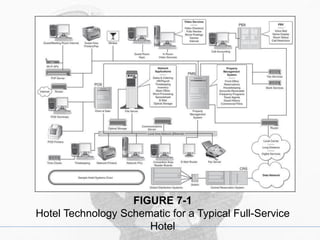
FIGURE 7-1
Hotel Technology Schematic for a Typical Full-Service
Hotel
THE GUEST LIFECYCLE
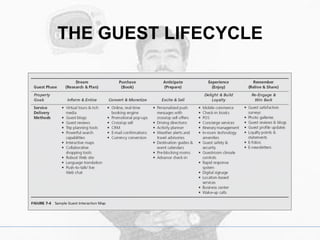
• Hospitality is not about discrete transactions; it’s
about relationships.
• It’s all about providing personalized guest
services that meet or exceed guest
expectations.
• In the end, it is about the experience and
pleasantly surprising or wowing guests.
THE GUEST LIFECYCLE
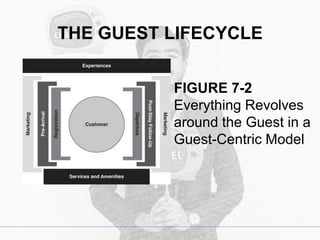
FIGURE 7-2
Everything Revolves
around the Guest in a
Guest-Centric Model
THE GUEST LIFECYCLE
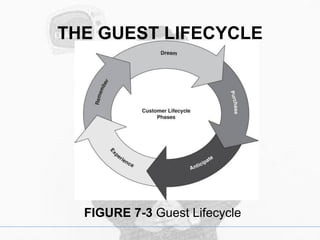
FIGURE 7-3 Guest Lifecycle
THE GUEST LIFECYCLE
THE PROPERTY MANAGEMENT
SYSTEM
• At the heart of any hotel or resort technology
portfolio is the property management system
(PMS).
– This system is essentially the nervous system
that runs the hotel or resort and the system with
which most other property-based systems must
connect or interface to exchange data (such as
guest charges from the property’s restaurant, bar,
and retail outlets and other areas in which guests
can make purchases).
The Property Management System (PMS)
THE PROPERTY MANAGEMENT
SYSTEM
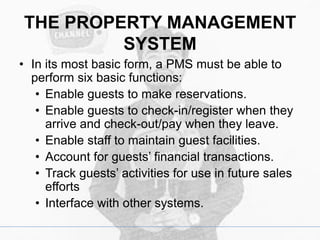
• In its most basic form, a PMS must be able to
perform six basic functions:
• Enable guests to make reservations.
• Enable guests to check-in/register when they
arrive and check-out/pay when they leave.
• Enable staff to maintain guest facilities.
• Account for guests’ financial transactions.
• Track guests’ activities for use in future sales
efforts
• Interface with other systems.
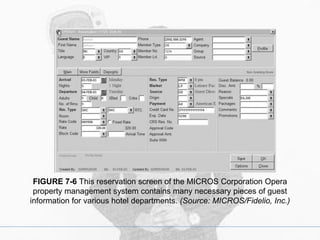
FIGURE 7-6 This reservation screen of the MICROS Corporation Opera
property management system contains many necessary pieces of guest
information for various hotel departments. (Source: MICROS/Fidelio, Inc.)
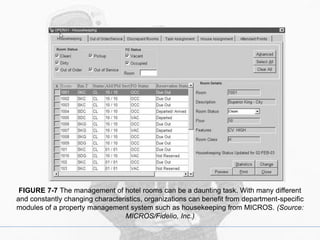
FIGURE 7-7 The management of hotel rooms can be a daunting task. With many different
and constantly changing characteristics, organizations can benefit from department-specific
modules of a property management system such as housekeeping from MICROS. (Source:
MICROS/Fidelio, Inc.)
FOUR KEY INTERFACES
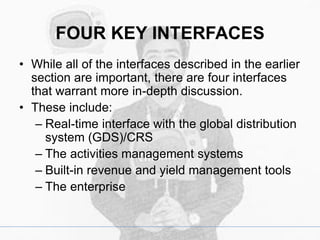
• While all of the interfaces described in the earlier
section are important, there are four interfaces
that warrant more in-depth discussion.
• These include:
– Real-time interface with the global distribution
system (GDS)/CRS
– The activities management systems
– Built-in revenue and yield management tools
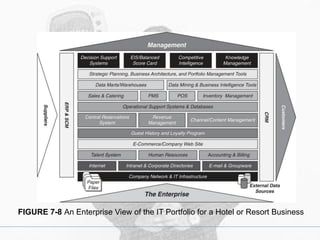
– The enterprise
FIGURE 7-8 An Enterprise View of the IT Portfolio for a Hotel or Resort Business
GRAPHICAL USER INTERFACE
• For hospitality professionals employing a PMS,
however, there may be no single element of the
system more important than the user interface.
– Not only must modern PMSs’ user interfaces support
the rapid training of a workforce that historically turns
over almost two to three times per year, but going
forward, the PMSs’ interfaces will also have to
support direct guest usage without the assistance of
hotel staff.
– Whenever a choice is made regarding which PMS to
use, study the interfaces.
E-Tourism
Hotel and Resort Technology

E-Tourism - Hotel and Resort Technology

  • 1.
  • 2.
    OVERVIEW • Introduction • Theguest lifecycle • The property management system • Four key interfaces
  • 3.
    Introduction • Hotels andresorts, especially large ones, are extremely complex businesses. • In fact, they are made up of a collection of businesses (or profit centers). • These profit centers include lodging operations, food and beverage outlets, retail stores, meeting rooms and banquets, spa, parking, and more.
  • 4.
    FIGURE 7-1 Hotel TechnologySchematic for a Typical Full-Service Hotel
  • 5.
    THE GUEST LIFECYCLE •Hospitality is not about discrete transactions; it’s about relationships. • It’s all about providing personalized guest services that meet or exceed guest expectations. • In the end, it is about the experience and pleasantly surprising or wowing guests.
  • 6.
    THE GUEST LIFECYCLE FIGURE7-2 Everything Revolves around the Guest in a Guest-Centric Model
  • 7.
    THE GUEST LIFECYCLE FIGURE7-3 Guest Lifecycle
  • 8.
  • 9.
    THE PROPERTY MANAGEMENT SYSTEM •At the heart of any hotel or resort technology portfolio is the property management system (PMS). – This system is essentially the nervous system that runs the hotel or resort and the system with which most other property-based systems must connect or interface to exchange data (such as guest charges from the property’s restaurant, bar, and retail outlets and other areas in which guests can make purchases). The Property Management System (PMS)
  • 10.
    THE PROPERTY MANAGEMENT SYSTEM •In its most basic form, a PMS must be able to perform six basic functions: • Enable guests to make reservations. • Enable guests to check-in/register when they arrive and check-out/pay when they leave. • Enable staff to maintain guest facilities. • Account for guests’ financial transactions. • Track guests’ activities for use in future sales efforts • Interface with other systems.
  • 11.
    FIGURE 7-6 Thisreservation screen of the MICROS Corporation Opera property management system contains many necessary pieces of guest information for various hotel departments. (Source: MICROS/Fidelio, Inc.)
  • 12.
    FIGURE 7-7 Themanagement of hotel rooms can be a daunting task. With many different and constantly changing characteristics, organizations can benefit from department-specific modules of a property management system such as housekeeping from MICROS. (Source: MICROS/Fidelio, Inc.)
  • 13.
    FOUR KEY INTERFACES •While all of the interfaces described in the earlier section are important, there are four interfaces that warrant more in-depth discussion. • These include: – Real-time interface with the global distribution system (GDS)/CRS – The activities management systems – Built-in revenue and yield management tools – The enterprise
  • 14.
    FIGURE 7-8 AnEnterprise View of the IT Portfolio for a Hotel or Resort Business
  • 15.
    GRAPHICAL USER INTERFACE •For hospitality professionals employing a PMS, however, there may be no single element of the system more important than the user interface. – Not only must modern PMSs’ user interfaces support the rapid training of a workforce that historically turns over almost two to three times per year, but going forward, the PMSs’ interfaces will also have to support direct guest usage without the assistance of hotel staff. – Whenever a choice is made regarding which PMS to use, study the interfaces.
  • 16.