ETHANOL
The Bio Fuel
By
K. Jayaram
II
ECE –A
ETHYL ALCOHOL (or)
ETHANOL
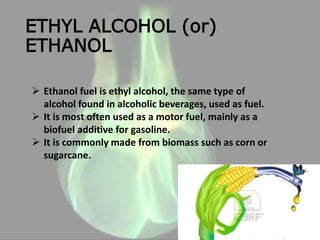
 Ethanol fuel is ethyl alcohol, the same type of
alcohol found in alcoholic beverages, used as fuel.
 It is most often used as a motor fuel, mainly as a
biofuel additive for gasoline.
 It is commonly made from biomass such as corn or
sugarcane.
Structure of Ethyl-
Alcohol
Bioethanol is a form of quasi-renewable energy that can be
produced from agricultural feed stocks.
It can be made from very common crops such as hemp, sugarcane,
potato, cassava and corn.
Cellulosic ethanol offers promise because cellulose fibers,
a major and universal component in plant cells walls, can be used to
produce ethanol.
MAJOR SOURCES
Ethanol Production
During ethanol fermentation, glucose and
other sugars in the corn (or sugarcane or
other crops) are converted into ethanol and
carbon dioxide.
C6H12O6 → 2 C2H5OH+ 2 CO2 + heat
Ethanol Production
Ethanol may also be produced industrially
from ethylene
by hydration of the double bond in the
presence of catalysts and high temperature.
C2H4 + H2O → C2H5OH
PRODUCTION PROCESS
Ethanol plant in Turner County, South Dakota
• various mixture of bioethanol with gasoline or
diesel fuels have been used. The most well‐known
blends are :
E5G to E26G (5‐26% ethanol, 95‐74% gasoline)
E85G (85% ethanol, 15% gasoline
E15D (15% ethanol, 85% diesel)
E95D (95% ethanol, 5% water )
ADVANTAGES
 ADVANTAGES
• Ethanol‐blended fuel as E10 (10% ethanol and
90% gasoline) reduces greenhouse gases by up
to 3.9%.
• Ethanol is considered a renewable energy
resource because it is primarily the result of
conversion of the sun's energy into usable
energy
• It reduces greenhouse gases.
• It reduces the amount of high‐octane additives.
• The fuel spills are more easily biodegraded or
diluted to non toxic concentrations
• Exhaust gases of ethanol are much cleaner , it
burns more cleanly (more complete combustion)
• The use of ethanol‐blended fuels such as E85 (85%
ethanol and 15% gasoline) can reduce the net
emissions of greenhouse gases by as much as
37.1%, which is a significant amount.
• You can use any plant for production of bioethanol,
it only has to contain sugar and starch. The best
choice is sugar cane, but you can also use potatoes,
barley , wheat etc.
• It is carbon neutral i.e. the carbon dioxide released
in the bioethanol production process is the same
amount as the one the crops previously absorbed
during photosynthesis
DISADVATAGES
The energy content of the petrol is much higher
than the one of bioethanol. Burning 1 litre of
ethanol gives 34% less energy than burning the
same amount of petrol
phosphorous and nitrogen used in the production
have negative effect on the environment
During the production process of bioethanol a
huge amount of carbon dioxide is released.
The production of ethanol fills the air with
greenhouse gases (GHG) in the amounts
comparable to the emissions of
internal‐combustion engines
 DISADVANTAGES
Transportation – ethanol is hygroscopic, it
means that it absorbs water from the air and
thus has high corrosion aggressiveness.
Biodiversity – A large amount of arable land is
required to grow crops. This could see some natural
habitats destroyed including rainforests.
The food V fuel debate – There is concern that
due to the lucrative prices of bioethanol some
farmers may sacrifice food crops for biofuel
production which will increase food prices around
the world.
Comparison of Gasoline and Bioethanol
•Energy content
• Bioethanol has much lower energy content than
gasoline (about two‐third of the energy content of
gasoline )
•Octane number
• Octane number of ethanol is higher than that for
petrol; hence ethanol has better antiknock
characteristics.
• This increases the fuel efficiency of the engine. The
oxygen content of ethanol also leads to a higher
efficiency , which results in a cleaner combustion
process at relatively low temperatures.
• Reid vapour pressure (measure for the volatility of
a fuel)
• Very low for ethanol indicates a slow evaporation,
which has the advantage that the concentration of
evaporative emissions in the air remains relatively low .
• This reduces the risk of explosions. However , the low
vapour pressure of ethanol, together with its single
boiling point, is disadvantageous with regard to engine
start at low ambient temperatures.
• Without aids, engines using ethanol cannot be started
at temperatures below 20ºC. Cold start difficulties are
the most important problem with regard to the
application of alcohols as automotive fuels.
Application of ethanol
• Ethanol can be used :
• as a transport fuel to replace gasoline
• as a fuel for power generation by thermal
combustion
• as a fuel for fuel cells by thermochemical
reaction
• as a fuel in cogeneration systems
• as a feedstock in the chemicals industry
Ethanol

Ethanol

  • 1.
    ETHANOL The Bio Fuel By K.Jayaram II ECE –A
  • 2.
    ETHYL ALCOHOL (or) ETHANOL Ethanol fuel is ethyl alcohol, the same type of alcohol found in alcoholic beverages, used as fuel.  It is most often used as a motor fuel, mainly as a biofuel additive for gasoline.  It is commonly made from biomass such as corn or sugarcane.
  • 3.
  • 4.
    Bioethanol is aform of quasi-renewable energy that can be produced from agricultural feed stocks. It can be made from very common crops such as hemp, sugarcane, potato, cassava and corn. Cellulosic ethanol offers promise because cellulose fibers, a major and universal component in plant cells walls, can be used to produce ethanol. MAJOR SOURCES
  • 5.
    Ethanol Production During ethanolfermentation, glucose and other sugars in the corn (or sugarcane or other crops) are converted into ethanol and carbon dioxide. C6H12O6 → 2 C2H5OH+ 2 CO2 + heat
  • 6.
    Ethanol Production Ethanol mayalso be produced industrially from ethylene by hydration of the double bond in the presence of catalysts and high temperature. C2H4 + H2O → C2H5OH
  • 7.
  • 8.
    Ethanol plant inTurner County, South Dakota
  • 10.
    • various mixtureof bioethanol with gasoline or diesel fuels have been used. The most well‐known blends are : E5G to E26G (5‐26% ethanol, 95‐74% gasoline) E85G (85% ethanol, 15% gasoline E15D (15% ethanol, 85% diesel) E95D (95% ethanol, 5% water )
  • 11.
  • 12.
     ADVANTAGES • Ethanol‐blendedfuel as E10 (10% ethanol and 90% gasoline) reduces greenhouse gases by up to 3.9%. • Ethanol is considered a renewable energy resource because it is primarily the result of conversion of the sun's energy into usable energy • It reduces greenhouse gases. • It reduces the amount of high‐octane additives. • The fuel spills are more easily biodegraded or diluted to non toxic concentrations
  • 13.
    • Exhaust gasesof ethanol are much cleaner , it burns more cleanly (more complete combustion) • The use of ethanol‐blended fuels such as E85 (85% ethanol and 15% gasoline) can reduce the net emissions of greenhouse gases by as much as 37.1%, which is a significant amount. • You can use any plant for production of bioethanol, it only has to contain sugar and starch. The best choice is sugar cane, but you can also use potatoes, barley , wheat etc. • It is carbon neutral i.e. the carbon dioxide released in the bioethanol production process is the same amount as the one the crops previously absorbed during photosynthesis
  • 14.
  • 15.
    The energy contentof the petrol is much higher than the one of bioethanol. Burning 1 litre of ethanol gives 34% less energy than burning the same amount of petrol phosphorous and nitrogen used in the production have negative effect on the environment During the production process of bioethanol a huge amount of carbon dioxide is released. The production of ethanol fills the air with greenhouse gases (GHG) in the amounts comparable to the emissions of internal‐combustion engines  DISADVANTAGES
  • 16.
    Transportation – ethanolis hygroscopic, it means that it absorbs water from the air and thus has high corrosion aggressiveness. Biodiversity – A large amount of arable land is required to grow crops. This could see some natural habitats destroyed including rainforests. The food V fuel debate – There is concern that due to the lucrative prices of bioethanol some farmers may sacrifice food crops for biofuel production which will increase food prices around the world.
  • 17.
    Comparison of Gasolineand Bioethanol
  • 18.
    •Energy content • Bioethanolhas much lower energy content than gasoline (about two‐third of the energy content of gasoline ) •Octane number • Octane number of ethanol is higher than that for petrol; hence ethanol has better antiknock characteristics. • This increases the fuel efficiency of the engine. The oxygen content of ethanol also leads to a higher efficiency , which results in a cleaner combustion process at relatively low temperatures.
  • 19.
    • Reid vapourpressure (measure for the volatility of a fuel) • Very low for ethanol indicates a slow evaporation, which has the advantage that the concentration of evaporative emissions in the air remains relatively low . • This reduces the risk of explosions. However , the low vapour pressure of ethanol, together with its single boiling point, is disadvantageous with regard to engine start at low ambient temperatures. • Without aids, engines using ethanol cannot be started at temperatures below 20ºC. Cold start difficulties are the most important problem with regard to the application of alcohols as automotive fuels.
  • 20.
    Application of ethanol •Ethanol can be used : • as a transport fuel to replace gasoline • as a fuel for power generation by thermal combustion • as a fuel for fuel cells by thermochemical reaction • as a fuel in cogeneration systems • as a feedstock in the chemicals industry