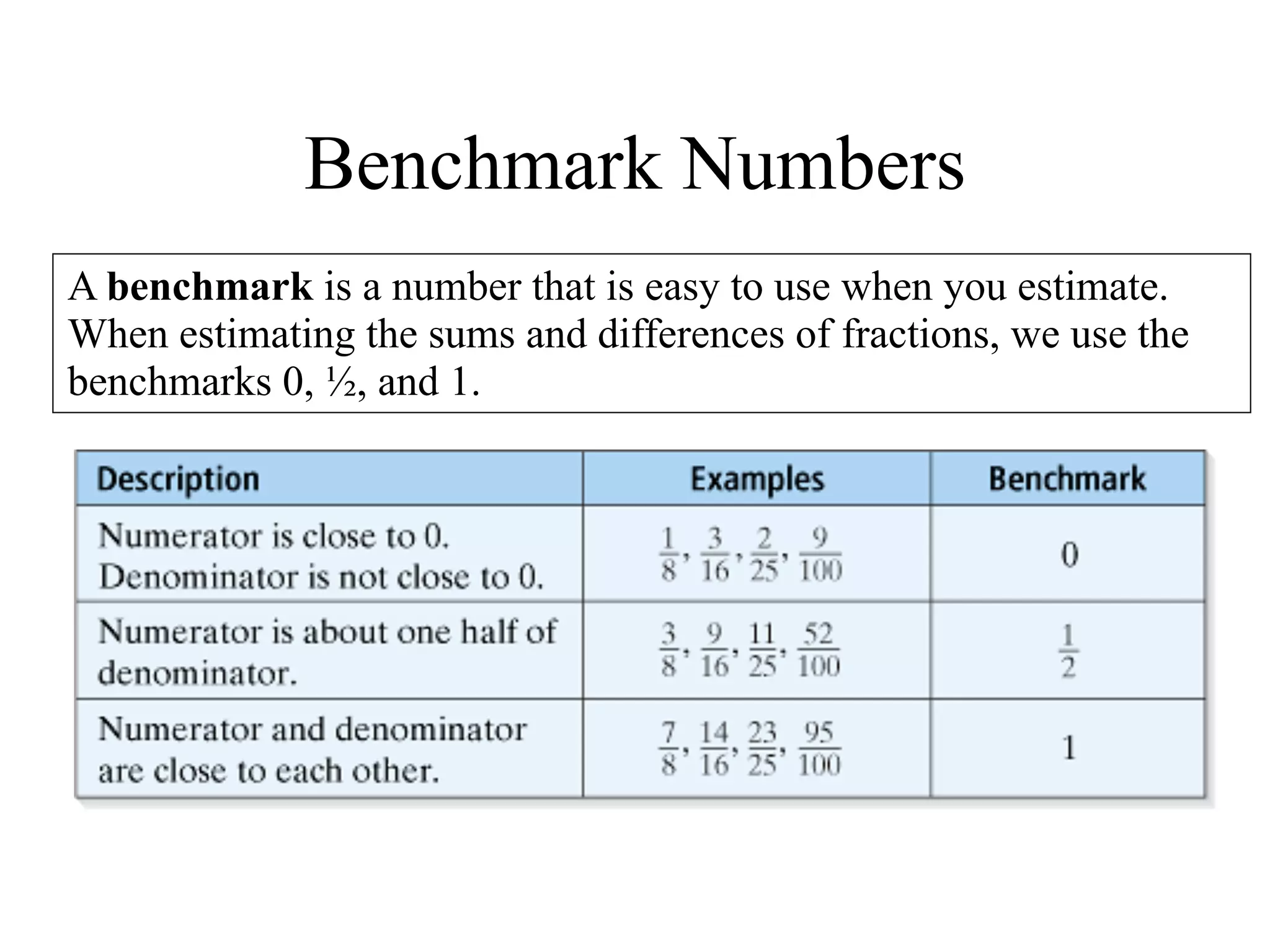
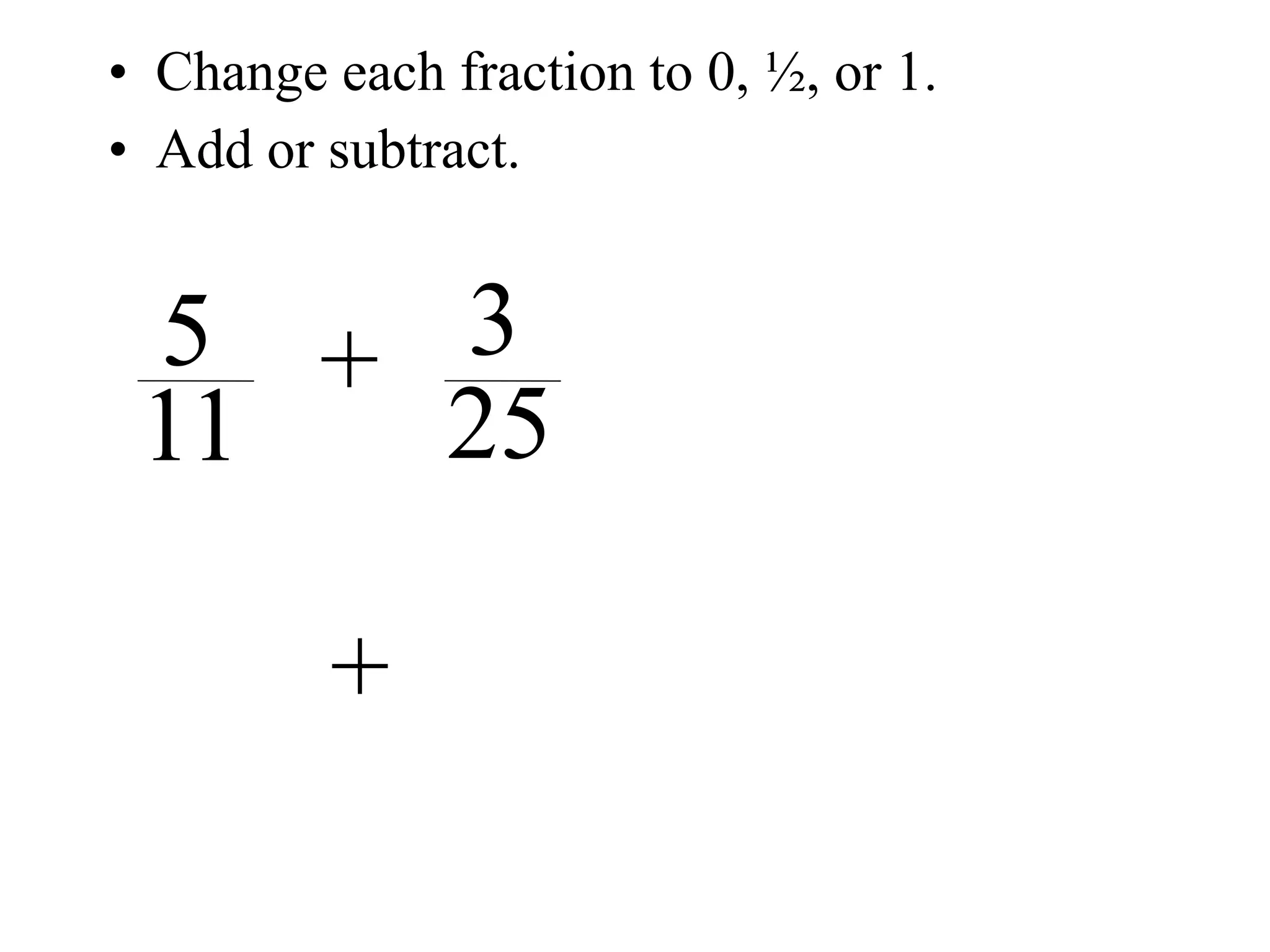
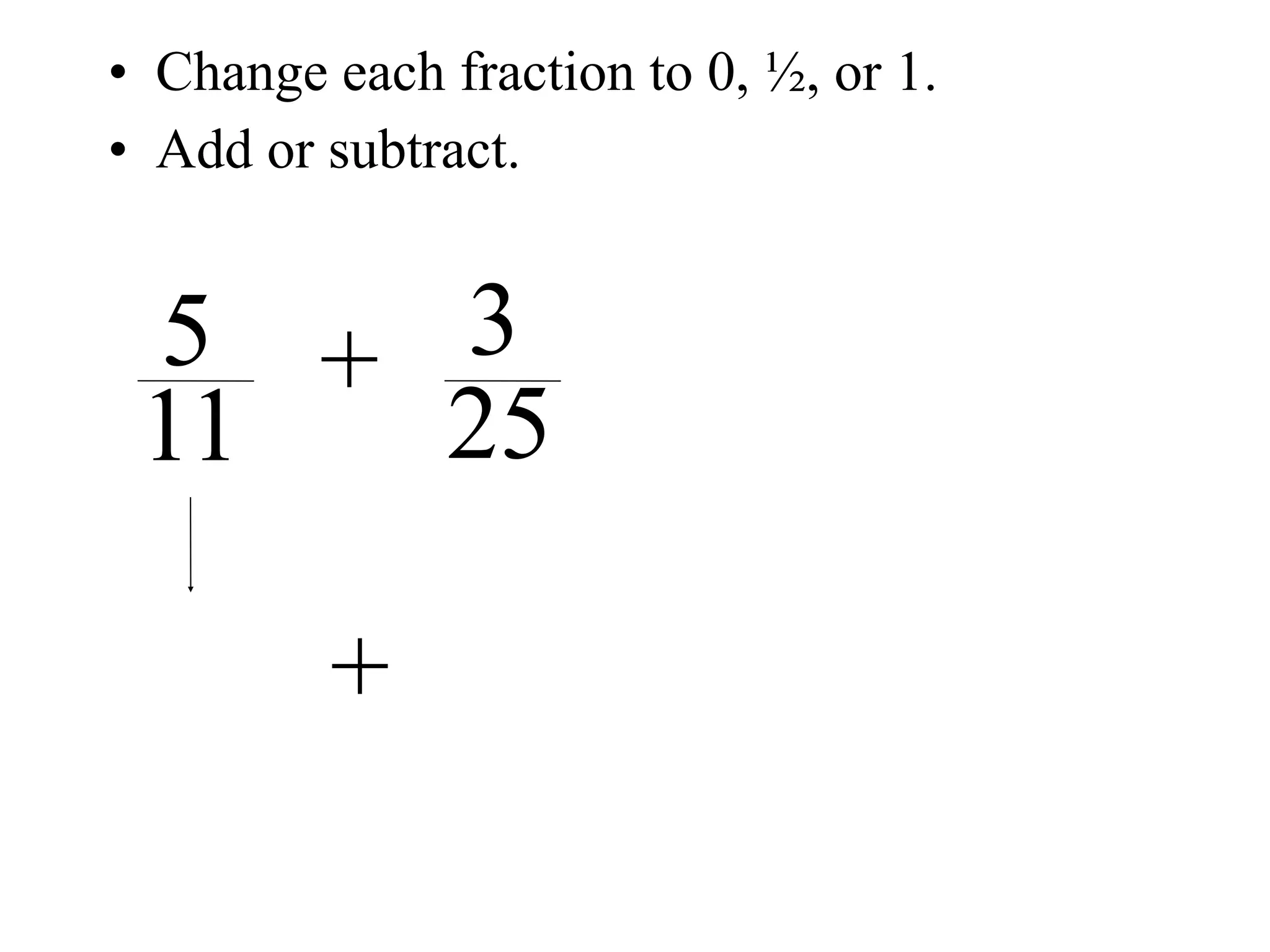
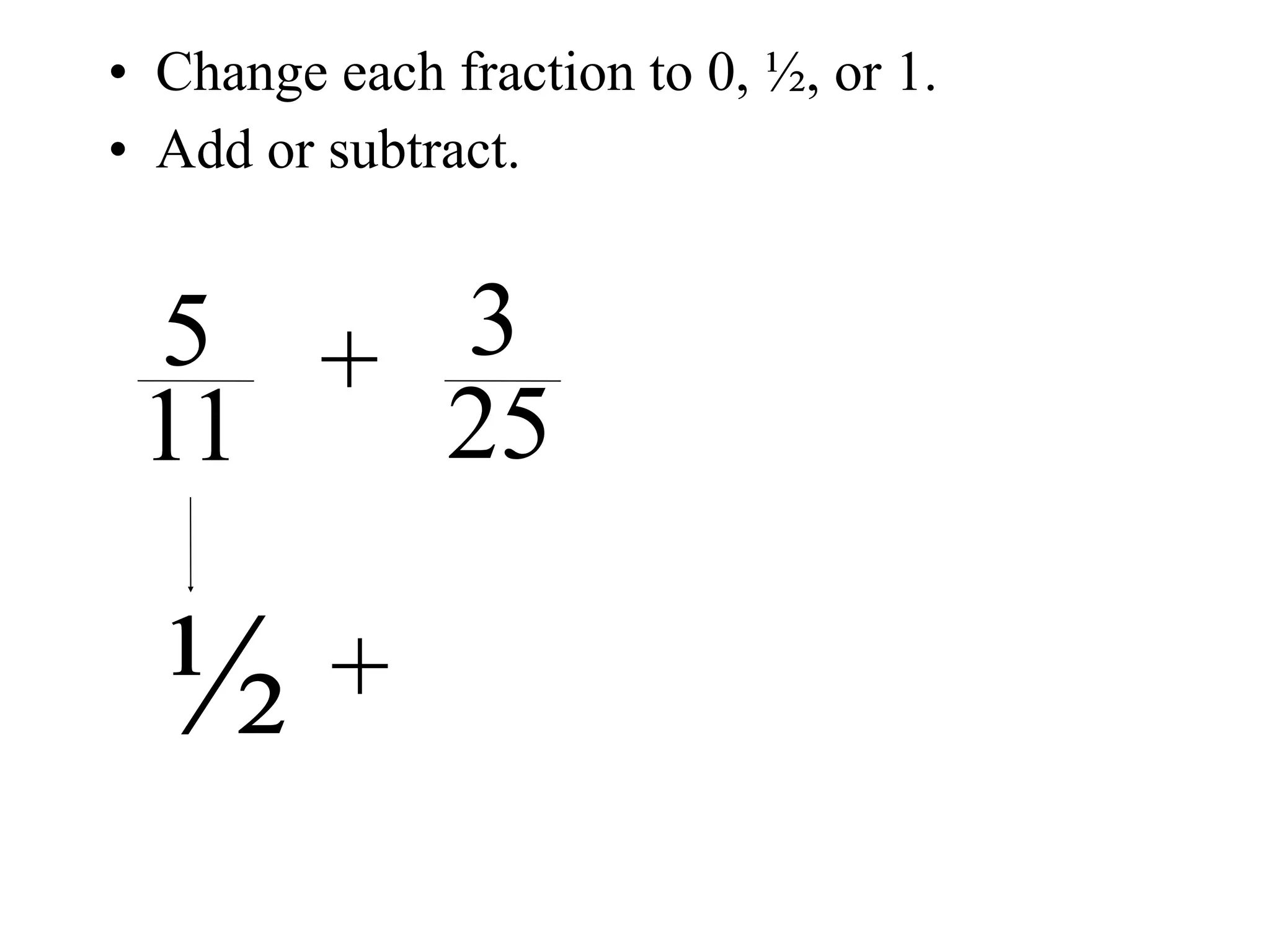
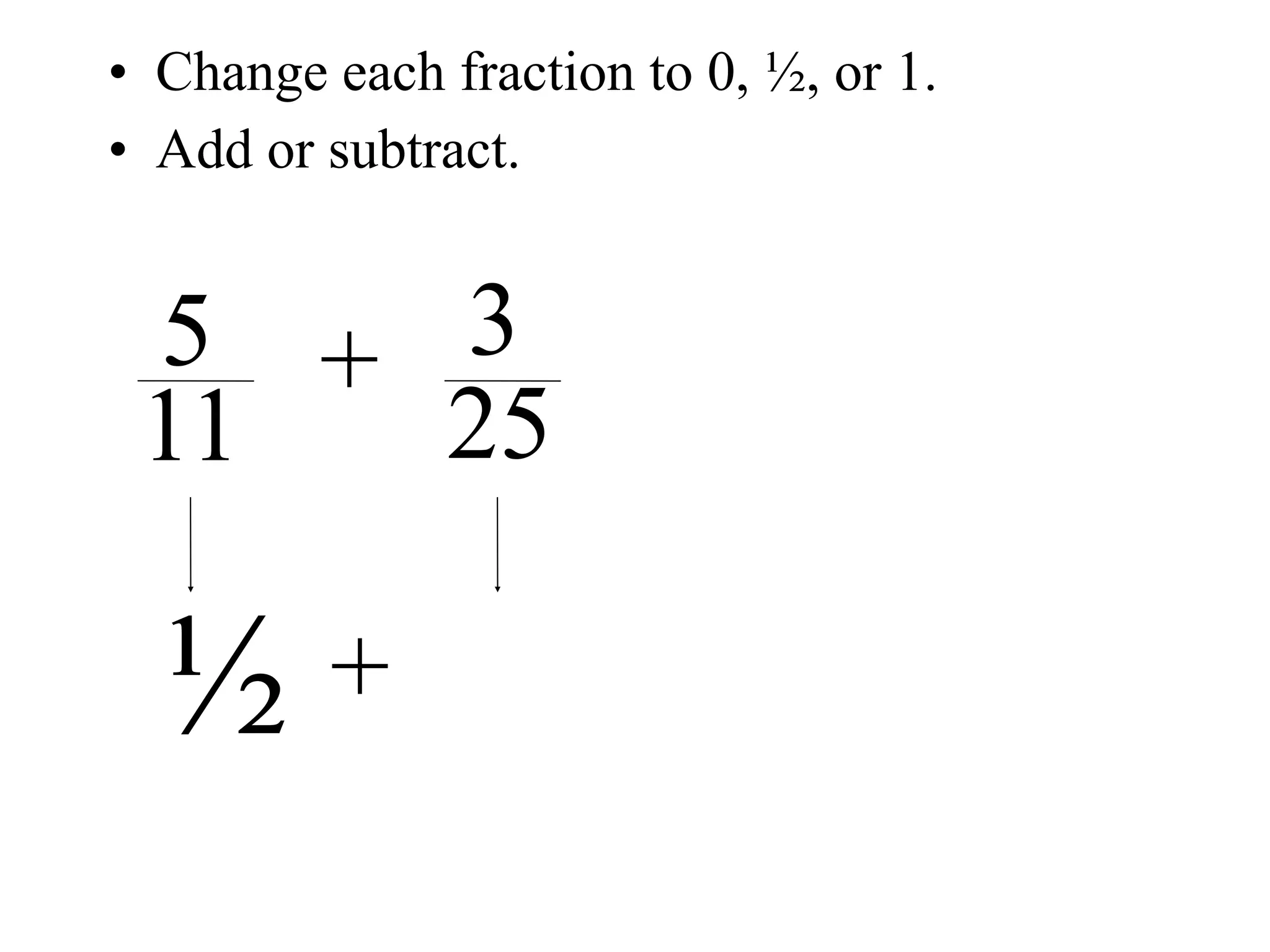
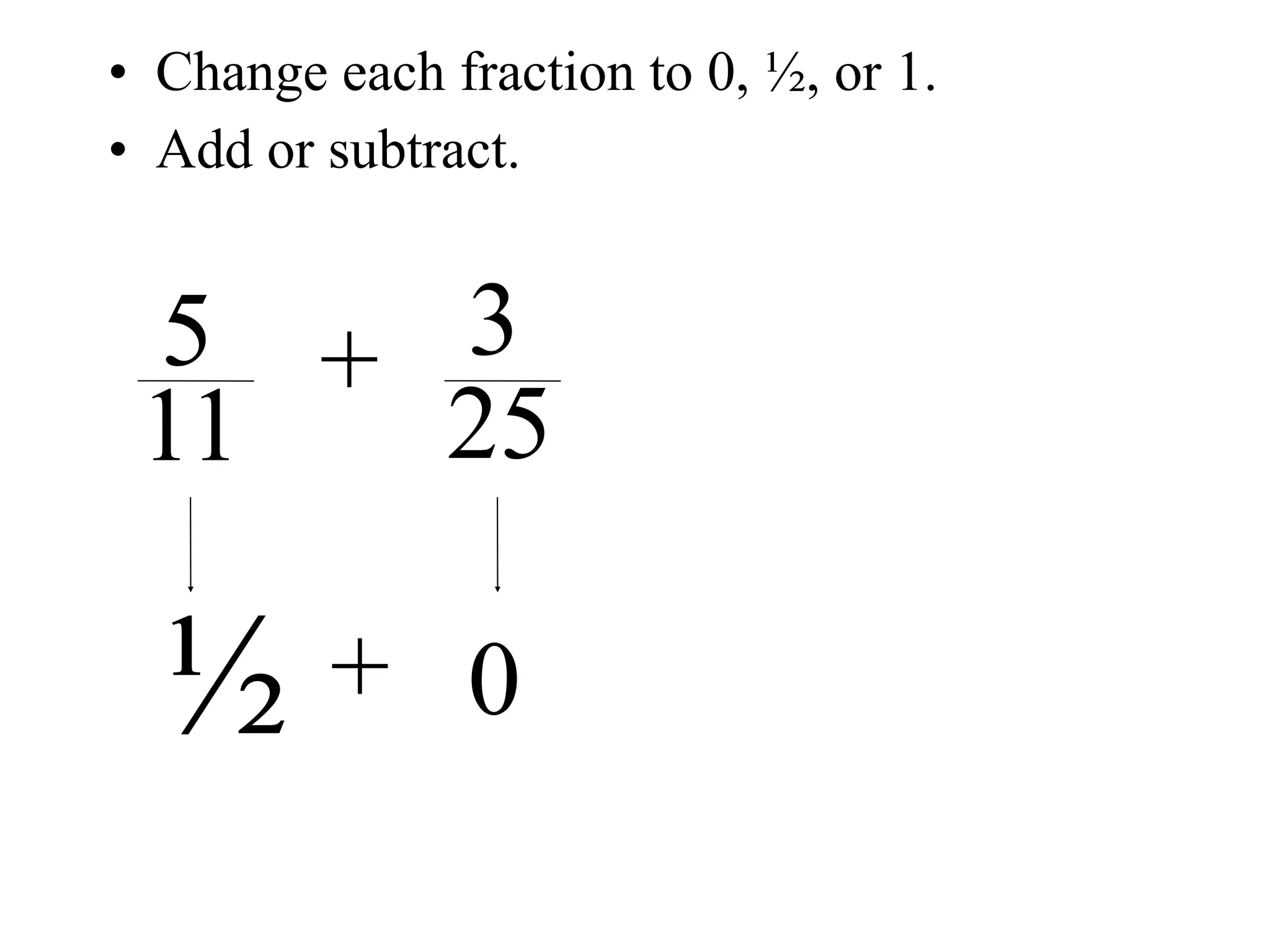
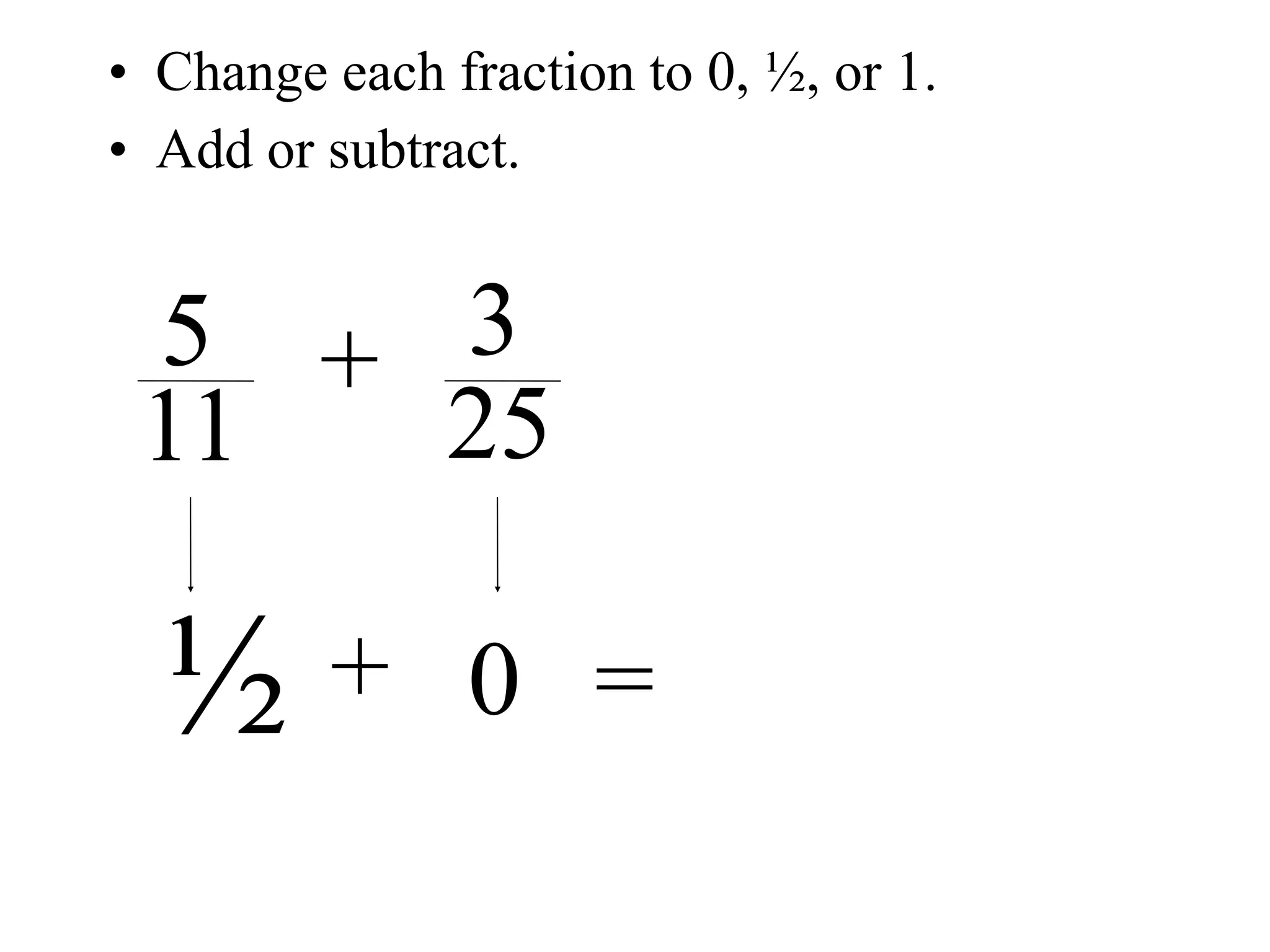
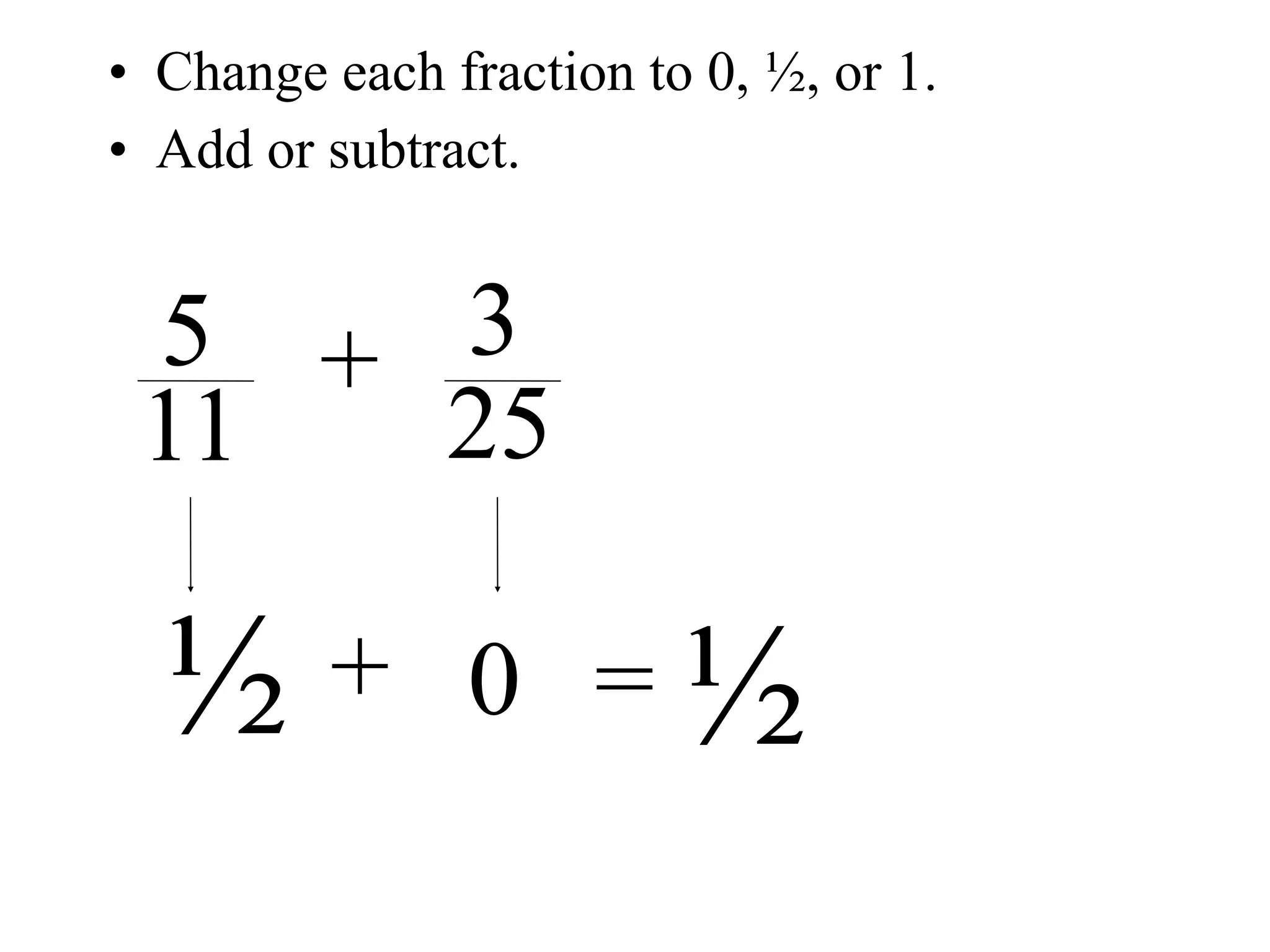
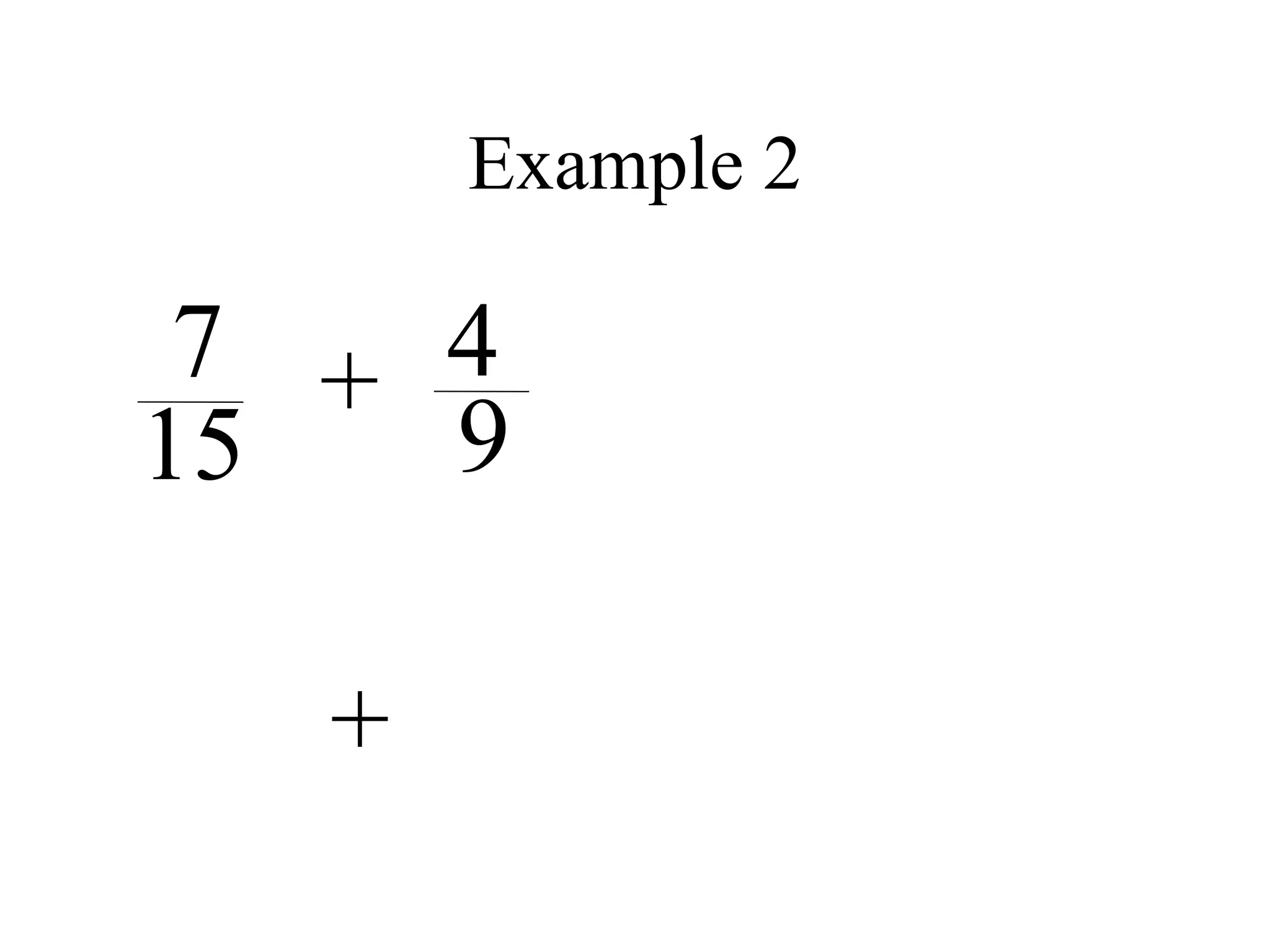
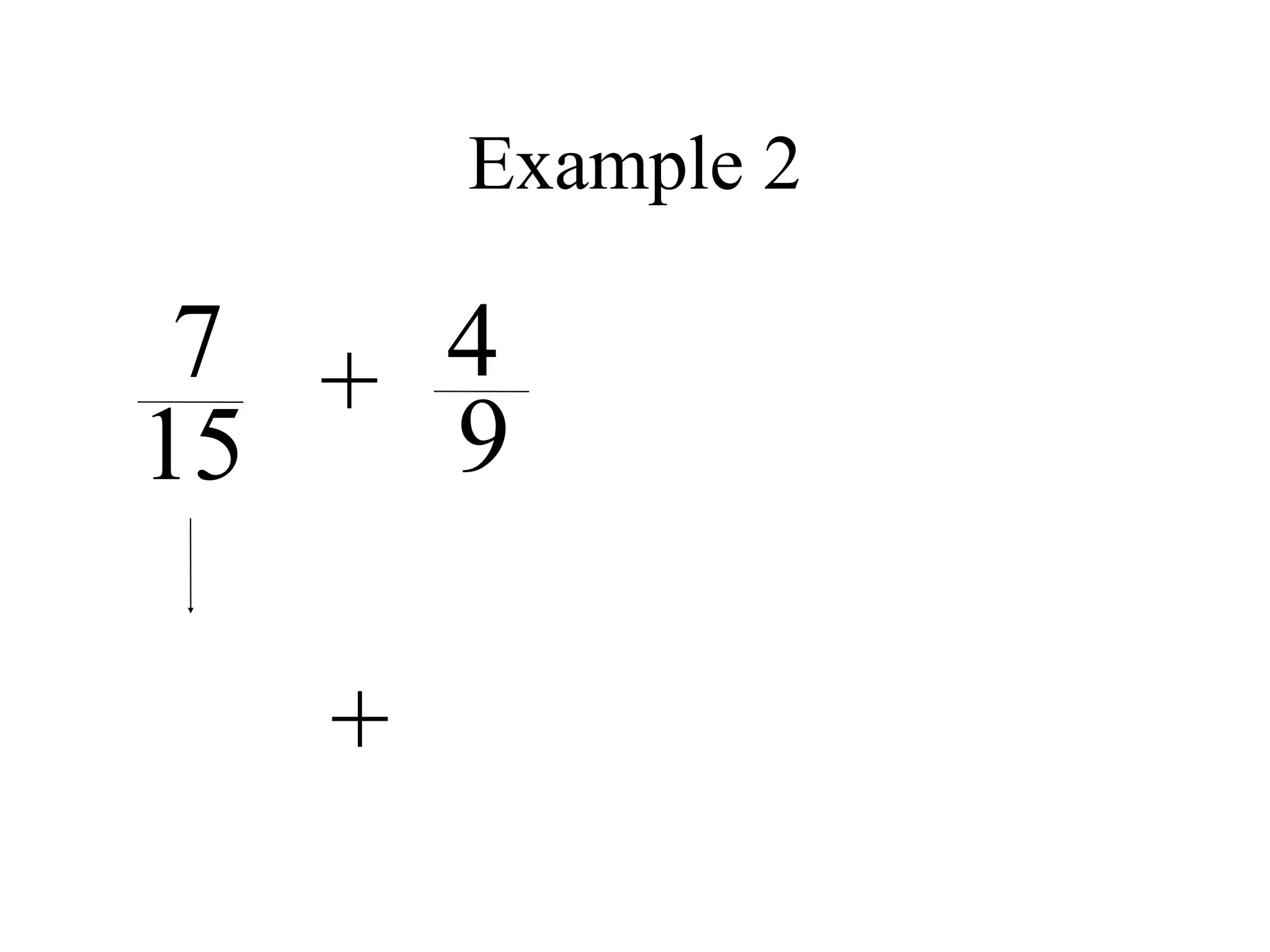
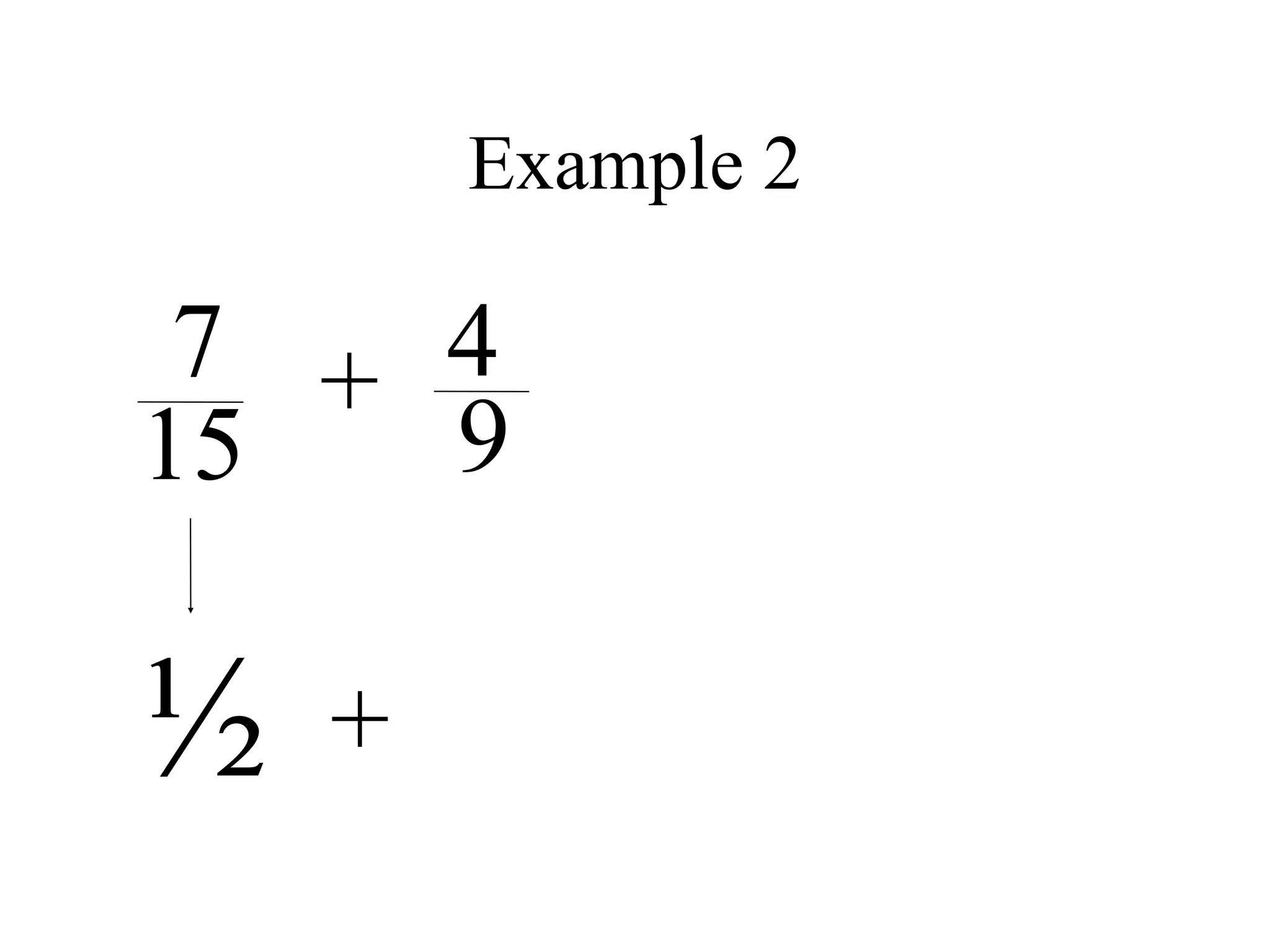
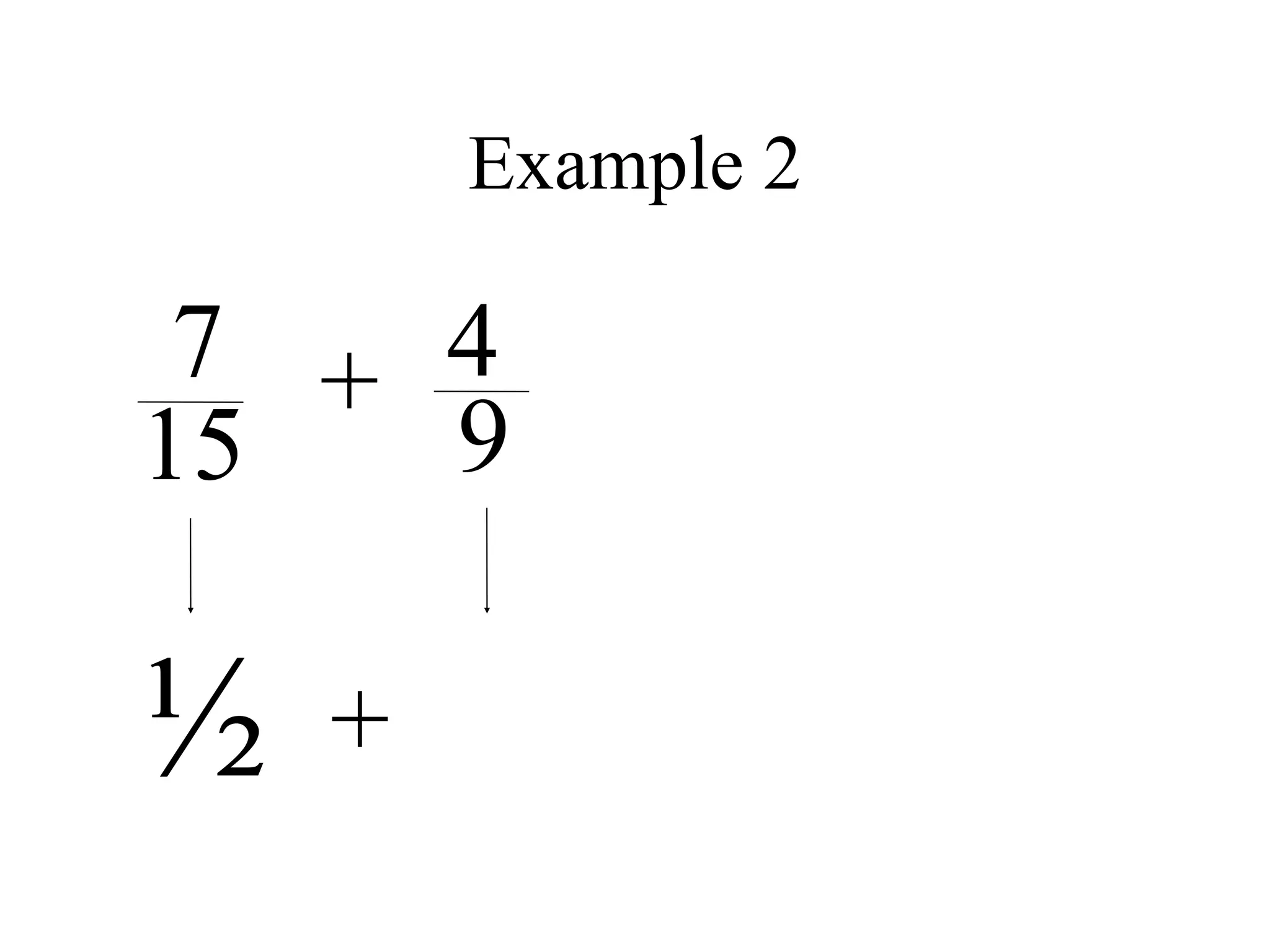
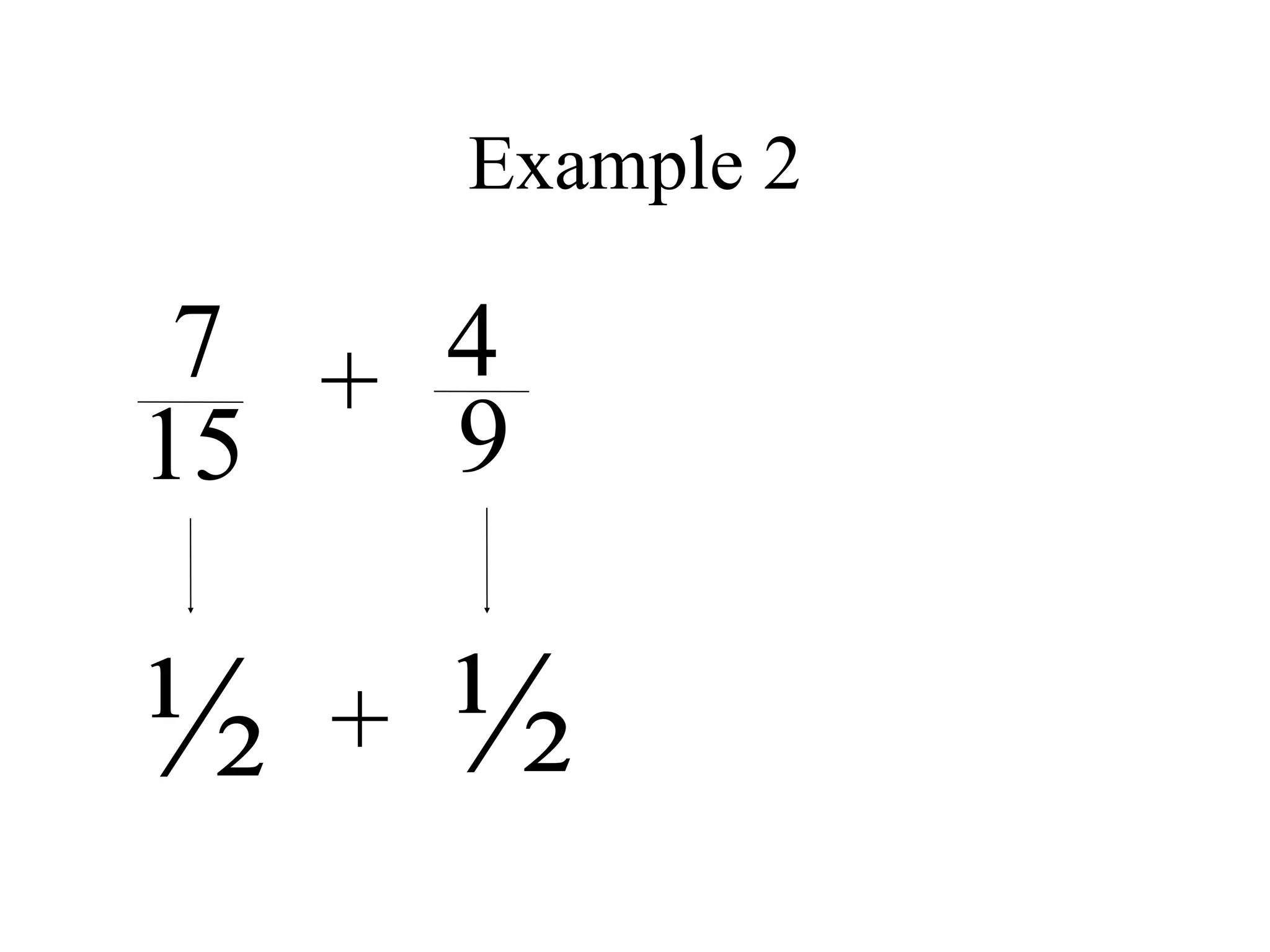
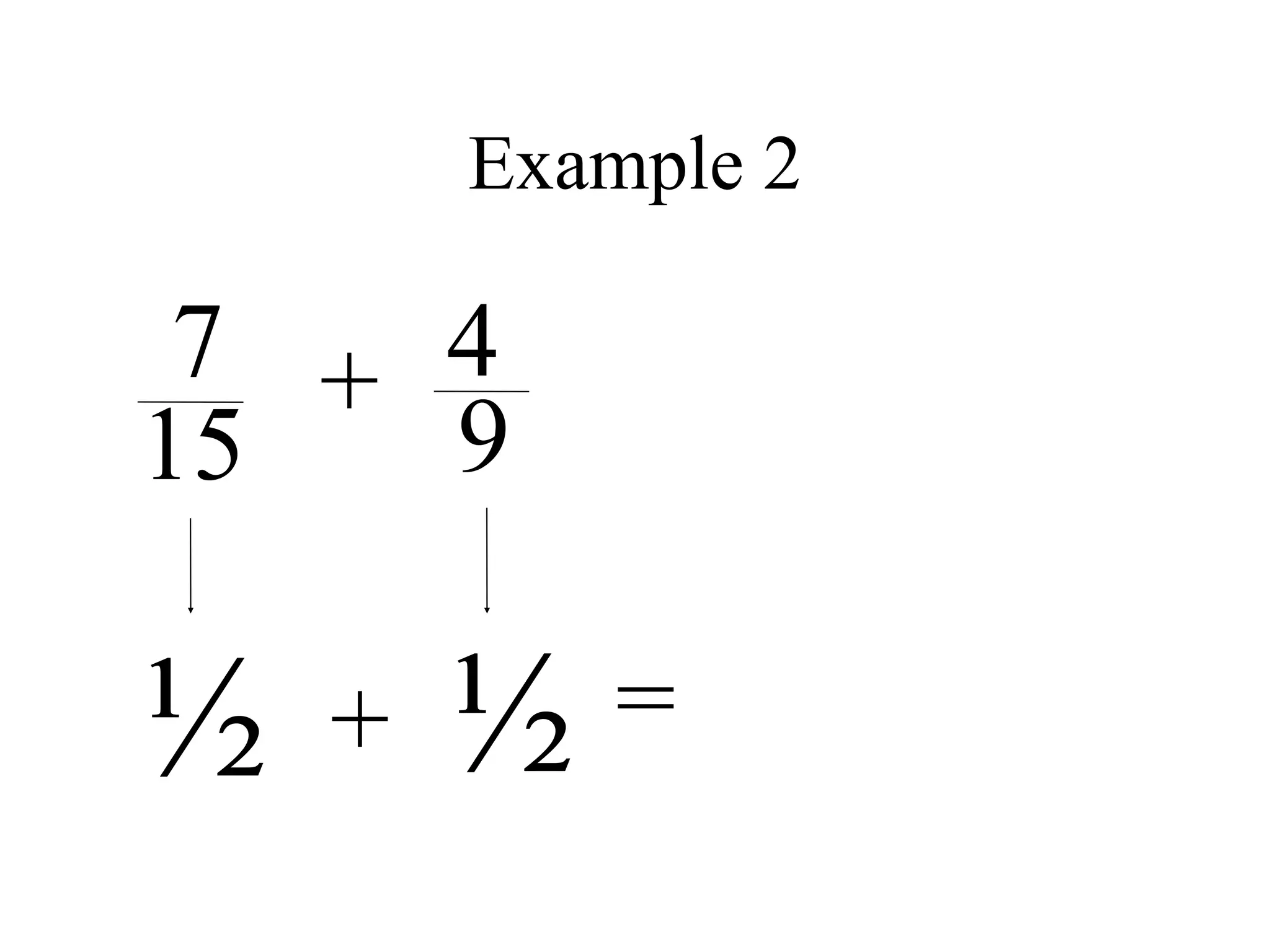
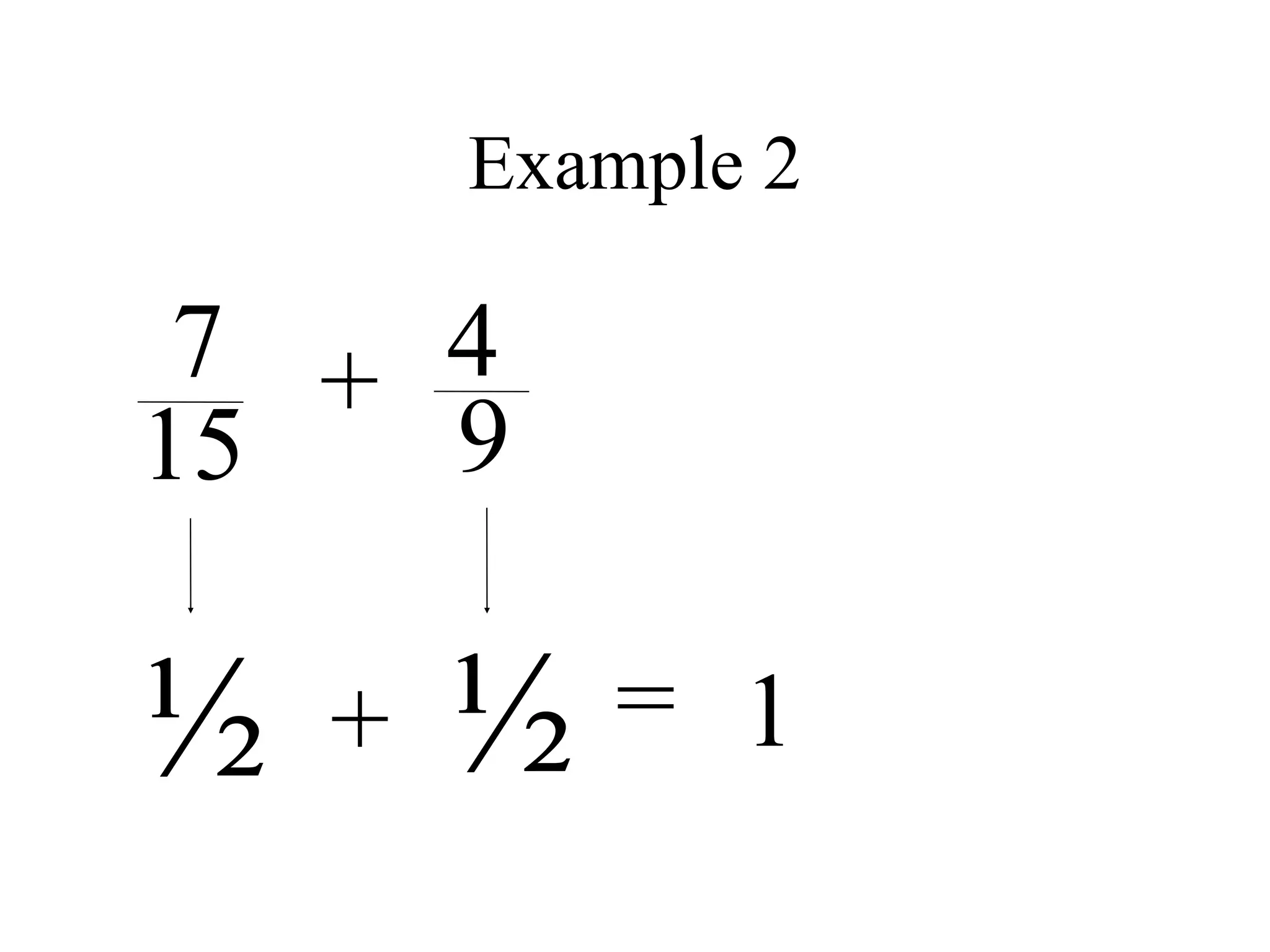
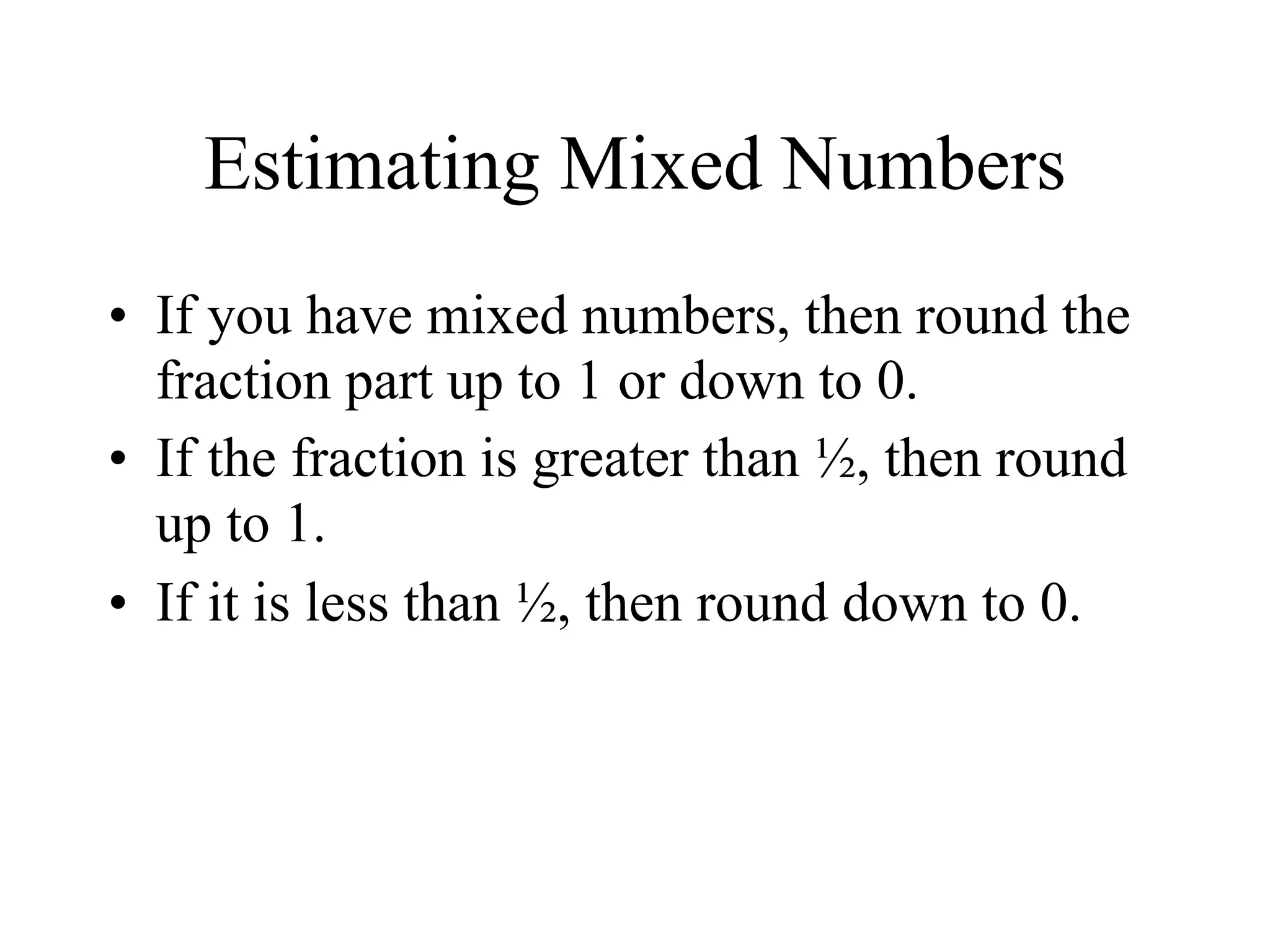
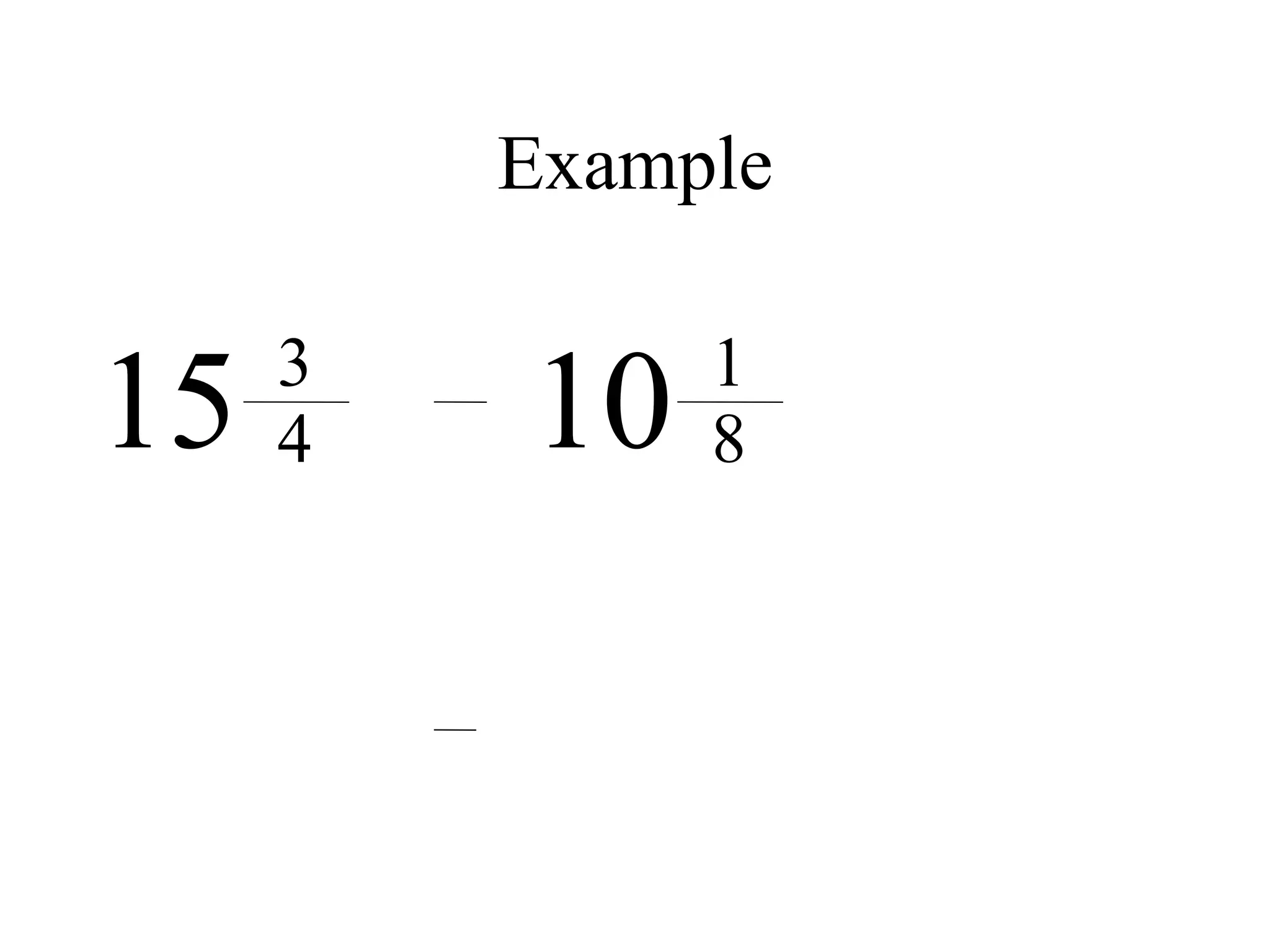
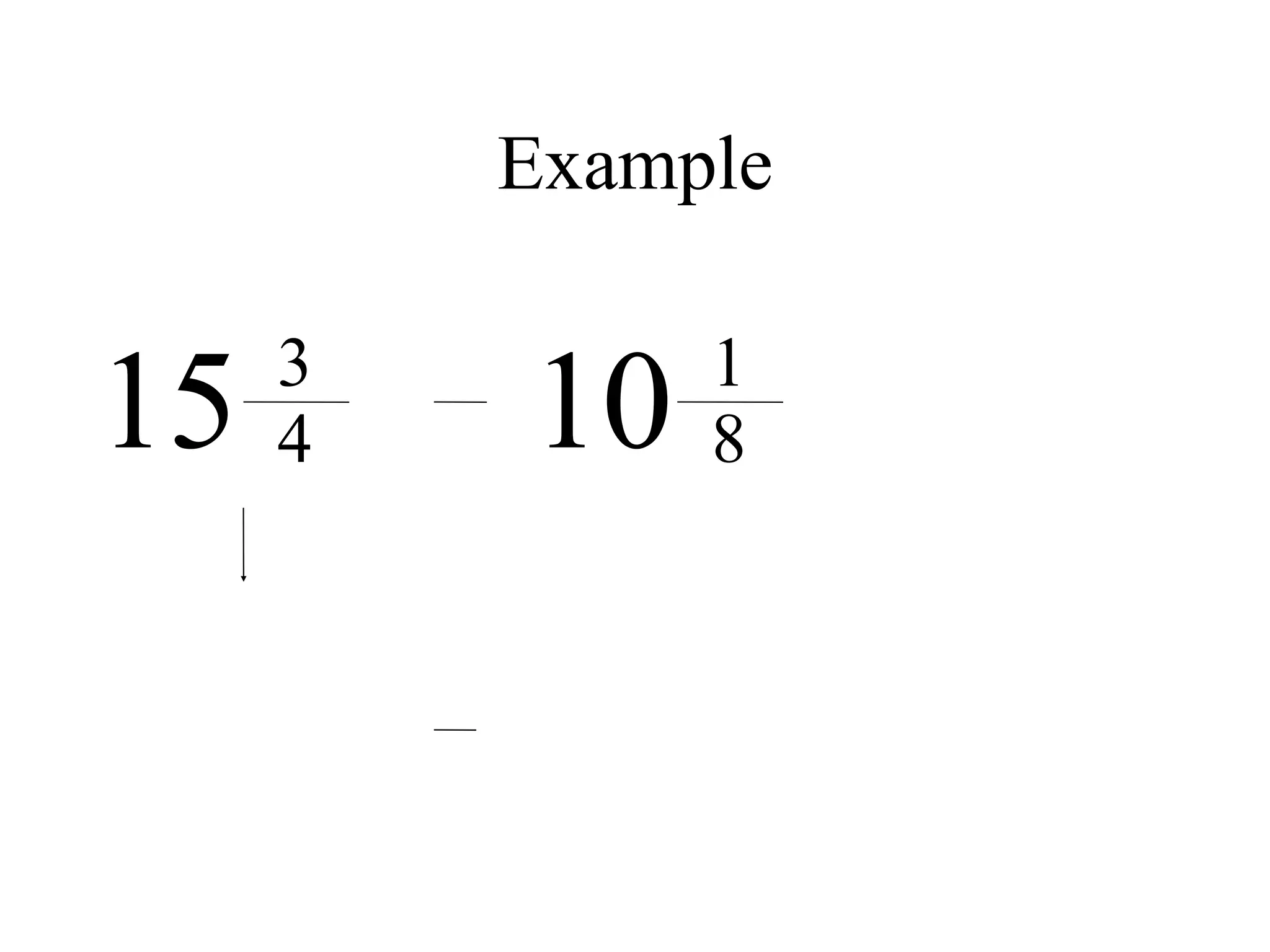
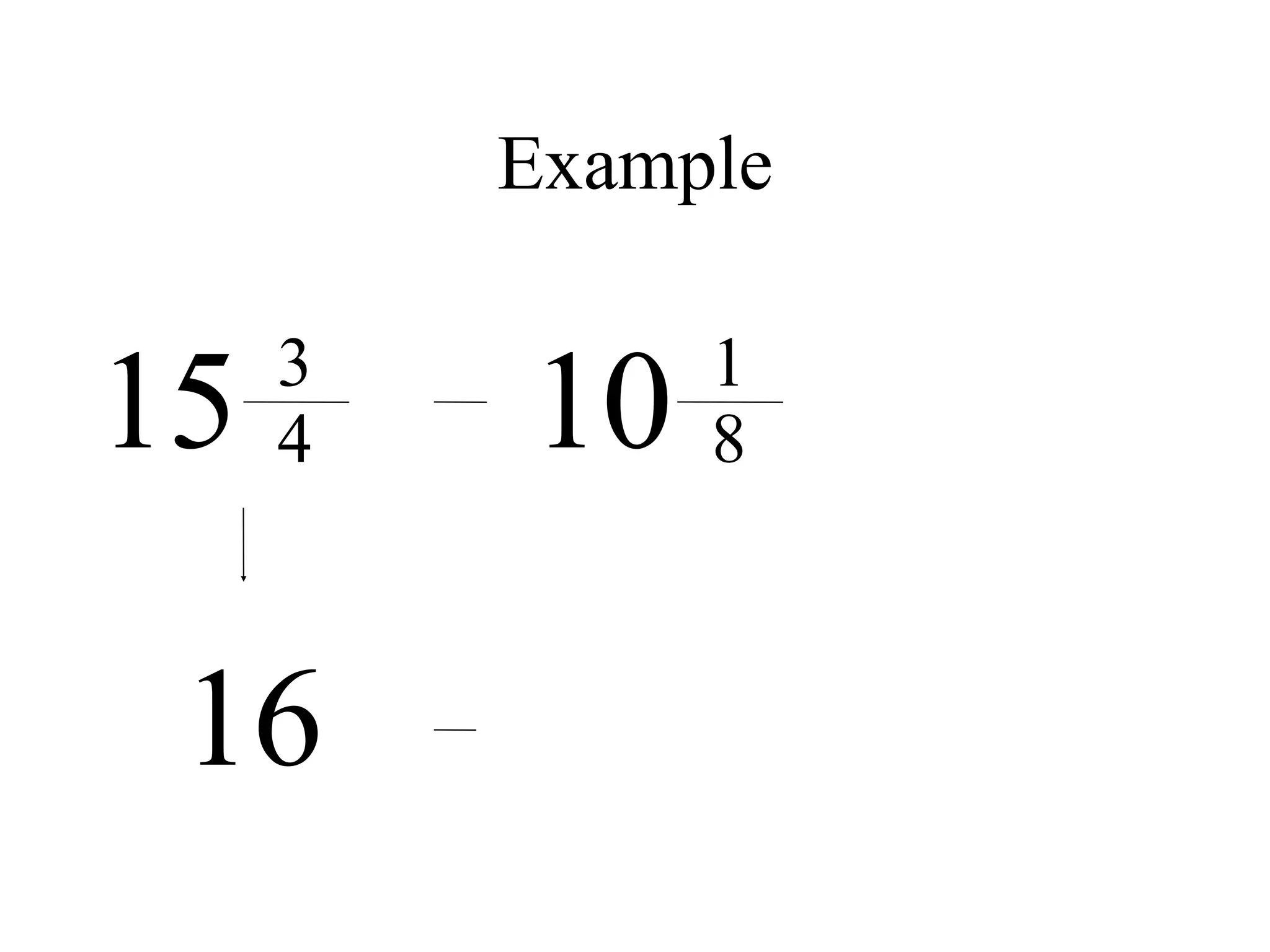
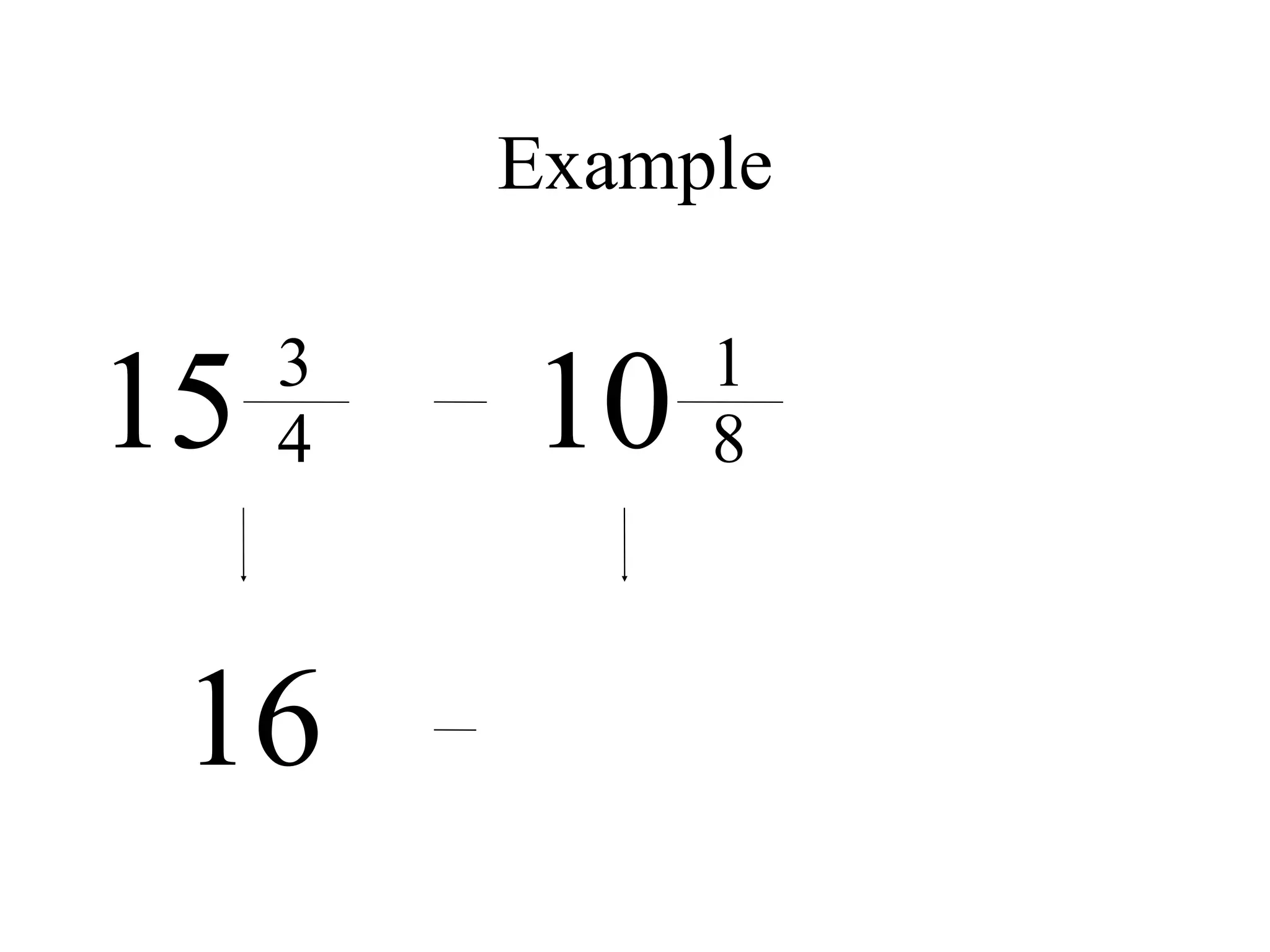
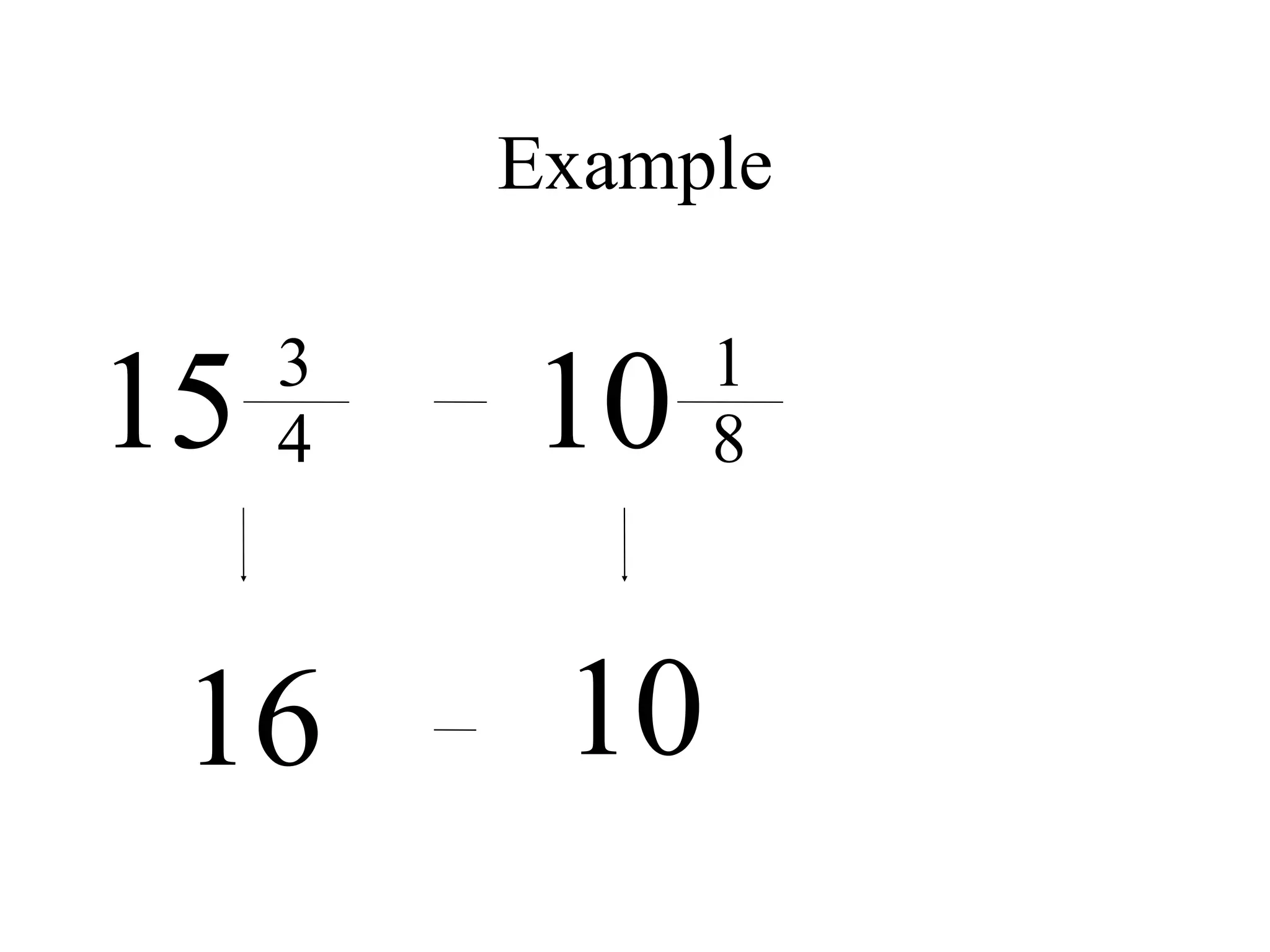
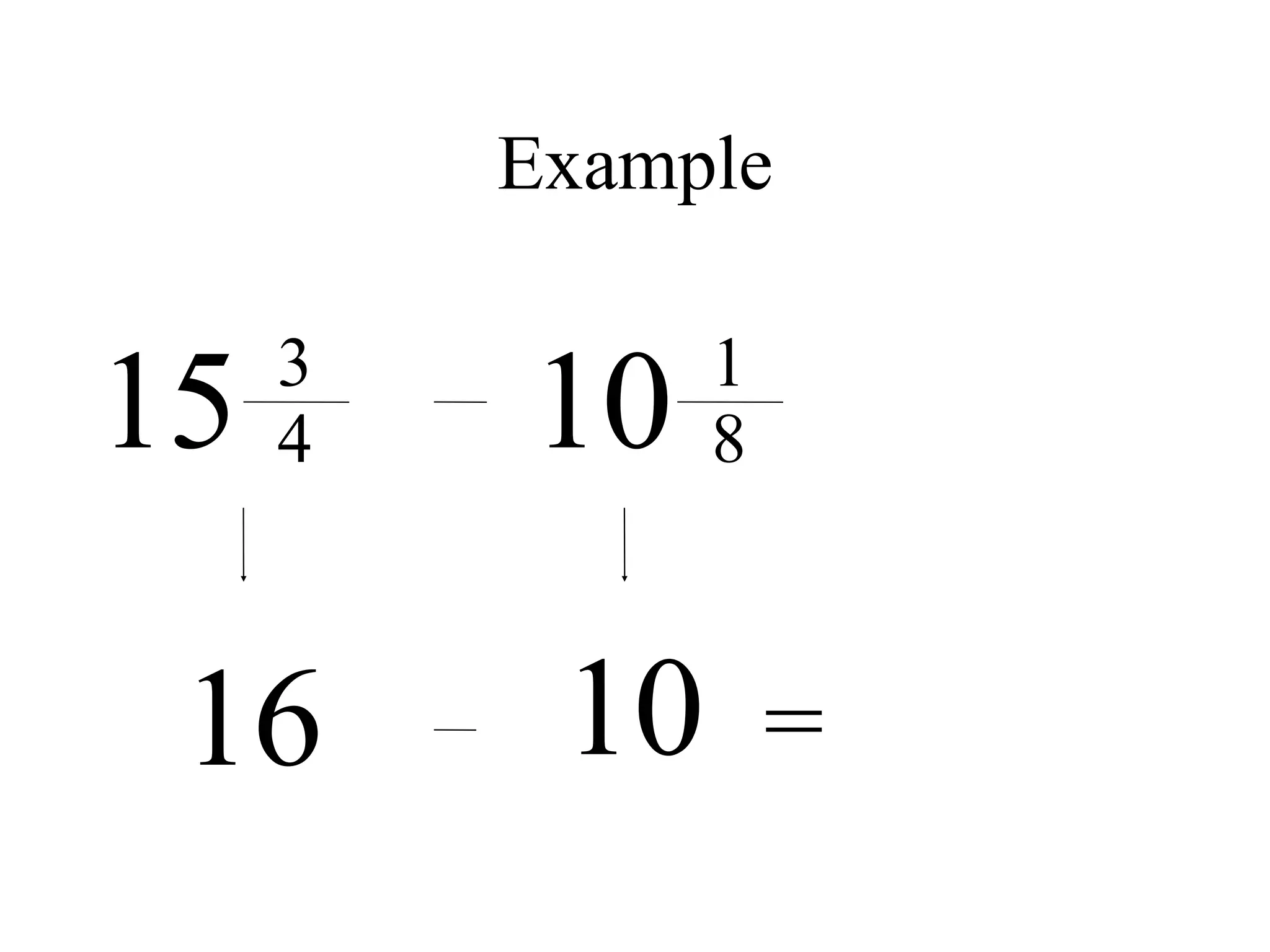
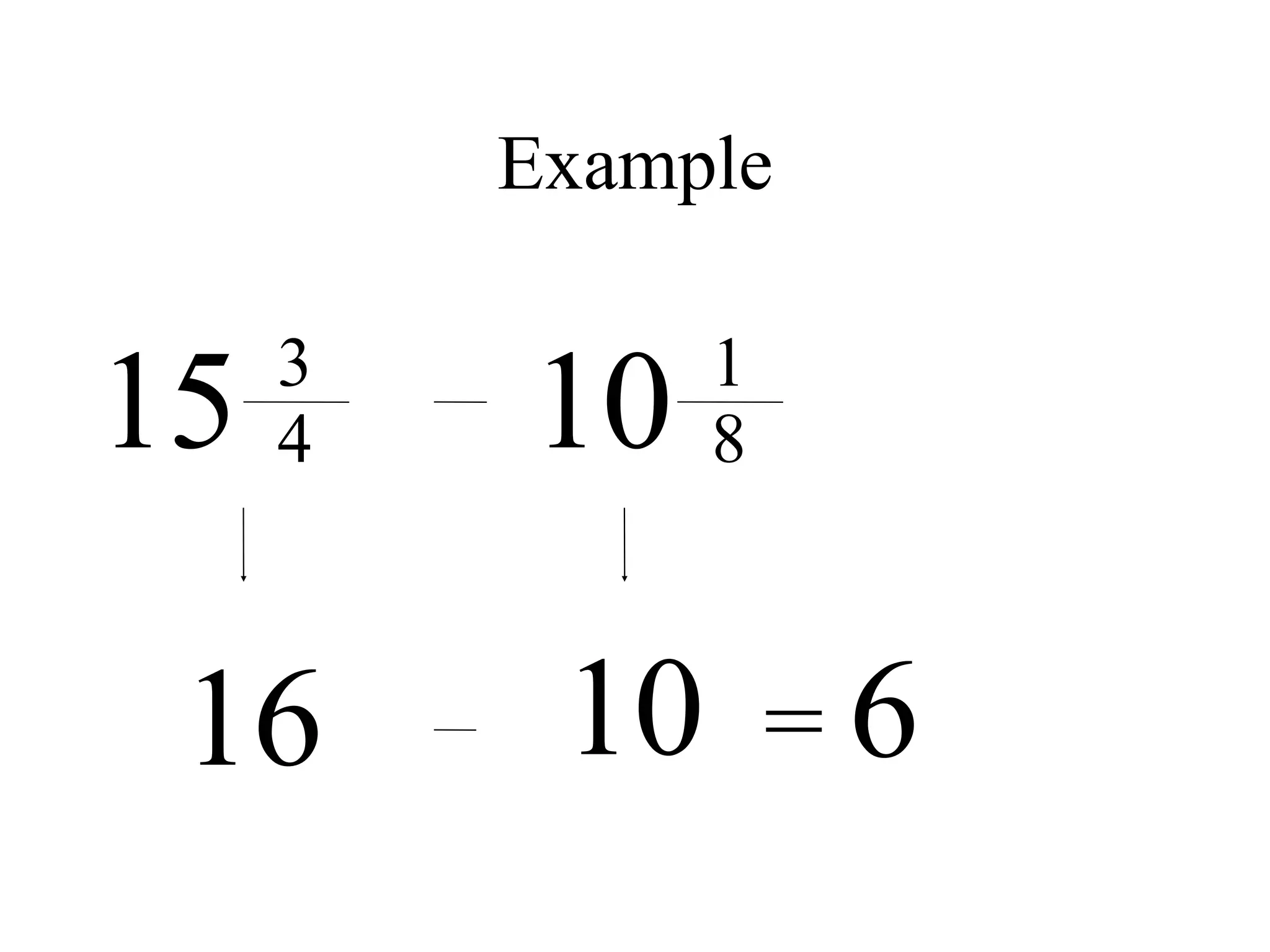
This document provides guidance on estimating sums and differences of fractions by rounding fractions to benchmarks of 0, 1/2, or 1. It explains that benchmarks are easy reference numbers to use when estimating. Examples are provided that show how to change each fraction in a sum or difference to the nearest benchmark, then calculate the sum or difference. For mixed numbers, the fraction part should be rounded up to 1 if it is greater than 1/2, or rounded down to 0 if it is less than 1/2 before calculating. This allows for quick estimation of fraction calculations.