Four rules of fractions

       How to do
Addition and Subtraction

      The simple bits
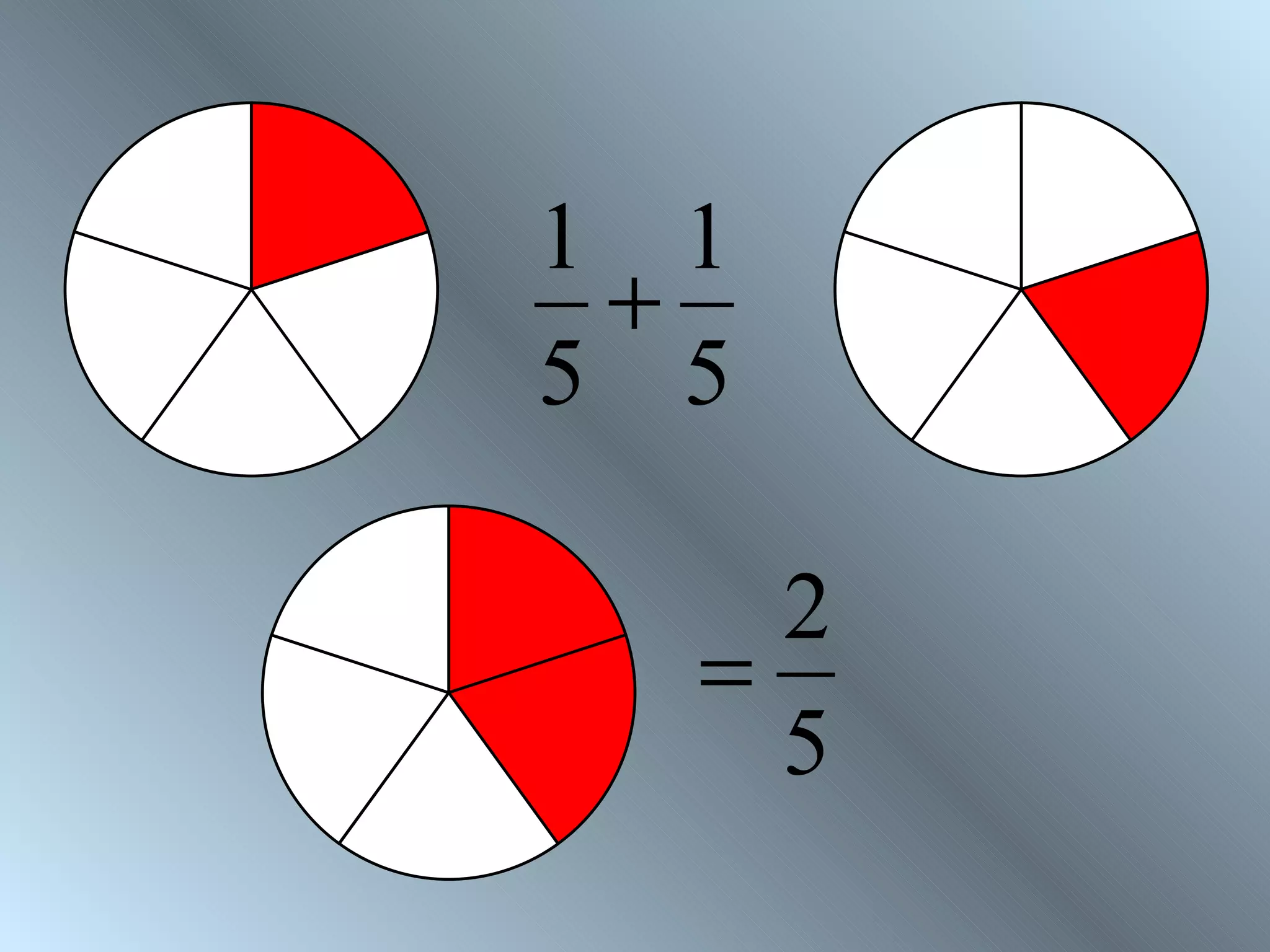
1 1
 +
5 5

    2
  =
    5
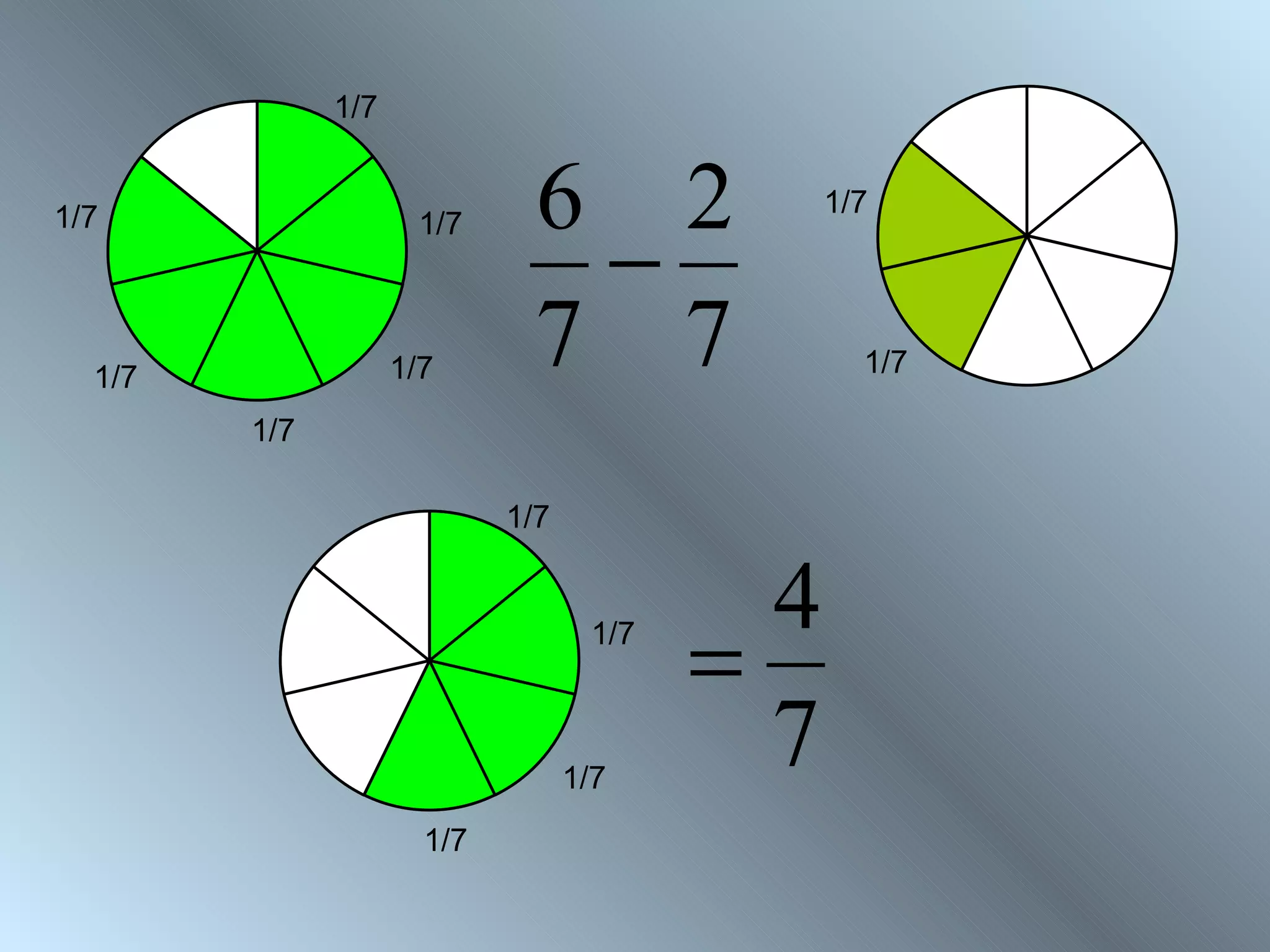
1/7


                             6 2               1/7

                              −
1/7                  1/7


  1/7               1/7      7 7                 1/7

        1/7

                            1/7


                                           4
                                   1/7
                                         =
                                  1/7
                                           7
                      1/7
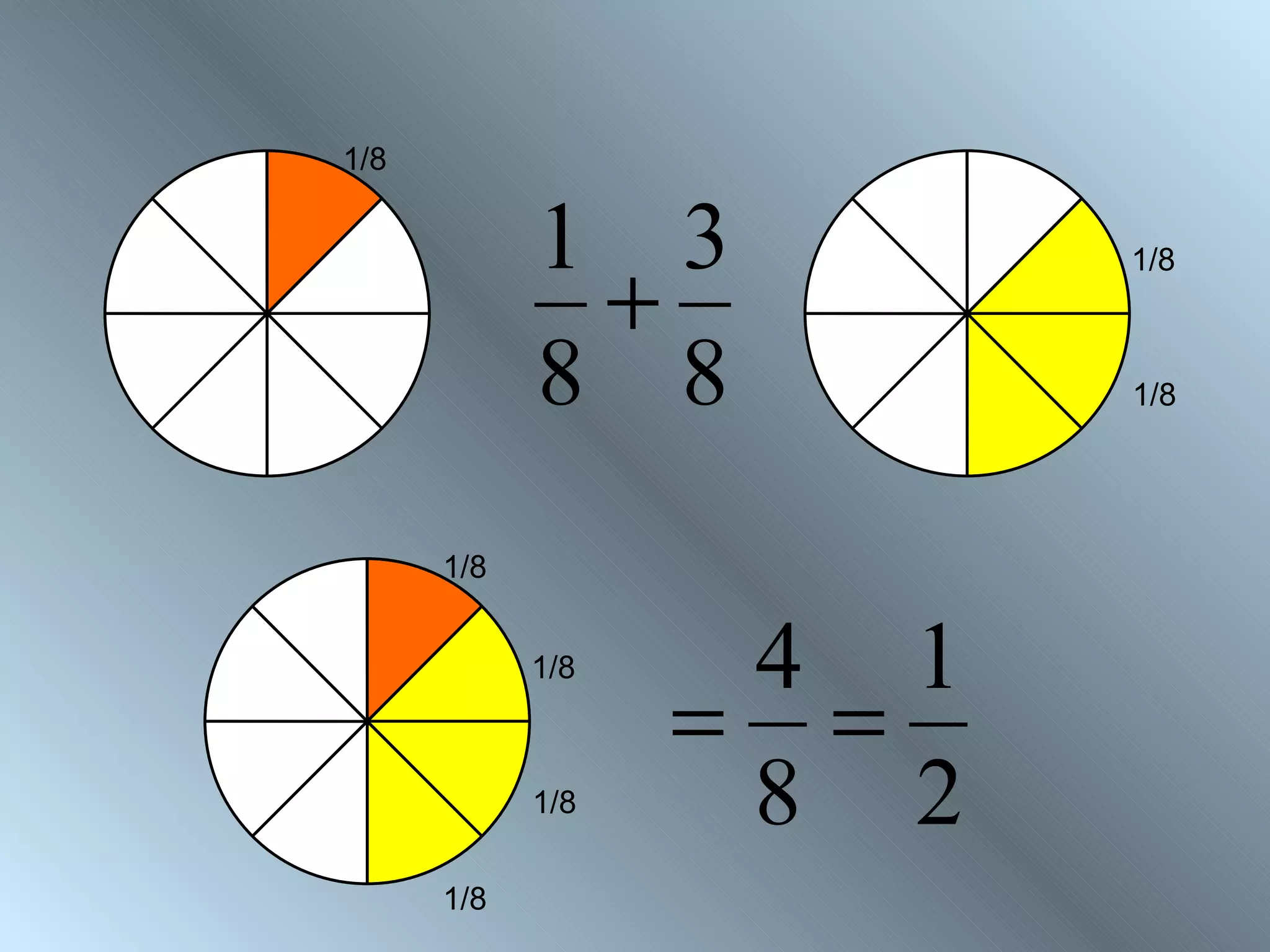
1/8


            1 3
             +
                         1/8


            8 8          1/8


      1/8


            1/8    4 1
                  = =
            1/8    8 2
      1/8
Why were they so simple?
• Because they all had the same
  denominator
• They were all from the same families


   What if they are of different
             families?
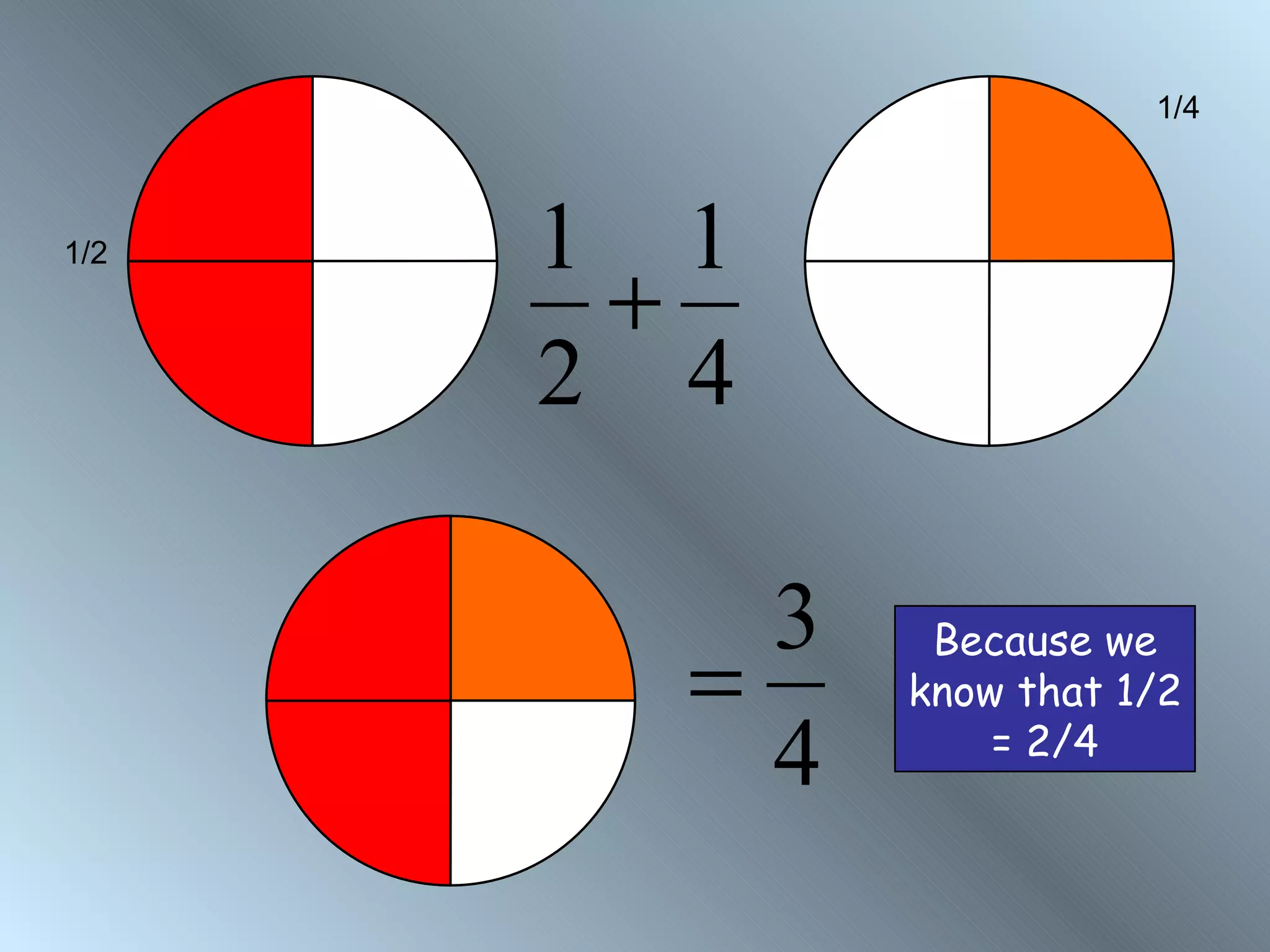
1/4


      1 1
       +
1/2


      2 4

          3    Because we
        =     know that 1/2
          4       = 2/4
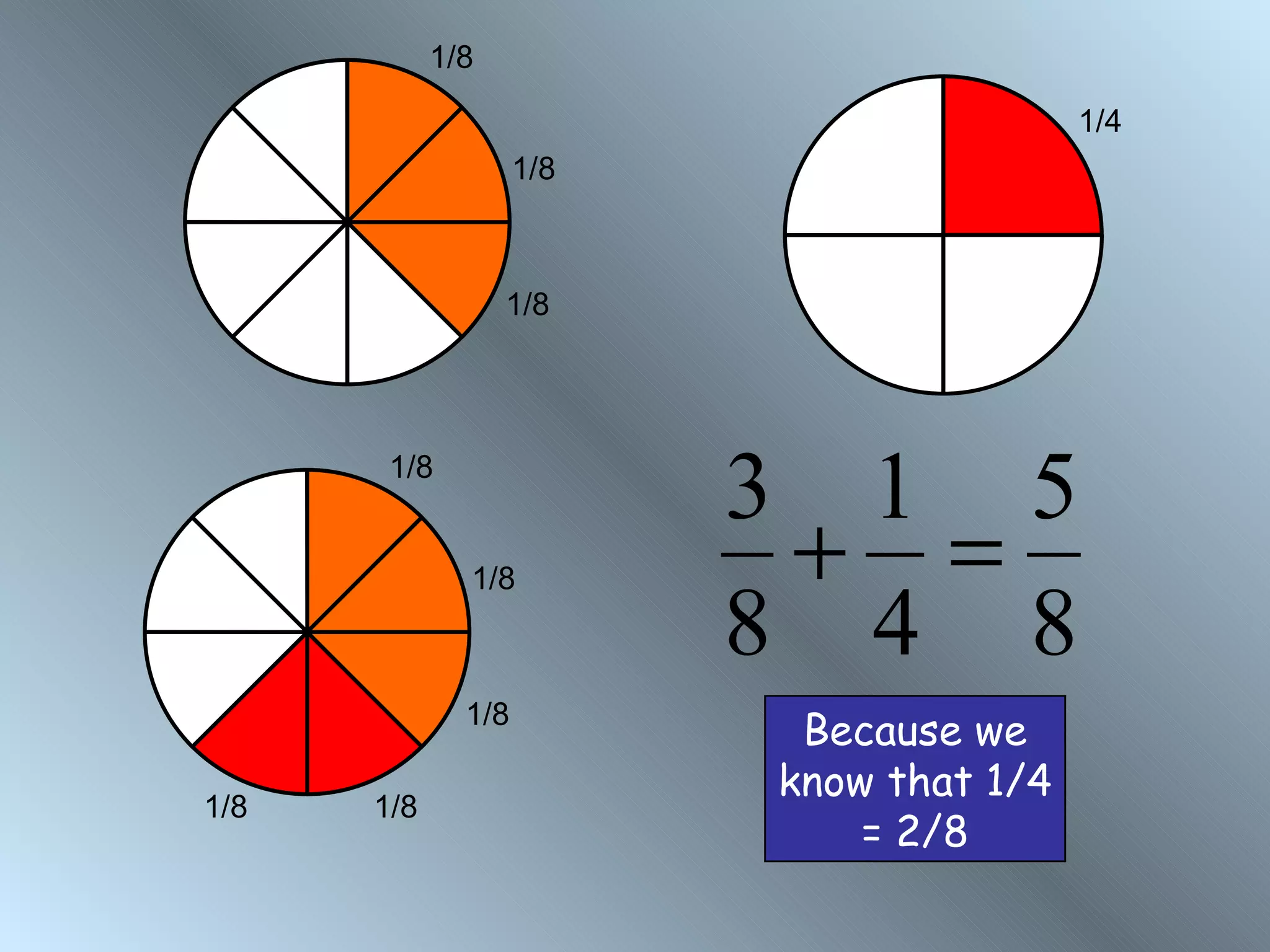
1/8

                                          1/4
                    1/8


                  1/8


       1/8
                          3 1 5
              1/8          + =
                          8 4 8
              1/8
                           Because we
                          know that 1/4
1/8   1/8
                              = 2/8
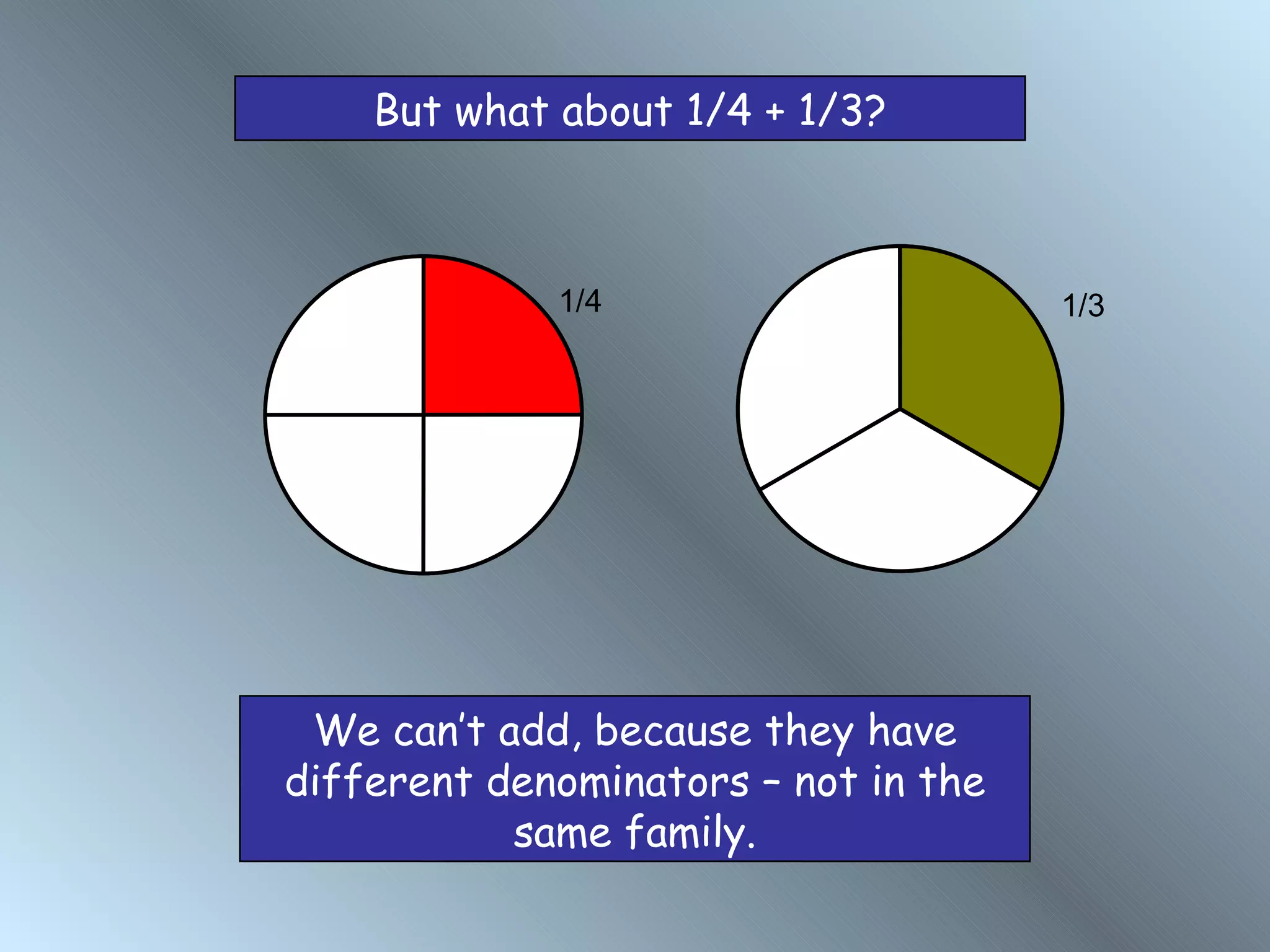
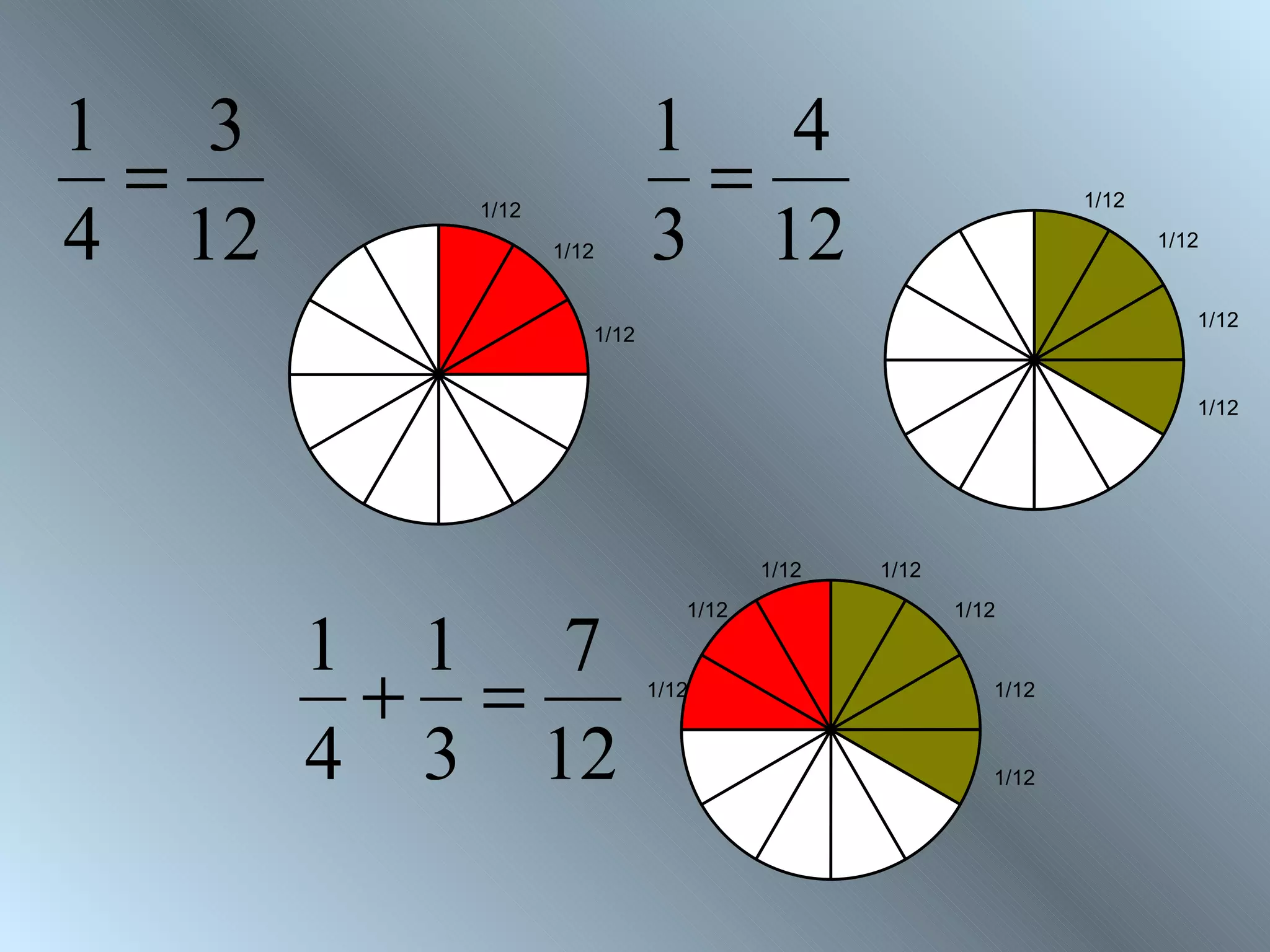
But what about 1/4 + 1/3?


             1/4                      1/3


 We can’t add, because they have
different denominators – not in the
           same family.
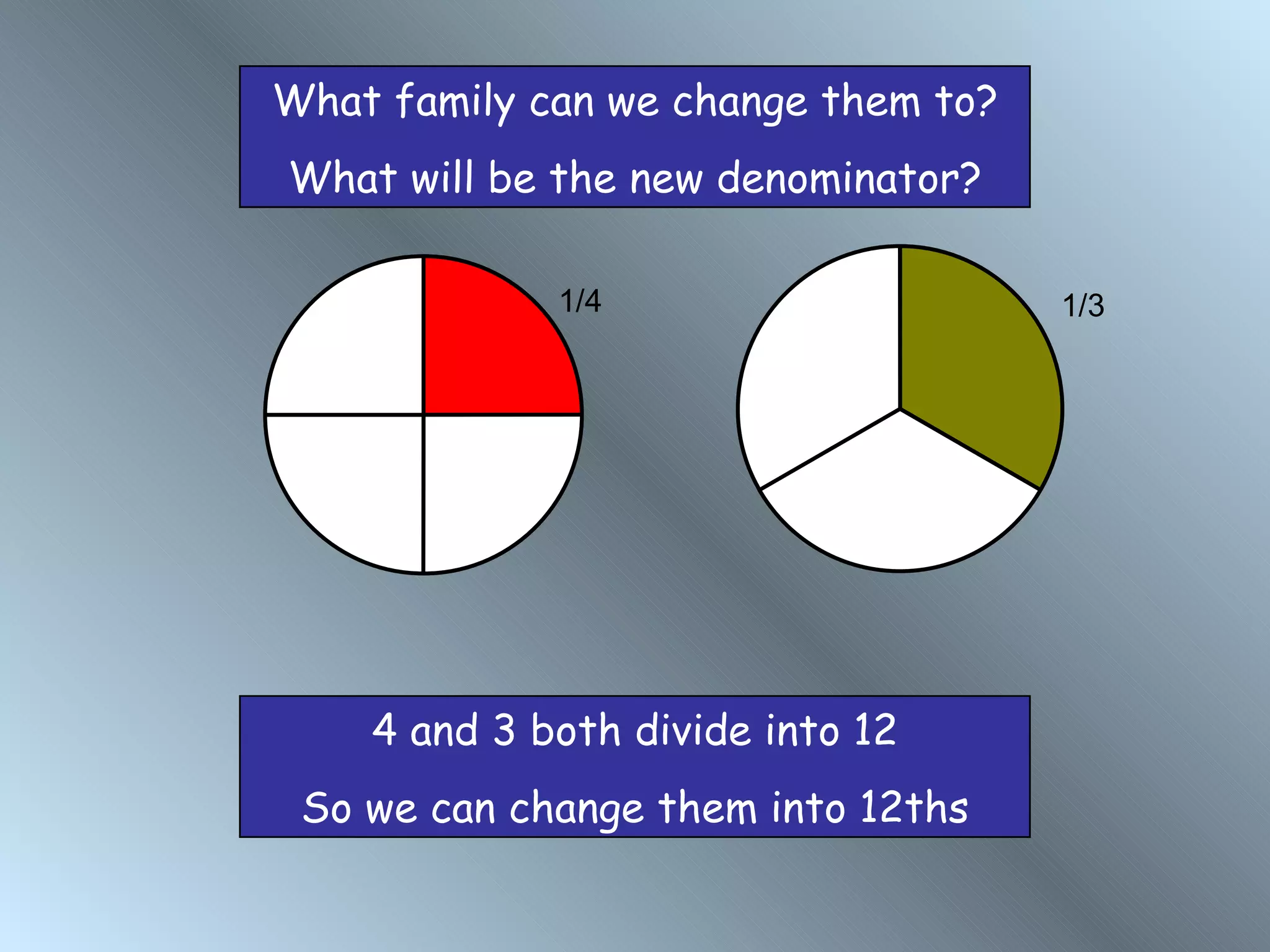
What family can we change them to?
What will be the new denominator?

             1/4                     1/3


    4 and 3 both divide into 12
 So we can change them into 12ths
1 3                        1 4
 =                          =                                1/12

4 12                       3 12
          1/12
                                                                    1/12
                 1/12


                                                                       1/12
                    1/12


                                                                       1/12


                                     1/12   1/12
                              1/12                 1/12

       1 1 7
        + =                1/12                       1/12


       4 3 12                                         1/12
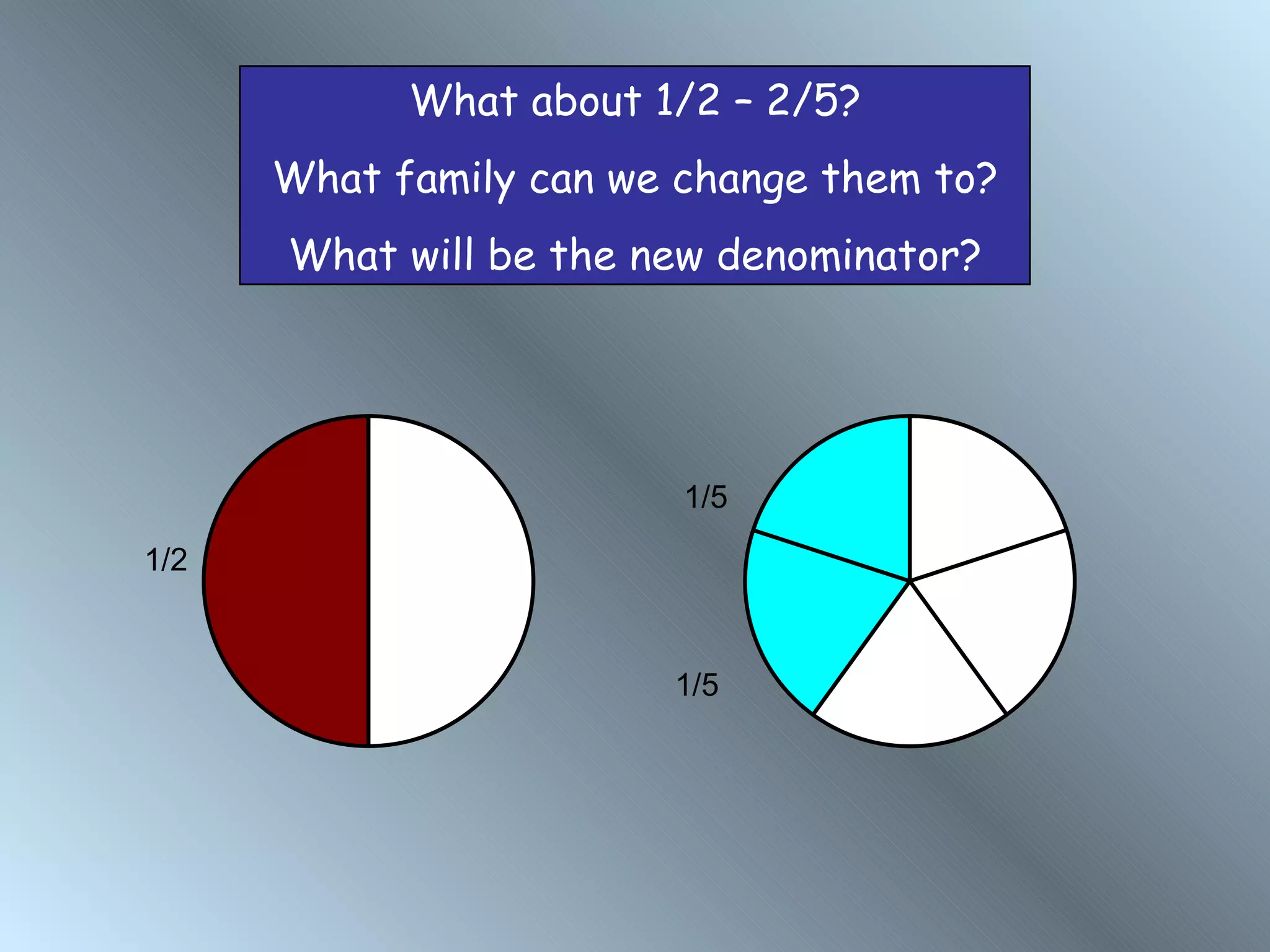
What about 1/2 – 2/5?
      What family can we change them to?
      What will be the new denominator?


                         1/5
1/2


                        1/5
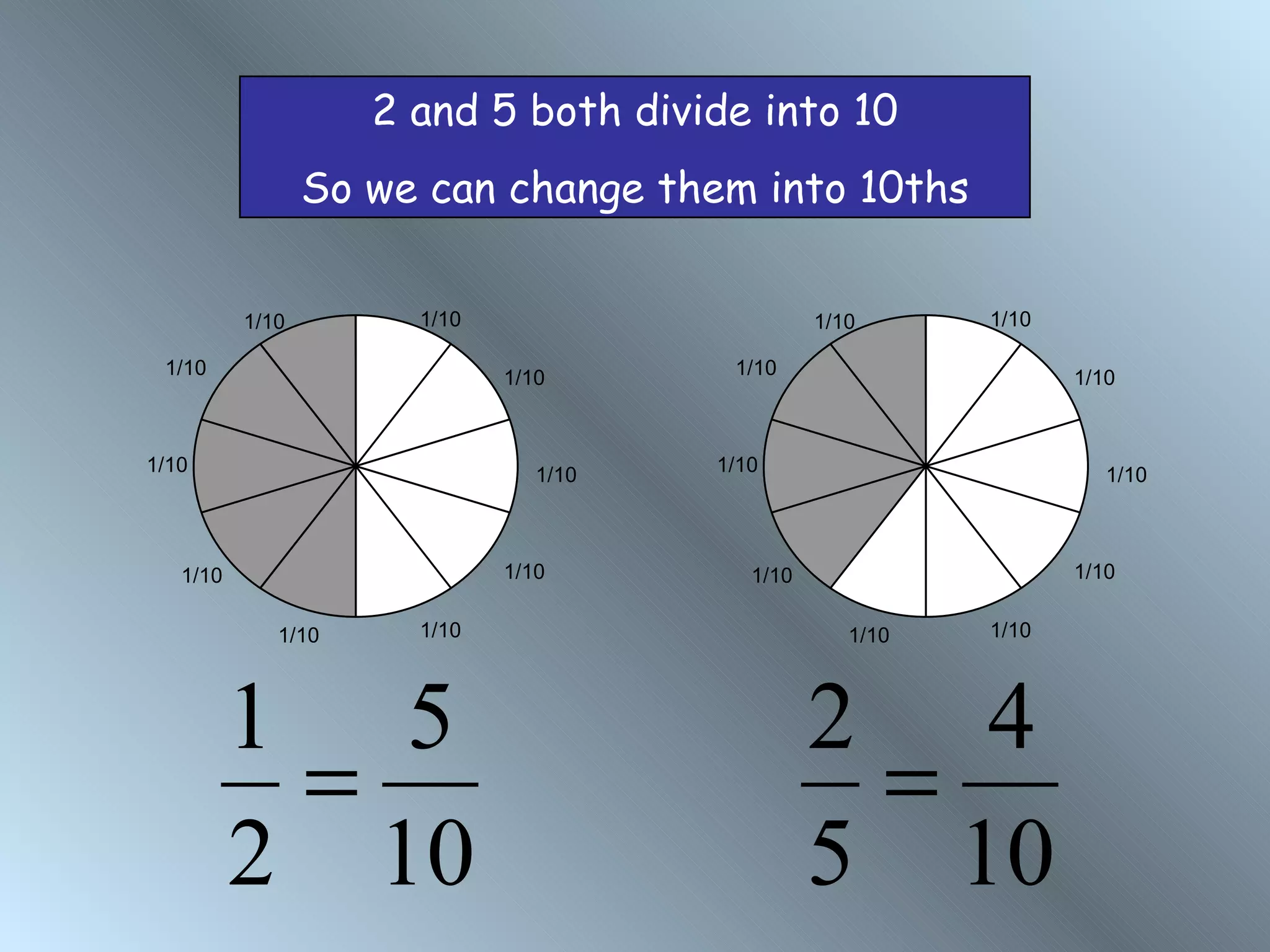
2 and 5 both divide into 10
                 So we can change them into 10ths

          1/10        1/10                       1/10      1/10

 1/10                        1/10       1/10                      1/10


1/10                            1/10   1/10                          1/10


   1/10                      1/10         1/10                    1/10


             1/10     1/10                          1/10   1/10


          1 5                                    2 4
           =                                      =
          2 10                                   5 10
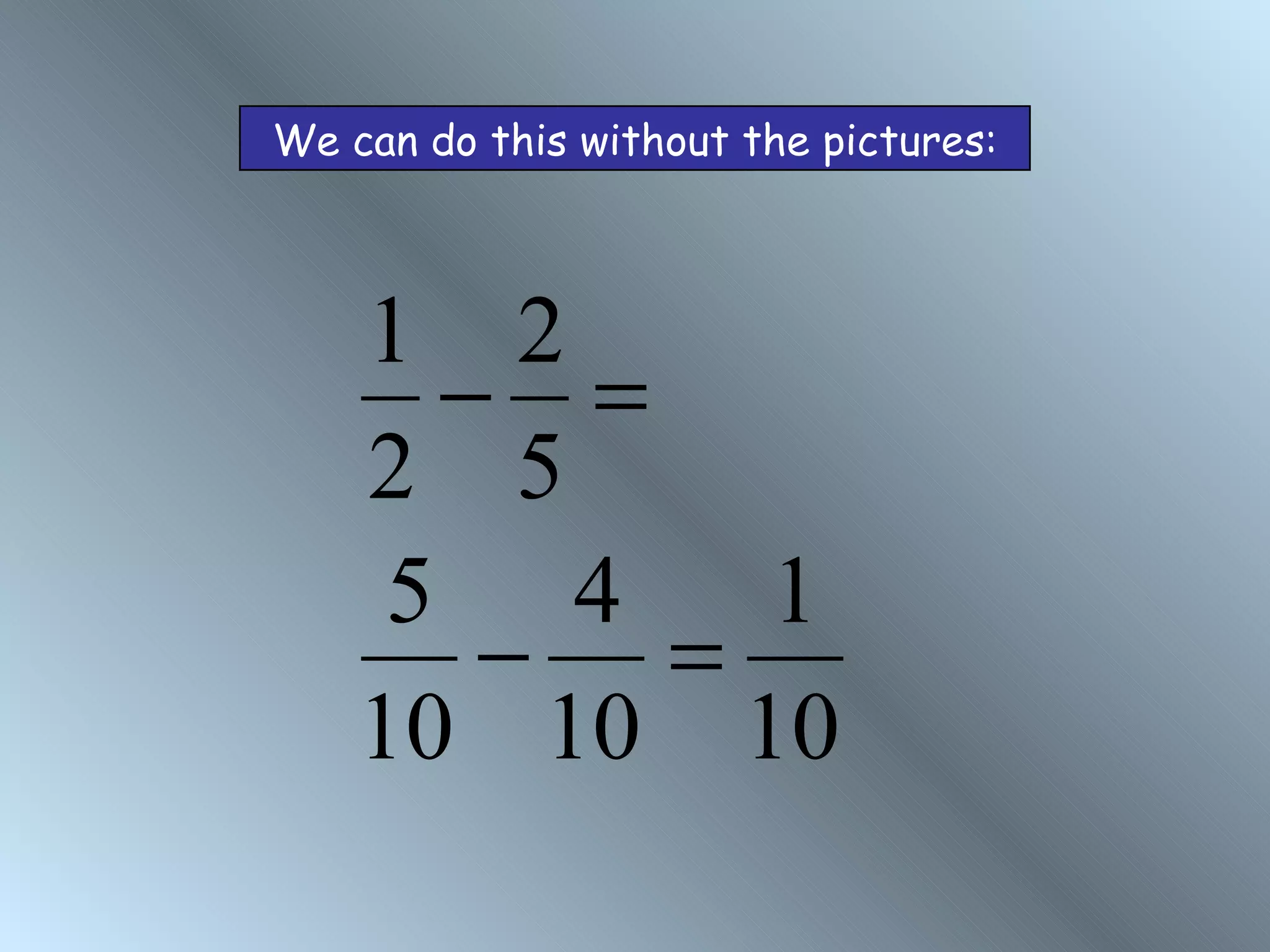
We can do this without the pictures:


    1 2
      − =
    2 5
     5 4   1
       − =
    10 10 10
Make fractions using a
set of numbered cards,
and try some addition and
subtraction yourself.
Check them with a
calculator
Share one example from
your group with the rest
of the class.
Multiplication and Division
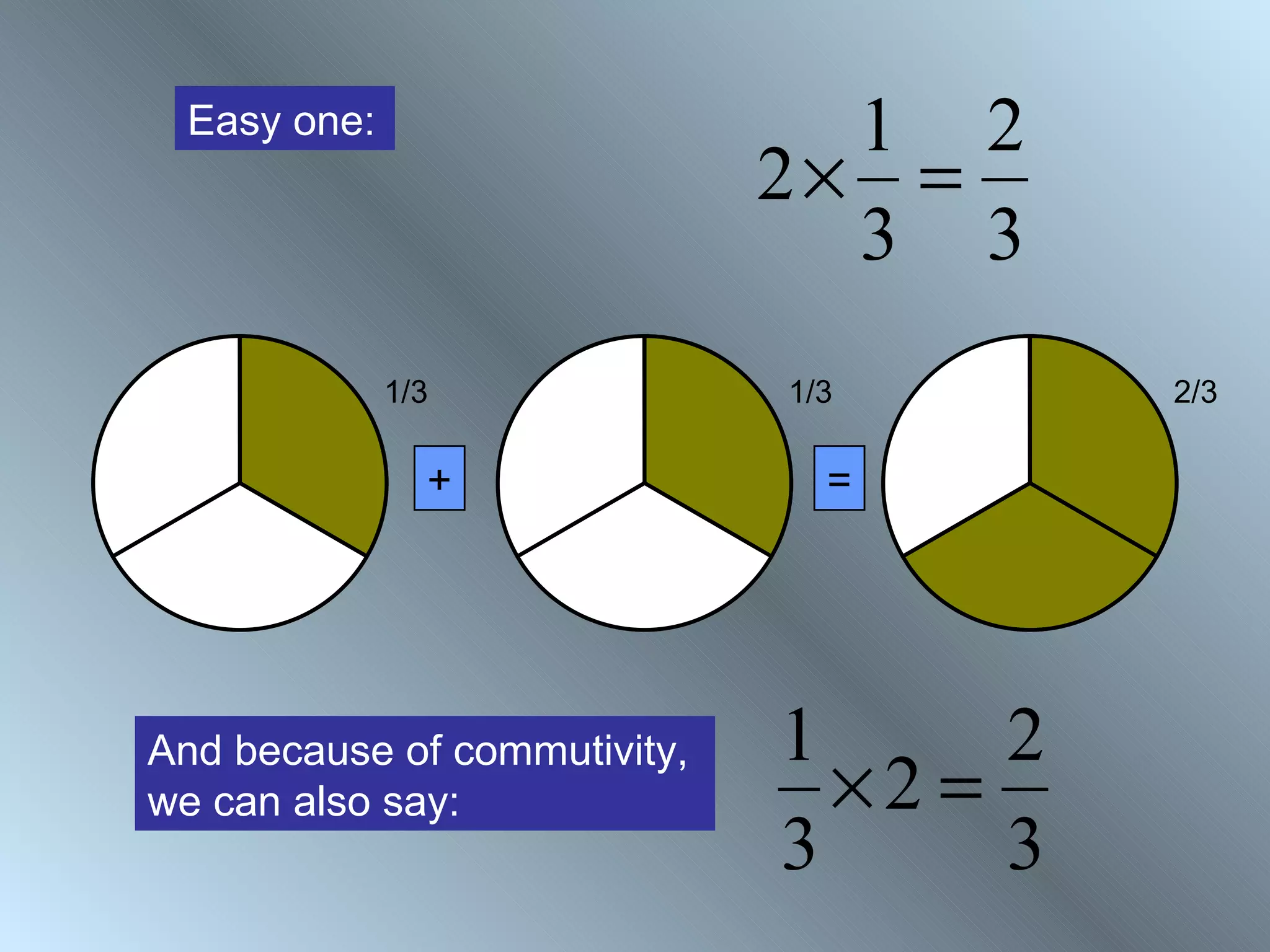
Easy one:                      1 2
                              2× =
                                3 3
             1/3              1/3        2/3

               +                =


And because of commutivity,   1      2
we can also say:                ×2 =
                              3      3
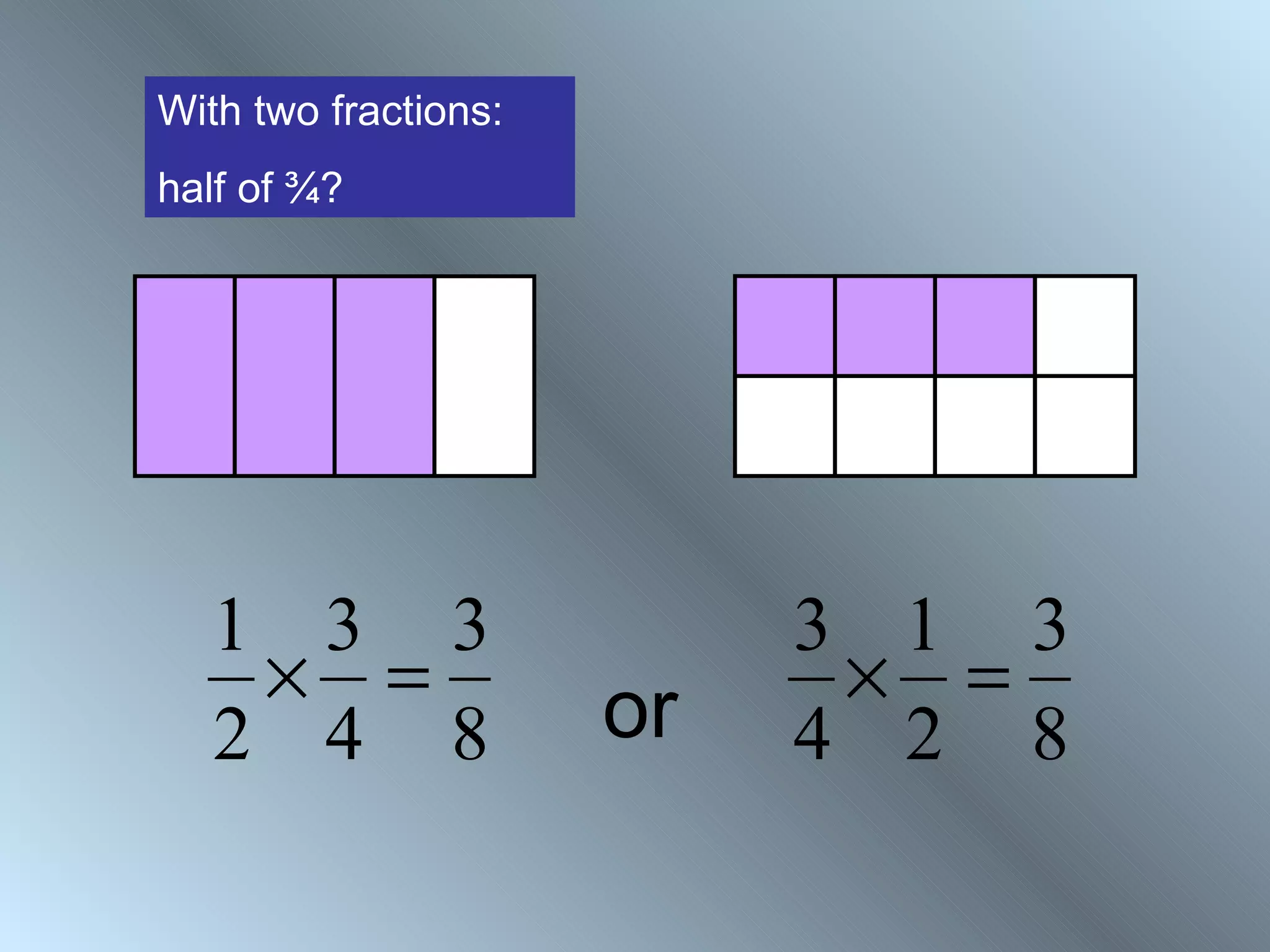
With two fractions:
half of ¾?


  1 3 3                    3 1 3
   × =                or    × =
  2 4 8                    4 2 8
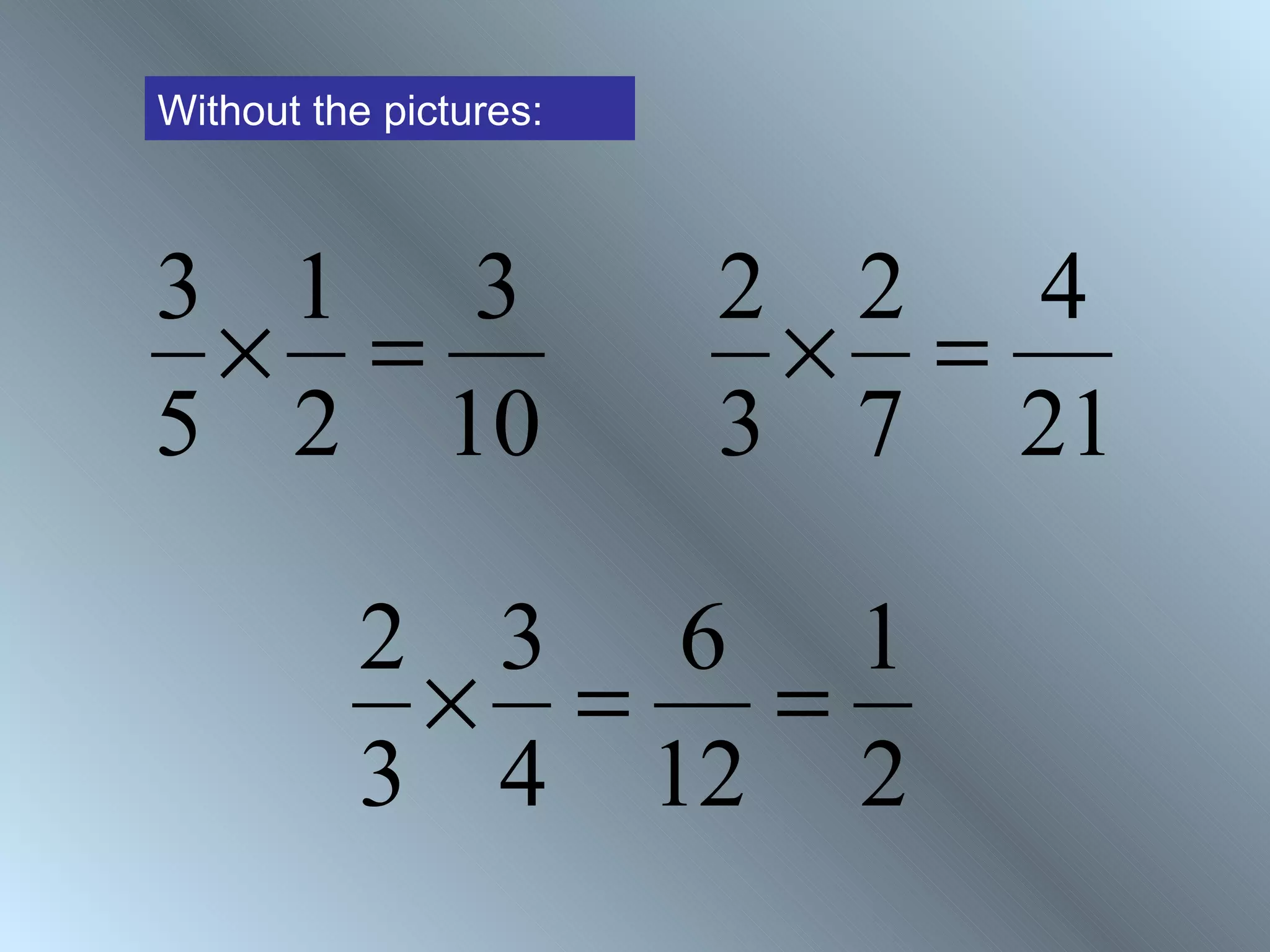
Without the pictures:


3 1 3                   2 2 4
 × =                     × =
5 2 10                  3 7 21

          2 3 6 1
           × =  =
          3 4 12 2
And division?


Unfortunately, there is no easy way to
show diagrams for division of fractions.


Nor is there any obvious way of trying to make
sense of it.


The best thing is probably just to learn the
rule!
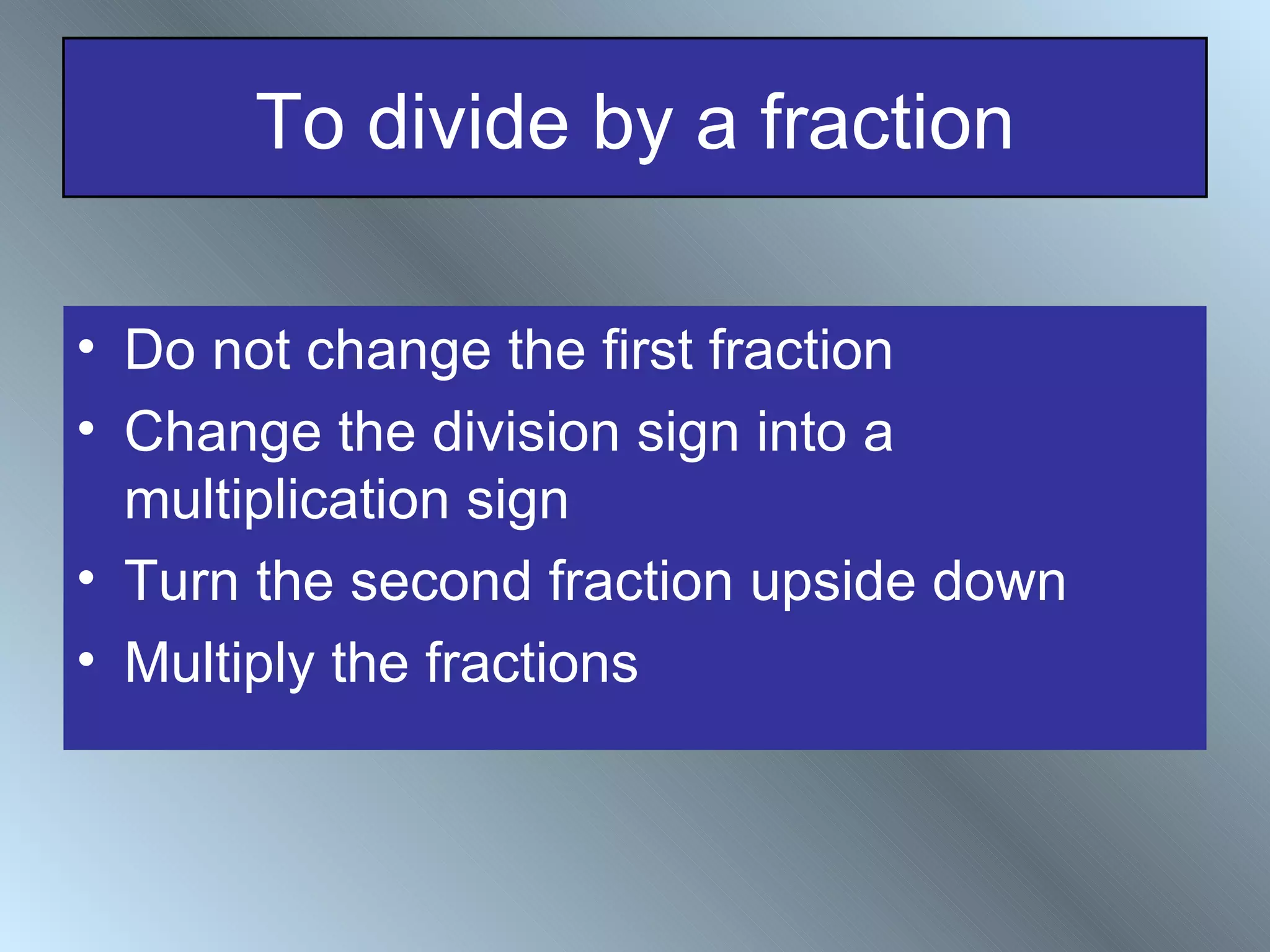
To divide by a fraction

• Do not change the first fraction
• Change the division sign into a
  multiplication sign
• Turn the second fraction upside down
• Multiply the fractions
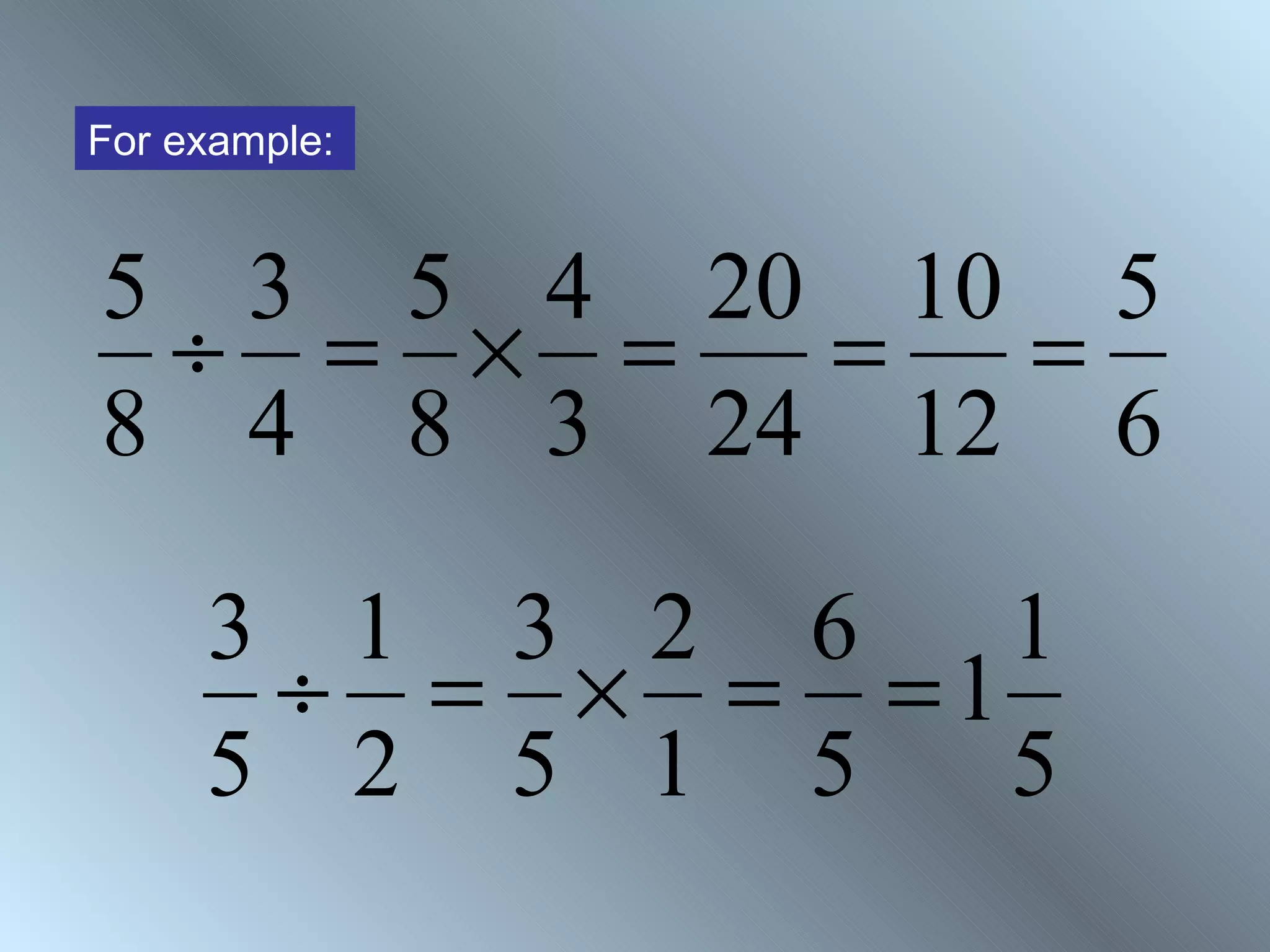
For example:


5 3 5 4 20 10 5
 ÷ = × =  =  =
8 4 8 3 24 12 6

     3 1 3 2 6   1
      ÷ = × = =1
     5 2 5 1 5   5
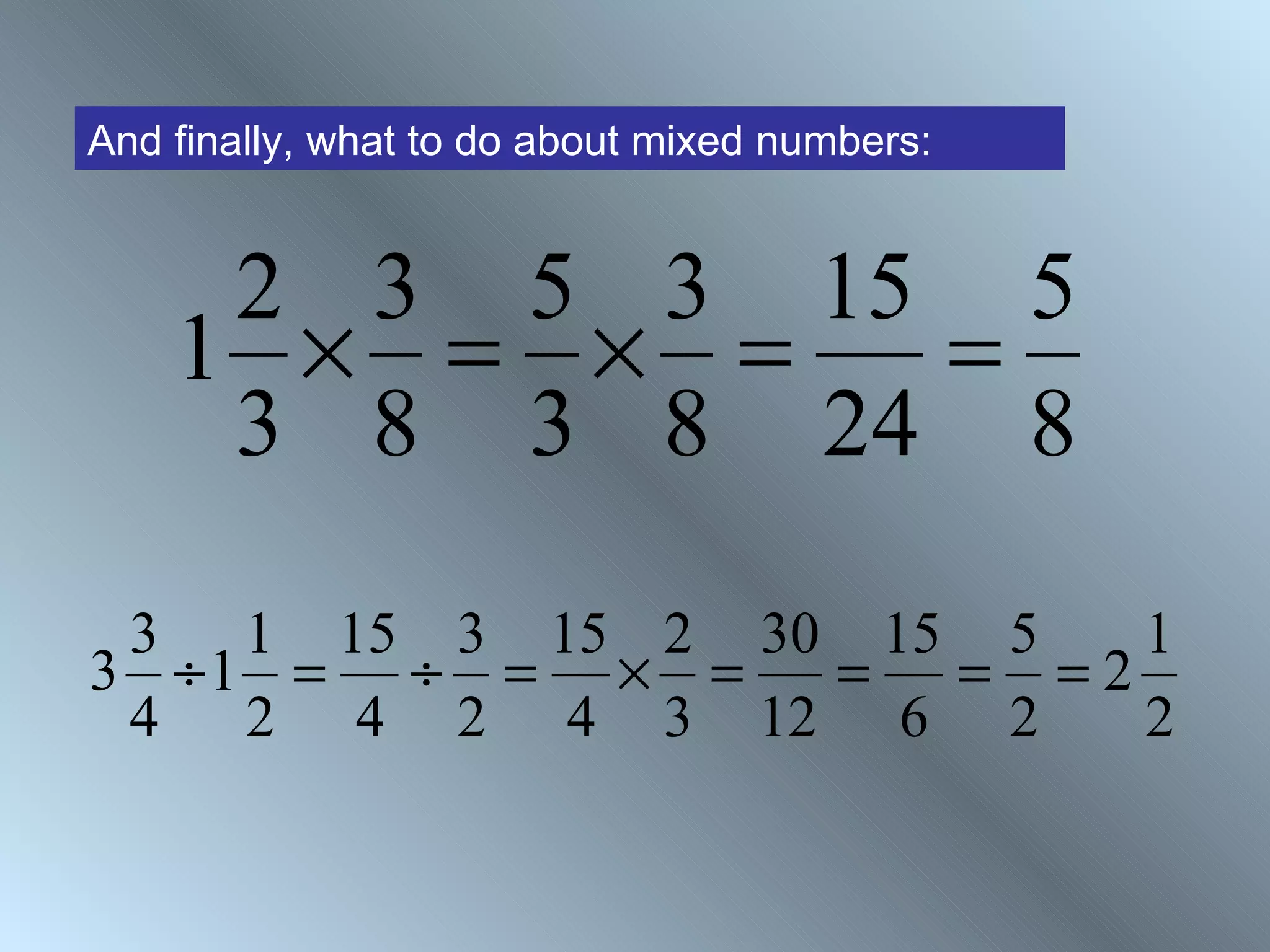
And finally, what to do about mixed numbers:


     2 3 5 3 15 5
    1 × = × =  =
     3 8 3 8 24 8

 3 1 15 3 15 2 30 15 5  1
3 ÷1 = ÷ = × =   = = =2
 4 2 4 2 4 3 12 6 2     2
Make fractions using a
set of numbered cards,
and try some
multiplication and division
yourself.
Check them with a
calculator

Four rules of fractions

  • 1.
    Four rules offractions How to do
  • 2.
  • 3.
    1 1 + 55 2 = 5
  • 4.
    1/7 6 2 1/7 − 1/7 1/7 1/7 1/7 7 7 1/7 1/7 1/7 4 1/7 = 1/7 7 1/7
  • 5.
    1/8 1 3 + 1/8 8 8 1/8 1/8 1/8 4 1 = = 1/8 8 2 1/8
  • 6.
    Why were theyso simple? • Because they all had the same denominator • They were all from the same families What if they are of different families?
  • 7.
    1/4 1 1 + 1/2 2 4 3 Because we = know that 1/2 4 = 2/4
  • 8.
    1/8 1/4 1/8 1/8 1/8 3 1 5 1/8 + = 8 4 8 1/8 Because we know that 1/4 1/8 1/8 = 2/8
  • 9.
    But what about1/4 + 1/3? 1/4 1/3 We can’t add, because they have different denominators – not in the same family.
  • 10.
    What family canwe change them to? What will be the new denominator? 1/4 1/3 4 and 3 both divide into 12 So we can change them into 12ths
  • 11.
    1 3 1 4 = = 1/12 4 12 3 12 1/12 1/12 1/12 1/12 1/12 1/12 1/12 1/12 1/12 1/12 1 1 7 + = 1/12 1/12 4 3 12 1/12
  • 12.
    What about 1/2– 2/5? What family can we change them to? What will be the new denominator? 1/5 1/2 1/5
  • 13.
    2 and 5both divide into 10 So we can change them into 10ths 1/10 1/10 1/10 1/10 1/10 1/10 1/10 1/10 1/10 1/10 1/10 1/10 1/10 1/10 1/10 1/10 1/10 1/10 1/10 1/10 1 5 2 4 = = 2 10 5 10
  • 14.
    We can dothis without the pictures: 1 2 − = 2 5 5 4 1 − = 10 10 10
  • 15.
    Make fractions usinga set of numbered cards, and try some addition and subtraction yourself. Check them with a calculator
  • 16.
    Share one examplefrom your group with the rest of the class.
  • 17.
  • 18.
    Easy one: 1 2 2× = 3 3 1/3 1/3 2/3 + = And because of commutivity, 1 2 we can also say: ×2 = 3 3
  • 19.
    With two fractions: halfof ¾? 1 3 3 3 1 3 × = or × = 2 4 8 4 2 8
  • 20.
    Without the pictures: 31 3 2 2 4 × = × = 5 2 10 3 7 21 2 3 6 1 × = = 3 4 12 2
  • 21.
    And division? Unfortunately, thereis no easy way to show diagrams for division of fractions. Nor is there any obvious way of trying to make sense of it. The best thing is probably just to learn the rule!
  • 22.
    To divide bya fraction • Do not change the first fraction • Change the division sign into a multiplication sign • Turn the second fraction upside down • Multiply the fractions
  • 23.
    For example: 5 35 4 20 10 5 ÷ = × = = = 8 4 8 3 24 12 6 3 1 3 2 6 1 ÷ = × = =1 5 2 5 1 5 5
  • 24.
    And finally, whatto do about mixed numbers: 2 3 5 3 15 5 1 × = × = = 3 8 3 8 24 8 3 1 15 3 15 2 30 15 5 1 3 ÷1 = ÷ = × = = = =2 4 2 4 2 4 3 12 6 2 2
  • 25.
    Make fractions usinga set of numbered cards, and try some multiplication and division yourself. Check them with a calculator