Properties of
Addition
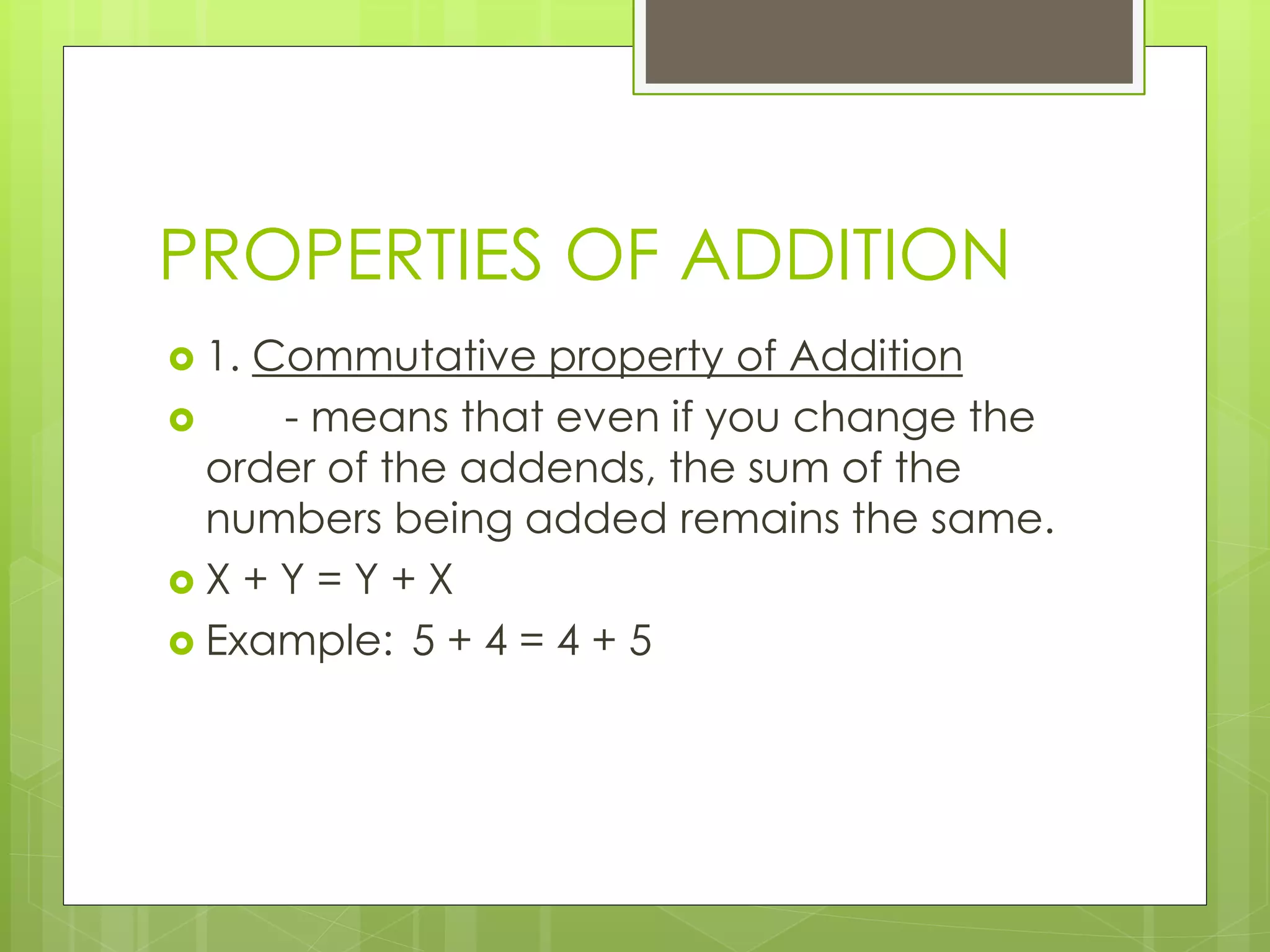
PROPERTIES OF ADDITION
 1. Commutative property of Addition
 - means that even if you change the
order of the addends, the sum of the
numbers being added remains the same.
 X + Y = Y + X
 Example: 5 + 4 = 4 + 5
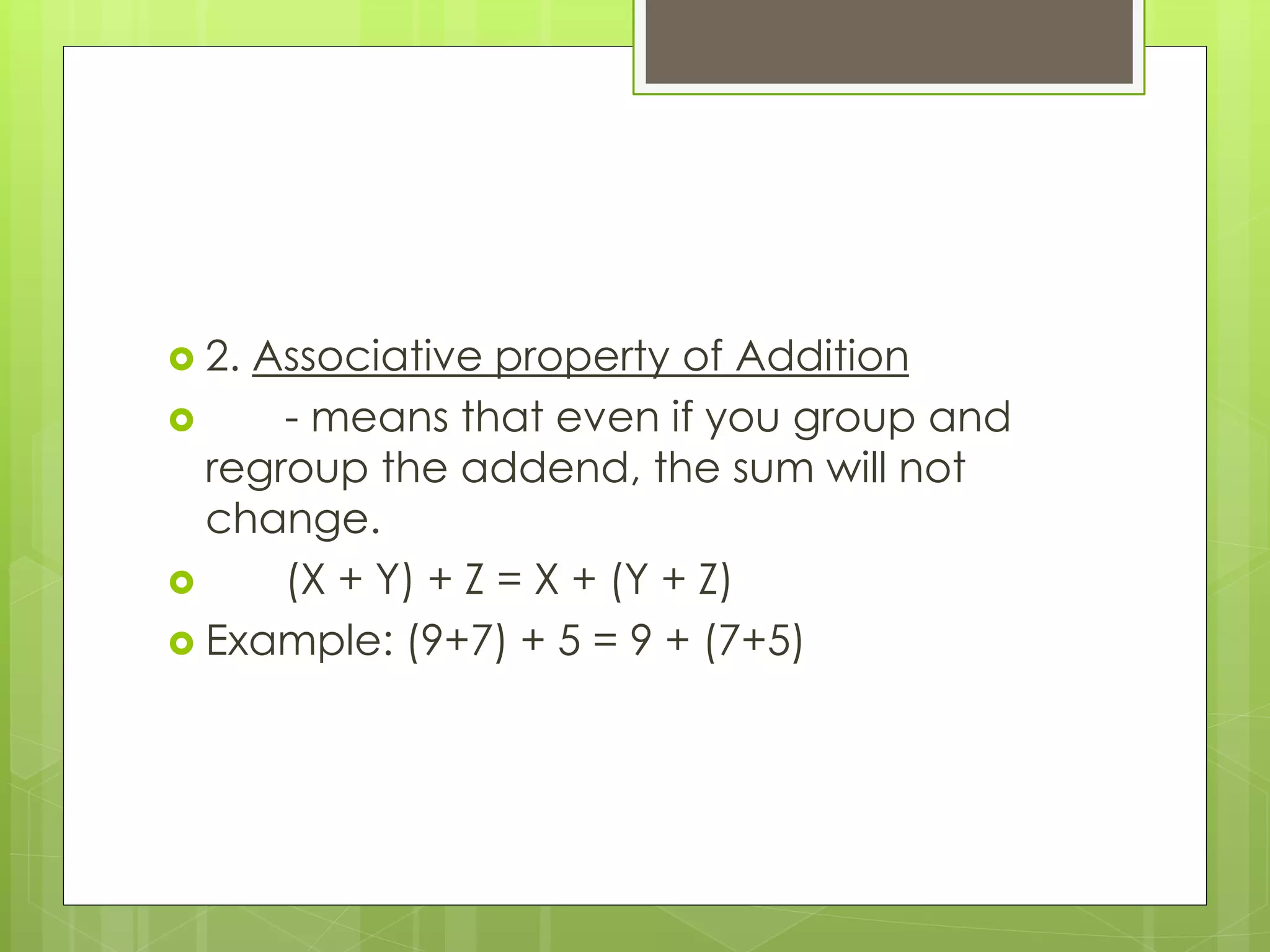
 2. Associative property of Addition
 - means that even if you group and
regroup the addend, the sum will not
change.
 (X + Y) + Z = X + (Y + Z)
 Example: (9+7) + 5 = 9 + (7+5)
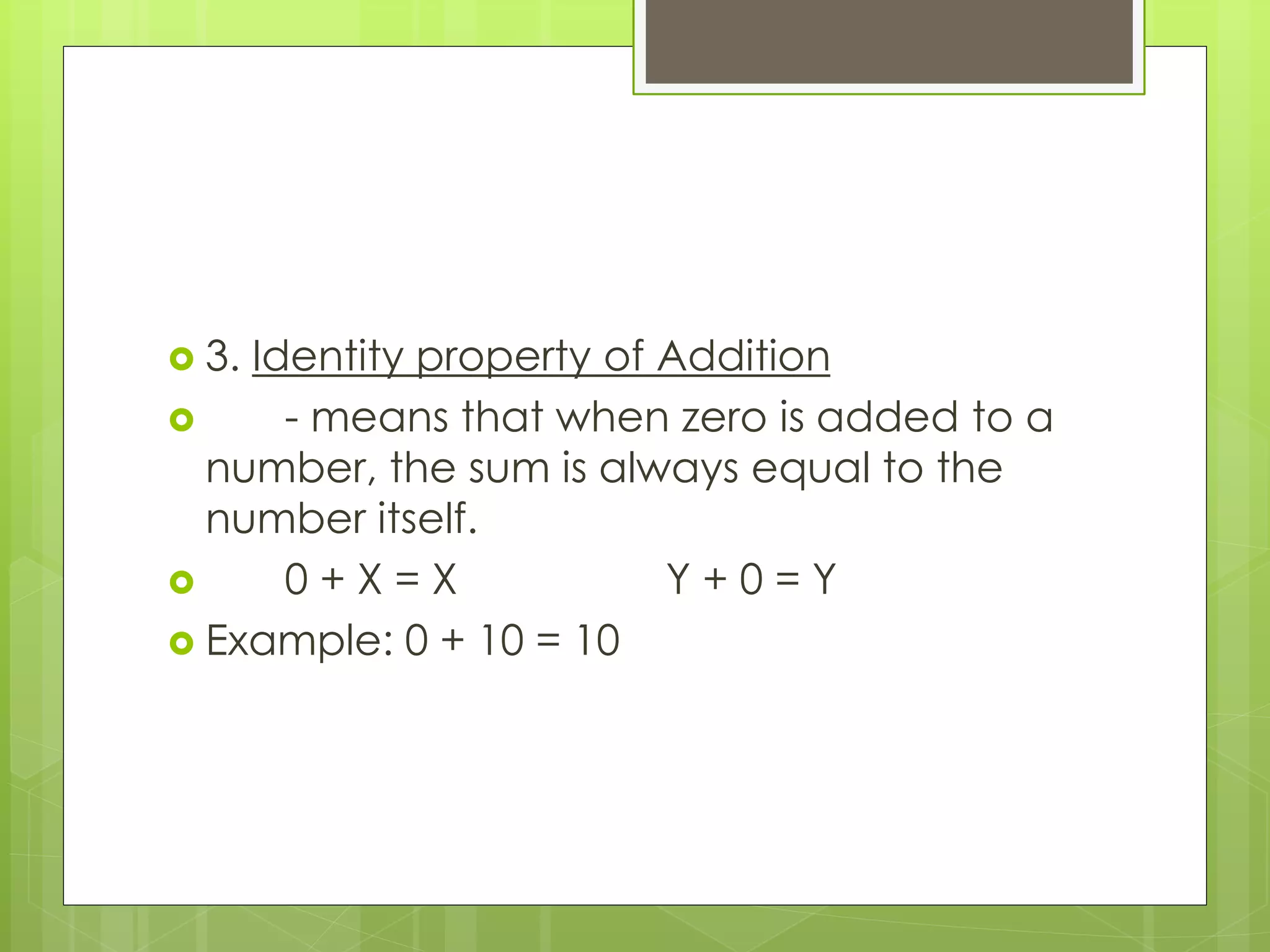
 3. Identity property of Addition
 - means that when zero is added to a
number, the sum is always equal to the
number itself.
 0 + X = X Y + 0 = Y
 Example: 0 + 10 = 10

Properties of addition

  • 1.
  • 2.
    PROPERTIES OF ADDITION 1. Commutative property of Addition  - means that even if you change the order of the addends, the sum of the numbers being added remains the same.  X + Y = Y + X  Example: 5 + 4 = 4 + 5
  • 3.
     2. Associativeproperty of Addition  - means that even if you group and regroup the addend, the sum will not change.  (X + Y) + Z = X + (Y + Z)  Example: (9+7) + 5 = 9 + (7+5)
  • 4.
     3. Identityproperty of Addition  - means that when zero is added to a number, the sum is always equal to the number itself.  0 + X = X Y + 0 = Y  Example: 0 + 10 = 10