Musculoskeletal disorders(MSDs)
& Ergonomics
Dr Vivek Singh
4/01/2019
Outline
• MSDs among health care professionals
• Ergonomics
• Components of ergonomics
• Principles of ergonomics
• Summary
MSDs among health care professionals
• High prevalence of-
• 1.Neck pain(59%)
• 2.Back pain(upper & lower)(55%)
• 3.Shoulder pain(34%)
• 4.Wrist and hand pain
• Incidence higher than in the general population
• Easy to overlook
• Knudsen et al;Iowa Orthop J;2014
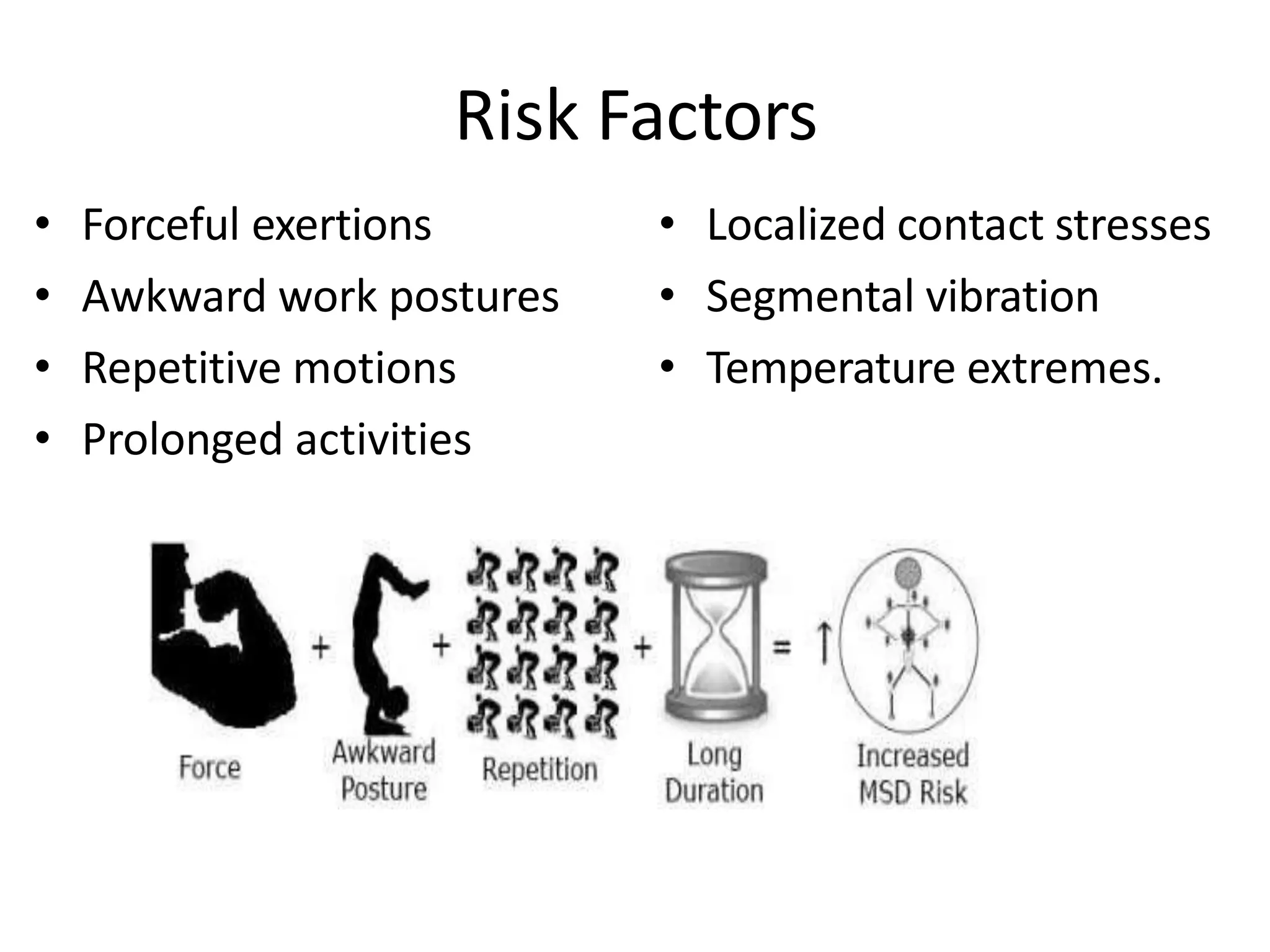
Risk Factors
• Forceful exertions
• Awkward work postures
• Repetitive motions
• Prolonged activities
• Localized contact stresses
• Segmental vibration
• Temperature extremes.
MSDs among health care professionals
• Reasons-
• Long working hours in ergonomically challenging postures
• Flexed neck and elevated arm positions when performing surgery
• Extremes of motion and contorted body
positioning
• Prolonged standing
Reasons for MSDs
• Static position of neck and trunk and associated frequent
movements of upper extremities.
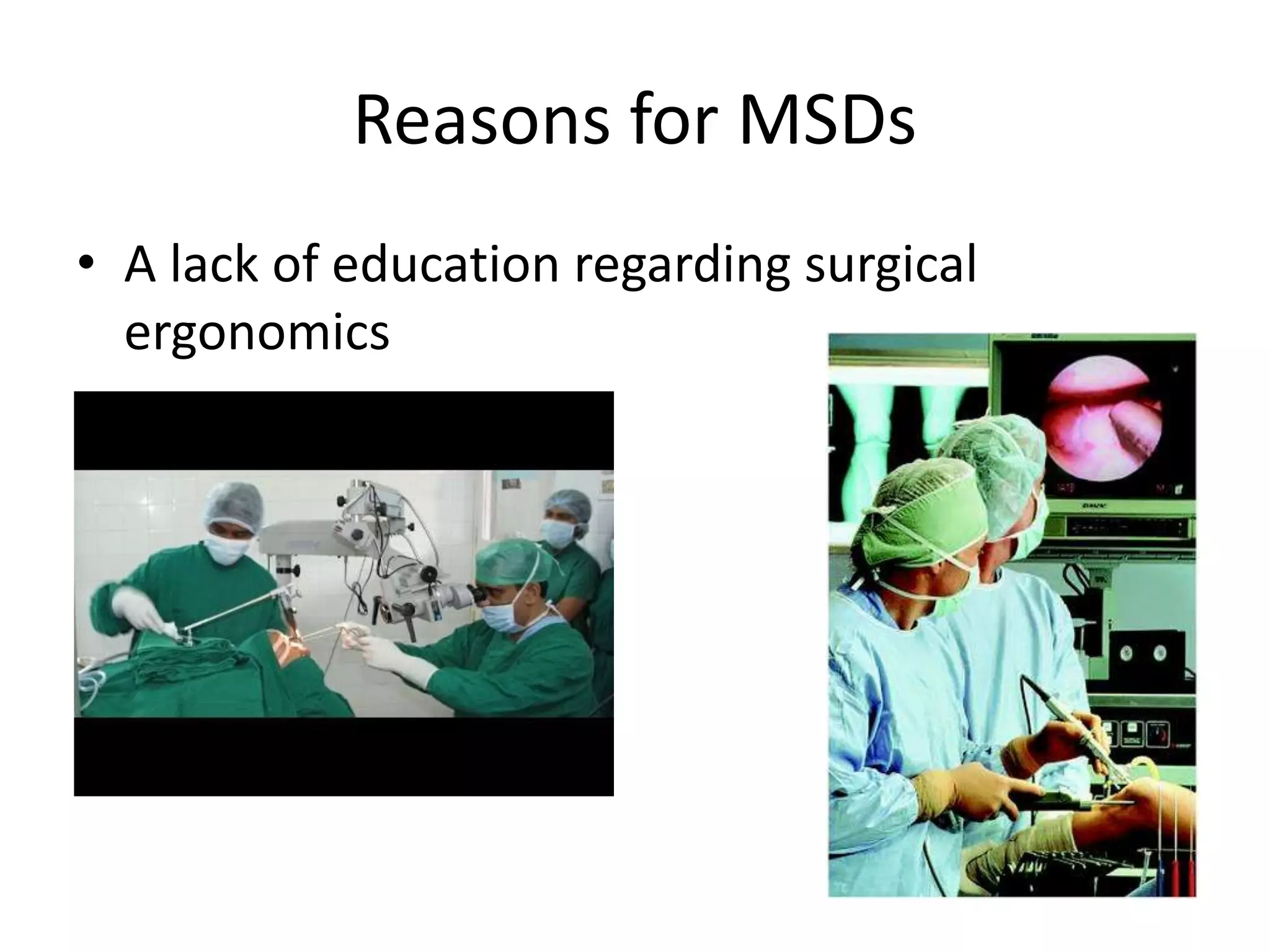
Reasons for MSDs
• A lack of education regarding surgical
ergonomics
Ergonomics
• Ergonomics is the science of designing a safe, comfortable and
productive workplace
• Matching the job to the worker and the product to the user
• Increasing productivity while maintaining health
Ergonomics
• Ergonomics is concerned with understanding of the
interactions among humans and other elements of his
profession to optimise well-being and overall system
performance.
Components Of Ergonomics
• Physical ergonomics
• Cognitive ergonomics
• Organizational ergonomics
Physical Ergonomics
• Physical ergonomics is the
human body’s responses to physical and
physiological work loads.
• Includes repetitive strain injuries from
repetition, vibration, force, and posture
Cognitive Ergonomics
• Cognitive ergonomics deals with the mental processes and human capacities
when at work.
• Cognitive ergonomics focuses on the fit between human cognitive abilities
and limitations and the machine, task, environment, etc.
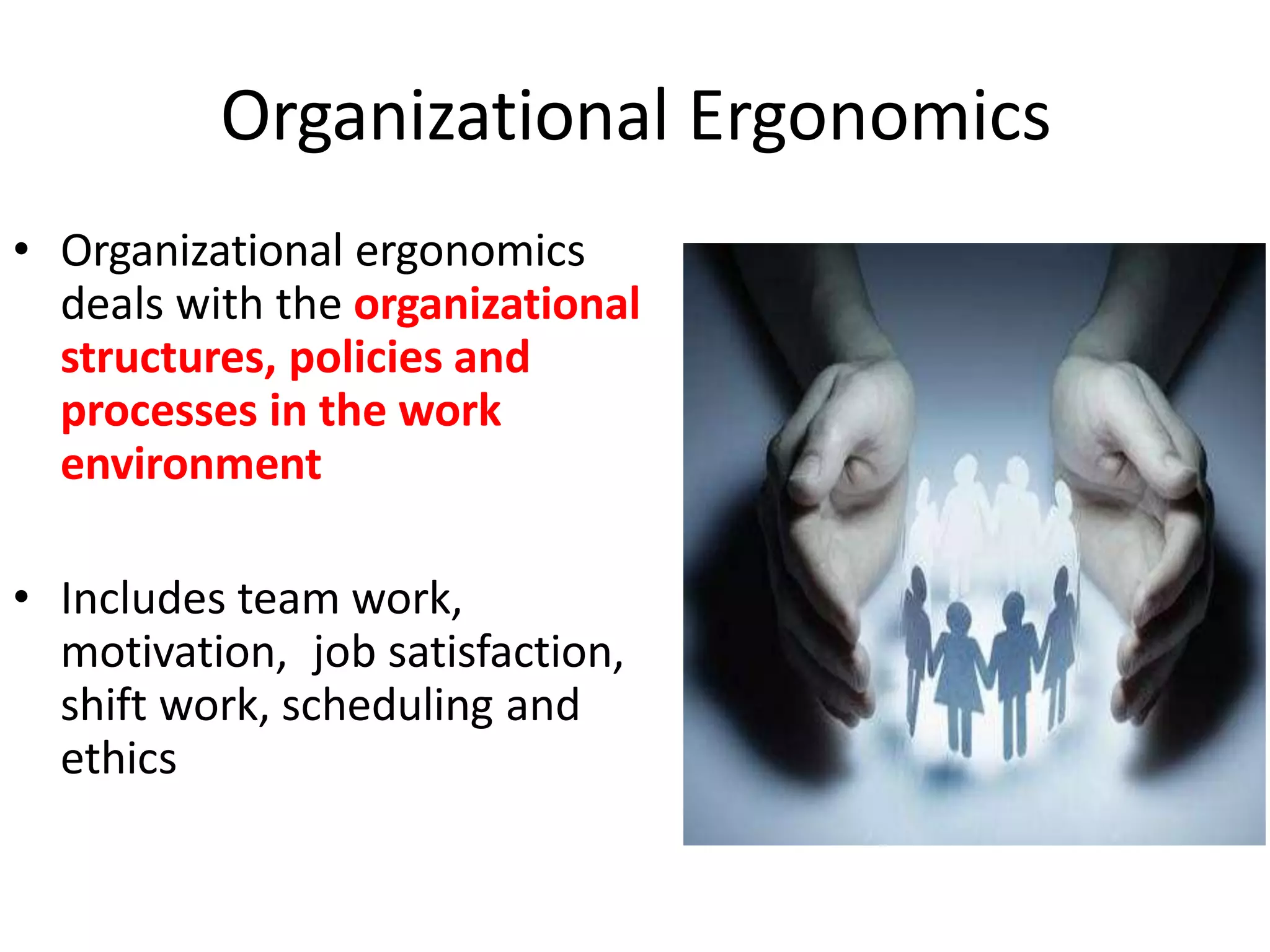
Organizational Ergonomics
• Organizational ergonomics
deals with the organizational
structures, policies and
processes in the work
environment
• Includes team work,
motivation, job satisfaction,
shift work, scheduling and
ethics
Benefits of Ergonomics
• Decreased injury risk
• Decreased mistakes
• Decreased lost work
day
• Increased productivity
• Increased efficiency
• Improved morale
Principles Of Ergonomics
• Maintain the ‘S’ curve
Principles Of Ergonomics
Seating & posture
Principles Of Ergonomics
• Keep everything in easy reach
Principles Of Ergonomics
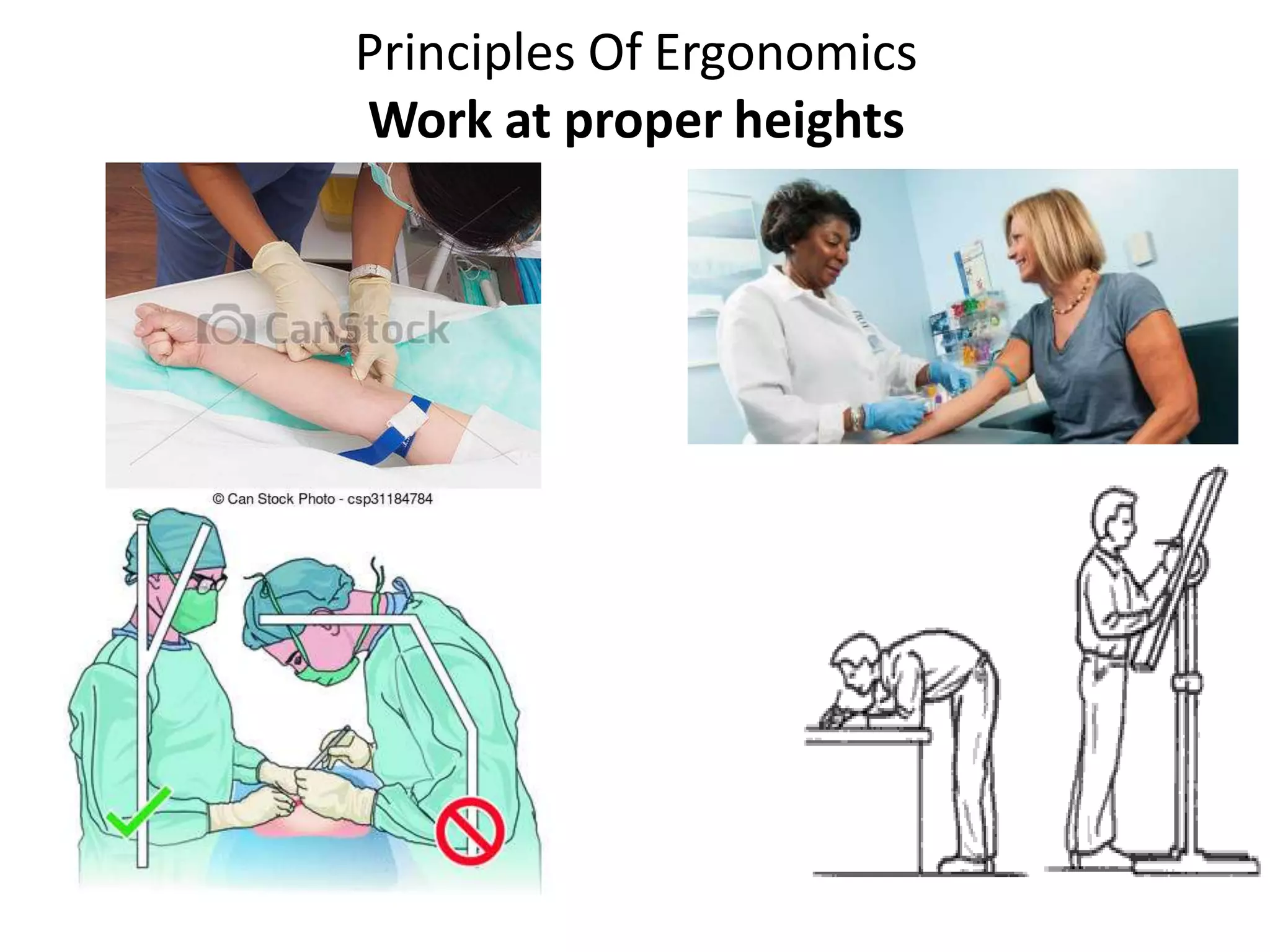
Work at proper heights
Principles Of Ergonomics
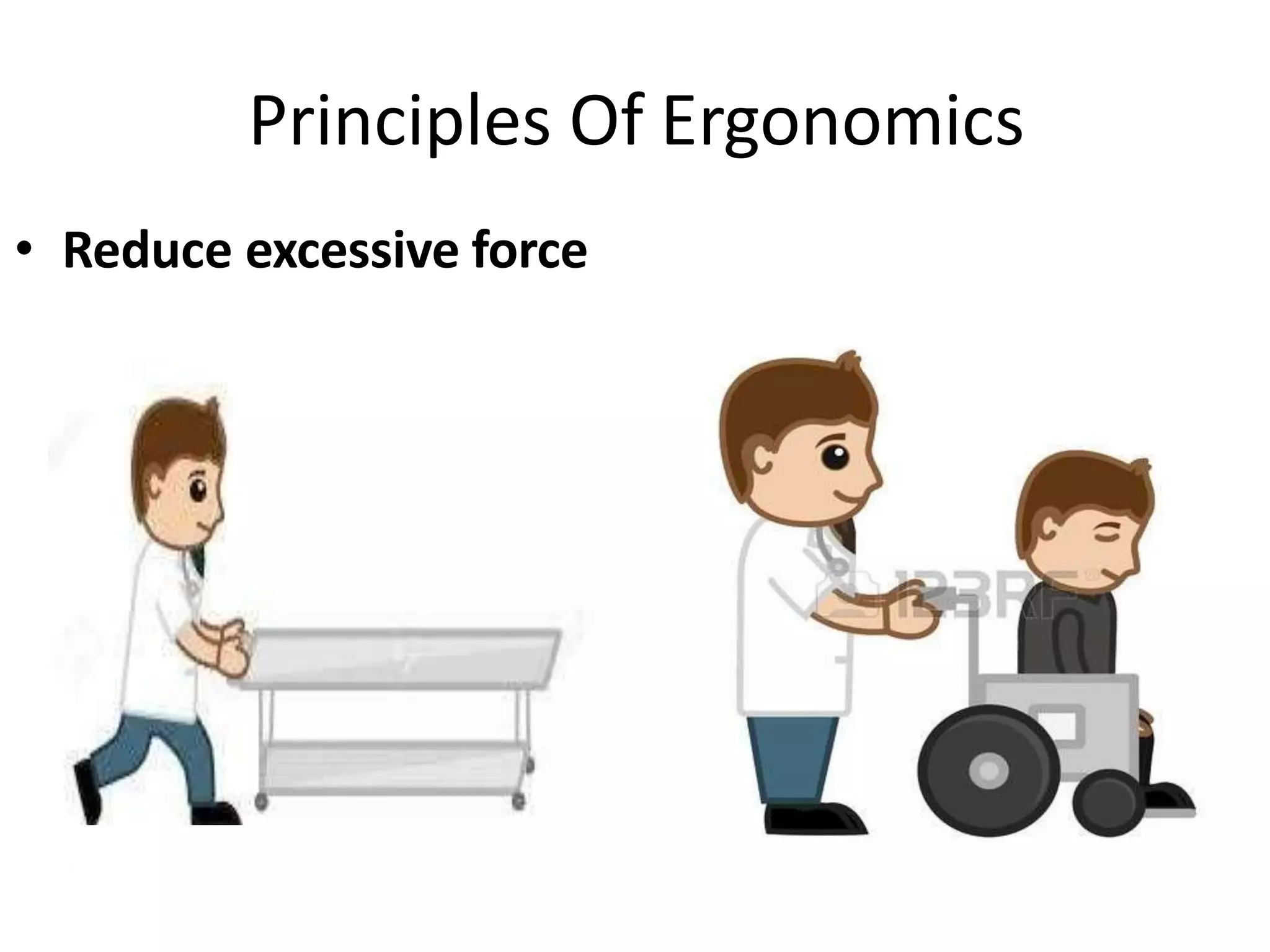
• Reduce excessive force
Principles Of Ergonomics
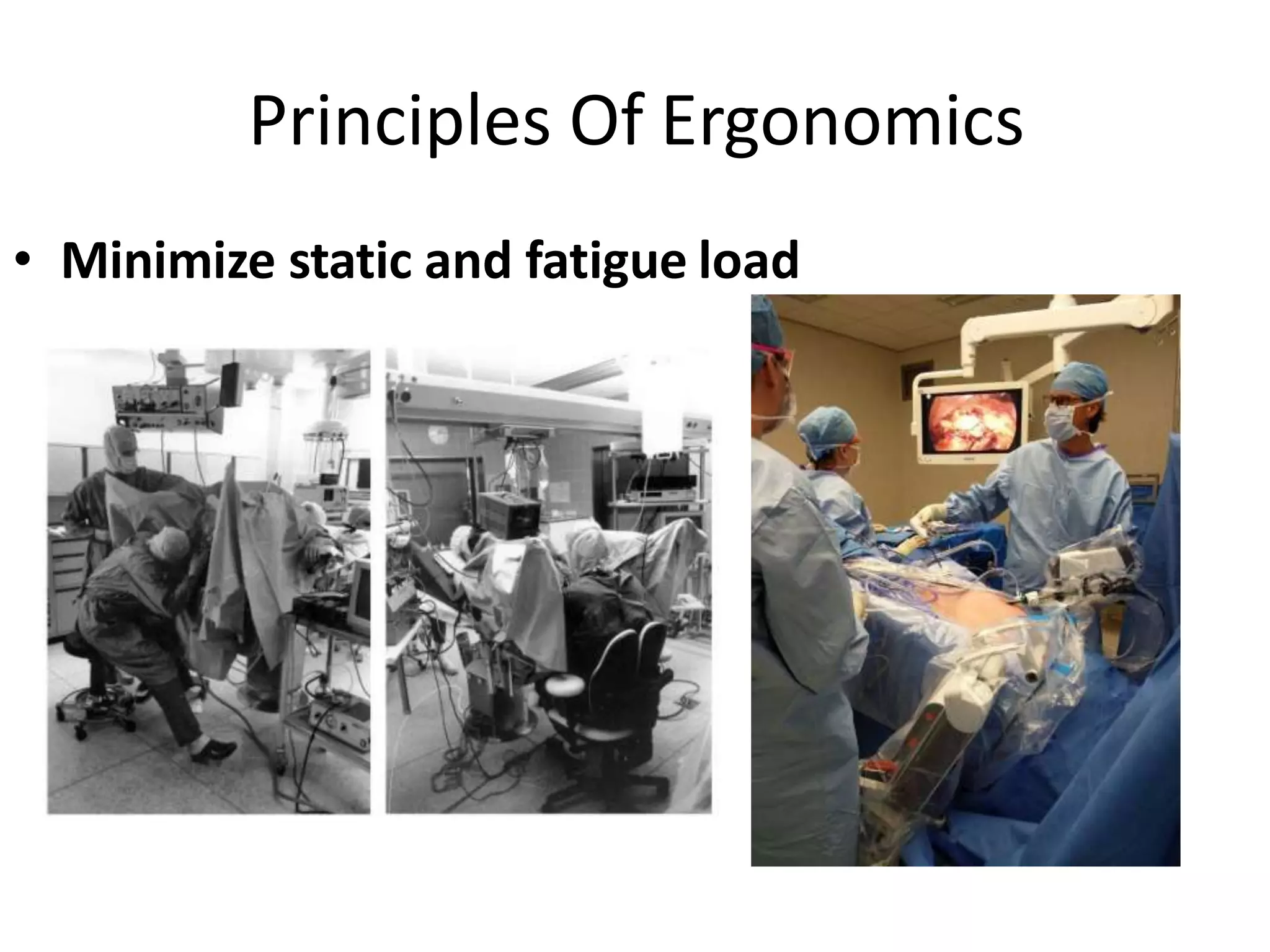
• Minimize static and fatigue load
Principles Of Ergonomics
• Minimize pressure points
Principles Of Ergonomics
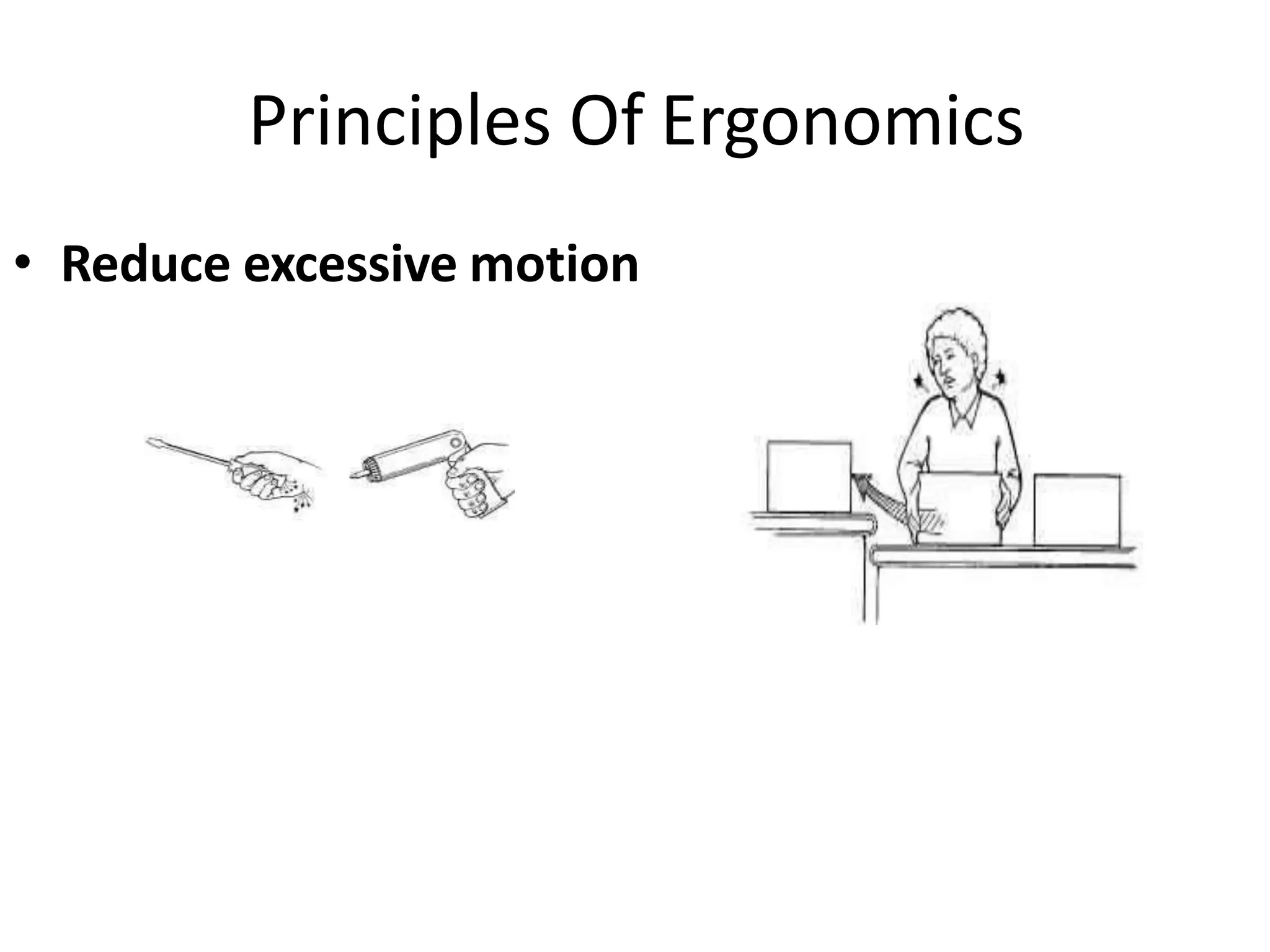
• Reduce excessive motion
Principles Of Ergonomics
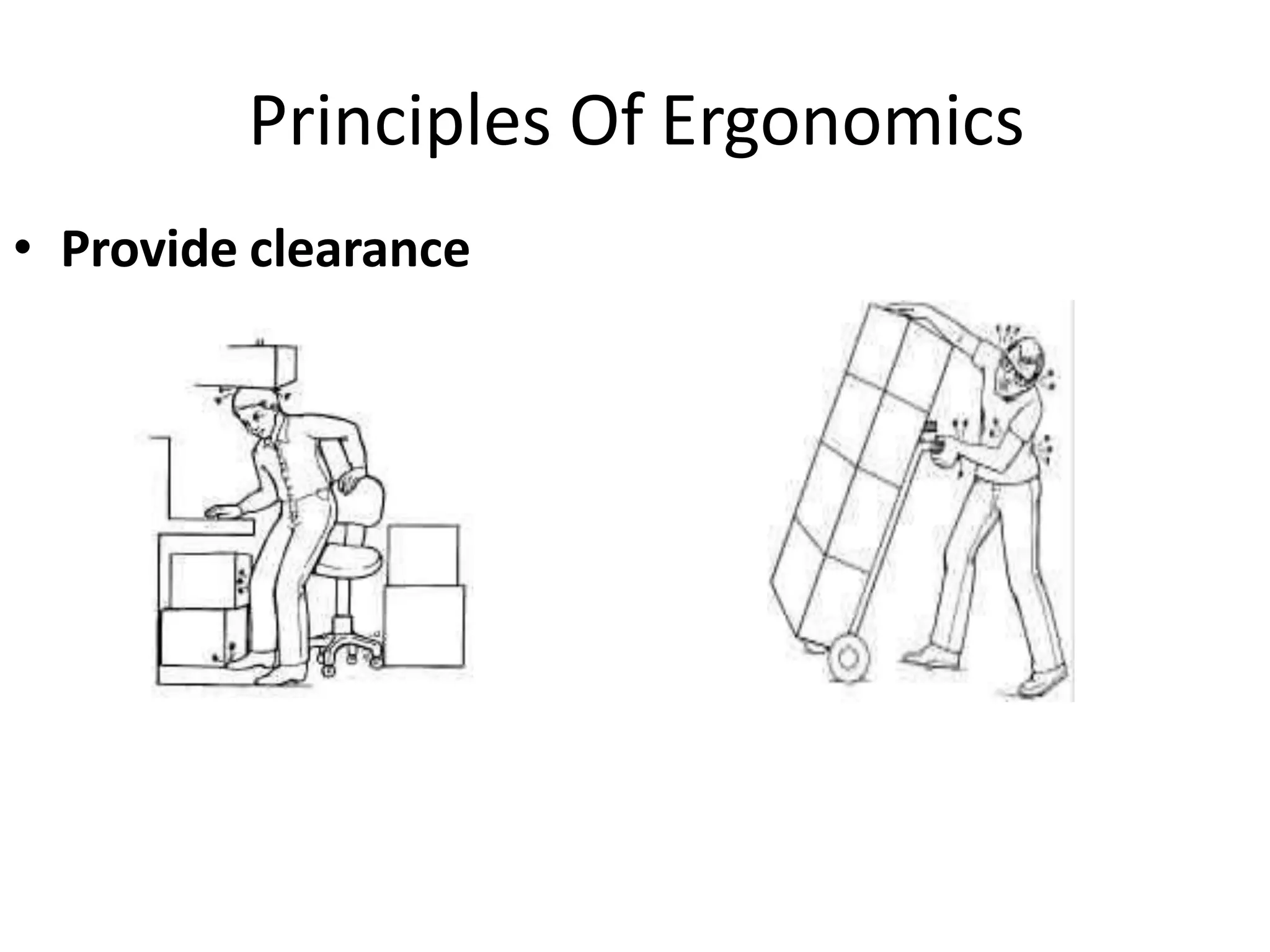
• Provide clearance
Principles Of Ergonomics
• Move, stretch and exercise
Principles Of Ergonomics
Monitor & Keyboard
Principles Of Ergonomics
Good Posture In Laboratory
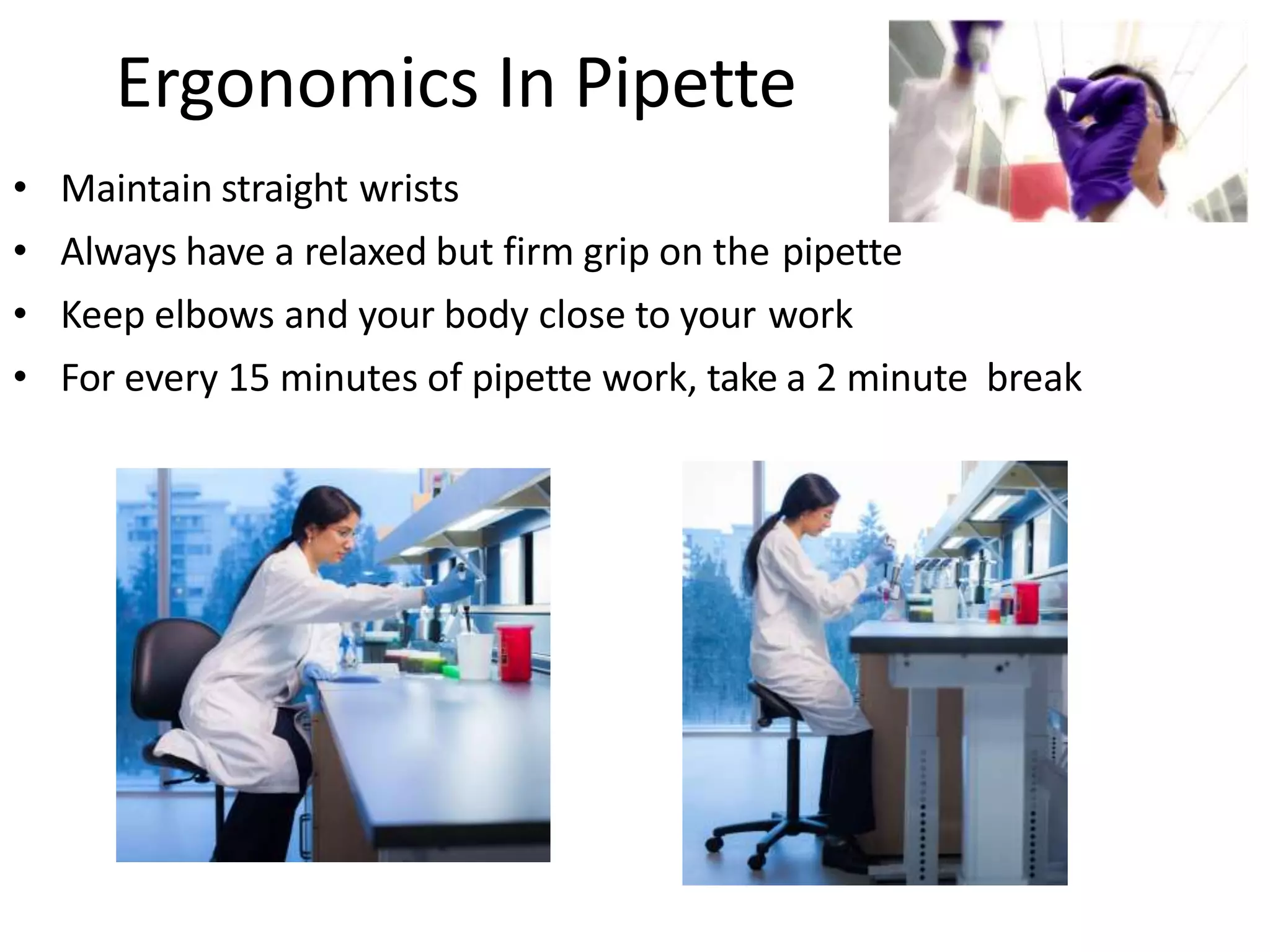
Ergonomics In Pipette
• Maintain straight wrists
• Always have a relaxed but firm grip on the pipette
• Keep elbows and your body close to your work
• For every 15 minutes of pipette work, take a 2 minute break
Thank You

Ergonomics healthcare professinals