Ergonomics is “the scientific discipline concern with the understanding
of interactions among human and other elements of a system,and the
profession that applies theory,principles,data and methods to design
In order to optimise human well being and overall system performance.”
The International Ergonomics Association
Dentists all around the world have been challenged with
issues related to the musculoskeletal system. This mainly
occurs due to uncomfortable posture in the work area.
This uncomfortable posture frequently results in muscular
disorders.
Occupation related diseases are increasing day
by day and one amongst them is
musculoskeletal disorders (MSDs) due to
improper ergonomics in dentistry.
Knowledge of ergonomics is thus of great value
in preventing ill-health and injury from work.
Prevelance Of Musculoskelatal Disorders
Among Dentists
With MSDs
Without MSDs
Most Prevelant Areas of Pain
NECK
BACK
SHOULDERS, ELBOW, HANDS
1. Reducing the risk of MDS.
2. Increasing productivity.
3. Increasing safety.
4. Improving the quality of work.
5. Decreasing fatigue and errors
Some Symptoms of
Musculoskeletal disorders
(MSDs):
• Excessive fatigue in the
shoulders and neck
• Tingling, burning, or other
pain in arms
• Weak grip, cramping of
hands
• Numbness in fingers and
hands
• Clumsiness and dropping of
objects
• Hypersensitivity in hands
and fingers
Some Signs of MSD
Decreased range of
motion
Loss of normal sensation
Decreased grip strength
Loss of normal
movement
Loss of co-ordination
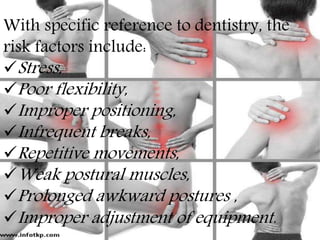
With specific reference to dentistry, the
risk factors include:
Stress,
Poor flexibility,
Improper positioning,
Infrequent breaks,
Repetitive movements,
Weak postural muscles,
Prolonged awkward postures ,
Improper adjustment of equipment.
Prolonged Static Postures
Muscle Ischemia/Necrosis/Imbalances
Hypomobile Joints
Spinal Disc Herniation and Degeneration
Neck and Shoulder Injury
Carpel Tunnel Syndrome
Low Back Pain
Psychosocial Factors
Prevention Of MSDs:
Good Posture
Proper Equipment Layout
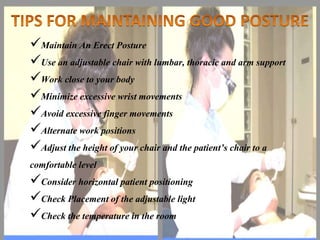
Maintain An Erect Posture
Use an adjustable chair with lumbar, thoracic and arm support
Work close to your body
Minimize excessive wrist movements
Avoid excessive finger movements
Alternate work positions
Adjust the height of your chair and the patient’s chair to a
comfortable level
Consider horizontal patient positioning
Check Placement of the adjustable light
Check the temperature in the room
Maintain the Low Back Curve
Tilted Seat Plan
Saddle Stools
Lumbar Support Of Chair
Avoid Static Postures
Use Magnification
Body Strenghtening Excercises
Weight Control
Scheduling
Potential Strategies
 Vary Procedures within same appointment
 Alternate tough and easy patients
 Shorten pateint’s recall interval
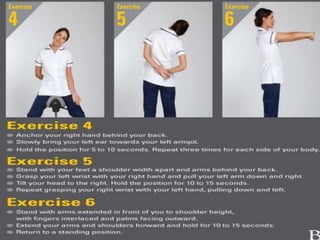
EXCERCISES
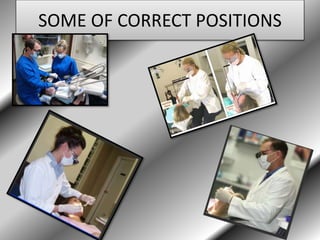
SOME OF CORRECT POSITIONS
The successful application of ergonomics
assures high productivity, avoidance of
illnesses and injuries, and increased
satisfaction among workers. Unsuccessful
application, on the other hand, can lead to
work-related musculoskeletal disorders
(WMSDs). Good ergonomic design of tools,
processes and furniture does improve
personnel comfort, health, morale,
productivity and readiness. So, take charge
of your health and stay fit and healthy !

Ergonomics In Dentistry

  • 2.
    Ergonomics is “thescientific discipline concern with the understanding of interactions among human and other elements of a system,and the profession that applies theory,principles,data and methods to design In order to optimise human well being and overall system performance.” The International Ergonomics Association
  • 3.
    Dentists all aroundthe world have been challenged with issues related to the musculoskeletal system. This mainly occurs due to uncomfortable posture in the work area. This uncomfortable posture frequently results in muscular disorders.
  • 4.
    Occupation related diseasesare increasing day by day and one amongst them is musculoskeletal disorders (MSDs) due to improper ergonomics in dentistry. Knowledge of ergonomics is thus of great value in preventing ill-health and injury from work.
  • 5.
    Prevelance Of MusculoskelatalDisorders Among Dentists With MSDs Without MSDs
  • 6.
    Most Prevelant Areasof Pain NECK BACK SHOULDERS, ELBOW, HANDS
  • 7.
    1. Reducing therisk of MDS. 2. Increasing productivity. 3. Increasing safety. 4. Improving the quality of work. 5. Decreasing fatigue and errors
  • 8.
    Some Symptoms of Musculoskeletaldisorders (MSDs): • Excessive fatigue in the shoulders and neck • Tingling, burning, or other pain in arms • Weak grip, cramping of hands • Numbness in fingers and hands • Clumsiness and dropping of objects • Hypersensitivity in hands and fingers Some Signs of MSD Decreased range of motion Loss of normal sensation Decreased grip strength Loss of normal movement Loss of co-ordination
  • 9.
    With specific referenceto dentistry, the risk factors include: Stress, Poor flexibility, Improper positioning, Infrequent breaks, Repetitive movements, Weak postural muscles, Prolonged awkward postures , Improper adjustment of equipment.
  • 10.
    Prolonged Static Postures MuscleIschemia/Necrosis/Imbalances Hypomobile Joints Spinal Disc Herniation and Degeneration Neck and Shoulder Injury Carpel Tunnel Syndrome Low Back Pain Psychosocial Factors
  • 11.
    Prevention Of MSDs: GoodPosture Proper Equipment Layout
  • 12.
    Maintain An ErectPosture Use an adjustable chair with lumbar, thoracic and arm support Work close to your body Minimize excessive wrist movements Avoid excessive finger movements Alternate work positions Adjust the height of your chair and the patient’s chair to a comfortable level Consider horizontal patient positioning Check Placement of the adjustable light Check the temperature in the room
  • 13.
    Maintain the LowBack Curve Tilted Seat Plan Saddle Stools Lumbar Support Of Chair Avoid Static Postures
  • 14.
    Use Magnification Body StrenghteningExcercises Weight Control Scheduling Potential Strategies  Vary Procedures within same appointment  Alternate tough and easy patients  Shorten pateint’s recall interval
  • 17.
  • 21.
    SOME OF CORRECTPOSITIONS
  • 22.
    The successful applicationof ergonomics assures high productivity, avoidance of illnesses and injuries, and increased satisfaction among workers. Unsuccessful application, on the other hand, can lead to work-related musculoskeletal disorders (WMSDs). Good ergonomic design of tools, processes and furniture does improve personnel comfort, health, morale, productivity and readiness. So, take charge of your health and stay fit and healthy !