THE BIG PICTURE
Faculty + Librarians =
Information Literacy
Video
Association of College and Research
Library (ACRL) Standards of IL
“Information literacy is the ability to recognize
when information is needed and have the ability to
locate, evaluate, and use effectively the needed
information.”

American Library Association. (1989). Presidential committee on information literacy: Final report. Retrieved from
http://www.ala.org/ala/mgrps/divs/acrl/publications/whitepapers/presidential.cfm
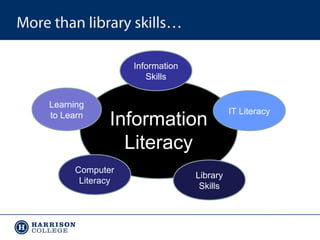
More than library skills…
Information
Skills
Learning
to Learn

Information
Literacy

Computer
Literacy

Library
Skills

IT Literacy
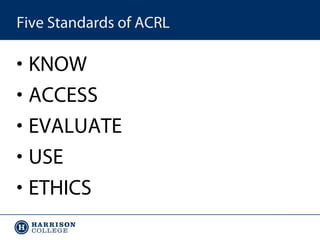
Five Standards of ACRL

• KNOW
• ACCESS
• EVALUATE
• USE
• ETHICS
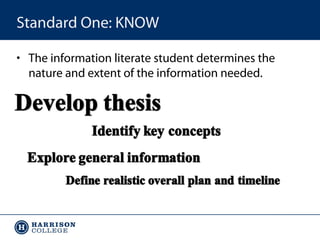
Standard One: KNOW
• The information literate student determines the
nature and extent of the information needed.
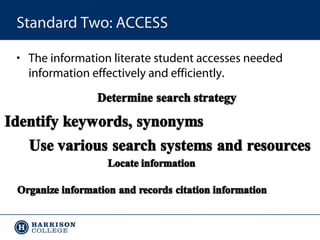
Standard Two: ACCESS
• The information literate student accesses needed
information effectively and efficiently.
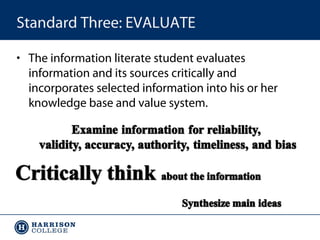
Standard Three: EVALUATE
• The information literate student evaluates
information and its sources critically and
incorporates selected information into his or her
knowledge base and value system.
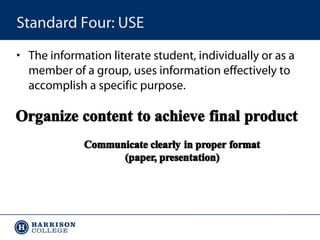
Standard Four: USE
• The information literate student, individually or as a
member of a group, uses information effectively to
accomplish a specific purpose.
Standard Five: ETHICS
• The information literate student understands many
of the economic, legal, and social issues surrounding
the use of information and accesses and uses
information ethically and legally.
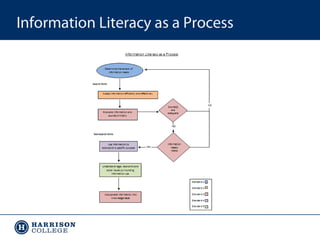
Information Literacy as a Process
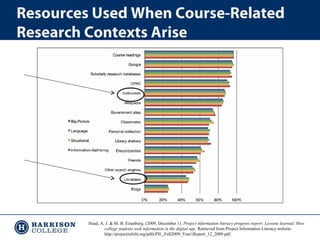
Resources Used When Course-Related
Research Contexts Arise

Head, A. J. & M. B. Eisenberg. (2009, December 1). Project information literacy progress report: Lessons learned: How
college students seek information in the digital age. Retrieved from Project Information Literacy website:
http://projectinfolit.org/pdfs/PIL_Fall2009_Year1Report_12_2009.pdf.
Librarians as Collaborators
• Collaboration between teaching faculty and librarians is
fundamental to information literacy.
• Collaboration is based on shared goals, a shared vision, and a
climate of trust and respect. Each partner brings different
strengths and perspectives to the relationship.
• Successful collaboration requires carefully defined roles,
comprehensive planning and shared leadership.

American Library Association. (2010). Collaboration with faculty . Retrieved from
http://www.ala.org/ala/mgrps/divs/acrl/issues/infolit/resources/collaboration/collaboration.cfm
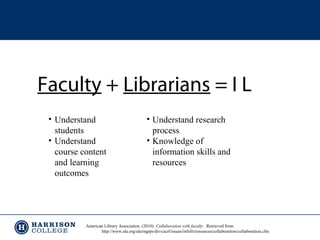
Faculty + Librarians = I L
• Understand
students
• Understand
course content
and learning
outcomes

• Understand research
process
• Knowledge of
information skills and
resources

American Library Association. (2010). Collaboration with faculty . Retrieved from
http://www.ala.org/ala/mgrps/divs/acrl/issues/infolit/resources/collaboration/collaboration.cfm
Example Scenario
1.
2.
3.
4.
5.

Consultation
Test
Collaboration
Critical Thinking
Plagiarism and APA

Information Literacy Faculty Training

  • 1.
    THE BIG PICTURE Faculty+ Librarians = Information Literacy
  • 2.
  • 3.
    Association of Collegeand Research Library (ACRL) Standards of IL “Information literacy is the ability to recognize when information is needed and have the ability to locate, evaluate, and use effectively the needed information.” American Library Association. (1989). Presidential committee on information literacy: Final report. Retrieved from http://www.ala.org/ala/mgrps/divs/acrl/publications/whitepapers/presidential.cfm
  • 4.
    More than libraryskills… Information Skills Learning to Learn Information Literacy Computer Literacy Library Skills IT Literacy
  • 5.
    Five Standards ofACRL • KNOW • ACCESS • EVALUATE • USE • ETHICS
  • 6.
    Standard One: KNOW •The information literate student determines the nature and extent of the information needed.
  • 7.
    Standard Two: ACCESS •The information literate student accesses needed information effectively and efficiently.
  • 8.
    Standard Three: EVALUATE •The information literate student evaluates information and its sources critically and incorporates selected information into his or her knowledge base and value system.
  • 9.
    Standard Four: USE •The information literate student, individually or as a member of a group, uses information effectively to accomplish a specific purpose.
  • 10.
    Standard Five: ETHICS •The information literate student understands many of the economic, legal, and social issues surrounding the use of information and accesses and uses information ethically and legally.
  • 11.
  • 12.
    Resources Used WhenCourse-Related Research Contexts Arise Head, A. J. & M. B. Eisenberg. (2009, December 1). Project information literacy progress report: Lessons learned: How college students seek information in the digital age. Retrieved from Project Information Literacy website: http://projectinfolit.org/pdfs/PIL_Fall2009_Year1Report_12_2009.pdf.
  • 13.
    Librarians as Collaborators •Collaboration between teaching faculty and librarians is fundamental to information literacy. • Collaboration is based on shared goals, a shared vision, and a climate of trust and respect. Each partner brings different strengths and perspectives to the relationship. • Successful collaboration requires carefully defined roles, comprehensive planning and shared leadership. American Library Association. (2010). Collaboration with faculty . Retrieved from http://www.ala.org/ala/mgrps/divs/acrl/issues/infolit/resources/collaboration/collaboration.cfm
  • 14.
    Faculty + Librarians= I L • Understand students • Understand course content and learning outcomes • Understand research process • Knowledge of information skills and resources American Library Association. (2010). Collaboration with faculty . Retrieved from http://www.ala.org/ala/mgrps/divs/acrl/issues/infolit/resources/collaboration/collaboration.cfm
  • 15.