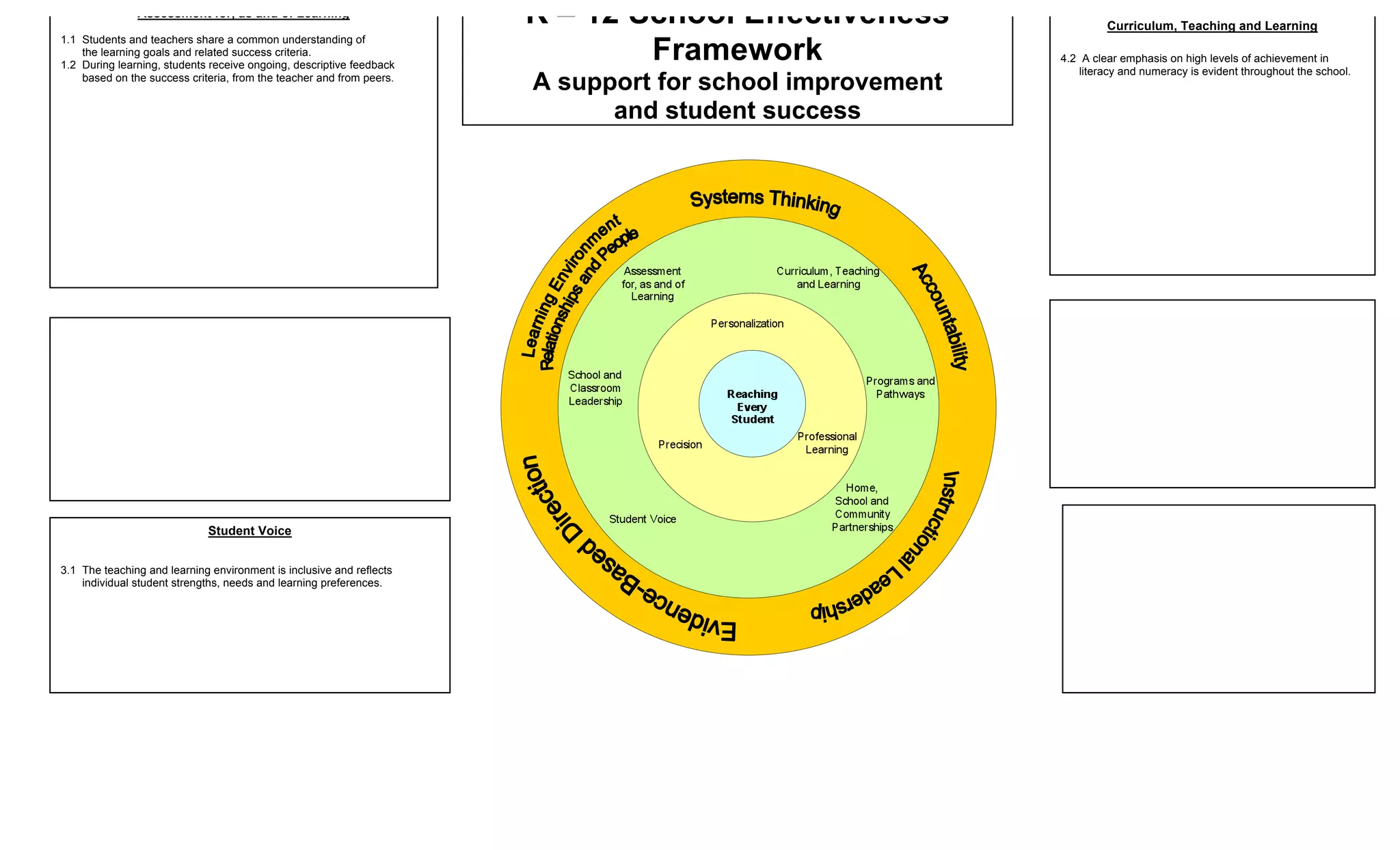
Assessment for, as and of Learning                     K – 12 School Effectiveness                 Curriculum, Teaching and Learning

                                                                              Framework
1.1 Students and teachers share a common understanding of
    the learning goals and related success criteria.
                                                                                                         4.2 A clear emphasis on high levels of achievement in
1.2 During learning, students receive ongoing, descriptive feedback
                                                                                                             literacy and numeracy is evident throughout the school.
    based on the success criteria, from the teacher and from peers.
                                                                      A support for school improvement
                                                                            and student success


                             Student Voice


3.1 The teaching and learning environment is inclusive and reflects
    individual student strengths, needs and learning preferences.
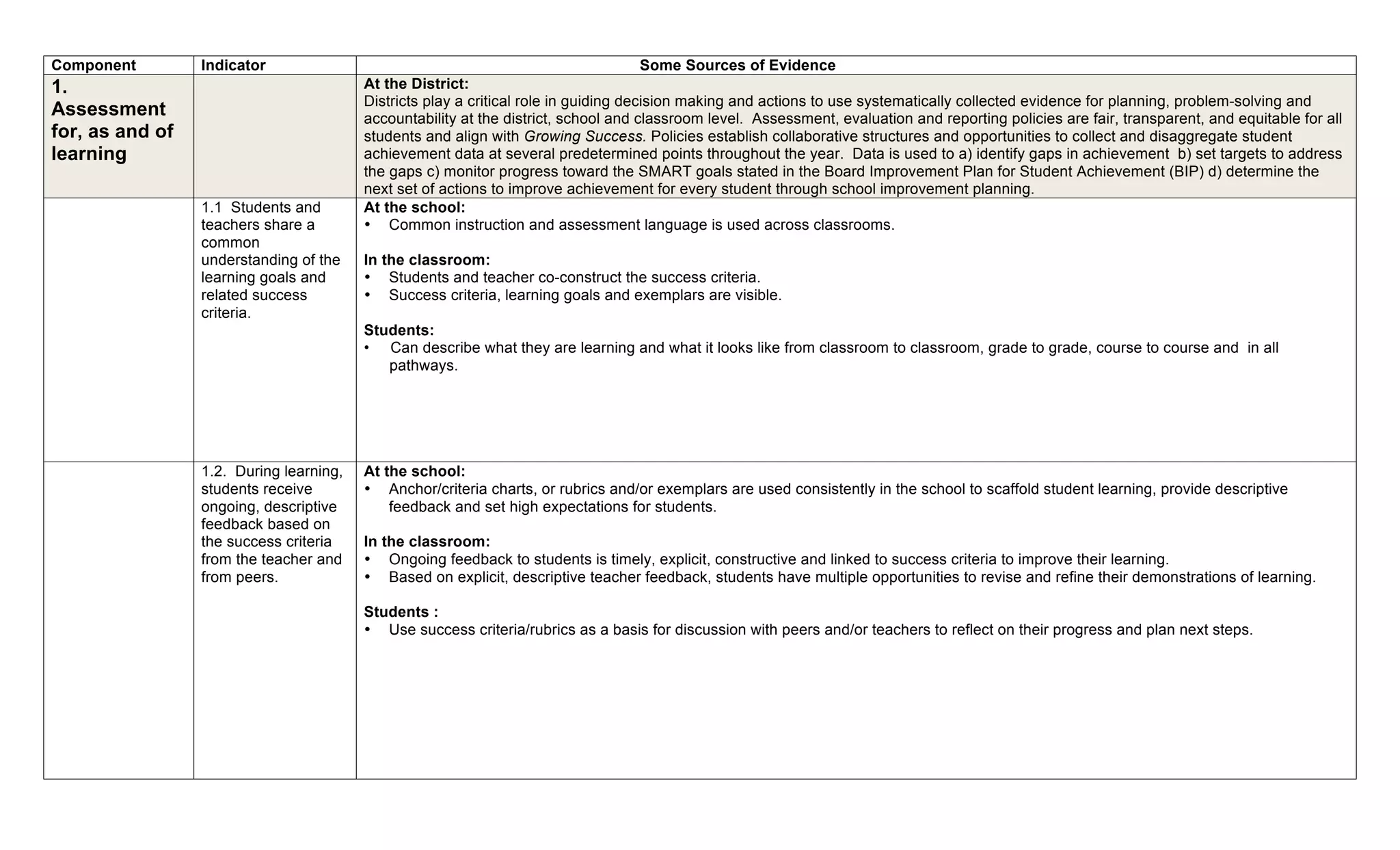
Component        Indicator                                                            Some Sources of Evidence
1.                                       At the District:
                                         Districts play a critical role in guiding decision making and actions to use systematically collected evidence for planning, problem-solving and
Assessment                               accountability at the district, school and classroom level. Assessment, evaluation and reporting policies are fair, transparent, and equitable for all
for, as and of                           students and align with Growing Success. Policies establish collaborative structures and opportunities to collect and disaggregate student
learning                                 achievement data at several predetermined points throughout the year. Data is used to a) identify gaps in achievement b) set targets to address
                                         the gaps c) monitor progress toward the SMART goals stated in the Board Improvement Plan for Student Achievement (BIP) d) determine the
                                         next set of actions to improve achievement for every student through school improvement planning.
                 1.1 Students and        At the school:
                 teachers share a        • Common instruction and assessment language is used across classrooms.
                 common
                 understanding of the    In the classroom:
                 learning goals and      • Students and teacher co-construct the success criteria.
                 related success         • Success criteria, learning goals and exemplars are visible.
                 criteria.
                                         Students:
                                         • Can describe what they are learning and what it looks like from classroom to classroom, grade to grade, course to course and in all
                                            pathways.


                 1.2. During learning,   At the school:
                 students receive        • Anchor/criteria charts, or rubrics and/or exemplars are used consistently in the school to scaffold student learning, provide descriptive
                 ongoing, descriptive        feedback and set high expectations for students.
                 feedback based on
                 the success criteria    In the classroom:
                 from the teacher and    • Ongoing feedback to students is timely, explicit, constructive and linked to success criteria to improve their learning.
                 from peers.             • Based on explicit, descriptive teacher feedback, students have multiple opportunities to revise and refine their demonstrations of learning.

                                         Students :
                                         • Use success criteria/rubrics as a basis for discussion with peers and/or teachers to reflect on their progress and plan next steps.
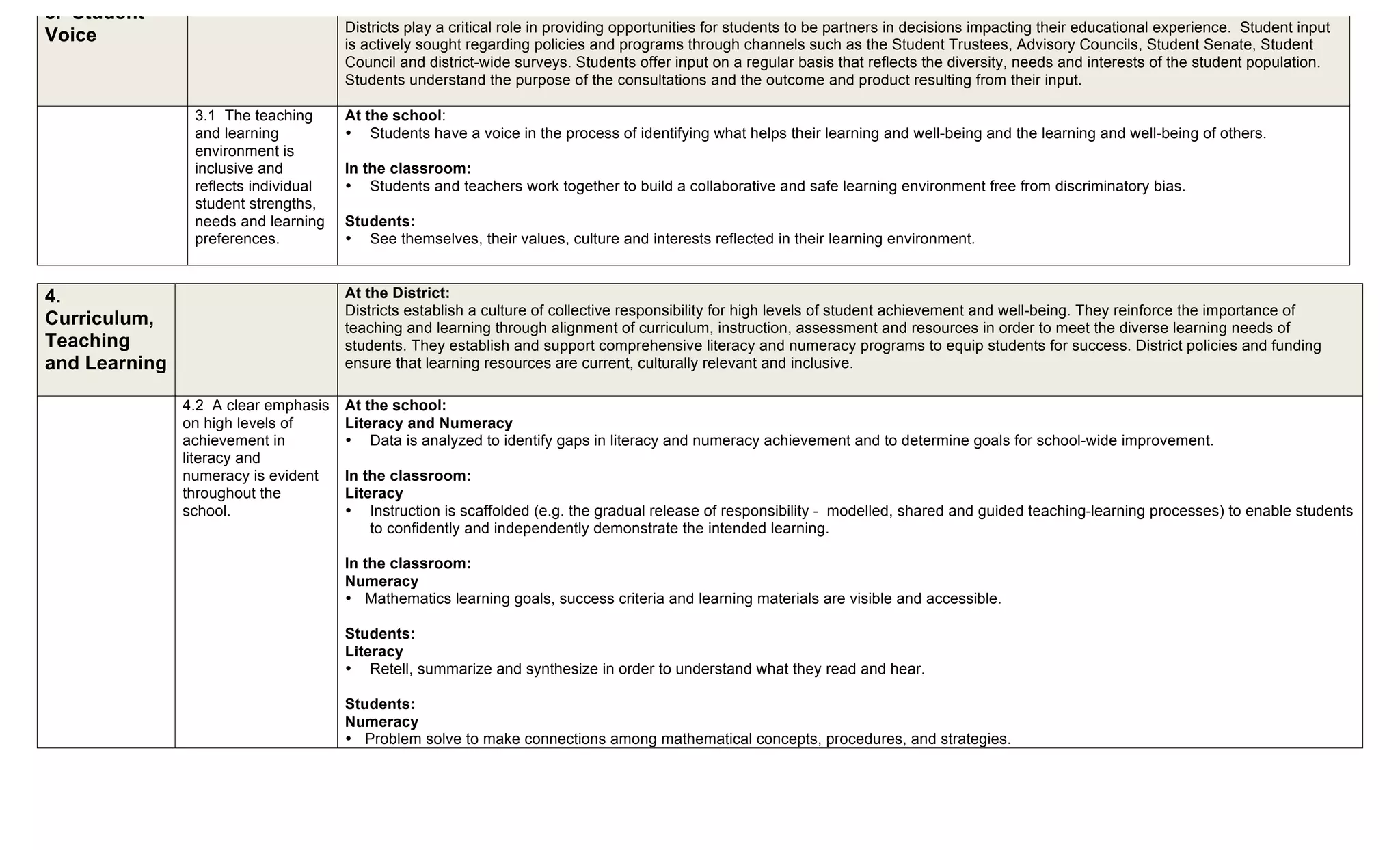
3. Student                            At the District:
                                      Districts play a critical role in providing opportunities for students to be partners in decisions impacting their educational experience. Student input
Voice                                 is actively sought regarding policies and programs through channels such as the Student Trustees, Advisory Councils, Student Senate, Student
                                      Council and district-wide surveys. Students offer input on a regular basis that reflects the diversity, needs and interests of the student population.
                                      Students understand the purpose of the consultations and the outcome and product resulting from their input.

                3.1 The teaching      At the school:
                and learning          • Students have a voice in the process of identifying what helps their learning and well-being and the learning and well-being of others.
                environment is
                inclusive and         In the classroom:
                reflects individual   • Students and teachers work together to build a collaborative and safe learning environment free from discriminatory bias.
                student strengths,
                needs and learning    Students:
                preferences.          • See themselves, their values, culture and interests reflected in their learning environment.


4.                                    At the District:
                                      Districts establish a culture of collective responsibility for high levels of student achievement and well-being. They reinforce the importance of
Curriculum,                           teaching and learning through alignment of curriculum, instruction, assessment and resources in order to meet the diverse learning needs of
Teaching                              students. They establish and support comprehensive literacy and numeracy programs to equip students for success. District policies and funding
and Learning                          ensure that learning resources are current, culturally relevant and inclusive.

               4.2 A clear emphasis   At the school:
               on high levels of      Literacy and Numeracy
               achievement in         • Data is analyzed to identify gaps in literacy and numeracy achievement and to determine goals for school-wide improvement.
               literacy and
               numeracy is evident    In the classroom:
               throughout the         Literacy
               school.                • Instruction is scaffolded (e.g. the gradual release of responsibility - modelled, shared and guided teaching-learning processes) to enable students
                                          to confidently and independently demonstrate the intended learning.

                                      In the classroom:
                                      Numeracy
                                      • Mathematics learning goals, success criteria and learning materials are visible and accessible.

                                      Students:
                                      Literacy
                                      • Retell, summarize and synthesize in order to understand what they read and hear.

                                      Students:
                                      Numeracy
                                      • Problem solve to make connections among mathematical concepts, procedures, and strategies.

Highgate SEF indicators & evidence 2010

  • 1.
    Assessment for, asand of Learning K – 12 School Effectiveness Curriculum, Teaching and Learning Framework 1.1 Students and teachers share a common understanding of the learning goals and related success criteria. 4.2 A clear emphasis on high levels of achievement in 1.2 During learning, students receive ongoing, descriptive feedback literacy and numeracy is evident throughout the school. based on the success criteria, from the teacher and from peers. A support for school improvement and student success Student Voice 3.1 The teaching and learning environment is inclusive and reflects individual student strengths, needs and learning preferences.
  • 2.
    Component Indicator Some Sources of Evidence 1. At the District: Districts play a critical role in guiding decision making and actions to use systematically collected evidence for planning, problem-solving and Assessment accountability at the district, school and classroom level. Assessment, evaluation and reporting policies are fair, transparent, and equitable for all for, as and of students and align with Growing Success. Policies establish collaborative structures and opportunities to collect and disaggregate student learning achievement data at several predetermined points throughout the year. Data is used to a) identify gaps in achievement b) set targets to address the gaps c) monitor progress toward the SMART goals stated in the Board Improvement Plan for Student Achievement (BIP) d) determine the next set of actions to improve achievement for every student through school improvement planning. 1.1 Students and At the school: teachers share a • Common instruction and assessment language is used across classrooms. common understanding of the In the classroom: learning goals and • Students and teacher co-construct the success criteria. related success • Success criteria, learning goals and exemplars are visible. criteria. Students: • Can describe what they are learning and what it looks like from classroom to classroom, grade to grade, course to course and in all pathways. 1.2. During learning, At the school: students receive • Anchor/criteria charts, or rubrics and/or exemplars are used consistently in the school to scaffold student learning, provide descriptive ongoing, descriptive feedback and set high expectations for students. feedback based on the success criteria In the classroom: from the teacher and • Ongoing feedback to students is timely, explicit, constructive and linked to success criteria to improve their learning. from peers. • Based on explicit, descriptive teacher feedback, students have multiple opportunities to revise and refine their demonstrations of learning. Students : • Use success criteria/rubrics as a basis for discussion with peers and/or teachers to reflect on their progress and plan next steps.
  • 3.
    3. Student At the District: Districts play a critical role in providing opportunities for students to be partners in decisions impacting their educational experience. Student input Voice is actively sought regarding policies and programs through channels such as the Student Trustees, Advisory Councils, Student Senate, Student Council and district-wide surveys. Students offer input on a regular basis that reflects the diversity, needs and interests of the student population. Students understand the purpose of the consultations and the outcome and product resulting from their input. 3.1 The teaching At the school: and learning • Students have a voice in the process of identifying what helps their learning and well-being and the learning and well-being of others. environment is inclusive and In the classroom: reflects individual • Students and teachers work together to build a collaborative and safe learning environment free from discriminatory bias. student strengths, needs and learning Students: preferences. • See themselves, their values, culture and interests reflected in their learning environment. 4. At the District: Districts establish a culture of collective responsibility for high levels of student achievement and well-being. They reinforce the importance of Curriculum, teaching and learning through alignment of curriculum, instruction, assessment and resources in order to meet the diverse learning needs of Teaching students. They establish and support comprehensive literacy and numeracy programs to equip students for success. District policies and funding and Learning ensure that learning resources are current, culturally relevant and inclusive. 4.2 A clear emphasis At the school: on high levels of Literacy and Numeracy achievement in • Data is analyzed to identify gaps in literacy and numeracy achievement and to determine goals for school-wide improvement. literacy and numeracy is evident In the classroom: throughout the Literacy school. • Instruction is scaffolded (e.g. the gradual release of responsibility - modelled, shared and guided teaching-learning processes) to enable students to confidently and independently demonstrate the intended learning. In the classroom: Numeracy • Mathematics learning goals, success criteria and learning materials are visible and accessible. Students: Literacy • Retell, summarize and synthesize in order to understand what they read and hear. Students: Numeracy • Problem solve to make connections among mathematical concepts, procedures, and strategies.