CHAPTER-04 THE HOT
AND WET EQUATORIAL
REGION.
INTRODUCTION:
Climate influences the lives of the
People, the crops they grow, the
food they eat and their Occupations.
Climate also influences the kind of
Plants and Animals Life found the
region.
All vary from one climatic region to the
other.
TORRID ZONE OF THE
EARTH:
LOCATION:
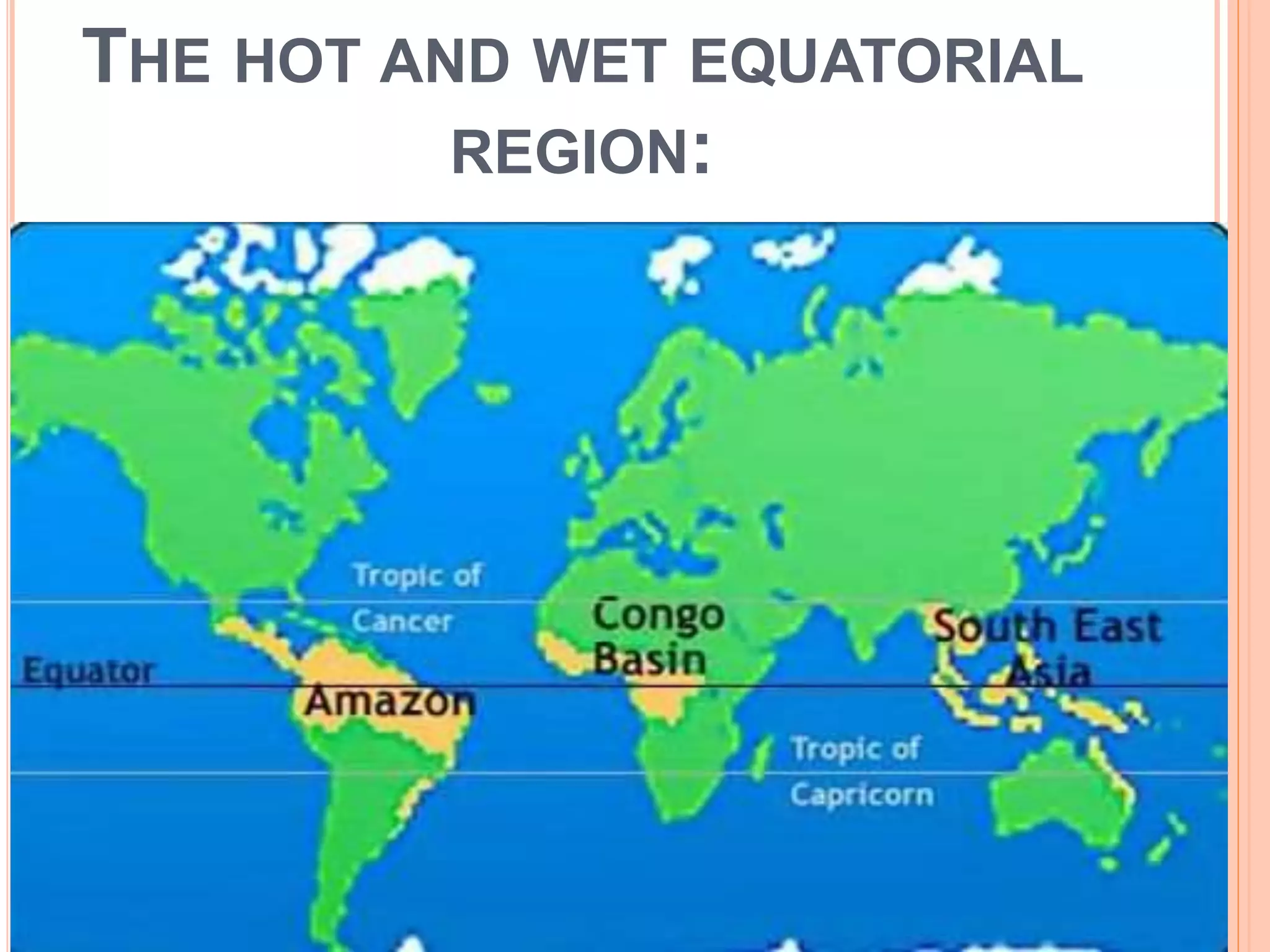
The hot and wet equatorial climate
region lies within the Torrid zone and
extends 100 north to 100 south of the
Equator.
The Region includes:
 Amazon basin in South America
 Democratic Republic of Congo in
Africa
 Malaysia and Indonesia in Asia.
THE HOT AND WET EQUATORIAL
REGION:
CLIMATE:
As this region receives the direct rays
of the Sun, it remains hot throughout
the year.
There is no winter in this region.
High Humidity
Heavy rain (around 4’o clock)
The rainfall is evenly distributed
through the year.
There is no month that is dry.
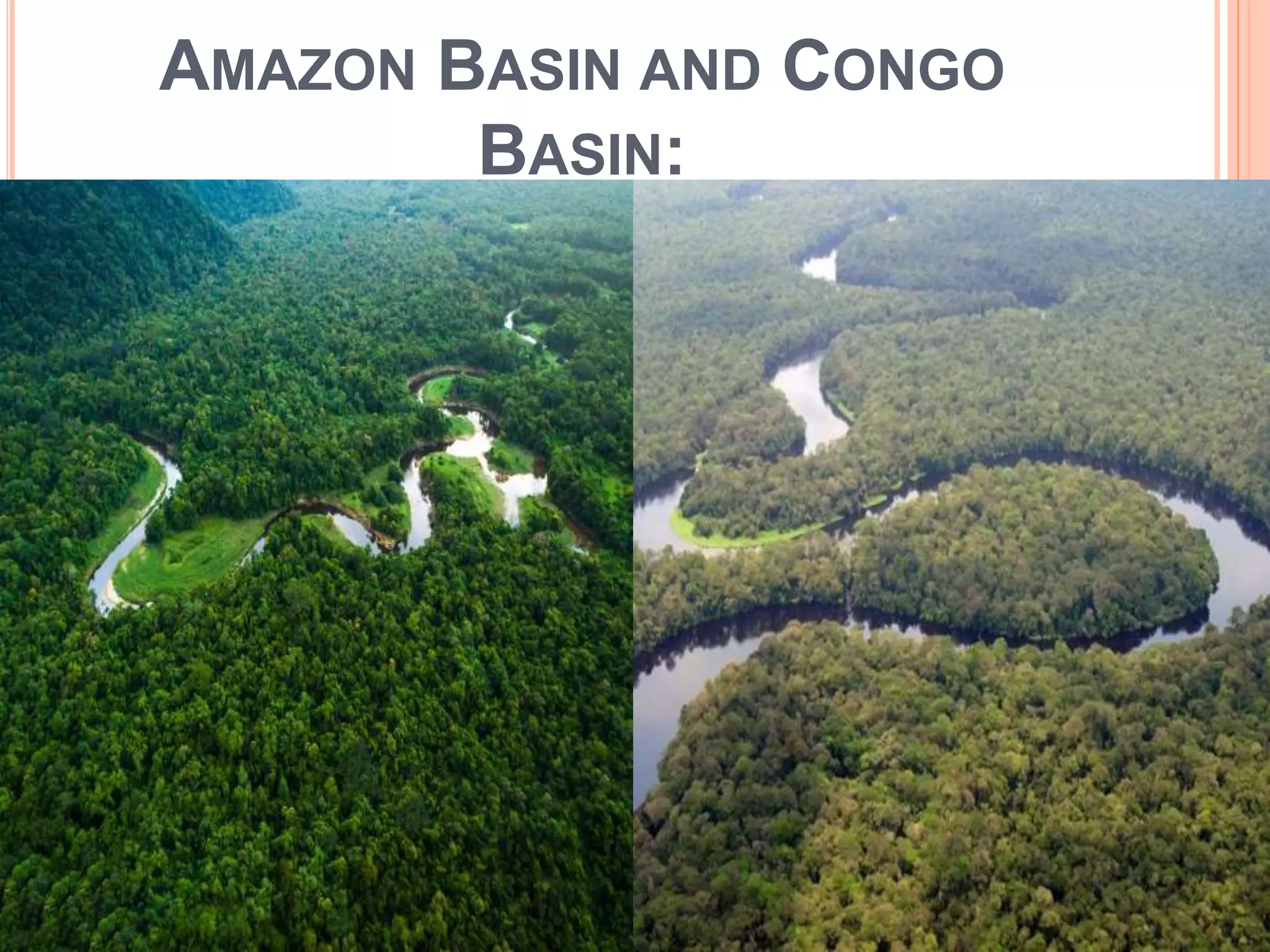
AMAZON BASIN AND CONGO
BASIN:
NATURAL VEGETATION:
 The High temperature and Heavy Rainfall,
Equatorial Rainforests grow in this region.
 The growth of the trees in these forests is dense
and luxuriant.
 These Forests are always green and never bare
of leaves.
 So, They are know as Evergreen Forests.
 Some variety of Trees are:
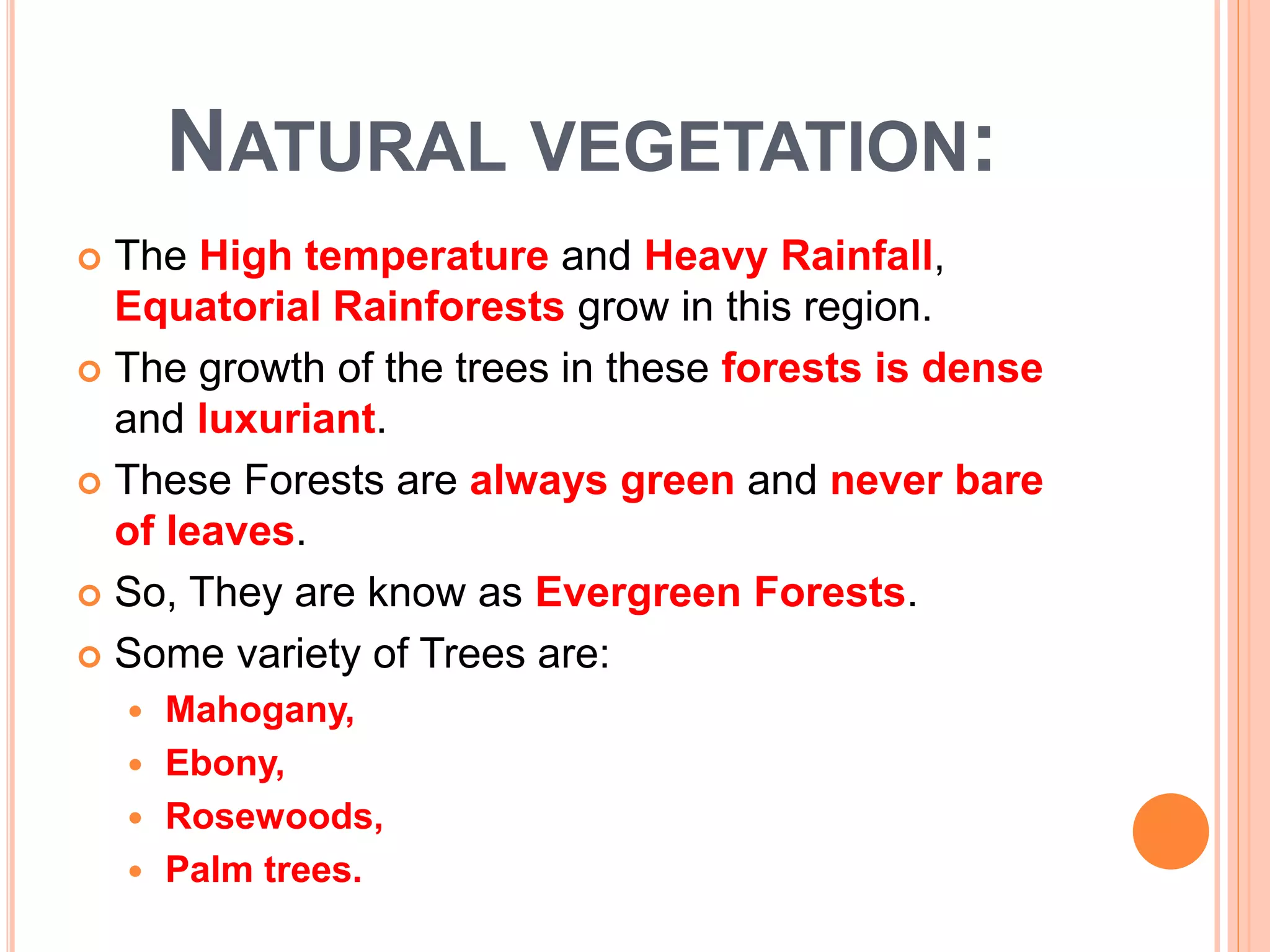
 Mahogany,
 Ebony,
 Rosewoods,
 Palm trees.
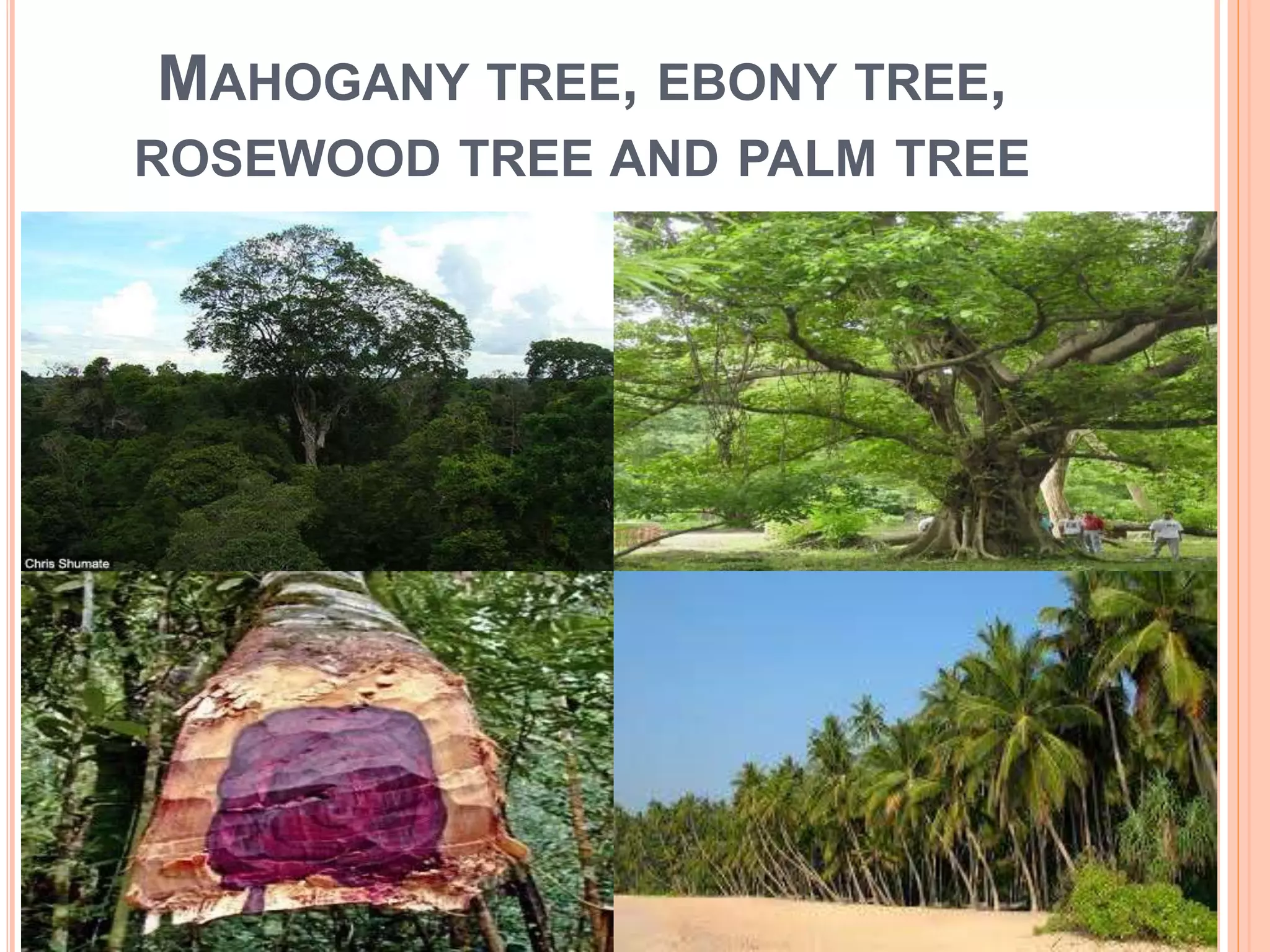
MAHOGANY TREE, EBONY TREE,
ROSEWOOD TREE AND PALM TREE
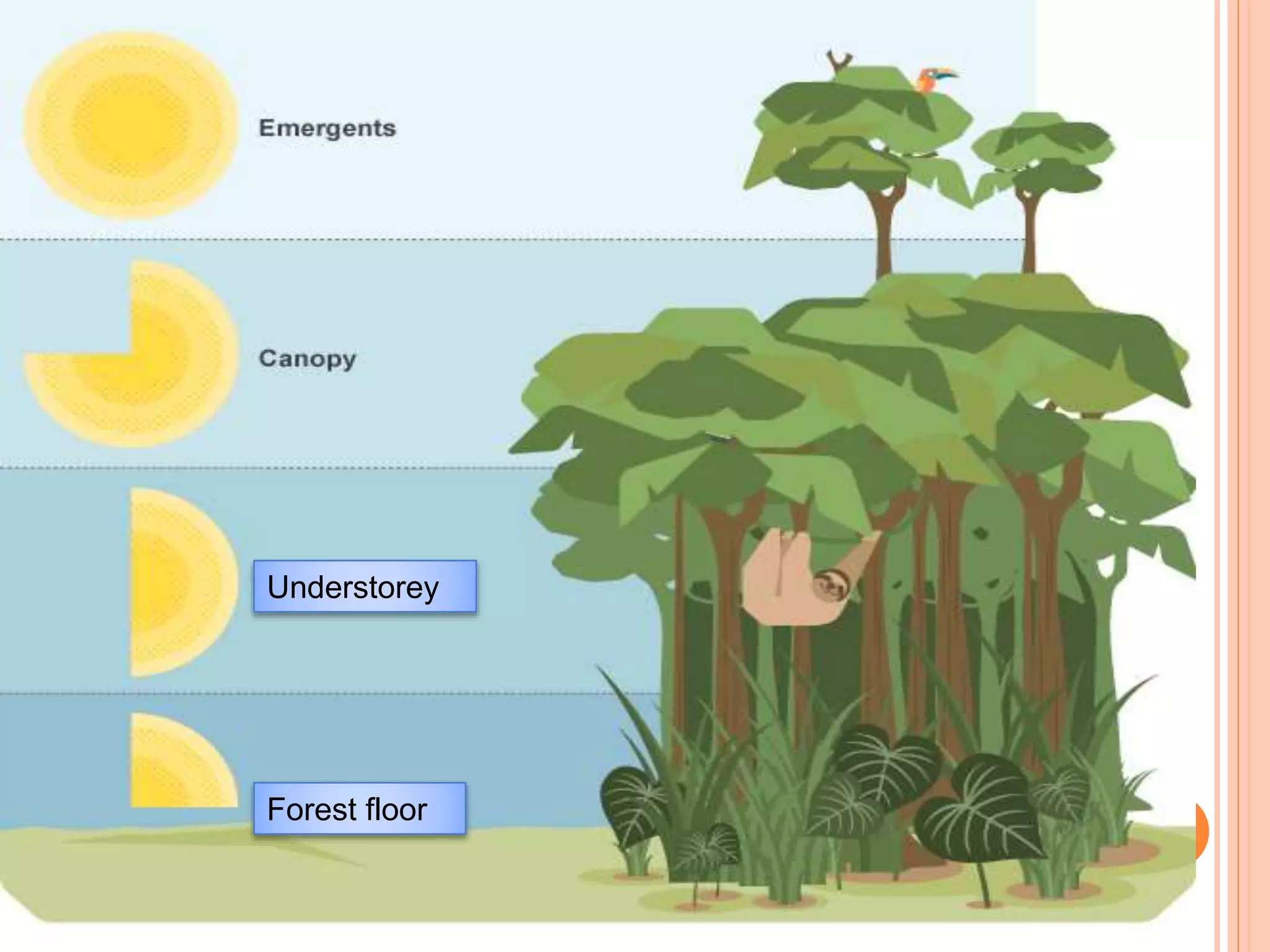
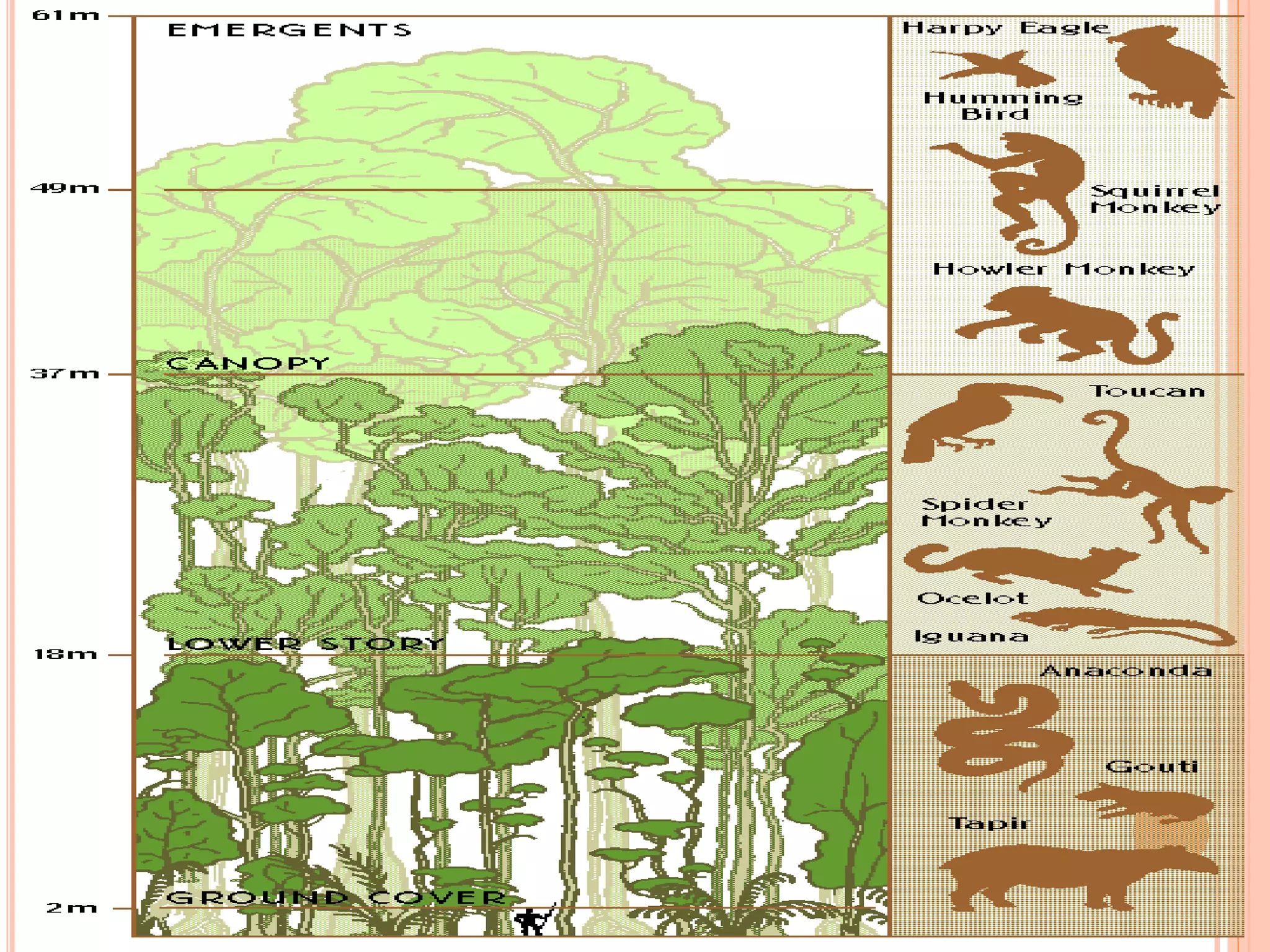
FOUR DISTINCT LAYERS IN THESE
FORESTS:
Forest floor
Understorey Layer,
Canopy Layer,
Emergent Layer.
Understorey
Forest floor
FOREST FLOOR:
This is the lowest layer.
The dense cover of trees
above allows very little
sunlight to reach the floor of
the Forest.
Hence this layer is Dark and
Damp with almost no plants.
UNDERSTOREY:
This layer receives a little more
Sunlight.
Allowing the growth of Shrubs,
Woody creepers and Orchids.
CANOPY:
This is the main layer of the
Forest.
It consists of a dense layer of
trees, whose leaves and
Branches join to form a
continuous cover over the layers
below.
The trees are around 30 metres
tall.
EMERGENT:
The Topmost layer of the
Equatorial forest.
Above the Canopy grow a few
extremely tall trees that tower
more than 60 metres over the
forest ground.
They are called Emergent.
ANIMAL LIFE:
Equatorial rainforests have a rich
variety of Animals, Birds, Butterflies,
Insects and Snakes.
Each layer of the forest has its own
unique life forms.
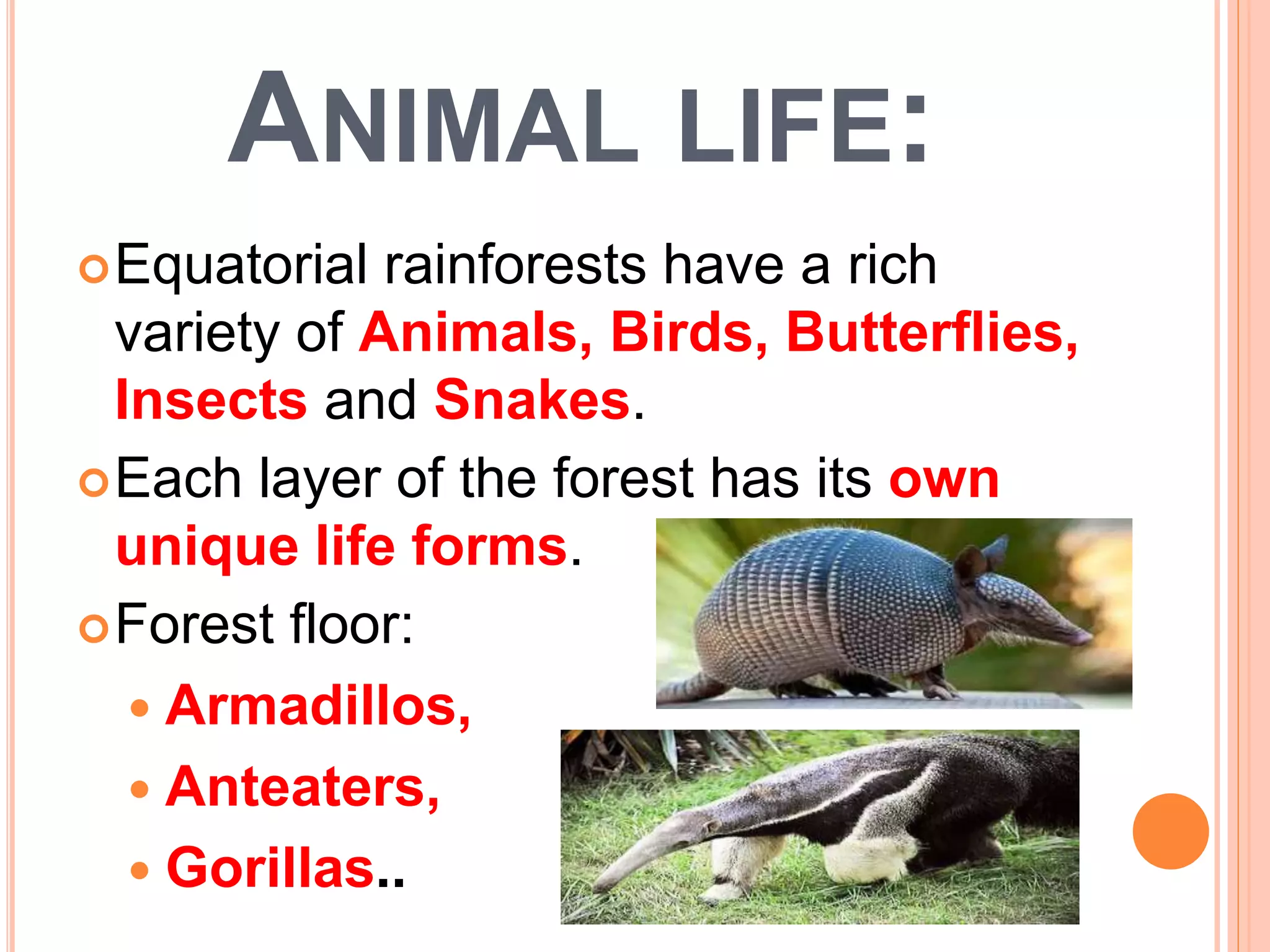
Forest floor:
 Armadillos,
 Anteaters,
 Gorillas..
ANIMAL LIFE:
Understorey
 Snakes
 Jaguars,
 Leopards,
 Frogs and
 Lizards
ANIMAL LIFE:
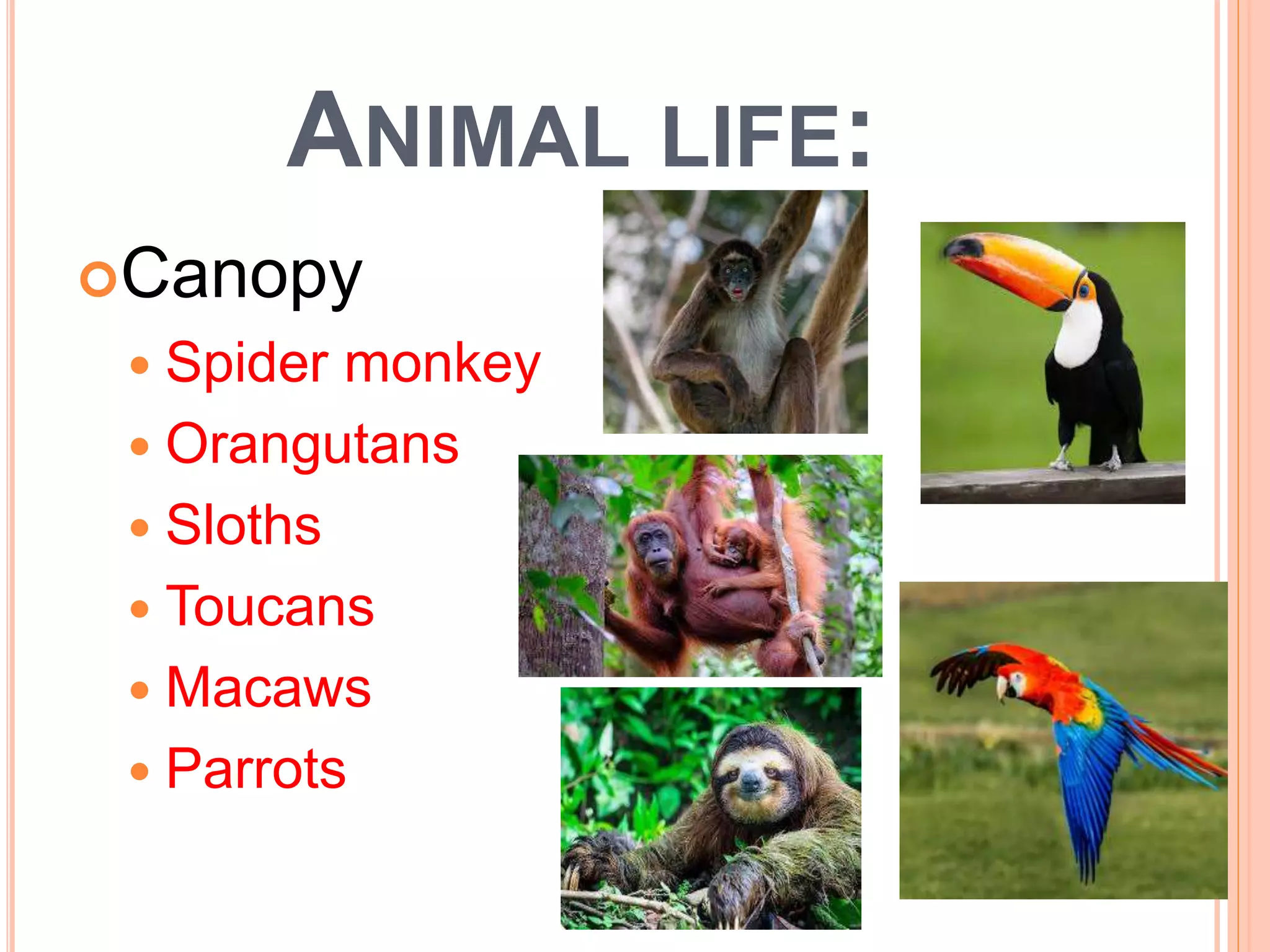
Canopy
 Spider monkey
 Orangutans
 Sloths
 Toucans
 Macaws
 Parrots
ANIMAL LIFE:
 Emergent Layer
 Eagles
 Bats
 Monkeys
 Butterflies
 Rivers
 Crocodiles
 Snakes
 Turtles
HUMAN LIFE:
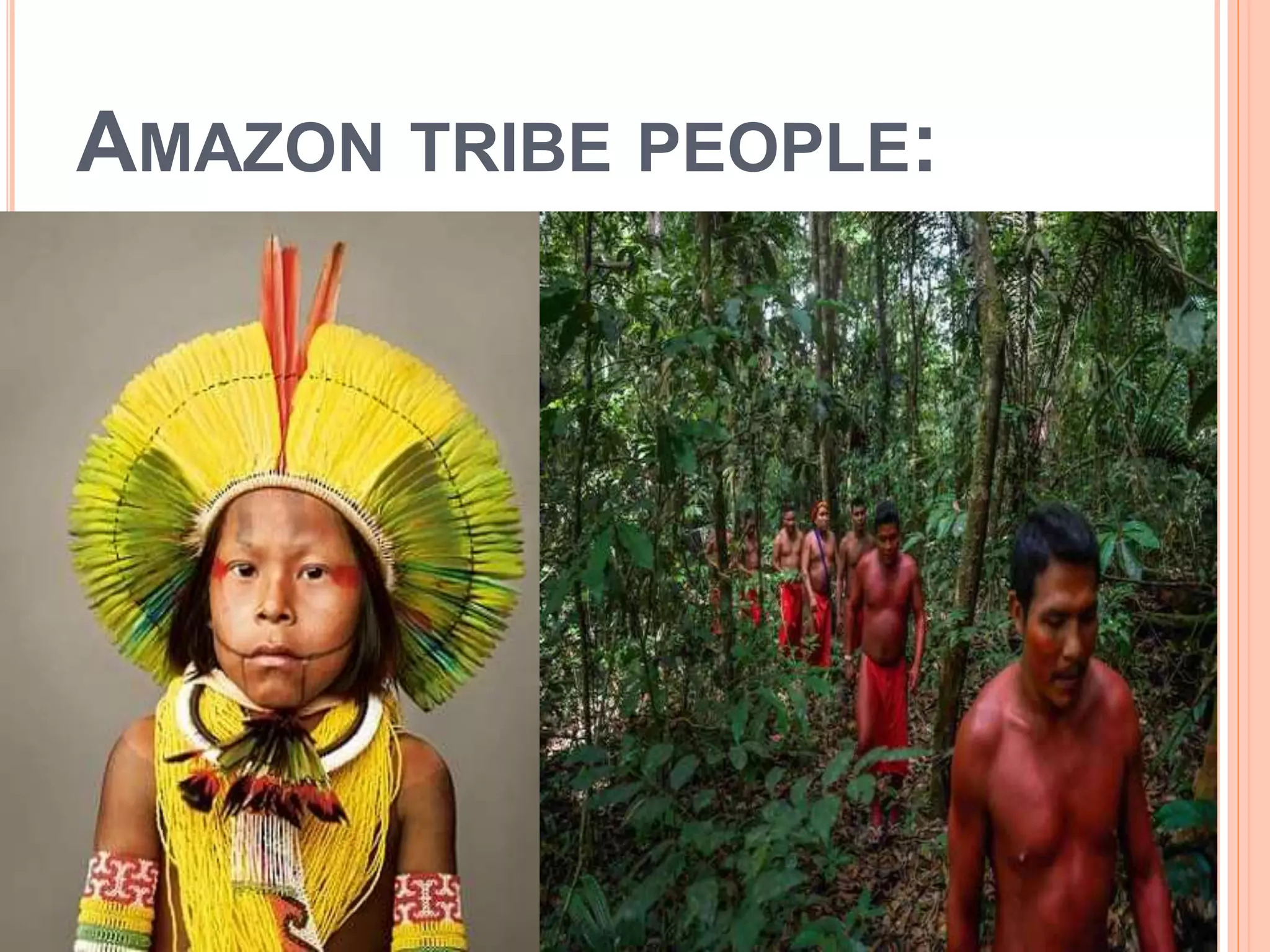
Small groups of Tribal people
continue to live in the rainforests.
Occupation
 Hunting
 Agriculture ( Shifting
Agriculture)
 Fishing
 Mining
SHIFTING AGRICULTURE
 One of the oldest method of Agriculture.
 In this method, a patch of ground is
cleared by cutting the trees and burning
them.
 The ash makes the soil fertile.
 The cleared plot of land is cultivated for a
few years till it loses its Fertility.
 The Farmers then move to another place
where the process is repeated.
PLANTATION FARMING:
 Around 300 years ago, Europeans traders
introduced Plantation farming in many parts of
the Equatorial Region.
 In this form of farming, Crops are grown on a
large farms called Plantation farming.
 Some crops are:
 Rubber
 Tea
 Cocoa
 Pineapple
 Banana
PLANTATION FARMING:
Malaysia is the world’s largest
producer of Rubber.
Cocoa is cultivated mainly in
the Ivory coast and Ghana in
West Africa, and in Malaysia.
AMAZON TRIBE PEOPLE:
CONGO TRIBE PEOPLE:
CHALLENGES FACING THE
REGION:
 One of the main challenges facing this
region today is how to bring about
Economic progress without destroying
the Environment.
 The Large-scale cutting of trees for Mining,
Timber, Agriculture and Ranching,
threatening the life of the Tribal people.
 It is also Endangering the Wildlife of the
region.
 Deforestation.

The hot and wet equatorial region

  • 1.
    CHAPTER-04 THE HOT ANDWET EQUATORIAL REGION.
  • 2.
    INTRODUCTION: Climate influences thelives of the People, the crops they grow, the food they eat and their Occupations. Climate also influences the kind of Plants and Animals Life found the region. All vary from one climatic region to the other.
  • 3.
    TORRID ZONE OFTHE EARTH:
  • 4.
    LOCATION: The hot andwet equatorial climate region lies within the Torrid zone and extends 100 north to 100 south of the Equator. The Region includes:  Amazon basin in South America  Democratic Republic of Congo in Africa  Malaysia and Indonesia in Asia.
  • 5.
    THE HOT ANDWET EQUATORIAL REGION:
  • 6.
    CLIMATE: As this regionreceives the direct rays of the Sun, it remains hot throughout the year. There is no winter in this region. High Humidity Heavy rain (around 4’o clock) The rainfall is evenly distributed through the year. There is no month that is dry.
  • 7.
    AMAZON BASIN ANDCONGO BASIN:
  • 8.
    NATURAL VEGETATION:  TheHigh temperature and Heavy Rainfall, Equatorial Rainforests grow in this region.  The growth of the trees in these forests is dense and luxuriant.  These Forests are always green and never bare of leaves.  So, They are know as Evergreen Forests.  Some variety of Trees are:  Mahogany,  Ebony,  Rosewoods,  Palm trees.
  • 9.
    MAHOGANY TREE, EBONYTREE, ROSEWOOD TREE AND PALM TREE
  • 10.
    FOUR DISTINCT LAYERSIN THESE FORESTS: Forest floor Understorey Layer, Canopy Layer, Emergent Layer.
  • 11.
  • 12.
    FOREST FLOOR: This isthe lowest layer. The dense cover of trees above allows very little sunlight to reach the floor of the Forest. Hence this layer is Dark and Damp with almost no plants.
  • 13.
    UNDERSTOREY: This layer receivesa little more Sunlight. Allowing the growth of Shrubs, Woody creepers and Orchids.
  • 14.
    CANOPY: This is themain layer of the Forest. It consists of a dense layer of trees, whose leaves and Branches join to form a continuous cover over the layers below. The trees are around 30 metres tall.
  • 15.
    EMERGENT: The Topmost layerof the Equatorial forest. Above the Canopy grow a few extremely tall trees that tower more than 60 metres over the forest ground. They are called Emergent.
  • 16.
    ANIMAL LIFE: Equatorial rainforestshave a rich variety of Animals, Birds, Butterflies, Insects and Snakes. Each layer of the forest has its own unique life forms. Forest floor:  Armadillos,  Anteaters,  Gorillas..
  • 17.
    ANIMAL LIFE: Understorey  Snakes Jaguars,  Leopards,  Frogs and  Lizards
  • 18.
    ANIMAL LIFE: Canopy  Spidermonkey  Orangutans  Sloths  Toucans  Macaws  Parrots
  • 19.
    ANIMAL LIFE:  EmergentLayer  Eagles  Bats  Monkeys  Butterflies  Rivers  Crocodiles  Snakes  Turtles
  • 21.
    HUMAN LIFE: Small groupsof Tribal people continue to live in the rainforests. Occupation  Hunting  Agriculture ( Shifting Agriculture)  Fishing  Mining
  • 22.
    SHIFTING AGRICULTURE  Oneof the oldest method of Agriculture.  In this method, a patch of ground is cleared by cutting the trees and burning them.  The ash makes the soil fertile.  The cleared plot of land is cultivated for a few years till it loses its Fertility.  The Farmers then move to another place where the process is repeated.
  • 23.
    PLANTATION FARMING:  Around300 years ago, Europeans traders introduced Plantation farming in many parts of the Equatorial Region.  In this form of farming, Crops are grown on a large farms called Plantation farming.  Some crops are:  Rubber  Tea  Cocoa  Pineapple  Banana
  • 24.
    PLANTATION FARMING: Malaysia isthe world’s largest producer of Rubber. Cocoa is cultivated mainly in the Ivory coast and Ghana in West Africa, and in Malaysia.
  • 25.
  • 26.
  • 27.
    CHALLENGES FACING THE REGION: One of the main challenges facing this region today is how to bring about Economic progress without destroying the Environment.  The Large-scale cutting of trees for Mining, Timber, Agriculture and Ranching, threatening the life of the Tribal people.  It is also Endangering the Wildlife of the region.  Deforestation.