1

DEFINITION
ACUTE HAEMORRHAGE FROM THE NOSTRIL, NASAL CAVITY OR
NASOPHARYNX
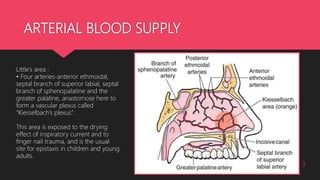
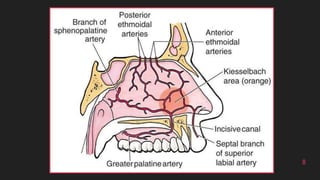
ARTERIAL BLOOD SUPPLY
3
Little’s area :
• Four arteries-anterior ethmoidal,
septal branch of superior labial, septal
branch of sphenopalatine and the
greater palatine, anastomose here to
form a vascular plexus called
“Kiesselbach’s plexus”.
This area is exposed to the drying
effect of inspiratory current and to
finger nail trauma, and is the usual
site for epistaxis in children and young
adults.
CAUSES
• LOCAL
• GENERAL
• IDIOPATHIC 4
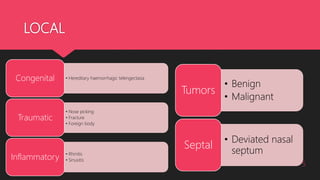
LOCAL
5
• Hereditary haemorrhagic telengectasiaCongenital
• Nose picking
• Fracture
• Foreign body
Traumatic
• Rhinitis
• SinusitisInflammatory
• Benign
• Malignant
Tumors
• Deviated nasal
septum
Septal
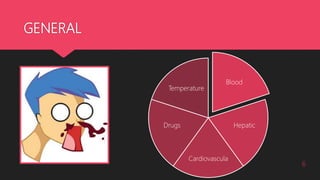
GENERAL
6
Blood
Hepatic
Cardiovascula
Drugs
Temperature
CLASSIFICATION
Anterior
Posterior
7
8
9
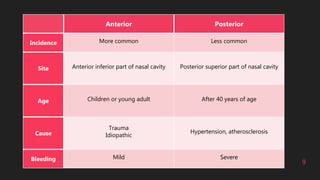
Anterior Posterior
Incidence More common Less common
Site Anterior inferior part of nasal cavity Posterior superior part of nasal cavity
Age Children or young adult After 40 years of age
Cause
Trauma
Idiopathic
Hypertension, atherosclerosis
Bleeding Mild Severe
MANAGEMENT
Primary Assessment
Treatment
Secondary Assessment 10
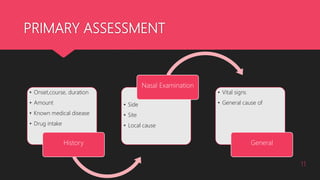
PRIMARY ASSESSMENT
• Onset,course, duration
• Amount
• Known medical disease
• Drug intake
History
• Side
• Site
• Local cause
Nasal Examination
• Vital signs
• General cause of
General
11
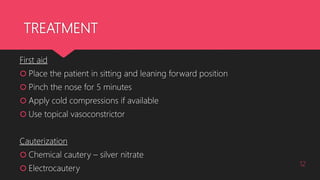
TREATMENT
First aid
 Place the patient in sitting and leaning forward position
 Pinch the nose for 5 minutes
 Apply cold compressions if available
 Use topical vasoconstrictor
Cauterization
 Chemical cautery – silver nitrate
 Electrocautery
12
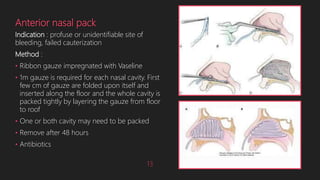
Anterior nasal pack
Indication : profuse or unidentifiable site of
bleeding, failed cauterization
Method :
• Ribbon gauze impregnated with Vaseline
• 1m gauze is required for each nasal cavity. First
few cm of gauze are folded upon itself and
inserted along the floor and the whole cavity is
packed tightly by layering the gauze from floor
to roof
• One or both cavity may need to be packed
• Remove after 48 hours
• Antibiotics
13
14
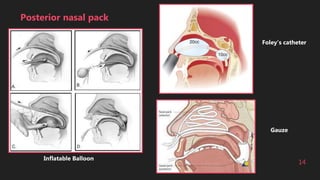
Posterior nasal pack
Inflatable Balloon
Foley’s catheter
Gauze
15
Endoscopic cautery
 For posterior bleeding point
Arterial ligation
Indication: severe bleeding with failed nasal packing
 Superior bleeding – Ethmoidal artery (ethmoidectomy approach)
 Posterior bleeding – Maxillary artery (trans maxillary sinus approach)
External carotid (cervical approach)
General
 Rest
 Sedative
 Coagulants and vitamin K
SECONDARY ASSESSMENT
History
Nasal and general examination
Investigations
 Coagulation profile
 Blood picture
 CT scan and MRI
 Biopsy
Treatment of cause 16
Thank Youuuuu
Made and presented by Basyar Nazri

Epistaxis

  • 1.
  • 2.
    DEFINITION ACUTE HAEMORRHAGE FROMTHE NOSTRIL, NASAL CAVITY OR NASOPHARYNX
  • 3.
    ARTERIAL BLOOD SUPPLY 3 Little’sarea : • Four arteries-anterior ethmoidal, septal branch of superior labial, septal branch of sphenopalatine and the greater palatine, anastomose here to form a vascular plexus called “Kiesselbach’s plexus”. This area is exposed to the drying effect of inspiratory current and to finger nail trauma, and is the usual site for epistaxis in children and young adults.
  • 4.
  • 5.
    LOCAL 5 • Hereditary haemorrhagictelengectasiaCongenital • Nose picking • Fracture • Foreign body Traumatic • Rhinitis • SinusitisInflammatory • Benign • Malignant Tumors • Deviated nasal septum Septal
  • 6.
  • 7.
  • 8.
  • 9.
    9 Anterior Posterior Incidence Morecommon Less common Site Anterior inferior part of nasal cavity Posterior superior part of nasal cavity Age Children or young adult After 40 years of age Cause Trauma Idiopathic Hypertension, atherosclerosis Bleeding Mild Severe
  • 10.
  • 11.
    PRIMARY ASSESSMENT • Onset,course,duration • Amount • Known medical disease • Drug intake History • Side • Site • Local cause Nasal Examination • Vital signs • General cause of General 11
  • 12.
    TREATMENT First aid  Placethe patient in sitting and leaning forward position  Pinch the nose for 5 minutes  Apply cold compressions if available  Use topical vasoconstrictor Cauterization  Chemical cautery – silver nitrate  Electrocautery 12
  • 13.
    Anterior nasal pack Indication: profuse or unidentifiable site of bleeding, failed cauterization Method : • Ribbon gauze impregnated with Vaseline • 1m gauze is required for each nasal cavity. First few cm of gauze are folded upon itself and inserted along the floor and the whole cavity is packed tightly by layering the gauze from floor to roof • One or both cavity may need to be packed • Remove after 48 hours • Antibiotics 13
  • 14.
    14 Posterior nasal pack InflatableBalloon Foley’s catheter Gauze
  • 15.
    15 Endoscopic cautery  Forposterior bleeding point Arterial ligation Indication: severe bleeding with failed nasal packing  Superior bleeding – Ethmoidal artery (ethmoidectomy approach)  Posterior bleeding – Maxillary artery (trans maxillary sinus approach) External carotid (cervical approach) General  Rest  Sedative  Coagulants and vitamin K
  • 16.
    SECONDARY ASSESSMENT History Nasal andgeneral examination Investigations  Coagulation profile  Blood picture  CT scan and MRI  Biopsy Treatment of cause 16
  • 17.
    Thank Youuuuu Made andpresented by Basyar Nazri

Editor's Notes

  • #2 To use this title animation slide with a new image simply 1) move the top semi-transparent shape to the side, 2) delete placeholder image, 3) click on the picture icon to add a new picture, 4) Move semi-transparent shape back to original position, 5) Update text on slide.