1
SAJJAD KHUDHUR ABBAS
Chemical Engineering , Al-Muthanna University, Iraq
Oil & Gas Safety and Health Professional – OSHACADEMY
Trainer of Trainers (TOT) - Canadian Center of Human
Development
Episode 19 : Project
Management Introduction
2
3
4
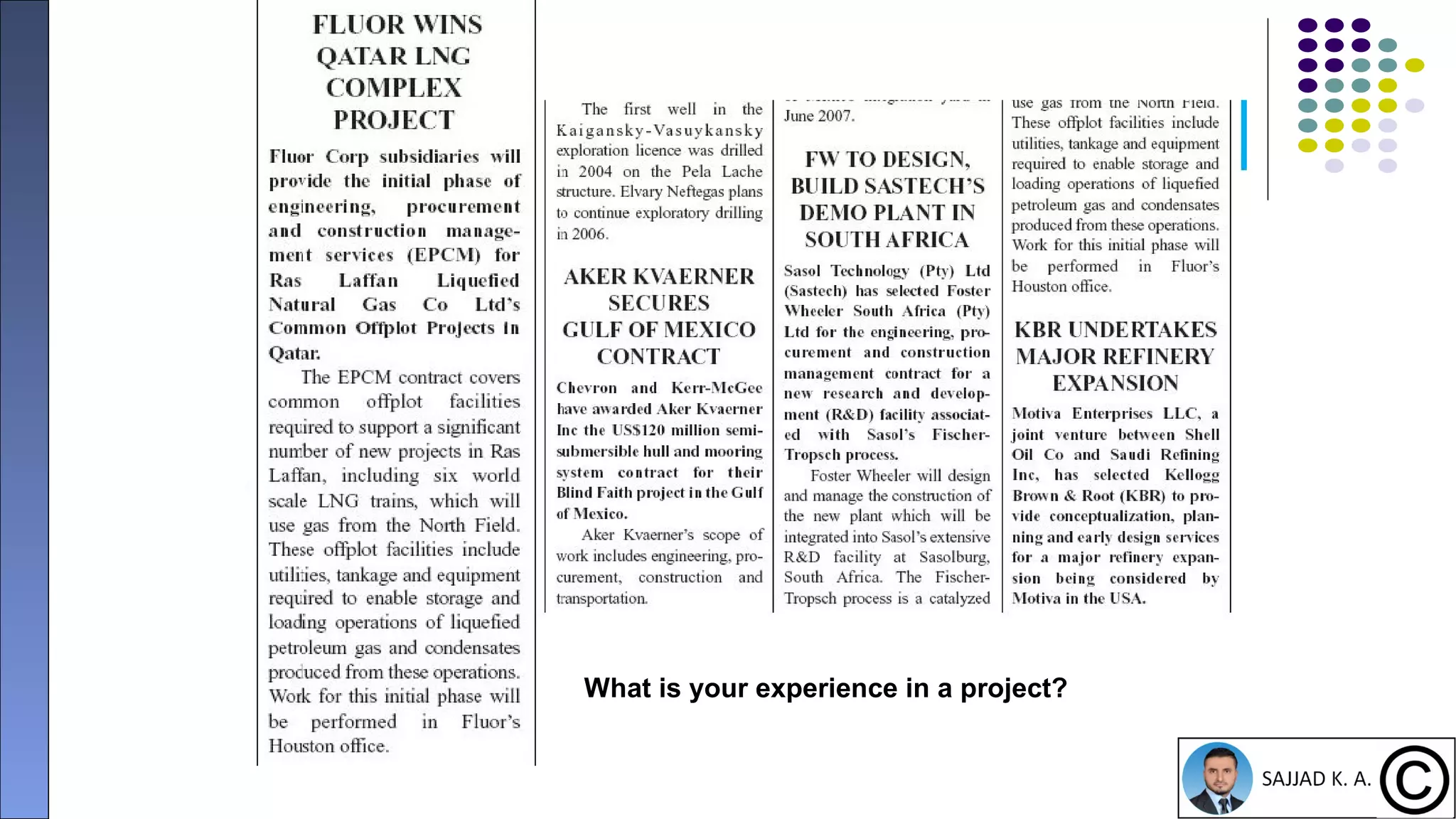
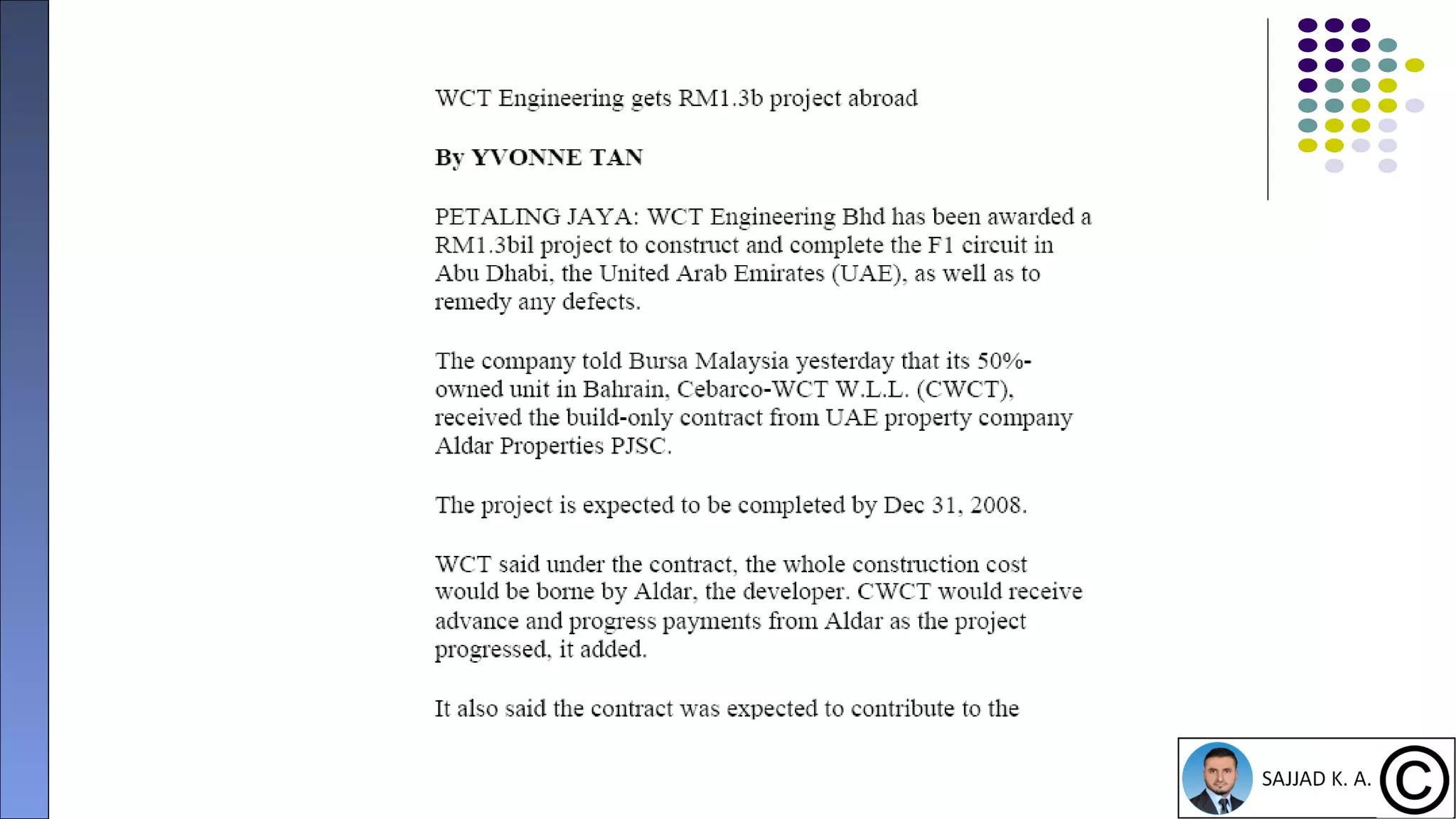
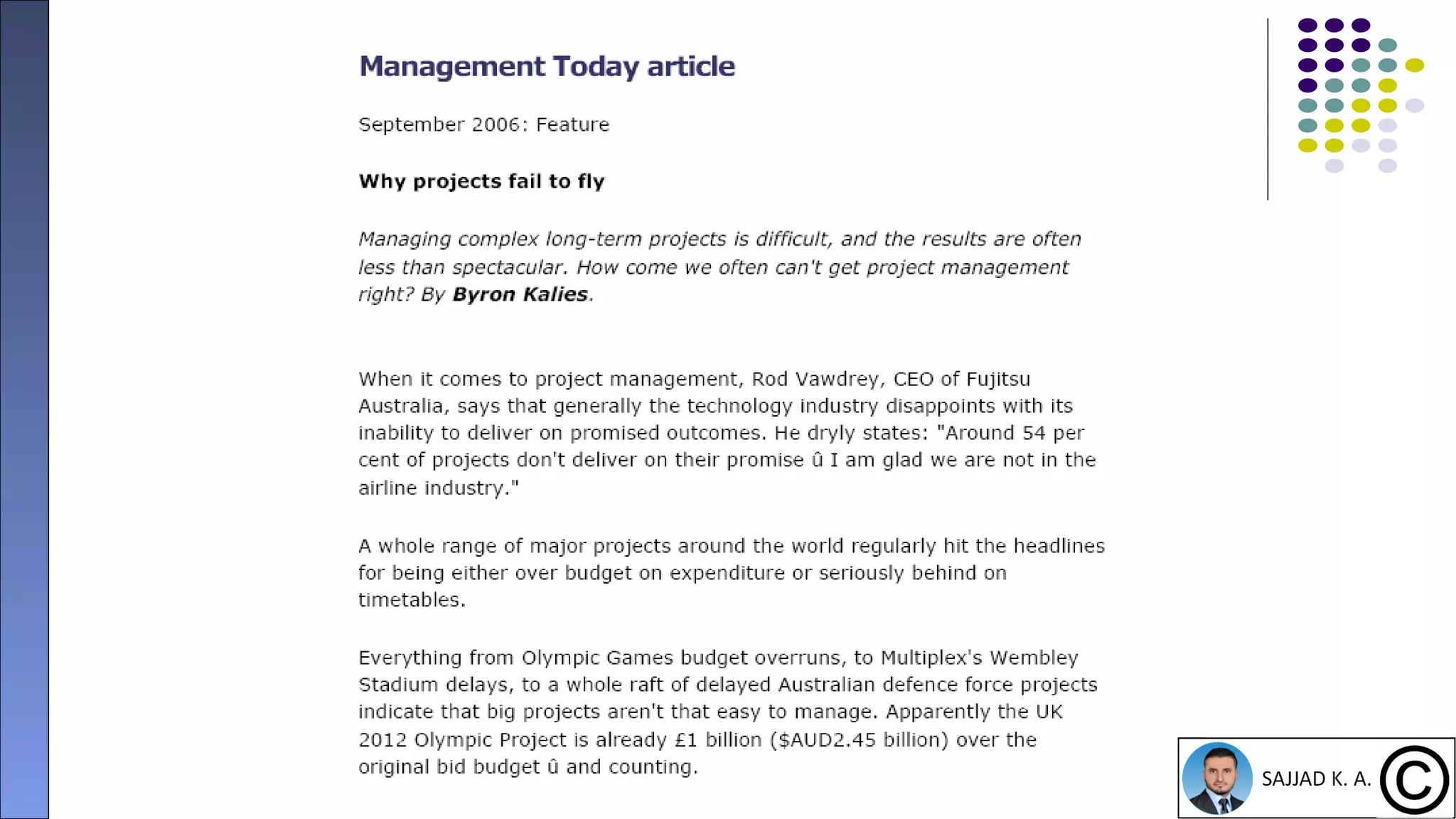
What is your experience in a project?
5
6
7
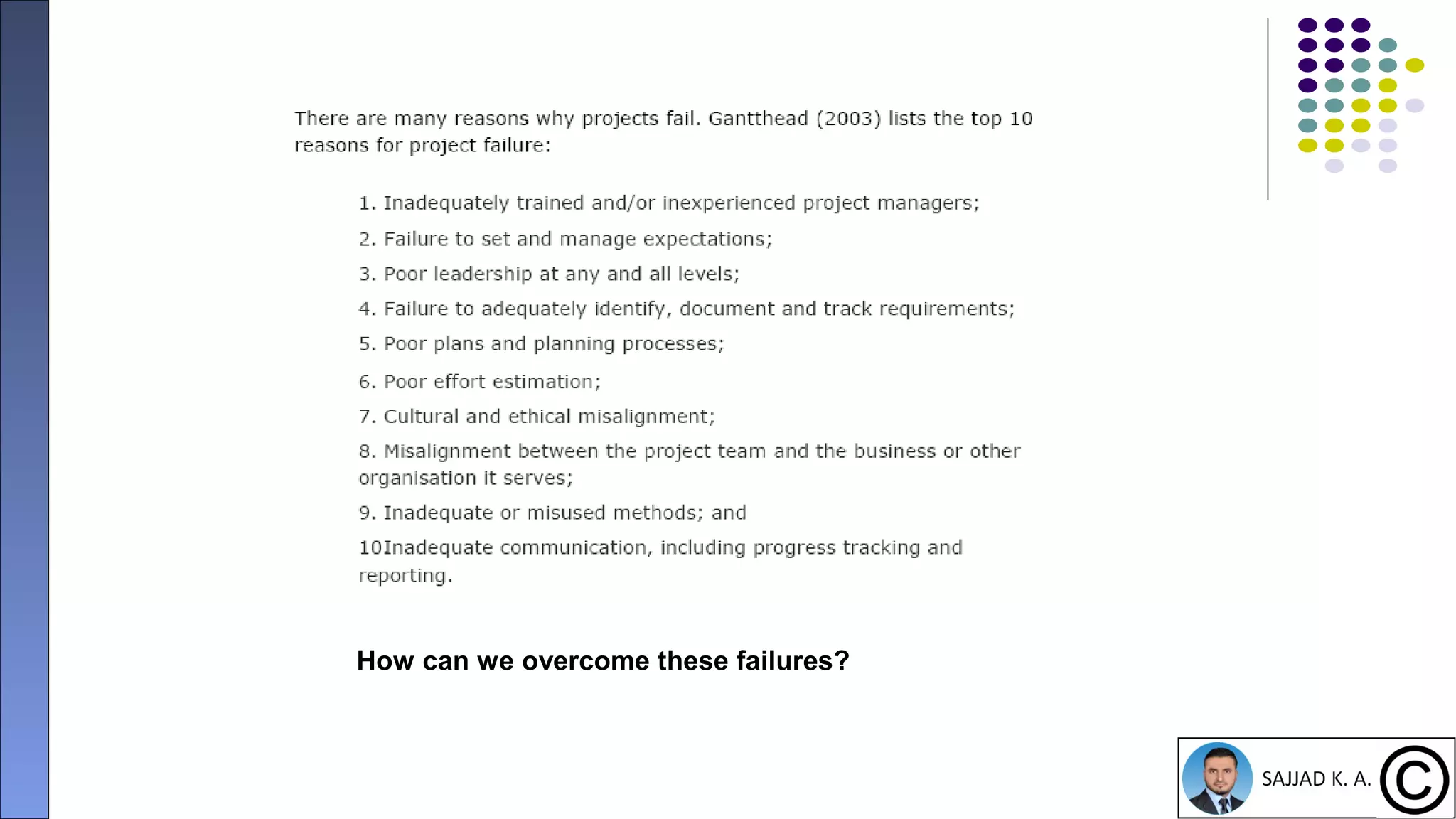
How can we overcome these failures?
8
Introduction
 What is a project?
 What is Project Management
 Relationship to other Management Disciplines
9
What is a project?
 Project vs operations
 Performed by people
 Constrained by limited resources
 Planned, executed and controlled
 Operations – ongoing and repetitive
 Projects – temporary and unique
A project is a temporary endeavor undertaken to
create a unique product or service
10
Examples of projects
 Developing a new product or service
 Effecting a change in structure, staffing or style of an organization
 Designing a new transportation vehicle
 Developing or acquiring a new or modified information system
 Constructing a building or facility
 Building a water system for a community in a developing country
 Running a campaign for political office
 Implementing a new business procedure or process
11
Think about a project that you have
been involved in. Discuss in
class:
• duration of the project
• Your role
• Any problems arising
• Any other relevant issues that
arises
12
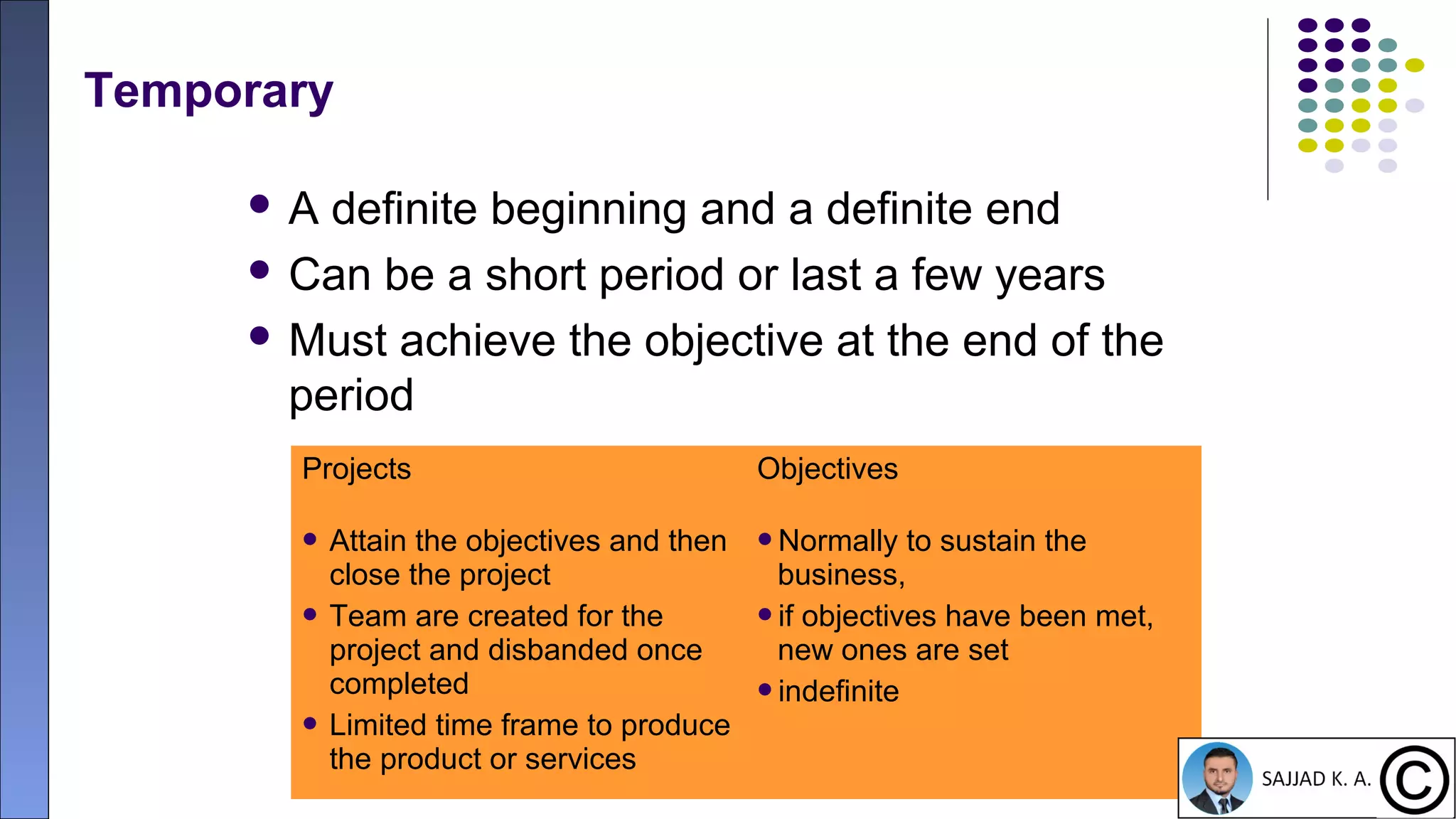
Temporary
 A definite beginning and a definite end
 Can be a short period or last a few years
 Must achieve the objective at the end of the
period
Projects Objectives
 Attain the objectives and then
close the project
 Team are created for the
project and disbanded once
completed
 Limited time frame to produce
the product or services
Normally to sustain the
business,
if objectives have been met,
new ones are set
indefinite
13
Unique
 Unique - Something that has not been done
before
 Eventhough the project category can be the
same, the uniqueness can be maintained
What is the uniqueness of the project
that you have been involved in?
What is the uniqueness of the project
that you have been involved in?
14
Progressive elaboration
 Progressive – proceeding in steps; continuing steadily by
increments
 Elaborated – worked out with care and detail; developed
thoroughly
 Must be carefully coordinated with proper project scope
definition
 Project scope – work to be done
 Product scope - ??
15
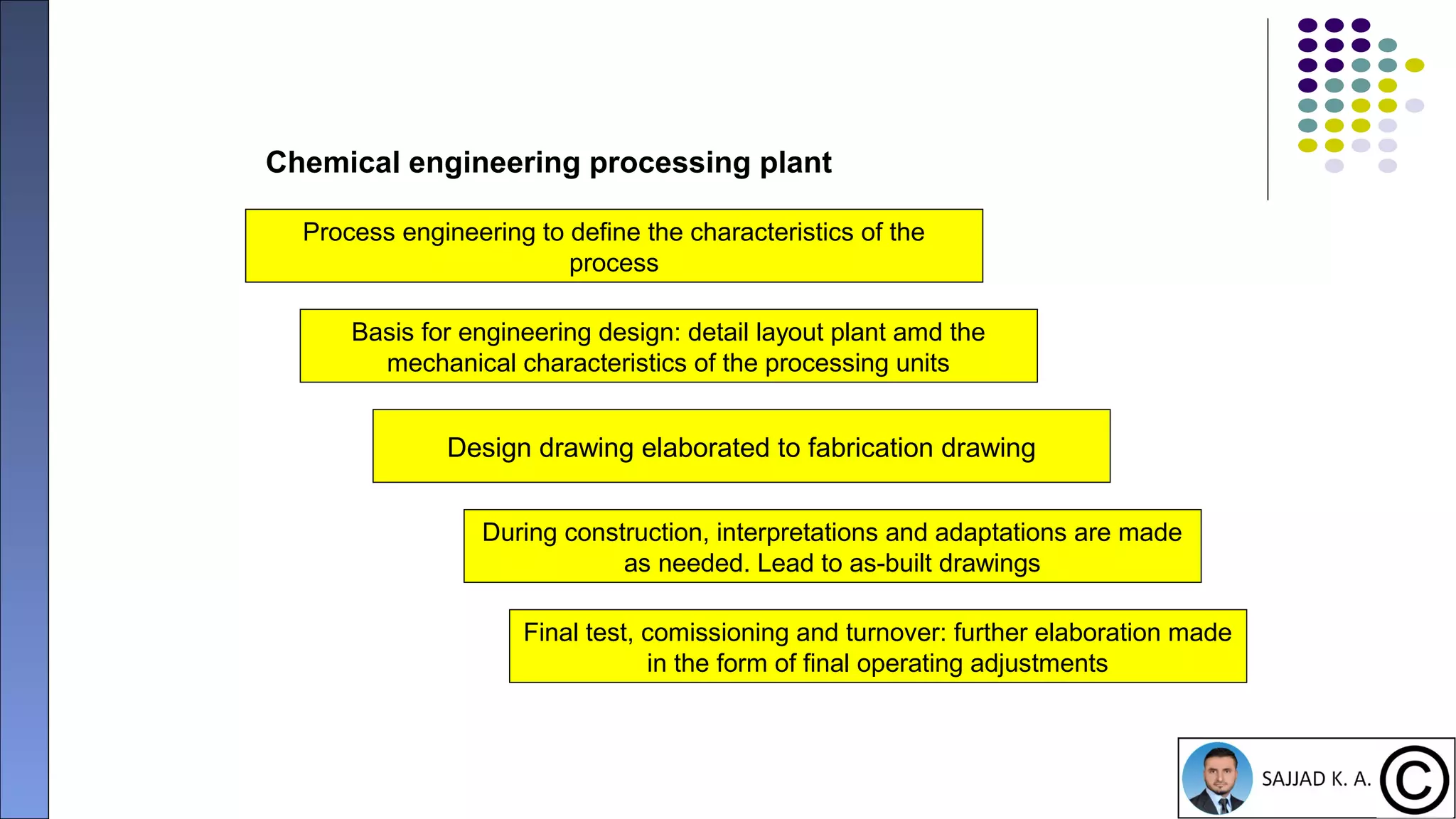
Chemical engineering processing plant
Process engineering to define the characteristics of the
process
Basis for engineering design: detail layout plant amd the
mechanical characteristics of the processing units
Design drawing elaborated to fabrication drawing
During construction, interpretations and adaptations are made
as needed. Lead to as-built drawings
Final test, comissioning and turnover: further elaboration made
in the form of final operating adjustments
16
What is Project Management?
Application of knowledge, skills, tools, and techniques to
project activities to meet project requirements. PM is
accomplished thorugh the use of such processes such
as:
• Initiating
• Planning
• Executing
• Controlling
• Closing
Project management vs management by
projects??
17
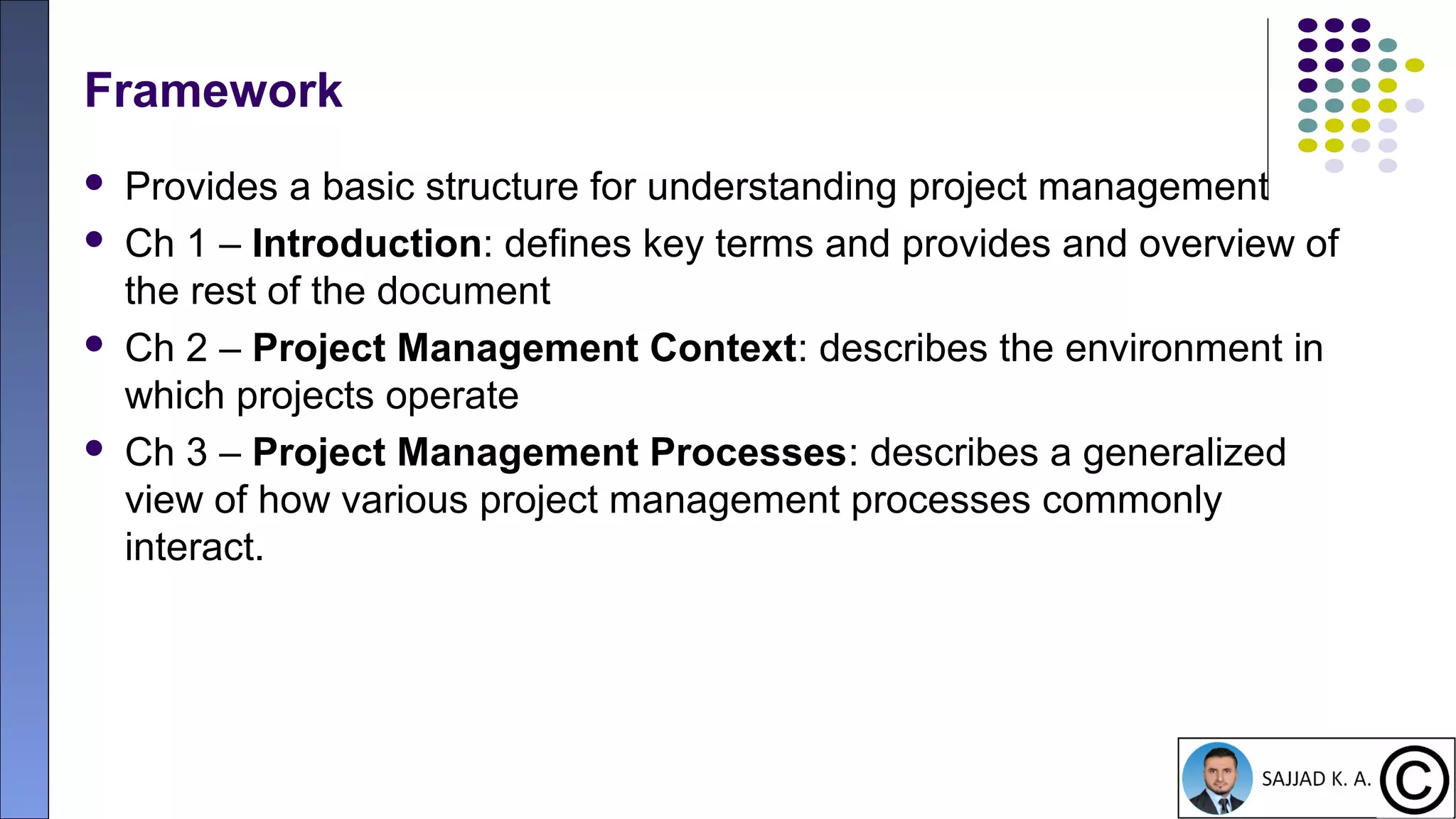
Framework
 Provides a basic structure for understanding project management
 Ch 1 – Introduction: defines key terms and provides and overview of
the rest of the document
 Ch 2 – Project Management Context: describes the environment in
which projects operate
 Ch 3 – Project Management Processes: describes a generalized
view of how various project management processes commonly
interact.
18
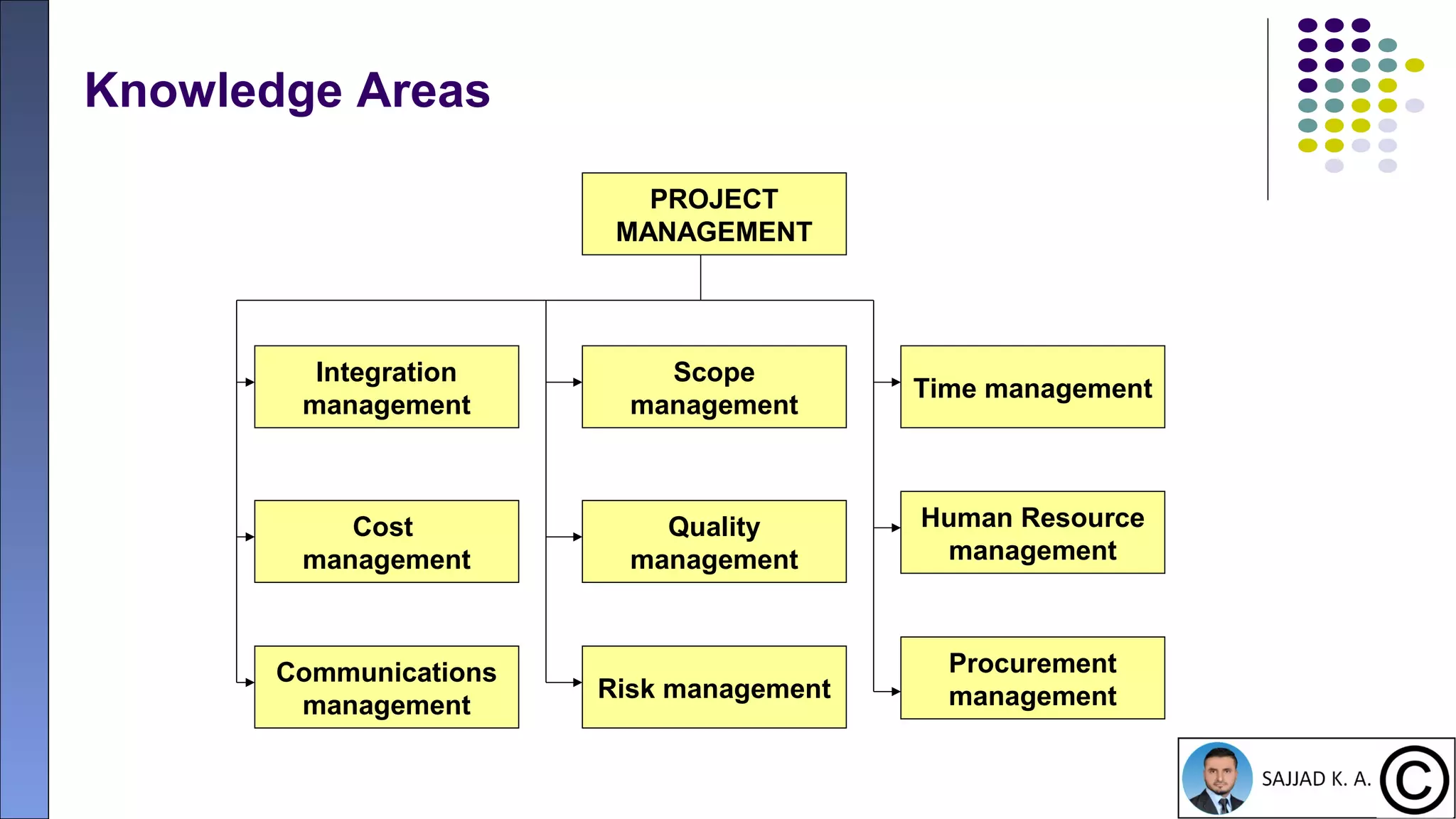
Knowledge Areas
Integration
management
Scope
management
Time management
Cost
management
Quality
management
Human Resource
management
Communications
management
Risk management
Procurement
management
PROJECT
MANAGEMENT
19
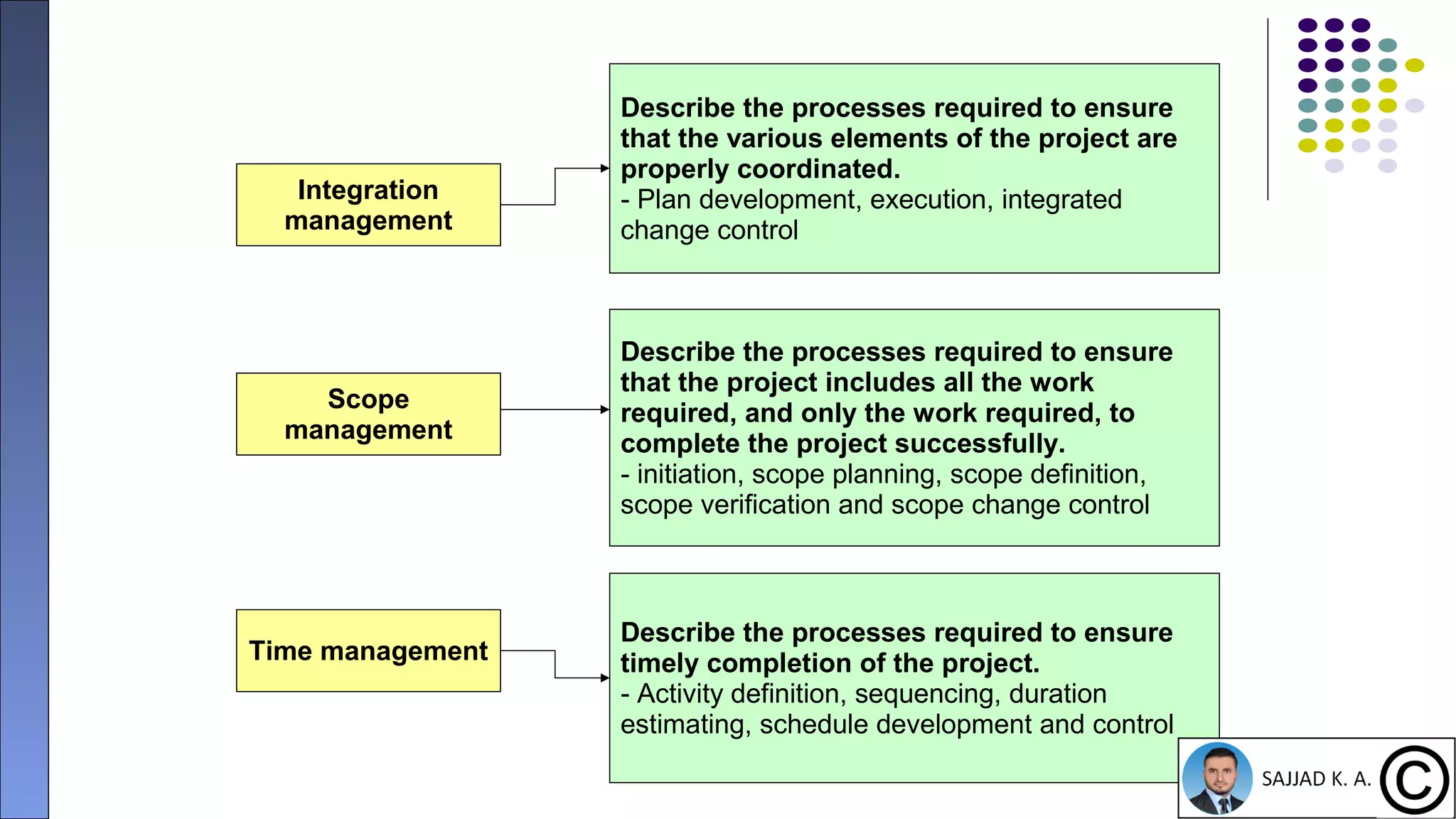
Integration
management
Describe the processes required to ensure
that the various elements of the project are
properly coordinated.
- Plan development, execution, integrated
change control
Time management
Describe the processes required to ensure
timely completion of the project.
- Activity definition, sequencing, duration
estimating, schedule development and control
Scope
management
Describe the processes required to ensure
that the project includes all the work
required, and only the work required, to
complete the project successfully.
- initiation, scope planning, scope definition,
scope verification and scope change control
20
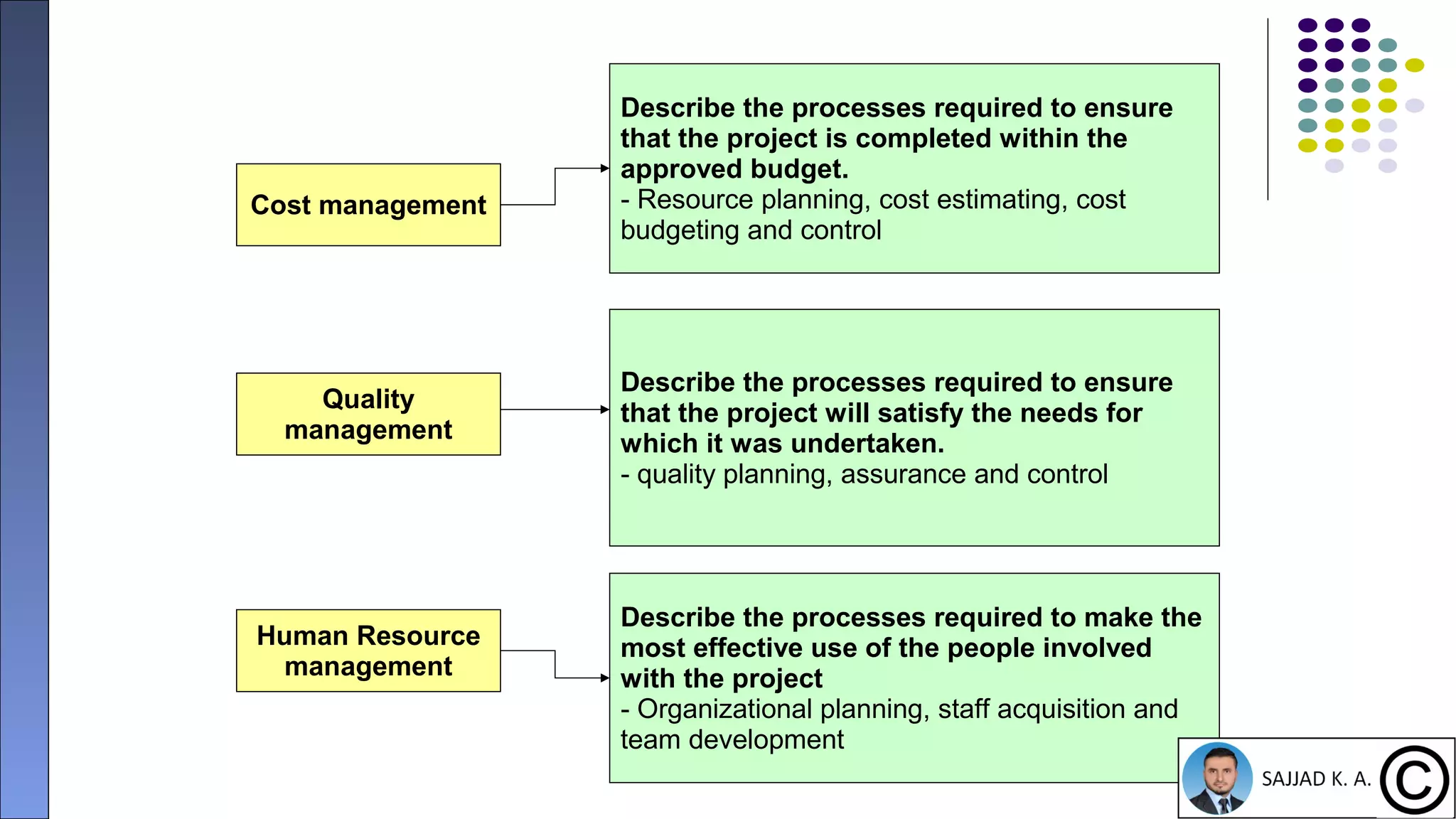
Cost management
Describe the processes required to ensure
that the project is completed within the
approved budget.
- Resource planning, cost estimating, cost
budgeting and control
Human Resource
management
Describe the processes required to make the
most effective use of the people involved
with the project
- Organizational planning, staff acquisition and
team development
Quality
management
Describe the processes required to ensure
that the project will satisfy the needs for
which it was undertaken.
- quality planning, assurance and control
21
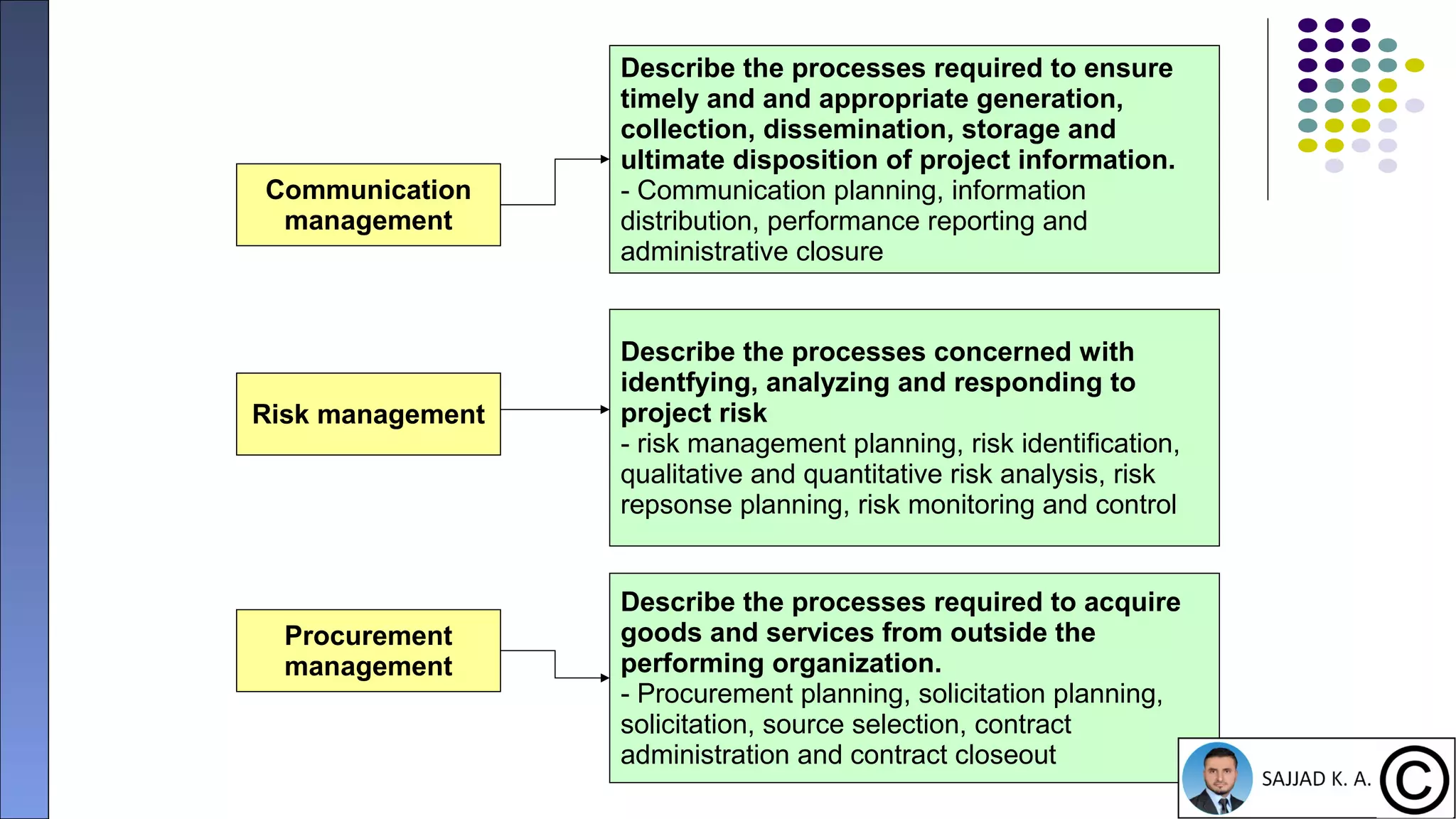
Communication
management
Describe the processes required to ensure
timely and and appropriate generation,
collection, dissemination, storage and
ultimate disposition of project information.
- Communication planning, information
distribution, performance reporting and
administrative closure
Procurement
management
Describe the processes required to acquire
goods and services from outside the
performing organization.
- Procurement planning, solicitation planning,
solicitation, source selection, contract
administration and contract closeout
Risk management
Describe the processes concerned with
identfying, analyzing and responding to
project risk
- risk management planning, risk identification,
qualitative and quantitative risk analysis, risk
repsonse planning, risk monitoring and control
22
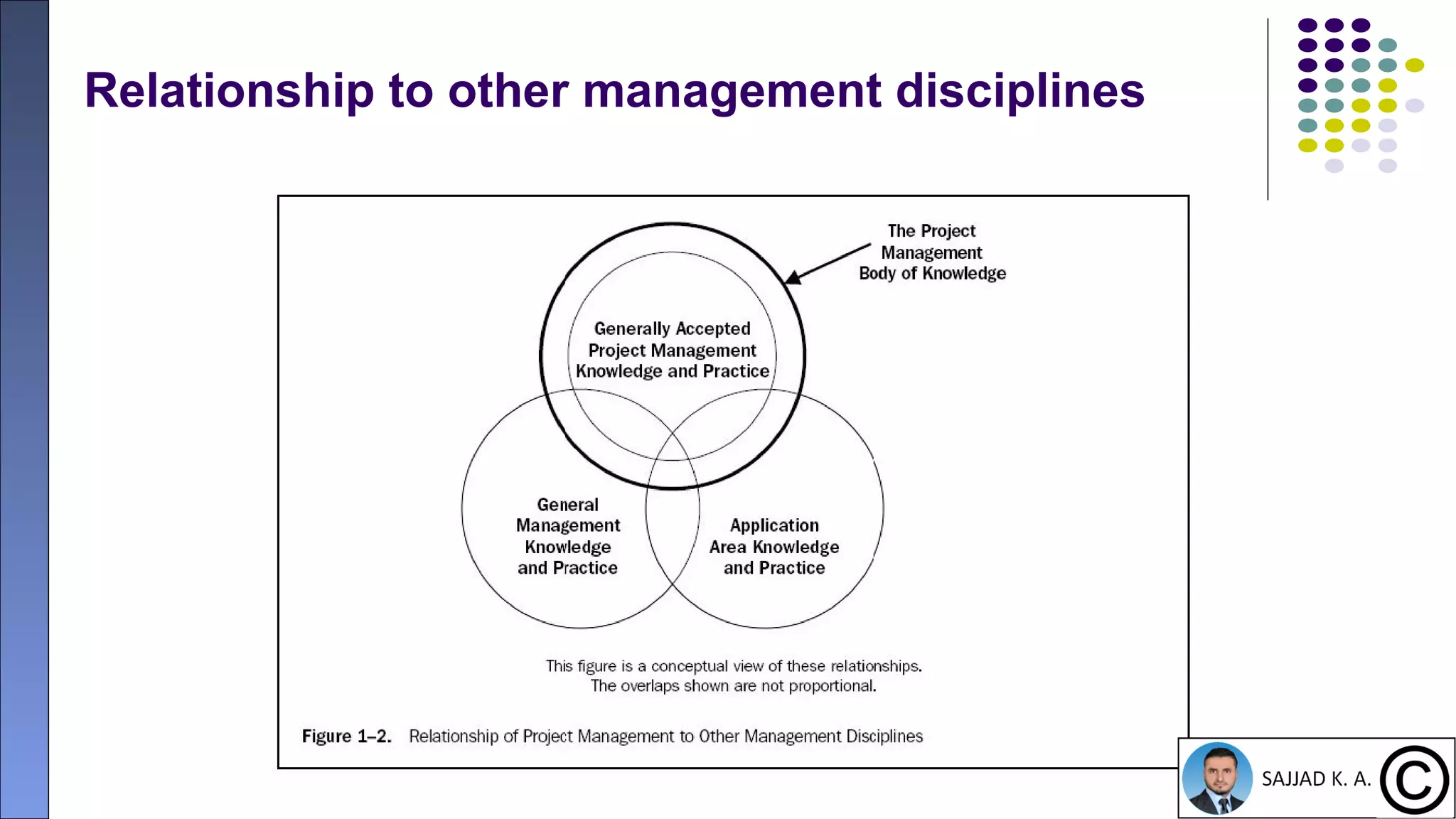
Relationship to other management disciplines
23
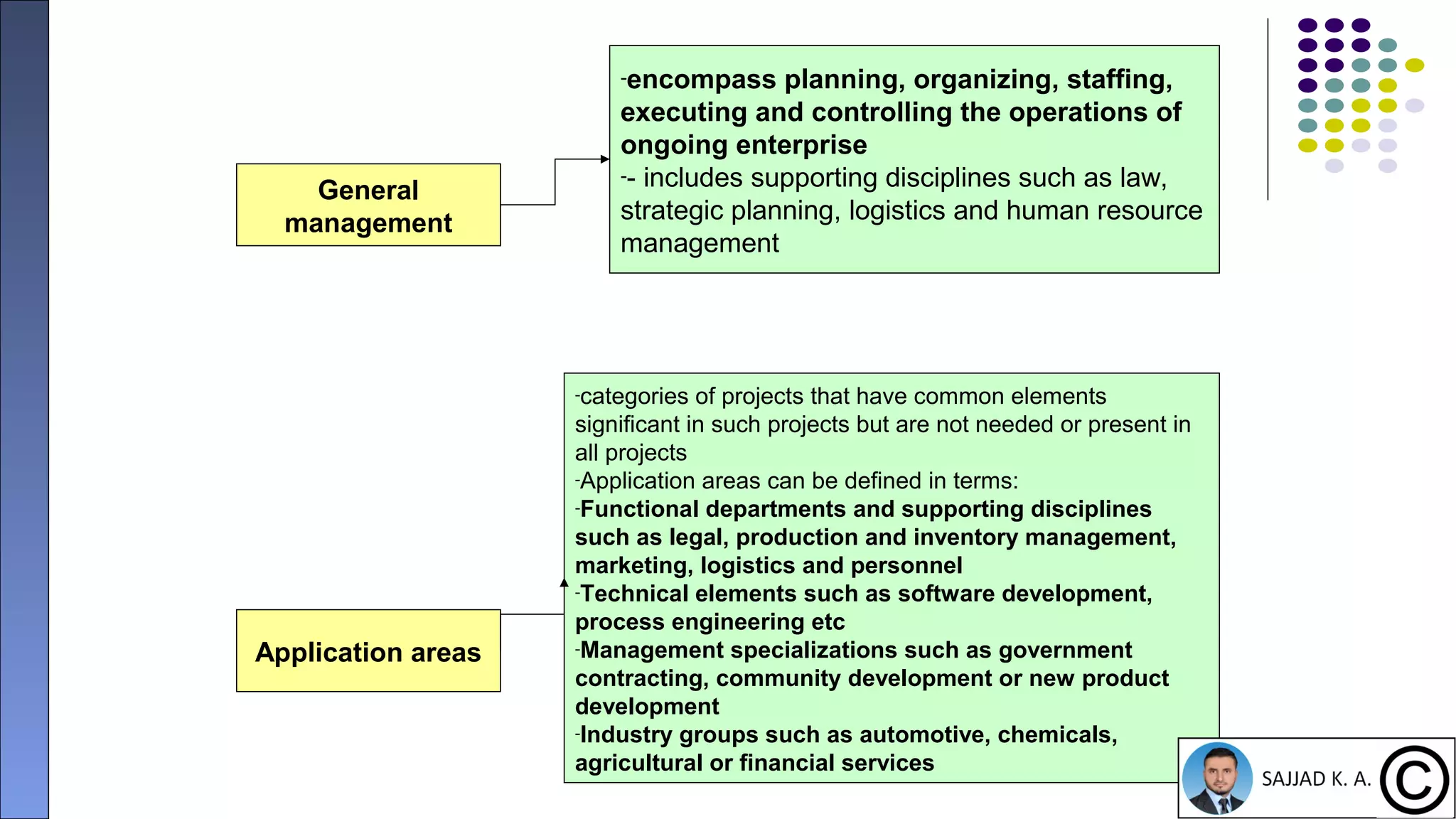
General
management
-encompass planning, organizing, staffing,
executing and controlling the operations of
ongoing enterprise
-- includes supporting disciplines such as law,
strategic planning, logistics and human resource
management
Application areas
-categories of projects that have common elements
significant in such projects but are not needed or present in
all projects
-Application areas can be defined in terms:
-Functional departments and supporting disciplines
such as legal, production and inventory management,
marketing, logistics and personnel
-Technical elements such as software development,
process engineering etc
-Management specializations such as government
contracting, community development or new product
development
-Industry groups such as automotive, chemicals,
agricultural or financial services
24
Understanding Project Failures
25
Thanks for Watching
Please follow me / SAJJAD KHUDHUR
ABBAS

Episode 23 : PROJECT TIME MANAGEMENT

  • 1.
    1 SAJJAD KHUDHUR ABBAS ChemicalEngineering , Al-Muthanna University, Iraq Oil & Gas Safety and Health Professional – OSHACADEMY Trainer of Trainers (TOT) - Canadian Center of Human Development Episode 19 : Project Management Introduction
  • 2.
  • 3.
  • 4.
    4 What is yourexperience in a project?
  • 5.
  • 6.
  • 7.
    7 How can weovercome these failures?
  • 8.
    8 Introduction  What isa project?  What is Project Management  Relationship to other Management Disciplines
  • 9.
    9 What is aproject?  Project vs operations  Performed by people  Constrained by limited resources  Planned, executed and controlled  Operations – ongoing and repetitive  Projects – temporary and unique A project is a temporary endeavor undertaken to create a unique product or service
  • 10.
    10 Examples of projects Developing a new product or service  Effecting a change in structure, staffing or style of an organization  Designing a new transportation vehicle  Developing or acquiring a new or modified information system  Constructing a building or facility  Building a water system for a community in a developing country  Running a campaign for political office  Implementing a new business procedure or process
  • 11.
    11 Think about aproject that you have been involved in. Discuss in class: • duration of the project • Your role • Any problems arising • Any other relevant issues that arises
  • 12.
    12 Temporary  A definitebeginning and a definite end  Can be a short period or last a few years  Must achieve the objective at the end of the period Projects Objectives  Attain the objectives and then close the project  Team are created for the project and disbanded once completed  Limited time frame to produce the product or services Normally to sustain the business, if objectives have been met, new ones are set indefinite
  • 13.
    13 Unique  Unique -Something that has not been done before  Eventhough the project category can be the same, the uniqueness can be maintained What is the uniqueness of the project that you have been involved in? What is the uniqueness of the project that you have been involved in?
  • 14.
    14 Progressive elaboration  Progressive– proceeding in steps; continuing steadily by increments  Elaborated – worked out with care and detail; developed thoroughly  Must be carefully coordinated with proper project scope definition  Project scope – work to be done  Product scope - ??
  • 15.
    15 Chemical engineering processingplant Process engineering to define the characteristics of the process Basis for engineering design: detail layout plant amd the mechanical characteristics of the processing units Design drawing elaborated to fabrication drawing During construction, interpretations and adaptations are made as needed. Lead to as-built drawings Final test, comissioning and turnover: further elaboration made in the form of final operating adjustments
  • 16.
    16 What is ProjectManagement? Application of knowledge, skills, tools, and techniques to project activities to meet project requirements. PM is accomplished thorugh the use of such processes such as: • Initiating • Planning • Executing • Controlling • Closing Project management vs management by projects??
  • 17.
    17 Framework  Provides abasic structure for understanding project management  Ch 1 – Introduction: defines key terms and provides and overview of the rest of the document  Ch 2 – Project Management Context: describes the environment in which projects operate  Ch 3 – Project Management Processes: describes a generalized view of how various project management processes commonly interact.
  • 18.
    18 Knowledge Areas Integration management Scope management Time management Cost management Quality management HumanResource management Communications management Risk management Procurement management PROJECT MANAGEMENT
  • 19.
    19 Integration management Describe the processesrequired to ensure that the various elements of the project are properly coordinated. - Plan development, execution, integrated change control Time management Describe the processes required to ensure timely completion of the project. - Activity definition, sequencing, duration estimating, schedule development and control Scope management Describe the processes required to ensure that the project includes all the work required, and only the work required, to complete the project successfully. - initiation, scope planning, scope definition, scope verification and scope change control
  • 20.
    20 Cost management Describe theprocesses required to ensure that the project is completed within the approved budget. - Resource planning, cost estimating, cost budgeting and control Human Resource management Describe the processes required to make the most effective use of the people involved with the project - Organizational planning, staff acquisition and team development Quality management Describe the processes required to ensure that the project will satisfy the needs for which it was undertaken. - quality planning, assurance and control
  • 21.
    21 Communication management Describe the processesrequired to ensure timely and and appropriate generation, collection, dissemination, storage and ultimate disposition of project information. - Communication planning, information distribution, performance reporting and administrative closure Procurement management Describe the processes required to acquire goods and services from outside the performing organization. - Procurement planning, solicitation planning, solicitation, source selection, contract administration and contract closeout Risk management Describe the processes concerned with identfying, analyzing and responding to project risk - risk management planning, risk identification, qualitative and quantitative risk analysis, risk repsonse planning, risk monitoring and control
  • 22.
    22 Relationship to othermanagement disciplines
  • 23.
    23 General management -encompass planning, organizing,staffing, executing and controlling the operations of ongoing enterprise -- includes supporting disciplines such as law, strategic planning, logistics and human resource management Application areas -categories of projects that have common elements significant in such projects but are not needed or present in all projects -Application areas can be defined in terms: -Functional departments and supporting disciplines such as legal, production and inventory management, marketing, logistics and personnel -Technical elements such as software development, process engineering etc -Management specializations such as government contracting, community development or new product development -Industry groups such as automotive, chemicals, agricultural or financial services
  • 24.
  • 25.
    25 Thanks for Watching Pleasefollow me / SAJJAD KHUDHUR ABBAS