enzyme kinetics, multi step reaction and rate limiting steps
1) This document discusses enzyme kinetics and multi-step biochemical reactions. It defines key terms like enzymes, reactants, products, elementary steps, and intermediate products.
2) It explains that some biochemical reactions occur in a single step but others require multiple steps, with intermediate products forming in between. The series of steps that produce intermediates is called a multi-step reaction.
3) Within a multi-step reaction, the slowest step that determines the overall rate is the rate-limiting step. Examples are provided to illustrate multi-step reactions and identifying the rate-limiting step.
Introduction
2
In theliving world without the biochemical reaction
nothing will happened, These chemical reaction was speedup
by enzymes, if there is no enzymes a reaction was take million
years to complete.
Some biochemical reaction is completed within one step
but in some causes it will take more step to complete the whole
reaction, these elementary step reaction called multi step
reaction.
In multi step reaction which elementary step was take more
time to completed that is called rate determine step.
3.
Vocabulary
Enzyme:
Enzyme is aprotein produced by living cells, which
catalyzes or speedup a biochemical reaction.
Enzyme Kinetics:
Enzyme kinetics is a study or understanding the
rate of biochemical reaction in a cell.
Reactants:
The starting materials in a reaction that undergo a
chemical change to form a product.
3
4.
Vocabulary
Elementary step:
An elementarystep is a single and simple step in
a multistep reaction.
Intermediate product:
The product of single elementary step in multi
step biochemical reaction.
Products:
The final changes of reactant its called product.
4
5.
5
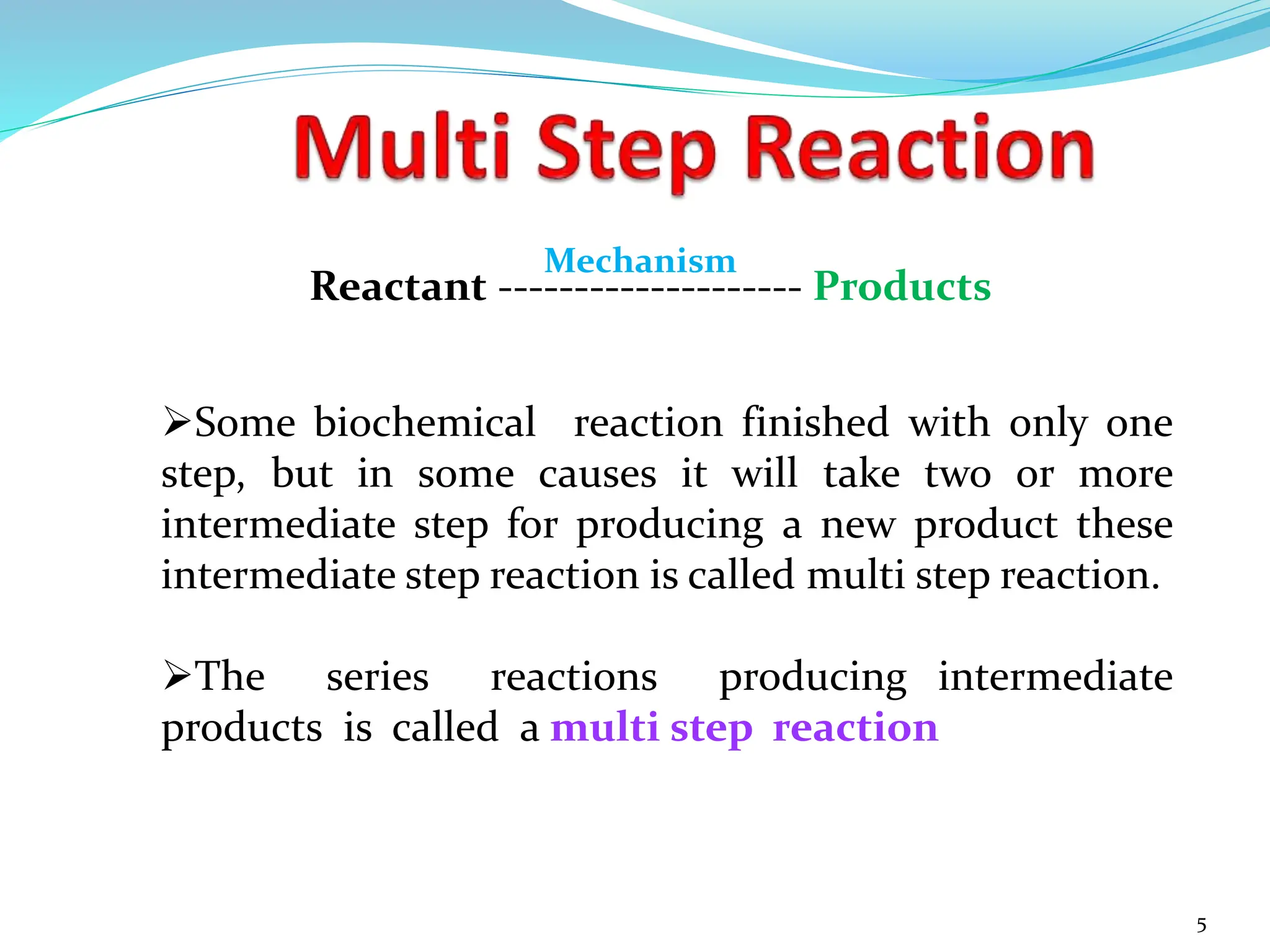
Reactant -------------------- Products
Mechanism
Somebiochemical reaction finished with only one
step, but in some causes it will take two or more
intermediate step for producing a new product these
intermediate step reaction is called multi step reaction.
The series reactions producing intermediate
products is called a multi step reaction
6.
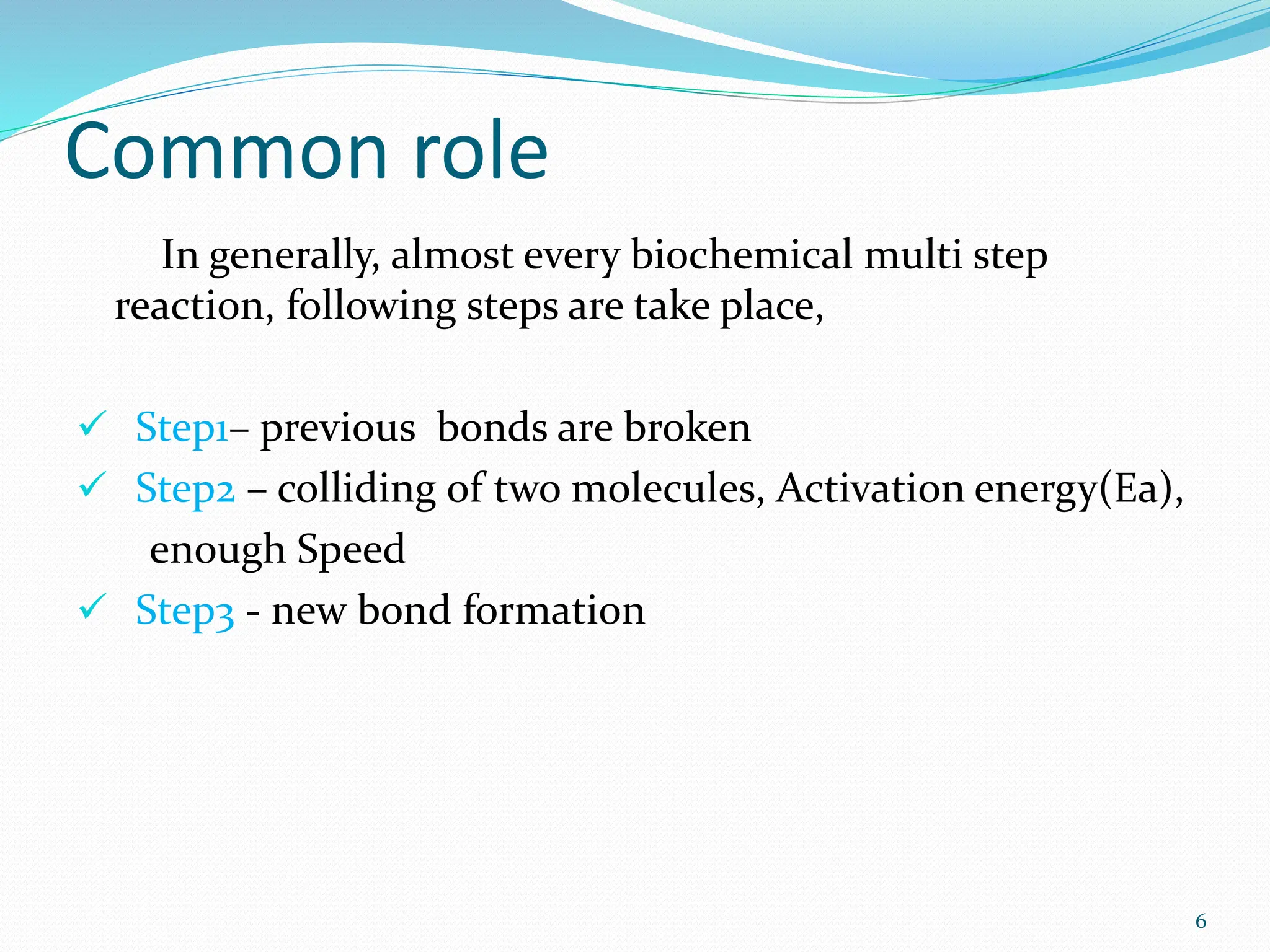
Common role
In generally,almost every biochemical multi step
reaction, following steps are take place,
Step1– previous bonds are broken
Step2 – colliding of two molecules, Activation energy(Ea),
enough Speed
Step3 - new bond formation
6
7.
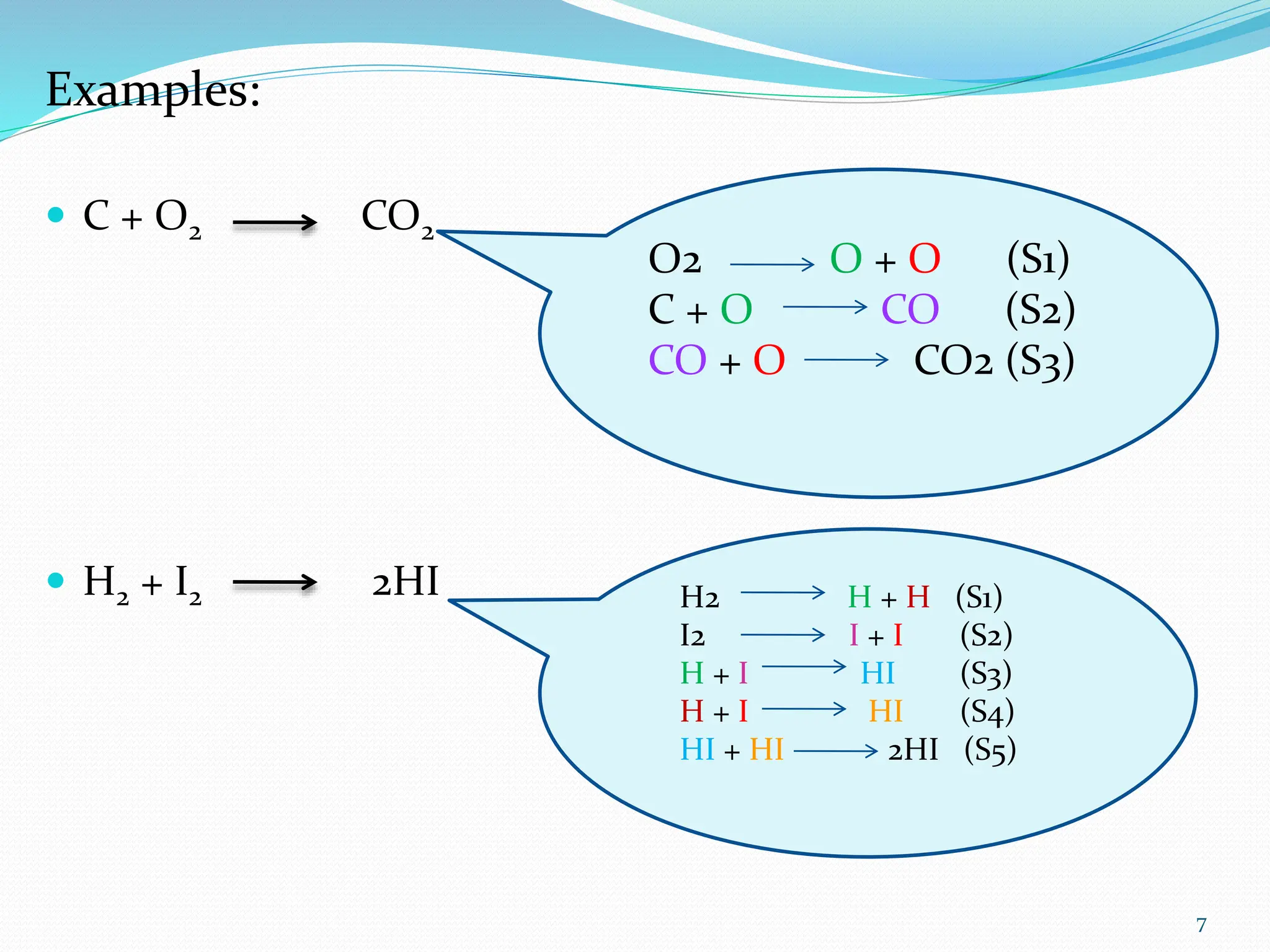
Examples:
C +O2 CO2
H2 + I2 2HI
7
O2 O + O (S1)
C + O CO (S2)
CO + O CO2 (S3)
H2 H + H (S1)
I2 I + I (S2)
H + I HI (S3)
H + I HI (S4)
HI + HI 2HI (S5)
Rate limiting step(time)
Fasterreaction = less time = faster rate
Slower reaction = more time = slower rate
9
The slowest step in a multi step reaction is called
Rate limiting step, which determine the over all
rate of the reaction
10.
10
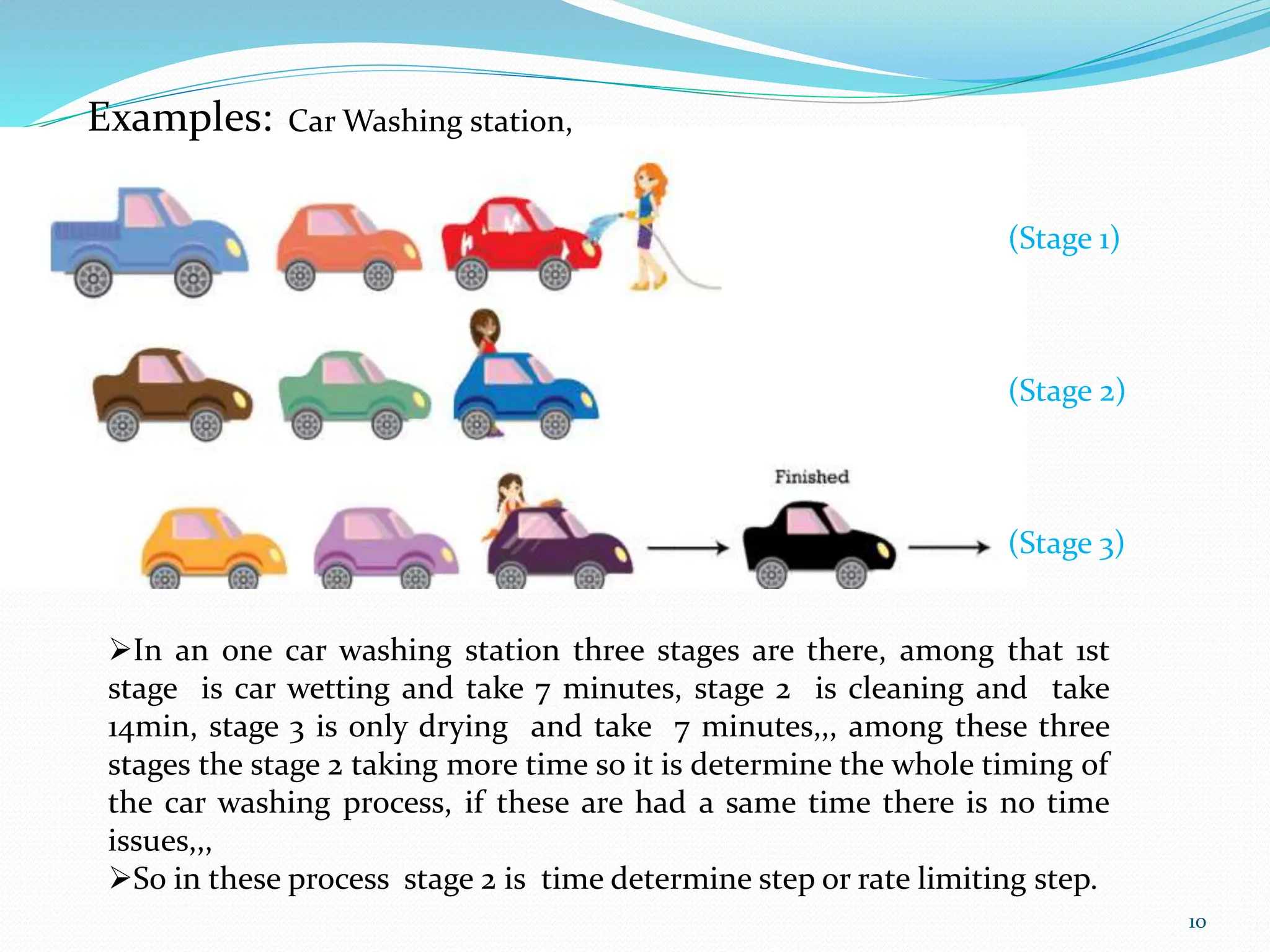
Examples: Car Washingstation,
(Stage 1)
(Stage 2)
(Stage 3)
In an one car washing station three stages are there, among that 1st
stage is car wetting and take 7 minutes, stage 2 is cleaning and take
14min, stage 3 is only drying and take 7 minutes,,, among these three
stages the stage 2 taking more time so it is determine the whole timing of
the car washing process, if these are had a same time there is no time
issues,,,
So in these process stage 2 is time determine step or rate limiting step.
11.
11
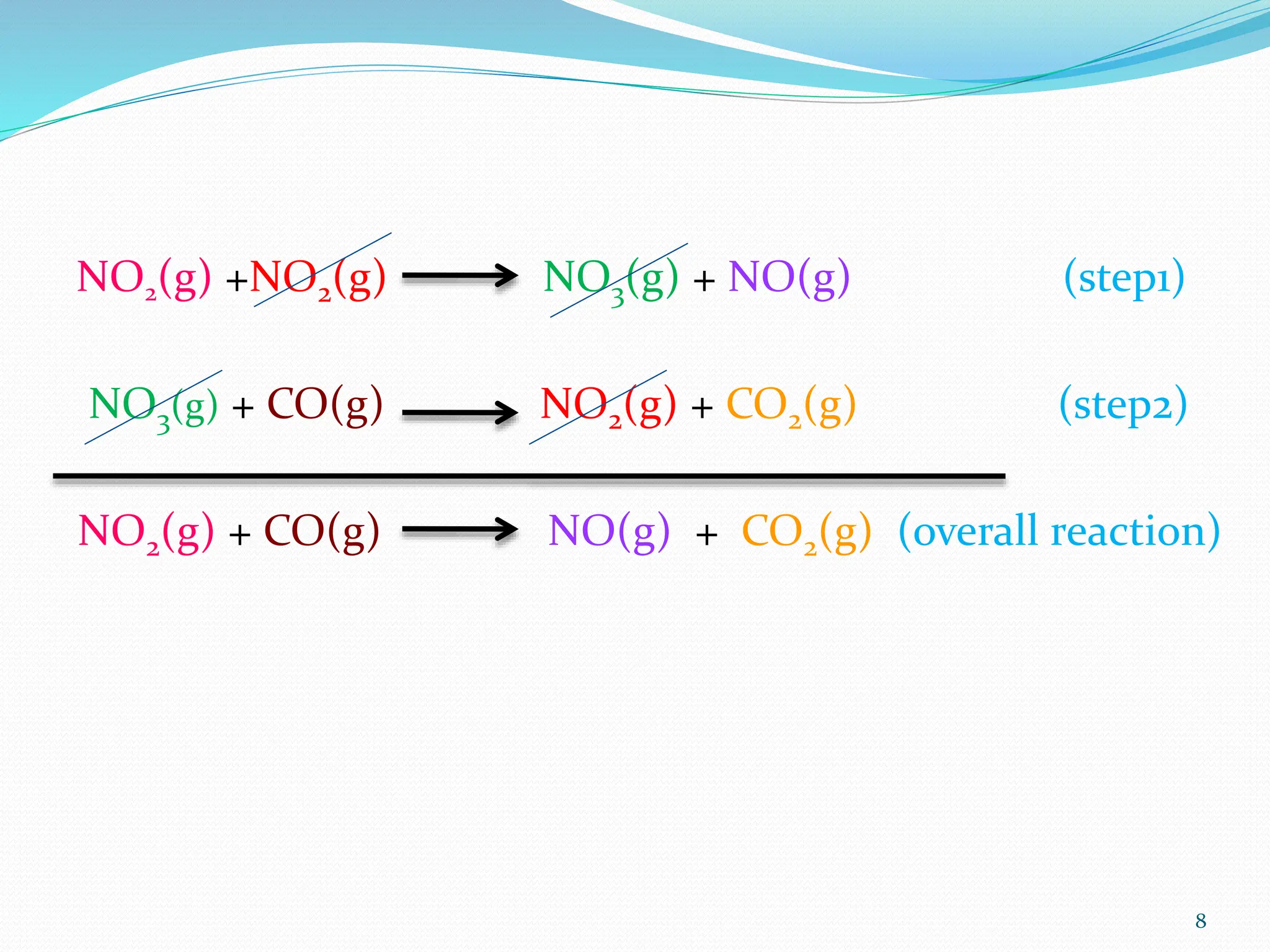
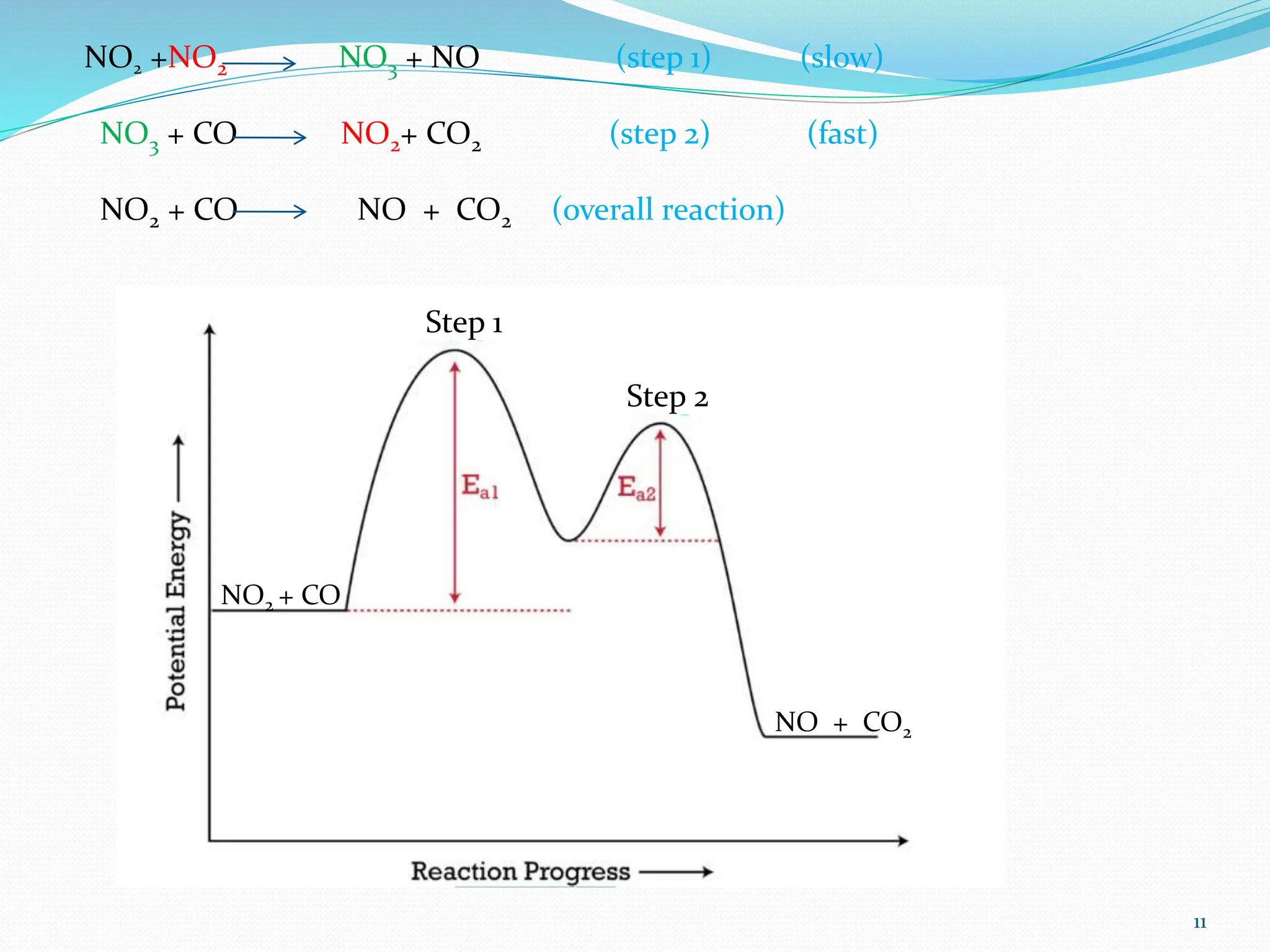
NO2 +NO2 NO3+ NO (step 1) (slow)
NO3 + CO NO2+ CO2 (step 2) (fast)
NO2 + CO NO + CO2 (overall reaction)
NO2 + CO
NO + CO2
Step 1
Step 2
12.
Difference between multistep reaction & rate
limiting step
Both multi step reaction and rate limiting steps are
almost similar, but in some way it have a difference
In a reaction, the elementary steps had no time or
rate different with each other(same time) it is called
multi step reaction
In a reaction, the elementary steps had time or rate
different with each other(different time) it is called
rate limiting step
12