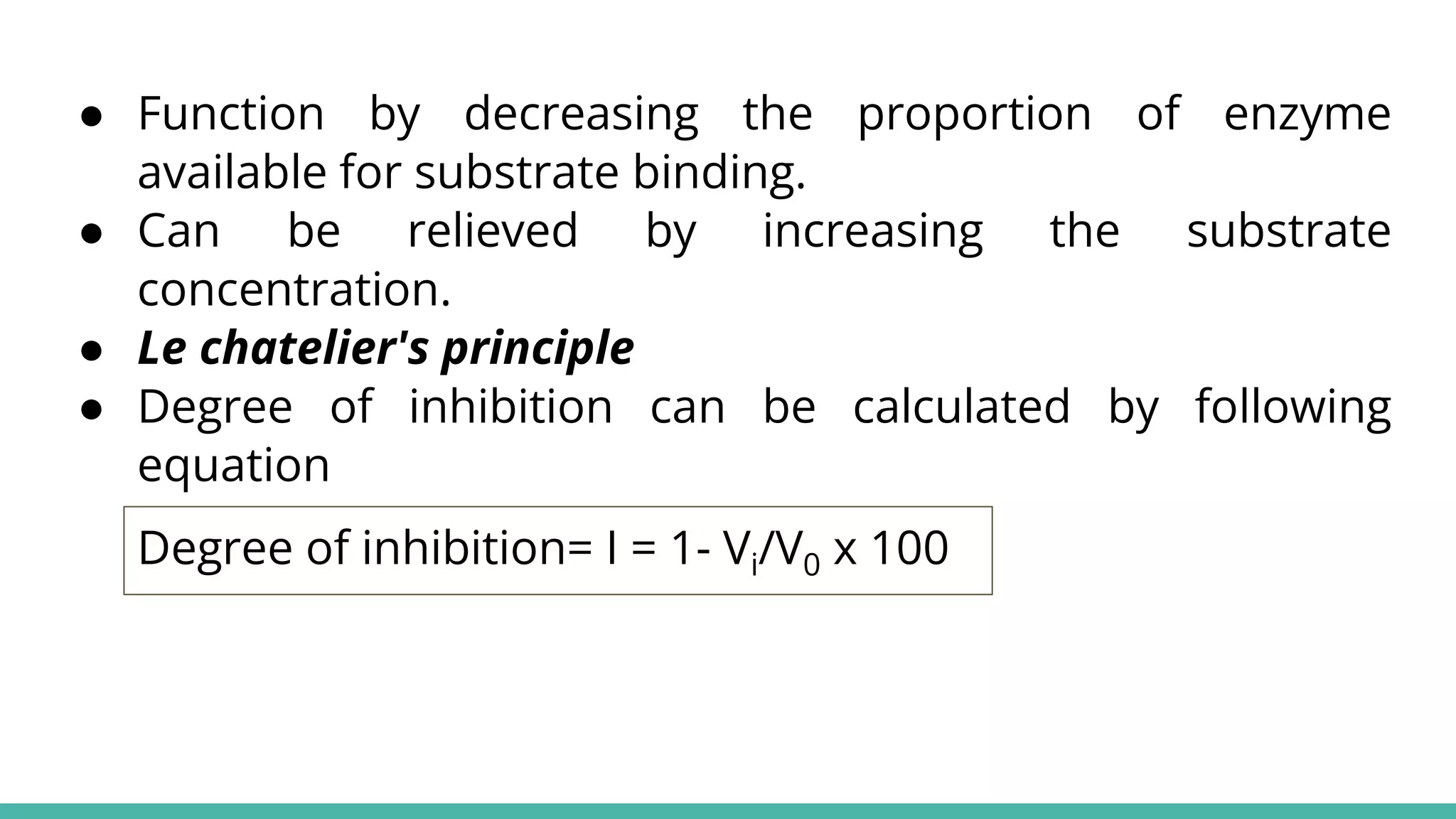
Types of enzyme inhibition include reversible, irreversible, suicidal, group-specific, non-competitive, and competitive inhibition. Competitive inhibitors are structurally similar to the substrate and bind to the active site, preventing substrate binding. Non-competitive inhibitors bind to allosteric sites and induce conformational changes in the active site. Examples include heavy metals, fluoride, cyanide, and EDTA. Uncompetitive inhibitors only bind the enzyme-substrate complex and have no affinity for the substrate or free enzyme. Inhibitors are used clinically to treat conditions like gout, poisoning, and diabetes.