Pharmaceuticals in the Water  A Global Concern
Pollutants are showing up in many waterways since the 1970’s Streams River ways Oceans Lakes Water treatment plants
History Drugs initially found in waterways in the 1970’s by Wayne Garrison In the U.S. 1990’s:  USGS in 1999-2000 Findings:  one or more chemicals were found in 80% of  the streams sampled 82 out of 95 chemicals investigated were detected atleast once. (NSFC Small Flows Quarterly)
“PPCP’s” Abbreviation used for: Pharmaceuticals (medications) and Personal  Care Pollutants  EPA calls PPCP’s emerging contaminants. USGS(US geological study) Found concentrations of < one part per billion in many waterways surveyed.
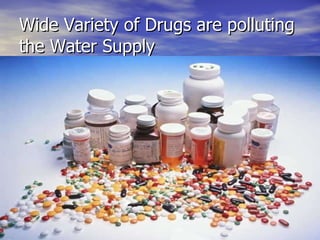
Wide Variety of Drugs are polluting the Water Supply
Types of Drugs found: Wide assortments of drug classifications  Over the counter Prescription Controlled Substances- def. drugs that are regulated  and rated by the federal government by their potential for abuse- Morphine, Codeine
Pharmaceutical Water Pollutants Includes drugs such as: seizure medications- decreases reaction time in the nervous    system (slows the neuron activity/response) Birth control pills- Hormones, estrogen replacement antidepressants-Zoloft, Paxil, Prozac chemotherapeutics- Kill cells antibiotics-  worry about: antibiotic resistant bacteria pain killers  Tranquillizers anti-cholesterol drugs anti-inflammatory Beta-Blockers and Calcium channel Blockers: heart and Blood  Pressure meds Steroids Stimulants Valium
Other Pharmaceutical pollutants Shampoo Lotion Caffeine Nicotine Fragrances Cosmetics Sun-screen  Diagnostic agents: X-ray contrast
Where do the drugs come from? Pharmaceutical Industries/Manufacturers Hospitals-Medical facilities: standard practice of disposal is to flush medications down toilet or pour down sink to prevent drug seeking behaviors Households: At home unused/unwanted quantities are flushed
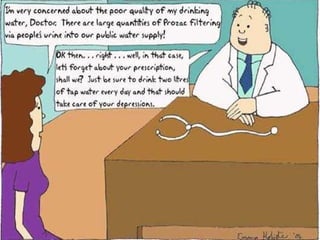
How do PPCP’s enter the environment? Showering Household cleaning Beverage consumption These PPCP’s are washed down the drain, consumed, excreted, then flushed down the toilet. Or: per poison control centers instruct to flush unused medications
PPCP’s Also enter through… Failing septic systems Straight pipes Discharge from wastewater treatment plants
How do they get into the water? Old medications are flushed down the toilet   to the water treatment system   they are not completely filtered then the metabolites of the drugs are returned to the lakes   drinking water  The drugs are dumped in garbage and  absorbed into ground water Animals receive treatment, excrete and absorbed via ground water
 
Why do Consumers flush drugs down the toilet? Prevention Drugs can be hazardous and poisonous Childhood poisoning-i.e. Over dose Adult and teenage abuse-i.e. Narcotics, cough medicines…
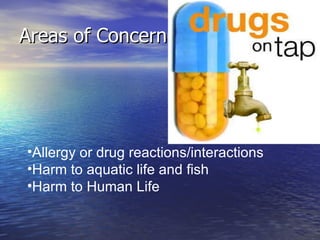
Areas of Concern… Allergy or drug reactions/interactions Harm to aquatic life and fish Harm to Human Life
Human concern Several federal, state and private agencies working together to analyze and research pharmaceuticals, impact on human and aquatic life.  “ Not very significant at this point due to chlorination, filtration and charcoal treatment of water before it reaches us”   Question: What about long term effects??????? Low concentrations- The amount is stated to be too minute to harm humans at this point (parts per billion/trillion)
Caffeine Maximum reported drinking water level for caffeine is 0.12 parts per billion. At this concentration a person would have to drink 222,000 gallons of water before they ingest the equivalent to one cup of coffee
EPA states: Do not know if there is a human health risk from reported levels US continues to have the safest drinking water supplies in the world due to the collective long standing commitment to keep our water clean and healthy
Aquatic life and fish Research findings state:  Sex steroids from oral contraceptives and other similar chemicals can feminize male fish and change behaviors of either sex. A three year study in the U.K. found many final sewage effluents contain estrogenic hormones believed to originate from women’s urine-research was initiated after the discovery of male fish became partly feminized.
Female fish have developed male genital organs. Skewed sex ratios in some aquatic populations Sexually abnormal bass that produce both eggs and sperm
Aquatic life at risk Estrogen responsible for deforming reproductive systems of the fish. Fish are living in the lake water with constant exposure and higher levels of chemicals.
 
Other wild life  Kidney failure in Vultures Impaired reproduction in mussels  Inhibited growth of algae Bull sharks tested positive for antidepressants
In Europe Researchers have tied a decline in male sperm count to low levels of birth control in the environment. Have discovered chemotherapy drugs, antibiotics and hormones in drinking water sources. Germany found anti-cholesterol drugs over a decade ago in a German water treatment plant
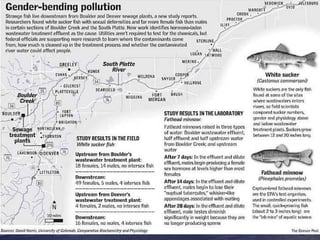
U.S. 20 years ago the EPA found sludge from a water treatment plant in the US contained excreted aspirin, caffeine and nicotine.  No significance with findings at that time. USGS discovered inter-sexed fish in the Potomac river in 2006(fish were small and large mouth bass, were male but carried immature eggs)
USGS Survey started in 1999 Surveyed 139 streams around the country and found that 80% of sample contained residues of pain killers, hormones, blood pressure medications, or antibiotics. The FDA is evaluating the effects of residues in antibiotics (effects on humans and assess potential to encourage the development of drug-resistant bacteria.
Testing analysis US has delayed there research report findings until 2009 Several agencies are devising new ways to measure and analyze the compounds, determine their prevalence in the environment, figure out where they come from , how they move, where they end up if they have any effects.
Lake Mead, Nevada - Research 2 long electric claws sunk into the lake from a boat Dozens of stunned fish float to the surface They are scooped up and placed in a cooler Researchers club 7# carps  to death, draw their blood, snip out there gonads and pack them in aluminum foil and dry ice. Specimens then flown to aquatic toxicologists
Suggestions of What can we do to: Agencies have started to discourage pharmacies, hospitals, nursing homes and residents from disposing medications in the toilet.  “ pharmaceutical take back locations”  in drug stores or police stations Adding drugs to a list of hazardous household waste- collect periodically and incinerate Flush down the drain only if they are labeled with specific instructions to do so. Or in the trash mixed with an undesirable substance to discourage drug seekers.
Preventing PPCP’s from entering the Environment per EPA Direct disposal of unused drugs Government need to make a guide for the nation on the safest way to dispose of drugs Limit introduction of PPCP’s into the environment
Fox News Clip on Drugs in our Water Supply http://www.youtube.com/watch?v=1VhMLPpJy4w&feature=related Bottled water
References Rochester D&C march 10,11 and April 14 Testimony of Benjamin H. Grumbles, Assistant Administrator for EPA before the Transportation Safety, infrastructure security and Water Quality Sub Committee of the Environment and Public Works Committee united states senate April 15, 2008 Drugs are in the Water.  Does it Matter? by Cornelia Dean Pharmaceuticals in our Water Supplies The Mystery Behind PPCP’s www.Epa.gov

Environmental issues pharmaceuticals in our dringing water

  • 1.
    Pharmaceuticals in theWater A Global Concern
  • 2.
    Pollutants are showingup in many waterways since the 1970’s Streams River ways Oceans Lakes Water treatment plants
  • 3.
    History Drugs initiallyfound in waterways in the 1970’s by Wayne Garrison In the U.S. 1990’s: USGS in 1999-2000 Findings: one or more chemicals were found in 80% of the streams sampled 82 out of 95 chemicals investigated were detected atleast once. (NSFC Small Flows Quarterly)
  • 4.
    “PPCP’s” Abbreviation usedfor: Pharmaceuticals (medications) and Personal Care Pollutants EPA calls PPCP’s emerging contaminants. USGS(US geological study) Found concentrations of < one part per billion in many waterways surveyed.
  • 5.
    Wide Variety ofDrugs are polluting the Water Supply
  • 6.
    Types of Drugsfound: Wide assortments of drug classifications Over the counter Prescription Controlled Substances- def. drugs that are regulated and rated by the federal government by their potential for abuse- Morphine, Codeine
  • 7.
    Pharmaceutical Water PollutantsIncludes drugs such as: seizure medications- decreases reaction time in the nervous system (slows the neuron activity/response) Birth control pills- Hormones, estrogen replacement antidepressants-Zoloft, Paxil, Prozac chemotherapeutics- Kill cells antibiotics- worry about: antibiotic resistant bacteria pain killers Tranquillizers anti-cholesterol drugs anti-inflammatory Beta-Blockers and Calcium channel Blockers: heart and Blood Pressure meds Steroids Stimulants Valium
  • 8.
    Other Pharmaceutical pollutantsShampoo Lotion Caffeine Nicotine Fragrances Cosmetics Sun-screen Diagnostic agents: X-ray contrast
  • 9.
    Where do thedrugs come from? Pharmaceutical Industries/Manufacturers Hospitals-Medical facilities: standard practice of disposal is to flush medications down toilet or pour down sink to prevent drug seeking behaviors Households: At home unused/unwanted quantities are flushed
  • 10.
    How do PPCP’senter the environment? Showering Household cleaning Beverage consumption These PPCP’s are washed down the drain, consumed, excreted, then flushed down the toilet. Or: per poison control centers instruct to flush unused medications
  • 11.
    PPCP’s Also enterthrough… Failing septic systems Straight pipes Discharge from wastewater treatment plants
  • 12.
    How do theyget into the water? Old medications are flushed down the toilet  to the water treatment system  they are not completely filtered then the metabolites of the drugs are returned to the lakes  drinking water The drugs are dumped in garbage and absorbed into ground water Animals receive treatment, excrete and absorbed via ground water
  • 13.
  • 14.
    Why do Consumersflush drugs down the toilet? Prevention Drugs can be hazardous and poisonous Childhood poisoning-i.e. Over dose Adult and teenage abuse-i.e. Narcotics, cough medicines…
  • 15.
    Areas of Concern…Allergy or drug reactions/interactions Harm to aquatic life and fish Harm to Human Life
  • 16.
    Human concern Severalfederal, state and private agencies working together to analyze and research pharmaceuticals, impact on human and aquatic life. “ Not very significant at this point due to chlorination, filtration and charcoal treatment of water before it reaches us” Question: What about long term effects??????? Low concentrations- The amount is stated to be too minute to harm humans at this point (parts per billion/trillion)
  • 17.
    Caffeine Maximum reporteddrinking water level for caffeine is 0.12 parts per billion. At this concentration a person would have to drink 222,000 gallons of water before they ingest the equivalent to one cup of coffee
  • 18.
    EPA states: Donot know if there is a human health risk from reported levels US continues to have the safest drinking water supplies in the world due to the collective long standing commitment to keep our water clean and healthy
  • 19.
    Aquatic life andfish Research findings state: Sex steroids from oral contraceptives and other similar chemicals can feminize male fish and change behaviors of either sex. A three year study in the U.K. found many final sewage effluents contain estrogenic hormones believed to originate from women’s urine-research was initiated after the discovery of male fish became partly feminized.
  • 20.
    Female fish havedeveloped male genital organs. Skewed sex ratios in some aquatic populations Sexually abnormal bass that produce both eggs and sperm
  • 21.
    Aquatic life atrisk Estrogen responsible for deforming reproductive systems of the fish. Fish are living in the lake water with constant exposure and higher levels of chemicals.
  • 22.
  • 23.
    Other wild life Kidney failure in Vultures Impaired reproduction in mussels Inhibited growth of algae Bull sharks tested positive for antidepressants
  • 24.
    In Europe Researchershave tied a decline in male sperm count to low levels of birth control in the environment. Have discovered chemotherapy drugs, antibiotics and hormones in drinking water sources. Germany found anti-cholesterol drugs over a decade ago in a German water treatment plant
  • 25.
    U.S. 20 yearsago the EPA found sludge from a water treatment plant in the US contained excreted aspirin, caffeine and nicotine. No significance with findings at that time. USGS discovered inter-sexed fish in the Potomac river in 2006(fish were small and large mouth bass, were male but carried immature eggs)
  • 26.
    USGS Survey startedin 1999 Surveyed 139 streams around the country and found that 80% of sample contained residues of pain killers, hormones, blood pressure medications, or antibiotics. The FDA is evaluating the effects of residues in antibiotics (effects on humans and assess potential to encourage the development of drug-resistant bacteria.
  • 27.
    Testing analysis UShas delayed there research report findings until 2009 Several agencies are devising new ways to measure and analyze the compounds, determine their prevalence in the environment, figure out where they come from , how they move, where they end up if they have any effects.
  • 28.
    Lake Mead, Nevada- Research 2 long electric claws sunk into the lake from a boat Dozens of stunned fish float to the surface They are scooped up and placed in a cooler Researchers club 7# carps to death, draw their blood, snip out there gonads and pack them in aluminum foil and dry ice. Specimens then flown to aquatic toxicologists
  • 29.
    Suggestions of Whatcan we do to: Agencies have started to discourage pharmacies, hospitals, nursing homes and residents from disposing medications in the toilet. “ pharmaceutical take back locations” in drug stores or police stations Adding drugs to a list of hazardous household waste- collect periodically and incinerate Flush down the drain only if they are labeled with specific instructions to do so. Or in the trash mixed with an undesirable substance to discourage drug seekers.
  • 30.
    Preventing PPCP’s fromentering the Environment per EPA Direct disposal of unused drugs Government need to make a guide for the nation on the safest way to dispose of drugs Limit introduction of PPCP’s into the environment
  • 31.
    Fox News Clipon Drugs in our Water Supply http://www.youtube.com/watch?v=1VhMLPpJy4w&feature=related Bottled water
  • 32.
    References Rochester D&Cmarch 10,11 and April 14 Testimony of Benjamin H. Grumbles, Assistant Administrator for EPA before the Transportation Safety, infrastructure security and Water Quality Sub Committee of the Environment and Public Works Committee united states senate April 15, 2008 Drugs are in the Water. Does it Matter? by Cornelia Dean Pharmaceuticals in our Water Supplies The Mystery Behind PPCP’s www.Epa.gov