
THE OXYGEN CYCLE
By: John Paul Espino
De La Salle University – Dasmarinas
Facebook.com/Johnpaul.dss
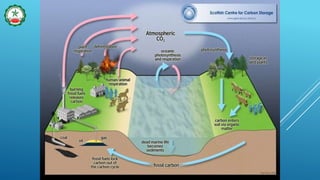
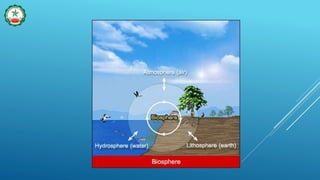
Oxygen cycle is a biogeochemical cycle that deals with the 3 main spheres of Earth. These
3 spheres are the Atmosphere, the Biosphere and the Lithosphere. Oxygen is the most
important element in the development of each of the spheres mentioned above. As we go
through this topic, we will discuss how Oxygen cycle is related to Water cycle and Carbon
cycle as Oxygen, usually binds with Carbon and Hydrogen, to produce Carbon dioxide and
Water, respectively.
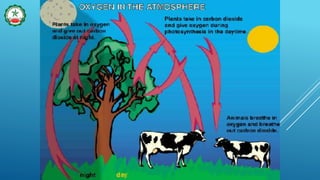
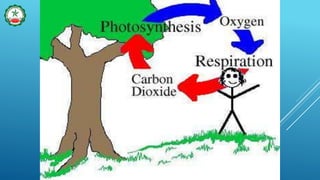
There 4 main processes where Oxygen is a vital part, Photosynthesis, Respiration,
Combustion and Decomposition. These processes will be broadly discussed later, in simple
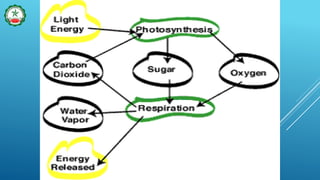
terms, Photosynthesis takes in CO2 to produce O2, and the 3 processes: Respiration,
Combustion and Decomposition uses O2 to produce CO2.
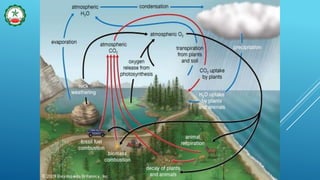
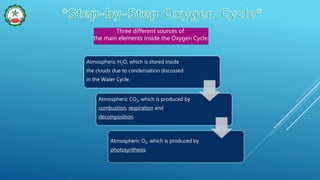
Atmospheric H2O, which is stored inside
the clouds due to condensation discussed
in the Water Cycle.
Atmospheric CO2, which is produced by
combustion, respiration and
decomposition.
Atmospheric O2, which is produced by
photosynthesis.
Three different sources of
the main elements inside the Oxygen Cycle:
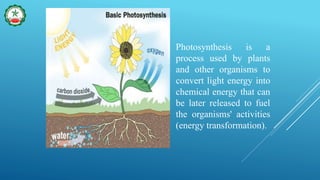
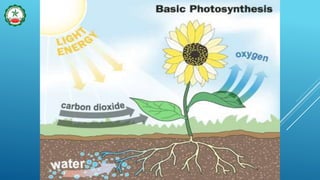
Photosynthesis is a
process used by plants
and other organisms to
convert light energy into
chemical energy that can
be later released to fuel
the organisms' activities
(energy transformation).
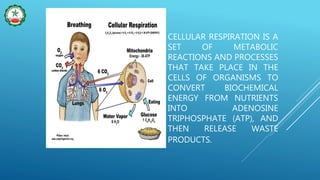
CELLULAR RESPIRATION IS A
SET OF METABOLIC
REACTIONS AND PROCESSES
THAT TAKE PLACE IN THE
CELLS OF ORGANISMS TO
CONVERT BIOCHEMICAL
ENERGY FROM NUTRIENTS
INTO ADENOSINE
TRIPHOSPHATE (ATP), AND
THEN RELEASE WASTE
PRODUCTS.
HISTORY OF OXYGEN
Early evolution of Earth, oxygen released from H2O vapor by UV
radiation and accumulated in the atmosphere as the hydrogen
escaped into the earth's atmosphere
Photosynthesis became a source of oxygen
Oxygen released as organic carbon and gets buried in sediments.
EARTH’S LAYERS
The lithosphere is Earth's surrounding layer,
composed of solids such as soil and rock.
The atmosphere is the surrounding thin layer of
gas.
The hydrosphere refers to liquid environments such
as lakes and oceans that lie between the
lithosphere and atmosphere.
The biosphere's creation and continuous existence
results from chemical, biological, and physical
processes.
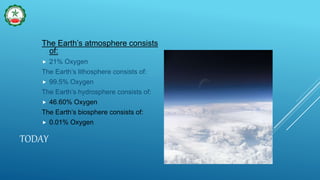
TODAY
The Earth’s atmosphere consists
of:
 21% Oxygen
The Earth’s lithosphere consists of:
 99.5% Oxygen
The Earth’s hydrosphere consists of:
 46.60% Oxygen
The Earth’s biosphere consists of:
 0.01% Oxygen
BIOLOGICAL IMPORTANCE OF OXYGEN
Humans need it to breathe
Needed for decomposition of organic waste
Water can dissolve oxygen and it is this dissolved oxygen
that supports aquatic life.
Without oxygen at the bottom of the
water body, anaerobic bacteria (those
that live without oxygen) produce
acids. These acids not only increase
acidity, but also cause a massive
release of phosphorus and nitrogen,
two major fertilizers, from the organic
sediment and into the water column.
These same anaerobic bacteria put
toxic gases in the water including
hydrogen sulfide (that rotten egg
smell), ammonia, carbon dioxide and
methane. These gases are all toxic to
fish, beneficial bacteria and insects.
Lack of bottom oxygen is the cause
of odors produced by anaerobic
bacteria.

Environmental engineering - oxygen cycle

  • 1.
    THE OXYGEN CYCLE By:John Paul Espino De La Salle University – Dasmarinas Facebook.com/Johnpaul.dss
  • 4.
    Oxygen cycle isa biogeochemical cycle that deals with the 3 main spheres of Earth. These 3 spheres are the Atmosphere, the Biosphere and the Lithosphere. Oxygen is the most important element in the development of each of the spheres mentioned above. As we go through this topic, we will discuss how Oxygen cycle is related to Water cycle and Carbon cycle as Oxygen, usually binds with Carbon and Hydrogen, to produce Carbon dioxide and Water, respectively. There 4 main processes where Oxygen is a vital part, Photosynthesis, Respiration, Combustion and Decomposition. These processes will be broadly discussed later, in simple terms, Photosynthesis takes in CO2 to produce O2, and the 3 processes: Respiration, Combustion and Decomposition uses O2 to produce CO2.
  • 6.
    Atmospheric H2O, whichis stored inside the clouds due to condensation discussed in the Water Cycle. Atmospheric CO2, which is produced by combustion, respiration and decomposition. Atmospheric O2, which is produced by photosynthesis. Three different sources of the main elements inside the Oxygen Cycle:
  • 7.
    Photosynthesis is a processused by plants and other organisms to convert light energy into chemical energy that can be later released to fuel the organisms' activities (energy transformation).
  • 8.
    CELLULAR RESPIRATION ISA SET OF METABOLIC REACTIONS AND PROCESSES THAT TAKE PLACE IN THE CELLS OF ORGANISMS TO CONVERT BIOCHEMICAL ENERGY FROM NUTRIENTS INTO ADENOSINE TRIPHOSPHATE (ATP), AND THEN RELEASE WASTE PRODUCTS.
  • 10.
    HISTORY OF OXYGEN Earlyevolution of Earth, oxygen released from H2O vapor by UV radiation and accumulated in the atmosphere as the hydrogen escaped into the earth's atmosphere Photosynthesis became a source of oxygen Oxygen released as organic carbon and gets buried in sediments.
  • 15.
    EARTH’S LAYERS The lithosphereis Earth's surrounding layer, composed of solids such as soil and rock. The atmosphere is the surrounding thin layer of gas. The hydrosphere refers to liquid environments such as lakes and oceans that lie between the lithosphere and atmosphere. The biosphere's creation and continuous existence results from chemical, biological, and physical processes.
  • 16.
    TODAY The Earth’s atmosphereconsists of:  21% Oxygen The Earth’s lithosphere consists of:  99.5% Oxygen The Earth’s hydrosphere consists of:  46.60% Oxygen The Earth’s biosphere consists of:  0.01% Oxygen
  • 17.
    BIOLOGICAL IMPORTANCE OFOXYGEN Humans need it to breathe Needed for decomposition of organic waste Water can dissolve oxygen and it is this dissolved oxygen that supports aquatic life.
  • 18.
    Without oxygen atthe bottom of the water body, anaerobic bacteria (those that live without oxygen) produce acids. These acids not only increase acidity, but also cause a massive release of phosphorus and nitrogen, two major fertilizers, from the organic sediment and into the water column. These same anaerobic bacteria put toxic gases in the water including hydrogen sulfide (that rotten egg smell), ammonia, carbon dioxide and methane. These gases are all toxic to fish, beneficial bacteria and insects. Lack of bottom oxygen is the cause of odors produced by anaerobic bacteria.