Environment Should Adopted to US
We should not adopt ourselves to the Environment
Zainab ALSHEHABI
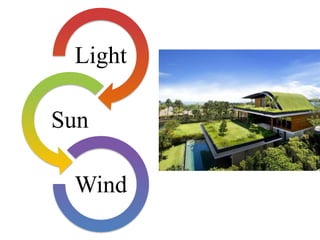
Light
Sun
Wind
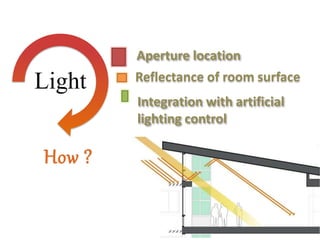
Light
Aperture location
Reflectance of room surface
Integration with artificial
lighting control
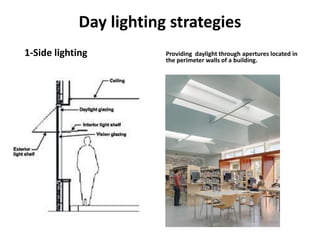
Day lighting strategies
1-Side lighting Providing daylight through apertures located in
the perimeter walls of a building.
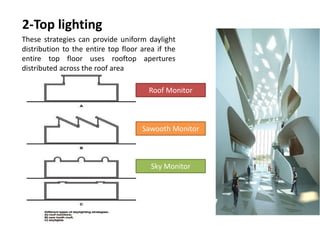
2-Top lighting
These strategies can provide uniform daylight
distribution to the entire top floor area if the
entire top floor uses rooftop apertures
distributed across the roof area
Roof Monitor
Sky Monitor
Sawooth Monitor
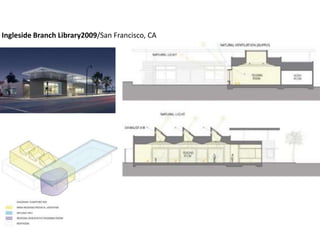
Ingleside Branch Library2009/San Francisco, CA
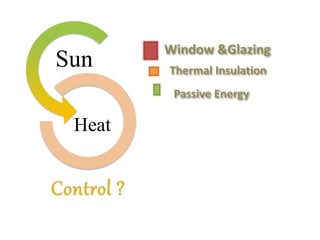
Sun
Heat
Window &Glazing
Thermal Insulation
Passive Energy
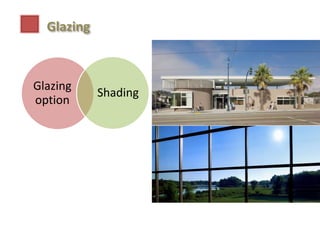
Glazing
Glazing
option
Shading
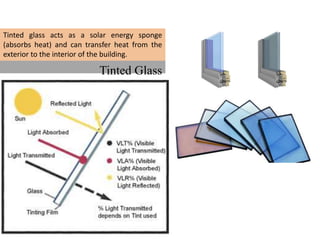
Tinted glass acts as a solar energy sponge
(absorbs heat) and can transfer heat from the
exterior to the interior of the building.
Tinted Glass
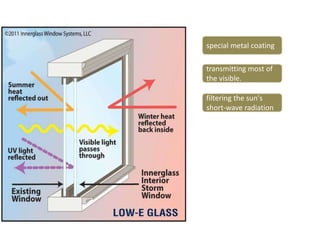
special metal coating
transmitting most of
the visible.
filtering the sun's
short-wave radiation
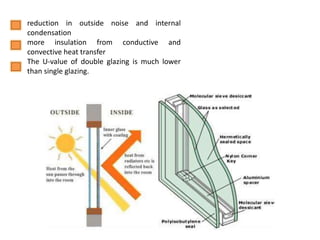
reduction in outside noise and internal
condensation
more insulation from conductive and
convective heat transfer
The U-value of double glazing is much lower
than single glazing.
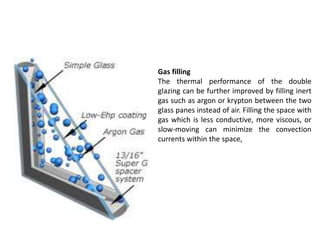
Gas filling
The thermal performance of the double
glazing can be further improved by filling inert
gas such as argon or krypton between the two
glass panes instead of air. Filling the space with
gas which is less conductive, more viscous, or
slow-moving can minimize the convection
currents within the space,
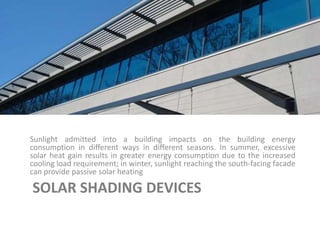
SOLAR SHADING DEVICES
Sunlight admitted into a building impacts on the building energy
consumption in different ways in different seasons. In summer, excessive
solar heat gain results in greater energy consumption due to the increased
cooling load requirement; in winter, sunlight reaching the south-facing facade
can provide passive solar heating
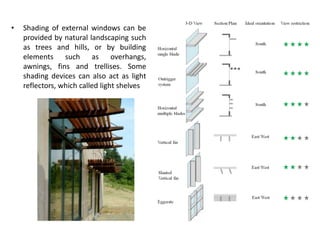
• Shading of external windows can be
provided by natural landscaping such
as trees and hills, or by building
elements such as overhangs,
awnings, fins and trellises. Some
shading devices can also act as light
reflectors, which called light shelves
MATERIALS AND THERMAL
INSULATION
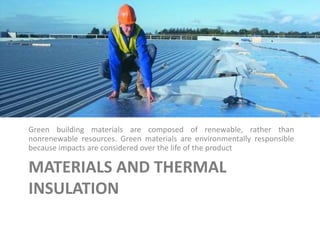
Green building materials are composed of renewable, rather than
nonrenewable resources. Green materials are environmentally responsible
because impacts are considered over the life of the product
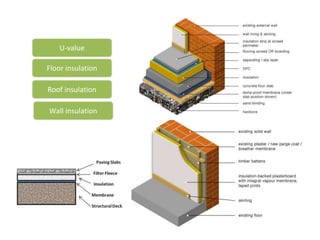
U-value
Wall insulation
Floor insulation
Roof insulation
U-value Overall Thermal Transmittance (U-value) or Overall coefficient of heat transfer (U-factor): This is the
overall rate of heat transfer through a section per unit area and per unit temperature difference, expressed
as W/(m2.°K)
Overall thermal resistance (RT): This is the sum of the thermal resistance of all material layers constituting
the wall or roof section, and includes the thermal resistance of the outside and the inside air films in
(h.ft2.oF)/Btu or (m2.oK)/W. RT = (Ro+Ri+ R1+R2+---------+Rn)
Ro is the thermal resistance of the outside air film & Ri is the thermal resistance of the inside air film. These
values are given in the Table below:
U-value
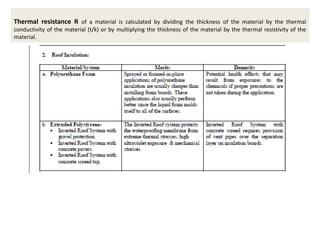
Thermal resistance R of a material is calculated by dividing the thickness of the material by the thermal
conductivity of the material (t/k) or by multiplying the thickness of the material by the thermal resistivity of the
material.
The overall thermal transmittance value (U-value) for the roof should not be more than 0.6
W/m2-οC
b. The overall thermal transmittance value (U-value) for external walls should not be more
than 0.75 W/m2-οC.
c. Insulated glass should be used for all buildings with more than three floors or if the area
of the glazed surfaces ranges between 10-20% of the total external surface area of the
building envelope. On the other hand, if the glazed area is more than 20%, double insulated
glass should be used.
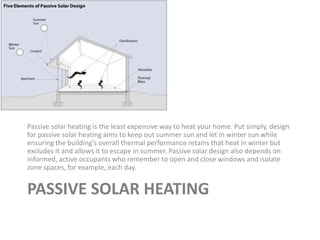
PASSIVE SOLAR HEATING
Passive solar heating is the least expensive way to heat your home. Put simply, design
for passive solar heating aims to keep out summer sun and let in winter sun while
ensuring the building’s overall thermal performance retains that heat in winter but
excludes it and allows it to escape in summer. Passive solar design also depends on
informed, active occupants who remember to open and close windows and isolate
zone spaces, for example, each day.
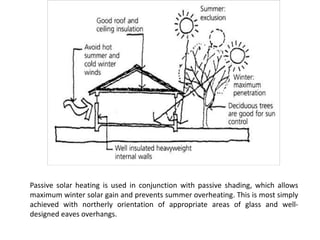
Passive solar heating is used in conjunction with passive shading, which allows
maximum winter solar gain and prevents summer overheating. This is most simply
achieved with northerly orientation of appropriate areas of glass and well-
designed eaves overhangs.
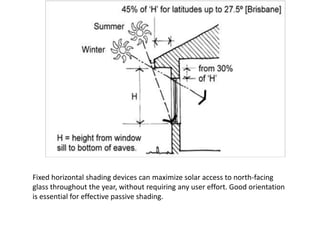
Fixed horizontal shading devices can maximize solar access to north-facing
glass throughout the year, without requiring any user effort. Good orientation
is essential for effective passive shading.
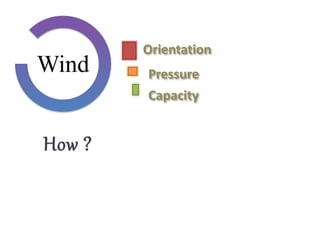
Wind
Orientation
Pressure
Capacity
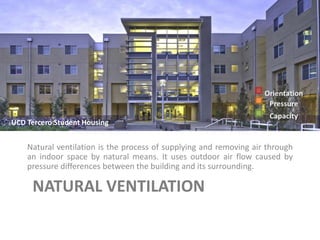
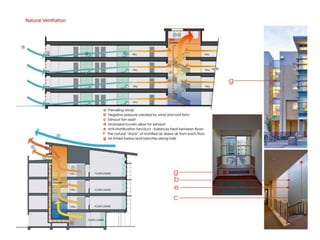
NATURAL VENTILATION
Natural ventilation is the process of supplying and removing air through
an indoor space by natural means. It uses outdoor air flow caused by
pressure differences between the building and its surrounding.
UCD Tercero Student Housing
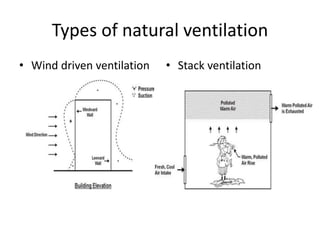
Types of natural ventilation
• Wind driven ventilation • Stack ventilation
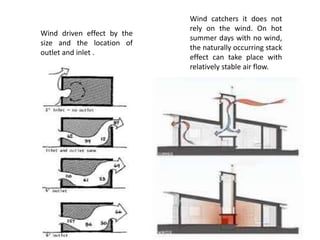
Wind driven effect by the
size and the location of
outlet and inlet .
Wind catchers it does not
rely on the wind. On hot
summer days with no wind,
the naturally occurring stack
effect can take place with
relatively stable air flow.
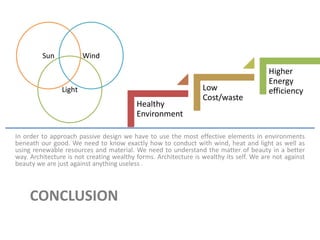
CONCLUSION
In order to approach passive design we have to use the most effective elements in environments
beneath our good. We need to know exactly how to conduct with wind, heat and light as well as
using renewable resources and material. We need to understand the matter of beauty in a better
way. Architecture is not creating wealthy forms. Architecture is wealthy its self. We are not against
beauty we are just against anything useless .
Sun
Light
Wind
Healthy
Environment
Low
Cost/waste
Higher
Energy
efficiency

Environmental case study

  • 1.
    Environment Should Adoptedto US We should not adopt ourselves to the Environment Zainab ALSHEHABI
  • 2.
  • 3.
    Light Aperture location Reflectance ofroom surface Integration with artificial lighting control
  • 4.
    Day lighting strategies 1-Sidelighting Providing daylight through apertures located in the perimeter walls of a building.
  • 5.
    2-Top lighting These strategiescan provide uniform daylight distribution to the entire top floor area if the entire top floor uses rooftop apertures distributed across the roof area Roof Monitor Sky Monitor Sawooth Monitor
  • 6.
  • 8.
  • 9.
  • 10.
    Tinted glass actsas a solar energy sponge (absorbs heat) and can transfer heat from the exterior to the interior of the building. Tinted Glass
  • 11.
    special metal coating transmittingmost of the visible. filtering the sun's short-wave radiation
  • 12.
    reduction in outsidenoise and internal condensation more insulation from conductive and convective heat transfer The U-value of double glazing is much lower than single glazing.
  • 13.
    Gas filling The thermalperformance of the double glazing can be further improved by filling inert gas such as argon or krypton between the two glass panes instead of air. Filling the space with gas which is less conductive, more viscous, or slow-moving can minimize the convection currents within the space,
  • 14.
    SOLAR SHADING DEVICES Sunlightadmitted into a building impacts on the building energy consumption in different ways in different seasons. In summer, excessive solar heat gain results in greater energy consumption due to the increased cooling load requirement; in winter, sunlight reaching the south-facing facade can provide passive solar heating
  • 15.
    • Shading ofexternal windows can be provided by natural landscaping such as trees and hills, or by building elements such as overhangs, awnings, fins and trellises. Some shading devices can also act as light reflectors, which called light shelves
  • 16.
    MATERIALS AND THERMAL INSULATION Greenbuilding materials are composed of renewable, rather than nonrenewable resources. Green materials are environmentally responsible because impacts are considered over the life of the product
  • 17.
  • 18.
    U-value Overall ThermalTransmittance (U-value) or Overall coefficient of heat transfer (U-factor): This is the overall rate of heat transfer through a section per unit area and per unit temperature difference, expressed as W/(m2.°K) Overall thermal resistance (RT): This is the sum of the thermal resistance of all material layers constituting the wall or roof section, and includes the thermal resistance of the outside and the inside air films in (h.ft2.oF)/Btu or (m2.oK)/W. RT = (Ro+Ri+ R1+R2+---------+Rn) Ro is the thermal resistance of the outside air film & Ri is the thermal resistance of the inside air film. These values are given in the Table below: U-value
  • 19.
    Thermal resistance Rof a material is calculated by dividing the thickness of the material by the thermal conductivity of the material (t/k) or by multiplying the thickness of the material by the thermal resistivity of the material.
  • 20.
    The overall thermaltransmittance value (U-value) for the roof should not be more than 0.6 W/m2-οC b. The overall thermal transmittance value (U-value) for external walls should not be more than 0.75 W/m2-οC. c. Insulated glass should be used for all buildings with more than three floors or if the area of the glazed surfaces ranges between 10-20% of the total external surface area of the building envelope. On the other hand, if the glazed area is more than 20%, double insulated glass should be used.
  • 21.
    PASSIVE SOLAR HEATING Passivesolar heating is the least expensive way to heat your home. Put simply, design for passive solar heating aims to keep out summer sun and let in winter sun while ensuring the building’s overall thermal performance retains that heat in winter but excludes it and allows it to escape in summer. Passive solar design also depends on informed, active occupants who remember to open and close windows and isolate zone spaces, for example, each day.
  • 22.
    Passive solar heatingis used in conjunction with passive shading, which allows maximum winter solar gain and prevents summer overheating. This is most simply achieved with northerly orientation of appropriate areas of glass and well- designed eaves overhangs.
  • 23.
    Fixed horizontal shadingdevices can maximize solar access to north-facing glass throughout the year, without requiring any user effort. Good orientation is essential for effective passive shading.
  • 24.
  • 25.
    NATURAL VENTILATION Natural ventilationis the process of supplying and removing air through an indoor space by natural means. It uses outdoor air flow caused by pressure differences between the building and its surrounding. UCD Tercero Student Housing
  • 26.
    Types of naturalventilation • Wind driven ventilation • Stack ventilation
  • 27.
    Wind driven effectby the size and the location of outlet and inlet . Wind catchers it does not rely on the wind. On hot summer days with no wind, the naturally occurring stack effect can take place with relatively stable air flow.
  • 29.
    CONCLUSION In order toapproach passive design we have to use the most effective elements in environments beneath our good. We need to know exactly how to conduct with wind, heat and light as well as using renewable resources and material. We need to understand the matter of beauty in a better way. Architecture is not creating wealthy forms. Architecture is wealthy its self. We are not against beauty we are just against anything useless . Sun Light Wind Healthy Environment Low Cost/waste Higher Energy efficiency