Building Envelope
& Wall Window Ratio (WWR)
in passive design strategies
By 2025, Construction market in
India is expected to emerge as
the third largest globally
Source: Indian Construction Industry Overview & Investment Opportunities (investindia.gov.in)
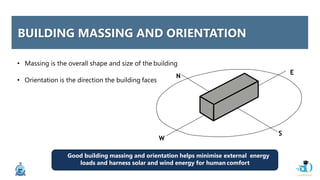
BUILDING MASSING AND ORIENTATION
N
S
E
W
• Massing is the overall shape and size of the building
• Orientation is the direction the building faces
Good building massing and orientation helps minimise external energy
loads and harness solar and wind energy for human comfort
Building Envelope
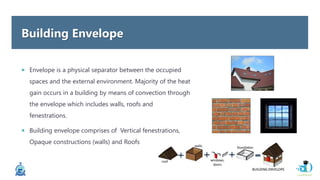
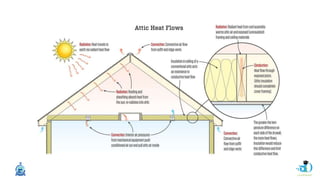
 Envelope is a physical separator between the occupied
spaces and the external environment. Majority of the heat
gain occurs in a building by means of convection through
the envelope which includes walls, roofs and
fenestrations.
 Building envelope comprises of Vertical fenestrations,
Opaque constructions (walls) and Roofs
6
The building envelope is first a protection and shelter.
It should meet this need of the occupants while reducing energy
consumption.
The building envelope is the boundary between the
conditioned interior of a building and the outdoors.
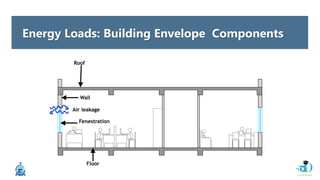
Energy Loads: Building Envelope Components
Roof
Wall
Air leakage
Fenestration
Floor
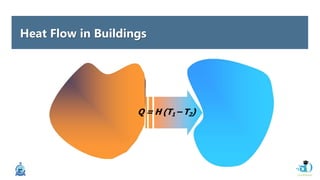
Heat Flow in Buildings
Q = H (T1 – T2)
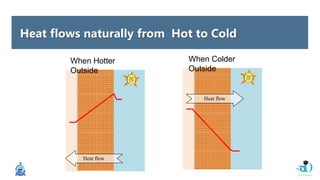
Heat flows naturally from Hot to Cold
Heat flow
Heat flow
When Hotter
Outside
When Colder
Outside
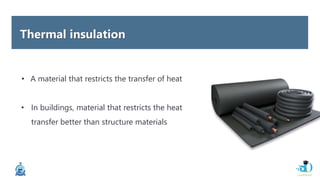
Thermal insulation
• A material that restricts the transfer of heat
• In buildings, material that restricts the heat
transfer better than structure materials
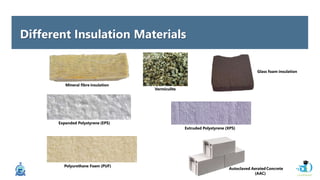
Different Insulation Materials
Mineral fibre insulation
Vermiculite
Glass foam insulation
Expanded Polystyrene (EPS)
Extruded Polystyrene (XPS)
Polyurethane Foam (PUF)
Autoclaved AeratedConcrete
(AAC)
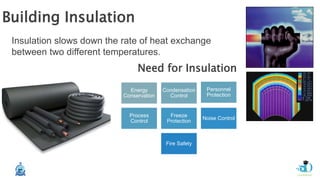
Insulation slows down the rate of heat exchange
between two different temperatures.
Building Insulation
Need for Insulation
Energy
Conservation
Condensation
Control
Personnel
Protection
Process
Control
Freeze
Protection
Noise Control
Fire Safety
How Does A Material Insulate ?
• Reduce the density of matter
to reduce conduction
• Lock or suppress any fluid to
avoid convection
• Using opaque or even reflecting
materials to reduce radiation
• Keep the product dry to avoid
evaporation-condensation
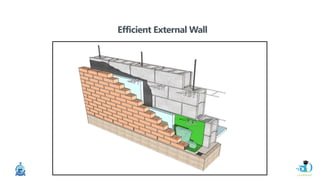
Efficient External Wall
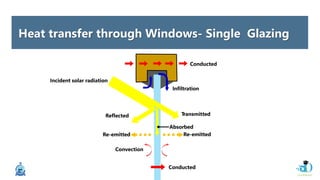
Heat transfer through Windows- Single Glazing
Incident solar radiation
Transmitted
Reflected
Absorbed
Re-emitted
Re-emitted
Conducted
Convection
Conducted
Infiltration
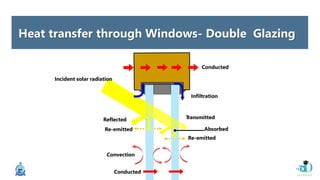
Heat transfer through Windows- Double Glazing
Conducted
Convection
Conducted
Transmitted
Incident solar radiation
Reflected
Re-emitted Absorbed
Re-emitted
Infiltration
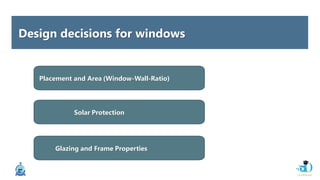
Design decisions for windows
Placement and Area (Window-Wall-Ratio)
Solar Protection
Glazing and Frame Properties
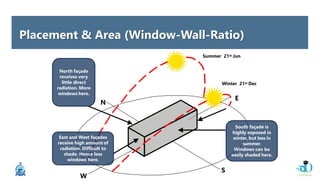
Placement & Area (Window-Wall-Ratio)
N
S
E
W
East and West façades
receive high amount of
radiation. Difficult to
shade. Hence less
windows here.
South façade is
highly exposed in
winter, but less in
summer.
Windows can be
easily shaded here.
North façade
receives very
little direct
radiation. More
windows here.
Winter 21st Dec
Summer 21st Jun
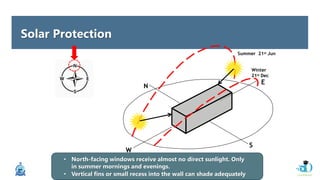
Solar Protection
• North-facing windows receive almost no direct sunlight. Only
in summer mornings and evenings.

• Vertical fins or small recess into the wall can shade adequately
N
S
W
Summer 21st Jun
Winter
21st Dec
E
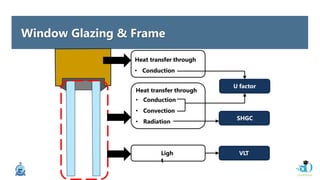
Window Glazing & Frame
Heat transfer through
• Conduction
Heat transfer through
• Conduction
• Convection
• Radiation
U factor
SHGC
Ligh
t
VLT
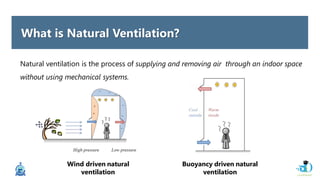
What is Natural Ventilation?
Natural ventilation is the process of supplying and removing air through an indoor space
without using mechanical systems.

Wind driven natural
ventilation
Buoyancy driven natural
ventilation
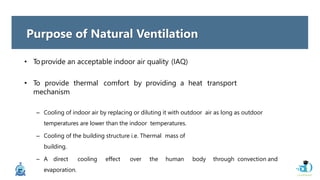
• Toprovide an acceptable indoor air quality (IAQ)
• To provide thermal comfort by providing a heat transport
mechanism
– Cooling of indoor air by replacing or diluting it with outdoor air as long as outdoor
temperatures are lower than the indoor temperatures.
– Cooling of the building structure i.e. Thermal mass of
building.
– A direct cooling effect over the human body through convection and
evaporation.
Purpose of Natural Ventilation
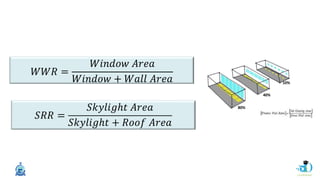
𝑊𝑊𝑅 =
𝑊𝑖𝑛𝑑𝑜𝑤 𝐴𝑟𝑒𝑎
𝑊𝑖𝑛𝑑𝑜𝑤 + 𝑊𝑎𝑙𝑙 𝐴𝑟𝑒𝑎
𝑆𝑅𝑅 =
𝑆𝑘𝑦𝑙𝑖𝑔ℎ𝑡 𝐴𝑟𝑒𝑎
𝑆𝑘𝑦𝑙𝑖𝑔ℎ𝑡 + 𝑅𝑜𝑜𝑓 𝐴𝑟𝑒𝑎
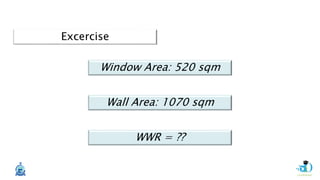
Window Area: 520 sqm
Wall Area: 1070 sqm
WWR = ??
Excercise
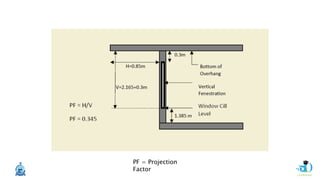
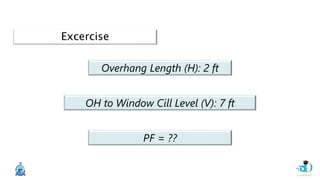
PF = Projection
Factor
Overhang Length (H): 2 ft
OH to Window Cill Level (V): 7 ft
PF = ??
Excercise
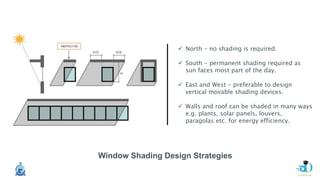
 North - no shading is required.
 South - permanent shading required as
sun faces most part of the day.
 East and West - preferable to design
vertical movable shading devices.
 Walls and roof can be shaded in many ways
e.g. plants, solar panels, louvers,
paragolas etc. for energy efficiency.
Window Shading Design Strategies
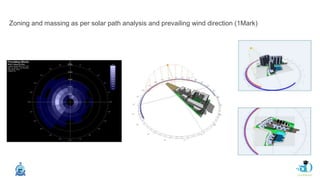
Zoning and massing as per solar path analysis and prevailing wind direction (1Mark)
3
2
Green Technology for Building Envelo
3
3
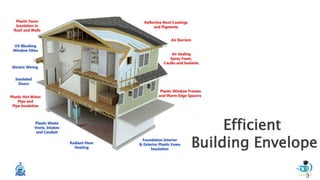
Efficient
Building Envelope
3
4
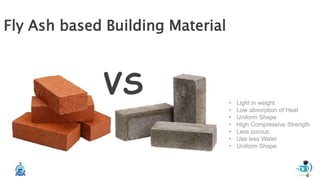
Fly Ash based Building Material
VS • Light in weight
• Low absorption of Heat
• Uniform Shape
• High Compressive Strength
• Less porous
• Use less Water
• Uniform Shape
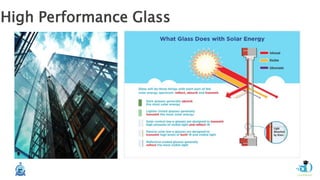
High Performance Glass
3
6
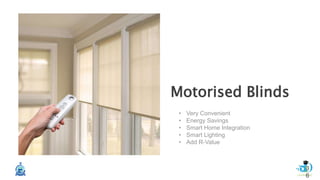
Motorised Blinds
• Very Convenient
• Energy Savings
• Smart Home Integration
• Smart Lighting
• Add R-Value
3
7
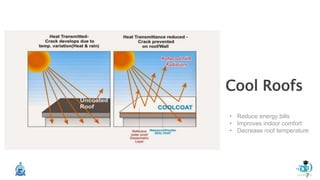
Cool Roofs
• Reduce energy bills
• Improves indoor comfort
• Decrease roof temperature
LET’S DISCUSS
38
LET’S CONNECT
!
www.d2olearning.com

Building Envelope & WWR.pptx

  • 1.
    Building Envelope & WallWindow Ratio (WWR) in passive design strategies
  • 2.
    By 2025, Constructionmarket in India is expected to emerge as the third largest globally Source: Indian Construction Industry Overview & Investment Opportunities (investindia.gov.in)
  • 4.
    BUILDING MASSING ANDORIENTATION N S E W • Massing is the overall shape and size of the building • Orientation is the direction the building faces Good building massing and orientation helps minimise external energy loads and harness solar and wind energy for human comfort
  • 5.
    Building Envelope  Envelopeis a physical separator between the occupied spaces and the external environment. Majority of the heat gain occurs in a building by means of convection through the envelope which includes walls, roofs and fenestrations.  Building envelope comprises of Vertical fenestrations, Opaque constructions (walls) and Roofs
  • 6.
    6 The building envelopeis first a protection and shelter. It should meet this need of the occupants while reducing energy consumption. The building envelope is the boundary between the conditioned interior of a building and the outdoors.
  • 7.
    Energy Loads: BuildingEnvelope Components Roof Wall Air leakage Fenestration Floor
  • 8.
    Heat Flow inBuildings Q = H (T1 – T2)
  • 9.
    Heat flows naturallyfrom Hot to Cold Heat flow Heat flow When Hotter Outside When Colder Outside
  • 10.
    Thermal insulation • Amaterial that restricts the transfer of heat • In buildings, material that restricts the heat transfer better than structure materials
  • 11.
    Different Insulation Materials Mineralfibre insulation Vermiculite Glass foam insulation Expanded Polystyrene (EPS) Extruded Polystyrene (XPS) Polyurethane Foam (PUF) Autoclaved AeratedConcrete (AAC)
  • 12.
    Insulation slows downthe rate of heat exchange between two different temperatures. Building Insulation Need for Insulation Energy Conservation Condensation Control Personnel Protection Process Control Freeze Protection Noise Control Fire Safety
  • 13.
    How Does AMaterial Insulate ? • Reduce the density of matter to reduce conduction • Lock or suppress any fluid to avoid convection • Using opaque or even reflecting materials to reduce radiation • Keep the product dry to avoid evaporation-condensation
  • 14.
  • 15.
    Heat transfer throughWindows- Single Glazing Incident solar radiation Transmitted Reflected Absorbed Re-emitted Re-emitted Conducted Convection Conducted Infiltration
  • 16.
    Heat transfer throughWindows- Double Glazing Conducted Convection Conducted Transmitted Incident solar radiation Reflected Re-emitted Absorbed Re-emitted Infiltration
  • 17.
    Design decisions forwindows Placement and Area (Window-Wall-Ratio) Solar Protection Glazing and Frame Properties
  • 18.
    Placement & Area(Window-Wall-Ratio) N S E W East and West façades receive high amount of radiation. Difficult to shade. Hence less windows here. South façade is highly exposed in winter, but less in summer. Windows can be easily shaded here. North façade receives very little direct radiation. More windows here. Winter 21st Dec Summer 21st Jun
  • 19.
    Solar Protection • North-facingwindows receive almost no direct sunlight. Only in summer mornings and evenings. • Vertical fins or small recess into the wall can shade adequately N S W Summer 21st Jun Winter 21st Dec E
  • 20.
    Window Glazing &Frame Heat transfer through • Conduction Heat transfer through • Conduction • Convection • Radiation U factor SHGC Ligh t VLT
  • 21.
    What is NaturalVentilation? Natural ventilation is the process of supplying and removing air through an indoor space without using mechanical systems. Wind driven natural ventilation Buoyancy driven natural ventilation
  • 22.
    • Toprovide anacceptable indoor air quality (IAQ) • To provide thermal comfort by providing a heat transport mechanism – Cooling of indoor air by replacing or diluting it with outdoor air as long as outdoor temperatures are lower than the indoor temperatures. – Cooling of the building structure i.e. Thermal mass of building. – A direct cooling effect over the human body through convection and evaporation. Purpose of Natural Ventilation
  • 25.
    𝑊𝑊𝑅 = 𝑊𝑖𝑛𝑑𝑜𝑤 𝐴𝑟𝑒𝑎 𝑊𝑖𝑛𝑑𝑜𝑤+ 𝑊𝑎𝑙𝑙 𝐴𝑟𝑒𝑎 𝑆𝑅𝑅 = 𝑆𝑘𝑦𝑙𝑖𝑔ℎ𝑡 𝐴𝑟𝑒𝑎 𝑆𝑘𝑦𝑙𝑖𝑔ℎ𝑡 + 𝑅𝑜𝑜𝑓 𝐴𝑟𝑒𝑎
  • 26.
    Window Area: 520sqm Wall Area: 1070 sqm WWR = ?? Excercise
  • 27.
  • 28.
    Overhang Length (H):2 ft OH to Window Cill Level (V): 7 ft PF = ?? Excercise
  • 29.
     North -no shading is required.  South - permanent shading required as sun faces most part of the day.  East and West - preferable to design vertical movable shading devices.  Walls and roof can be shaded in many ways e.g. plants, solar panels, louvers, paragolas etc. for energy efficiency. Window Shading Design Strategies
  • 30.
    Zoning and massingas per solar path analysis and prevailing wind direction (1Mark)
  • 32.
    3 2 Green Technology forBuilding Envelo
  • 33.
  • 34.
    3 4 Fly Ash basedBuilding Material VS • Light in weight • Low absorption of Heat • Uniform Shape • High Compressive Strength • Less porous • Use less Water • Uniform Shape
  • 35.
  • 36.
    3 6 Motorised Blinds • VeryConvenient • Energy Savings • Smart Home Integration • Smart Lighting • Add R-Value
  • 37.
    3 7 Cool Roofs • Reduceenergy bills • Improves indoor comfort • Decrease roof temperature
  • 38.
  • 39.