7C               Summary Sheets
             Habitats and adaptations
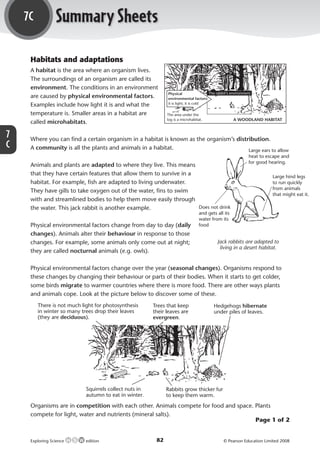
             A habitat is the area where an organism lives.
             The surroundings of an organism are called its
             environment. The conditions in an environment
                                                                       Physical                The rabbit’s environment
             are caused by physical environmental factors.             environmental factors:
             Examples include how light it is and what the             it is light; it is cold

             temperature is. Smaller areas in a habitat are            The area under the
                                                                       log is a microhabitat.                A WOODLAND HABITAT
             called microhabitats.

7            Where you can find a certain organism in a habitat is known as the organism’s distribution.
C            A community is all the plants and animals in a habitat.                           Large ears to allow
                                                                                                                     heat to escape and
                                                                                                                     for good hearing.
             Animals and plants are adapted to where they live. This means
             that they have certain features that allow them to survive in a                                                   Large hind legs
             habitat. For example, fish are adapted to living underwater.                                                       to run quickly
                                                                                                                               from animals
             They have gills to take oxygen out of the water, fins to swim
                                                                                                                               that might eat it.
             with and streamlined bodies to help them move easily through
             the water. This jack rabbit is another example.                 Does not drink
                                                                                          and gets all its
                                                                                          water from its
             Physical environmental factors change from day to day (daily                 food
             changes). Animals alter their behaviour in response to those
             changes. For example, some animals only come out at night;                            Jack rabbits are adapted to
                                                                                                    living in a desert habitat.
             they are called nocturnal animals (e.g. owls).

             Physical environmental factors change over the year (seasonal changes). Organisms respond to
             these changes by changing their behaviour or parts of their bodies. When it starts to get colder,
             some birds migrate to warmer countries where there is more food. There are other ways plants
             and animals cope. Look at the picture below to discover some of these.
                 There is not much light for photosynthesis      Trees that keep                 Hedgehogs hibernate
                 in winter so many trees drop their leaves       their leaves are                under piles of leaves.
                 (they are deciduous).                           evergreen.


                                     Squirrels collect nuts in         Rabbits grow thicker fur
                                     autumn to eat in winter.          to keep them warm.
             Organisms are in competition with each other. Animals compete for food and space. Plants
             compete for light, water and nutrients (mineral salts).
                                                                                               Page 1 of 2


             Exploring Science       edition                      82                                   © Pearson Education Limited 2008


M03_ES_AB_Y7_2445_U7C.indd 82                                                                                                             4/3/08 10:21:17
7C               Summary Sheets (continued)

             Feeding relationships
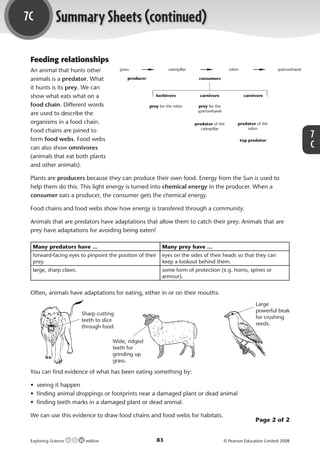
             An animal that hunts other              grass                    caterpillar                      robin                   sparrowhawk

             animals is a predator. What                 producer                             consumers

             it hunts is its prey. We can
             show what eats what on a                                  herbivore              carnivore                 carnivore

             food chain. Different words                            prey for the robin        prey for the
                                                                                             sparrowhawk
             are used to describe the
             organisms in a food chain.                                                     predator of the        predator of the
                                                                                               caterpillar             robin
             Food chains are joined to
             form food webs. Food webs                                                                                 top predator
                                                                                                                                                           7
             can also show omnivores                                                                                                                       C
             (animals that eat both plants
             and other animals).

             Plants are producers because they can produce their own food. Energy from the Sun is used to
             help them do this. This light energy is turned into chemical energy in the producer. When a
             consumer eats a producer, the consumer gets the chemical energy.

             Food chains and food webs show how energy is transfered through a community.

             Animals that are predators have adaptations that allow them to catch their prey. Animals that are
             prey have adaptations for avoiding being eaten!

              Many predators have …                                       Many prey have …
              forward-facing eyes to pinpoint the position of their       eyes on the sides of their heads so that they can
              prey.                                                       keep a lookout behind them.
              large, sharp claws.                                         some form of protection (e.g. horns, spines or
                                                                          armour).


             Often, animals have adaptations for eating, either in or on their mouths:
                                                                                                                              Large
                                                                                                                              powerful beak
                                    Sharp cutting
                                                                                                                              for crushing
                                    teeth to slice
                                                                                                                              seeds.
                                    through food.

                                                 Wide, ridged
                                                 teeth for
                                                 grinding up
                                                 grass.

             You can find evidence of what has been eating something by:

             • seeing it happen
             • finding animal droppings or footprints near a damaged plant or dead animal
             • finding teeth marks in a damaged plant or dead animal.

             We can use this evidence to draw food chains and food webs for habitats.
                                                                                                                              Page 2 of 2


             Exploring Science       edition                           83                                    © Pearson Education Limited 2008


M03_ES_AB_Y7_2445_U7C.indd 83                                                                                                                   4/3/08 10:21:20

Environment and feeding relationships

  • 1.
    7C Summary Sheets Habitats and adaptations A habitat is the area where an organism lives. The surroundings of an organism are called its environment. The conditions in an environment Physical The rabbit’s environment are caused by physical environmental factors. environmental factors: Examples include how light it is and what the it is light; it is cold temperature is. Smaller areas in a habitat are The area under the log is a microhabitat. A WOODLAND HABITAT called microhabitats. 7 Where you can find a certain organism in a habitat is known as the organism’s distribution. C A community is all the plants and animals in a habitat. Large ears to allow heat to escape and for good hearing. Animals and plants are adapted to where they live. This means that they have certain features that allow them to survive in a Large hind legs habitat. For example, fish are adapted to living underwater. to run quickly from animals They have gills to take oxygen out of the water, fins to swim that might eat it. with and streamlined bodies to help them move easily through the water. This jack rabbit is another example. Does not drink and gets all its water from its Physical environmental factors change from day to day (daily food changes). Animals alter their behaviour in response to those changes. For example, some animals only come out at night; Jack rabbits are adapted to living in a desert habitat. they are called nocturnal animals (e.g. owls). Physical environmental factors change over the year (seasonal changes). Organisms respond to these changes by changing their behaviour or parts of their bodies. When it starts to get colder, some birds migrate to warmer countries where there is more food. There are other ways plants and animals cope. Look at the picture below to discover some of these. There is not much light for photosynthesis Trees that keep Hedgehogs hibernate in winter so many trees drop their leaves their leaves are under piles of leaves. (they are deciduous). evergreen. Squirrels collect nuts in Rabbits grow thicker fur autumn to eat in winter. to keep them warm. Organisms are in competition with each other. Animals compete for food and space. Plants compete for light, water and nutrients (mineral salts). Page 1 of 2 Exploring Science edition 82 © Pearson Education Limited 2008 M03_ES_AB_Y7_2445_U7C.indd 82 4/3/08 10:21:17
  • 2.
    7C Summary Sheets (continued) Feeding relationships An animal that hunts other grass caterpillar robin sparrowhawk animals is a predator. What producer consumers it hunts is its prey. We can show what eats what on a herbivore carnivore carnivore food chain. Different words prey for the robin prey for the sparrowhawk are used to describe the organisms in a food chain. predator of the predator of the caterpillar robin Food chains are joined to form food webs. Food webs top predator 7 can also show omnivores C (animals that eat both plants and other animals). Plants are producers because they can produce their own food. Energy from the Sun is used to help them do this. This light energy is turned into chemical energy in the producer. When a consumer eats a producer, the consumer gets the chemical energy. Food chains and food webs show how energy is transfered through a community. Animals that are predators have adaptations that allow them to catch their prey. Animals that are prey have adaptations for avoiding being eaten! Many predators have … Many prey have … forward-facing eyes to pinpoint the position of their eyes on the sides of their heads so that they can prey. keep a lookout behind them. large, sharp claws. some form of protection (e.g. horns, spines or armour). Often, animals have adaptations for eating, either in or on their mouths: Large powerful beak Sharp cutting for crushing teeth to slice seeds. through food. Wide, ridged teeth for grinding up grass. You can find evidence of what has been eating something by: • seeing it happen • finding animal droppings or footprints near a damaged plant or dead animal • finding teeth marks in a damaged plant or dead animal. We can use this evidence to draw food chains and food webs for habitats. Page 2 of 2 Exploring Science edition 83 © Pearson Education Limited 2008 M03_ES_AB_Y7_2445_U7C.indd 83 4/3/08 10:21:20