ENT-HNS JOURNAL CLUB
DR ANAND JHA
2ND YEAR RESIDENT, ENT-HNS
KISTMCTH, LALITPUR.
TONSILLECTOMY-COMPARATIVE STUDY OF
VARIOUS TECHNIQUES AND CHANGING TREND
 Ravinder Verma
 Ravneet Ravinder Verma
 Rohan Ravinder Verma
 Received: 23 September 2015
 Accepted: 23 August 2017
 Published online: 18 September 2017
 Indian J Otolaryngol Head Neck Surg.
INTRODUCTION
 Tonsillectomy is a 3000-year-old operation
 In 1959 1.4 million tonsillectomies were performed in the United States.
 The number had dropped to 260,000 by 1987
 24th most common indication for hospital admission
INTRODUCTION
 A comparative study between the various methods of tonsillectomy was done
to compare the rates of major complications.
 The study aim:
 Comparing the intra-operative factors (blood loss, time taken for surgery)
 Postoperative results (pain, bleeding, dehydration, time taken for complete
healing)
 Other complications like hemorrhage, vomiting and hospitalization time
between all groups of surgical methods
INTRODUCTION
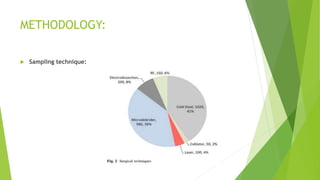
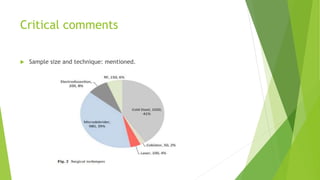
 2500 patients undergoing tonsillectomy with or without adenoid removal in a
period of 35 years (1979–2013)
 41% of the patients underwent cold steel tonsillectomy.
 39% underwent microdebrider assisted tonsillectomy
 21% of the patients, other methods like coblation, radio frequency and laser
were used.
METHODOLOGY:
 Study design: comparative study on following parameter
 Comparing the intra-operative factors (blood loss, time taken for surgery)
 Postoperative results (pain, bleeding, dehydration, time taken for complete
healing)
 Other complications like hemorrhage, vomiting and hospitalization time
between all groups of surgical methods
METHODOLOGY:
 Study duration : 1979–2013
 Sample size: 2500
 Study population: patients with recurrent throat infection, sleep disordered
breathing causing daytime sleepiness, inattention and poor concentration.
 Inclusion criteria:
 Chronic recurrent tonsillitis
 Chronic hypertropic tonsillitis with OSA
 Hypertropic tonsillitis with snoring and dental malocclusion
 Quinsy tonsillectomy
 Unilateral hypertropic tonsil
 Patient with age > 2 years
METHODOLOGY:
 Exclusion criteria:
 Bleeding diathesis
 Poor anesthetic risk or uncontrolled medical illness
 Anemia
 Acute infection
METHODOLOGY:
 Sampling technique:
METHODOLOGY
 Examination of study subjects:
 Laboratory investigations: CBC, BT, CT, ASO titre.
 Throat swab from the surface of tonsils for culture and sensitivty was done in
120 patients whenever felt necessary especially with chronic tonsillitis not
responding to medical treatment.
RESULTS:
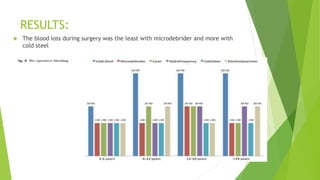
 The blood loss during surgery was the least with microdebrider and more with
cold steel
RESULTS
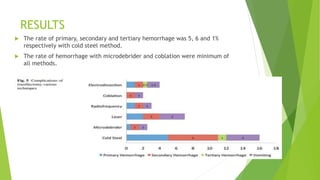
 The rate of primary, secondary and tertiary hemorrhage was 5, 6 and 1%
respectively with cold steel method.
 The rate of hemorrhage with microdebrider and coblation were minimum of
all methods.
RESULTS
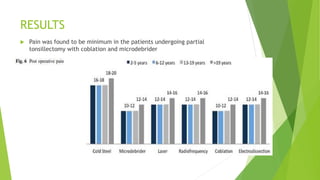
 Pain was found to be minimum in the patients undergoing partial
tonsillectomy with coblation and microdebrider
RESULTS
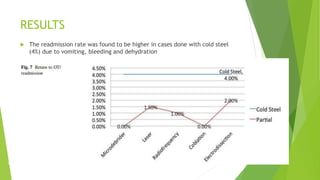
 The readmission rate was found to be higher in cases done with cold steel
(4%) due to vomiting, bleeding and dehydration
RESULTS
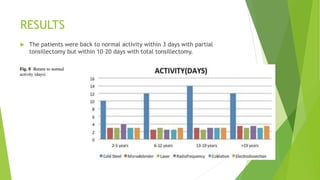
 The patients were back to normal activity within 3 days with partial
tonsillectomy but within 10–20 days with total tonsillectomy.
RESULTS
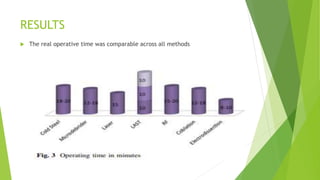
 The real operative time was comparable across all methods
CONCLUSION
 Intracapsular partial technique is better in terms of pain, hemorrhage and
healing.
 The author of this study found that the Powered intracapsular partial
tonsillectomy using microdebrider is the best method followed by coblation as
far as per-operative and post operative complications are concerned.
CRITICAL COMMENTS:
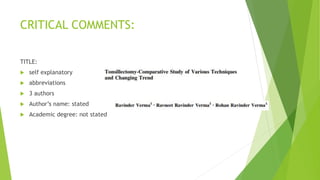
TITLE:
 self explanatory
 abbreviations
 3 authors
 Author’s name: stated
 Academic degree: not stated
CRITICAL COMMENTS:
 ABSTRACT:
 143 words( 150-250 words)
 No concrete information about study
 Introduction/objective/methods/results: mentioned
 Keywords mentioned: 4 in number (3-6)
CRITICAL COMMENTS
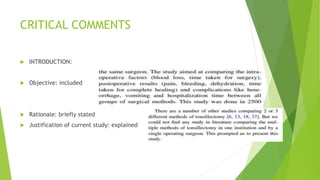
 INTRODUCTION:
 Objective: included
 Rationale: briefly stated
 Justification of current study: explained
CRITICAL COMMENTS:
MATERIALS AND METHODS:
 Not Listed in separate headings
 Study design: comparative
 Study place: not mentioned
 Duration of study: mentioned (2079-2013)
 Ethical clearance and consent from study subject: not mentioned
 Inclusion and exclusion criteria: mentioned
 Statistical methods : not mentioned
Critical comments
 Sample size and technique: mentioned.
CRITICAL COMMENTS:
RESULTS:
 Author’s main finding:
 clearly presented
 The author states first half and second half of study, the date of first half and
second half not mentioned.
 Met the objective mentioned.
CRITICAL COMMENTS
DISCUSSIONS:
 Explanation of individual research finding: not elaborated
 Comparision with other studies: done adequately
 Different technique of tonsillectomy: briefly mentioned.
 Limitation of the study : not mentioned
CONCLUSION:
 As per objective
REFERENCES:
 Vancouver system
 44 journal article.
THANK YOU.

ENT-HNS JOURNAL CLUB TONSILLECTOMY TECHNIQUE.pptx

  • 1.
    ENT-HNS JOURNAL CLUB DRANAND JHA 2ND YEAR RESIDENT, ENT-HNS KISTMCTH, LALITPUR.
  • 2.
    TONSILLECTOMY-COMPARATIVE STUDY OF VARIOUSTECHNIQUES AND CHANGING TREND  Ravinder Verma  Ravneet Ravinder Verma  Rohan Ravinder Verma  Received: 23 September 2015  Accepted: 23 August 2017  Published online: 18 September 2017  Indian J Otolaryngol Head Neck Surg.
  • 3.
    INTRODUCTION  Tonsillectomy isa 3000-year-old operation  In 1959 1.4 million tonsillectomies were performed in the United States.  The number had dropped to 260,000 by 1987  24th most common indication for hospital admission
  • 4.
    INTRODUCTION  A comparativestudy between the various methods of tonsillectomy was done to compare the rates of major complications.  The study aim:  Comparing the intra-operative factors (blood loss, time taken for surgery)  Postoperative results (pain, bleeding, dehydration, time taken for complete healing)  Other complications like hemorrhage, vomiting and hospitalization time between all groups of surgical methods
  • 5.
    INTRODUCTION  2500 patientsundergoing tonsillectomy with or without adenoid removal in a period of 35 years (1979–2013)  41% of the patients underwent cold steel tonsillectomy.  39% underwent microdebrider assisted tonsillectomy  21% of the patients, other methods like coblation, radio frequency and laser were used.
  • 6.
    METHODOLOGY:  Study design:comparative study on following parameter  Comparing the intra-operative factors (blood loss, time taken for surgery)  Postoperative results (pain, bleeding, dehydration, time taken for complete healing)  Other complications like hemorrhage, vomiting and hospitalization time between all groups of surgical methods
  • 7.
    METHODOLOGY:  Study duration: 1979–2013  Sample size: 2500  Study population: patients with recurrent throat infection, sleep disordered breathing causing daytime sleepiness, inattention and poor concentration.  Inclusion criteria:  Chronic recurrent tonsillitis  Chronic hypertropic tonsillitis with OSA  Hypertropic tonsillitis with snoring and dental malocclusion  Quinsy tonsillectomy  Unilateral hypertropic tonsil  Patient with age > 2 years
  • 8.
    METHODOLOGY:  Exclusion criteria: Bleeding diathesis  Poor anesthetic risk or uncontrolled medical illness  Anemia  Acute infection
  • 9.
  • 10.
    METHODOLOGY  Examination ofstudy subjects:  Laboratory investigations: CBC, BT, CT, ASO titre.  Throat swab from the surface of tonsils for culture and sensitivty was done in 120 patients whenever felt necessary especially with chronic tonsillitis not responding to medical treatment.
  • 11.
    RESULTS:  The bloodloss during surgery was the least with microdebrider and more with cold steel
  • 12.
    RESULTS  The rateof primary, secondary and tertiary hemorrhage was 5, 6 and 1% respectively with cold steel method.  The rate of hemorrhage with microdebrider and coblation were minimum of all methods.
  • 13.
    RESULTS  Pain wasfound to be minimum in the patients undergoing partial tonsillectomy with coblation and microdebrider
  • 14.
    RESULTS  The readmissionrate was found to be higher in cases done with cold steel (4%) due to vomiting, bleeding and dehydration
  • 15.
    RESULTS  The patientswere back to normal activity within 3 days with partial tonsillectomy but within 10–20 days with total tonsillectomy.
  • 16.
    RESULTS  The realoperative time was comparable across all methods
  • 17.
    CONCLUSION  Intracapsular partialtechnique is better in terms of pain, hemorrhage and healing.  The author of this study found that the Powered intracapsular partial tonsillectomy using microdebrider is the best method followed by coblation as far as per-operative and post operative complications are concerned.
  • 18.
    CRITICAL COMMENTS: TITLE:  selfexplanatory  abbreviations  3 authors  Author’s name: stated  Academic degree: not stated
  • 19.
    CRITICAL COMMENTS:  ABSTRACT: 143 words( 150-250 words)  No concrete information about study  Introduction/objective/methods/results: mentioned  Keywords mentioned: 4 in number (3-6)
  • 20.
    CRITICAL COMMENTS  INTRODUCTION: Objective: included  Rationale: briefly stated  Justification of current study: explained
  • 21.
    CRITICAL COMMENTS: MATERIALS ANDMETHODS:  Not Listed in separate headings  Study design: comparative  Study place: not mentioned  Duration of study: mentioned (2079-2013)  Ethical clearance and consent from study subject: not mentioned  Inclusion and exclusion criteria: mentioned  Statistical methods : not mentioned
  • 22.
    Critical comments  Samplesize and technique: mentioned.
  • 23.
    CRITICAL COMMENTS: RESULTS:  Author’smain finding:  clearly presented  The author states first half and second half of study, the date of first half and second half not mentioned.  Met the objective mentioned.
  • 24.
    CRITICAL COMMENTS DISCUSSIONS:  Explanationof individual research finding: not elaborated  Comparision with other studies: done adequately  Different technique of tonsillectomy: briefly mentioned.  Limitation of the study : not mentioned CONCLUSION:  As per objective REFERENCES:  Vancouver system  44 journal article.
  • 25.

Editor's Notes

  • #4 Main indication of tonsillectomy in the past : recurrent infection Now the main indication of tonsillectomy has shifted to sleep disturbance.