Enteroviruses

New Emerging Disease
     April 2010

        Huthayfa Mujahed
Outline
•   Introduction
•   Virus Properties
•   Clinical Aspects
•   Pathogenesis
•   Vaccines & Treatment
•   Epidemiology
Introduction

•   Most common human pathogens.
•   Distribution world wild.
•   Usually cause mild fever.
•   Rarely progress to severe and fatal disease.
Properties
1. Classification :
     Family : Picornaviridae
            Genus : Enterovirus
                       10 species
Properties
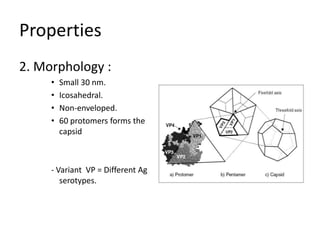
2. Morphology :
     •   Small 30 nm.
     •   Icosahedral.
     •   Non-enveloped.
     •   60 protomers forms the
         capsid


     - Variant VP = Different Ag
        serotypes.
Properties
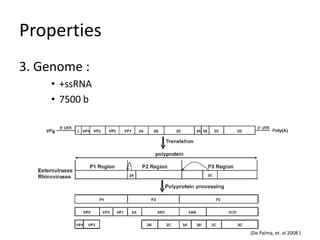
3. Genome :
    • +ssRNA
    • 7500 b


               (De Palma, et. al 2008 )
Properties
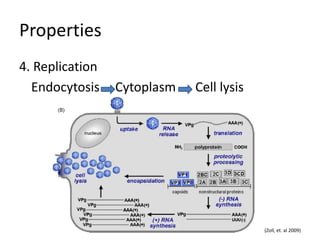
4. Replication
  Endocytosis    Cytoplasm   Cell lysis


                                          (Zoll, et. al 2009)
Clinical Aspects
• Symptoms :
     • Often NO symptoms.
     • Rash, Fever, Muscle aches, Common clod, flu-like.


• Transmission :
     • Saliva, Blister fluid, stool, nasal mucus, and any thing
       contaminated with the virus.
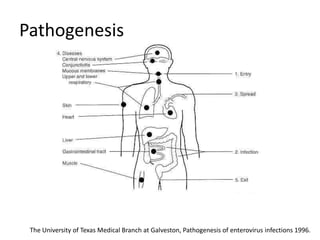
Pathogenesis


 The University of Texas Medical Branch at Galveston, Pathogenesis of enterovirus infections 1996.
Pathogenesis
• Aseptic Meningitis
  – Less severe than bacterial meningitis.
  – Rarely fatal in people with normal immune
    systems.
  – Symptoms last from 7 to 10 days.
  – Completely recover within 2 weeks.


  – H. Enterovirus B species
Pathogenesis
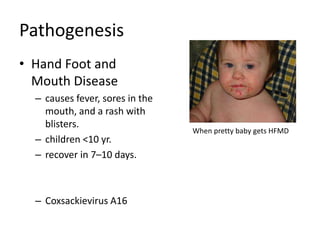
• Hand Foot and
  Mouth Disease
  – causes fever, sores in the
    mouth, and a rash with
    blisters.
                                 When pretty baby gets HFMD
  – children <10 yr.
  – recover in 7–10 days.


  – Coxsackievirus A16
Lab Diagnosis
• RT-PCR.
• Recently Flow Cytometry .
Vaccines
 – No vaccine, Good hygiene.


Treatment
 – No specific anti-viral agent.
Epidemiology


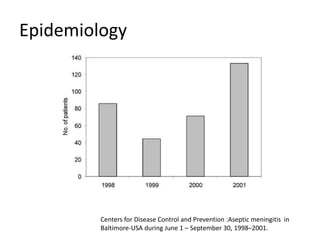
         Centers for Disease Control and Prevention :Aseptic meningitis in
         Baltimore-USA during June 1 – September 30, 1998–2001.
Epidemiology


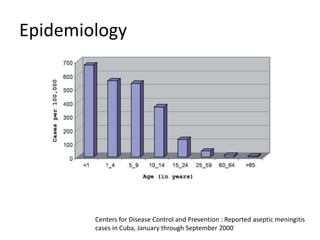
        Centers for Disease Control and Prevention : Reported aseptic meningitis
        cases in Cuba, January through September 2000
Epidemiology


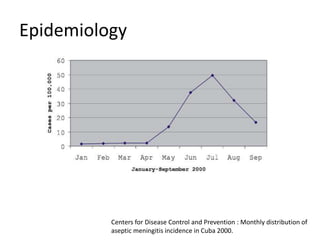
          Centers for Disease Control and Prevention : Monthly distribution of
          aseptic meningitis incidence in Cuba 2000.
Epidemiology


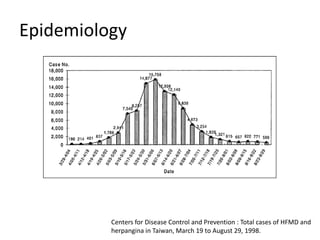
          Centers for Disease Control and Prevention : Total cases of HFMD and
          herpangina in Taiwan, March 19 to August 29, 1998.
Epidemiology


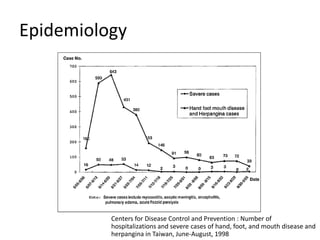
          Centers for Disease Control and Prevention : Number of
          hospitalizations and severe cases of hand, foot, and mouth disease and
          herpangina in Taiwan, June-August, 1998
Epidemiology


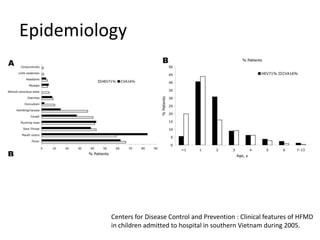
          Centers for Disease Control and Prevention : Clinical features of HFMD
          in children admitted to hospital in southern Vietnam during 2005.
Epidemiology


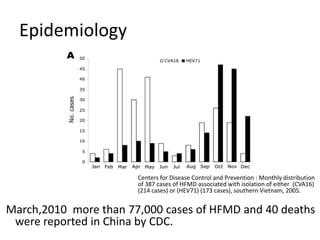
                       Centers for Disease Control and Prevention : Monthly distribution
                       of 387 cases of HFMD associated with isolation of either (CVA16)
                       (214 cases) or (HEV71) (173 cases), southern Vietnam, 2005.


March,2010 more than 77,000 cases of HFMD and 40 deaths
 were reported in China by CDC.
References
•   Cordey. Samuel, Gerlach. Daniel, Junier. Thomas, Zdobnov. Evgeny M, Kaiser. Laurent, and
    Tapparel. Caroline. 2008. The cis-acting replecation elements define human enterovirus and
    rhinovirus species. RNA, 14:1568-1578.
•   De Palma. Armando M, Vliegen. Inge, De Clercq. Erik, Neyts. Johan. 2008. Selective inhibitors
    of Picornavirus replication. Medicinal Reasearch Reviews, 28:823-884.
•   Lin. Mong-Cheng, Chan. Yu-Jiun, Chen. Chun-Jen, Tang. Ren-Bin, and Wu. Keh-Gong. 2008.
    Epidemiology and diagnostic methodology for enterovirus infection, including cerebrospinal
    fluid analysis. Microbio Immunol & infect, 41:450-455.
•   She. Rosemary C, Preobrazhensky. Sergey N, Taggar Edward W, Petti Cathy A, and Bahler
    Devid W. 2009. Flow cytometric detection and serotyping of enterovirus for the clinical
    laboratory. Jviromet, 162:245-250.
•   Zoll. Jan, Heus. Hans A, Kuppeveld. Frank J.M Van, and Melchers. Willem J.M. 2009. The
    structure-function relationship of the enterovirus 3’-UTR. Viruses, 139:209-216.
•   Centers for Disease Control and Prevention./www.cdc..gov/
Be a virus, see the world

Enteroviruses

  • 1.
    Enteroviruses New Emerging Disease April 2010 Huthayfa Mujahed
  • 2.
    Outline • Introduction • Virus Properties • Clinical Aspects • Pathogenesis • Vaccines & Treatment • Epidemiology
  • 3.
    Introduction • Most common human pathogens. • Distribution world wild. • Usually cause mild fever. • Rarely progress to severe and fatal disease.
  • 4.
    Properties 1. Classification : Family : Picornaviridae Genus : Enterovirus 10 species
  • 5.
    Properties 2. Morphology : • Small 30 nm. • Icosahedral. • Non-enveloped. • 60 protomers forms the capsid - Variant VP = Different Ag serotypes.
  • 6.
    Properties 3. Genome : • +ssRNA • 7500 b (De Palma, et. al 2008 )
  • 7.
    Properties 4. Replication Endocytosis Cytoplasm Cell lysis (Zoll, et. al 2009)
  • 8.
    Clinical Aspects • Symptoms: • Often NO symptoms. • Rash, Fever, Muscle aches, Common clod, flu-like. • Transmission : • Saliva, Blister fluid, stool, nasal mucus, and any thing contaminated with the virus.
  • 9.
    Pathogenesis The Universityof Texas Medical Branch at Galveston, Pathogenesis of enterovirus infections 1996.
  • 10.
    Pathogenesis • Aseptic Meningitis – Less severe than bacterial meningitis. – Rarely fatal in people with normal immune systems. – Symptoms last from 7 to 10 days. – Completely recover within 2 weeks. – H. Enterovirus B species
  • 11.
    Pathogenesis • Hand Footand Mouth Disease – causes fever, sores in the mouth, and a rash with blisters. When pretty baby gets HFMD – children <10 yr. – recover in 7–10 days. – Coxsackievirus A16
  • 12.
    Lab Diagnosis • RT-PCR. •Recently Flow Cytometry .
  • 13.
    Vaccines – Novaccine, Good hygiene. Treatment – No specific anti-viral agent.
  • 14.
    Epidemiology Centers for Disease Control and Prevention :Aseptic meningitis in Baltimore-USA during June 1 – September 30, 1998–2001.
  • 15.
    Epidemiology Centers for Disease Control and Prevention : Reported aseptic meningitis cases in Cuba, January through September 2000
  • 16.
    Epidemiology Centers for Disease Control and Prevention : Monthly distribution of aseptic meningitis incidence in Cuba 2000.
  • 17.
    Epidemiology Centers for Disease Control and Prevention : Total cases of HFMD and herpangina in Taiwan, March 19 to August 29, 1998.
  • 18.
    Epidemiology Centers for Disease Control and Prevention : Number of hospitalizations and severe cases of hand, foot, and mouth disease and herpangina in Taiwan, June-August, 1998
  • 19.
    Epidemiology Centers for Disease Control and Prevention : Clinical features of HFMD in children admitted to hospital in southern Vietnam during 2005.
  • 20.
    Epidemiology Centers for Disease Control and Prevention : Monthly distribution of 387 cases of HFMD associated with isolation of either (CVA16) (214 cases) or (HEV71) (173 cases), southern Vietnam, 2005. March,2010 more than 77,000 cases of HFMD and 40 deaths were reported in China by CDC.
  • 21.
    References • Cordey. Samuel, Gerlach. Daniel, Junier. Thomas, Zdobnov. Evgeny M, Kaiser. Laurent, and Tapparel. Caroline. 2008. The cis-acting replecation elements define human enterovirus and rhinovirus species. RNA, 14:1568-1578. • De Palma. Armando M, Vliegen. Inge, De Clercq. Erik, Neyts. Johan. 2008. Selective inhibitors of Picornavirus replication. Medicinal Reasearch Reviews, 28:823-884. • Lin. Mong-Cheng, Chan. Yu-Jiun, Chen. Chun-Jen, Tang. Ren-Bin, and Wu. Keh-Gong. 2008. Epidemiology and diagnostic methodology for enterovirus infection, including cerebrospinal fluid analysis. Microbio Immunol & infect, 41:450-455. • She. Rosemary C, Preobrazhensky. Sergey N, Taggar Edward W, Petti Cathy A, and Bahler Devid W. 2009. Flow cytometric detection and serotyping of enterovirus for the clinical laboratory. Jviromet, 162:245-250. • Zoll. Jan, Heus. Hans A, Kuppeveld. Frank J.M Van, and Melchers. Willem J.M. 2009. The structure-function relationship of the enterovirus 3’-UTR. Viruses, 139:209-216. • Centers for Disease Control and Prevention./www.cdc..gov/
  • 22.
    Be a virus,see the world