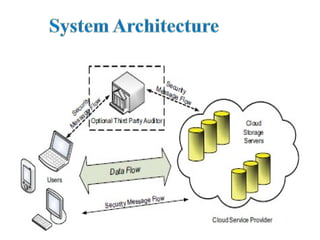

Cloud computing has been envisioned as the next-generation architecture of IT
enterprise. In contrast to traditional solutions, where the IT services are under proper
physical, logical and personnel controls, cloud computing moves the application software
and databases to the large data centers, where the management of the data and services
may not be fully trustworthy. This unique attribute, however, poses many new security
challenges which have not been well understood. In this article, we focus on cloud data
storage security, which has always been an important aspect of quality of service. To
ensure the correctness of users' data in the cloud, we propose an effective and flexible
distributed scheme with two salient features, opposing to its predecessors. By utilizing the
homomorphic token with distributed verification of erasure-coded data, our scheme
achieves the integration of storage correctness insurance and data error localization, i.e.,
the identification of misbehaving server (s). Unlike most prior works, the new scheme
further supports secure and efficient dynamic operations on data blocks, including: data
update, delete and append. Extensive security and performance analysis shows that the
proposed scheme is highly efficient and resilient against Byzantine failure, malicious data
modification attack, and even server colluding attacks.
What is cloud Computing?
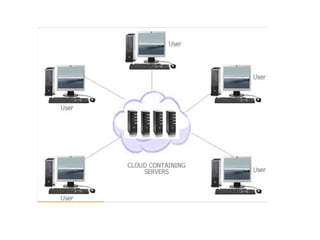
• key to the defination of cloud computing is the “cloud” itself.
  here cloud is the group of large group of interconnected
  computers

• these computers can be personal or network servers.

• the cloud of computers extend beyond a single company or
  entity. the application and data served by cloud are available to
  broader group of users, cross enterprise,and cross platform.

• access is via internet. any authorized user can access these
  documents, application from any computer over the internet.
From the perspective of data security, which has always been an important aspect
  of quality of service, Cloud Computing inevitably poses new challenging security
  threats for number of reasons.


1. Firstly, traditional cryptographic primitives for the purpose of data security protection
   can not be directly adopted due to the users’ loss control of data under Cloud
   Computing.
2. Secondly, Cloud Computing is not just a third party data warehouse. The data stored in
   the cloud may be frequently updated by the users, including insertion, deletion,
   modification, appending, reordering, etc.
In this paper, we propose an effective and flexible distributed scheme with explicit
dynamic data support to ensure the correctness of users’ data in the cloud. We rely on
erasure correcting code in the file distribution preparation to provide redundancies
and guarantee the data dependability. This construction drastically reduces the
communication and storage overhead as compared to the traditional replication-
based file distribution techniques.


1.Compared to many of its predecessors, which only provide binary results about the
storage state across the distributed servers, the challenge-response protocol in our
work further provides the localization of data error.

2.Unlike most prior works for ensuring remote data integrity, the new scheme supports
secure and efficient dynamic operations on data blocks, including: update, delete and
append.

3.Extensive security and performance analysis shows that the proposed scheme is
highly efficient and resilient against Byzantine failure, malicious data modification
attack, and even server colluding attacks.
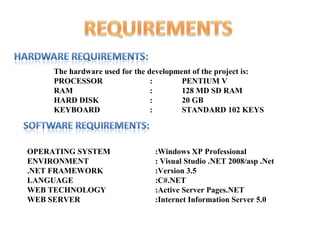
The hardware used for the development of the project is:
     PROCESSOR                  :       PENTIUM V
     RAM                        :       128 MD SD RAM
     HARD DISK                  :       20 GB
     KEYBOARD                   :       STANDARD 102 KEYS


OPERATING SYSTEM                :Windows XP Professional
ENVIRONMENT                     : Visual Studio .NET 2008/asp .Net
.NET FRAMEWORK                  :Version 3.5
LANGUAGE                        :C#.NET
WEB TECHNOLOGY                  :Active Server Pages.NET
WEB SERVER                      :Internet Information Server 5.0
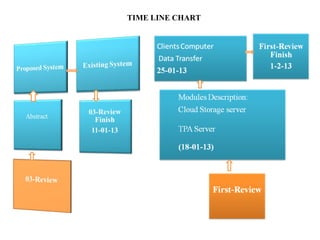
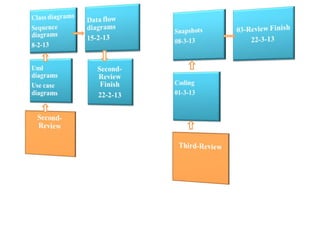
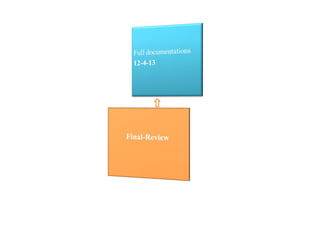
TIME LINE CHART
Ensuring d.s
Ensuring d.s
Ensuring d.s

Ensuring d.s

  • 2.
    Cloud computing hasbeen envisioned as the next-generation architecture of IT enterprise. In contrast to traditional solutions, where the IT services are under proper physical, logical and personnel controls, cloud computing moves the application software and databases to the large data centers, where the management of the data and services may not be fully trustworthy. This unique attribute, however, poses many new security challenges which have not been well understood. In this article, we focus on cloud data storage security, which has always been an important aspect of quality of service. To ensure the correctness of users' data in the cloud, we propose an effective and flexible distributed scheme with two salient features, opposing to its predecessors. By utilizing the homomorphic token with distributed verification of erasure-coded data, our scheme achieves the integration of storage correctness insurance and data error localization, i.e., the identification of misbehaving server (s). Unlike most prior works, the new scheme further supports secure and efficient dynamic operations on data blocks, including: data update, delete and append. Extensive security and performance analysis shows that the proposed scheme is highly efficient and resilient against Byzantine failure, malicious data modification attack, and even server colluding attacks.
  • 3.
    What is cloudComputing? • key to the defination of cloud computing is the “cloud” itself. here cloud is the group of large group of interconnected computers • these computers can be personal or network servers. • the cloud of computers extend beyond a single company or entity. the application and data served by cloud are available to broader group of users, cross enterprise,and cross platform. • access is via internet. any authorized user can access these documents, application from any computer over the internet.
  • 5.
    From the perspectiveof data security, which has always been an important aspect of quality of service, Cloud Computing inevitably poses new challenging security threats for number of reasons. 1. Firstly, traditional cryptographic primitives for the purpose of data security protection can not be directly adopted due to the users’ loss control of data under Cloud Computing. 2. Secondly, Cloud Computing is not just a third party data warehouse. The data stored in the cloud may be frequently updated by the users, including insertion, deletion, modification, appending, reordering, etc.
  • 6.
    In this paper,we propose an effective and flexible distributed scheme with explicit dynamic data support to ensure the correctness of users’ data in the cloud. We rely on erasure correcting code in the file distribution preparation to provide redundancies and guarantee the data dependability. This construction drastically reduces the communication and storage overhead as compared to the traditional replication- based file distribution techniques. 1.Compared to many of its predecessors, which only provide binary results about the storage state across the distributed servers, the challenge-response protocol in our work further provides the localization of data error. 2.Unlike most prior works for ensuring remote data integrity, the new scheme supports secure and efficient dynamic operations on data blocks, including: update, delete and append. 3.Extensive security and performance analysis shows that the proposed scheme is highly efficient and resilient against Byzantine failure, malicious data modification attack, and even server colluding attacks.
  • 8.
    The hardware usedfor the development of the project is: PROCESSOR : PENTIUM V RAM : 128 MD SD RAM HARD DISK : 20 GB KEYBOARD : STANDARD 102 KEYS OPERATING SYSTEM :Windows XP Professional ENVIRONMENT : Visual Studio .NET 2008/asp .Net .NET FRAMEWORK :Version 3.5 LANGUAGE :C#.NET WEB TECHNOLOGY :Active Server Pages.NET WEB SERVER :Internet Information Server 5.0
  • 9.