PHILISOPHICAL
ORIGINS OF
AMERCIAN
GOVERNMENT
Enlightenment Philosophy

Use of logic and reason to solve human
problems
Questioning the divine right of kings
Written into our nation’s founding
documents
  The Declaration of Independence
  The U.S. Constitution
Natural Rights
The philosophy-belief- that all human beings are born
with certain rights:

The right to life

The right to be free

The right to think independently

The right to express your beliefs

The right to be treated equally or fairly before the law
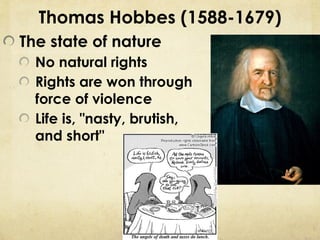
Thomas Hobbes (1588-1679)
The state of nature
  No natural rights
  Rights are won through
  force of violence
  Life is, "nasty, brutish,
  and short"
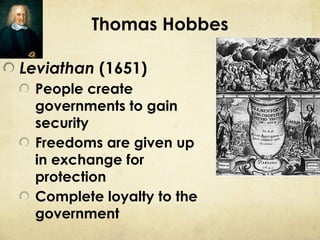
Thomas Hobbes

Leviathan (1651)
 People create
 governments to gain
 security
 Freedoms are given up
 in exchange for
 protection
 Complete loyalty to the
 government
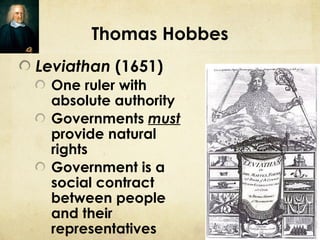
Thomas Hobbes
Leviathan (1651)
 One ruler with
 absolute authority
 Governments must
 provide natural
 rights
 Government is a
 social contract
 between people
 and their
 representatives
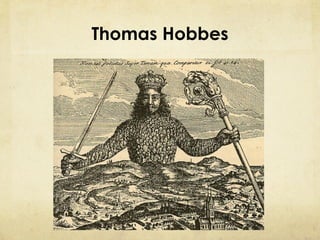
Thomas Hobbes
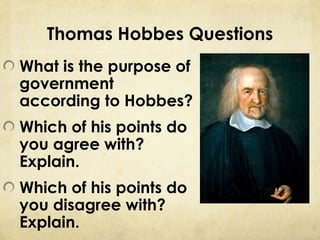
Thomas Hobbes Questions
What is the purpose of
government
according to Hobbes?
Which of his points do
you agree with?
Explain.
Which of his points do
you disagree with?
Explain.
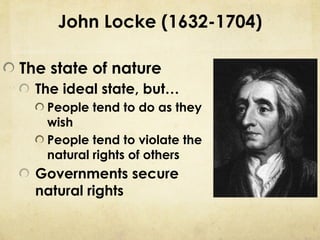
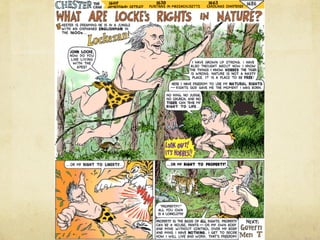
John Locke (1632-1704)

The state of nature
  The ideal state, but…
   People tend to do as they
   wish
   People tend to violate the
   natural rights of others
  Governments secure
  natural rights
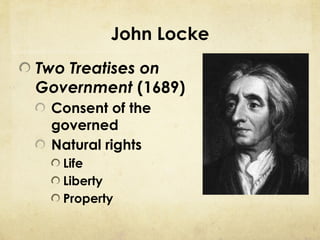
John Locke
Two Treatises on
Government (1689)
 Consent of the
 governed
 Natural rights
   Life
   Liberty
   Property
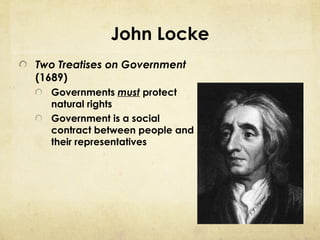
John Locke
Two Treatises on Government
(1689)
  Governments must protect
  natural rights
  Government is a social
  contract between people and
  their representatives
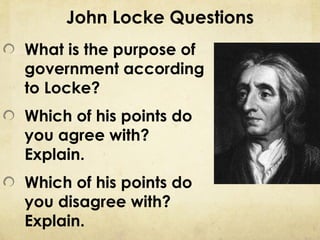
John Locke Questions
What is the purpose of
government according
to Locke?
Which of his points do
you agree with?
Explain.
Which of his points do
you disagree with?
Explain.
Assignment
Complete sheet based on information in powerpoint
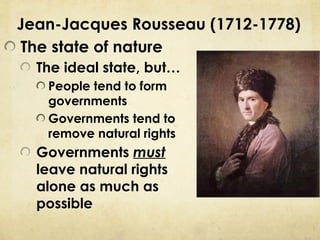
Jean-Jacques Rousseau (1712-1778)
The state of nature
  The ideal state, but…
   People tend to form
   governments
   Governments tend to
   remove natural rights
  Governments must
  leave natural rights
  alone as much as
  possible
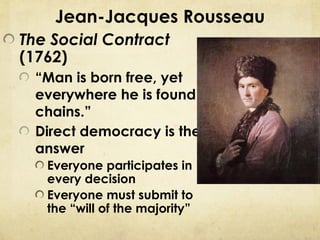
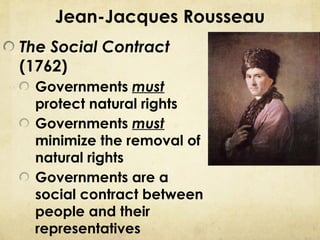
Jean-Jacques Rousseau
The Social Contract
(1762)
 “Man is born free, yet
 everywhere he is found in
 chains.”
 Direct democracy is the
 answer
   Everyone participates in
   every decision
   Everyone must submit to
   the “will of the majority”
Jean-Jacques Rousseau
The Social Contract
(1762)
 Governments must
 protect natural rights
 Governments must
 minimize the removal of
 natural rights
 Governments are a
 social contract between
 people and their
 representatives
Jean-Jacques Rousseau Questions

  What is the purpose
  of government
  according to
  Rousseau?
  Which of his points
  do you agree with?
  Explain.
  Which of his points
  do you disagree
  with? Explain.

Enlightenment philosophers

  • 1.
  • 2.
    Enlightenment Philosophy Use oflogic and reason to solve human problems Questioning the divine right of kings Written into our nation’s founding documents The Declaration of Independence The U.S. Constitution
  • 3.
    Natural Rights The philosophy-belief-that all human beings are born with certain rights: The right to life The right to be free The right to think independently The right to express your beliefs The right to be treated equally or fairly before the law
  • 4.
    Thomas Hobbes (1588-1679) Thestate of nature No natural rights Rights are won through force of violence Life is, "nasty, brutish, and short"
  • 5.
    Thomas Hobbes Leviathan (1651) People create governments to gain security Freedoms are given up in exchange for protection Complete loyalty to the government
  • 6.
    Thomas Hobbes Leviathan (1651) One ruler with absolute authority Governments must provide natural rights Government is a social contract between people and their representatives
  • 7.
  • 8.
    Thomas Hobbes Questions Whatis the purpose of government according to Hobbes? Which of his points do you agree with? Explain. Which of his points do you disagree with? Explain.
  • 9.
    John Locke (1632-1704) Thestate of nature The ideal state, but… People tend to do as they wish People tend to violate the natural rights of others Governments secure natural rights
  • 11.
    John Locke Two Treatiseson Government (1689) Consent of the governed Natural rights Life Liberty Property
  • 12.
    John Locke Two Treatiseson Government (1689) Governments must protect natural rights Government is a social contract between people and their representatives
  • 13.
    John Locke Questions Whatis the purpose of government according to Locke? Which of his points do you agree with? Explain. Which of his points do you disagree with? Explain.
  • 14.
    Assignment Complete sheet basedon information in powerpoint
  • 15.
    Jean-Jacques Rousseau (1712-1778) Thestate of nature The ideal state, but… People tend to form governments Governments tend to remove natural rights Governments must leave natural rights alone as much as possible
  • 16.
    Jean-Jacques Rousseau The SocialContract (1762) “Man is born free, yet everywhere he is found in chains.” Direct democracy is the answer Everyone participates in every decision Everyone must submit to the “will of the majority”
  • 17.
    Jean-Jacques Rousseau The SocialContract (1762) Governments must protect natural rights Governments must minimize the removal of natural rights Governments are a social contract between people and their representatives
  • 18.
    Jean-Jacques Rousseau Questions What is the purpose of government according to Rousseau? Which of his points do you agree with? Explain. Which of his points do you disagree with? Explain.