Definition of Survey Research
Design
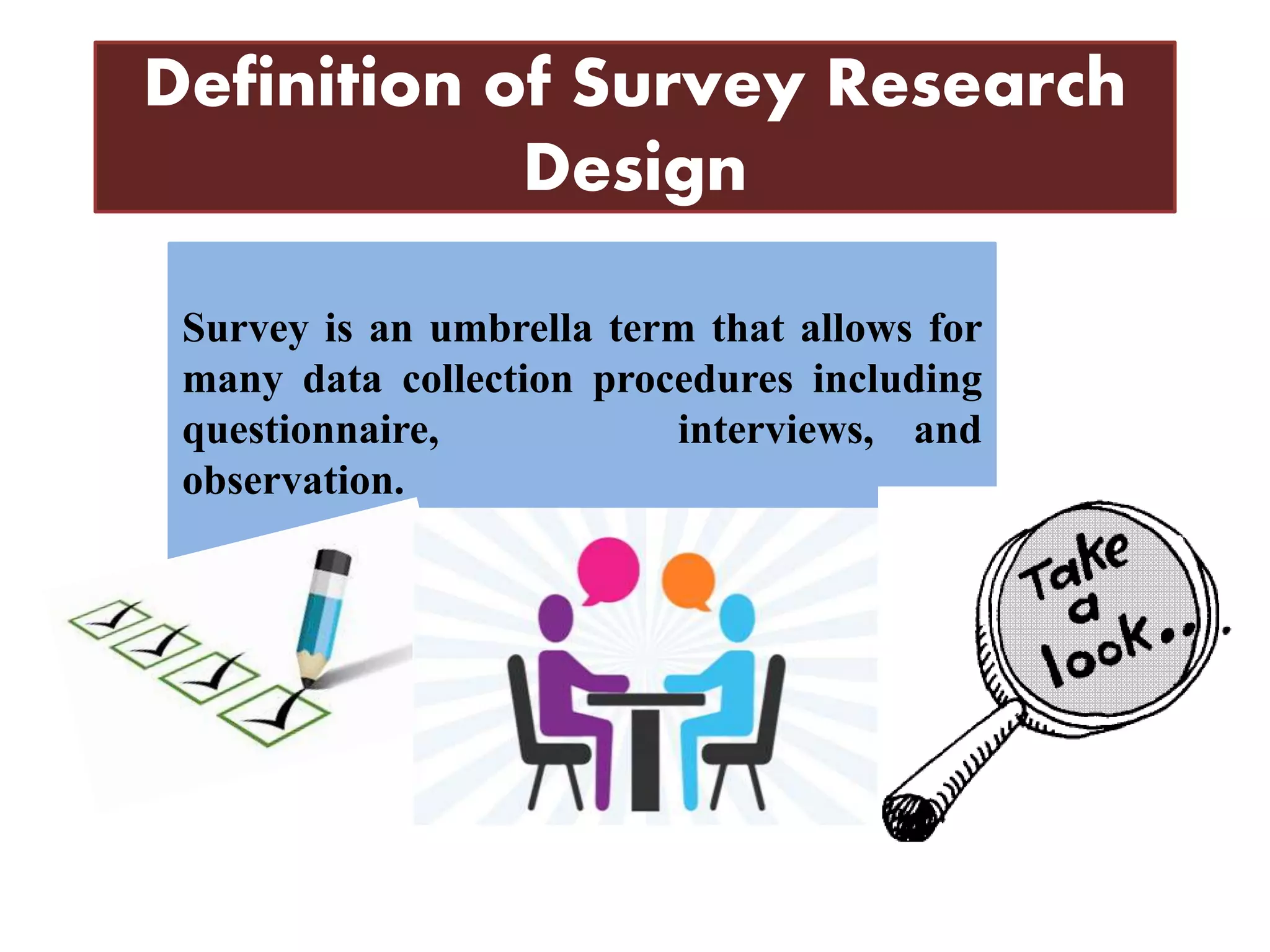
Survey is an umbrella term that allows for
many data collection procedures including
questionnaire, interviews, and
observation.
Key component of survey Design
Planning the
survey Sampling
Constructing
the
instrument
Conducting
the survey
Analyzing
the data
According to Ary, Jacobs, & Razavieh,
there are 5 steps in the survey process
Planning the survey
Developing the instrument
Gathering the data
Analyzing the data statistically
Analyzing the data qualitatively
Reporting the result
According to Brown, there are 6 steps
A survey design consist of a construct, a population,
and a sample.
Construct
Population
Sampl
e
What is Survey Design good at?
What is Survey Design not good
at?
• There are three types of data typicalled
used in SRD :
What kind of data is most closely associated
with SRD?
Behavioural data
Preference
Descriptive data
What issues and concerns does survey
design highlight?
a. What am I investigating?
b. Who will be surveyed?
Type of sampling :
Convenience A group already formed and easy
to use
Purposeful Knowledgable and available
persons
SnowballSelected respondents suggest other
respondents
QuotaStratified sampling, but not randomly
chosen
c. How should I select my respondent?
1. Non probability sampling
2. Probability sample
Simple randomPull names out of a
hat
Systematic randomComputer
generated numbers to select
StratifiedThe sample divided into
groups called strata
ClusterGroups of strata
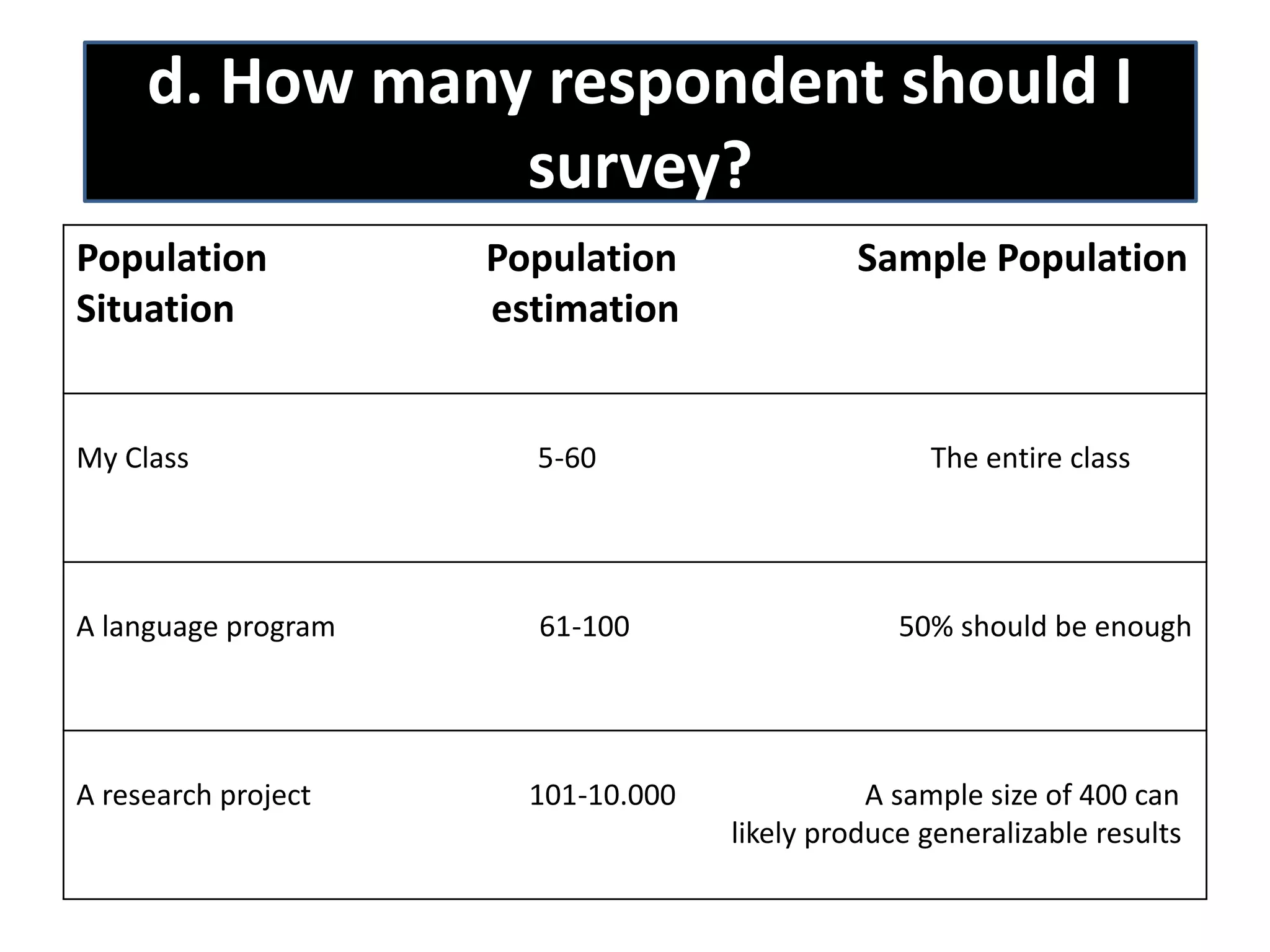
Population Population Sample Population
Situation estimation
My Class 5-60 The entire class
A language program 61-100 50% should be enough
A research project 101-10.000 A sample size of 400 can
likely produce generalizable results
d. How many respondent should I
survey?

English Language Research : Survey Research Design

  • 1.
    Definition of SurveyResearch Design Survey is an umbrella term that allows for many data collection procedures including questionnaire, interviews, and observation.
  • 2.
    Key component ofsurvey Design Planning the survey Sampling Constructing the instrument Conducting the survey Analyzing the data According to Ary, Jacobs, & Razavieh, there are 5 steps in the survey process
  • 3.
    Planning the survey Developingthe instrument Gathering the data Analyzing the data statistically Analyzing the data qualitatively Reporting the result According to Brown, there are 6 steps
  • 4.
    A survey designconsist of a construct, a population, and a sample. Construct Population Sampl e
  • 5.
    What is SurveyDesign good at? What is Survey Design not good at?
  • 6.
    • There arethree types of data typicalled used in SRD : What kind of data is most closely associated with SRD? Behavioural data Preference Descriptive data
  • 7.
    What issues andconcerns does survey design highlight? a. What am I investigating? b. Who will be surveyed?
  • 8.
    Type of sampling: Convenience A group already formed and easy to use Purposeful Knowledgable and available persons SnowballSelected respondents suggest other respondents QuotaStratified sampling, but not randomly chosen c. How should I select my respondent? 1. Non probability sampling
  • 9.
    2. Probability sample SimplerandomPull names out of a hat Systematic randomComputer generated numbers to select StratifiedThe sample divided into groups called strata ClusterGroups of strata
  • 10.
    Population Population SamplePopulation Situation estimation My Class 5-60 The entire class A language program 61-100 50% should be enough A research project 101-10.000 A sample size of 400 can likely produce generalizable results d. How many respondent should I survey?