Created by,
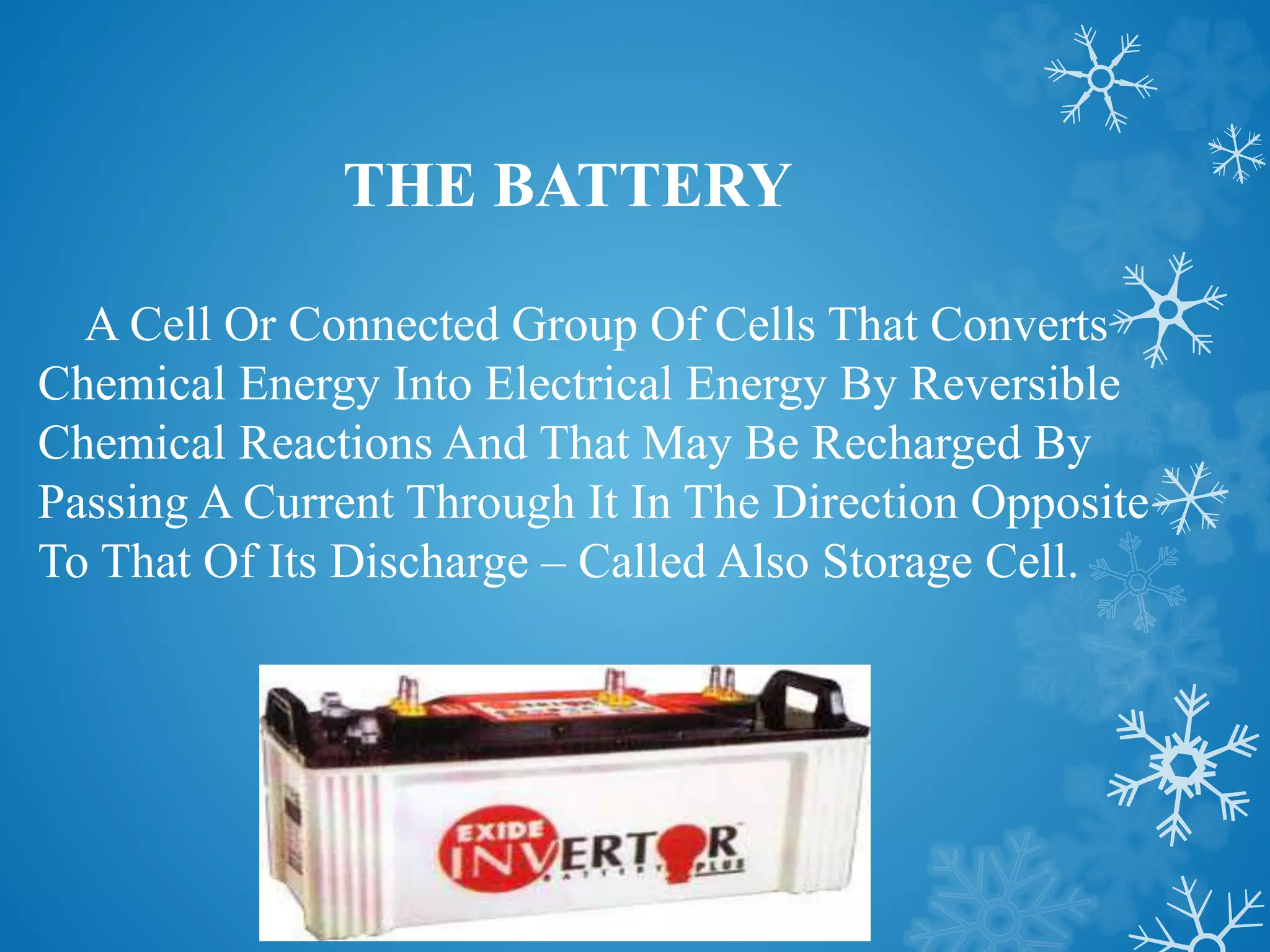
A Cell Or Connected Group Of Cells That Converts
Chemical Energy Into Electrical Energy By Reversible
Chemical Reactions And That May Be Recharged By
Passing A Current Through It In The Direction Opposite
To That Of Its Discharge – Called Also Storage Cell.
THE BATTERY
HISTORY/BACKGROUND
TYPES OF BATTERIES
The primary battery
The secondary battery
The secondary battery must first be charged with electrical
energy before it can convert chemical energy to electrical
energy . It is rechargeable.
Example-Lead Acid Battery
The primary battery converts chemical energy to
electrical energy directly, using the chemical materials within
the cell to start the action. It is not rechargeable.
Example-Dry Cell
THE PRIMARY BATTERY
THE SECONDARY BATTERY
Uses An electrolytic paste.
The electrolytic paste reacts with
the electrodes to produce a
negative charge on one
electrode and a positive charge
on the other.
The difference of potential
between the two Electrodes is
the output voltage.
DRY CELL
 A Hard plastic container.
 Positive and negative internal plates made of
lead.
 Plate separators made of porous synthetic
material.
 Electrolyte, a dilute solution of sulfuric acid
and water, better known as battery acid.
 Lead terminals, the connection point between
the battery and whatever it powers.
LEAD ACID BATTERY
Positive electrode
Negative electrode
Electrolyte
Separator
CELLS
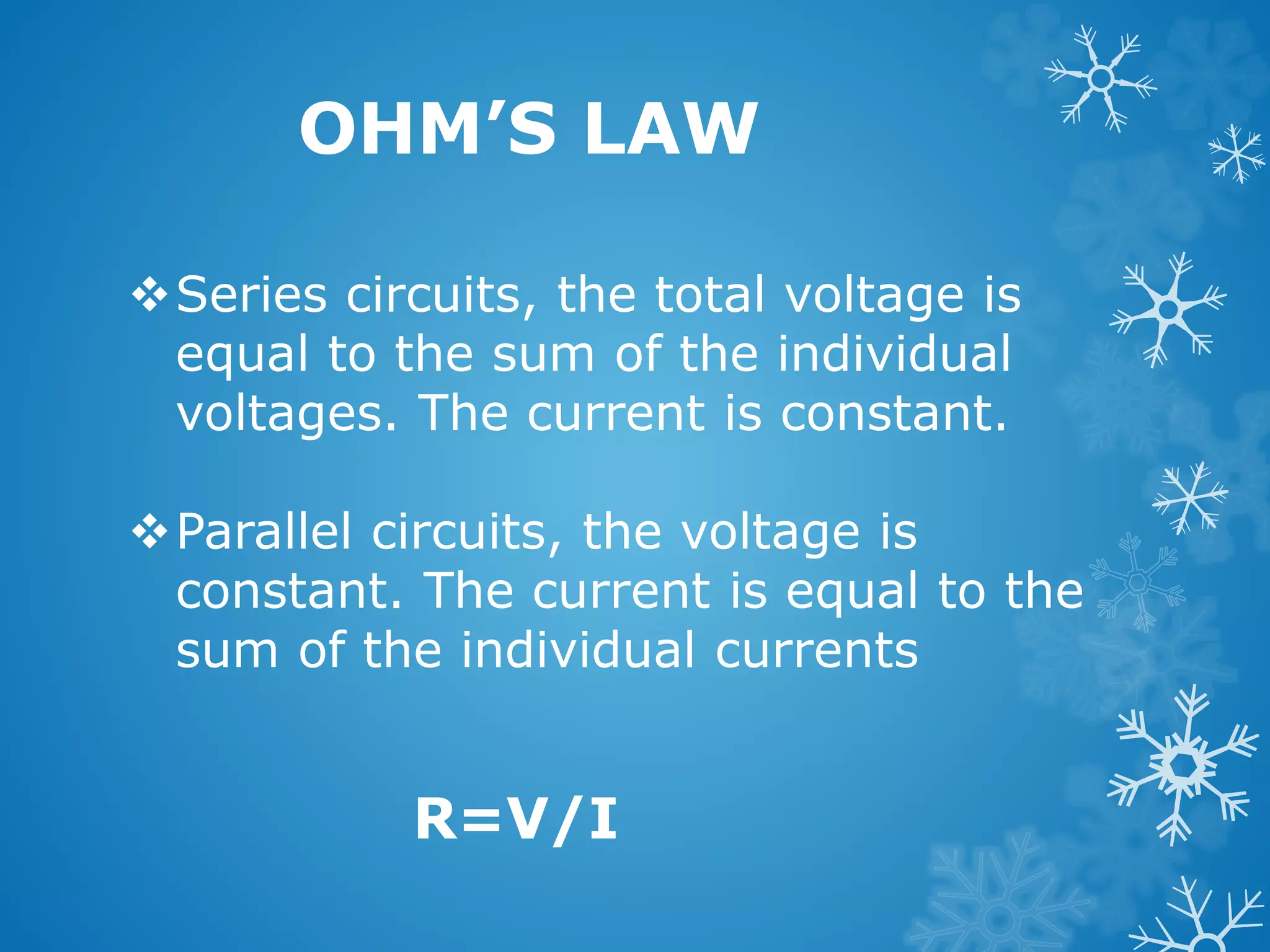
Series circuits, the total voltage is
equal to the sum of the individual
voltages. The current is constant.
Parallel circuits, the voltage is
constant. The current is equal to the
sum of the individual currents
OHM’S LAW
R=V/I
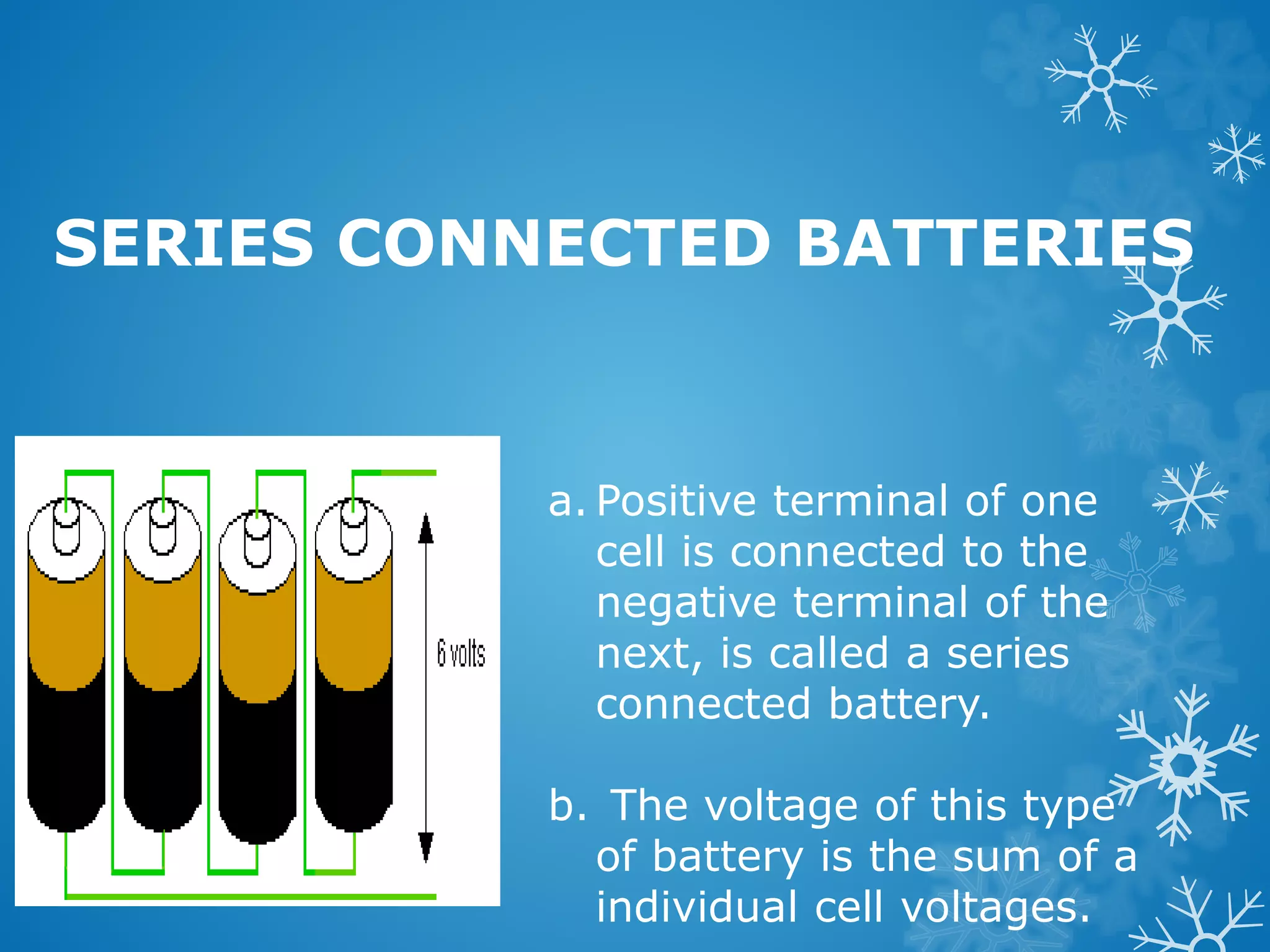
SERIES CONNECTED BATTERIES
a. Positive terminal of one
cell is connected to the
negative terminal of the
next, is called a series
connected battery.
b. The voltage of this type
of battery is the sum of a
individual cell voltages.
PARALLEL CONNECTED
BATTERIES
o Connect the negative
terminal from one cell
to the negative of the
next cell
o Connect the positive
terminal to the positive
terminal, is parallel
connected.
o Voltage remains
constant and the
current is cumulative.
Negative plate reaction:
PbSO4(s) + H+(aq) + 2-e → Pb(s) + HSO4(aq)
Positive plate reaction:
PbSO4(s) + 2H2O(l) → PbO2(s) + HSO4(aq) +
3H+(aq) + 2e
The total reaction can be written:
2PbSO4(s) + 2H2O(l) → Pb(s) + PbO2(s) +
2H2SO4(aq)
CHARGING
Negative plate reaction:
Pb(s) + HSO4(aq) → PbSO4(s) + H+(aq) + 2-e
Positive plate reaction:
PbO2(s) + HSO4(aq) + 3H+(aq) + 2-e →
PbSO4(s) + 2H2O(l)
The total reaction can be written:
Pb(s) + PbO2(s) + 2H2SO4(aq) → 2PbSO4(s) +
2H2O(l)
DISCHARGING
• Clean Battery Terminals.
• Attach clamps to the battery in
proper polarity.
• Keep open flames and sparks away
from battery.
• Ventilate the battery well while
charging.
CHARGING
WHY ADD ELECTRONICS TO
BATTERIES?
REQUIRED ELECTRONICS ON NEW CHEMISTRIES:
Energy density has increased with each advancement in chemistry making cells less
stable.
Requiring:
– Safety circuits
– Cell balancing
– Secondary safeties
Added Value
Electronics:
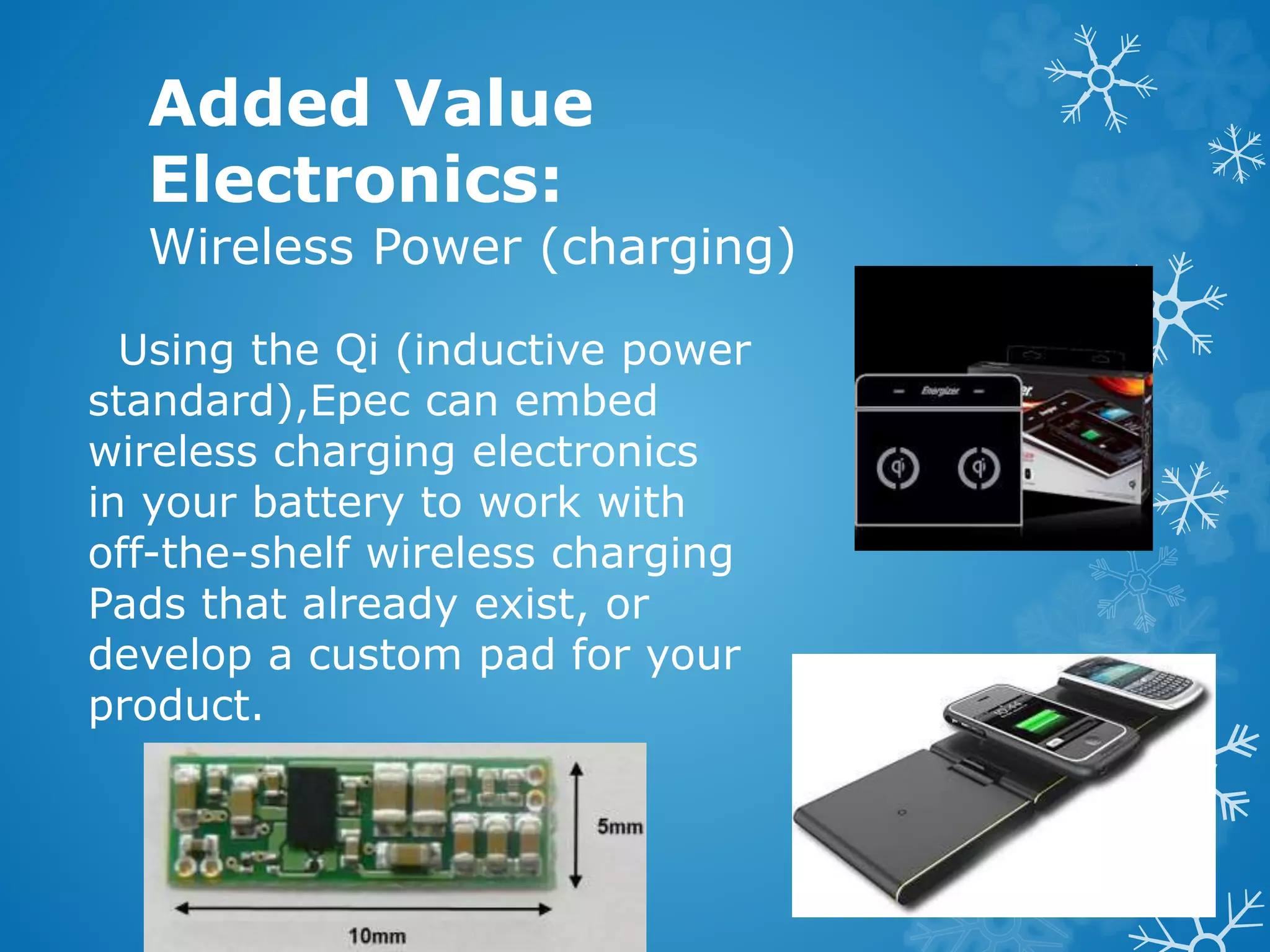
Wireless Power (charging)
Using the Qi (inductive power
standard),Epec can embed
wireless charging electronics
in your battery to work with
off-the-shelf wireless charging
Pads that already exist, or
develop a custom pad for your
product.
BUILD TO PRINT ELECTRONICS
PAPER BATTERY
 Battery takes large
amount of space and
consumes more weight.
 researchers show interest
in Ultrathin, Flexible ,
safe energy storage
device.
 Nano scale.
INTRODUCTION
CARBON NANO TUBES
 A carbon Nanotube is a tube-
shaped material, made of carbon,
diameter measures on the
nanometer scale also known as
Bucky tubes.
 A nanometer is one billionth of the
meter.
 Carbon Nanotubes have many
structures, differing in length,
thickness, and in the type of felicity
and number of layers.
STRUCTURE OF PAPER
BATTERY
APPLICATION
PRINTABLE BATTERY
Imprint Energy
Founded in 2010
Develop zinc-based
rechargeable battery
technology
 Bendable Electronics
 LG and Samsung
 Flexible phones and
watches
CUSTOMER SELECTION
CUSTOMER SELECTION
 Bioelectronics
 MC10
Medical patch
Digital Health
WEARABLE ELECTRONICS
CONSTRUCTION ON
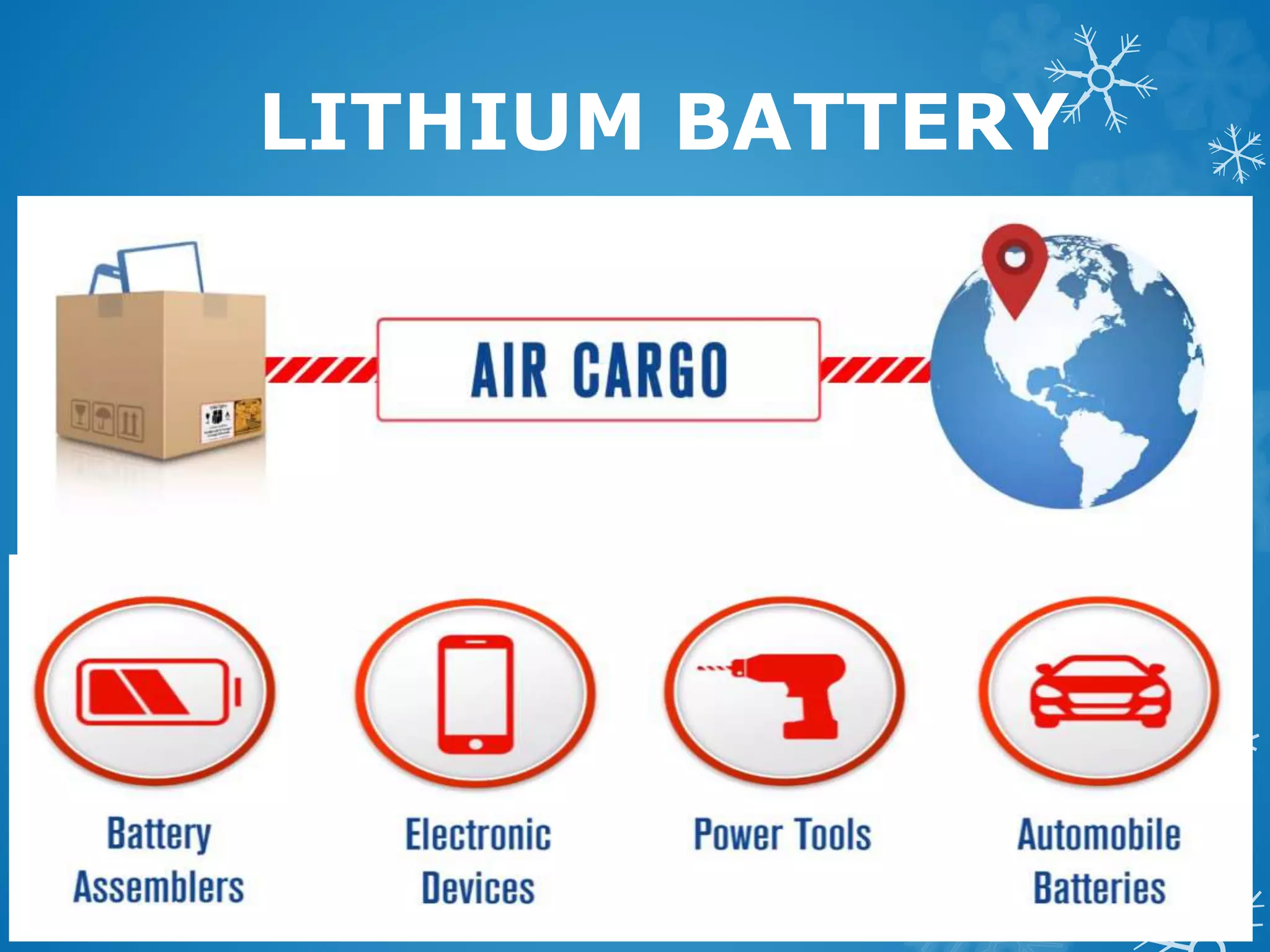
LITHIUM BATTERY
LITHIUM BATTERY
LITHIUM BATTERY
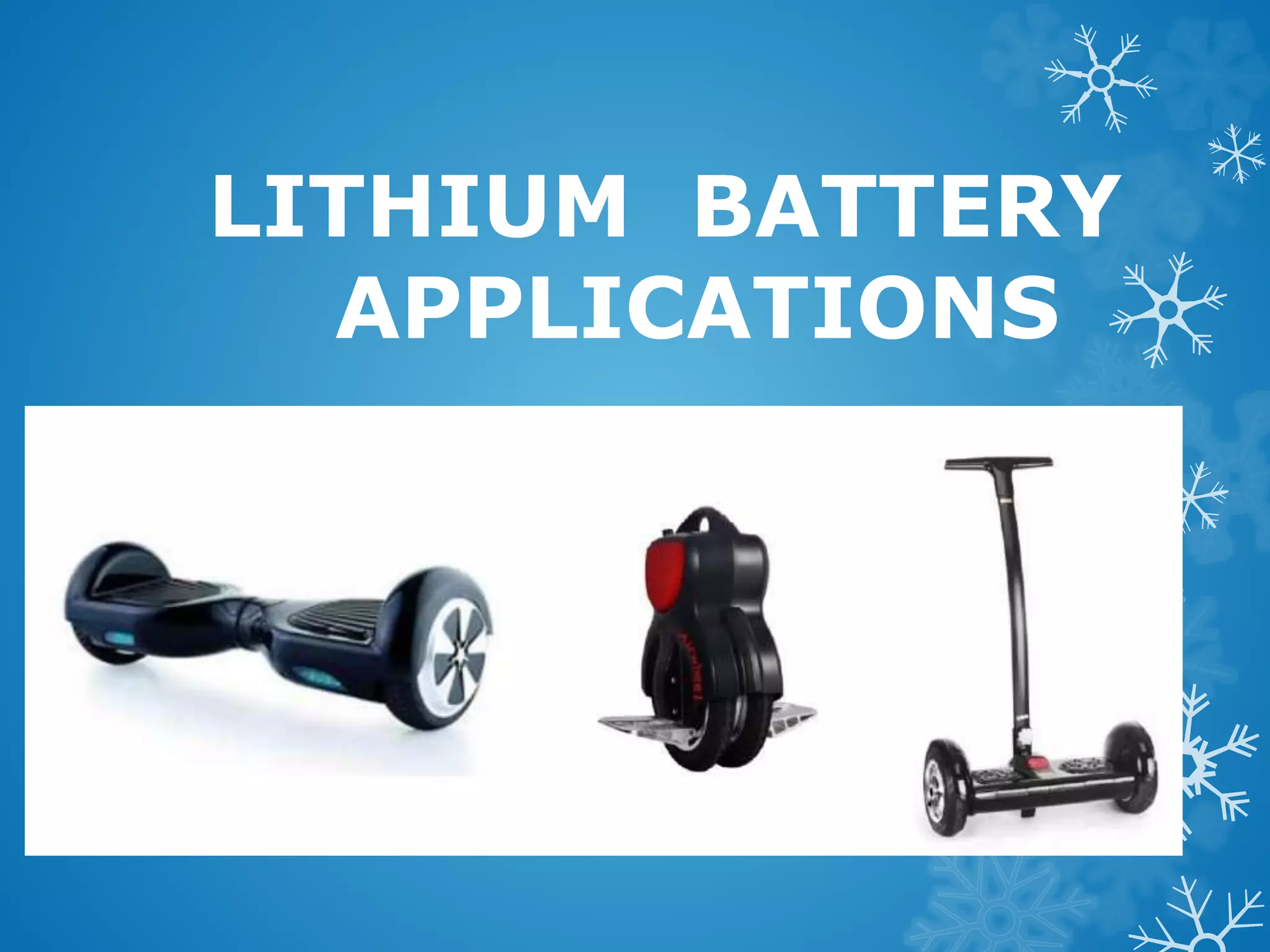
APPLICATIONS
NEW INNOVATIVE DEVICES
energy stored devices

energy stored devices

  • 1.
  • 2.
    A Cell OrConnected Group Of Cells That Converts Chemical Energy Into Electrical Energy By Reversible Chemical Reactions And That May Be Recharged By Passing A Current Through It In The Direction Opposite To That Of Its Discharge – Called Also Storage Cell. THE BATTERY
  • 3.
  • 4.
    TYPES OF BATTERIES Theprimary battery The secondary battery
  • 5.
    The secondary batterymust first be charged with electrical energy before it can convert chemical energy to electrical energy . It is rechargeable. Example-Lead Acid Battery The primary battery converts chemical energy to electrical energy directly, using the chemical materials within the cell to start the action. It is not rechargeable. Example-Dry Cell THE PRIMARY BATTERY THE SECONDARY BATTERY
  • 6.
    Uses An electrolyticpaste. The electrolytic paste reacts with the electrodes to produce a negative charge on one electrode and a positive charge on the other. The difference of potential between the two Electrodes is the output voltage. DRY CELL
  • 7.
     A Hardplastic container.  Positive and negative internal plates made of lead.  Plate separators made of porous synthetic material.  Electrolyte, a dilute solution of sulfuric acid and water, better known as battery acid.  Lead terminals, the connection point between the battery and whatever it powers. LEAD ACID BATTERY
  • 8.
  • 9.
    Series circuits, thetotal voltage is equal to the sum of the individual voltages. The current is constant. Parallel circuits, the voltage is constant. The current is equal to the sum of the individual currents OHM’S LAW R=V/I
  • 10.
    SERIES CONNECTED BATTERIES a.Positive terminal of one cell is connected to the negative terminal of the next, is called a series connected battery. b. The voltage of this type of battery is the sum of a individual cell voltages.
  • 11.
    PARALLEL CONNECTED BATTERIES o Connectthe negative terminal from one cell to the negative of the next cell o Connect the positive terminal to the positive terminal, is parallel connected. o Voltage remains constant and the current is cumulative.
  • 12.
    Negative plate reaction: PbSO4(s)+ H+(aq) + 2-e → Pb(s) + HSO4(aq) Positive plate reaction: PbSO4(s) + 2H2O(l) → PbO2(s) + HSO4(aq) + 3H+(aq) + 2e The total reaction can be written: 2PbSO4(s) + 2H2O(l) → Pb(s) + PbO2(s) + 2H2SO4(aq) CHARGING
  • 13.
    Negative plate reaction: Pb(s)+ HSO4(aq) → PbSO4(s) + H+(aq) + 2-e Positive plate reaction: PbO2(s) + HSO4(aq) + 3H+(aq) + 2-e → PbSO4(s) + 2H2O(l) The total reaction can be written: Pb(s) + PbO2(s) + 2H2SO4(aq) → 2PbSO4(s) + 2H2O(l) DISCHARGING
  • 14.
    • Clean BatteryTerminals. • Attach clamps to the battery in proper polarity. • Keep open flames and sparks away from battery. • Ventilate the battery well while charging. CHARGING
  • 15.
    WHY ADD ELECTRONICSTO BATTERIES? REQUIRED ELECTRONICS ON NEW CHEMISTRIES: Energy density has increased with each advancement in chemistry making cells less stable. Requiring: – Safety circuits – Cell balancing – Secondary safeties
  • 16.
    Added Value Electronics: Wireless Power(charging) Using the Qi (inductive power standard),Epec can embed wireless charging electronics in your battery to work with off-the-shelf wireless charging Pads that already exist, or develop a custom pad for your product.
  • 17.
    BUILD TO PRINTELECTRONICS
  • 18.
    PAPER BATTERY  Batterytakes large amount of space and consumes more weight.  researchers show interest in Ultrathin, Flexible , safe energy storage device.  Nano scale. INTRODUCTION
  • 19.
    CARBON NANO TUBES A carbon Nanotube is a tube- shaped material, made of carbon, diameter measures on the nanometer scale also known as Bucky tubes.  A nanometer is one billionth of the meter.  Carbon Nanotubes have many structures, differing in length, thickness, and in the type of felicity and number of layers.
  • 20.
  • 21.
  • 22.
    PRINTABLE BATTERY Imprint Energy Foundedin 2010 Develop zinc-based rechargeable battery technology
  • 23.
     Bendable Electronics LG and Samsung  Flexible phones and watches CUSTOMER SELECTION
  • 24.
    CUSTOMER SELECTION  Bioelectronics MC10 Medical patch Digital Health
  • 26.
  • 27.
  • 28.
  • 29.
  • 30.