ENERGY SOURCES IN
SURGERY
Dr Naveen Kumar A,
Dept. of General
Surgery,
MMHRC.
PROPERTIES OF ELECTRICITY
 Current = flow of electrons during a period of time.
 Voltage = force with which the electrons are
pushed through the tissue
 Impedence/Resistance = measure of the difficulty
that a given tissue presents to the passage of
electrons
 Circuit = Pathway for uninterrupted flow of
electrons.
 Power = Capacity to do work per unit time.
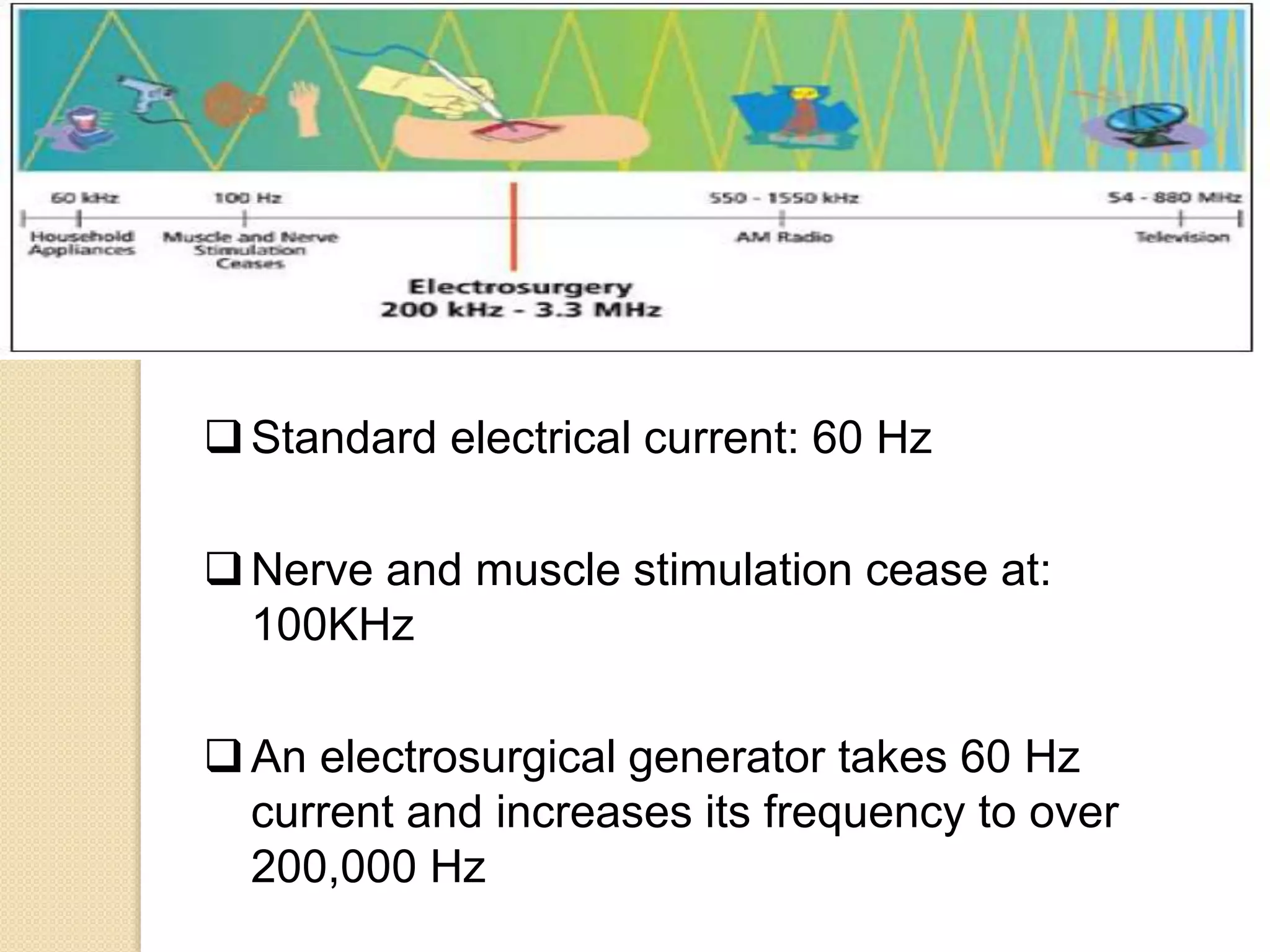
Standard electrical current: 60 Hz
Nerve and muscle stimulation cease at:
100KHz
An electrosurgical generator takes 60 Hz
current and increases its frequency to over
200,000 Hz
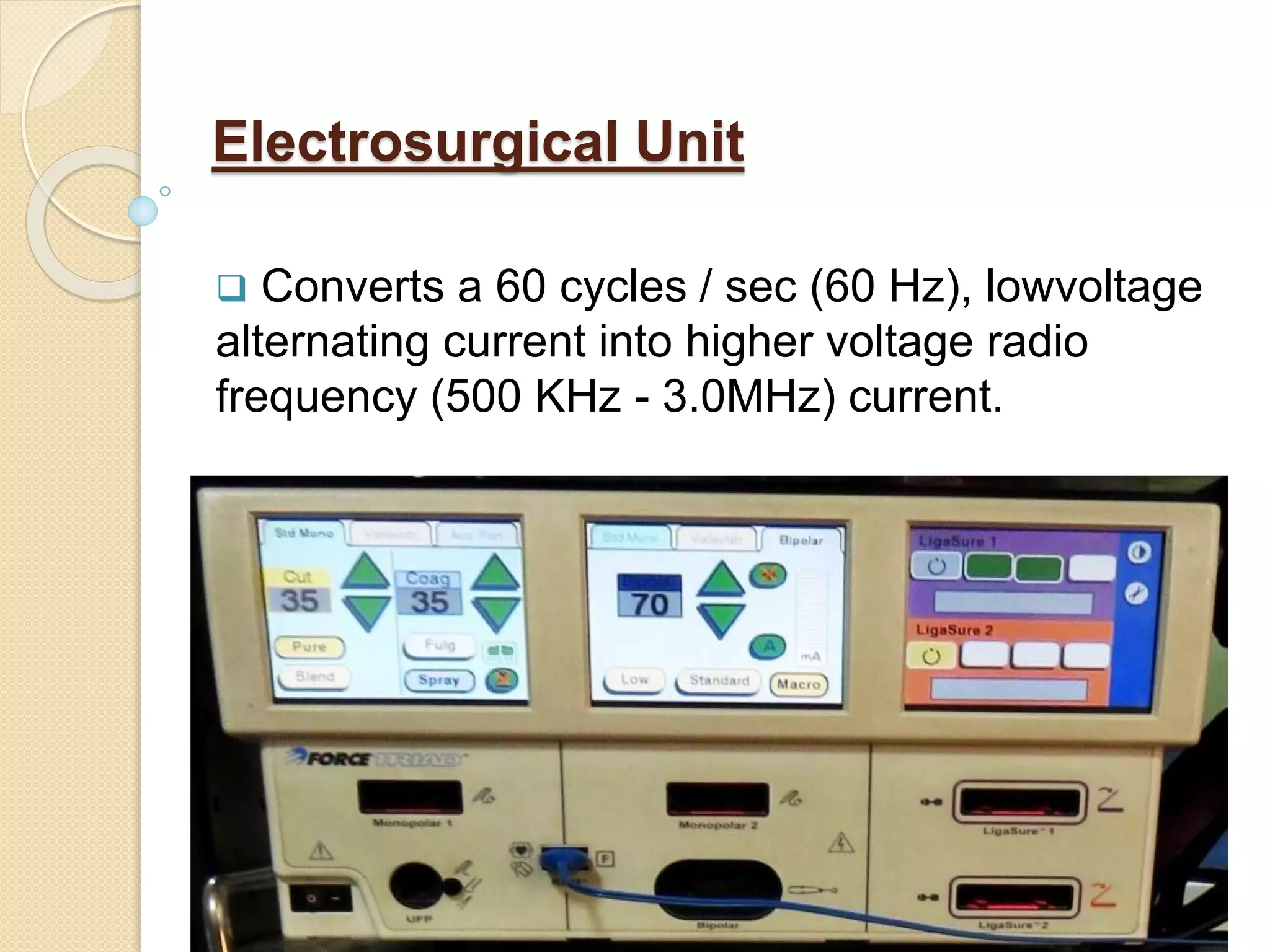
Electrosurgical Unit
 Converts a 60 cycles / sec (60 Hz), lowvoltage
alternating current into higher voltage radio
frequency (500 KHz - 3.0MHz) current.
Electrocautery is NOT Electrosurgery
 The terms electrocautery and electrosurgery are
frequently used interchangeably; however, these
terms define two distinctly different modalities.
 Electrocautery: use of electricity to heat an object
that is then used to burn a specific site e.g. a hot wire
 Electrosurgery: the electrical current heats the
tissue. The current must pass through the tissue to
produce the desired effect..
MONOPOLAR ELECTROSURGERY
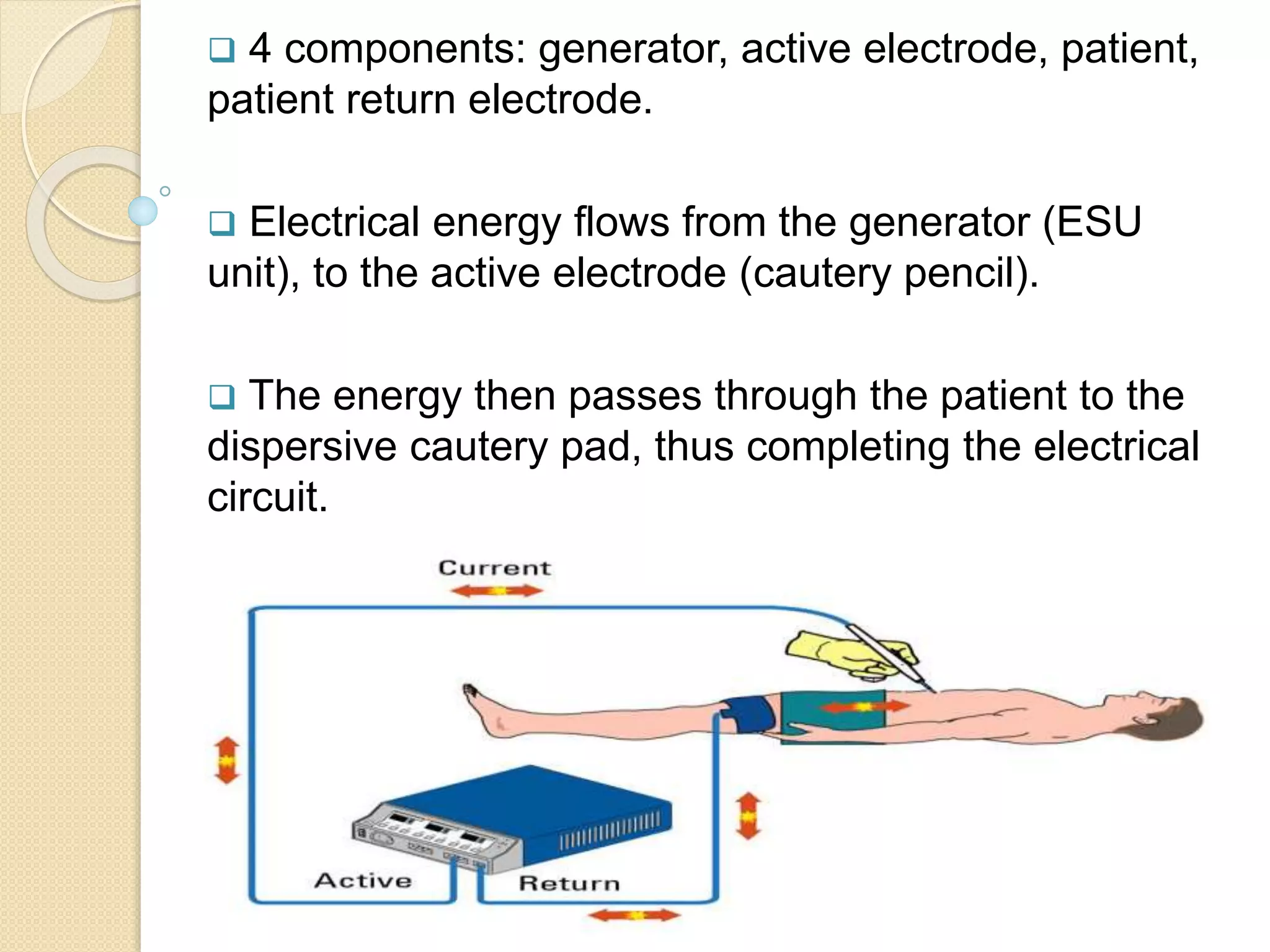
 4 components: generator, active electrode, patient,
patient return electrode.
 Electrical energy flows from the generator (ESU
unit), to the active electrode (cautery pencil).
 The energy then passes through the patient to the
dispersive cautery pad, thus completing the electrical
circuit.
Effect of temperature on cells and tissue
 cellular temperature reaches 50°C cell death will
occur in approximately 6 min.
 if the local temperature is 60°C cellular death is
instantaneous.
 Between about 60 and 95°C two process occur
- first is protein denaturation -> coagulum
- dessication
 If the intracellular temperature rises to 100°C or
more – vapourization.
 local temperature reaches 200°C or more -
carbonization
TISSUE EFFECTS WITH WAVEFORM
MODIFICATION
 Cut waveform: Duty cycle(“on”
time) is high, continuous
waveform
 vaporize or cut tissue,
 Produce heat very rapidly
 Coagulation waveform:
intermittent waveform
 Duty cycle (“on” time) reduced,
 Produce less heat so coagulum is
formed
 Blended current : not a mixture
of cutting and coagulation, but a
modification of duty cycle
ELECTROSURGICAL TISSUE EFFECTS
 Cutting: divide tissue
with electric sparks that
focus intense heat at
surgical site
 -By sparking we achieve
maximum current
concentration
 Fulguration: sparking
with coagulation
waveform
 -coagulates and chars
the tissue over a wide
area, result in coagulum
 -high voltage coag
current is used(duty
cycle 6%)
 Desiccation: occurs
when electrode is in
direct contact with the
tissue
- -Achieved most
efficiently with cutting
current
- -by touching electrode
to the tissue, current
concentration reduced,
result in less heat and
no cutting action
- -cells dry out and form
a coagulum
VARIABLES IMPACTING TISSUE
EFFECT
 Waveform
 Power settings
 Size of electrode
 Time
 Manipulation of
electrode
 Type of tissue
 eschar
Patient return electrode
 The only difference
b/w active electrode
and patient return
electrode is their
relative size and
conductivity
 At patient return
electrode site:
reduced contact area-
current concentration
increased-
temperature
increased- burn
 REM contact quality
monitoring(RECQM)
 -protects patient from
pad site burn
 -monitor impedance at
the patient/pad
interface
 -system deactivate if
impedance is high
 -such electrode can be
identified by its split
appearance i.e. two
separate areas and a
special plug with
center pin.
ELECTROSURGICAL INJURY
Direct coupling
 occurs when the active electrode touches another
metal instrument.
 The electrical current flows from one to the other
and then proceeds to tissue resulting in unintended
burn.
Insulation failure
 occur when the insulation covering of an
instrument has been damaged.
 Cracks or breaks in the shaft’s insulation allow the
electrical energy to escape and burn unintended
tissue.
 Coagulation waveform is high in voltage, which
can spark through compromised insulation. Also high
voltage can blow holes in weak insulation.
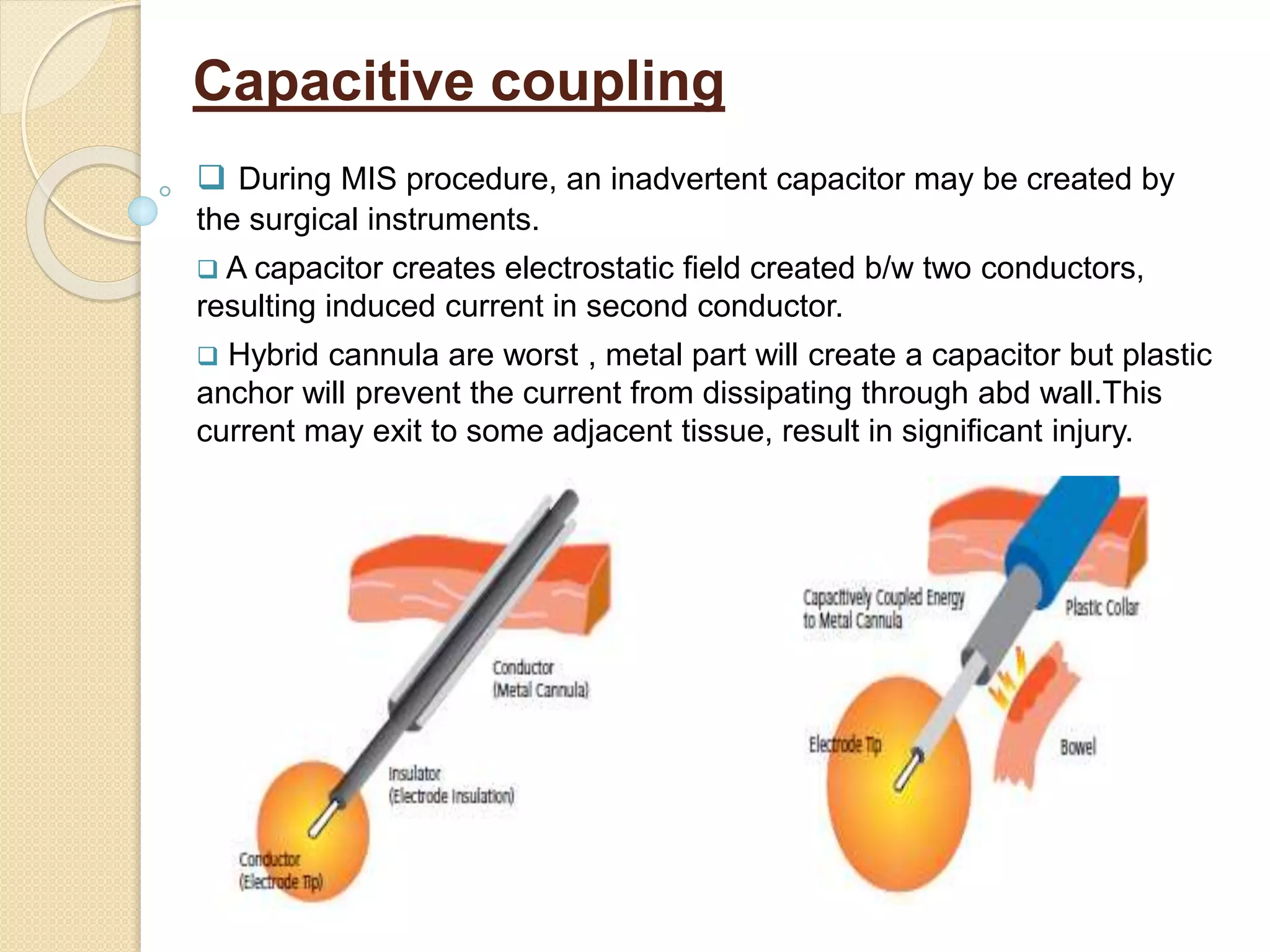
Capacitive coupling
 During MIS procedure, an inadvertent capacitor may be created by
the surgical instruments.
 A capacitor creates electrostatic field created b/w two conductors,
resulting induced current in second conductor.
 Hybrid cannula are worst , metal part will create a capacitor but plastic
anchor will prevent the current from dissipating through abd wall.This
current may exit to some adjacent tissue, result in significant injury.
BIPOLAR ELECTROSURGERY
 The two tines forceps
function active and return
electrodes.
 Only the tissue grasped is
included in circuit.
 No patient return electrode
 Better hemostasis
 Less thermal injury
 Safer than monopolar
LIGASURE
BIPOLAR VESSEL SEALING DEVICE
 Electrosurgical technology
that combines pressure
and energy to create a
seal.
 Seals vessels up to 7 mm
with a single activation.
 Seal strength comparable
to sutures/clips, can
withstand >3 times normal
SBP.
 Lateral thermal spread :
0 - 4.5 mm
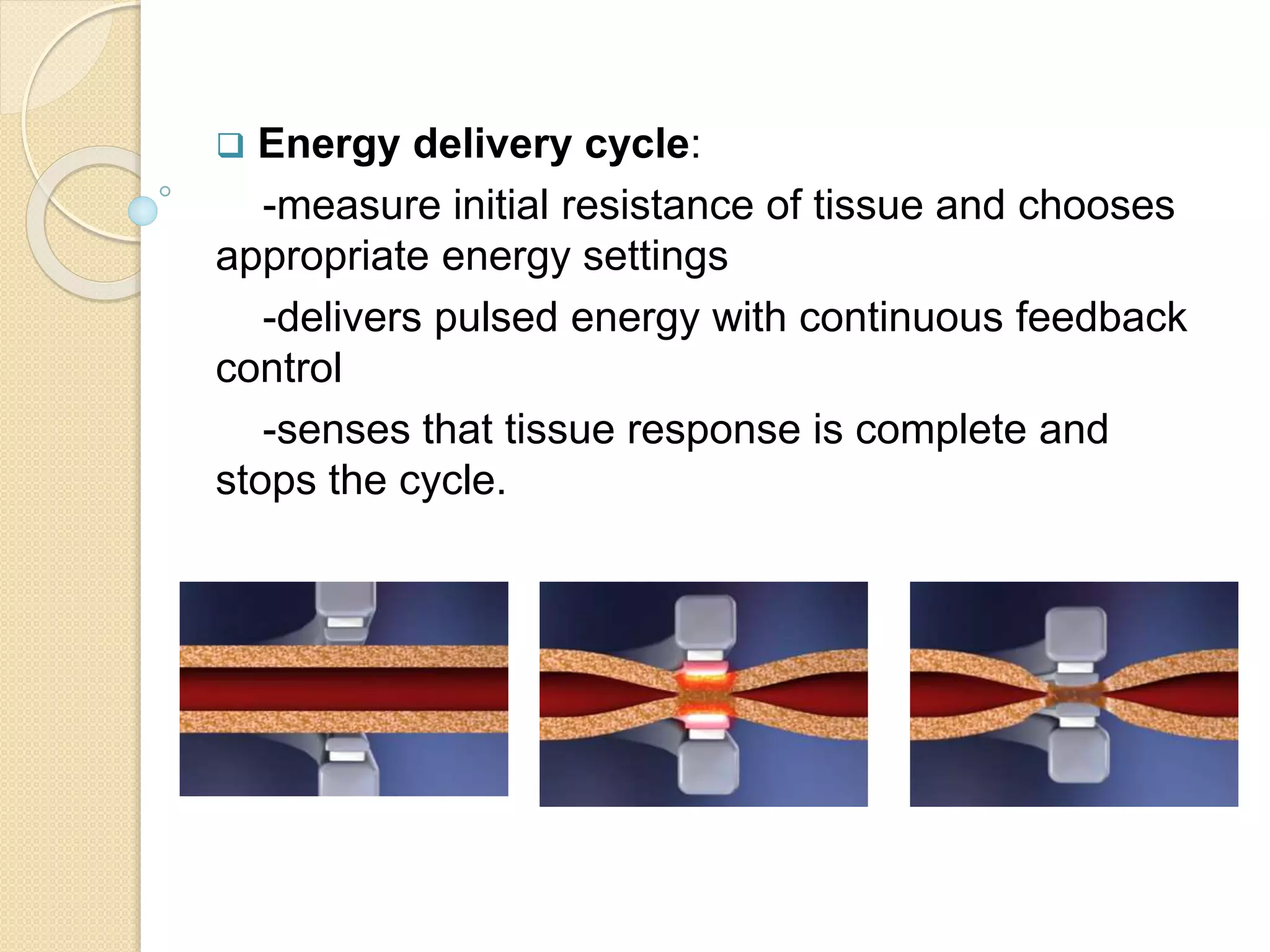
 Energy delivery cycle:
-measure initial resistance of tissue and chooses
appropriate energy settings
-delivers pulsed energy with continuous feedback
control
-senses that tissue response is complete and
stops the cycle.
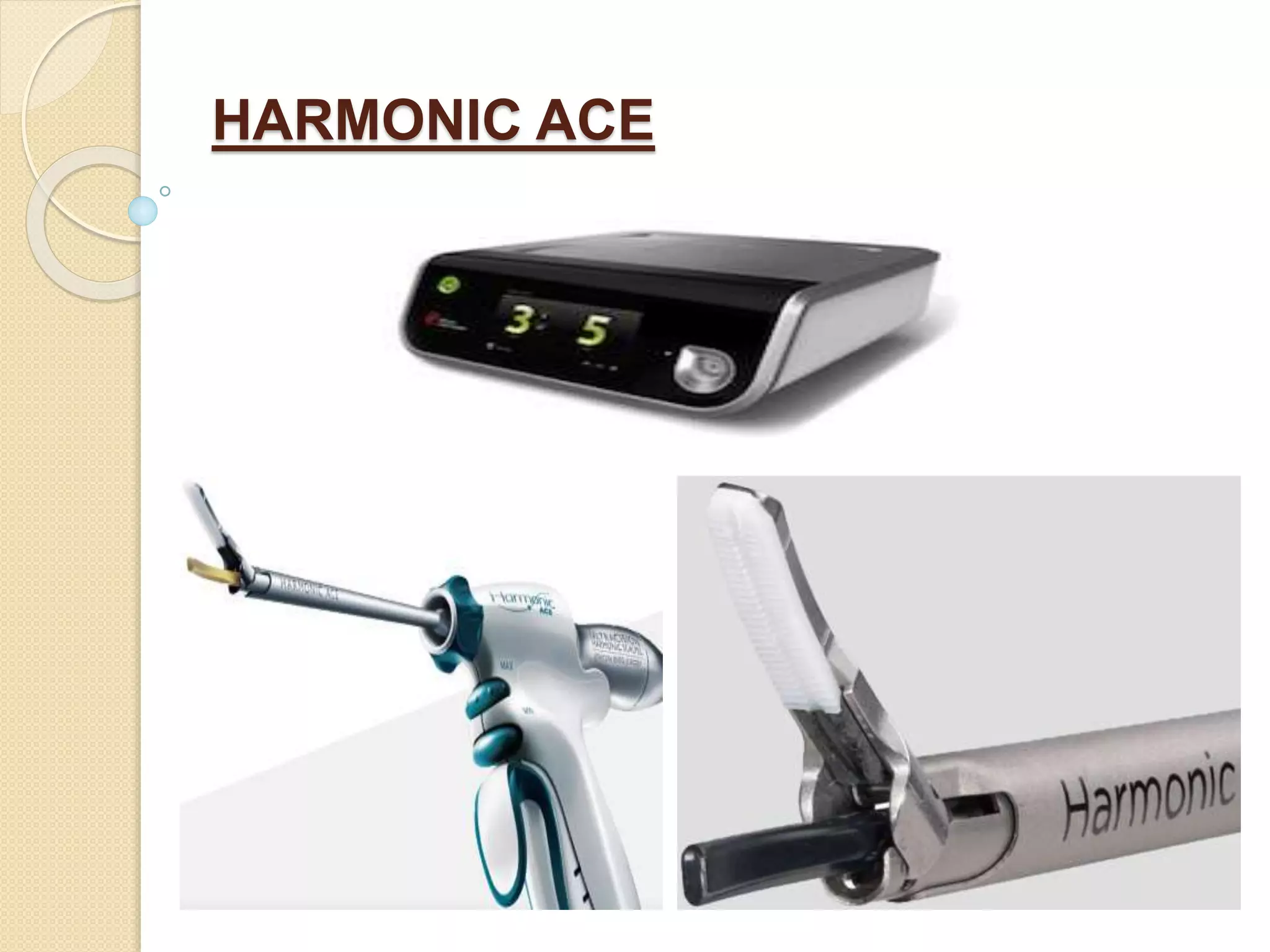
HARMONIC ACE
 Electrical energy is passed to the hand piece
 Piezo-electric ceramic disks in hand piece
become excited
 Disks transfer electrical energy into mechanical
energy
 Reaches maximum frequency of 55,500
cycles/sec at blade tip
 Blade comes into contact with tissue, pressure
causes coaptation of blood vessel
- Hydrogen bonds are broken, protein in cells is
denatured
- Denatured protein forms a sticky coagulum
 allows for simultaneous cutting and coagulation
to take place at a lower temperature
 Can seal vessels upto 5mm
THUNDERBEAT
 THUNDERBEAT is
integration of both bipolar
and ultrasonic energies
delivered simultaneously
from a single versatile
instrument.
 benefits of each individual
energy; the ability to rapidly
cut tissue with ultrasonic
energy; and the ability to
create reliable vessel seals
with bipolar energy.
 Reliable 7 mm vessel sealing
·Minimal thermal spread
·Quickest in-its-class cutting
·Reduced mist generation for improved
visibility
·Fine dissection with fine jaw design
Energy sources in surgery

Energy sources in surgery

  • 1.
    ENERGY SOURCES IN SURGERY DrNaveen Kumar A, Dept. of General Surgery, MMHRC.
  • 2.
    PROPERTIES OF ELECTRICITY Current = flow of electrons during a period of time.  Voltage = force with which the electrons are pushed through the tissue  Impedence/Resistance = measure of the difficulty that a given tissue presents to the passage of electrons  Circuit = Pathway for uninterrupted flow of electrons.  Power = Capacity to do work per unit time.
  • 3.
    Standard electrical current:60 Hz Nerve and muscle stimulation cease at: 100KHz An electrosurgical generator takes 60 Hz current and increases its frequency to over 200,000 Hz
  • 4.
    Electrosurgical Unit  Convertsa 60 cycles / sec (60 Hz), lowvoltage alternating current into higher voltage radio frequency (500 KHz - 3.0MHz) current.
  • 5.
    Electrocautery is NOTElectrosurgery  The terms electrocautery and electrosurgery are frequently used interchangeably; however, these terms define two distinctly different modalities.  Electrocautery: use of electricity to heat an object that is then used to burn a specific site e.g. a hot wire  Electrosurgery: the electrical current heats the tissue. The current must pass through the tissue to produce the desired effect..
  • 6.
  • 7.
     4 components:generator, active electrode, patient, patient return electrode.  Electrical energy flows from the generator (ESU unit), to the active electrode (cautery pencil).  The energy then passes through the patient to the dispersive cautery pad, thus completing the electrical circuit.
  • 8.
    Effect of temperatureon cells and tissue  cellular temperature reaches 50°C cell death will occur in approximately 6 min.  if the local temperature is 60°C cellular death is instantaneous.  Between about 60 and 95°C two process occur - first is protein denaturation -> coagulum - dessication  If the intracellular temperature rises to 100°C or more – vapourization.  local temperature reaches 200°C or more - carbonization
  • 9.
    TISSUE EFFECTS WITHWAVEFORM MODIFICATION  Cut waveform: Duty cycle(“on” time) is high, continuous waveform  vaporize or cut tissue,  Produce heat very rapidly  Coagulation waveform: intermittent waveform  Duty cycle (“on” time) reduced,  Produce less heat so coagulum is formed  Blended current : not a mixture of cutting and coagulation, but a modification of duty cycle
  • 10.
    ELECTROSURGICAL TISSUE EFFECTS Cutting: divide tissue with electric sparks that focus intense heat at surgical site  -By sparking we achieve maximum current concentration  Fulguration: sparking with coagulation waveform  -coagulates and chars the tissue over a wide area, result in coagulum  -high voltage coag current is used(duty cycle 6%)
  • 11.
     Desiccation: occurs whenelectrode is in direct contact with the tissue - -Achieved most efficiently with cutting current - -by touching electrode to the tissue, current concentration reduced, result in less heat and no cutting action - -cells dry out and form a coagulum
  • 12.
    VARIABLES IMPACTING TISSUE EFFECT Waveform  Power settings  Size of electrode  Time  Manipulation of electrode  Type of tissue  eschar
  • 13.
    Patient return electrode The only difference b/w active electrode and patient return electrode is their relative size and conductivity  At patient return electrode site: reduced contact area- current concentration increased- temperature increased- burn
  • 14.
     REM contactquality monitoring(RECQM)  -protects patient from pad site burn  -monitor impedance at the patient/pad interface  -system deactivate if impedance is high  -such electrode can be identified by its split appearance i.e. two separate areas and a special plug with center pin.
  • 15.
    ELECTROSURGICAL INJURY Direct coupling occurs when the active electrode touches another metal instrument.  The electrical current flows from one to the other and then proceeds to tissue resulting in unintended burn.
  • 16.
    Insulation failure  occurwhen the insulation covering of an instrument has been damaged.  Cracks or breaks in the shaft’s insulation allow the electrical energy to escape and burn unintended tissue.  Coagulation waveform is high in voltage, which can spark through compromised insulation. Also high voltage can blow holes in weak insulation.
  • 17.
    Capacitive coupling  DuringMIS procedure, an inadvertent capacitor may be created by the surgical instruments.  A capacitor creates electrostatic field created b/w two conductors, resulting induced current in second conductor.  Hybrid cannula are worst , metal part will create a capacitor but plastic anchor will prevent the current from dissipating through abd wall.This current may exit to some adjacent tissue, result in significant injury.
  • 18.
    BIPOLAR ELECTROSURGERY  Thetwo tines forceps function active and return electrodes.  Only the tissue grasped is included in circuit.  No patient return electrode  Better hemostasis  Less thermal injury  Safer than monopolar
  • 19.
    LIGASURE BIPOLAR VESSEL SEALINGDEVICE  Electrosurgical technology that combines pressure and energy to create a seal.  Seals vessels up to 7 mm with a single activation.  Seal strength comparable to sutures/clips, can withstand >3 times normal SBP.  Lateral thermal spread : 0 - 4.5 mm
  • 20.
     Energy deliverycycle: -measure initial resistance of tissue and chooses appropriate energy settings -delivers pulsed energy with continuous feedback control -senses that tissue response is complete and stops the cycle.
  • 21.
  • 22.
     Electrical energyis passed to the hand piece  Piezo-electric ceramic disks in hand piece become excited  Disks transfer electrical energy into mechanical energy  Reaches maximum frequency of 55,500 cycles/sec at blade tip
  • 23.
     Blade comesinto contact with tissue, pressure causes coaptation of blood vessel - Hydrogen bonds are broken, protein in cells is denatured - Denatured protein forms a sticky coagulum  allows for simultaneous cutting and coagulation to take place at a lower temperature  Can seal vessels upto 5mm
  • 24.
    THUNDERBEAT  THUNDERBEAT is integrationof both bipolar and ultrasonic energies delivered simultaneously from a single versatile instrument.  benefits of each individual energy; the ability to rapidly cut tissue with ultrasonic energy; and the ability to create reliable vessel seals with bipolar energy.
  • 25.
     Reliable 7mm vessel sealing ·Minimal thermal spread ·Quickest in-its-class cutting ·Reduced mist generation for improved visibility ·Fine dissection with fine jaw design