
KENDRIYA
 VIDYALAYA
PHYSICS PROJECT WORK
  NAME – UTSAV AMETA
     CLASS – 10TH
    ROLL NO. - 10336
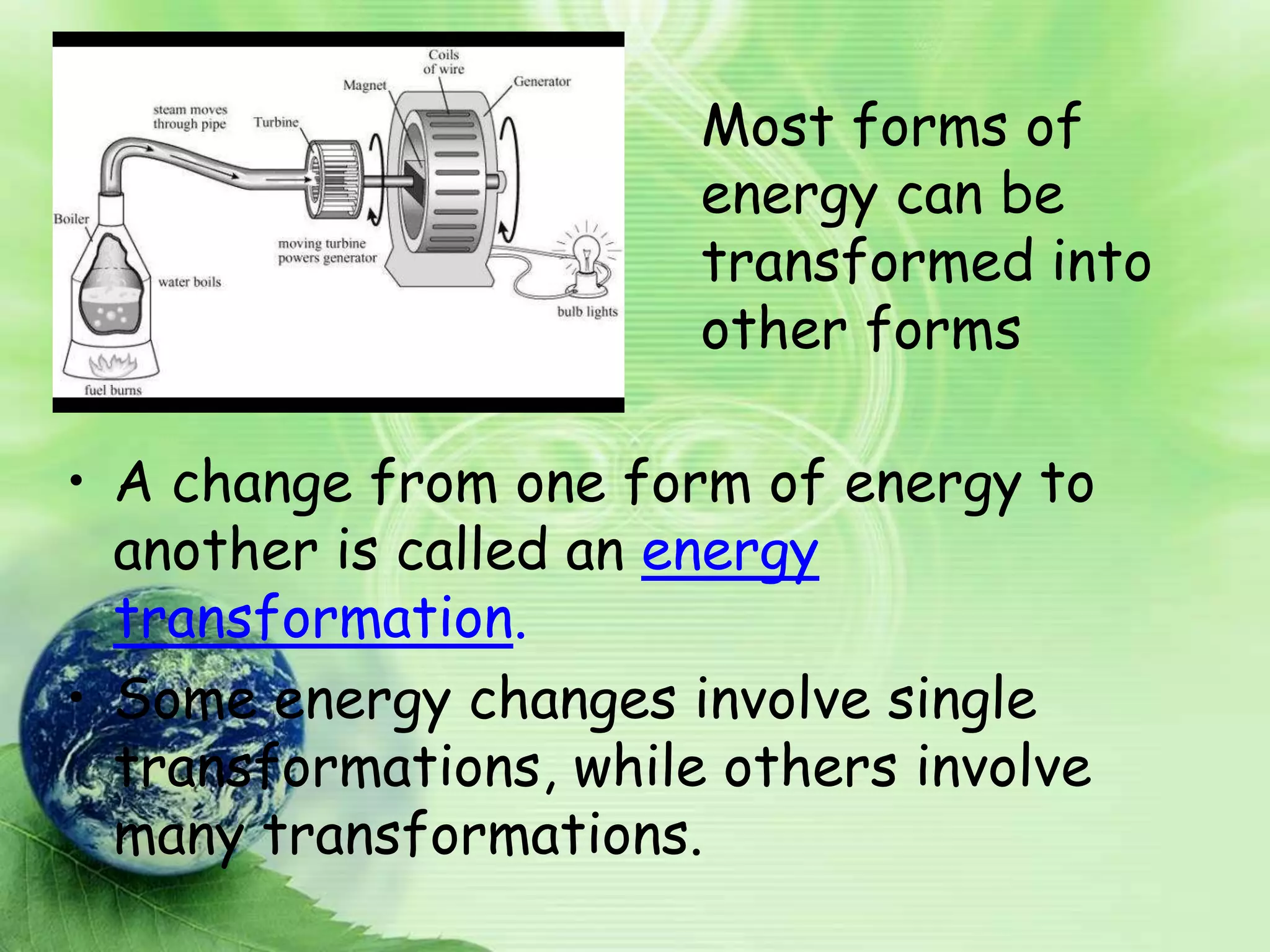
Energy Transformations
   and Conservation
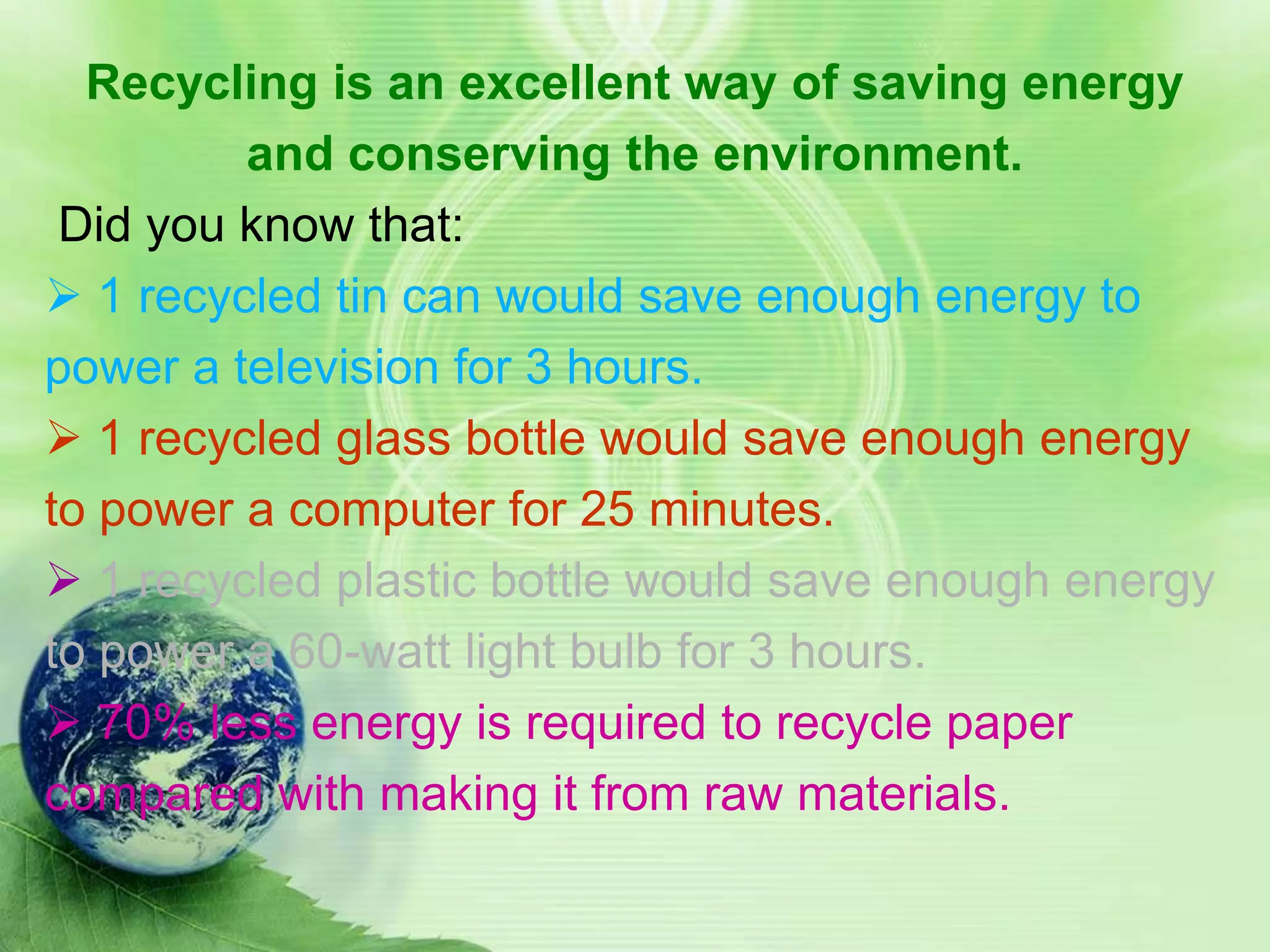
Most forms of
                        energy can be
                        transformed into
                        other forms

• A change from one form of energy to
  another is called an energy
  transformation.
• Some energy changes involve single
  transformations, while others involve
  many transformations.
Recycling is an excellent way of saving energy
         and conserving the environment.
 Did you know that:
 1 recycled tin can would save enough energy to
power a television for 3 hours.
 1 recycled glass bottle would save enough energy
to power a computer for 25 minutes.
 1 recycled plastic bottle would save enough energy
to power a 60-watt light bulb for 3 hours.
 70% less energy is required to recycle paper
compared with making it from raw materials.
You can directly contribute by

1. By switching of lights when not required.
2. By using cloth/jute bags instead of plastic
   bags.
3. Using both side of paper.
4. Using refills instead of buying a new pen.
5. Buying materials in bulk/without packing
6. By growing plants.
7. By being vegetarian also you save energy
8. By encouraging foods made of jowar, bajra,
   instead of rice.
9. By not wasting food.
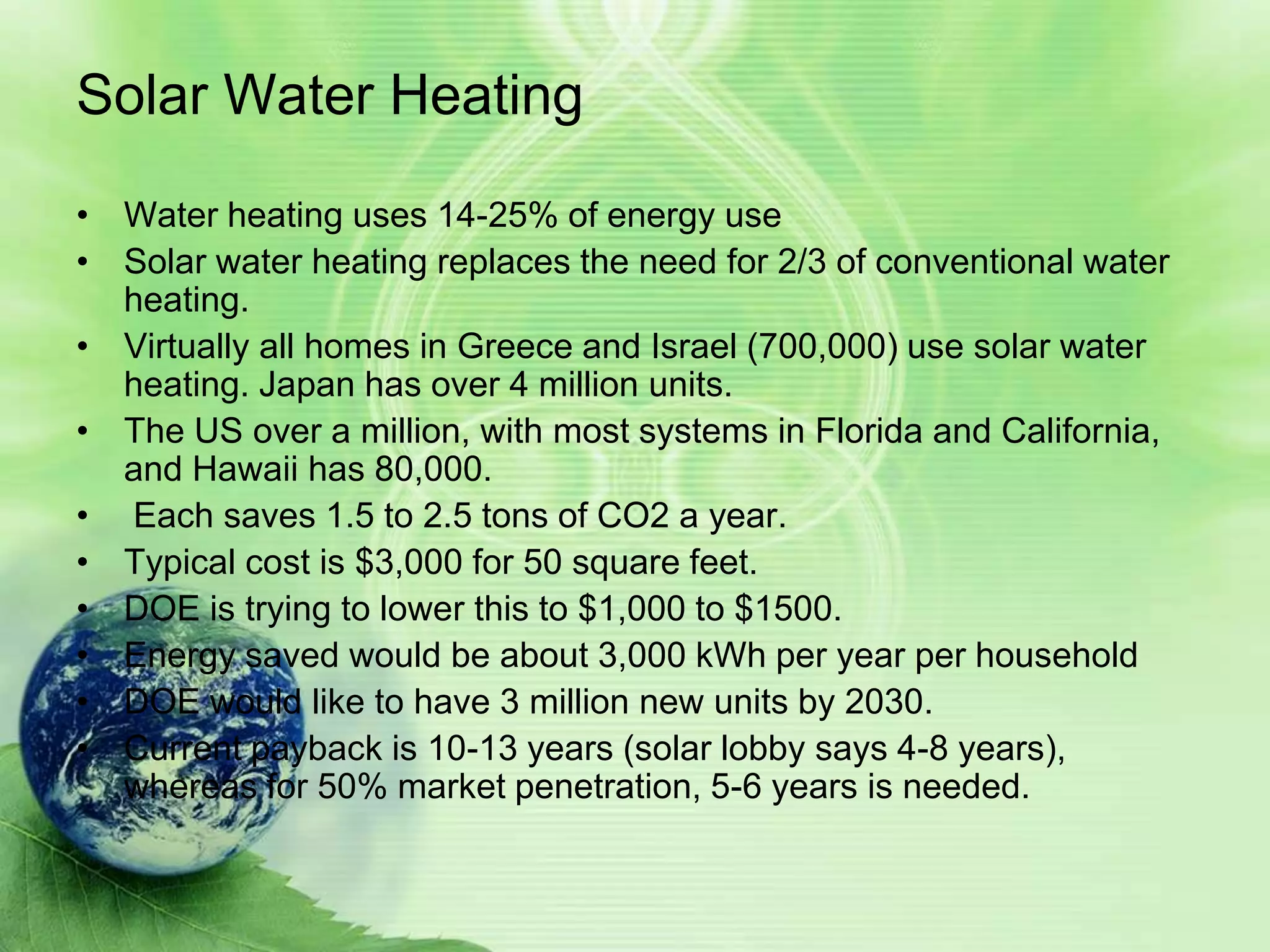
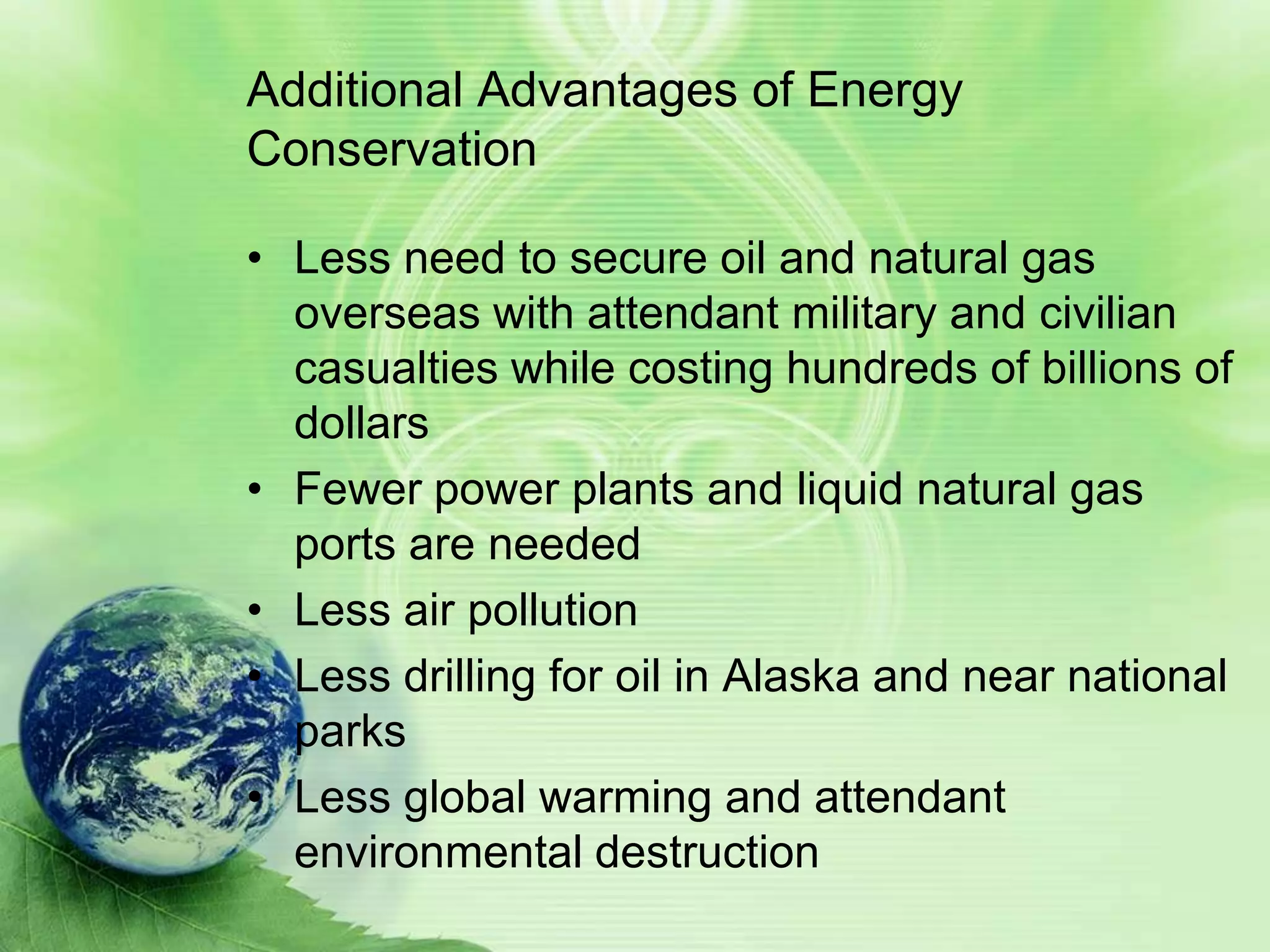
Single Transformations
• Sometimes, one form of energy needs to be
  transformed into another to get work done.
• For example, a toaster transforms electrical
  energy to thermal energy to toast your bread.
• A cell phone transforms electrical energy to
  electromagnetic energy that travels to other
  phones.
Solar Water Heating
• Water heating uses 14-25% of energy use
• Solar water heating replaces the need for 2/3 of conventional water
  heating.
• Virtually all homes in Greece and Israel (700,000) use solar water
  heating. Japan has over 4 million units.
• The US over a million, with most systems in Florida and California,
  and Hawaii has 80,000.
• Each saves 1.5 to 2.5 tons of CO2 a year.
• Typical cost is $3,000 for 50 square feet.
• DOE is trying to lower this to $1,000 to $1500.
• Energy saved would be about 3,000 kWh per year per household
• DOE would like to have 3 million new units by 2030.
• Current payback is 10-13 years (solar lobby says 4-8 years),
  whereas for 50% market penetration, 5-6 years is needed.
Additional Advantages of Energy
Conservation

• Less need to secure oil and natural gas
  overseas with attendant military and civilian
  casualties while costing hundreds of billions of
  dollars
• Fewer power plants and liquid natural gas
  ports are needed
• Less air pollution
• Less drilling for oil in Alaska and near national
  parks
• Less global warming and attendant
  environmental destruction
Conclusions on Energy
Conservation
• Energy conservation has saved the need for many power
  plants and fuel imports.
• It has also avoided CO2 and environmental pollution.
• Energy conservation research is only funded at $306
  million this year at DOE, which is low considering the
  massive amounts of energy production that are being
  saved by conservation.
• Regulations on efficiency work, but voluntary efforts
  lag far behind.
• Much has been done, but much more can be done
• In this new era of global warming and high energy costs
  and energy shortages, the public must be informed and
  politicians sought who are sensitive to these issues.
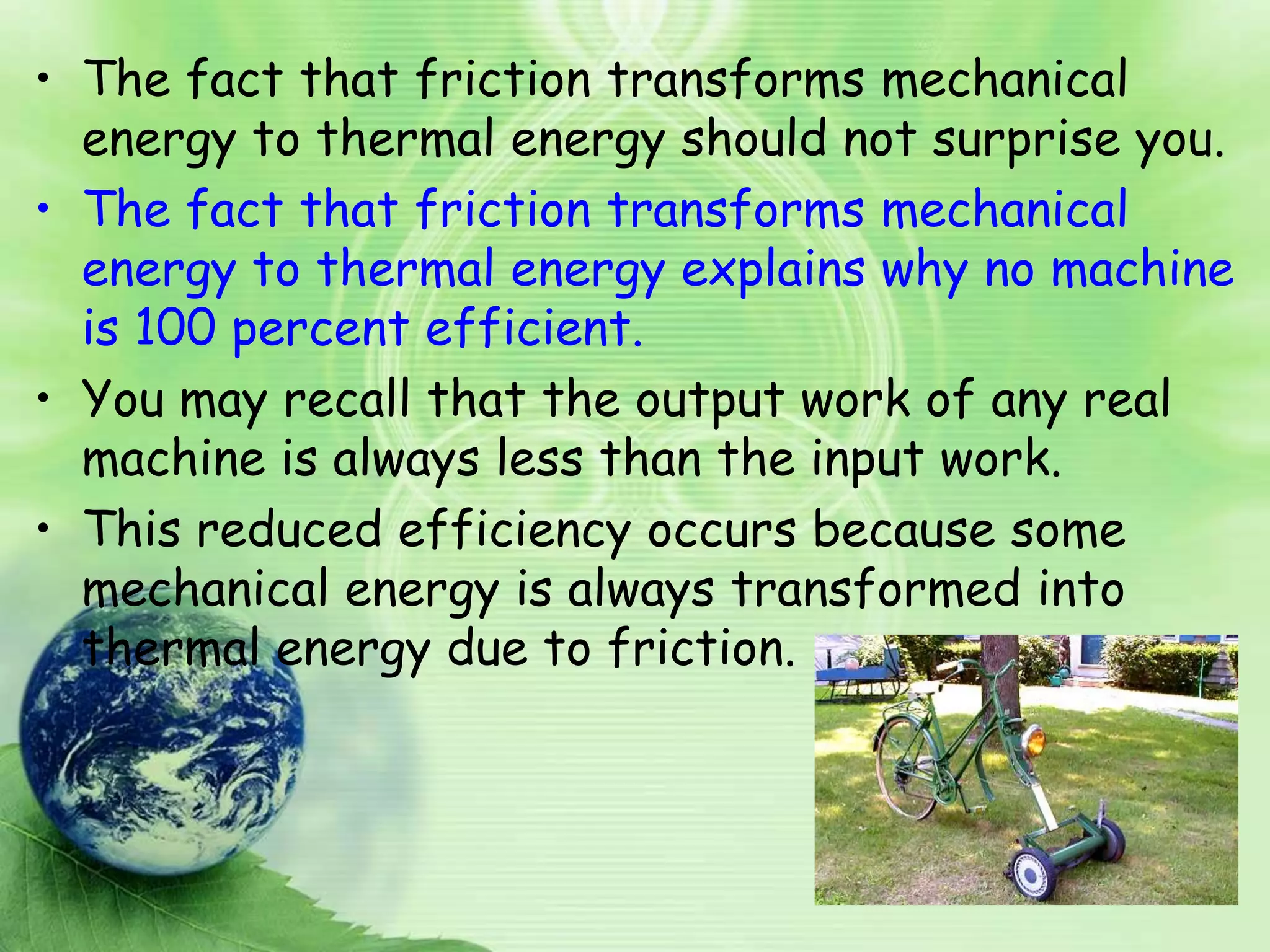
• The fact that friction transforms mechanical
  energy to thermal energy should not surprise you.
• The fact that friction transforms mechanical
  energy to thermal energy explains why no machine
  is 100 percent efficient.
• You may recall that the output work of any real
  machine is always less than the input work.
• This reduced efficiency occurs because some
  mechanical energy is always transformed into
  thermal energy due to friction.

Energy Conservation And transformation

  • 1.
    KENDRIYA VIDYALAYA PHYSICS PROJECTWORK NAME – UTSAV AMETA CLASS – 10TH ROLL NO. - 10336
  • 2.
    Energy Transformations and Conservation
  • 3.
    Most forms of energy can be transformed into other forms • A change from one form of energy to another is called an energy transformation. • Some energy changes involve single transformations, while others involve many transformations.
  • 4.
    Recycling is anexcellent way of saving energy and conserving the environment. Did you know that:  1 recycled tin can would save enough energy to power a television for 3 hours.  1 recycled glass bottle would save enough energy to power a computer for 25 minutes.  1 recycled plastic bottle would save enough energy to power a 60-watt light bulb for 3 hours.  70% less energy is required to recycle paper compared with making it from raw materials.
  • 5.
    You can directlycontribute by 1. By switching of lights when not required. 2. By using cloth/jute bags instead of plastic bags. 3. Using both side of paper. 4. Using refills instead of buying a new pen. 5. Buying materials in bulk/without packing 6. By growing plants. 7. By being vegetarian also you save energy 8. By encouraging foods made of jowar, bajra, instead of rice. 9. By not wasting food.
  • 6.
    Single Transformations • Sometimes,one form of energy needs to be transformed into another to get work done. • For example, a toaster transforms electrical energy to thermal energy to toast your bread. • A cell phone transforms electrical energy to electromagnetic energy that travels to other phones.
  • 7.
    Solar Water Heating •Water heating uses 14-25% of energy use • Solar water heating replaces the need for 2/3 of conventional water heating. • Virtually all homes in Greece and Israel (700,000) use solar water heating. Japan has over 4 million units. • The US over a million, with most systems in Florida and California, and Hawaii has 80,000. • Each saves 1.5 to 2.5 tons of CO2 a year. • Typical cost is $3,000 for 50 square feet. • DOE is trying to lower this to $1,000 to $1500. • Energy saved would be about 3,000 kWh per year per household • DOE would like to have 3 million new units by 2030. • Current payback is 10-13 years (solar lobby says 4-8 years), whereas for 50% market penetration, 5-6 years is needed.
  • 8.
    Additional Advantages ofEnergy Conservation • Less need to secure oil and natural gas overseas with attendant military and civilian casualties while costing hundreds of billions of dollars • Fewer power plants and liquid natural gas ports are needed • Less air pollution • Less drilling for oil in Alaska and near national parks • Less global warming and attendant environmental destruction
  • 9.
    Conclusions on Energy Conservation •Energy conservation has saved the need for many power plants and fuel imports. • It has also avoided CO2 and environmental pollution. • Energy conservation research is only funded at $306 million this year at DOE, which is low considering the massive amounts of energy production that are being saved by conservation. • Regulations on efficiency work, but voluntary efforts lag far behind. • Much has been done, but much more can be done • In this new era of global warming and high energy costs and energy shortages, the public must be informed and politicians sought who are sensitive to these issues.
  • 10.
    • The factthat friction transforms mechanical energy to thermal energy should not surprise you. • The fact that friction transforms mechanical energy to thermal energy explains why no machine is 100 percent efficient. • You may recall that the output work of any real machine is always less than the input work. • This reduced efficiency occurs because some mechanical energy is always transformed into thermal energy due to friction.