How to Attract, Keep, Motivate Your Workforce Employee Retention www.chartcourse.com [email_address]
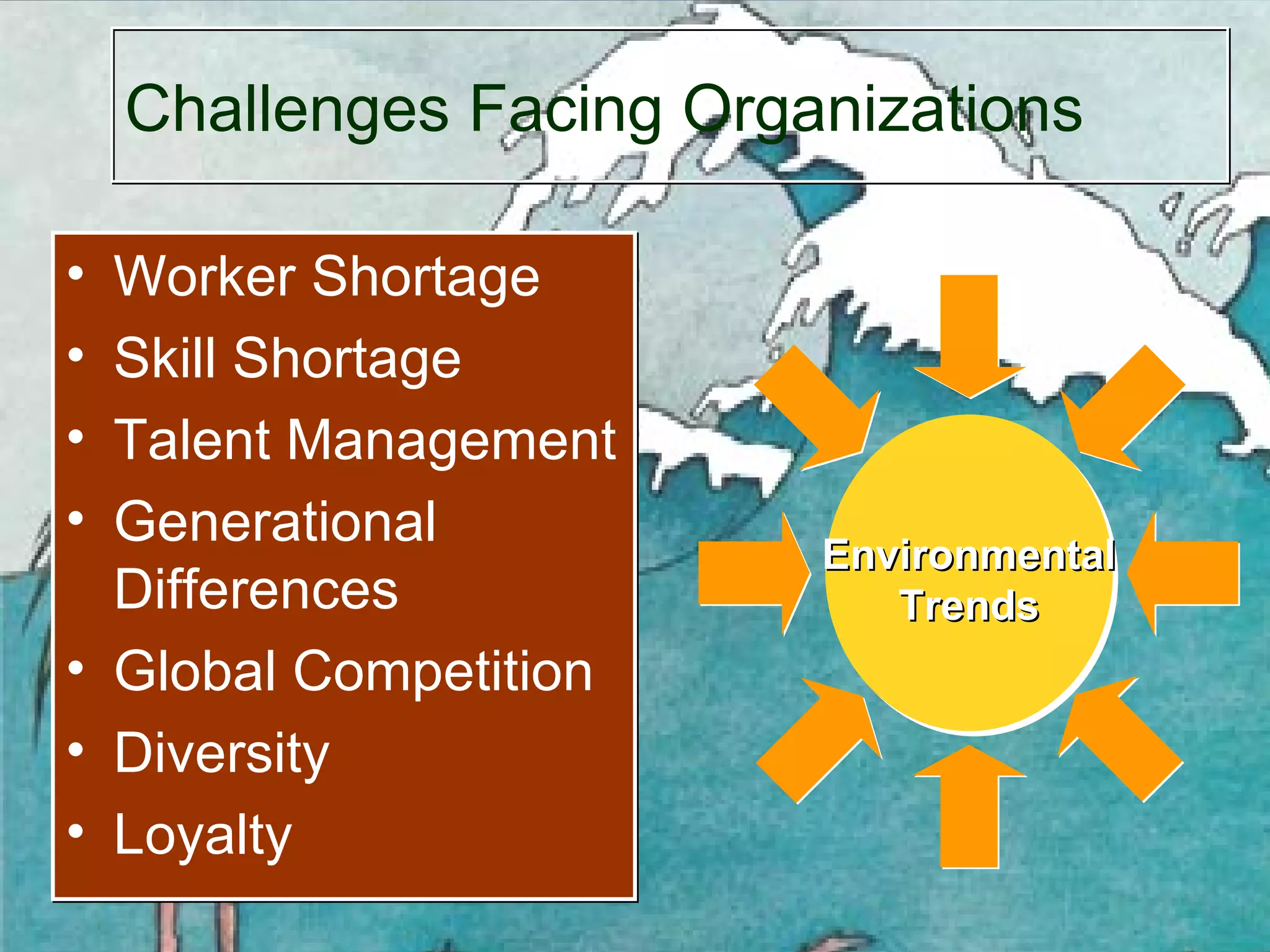
Challenges Facing Organizations Worker Shortage Skill Shortage Talent Management Generational Differences Global Competition Diversity Loyalty Environmental Trends
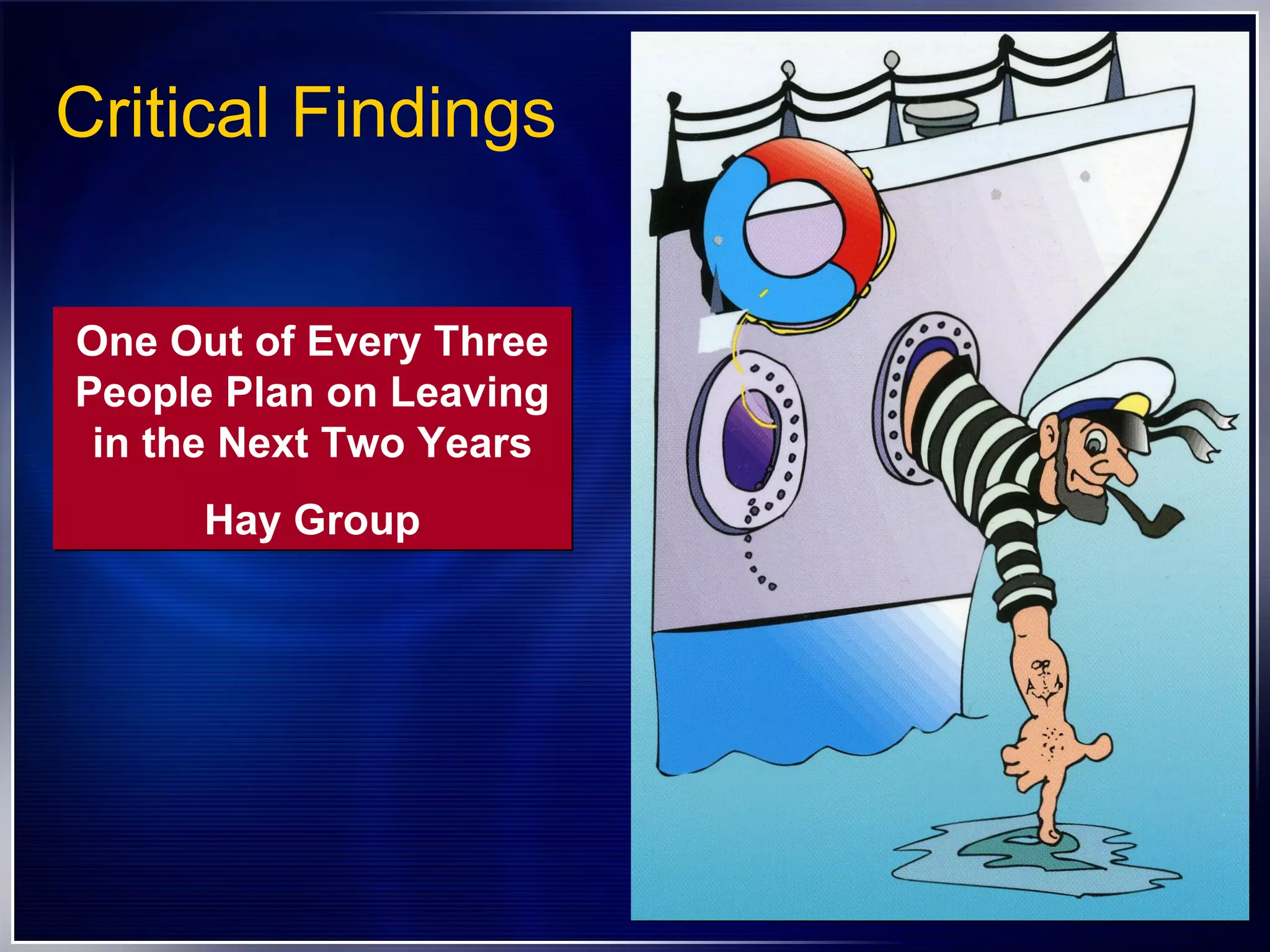
Critical Findings One Out of Every Three People Plan on Leaving in the Next Two Years Hay Group
Critical Finding It Costs Much More to Replace Employees Than to Keep Them
Key Finding Money may attract people to the front door but something else is needed to keep them from going out the back.
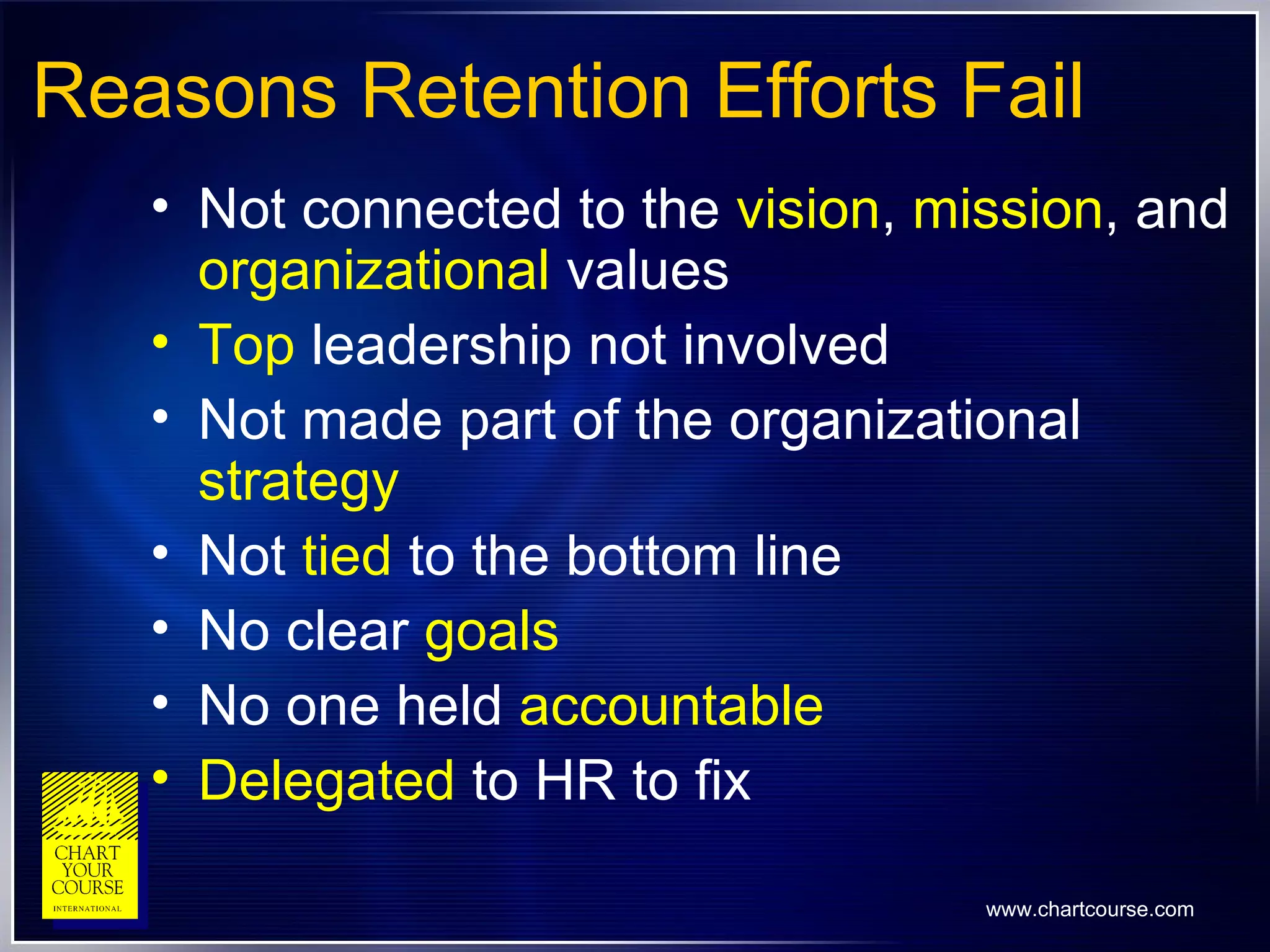
Reasons Retention Efforts Fail Not connected to the  vision ,  mission , and  organizational  values Top  leadership not involved Not made part of the organizational  strategy Not  tied  to the bottom line No clear  goals No one held  accountable Delegated  to HR to fix
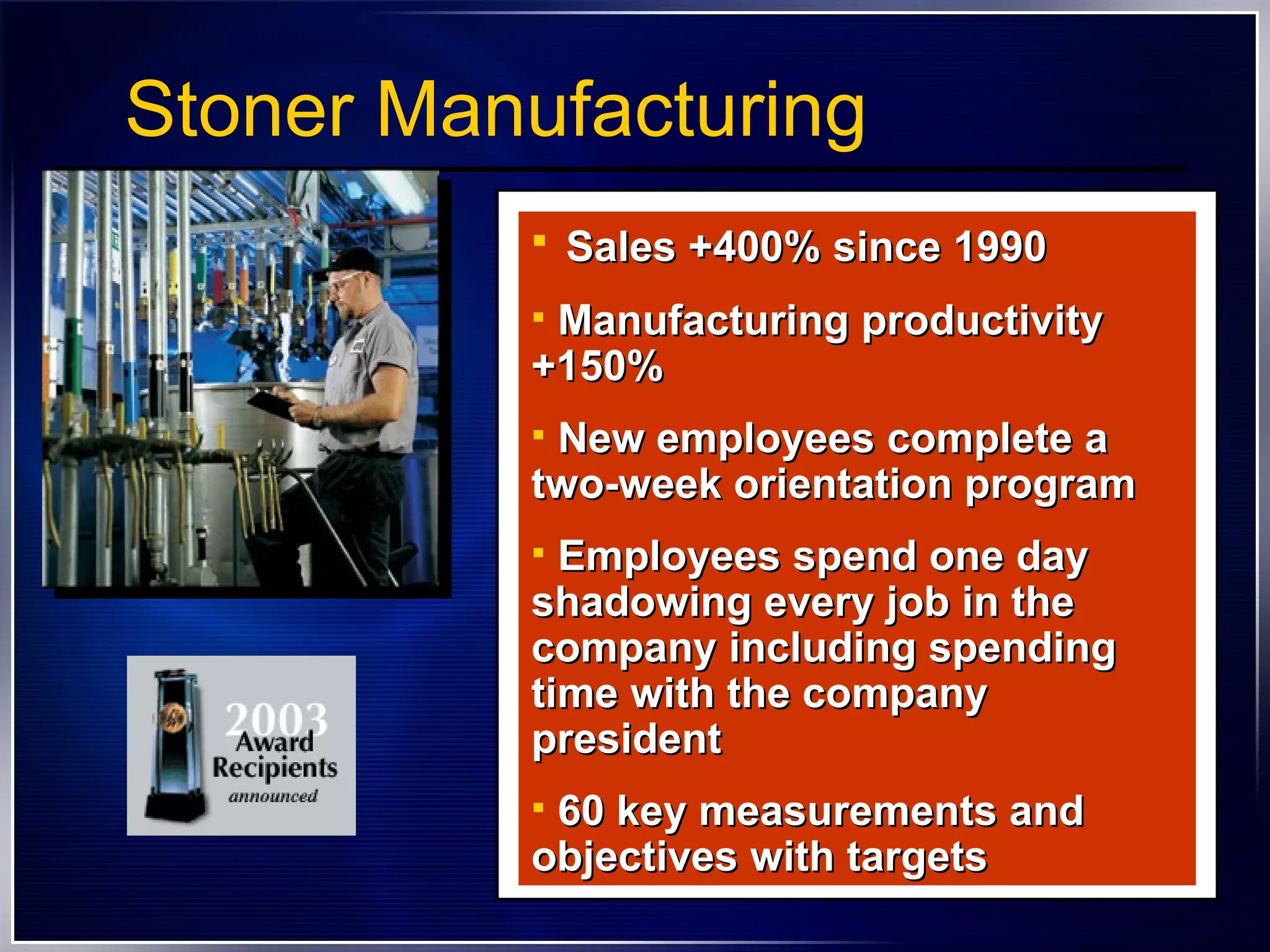
Stoner Manufacturing Sales +400% since 1990 Manufacturing productivity +150% New employees complete a two-week orientation program Employees spend one day shadowing every job in the company including spending time with the company president  60 key measurements and objectives with targets
Information You Must Know Current Employees : Why do they stay? New Employees : Why did they say yes? Former Employees :  Why did they leave? Interviewed , But Said “No”:  Why?
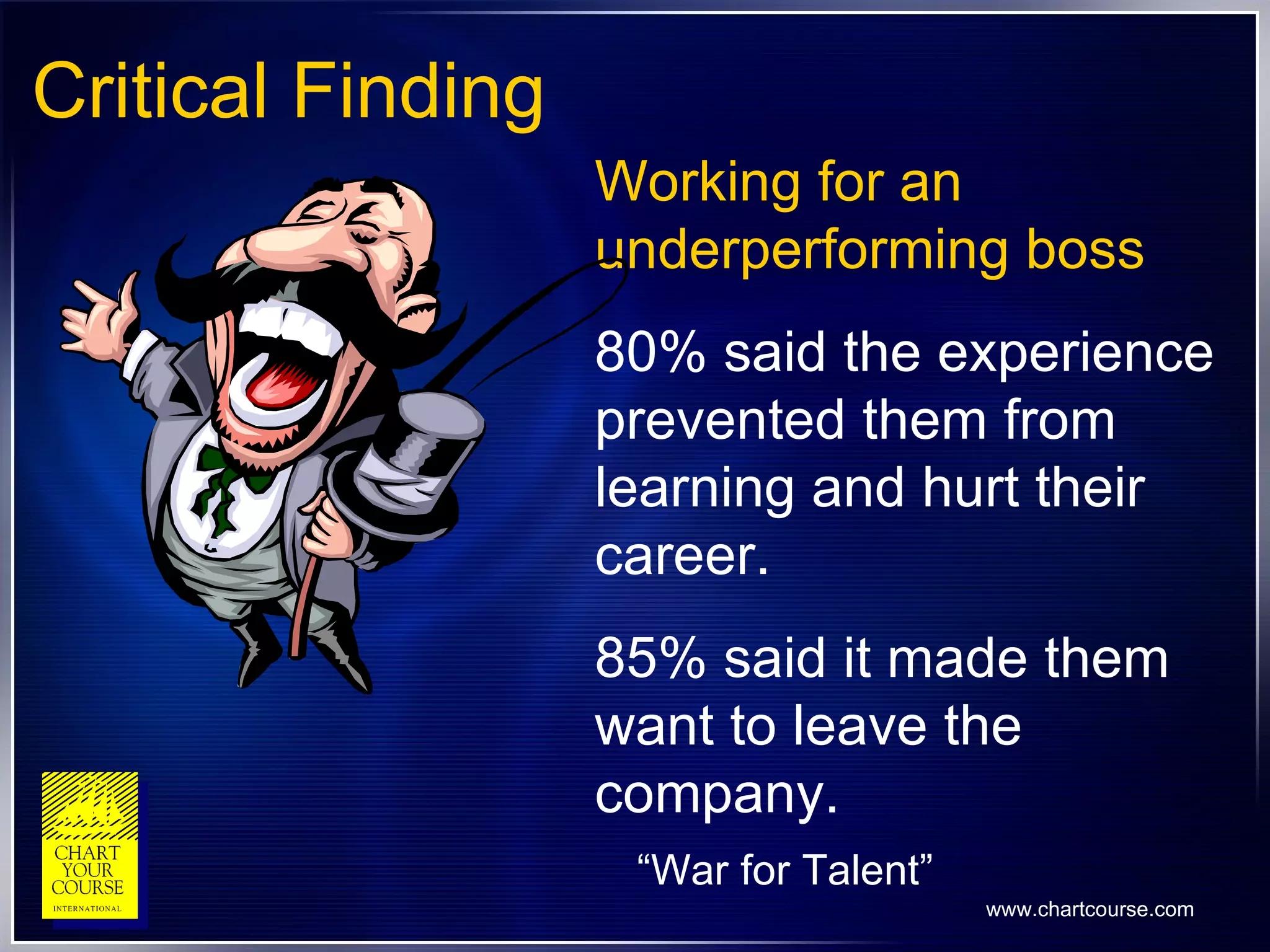
Critical Finding Working for an underperforming boss 80% said the experience prevented them from learning and hurt their career. 85% said it made them want to leave the company. “ War for Talent”
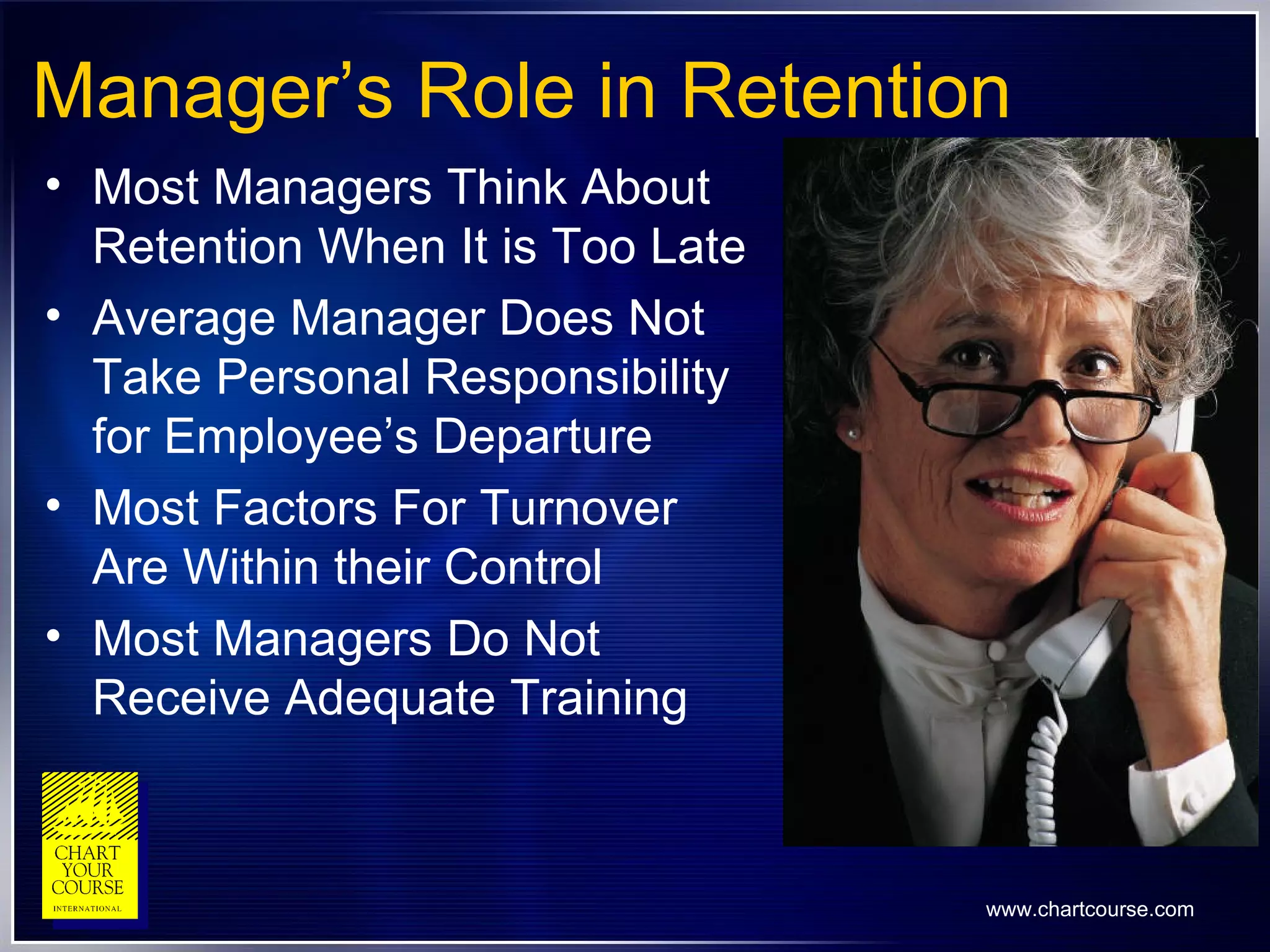
Manager’s Role in Retention Most Managers Think About Retention When It is Too Late Average Manager Does Not Take Personal Responsibility for Employee’s Departure  Most Factors For Turnover Are Within their Control Most Managers Do Not Receive Adequate Training
Have you ever hired  the wrong person?
Why Good People Quit Poor  match between the person and the job Poor  fit with the organizational climate and culture  Poor  alignment between pay and performance Poor  connections between the individual, their coworkers, and the supervisor Poor  opportunities for growth and advancement
Hire the Right People How Do You Know What the  RIGHT  Person Looks Like?
Typical Hiring Practices Failure to  detect  motivational fit with job Applicants  "exaggerate"  to get a job Most hiring decisions made by  intuition  during the first  few  minutes of the interview  Legal liability Two out of three hires prove to be a  bad fit  within the first year Most interviewers  not properly trained  Excellent employees placed in the  wrong jobs  grow  frustrated  when unable to utilize their strengths
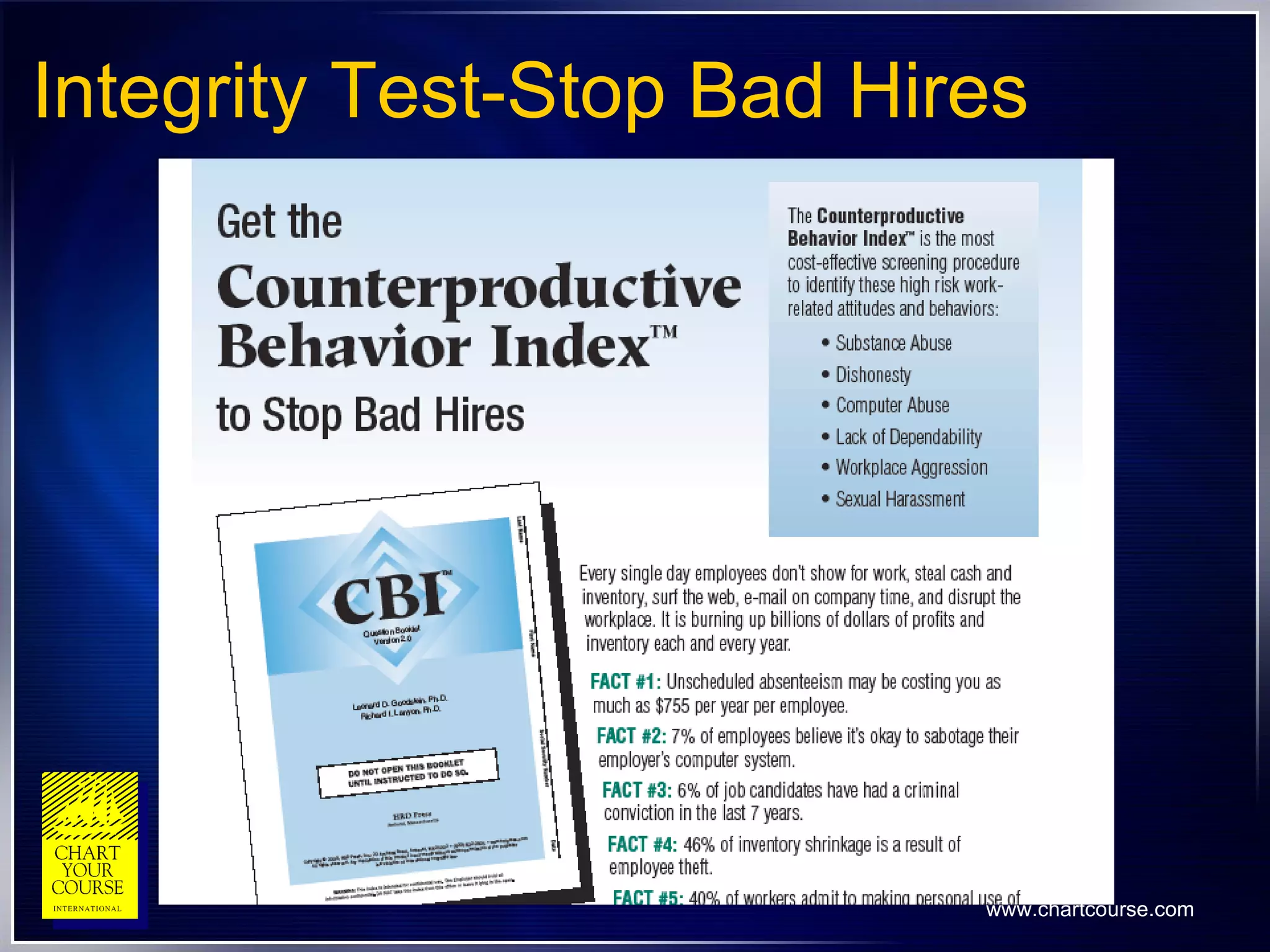
Integrity Test-Stop Bad Hires
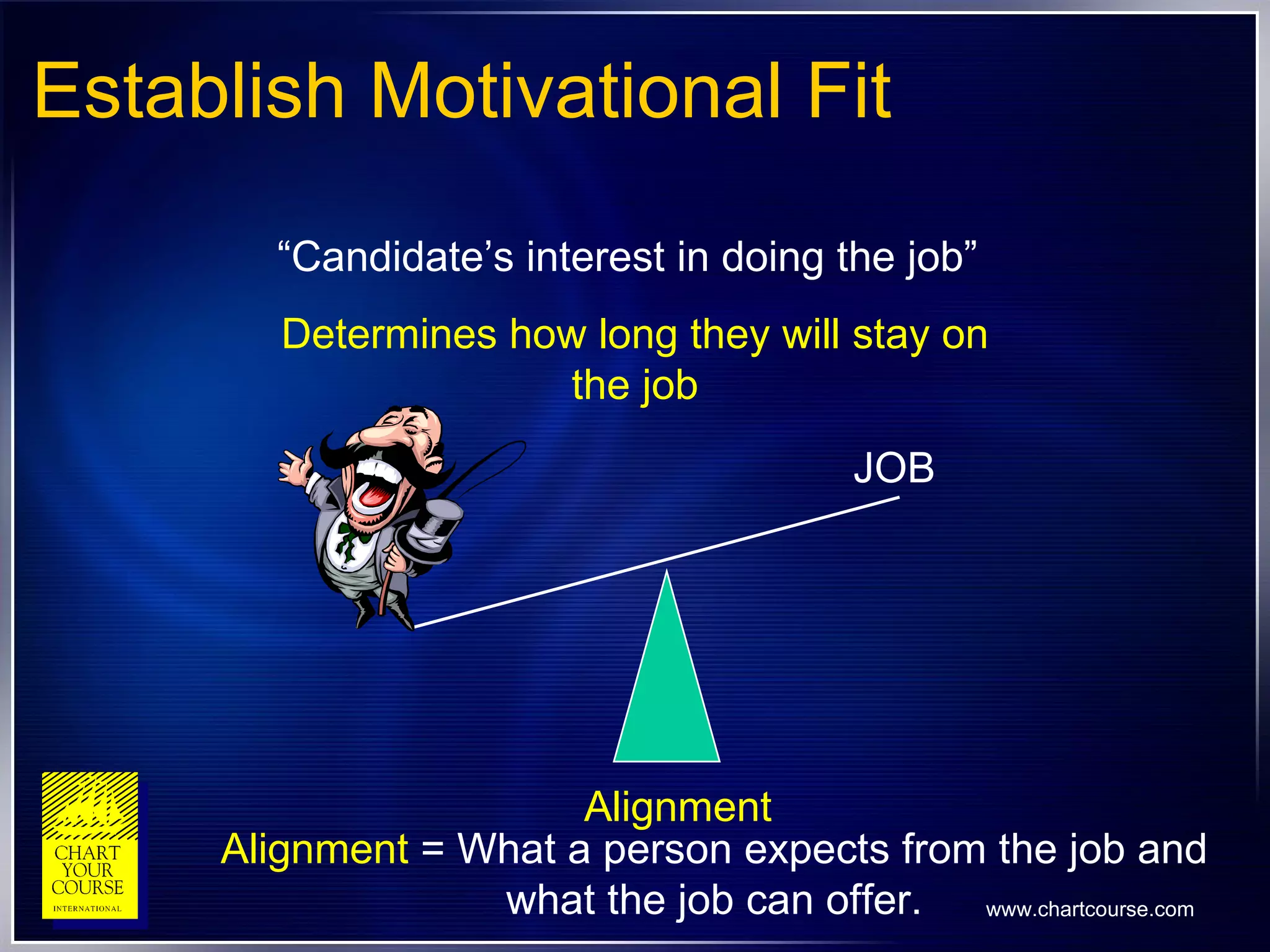
Establish Motivational Fit “ Candidate’s interest in doing the job” Determines how long they will stay on the job JOB Alignment Alignment  = What a person expects from the job and what the job can offer.
Use Behaviorial  Assessments to Identify The Best People
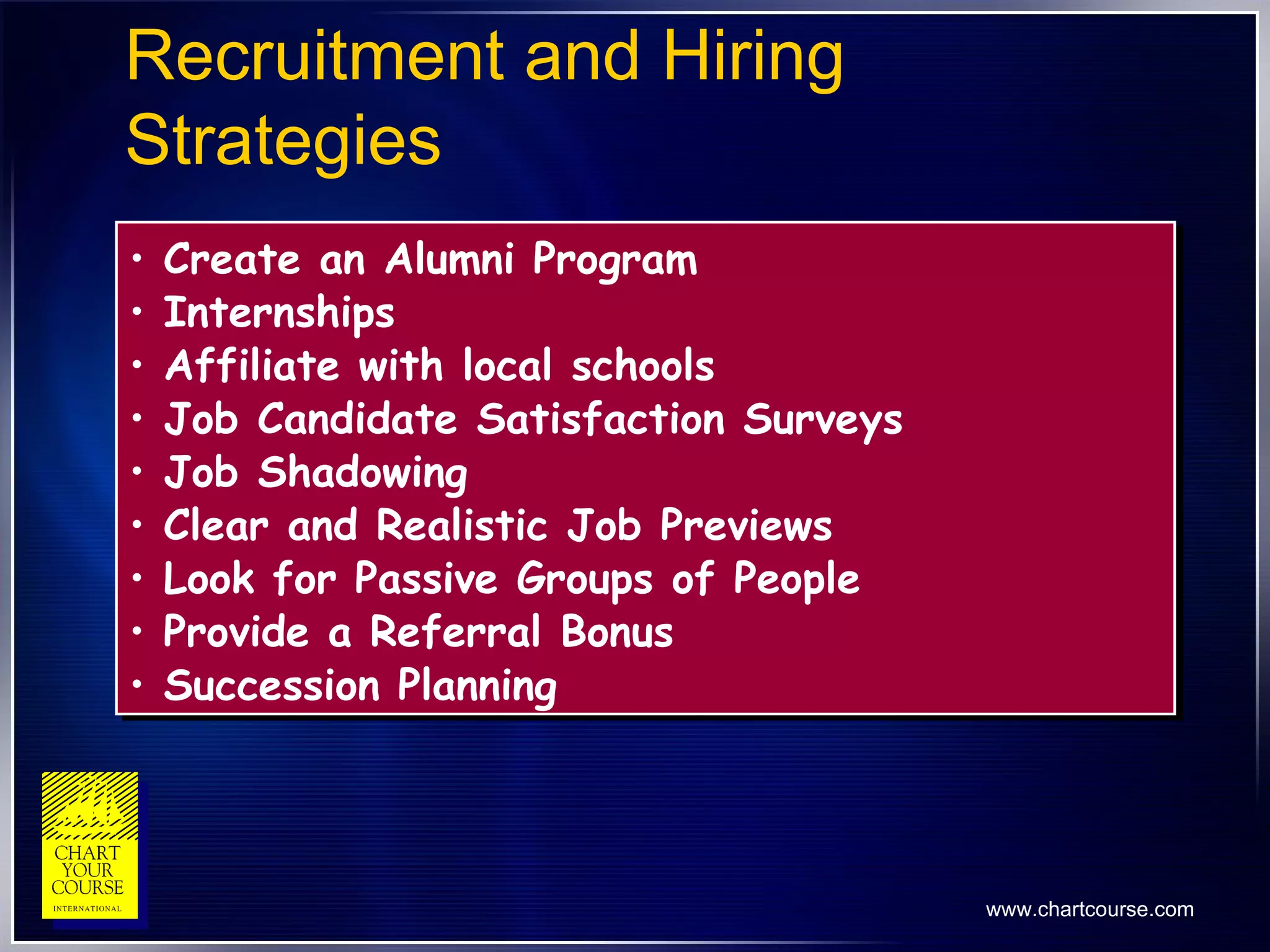
Recruitment and Hiring Strategies Create an Alumni Program Internships Affiliate with local schools Job Candidate Satisfaction Surveys Job Shadowing Clear and Realistic Job Previews Look for Passive Groups of People Provide a Referral Bonus Succession Planning
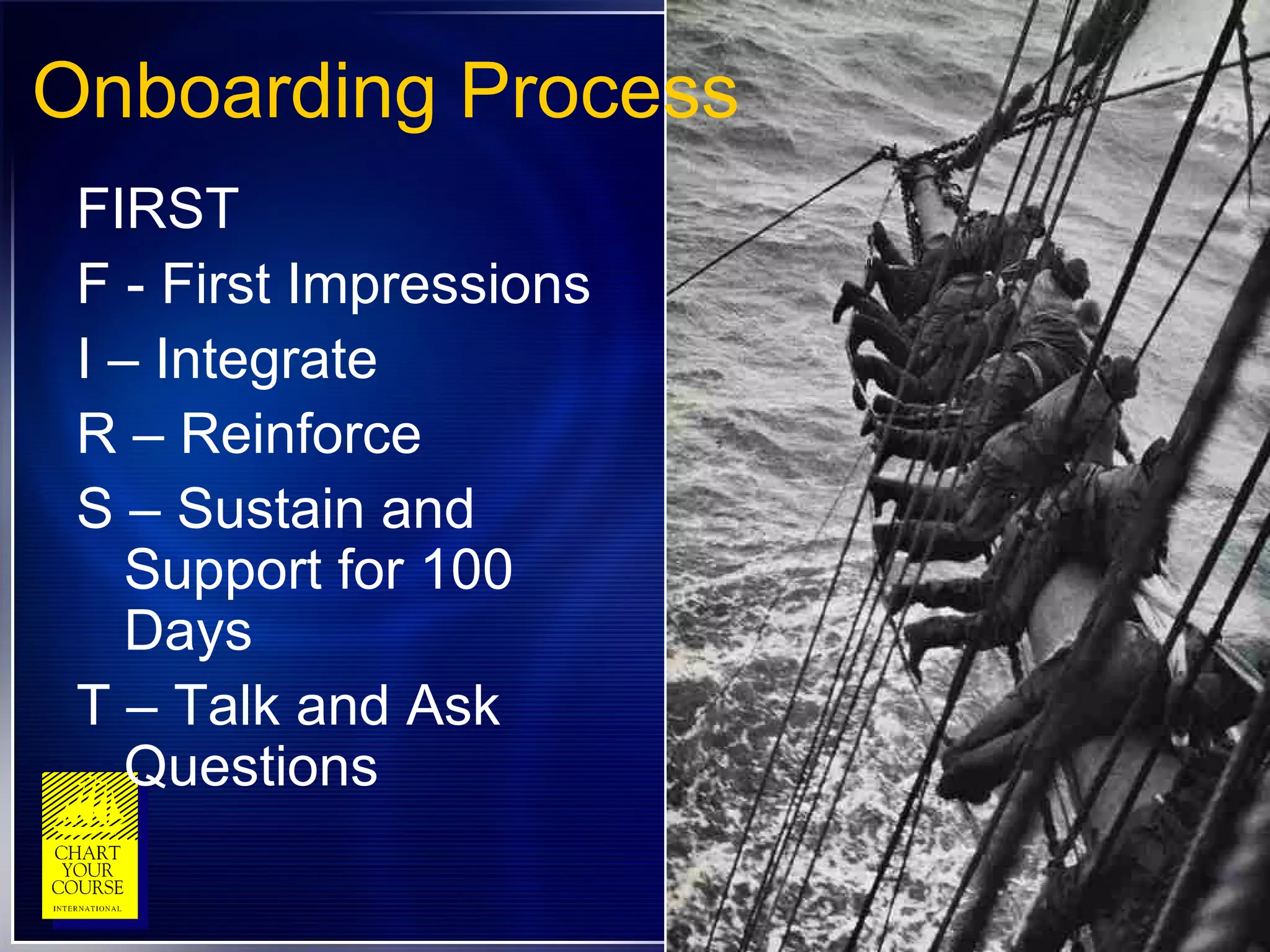
Onboarding Process FIRST F - First Impressions I – Integrate R – Reinforce S – Sustain and Support for 100 Days T – Talk and Ask Questions
First 30 Days-”On-Boarding” Prior to Starting Complete forms  Welcome gift, greeting etc. Answer questions about benefits, parking etc. Watch orientation video “ Ways to Wow”-ARAMARK  First Week “ Lunch Bunch” Meet with Boss Flyer/Photo of new person for all to see Reserved parking spot  Send welcome gift to family Give “go-to” list and directory First Month Survey Celebration Party  Who was most helpful/harmful? What needs fixing? Know others looking for job? What barriers in the way? Recognition for Parents/Spouse Individual Retention Profile First Week Ad in newspaper “ Meet everyone card” License plate cover Give them a mentor Dumb question coupon book Free meal coupons Benefits in writing
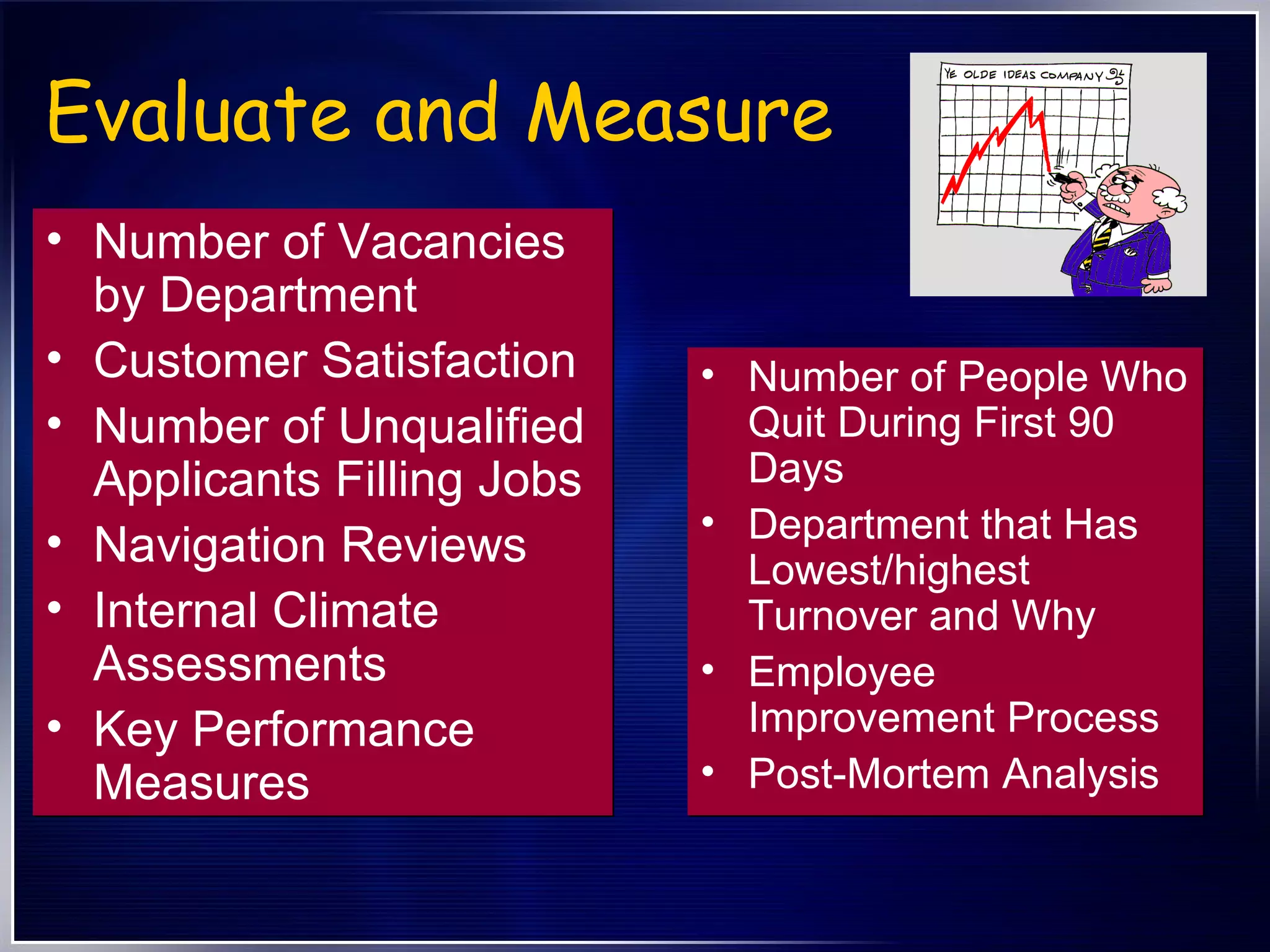
Evaluate and Measure Number of Vacancies by Department Customer Satisfaction  Number of Unqualified Applicants Filling Jobs Navigation Reviews Internal Climate Assessments Key Performance Measures Number of People Who Quit During First 90 Days Department that Has Lowest/highest Turnover and Why Employee Improvement Process Post-Mortem Analysis
Development Opportunities At least 2 times a year discuss plans for development (Personal & Professional) “Dream jobs” 360 assessment Task force and challenge projects Special opportunities for HPO’s Career Ladders Timely and accurate performance appraisals
Which Practices Have the Greatest Impact on Productivity and Shareholder Return? TALENT MANAGEMENT Attracting Top Talent Retention of Top Performers Collegial & Flexible Workplace Rewarding Performance & Accountability Communication
High Retention Organizations Do the Following: Make Greater Use of Competency Models to Select Leaders Rate People Skills as More Important Than Technical Skills Visibly Behave in Ways that Reinforce Values Do Not Tolerate Behaviors that Violate Values Evaluate How Effective They Are, How Well They Take Care of Their People and How They Personally Develop Their Team Assign Responsibility for Retention
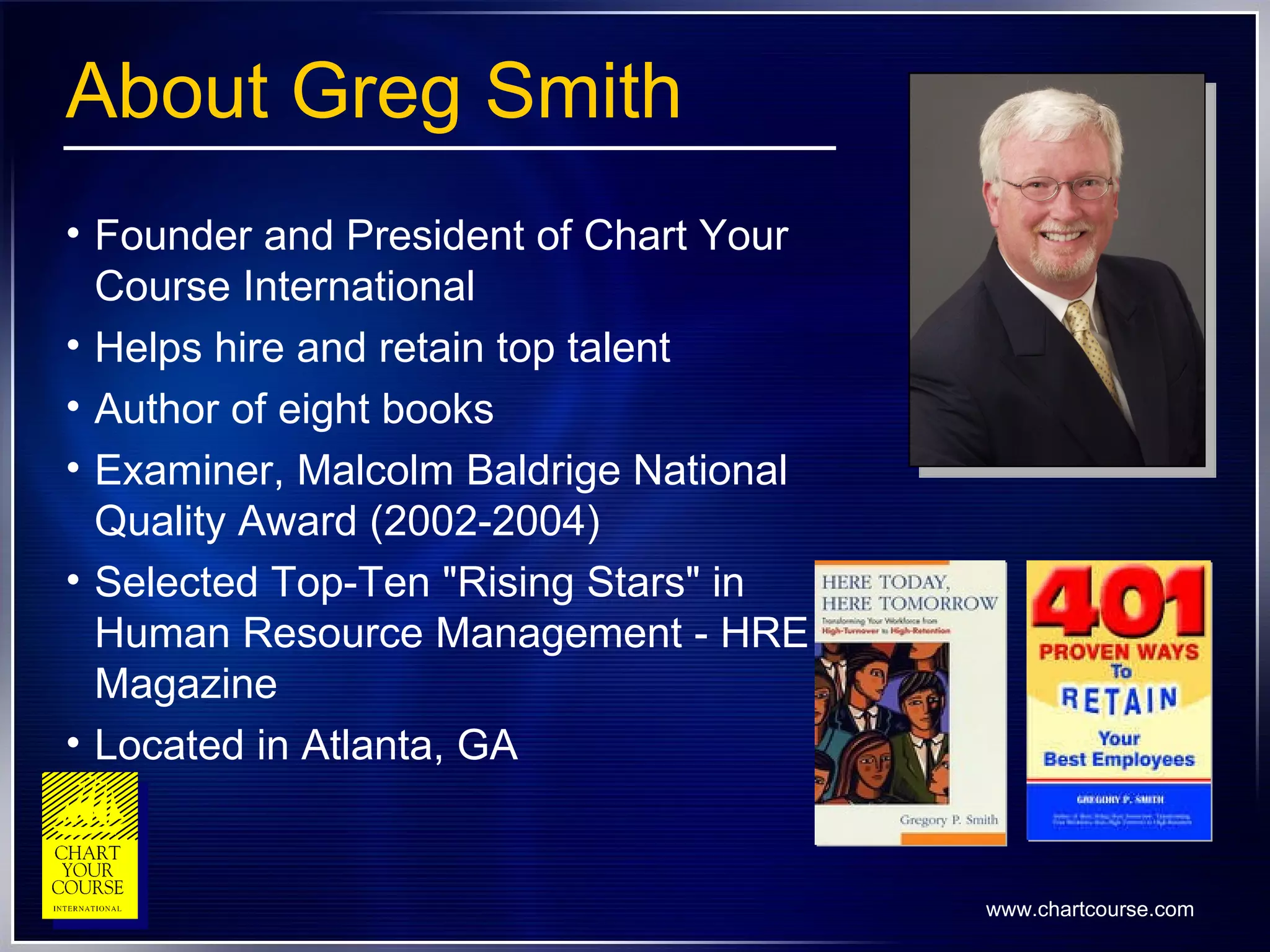
About Greg Smith Founder and President of Chart Your Course International Helps hire and retain top talent Author of eight books Examiner, Malcolm Baldrige National Quality Award (2002-2004) Selected Top-Ten "Rising Stars" in Human Resource Management - HRE Magazine   Located in Atlanta, GA
FREE SEVEN-LESSON COURSE ON EMPLOYEE RETENTION www.highretention.com World Wide Web www.ChartCourse.com Chart Your Course International 770-860-9464

Employee Retention

  • 1.
    How to Attract,Keep, Motivate Your Workforce Employee Retention www.chartcourse.com [email_address]
  • 2.
    Challenges Facing OrganizationsWorker Shortage Skill Shortage Talent Management Generational Differences Global Competition Diversity Loyalty Environmental Trends
  • 3.
    Critical Findings OneOut of Every Three People Plan on Leaving in the Next Two Years Hay Group
  • 4.
    Critical Finding ItCosts Much More to Replace Employees Than to Keep Them
  • 5.
    Key Finding Moneymay attract people to the front door but something else is needed to keep them from going out the back.
  • 6.
    Reasons Retention EffortsFail Not connected to the vision , mission , and organizational values Top leadership not involved Not made part of the organizational strategy Not tied to the bottom line No clear goals No one held accountable Delegated to HR to fix
  • 7.
    Stoner Manufacturing Sales+400% since 1990 Manufacturing productivity +150% New employees complete a two-week orientation program Employees spend one day shadowing every job in the company including spending time with the company president 60 key measurements and objectives with targets
  • 8.
    Information You MustKnow Current Employees : Why do they stay? New Employees : Why did they say yes? Former Employees : Why did they leave? Interviewed , But Said “No”: Why?
  • 9.
    Critical Finding Workingfor an underperforming boss 80% said the experience prevented them from learning and hurt their career. 85% said it made them want to leave the company. “ War for Talent”
  • 10.
    Manager’s Role inRetention Most Managers Think About Retention When It is Too Late Average Manager Does Not Take Personal Responsibility for Employee’s Departure Most Factors For Turnover Are Within their Control Most Managers Do Not Receive Adequate Training
  • 11.
    Have you everhired the wrong person?
  • 12.
    Why Good PeopleQuit Poor match between the person and the job Poor fit with the organizational climate and culture Poor alignment between pay and performance Poor connections between the individual, their coworkers, and the supervisor Poor opportunities for growth and advancement
  • 13.
    Hire the RightPeople How Do You Know What the RIGHT Person Looks Like?
  • 14.
    Typical Hiring PracticesFailure to detect motivational fit with job Applicants "exaggerate" to get a job Most hiring decisions made by intuition during the first few minutes of the interview  Legal liability Two out of three hires prove to be a bad fit within the first year Most interviewers not properly trained Excellent employees placed in the wrong jobs grow frustrated when unable to utilize their strengths
  • 15.
  • 16.
    Establish Motivational Fit“ Candidate’s interest in doing the job” Determines how long they will stay on the job JOB Alignment Alignment = What a person expects from the job and what the job can offer.
  • 17.
    Use Behaviorial Assessments to Identify The Best People
  • 18.
    Recruitment and HiringStrategies Create an Alumni Program Internships Affiliate with local schools Job Candidate Satisfaction Surveys Job Shadowing Clear and Realistic Job Previews Look for Passive Groups of People Provide a Referral Bonus Succession Planning
  • 19.
    Onboarding Process FIRSTF - First Impressions I – Integrate R – Reinforce S – Sustain and Support for 100 Days T – Talk and Ask Questions
  • 20.
    First 30 Days-”On-Boarding”Prior to Starting Complete forms Welcome gift, greeting etc. Answer questions about benefits, parking etc. Watch orientation video “ Ways to Wow”-ARAMARK First Week “ Lunch Bunch” Meet with Boss Flyer/Photo of new person for all to see Reserved parking spot Send welcome gift to family Give “go-to” list and directory First Month Survey Celebration Party Who was most helpful/harmful? What needs fixing? Know others looking for job? What barriers in the way? Recognition for Parents/Spouse Individual Retention Profile First Week Ad in newspaper “ Meet everyone card” License plate cover Give them a mentor Dumb question coupon book Free meal coupons Benefits in writing
  • 21.
    Evaluate and MeasureNumber of Vacancies by Department Customer Satisfaction Number of Unqualified Applicants Filling Jobs Navigation Reviews Internal Climate Assessments Key Performance Measures Number of People Who Quit During First 90 Days Department that Has Lowest/highest Turnover and Why Employee Improvement Process Post-Mortem Analysis
  • 22.
    Development Opportunities Atleast 2 times a year discuss plans for development (Personal & Professional) “Dream jobs” 360 assessment Task force and challenge projects Special opportunities for HPO’s Career Ladders Timely and accurate performance appraisals
  • 23.
    Which Practices Havethe Greatest Impact on Productivity and Shareholder Return? TALENT MANAGEMENT Attracting Top Talent Retention of Top Performers Collegial & Flexible Workplace Rewarding Performance & Accountability Communication
  • 24.
    High Retention OrganizationsDo the Following: Make Greater Use of Competency Models to Select Leaders Rate People Skills as More Important Than Technical Skills Visibly Behave in Ways that Reinforce Values Do Not Tolerate Behaviors that Violate Values Evaluate How Effective They Are, How Well They Take Care of Their People and How They Personally Develop Their Team Assign Responsibility for Retention
  • 25.
    About Greg SmithFounder and President of Chart Your Course International Helps hire and retain top talent Author of eight books Examiner, Malcolm Baldrige National Quality Award (2002-2004) Selected Top-Ten "Rising Stars" in Human Resource Management - HRE Magazine Located in Atlanta, GA
  • 26.
    FREE SEVEN-LESSON COURSEON EMPLOYEE RETENTION www.highretention.com World Wide Web www.ChartCourse.com Chart Your Course International 770-860-9464

Editor's Notes

  • #2 1 Ask how many been here First time Morning people Left handed Rt. Handed creative How many been lost before?