EMPATHY AT WORK
PLACE
By: Muhammad Akbar
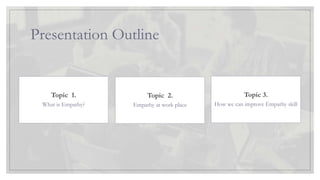
Presentation Outline
Topic 1.
What is Empathy?
Topic 2.
Empathy at work place
Topic 3.
How we can improve Empathy skill
◦ The term empathy was first introduced in
1909 by psychologist Edward B.
Titchener as a translation of the German
term einfühlung (meaning "feeling into").
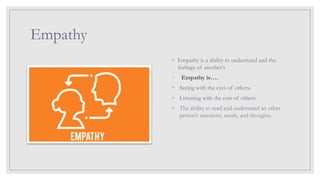
Empathy
• Empathy is a ability to understand and the
feelings of another's
◦ Empathy is….
• Seeing with the eyes of others.
• Listening with the ears of others.
• The ability to read and understand an other
person’s emotions, needs, and thoughts.
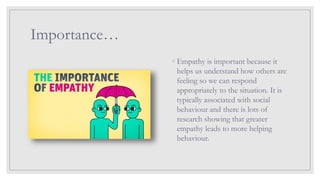
Importance…
◦ Empathy is important because it
helps us understand how others are
feeling so we can respond
appropriately to the situation. It is
typically associated with social
behaviour and there is lots of
research showing that greater
empathy leads to more helping
behaviour.
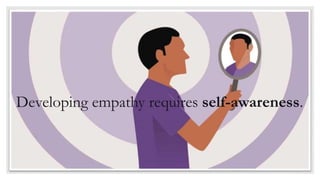
Developing empathy requires self-awareness.
Topic:
Empathy at work place
Empathy and Performance: What’s the
Connection?
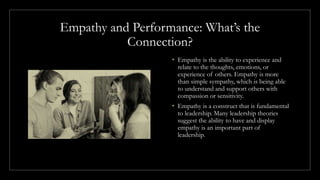
• Empathy is the ability to experience and
relate to the thoughts, emotions, or
experience of others. Empathy is more
than simple sympathy, which is being able
to understand and support others with
compassion or sensitivity.
• Empathy is a construct that is fundamental
to leadership. Many leadership theories
suggest the ability to have and display
empathy is an important part of
leadership.
Cont…
◦ Our results reveal that empathy is positively
related to job performance. Managers who
show more empathy toward direct reports
are viewed as better performers in their job
by their bosses.
◦ Leaders today need to be more
personfocused and be able to work with
those not just in the next cubicle, but also
with those in other buildings, or other
countries.
What exercises can we use to practice
empathy?
◦ Observe and listen:
Observe and listen to people you work with – including customers - to
learn about problems and opportunities.
◦ The class’ hour:
In primary education in Denmark, “the class’ hour” is held once a week.
The purpose of “the class’ hour” is for all students to come together to talk
about any problems and learn about how everyone feels. Students also share
ideas to solve problems. If there are no problems to be discussed, students just
play
Cont…
◦ Experience the day of a person you lead:
If you are leader, go experience the day of someone you lead.
◦ Practice breathing:
With mindfulness, we learn to stand in our own shoes. From this
perspective, mindfulness is a practice of self empathy. This kind of self
awareness allows us to develop empathic connections to others.
Topic:
How we can improve Empathy skill
Empathy Can Be Learned
◦ To improve their performance and effectiveness, leaders may need to develop the
capability to demonstrate empathy
◦ Some people naturally exude empathy and have an advantage over their peers
who have difficulty expressing empathy. Most leaders fall in the middle and are
sometimes or somewhat empathetic.
◦ Organizations can encourage a more empathetic workplace and help managers
improve their empathy skills in a number of simple ways:
Cont…
◦ Challenge yourself. Undertake challenging experiences which push you outside your
comfort zone. Learn a new skill, for example, such as a musical instrument, hobby, or foreign
language. Develop a new professional competency. Doing things like this will humble you, and
humility is a key enabler of empathy.
◦ Get out of your usual environment. Travel, especially to new places and cultures. It
gives you a better appreciation for others.
◦ Get feedback. Ask for feedback about your relationship skills (e.g., listening) from family,
friends, and colleagues—and then check in with them periodically to see how you’re doing.
Cont…
◦ Explore the heart not just the head. Read literature that explores personal relationships
and emotions. This has been shown to improve the empathy of young doctors.
◦ Walk in others’ shoes. Talk to others about what it is like to walk in their shoes—about
their issues and concerns and how they perceived experiences you both shared.
◦ Examine your biases. We all have hidden (and sometimes not-so-hidden) biases that
interfere with our ability to listen and empathize. These are often centered around visible factors
such as age, race, and gender. Don’t think you have any biases? Think again—we all do.
THANK YOU!

Empathy at workplace

  • 1.
  • 2.
    Presentation Outline Topic 1. Whatis Empathy? Topic 2. Empathy at work place Topic 3. How we can improve Empathy skill
  • 3.
    ◦ The termempathy was first introduced in 1909 by psychologist Edward B. Titchener as a translation of the German term einfühlung (meaning "feeling into").
  • 4.
    Empathy • Empathy isa ability to understand and the feelings of another's ◦ Empathy is…. • Seeing with the eyes of others. • Listening with the ears of others. • The ability to read and understand an other person’s emotions, needs, and thoughts.
  • 5.
    Importance… ◦ Empathy isimportant because it helps us understand how others are feeling so we can respond appropriately to the situation. It is typically associated with social behaviour and there is lots of research showing that greater empathy leads to more helping behaviour.
  • 6.
  • 7.
  • 8.
    Empathy and Performance:What’s the Connection? • Empathy is the ability to experience and relate to the thoughts, emotions, or experience of others. Empathy is more than simple sympathy, which is being able to understand and support others with compassion or sensitivity. • Empathy is a construct that is fundamental to leadership. Many leadership theories suggest the ability to have and display empathy is an important part of leadership.
  • 9.
    Cont… ◦ Our resultsreveal that empathy is positively related to job performance. Managers who show more empathy toward direct reports are viewed as better performers in their job by their bosses. ◦ Leaders today need to be more personfocused and be able to work with those not just in the next cubicle, but also with those in other buildings, or other countries.
  • 10.
    What exercises canwe use to practice empathy? ◦ Observe and listen: Observe and listen to people you work with – including customers - to learn about problems and opportunities. ◦ The class’ hour: In primary education in Denmark, “the class’ hour” is held once a week. The purpose of “the class’ hour” is for all students to come together to talk about any problems and learn about how everyone feels. Students also share ideas to solve problems. If there are no problems to be discussed, students just play
  • 11.
    Cont… ◦ Experience theday of a person you lead: If you are leader, go experience the day of someone you lead. ◦ Practice breathing: With mindfulness, we learn to stand in our own shoes. From this perspective, mindfulness is a practice of self empathy. This kind of self awareness allows us to develop empathic connections to others.
  • 12.
    Topic: How we canimprove Empathy skill
  • 13.
    Empathy Can BeLearned ◦ To improve their performance and effectiveness, leaders may need to develop the capability to demonstrate empathy ◦ Some people naturally exude empathy and have an advantage over their peers who have difficulty expressing empathy. Most leaders fall in the middle and are sometimes or somewhat empathetic. ◦ Organizations can encourage a more empathetic workplace and help managers improve their empathy skills in a number of simple ways:
  • 14.
    Cont… ◦ Challenge yourself.Undertake challenging experiences which push you outside your comfort zone. Learn a new skill, for example, such as a musical instrument, hobby, or foreign language. Develop a new professional competency. Doing things like this will humble you, and humility is a key enabler of empathy. ◦ Get out of your usual environment. Travel, especially to new places and cultures. It gives you a better appreciation for others. ◦ Get feedback. Ask for feedback about your relationship skills (e.g., listening) from family, friends, and colleagues—and then check in with them periodically to see how you’re doing.
  • 15.
    Cont… ◦ Explore theheart not just the head. Read literature that explores personal relationships and emotions. This has been shown to improve the empathy of young doctors. ◦ Walk in others’ shoes. Talk to others about what it is like to walk in their shoes—about their issues and concerns and how they perceived experiences you both shared. ◦ Examine your biases. We all have hidden (and sometimes not-so-hidden) biases that interfere with our ability to listen and empathize. These are often centered around visible factors such as age, race, and gender. Don’t think you have any biases? Think again—we all do.
  • 17.