Empathy at Work: Building a
Better Workplace
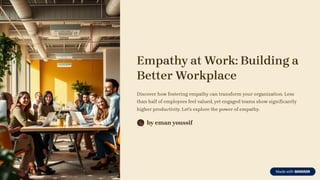
Discover how fostering empathy can transform your organization. Less
than half of employees feel valued, yet engaged teams show significantly
higher productivity. Let's explore the power of empathy.
by eman youssif
What is Empathy?
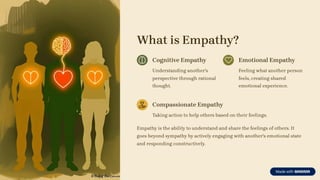
Cognitive Empathy
Understanding another's
perspective through rational
thought.
Emotional Empathy
Feeling what another person
feels, creating shared
emotional experience.
Compassionate Empathy
Taking action to help others based on their feelings.
Empathy is the ability to understand and share the feelings of others. It
goes beyond sympathy by actively engaging with another's emotional state
and responding constructively.
Why Empathy Matters in the
Workplace
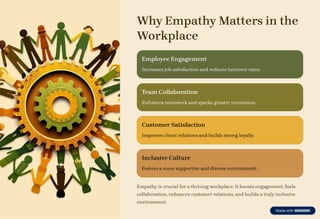
Employee Engagement
Increases job satisfaction and reduces turnover rates.
Team Collaboration
Enhances teamwork and sparks greater innovation.
Customer Satisfaction
Improves client relations and builds strong loyalty.
Inclusive Culture
Fosters a more supportive and diverse environment.
Empathy is crucial for a thriving workplace. It boosts engagement, fuels
collaboration, enhances customer relations, and builds a truly inclusive
environment.
The Business Case for
Empathy
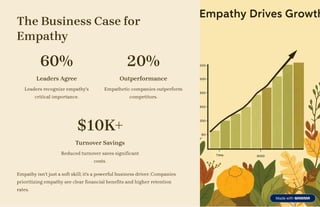
60%
Leaders Agree
Leaders recognize empathy's
critical importance.
20%
Outperformance
Empathetic companies outperform
competitors.
$10K+
Turnover Savings
Reduced turnover saves significant
costs.
Empathy isn't just a soft skill; it's a powerful business driver. Companies
prioritizing empathy see clear financial benefits and higher retention
rates.
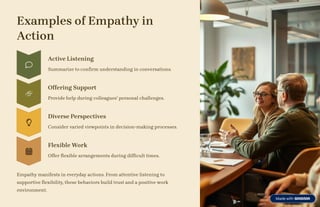
Examples of Empathy in
Action
Active Listening
Summarize to confirm understanding in conversations.
Offering Support
Provide help during colleagues' personal challenges.
Diverse Perspectives
Consider varied viewpoints in decision-making processes.
Flexible Work
Offer flexible arrangements during difficult times.
Empathy manifests in everyday actions. From attentive listening to
supportive flexibility, these behaviors build trust and a positive work
environment.
Building an Empathetic Workplace Culture
Leadership Modeling
Leaders demonstrate vulnerability and empathy daily.
Training Programs
Implement emotional intelligence development for all.
Safe Spaces
Create forums for open, honest communication.
Cultivating empathy starts with leadership. Providing training and creating platforms for open dialogue empowers employees to
connect authentically.
Practical Strategies to Improve Empathy
Active Listening
Practice during all one-on-one interactions.
Ask Open Questions
Seek to truly understand diverse viewpoints.
Share Experiences
Build trust by being open about yourself.
Acknowledge Feelings
Validate emotions without judgment or bias.
Improving empathy is an ongoing practice. Actively listen, ask probing questions, share your own journey, and always validate
others' emotions.
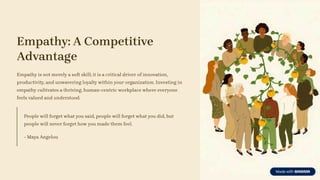
Empathy: A Competitive
Advantage
Empathy is not merely a soft skill; it is a critical driver of innovation,
productivity, and unwavering loyalty within your organization. Investing in
empathy cultivates a thriving, human-centric workplace where everyone
feels valued and understood.
People will forget what you said, people will forget what you did, but
people will never forget how you made them feel.
- Maya Angelou

Empathy-at-Work-Building-a-Better-Workplace.pdf

  • 1.
    Empathy at Work:Building a Better Workplace Discover how fostering empathy can transform your organization. Less than half of employees feel valued, yet engaged teams show significantly higher productivity. Let's explore the power of empathy. by eman youssif
  • 2.
    What is Empathy? CognitiveEmpathy Understanding another's perspective through rational thought. Emotional Empathy Feeling what another person feels, creating shared emotional experience. Compassionate Empathy Taking action to help others based on their feelings. Empathy is the ability to understand and share the feelings of others. It goes beyond sympathy by actively engaging with another's emotional state and responding constructively.
  • 3.
    Why Empathy Mattersin the Workplace Employee Engagement Increases job satisfaction and reduces turnover rates. Team Collaboration Enhances teamwork and sparks greater innovation. Customer Satisfaction Improves client relations and builds strong loyalty. Inclusive Culture Fosters a more supportive and diverse environment. Empathy is crucial for a thriving workplace. It boosts engagement, fuels collaboration, enhances customer relations, and builds a truly inclusive environment.
  • 4.
    The Business Casefor Empathy 60% Leaders Agree Leaders recognize empathy's critical importance. 20% Outperformance Empathetic companies outperform competitors. $10K+ Turnover Savings Reduced turnover saves significant costs. Empathy isn't just a soft skill; it's a powerful business driver. Companies prioritizing empathy see clear financial benefits and higher retention rates.
  • 5.
    Examples of Empathyin Action Active Listening Summarize to confirm understanding in conversations. Offering Support Provide help during colleagues' personal challenges. Diverse Perspectives Consider varied viewpoints in decision-making processes. Flexible Work Offer flexible arrangements during difficult times. Empathy manifests in everyday actions. From attentive listening to supportive flexibility, these behaviors build trust and a positive work environment.
  • 6.
    Building an EmpatheticWorkplace Culture Leadership Modeling Leaders demonstrate vulnerability and empathy daily. Training Programs Implement emotional intelligence development for all. Safe Spaces Create forums for open, honest communication. Cultivating empathy starts with leadership. Providing training and creating platforms for open dialogue empowers employees to connect authentically.
  • 7.
    Practical Strategies toImprove Empathy Active Listening Practice during all one-on-one interactions. Ask Open Questions Seek to truly understand diverse viewpoints. Share Experiences Build trust by being open about yourself. Acknowledge Feelings Validate emotions without judgment or bias. Improving empathy is an ongoing practice. Actively listen, ask probing questions, share your own journey, and always validate others' emotions.
  • 8.
    Empathy: A Competitive Advantage Empathyis not merely a soft skill; it is a critical driver of innovation, productivity, and unwavering loyalty within your organization. Investing in empathy cultivates a thriving, human-centric workplace where everyone feels valued and understood. People will forget what you said, people will forget what you did, but people will never forget how you made them feel. - Maya Angelou