
















Embracing Change 
Bret L. Simmons, Ph.D. 
www.bretlsimmons.com 
Training for 
Barrick Gold Corporation
www.bretlsimmons.com 
http://www.slideshare.net/BretLSimmons
Agenda 
• Session 1: Overview of Change 
• Session 2: Progress Principle 
• Session 3: Switch 
• Session 4: Organizational Citizenship 
• Breaks 
• Lunch 11 am 
• Wrap-up
Changes I need to make 
• Add two items after each session 
• Prioritize top two in wrap-up session 
• When you return to work 
– Apply the change formula you will learn today 
– Invite accountability 
– Make continual improvement a habit
What do you want 
to learn today?
Yesterday’s home 
runs don’t win today’s 
games 
Babe Ruth
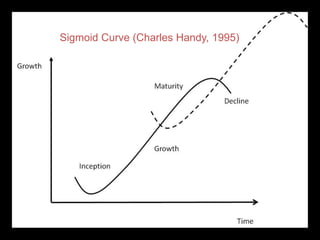
Sigmoid Curve (Charles Handy) 
Sigmoid Curve (Charles Handy, 1995)
Discipline of The Second 
Curve 
“..always assume that we are 
near the peak of the first curve 
and should therefore be starting 
to prepare for the second” (p.57)
Exercise 1 
Identify a change that is 
happening right now at work. 
Why are you resisting that 
change?
Integrity
Add two items to your list of 
changes you need to make
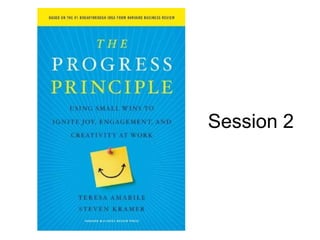
Session 2
For anything to change, someone has to 
start acting differently. Can you get 
people to start behaving differently?
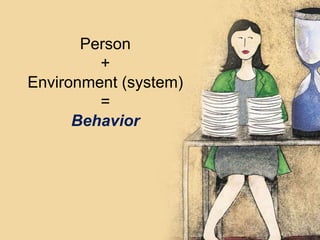
Person 
+ 
Environment (system) 
= 
Behavior
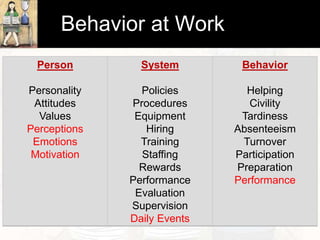
Behavior at Work 
Person 
Personality 
Attitudes 
Values 
Perceptions 
Emotions 
Motivation 
System 
Policies 
Procedures 
Equipment 
Hiring 
Training 
Staffing 
Rewards 
Performance 
Evaluation 
Supervision 
Daily Events 
Behavior 
Helping 
Civility 
Tardiness 
Absenteeism 
Turnover 
Participation 
Preparation 
Performance
Inner Work Life Effect: 
“People do better work when they are happy, have 
positive views of the organization and its people, and 
are motivated primarily by the work itself.” (p, 47)
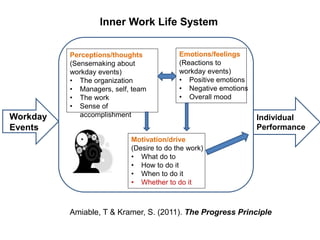
Workday 
Events 
Perceptions/thoughts 
(Sensemaking about 
workday events) 
• The organization 
• Managers, self, team 
• The work 
• Sense of 
accomplishment 
Emotions/feelings 
(Reactions to 
workday events) 
• Positive emotions 
• Negative emotions 
• Overall mood 
Motivation/drive 
(Desire to do the work) 
• What do to 
• How to do it 
• When to do it 
• Whether to do it 
Individual 
Performance 
Inner Work Life System 
Amiable, T & Kramer, S. (2011). The Progress Principle
Even seemingly 
mundane events – such 
as small wins and minor 
setbacks – can 
significantly effect 
inner work life
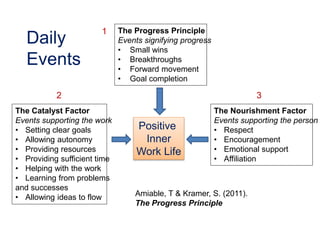
The Progress Principle 
Events signifying progress 
• Small wins 
• Breakthroughs 
• Forward movement 
• Goal completion 
Daily 
Events 
The Catalyst Factor 
Events supporting the work 
• Setting clear goals 
• Allowing autonomy 
• Providing resources 
• Providing sufficient time 
• Helping with the work 
• Learning from problems 
and successes 
• Allowing ideas to flow 
The Nourishment Factor 
Events supporting the person 
• Respect 
• Encouragement 
• Emotional support 
• Affiliation 
Positive 
Inner 
Work Life 
Amiable, T & Kramer, S. (2011). 
The Progress Principle 
1 
2 3
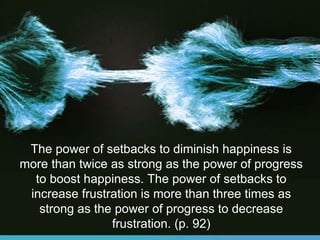
The power of setbacks to diminish happiness is 
more than twice as strong as the power of progress 
to boost happiness. The power of setbacks to 
increase frustration is more than three times as 
strong as the power of progress to decrease 
frustration. (p. 92)
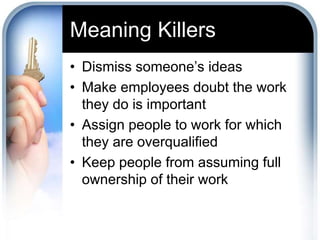
Meaning Killers 
• Dismiss someone’s ideas 
• Make employees doubt the work 
they do is important 
• Assign people to work for which 
they are overqualified 
• Keep people from assuming full 
ownership of their work
Inhibitors 
• Unclear goals 
• Micro-management 
• Lack of resources (e.g. information, equipment, 
funding, personnel, training) 
• Time pressure 
• Punishment (vs. learning) from problems or 
mistakes 
• Shut down open discussion 
• Increased workload + decreased control
Toxins 
• Disrespect 
• Discouragement 
• Emotional neglect 
• Antagonism
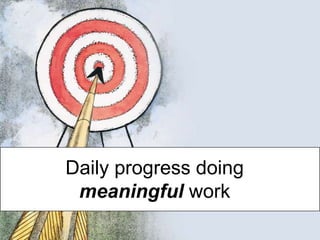
Daily progress doing 
meaningful work
Team Leaders / 
Immediate Supervisors
Whatever your level in the organization … you bear 
some responsibility for the inner work lives of the 
people around you (p. 181)
Recommendations 
• Systematic awareness 
• Stay tuned everyday 
• Target support 
• Check in – don’t check-up 
• Events change the culture 
• Tend to your own inner work life
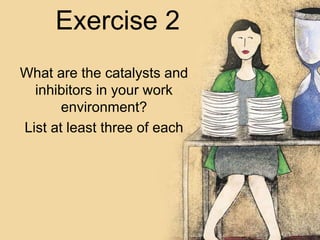
Exercise 2 
What are the catalysts and 
inhibitors in your work 
environment? 
List at least three of each
Add two items to your list of 
changes you need to make
Session 3
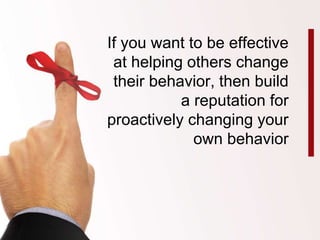
If you want to be effective 
at helping others change 
their behavior, then build 
a reputation for 
proactively changing your 
own behavior
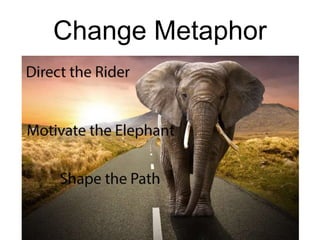
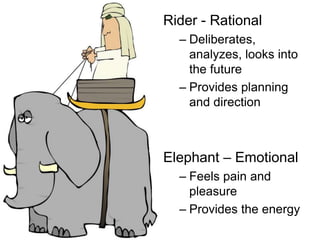
Change Metaphor
Rider - Rational 
– Deliberates, 
analyzes, looks into 
the future 
– Provides planning 
and direction 
Elephant – Emotional 
– Feels pain and 
pleasure 
– Provides the energy
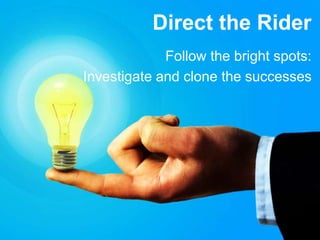
Direct the Rider 
Follow the bright spots: 
Investigate and clone the successes
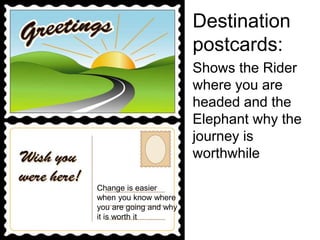
Destination 
postcards: 
Shows the Rider 
where you are 
headed and the 
Elephant why the 
journey is 
worthwhile 
Change is easier 
when you know where 
you are going and why 
it is worth it
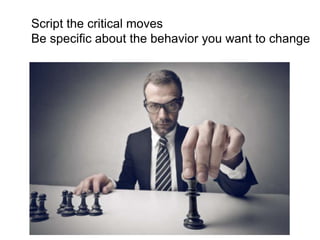
Script the critical moves 
Be specific about the behavior you want to change
Direct the Rider 
• What looks like resistance is 
often a lack of clarity 
• Clarity dissolves resistance
Motivate the Elephant 
Find the feeling 
Motivation comes from 
confidence. The 
Elephant has to believe 
that it’s capable of 
conquering the change
Shrink the change: 
Break down the change until 
it no longer spooks the 
Elephant 
Sense of progress is critical
Make change a matter of identity, not consequences 
Who am I? What kind of situation is this? What 
would someone like me do in this situation?
Grow your people 
Encourage a growth 
mindset by praising 
effort rather than skill
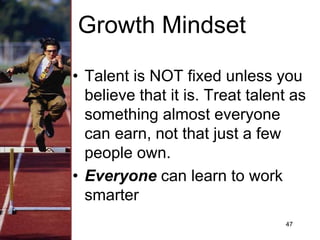
Growth Mindset 
• Talent is NOT fixed unless you 
believe that it is. Treat talent as 
something almost everyone 
can earn, not that just a few 
people own. 
• Everyone can learn to work 
smarter 
47
Motivate the 
Elephant 
Change is hard because people 
wear themselves out. What looks 
like laziness is often exhaustion
Shape the Path 
Tweak the environment. When the situation 
changes, behavior changes
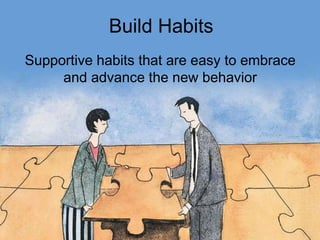
Build Habits 
Supportive habits that are easy to embrace 
and advance the new behavior
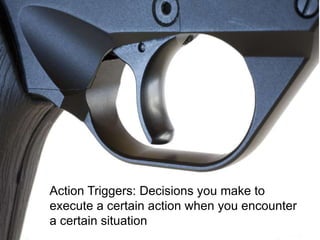
Action Triggers: Decisions you make to 
execute a certain action when you encounter 
a certain situation
Checklists help educate 
people about what is best 
by showing then the right 
way to do something
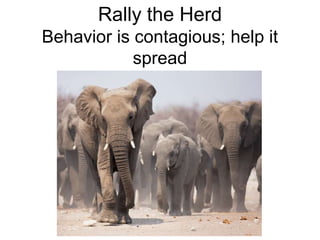
Rally the Herd 
Behavior is contagious; help it 
spread
Shape the path 
What looks like a people problem is 
often a situation problem. When 
you shape the path, you make the 
change more likely, no matter 
what’s happening with the Rider 
and the Elephant
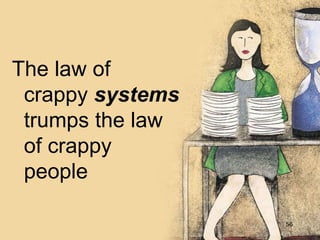
The law of 
crappy systems 
trumps the law 
of crappy 
people 
56
How can you partner with others to help 
fix crappy systems?
This sucks and so do you
Here is my suggestion
This system does not work as well as it 
could. I have a few suggestions. Here are 
some things I can do to help make it better
Exercise 3 
Identify a change that is happening 
right now at work. Discuss ways 
that you can direct the Rider, 
motivate the Elephant, and shape 
the Path to help improve the 
success of this change
Add two items to your list of 
changes you need to make
Organizational Citizens 
Taker, Matcher, or Giver
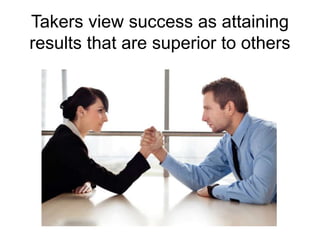
Takers view success as attaining 
results that are superior to others
Matchers see success in terms of balancing 
individual accomplishments with fairness to 
others
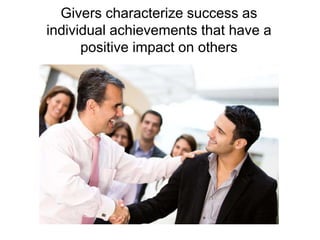
Givers characterize success as 
individual achievements that have a 
positive impact on others
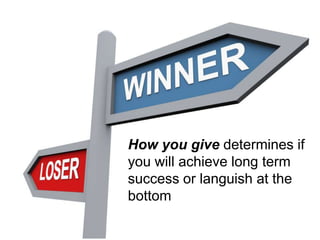
How you give determines if 
you will achieve long term 
success or languish at the 
bottom
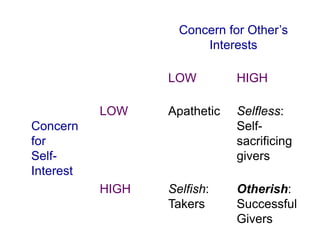
Concern for Other’s 
Interests 
LOW HIGH 
Concern 
for 
Self- 
Interest 
LOW Apathetic Selfless: 
Self-sacrificing 
givers 
HIGH Selfish: 
Takers 
Otherish: 
Successful 
Givers
Exercise 4 
How can you improve the citizenship 
behavior in your organization? 
Discuss ways you can direct the Rider, 
motivate the Elephant, and shape the 
Path to create more otherish givers in 
your organization.
Questions?

Embracing Change

  • 1.
    Embracing Change BretL. Simmons, Ph.D. www.bretlsimmons.com Training for Barrick Gold Corporation
  • 2.
  • 3.
    Agenda • Session1: Overview of Change • Session 2: Progress Principle • Session 3: Switch • Session 4: Organizational Citizenship • Breaks • Lunch 11 am • Wrap-up
  • 4.
    Changes I needto make • Add two items after each session • Prioritize top two in wrap-up session • When you return to work – Apply the change formula you will learn today – Invite accountability – Make continual improvement a habit
  • 5.
    What do youwant to learn today?
  • 6.
    Yesterday’s home runsdon’t win today’s games Babe Ruth
  • 7.
    Sigmoid Curve (CharlesHandy) Sigmoid Curve (Charles Handy, 1995)
  • 8.
    Discipline of TheSecond Curve “..always assume that we are near the peak of the first curve and should therefore be starting to prepare for the second” (p.57)
  • 9.
    Exercise 1 Identifya change that is happening right now at work. Why are you resisting that change?
  • 15.
  • 16.
    Add two itemsto your list of changes you need to make
  • 17.
  • 18.
    For anything tochange, someone has to start acting differently. Can you get people to start behaving differently?
  • 19.
    Person + Environment(system) = Behavior
  • 20.
    Behavior at Work Person Personality Attitudes Values Perceptions Emotions Motivation System Policies Procedures Equipment Hiring Training Staffing Rewards Performance Evaluation Supervision Daily Events Behavior Helping Civility Tardiness Absenteeism Turnover Participation Preparation Performance
  • 21.
    Inner Work LifeEffect: “People do better work when they are happy, have positive views of the organization and its people, and are motivated primarily by the work itself.” (p, 47)
  • 22.
    Workday Events Perceptions/thoughts (Sensemaking about workday events) • The organization • Managers, self, team • The work • Sense of accomplishment Emotions/feelings (Reactions to workday events) • Positive emotions • Negative emotions • Overall mood Motivation/drive (Desire to do the work) • What do to • How to do it • When to do it • Whether to do it Individual Performance Inner Work Life System Amiable, T & Kramer, S. (2011). The Progress Principle
  • 23.
    Even seemingly mundaneevents – such as small wins and minor setbacks – can significantly effect inner work life
  • 24.
    The Progress Principle Events signifying progress • Small wins • Breakthroughs • Forward movement • Goal completion Daily Events The Catalyst Factor Events supporting the work • Setting clear goals • Allowing autonomy • Providing resources • Providing sufficient time • Helping with the work • Learning from problems and successes • Allowing ideas to flow The Nourishment Factor Events supporting the person • Respect • Encouragement • Emotional support • Affiliation Positive Inner Work Life Amiable, T & Kramer, S. (2011). The Progress Principle 1 2 3
  • 25.
    The power ofsetbacks to diminish happiness is more than twice as strong as the power of progress to boost happiness. The power of setbacks to increase frustration is more than three times as strong as the power of progress to decrease frustration. (p. 92)
  • 26.
    Meaning Killers •Dismiss someone’s ideas • Make employees doubt the work they do is important • Assign people to work for which they are overqualified • Keep people from assuming full ownership of their work
  • 27.
    Inhibitors • Uncleargoals • Micro-management • Lack of resources (e.g. information, equipment, funding, personnel, training) • Time pressure • Punishment (vs. learning) from problems or mistakes • Shut down open discussion • Increased workload + decreased control
  • 28.
    Toxins • Disrespect • Discouragement • Emotional neglect • Antagonism
  • 29.
    Daily progress doing meaningful work
  • 30.
    Team Leaders / Immediate Supervisors
  • 31.
    Whatever your levelin the organization … you bear some responsibility for the inner work lives of the people around you (p. 181)
  • 32.
    Recommendations • Systematicawareness • Stay tuned everyday • Target support • Check in – don’t check-up • Events change the culture • Tend to your own inner work life
  • 33.
    Exercise 2 Whatare the catalysts and inhibitors in your work environment? List at least three of each
  • 34.
    Add two itemsto your list of changes you need to make
  • 35.
  • 36.
    If you wantto be effective at helping others change their behavior, then build a reputation for proactively changing your own behavior
  • 37.
  • 38.
    Rider - Rational – Deliberates, analyzes, looks into the future – Provides planning and direction Elephant – Emotional – Feels pain and pleasure – Provides the energy
  • 39.
    Direct the Rider Follow the bright spots: Investigate and clone the successes
  • 40.
    Destination postcards: Showsthe Rider where you are headed and the Elephant why the journey is worthwhile Change is easier when you know where you are going and why it is worth it
  • 41.
    Script the criticalmoves Be specific about the behavior you want to change
  • 42.
    Direct the Rider • What looks like resistance is often a lack of clarity • Clarity dissolves resistance
  • 43.
    Motivate the Elephant Find the feeling Motivation comes from confidence. The Elephant has to believe that it’s capable of conquering the change
  • 44.
    Shrink the change: Break down the change until it no longer spooks the Elephant Sense of progress is critical
  • 45.
    Make change amatter of identity, not consequences Who am I? What kind of situation is this? What would someone like me do in this situation?
  • 46.
    Grow your people Encourage a growth mindset by praising effort rather than skill
  • 47.
    Growth Mindset •Talent is NOT fixed unless you believe that it is. Treat talent as something almost everyone can earn, not that just a few people own. • Everyone can learn to work smarter 47
  • 48.
    Motivate the Elephant Change is hard because people wear themselves out. What looks like laziness is often exhaustion
  • 49.
    Shape the Path Tweak the environment. When the situation changes, behavior changes
  • 50.
    Build Habits Supportivehabits that are easy to embrace and advance the new behavior
  • 51.
    Action Triggers: Decisionsyou make to execute a certain action when you encounter a certain situation
  • 53.
    Checklists help educate people about what is best by showing then the right way to do something
  • 54.
    Rally the Herd Behavior is contagious; help it spread
  • 55.
    Shape the path What looks like a people problem is often a situation problem. When you shape the path, you make the change more likely, no matter what’s happening with the Rider and the Elephant
  • 56.
    The law of crappy systems trumps the law of crappy people 56
  • 57.
    How can youpartner with others to help fix crappy systems?
  • 59.
    This sucks andso do you
  • 60.
    Here is mysuggestion
  • 61.
    This system doesnot work as well as it could. I have a few suggestions. Here are some things I can do to help make it better
  • 62.
    Exercise 3 Identifya change that is happening right now at work. Discuss ways that you can direct the Rider, motivate the Elephant, and shape the Path to help improve the success of this change
  • 63.
    Add two itemsto your list of changes you need to make
  • 64.
  • 65.
    Takers view successas attaining results that are superior to others
  • 66.
    Matchers see successin terms of balancing individual accomplishments with fairness to others
  • 67.
    Givers characterize successas individual achievements that have a positive impact on others
  • 68.
    How you givedetermines if you will achieve long term success or languish at the bottom
  • 69.
    Concern for Other’s Interests LOW HIGH Concern for Self- Interest LOW Apathetic Selfless: Self-sacrificing givers HIGH Selfish: Takers Otherish: Successful Givers
  • 70.
    Exercise 4 Howcan you improve the citizenship behavior in your organization? Discuss ways you can direct the Rider, motivate the Elephant, and shape the Path to create more otherish givers in your organization.
  • 71.

Editor's Notes

  • #2 This presentation is updated online at http://www.slideshare.net/BretLSimmons Videos of this session will be available at my website www.bretlsimmons.com and at my Youtube channel http://www.youtube.com/user/eustress