Downloaded 236 times
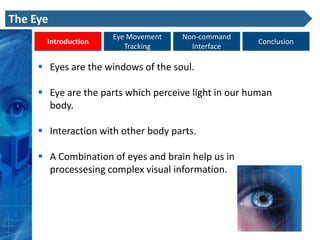
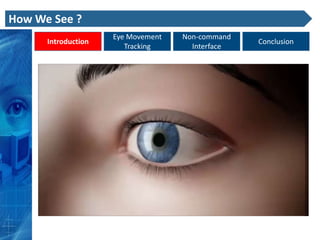
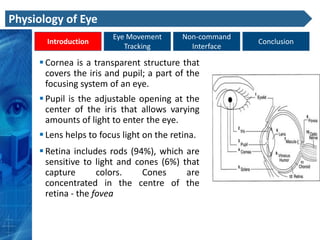
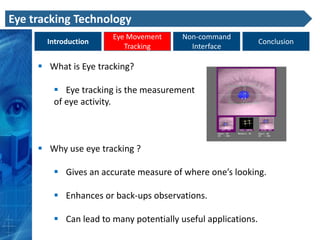
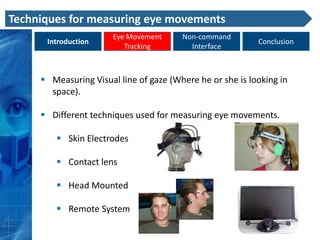
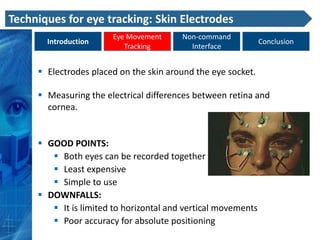
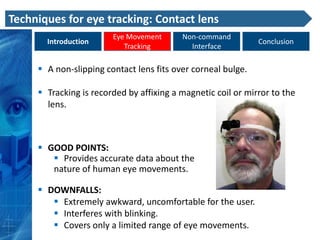
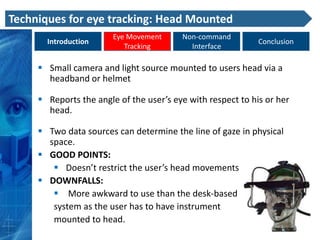
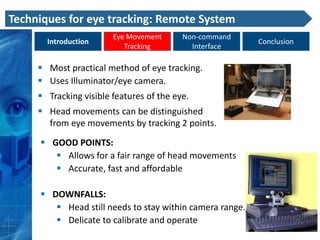
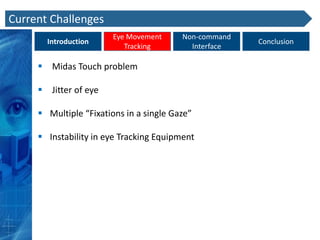
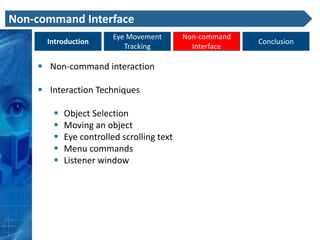
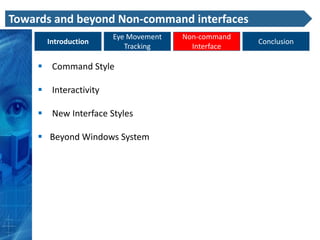
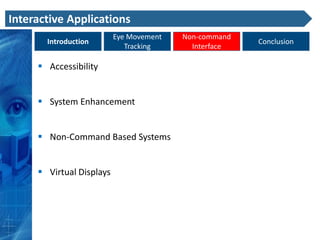
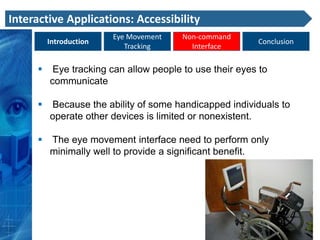
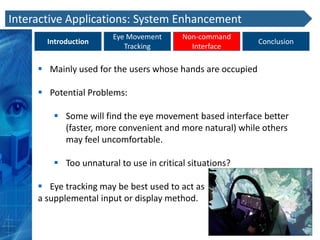
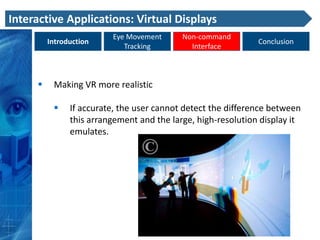
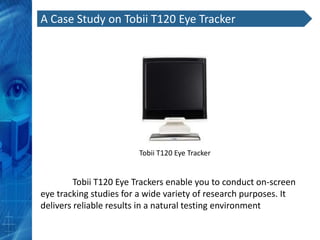
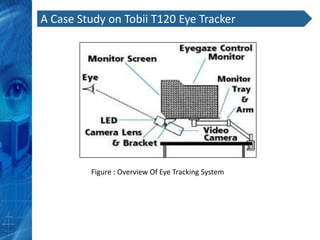
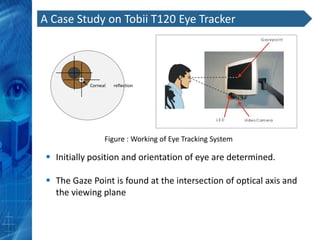
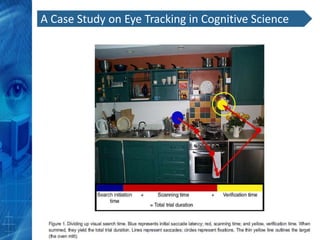


The document discusses eye movement tracking techniques for human-computer interaction. It describes the anatomy and physiology of the eye, how eye movements are tracked using different techniques like skin electrodes, contact lenses, head-mounted and remote systems. Challenges in eye tracking like the midas touch problem and jitter are also covered. Applications of eye tracking like accessibility, system enhancement and virtual displays are discussed. Case studies on using eye tracking for visual search tasks in cognitive science and on the Tobii T120 eye tracker are provided. The conclusion states that while eye tracking is not perfect, it has potential to provide new effective interaction methods.


