Challenges 
in 
designing 
a 
type 
1 
hypervisor 
for 
ARM 
v7 
VE 
Manish 
Jaggi 
manish.jaggi@gmail.com 
http://in.linkedin.com/in/manishjaggi
Hypervisor 
Layering 
in 
Software 
Stack 
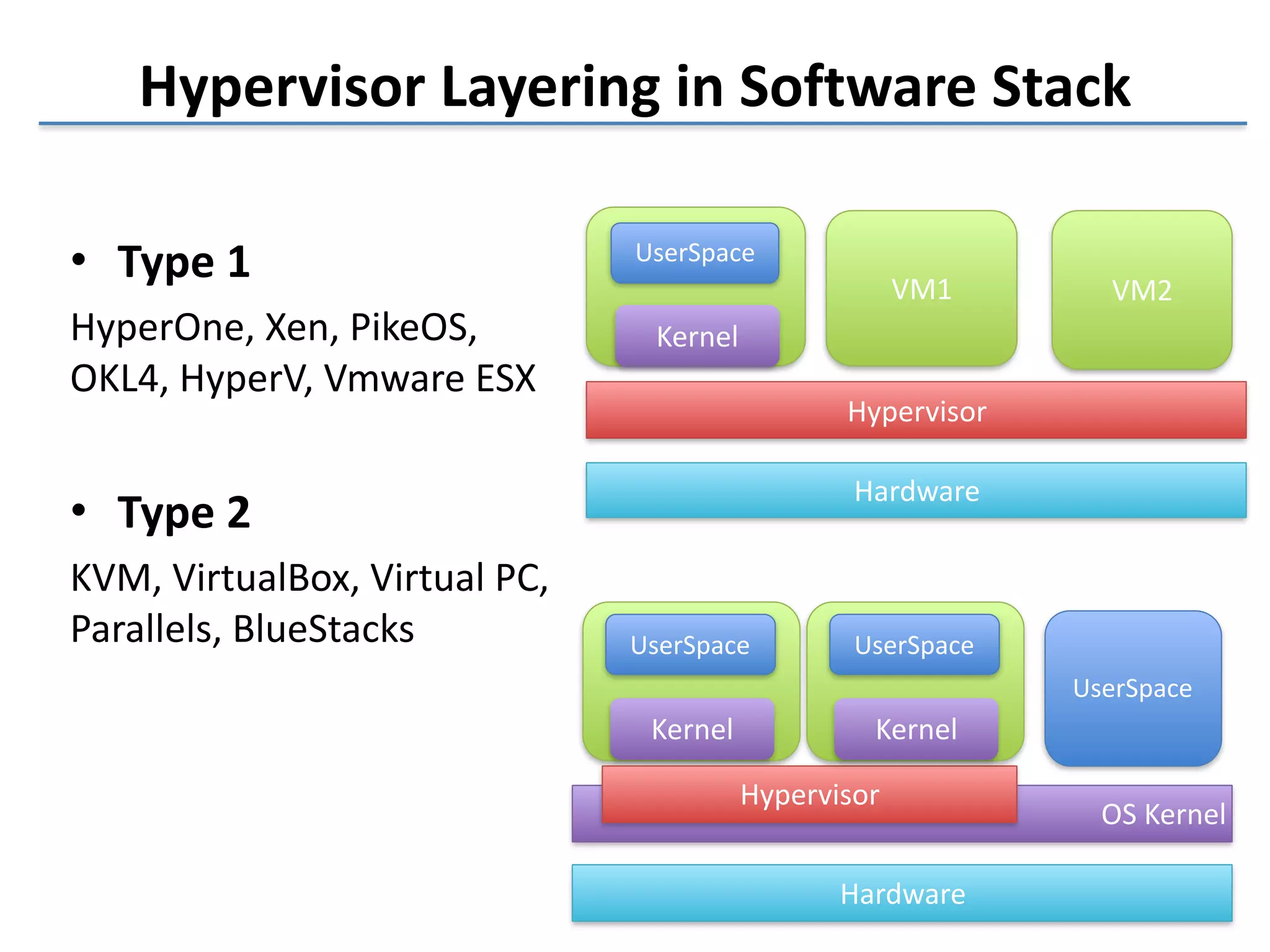
• Type 
1 
HyperOne, 
Xen, 
PikeOS, 
OKL4, 
HyperV, 
Vmware 
ESX 
! 
• Type 
2 
KVM, 
VirtualBox, 
Virtual 
PC, 
Parallels, 
BlueStacks 
Hypervisor 
Hardware 
UserSpace 
Kernel 
Hardware 
OS 
Kernel 
UserSpace 
Kernel 
Hypervisor 
VM1 VM2 
UserSpace 
Kernel 
UserSpace
Monolithic 
vs 
Microkernel 
Design
HyperOne 
Microkernel 
Design.. 
VM2 Driver 
Device 
Drivers 
Hypervisor 
Hardware 
VM 
VM1 
Root 
InterVM 
IPC 
Virtual 
Scheduling Memory 
Interrupt 
Routing 
Virtualization 
Stack 
Device 
Drivers Device 
Drivers
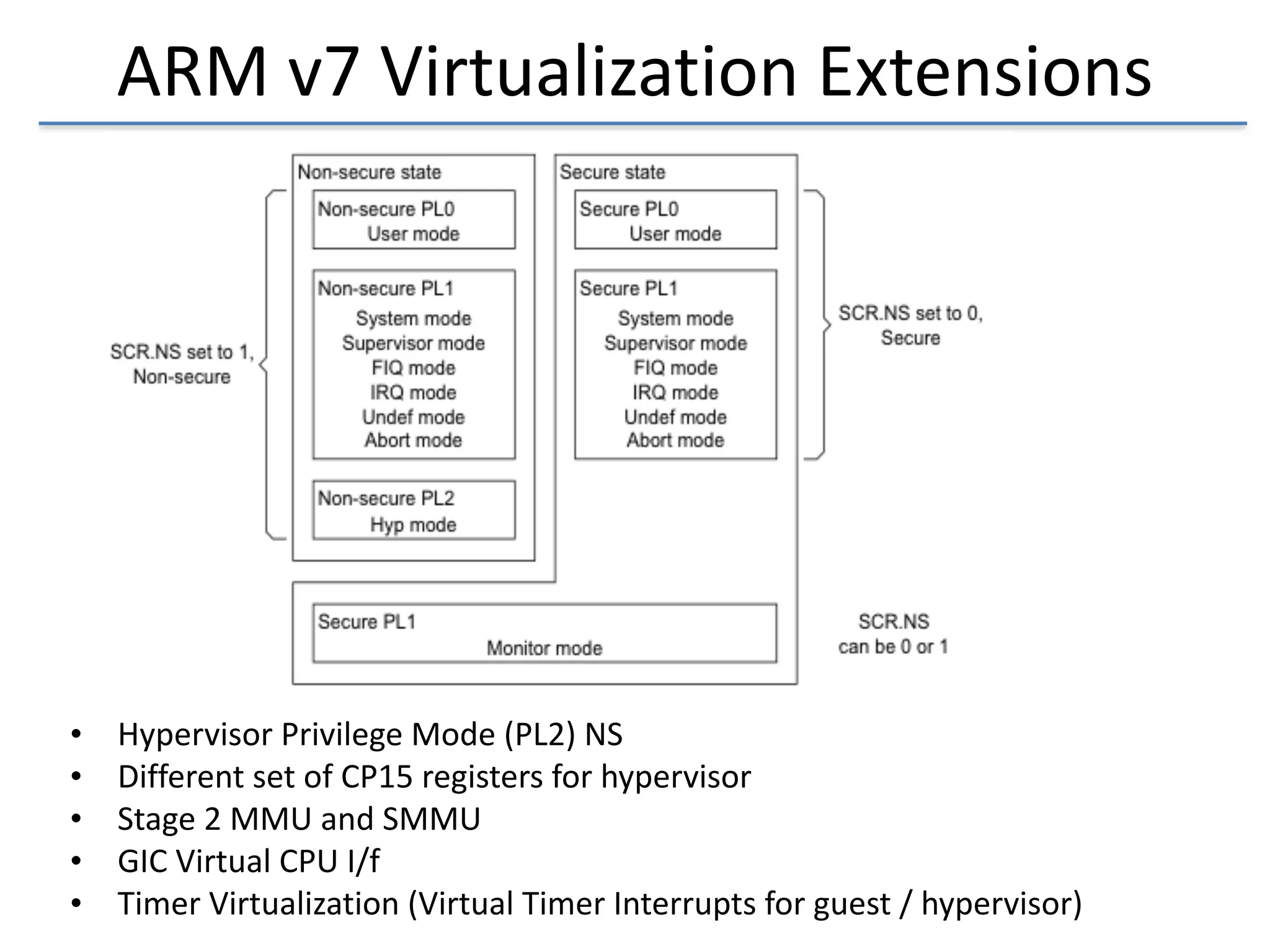
ARM 
v7 
Virtualization 
Extensions 
• Hypervisor 
Privilege 
Mode 
(PL2) 
NS 
• Different 
set 
of 
CP15 
registers 
for 
hypervisor 
• Stage 
2 
MMU 
and 
SMMU 
• GIC 
Virtual 
CPU 
I/f 
• Timer 
Virtualization 
(Virtual 
Timer 
Interrupts 
for 
guest 
/ 
hypervisor)
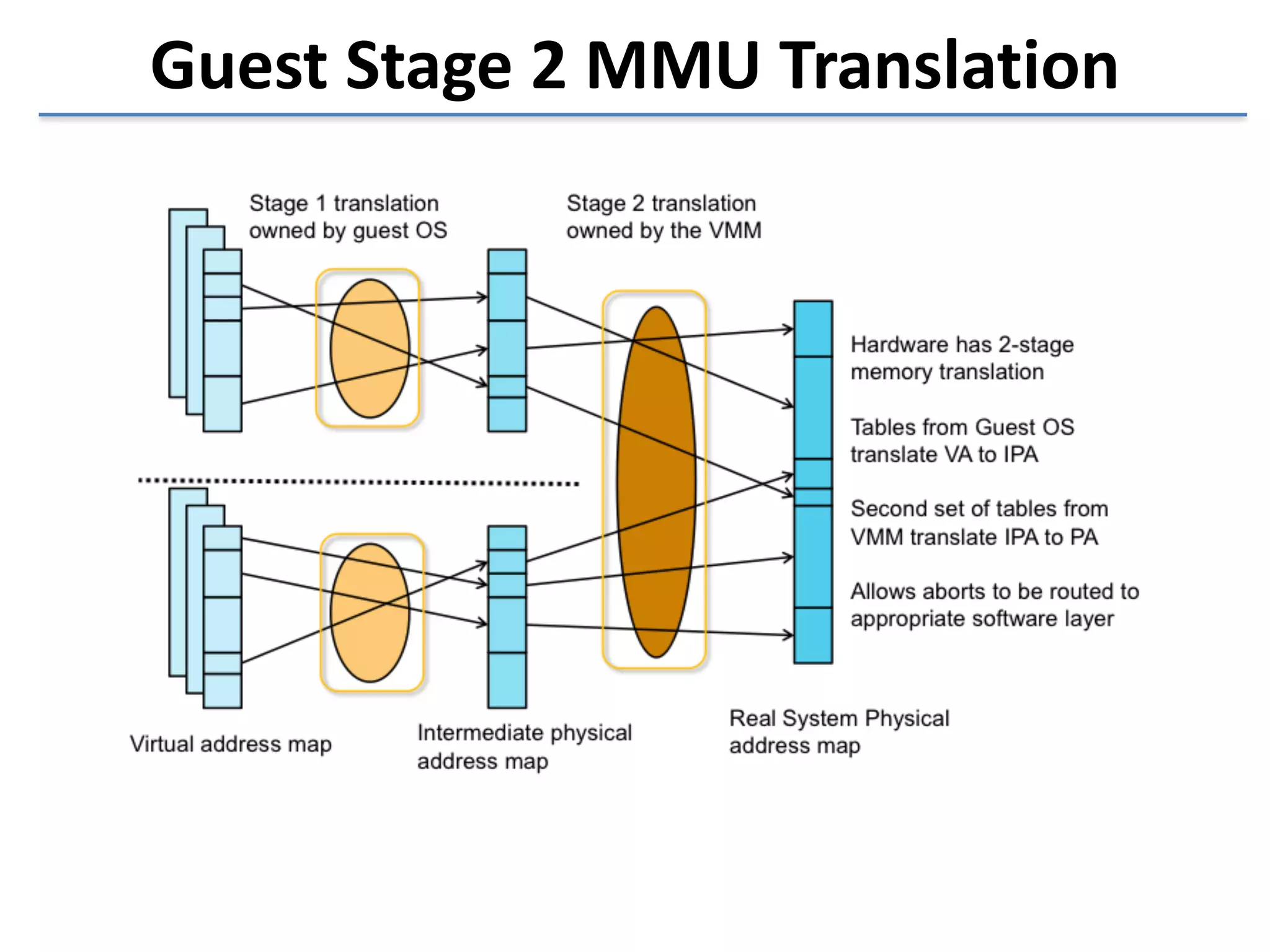
Guest 
Stage 
2 
MMU 
Translation
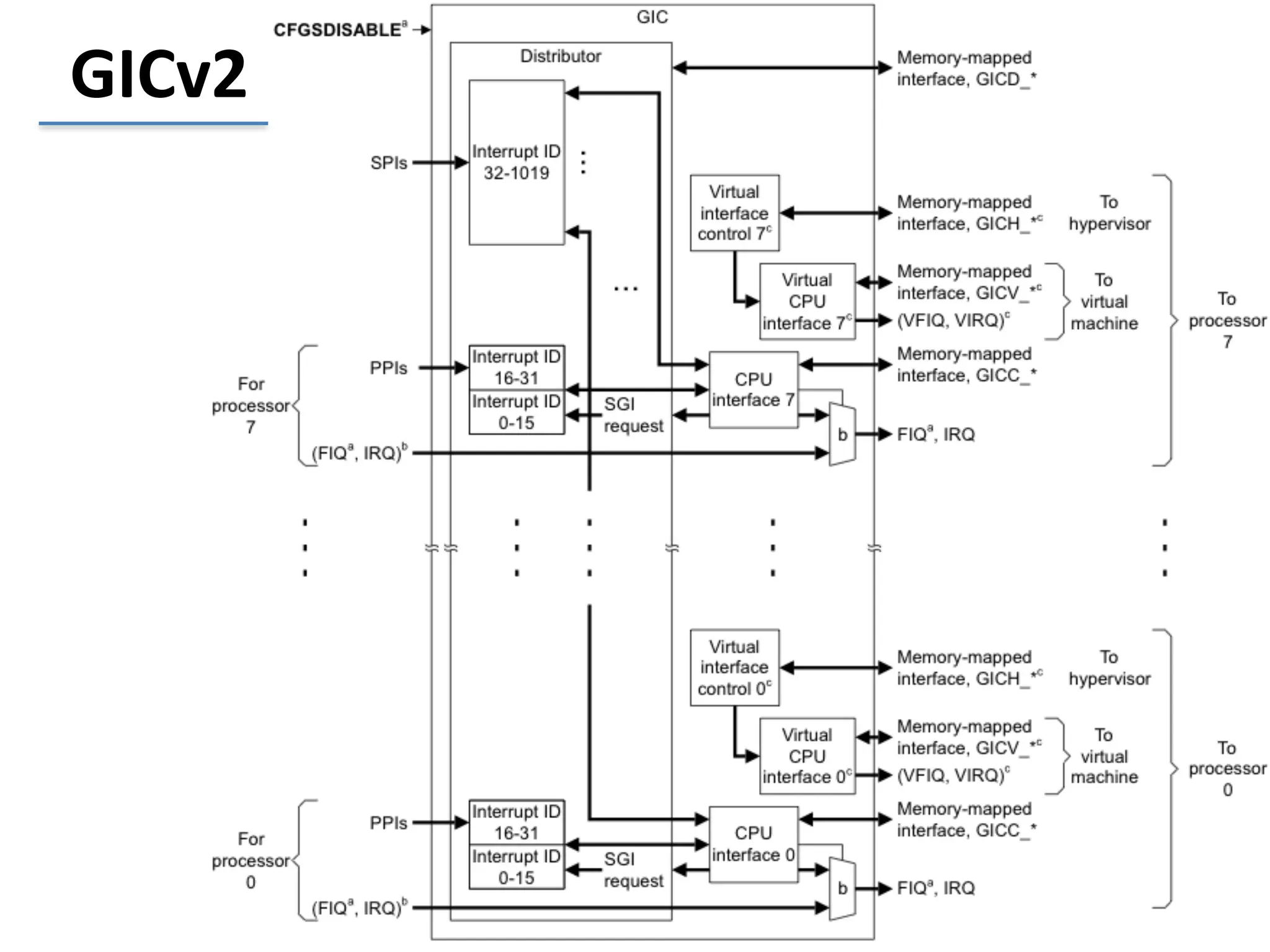
GICv2
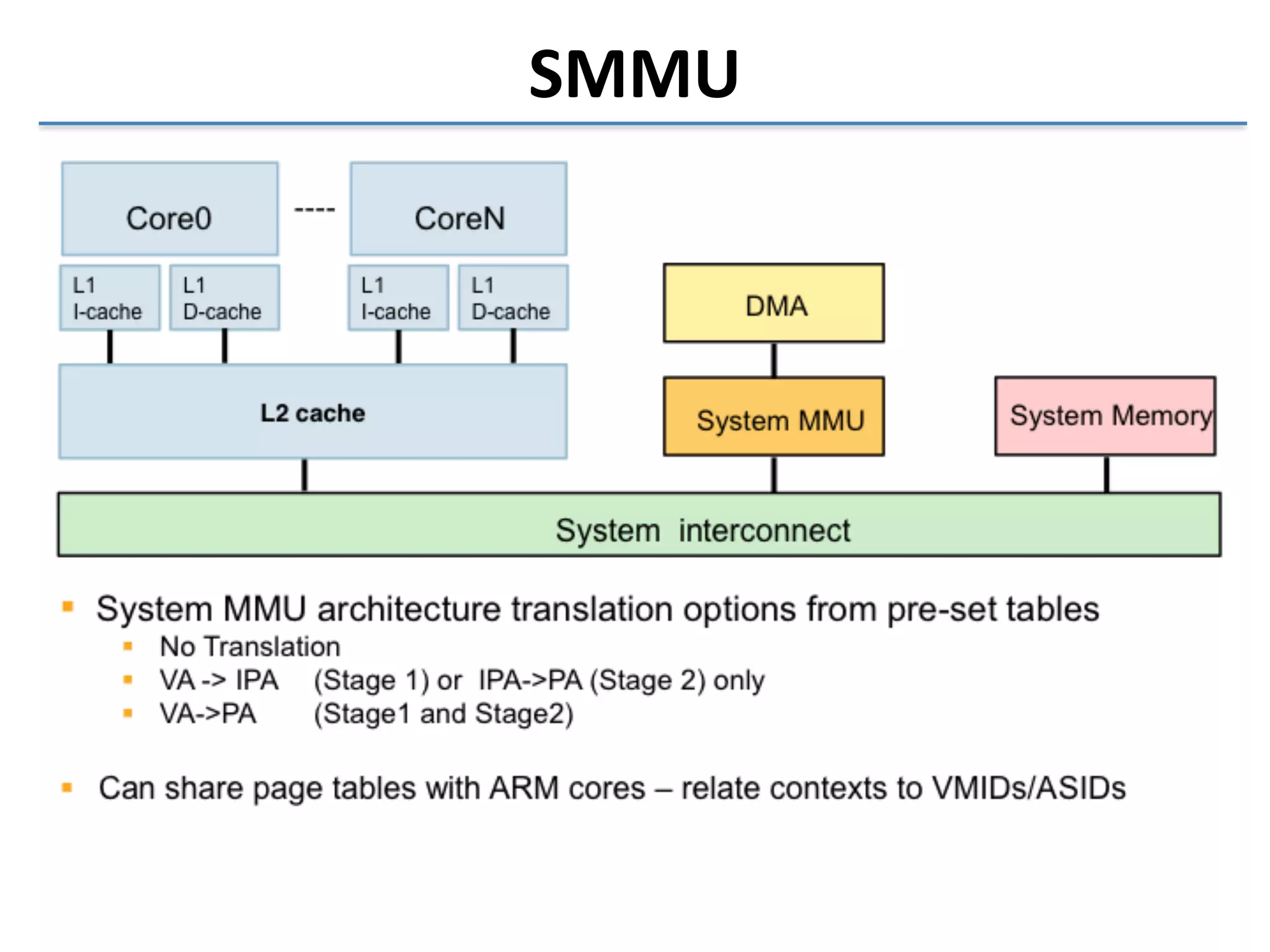
SMMU
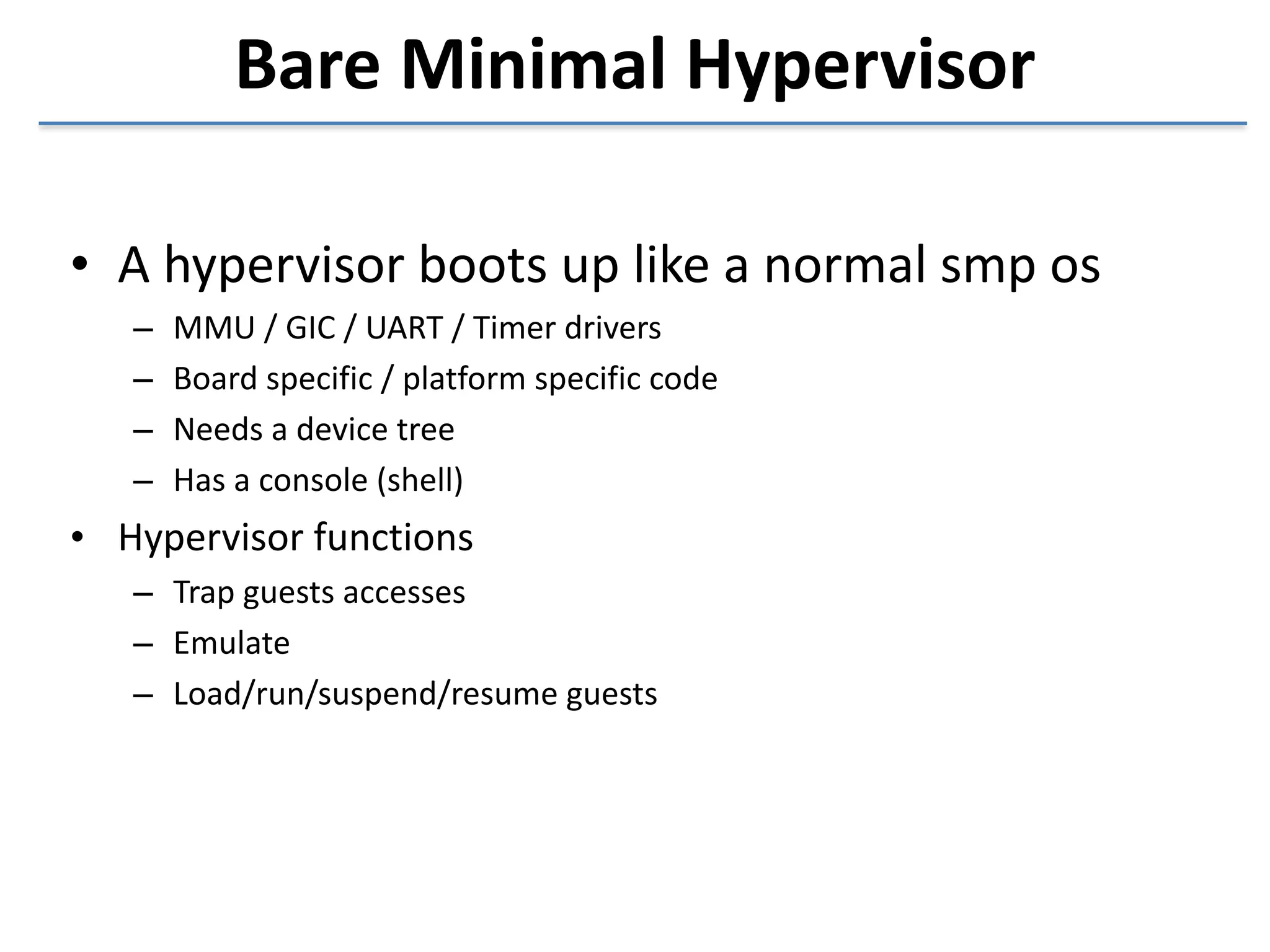
Bare 
Minimal 
Hypervisor 
• A 
hypervisor 
boots 
up 
like 
a 
normal 
smp 
os 
– MMU 
/ 
GIC 
/ 
UART 
/ 
Timer 
drivers 
– Board 
specific 
/ 
platform 
specific 
code 
– Needs 
a 
device 
tree 
– Has 
a 
console 
(shell) 
• Hypervisor 
functions 
– Trap 
guests 
accesses 
– Emulate 
– Load/run/suspend/resume 
guests
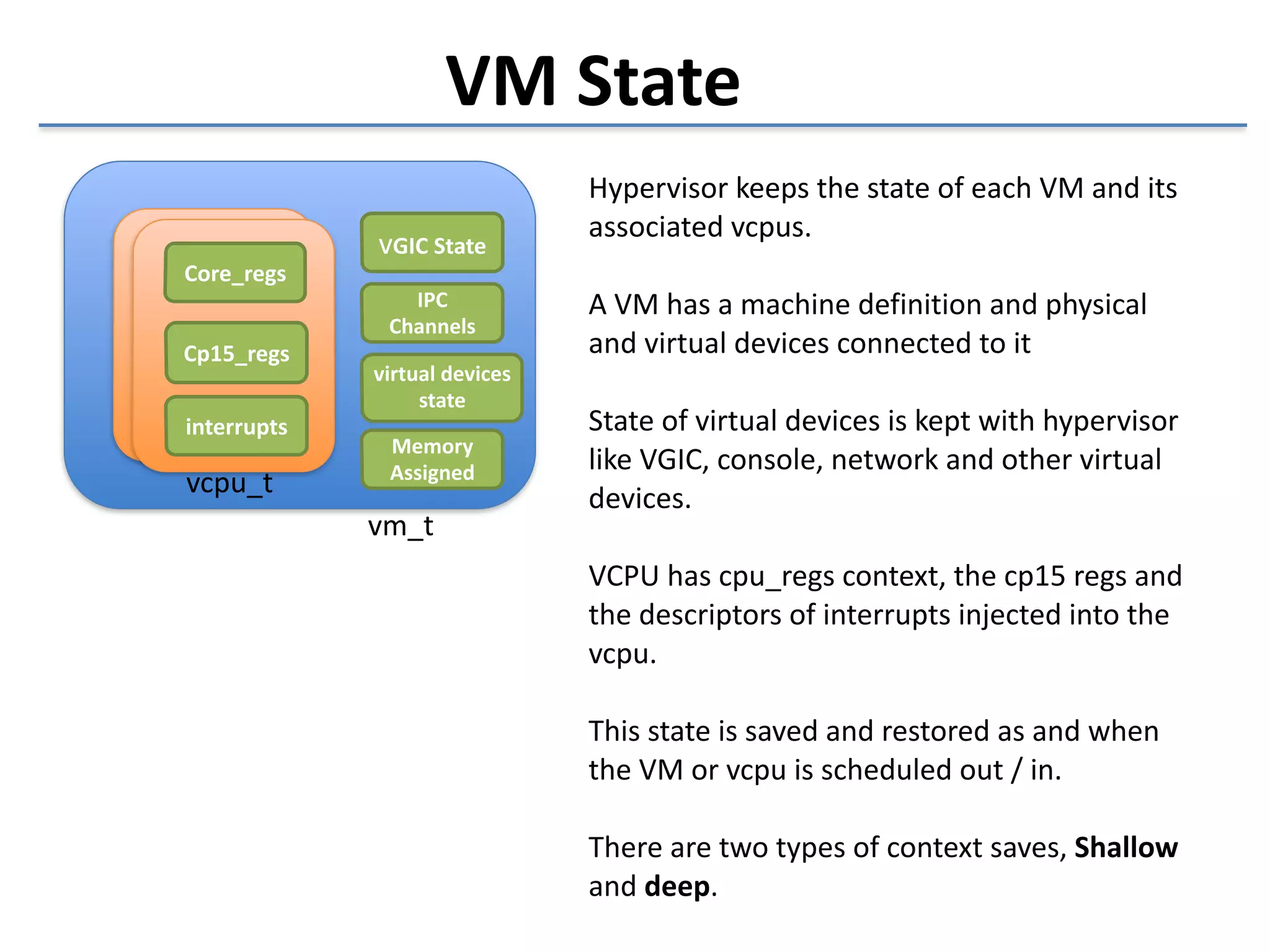
IPC 
Channels 
vm_t 
Core_regs 
Cp15_regs 
interrupts 
vcpu_t 
VM 
State 
vGIC 
State 
virtual 
devices 
state 
Memory 
Assigned 
Hypervisor 
keeps 
the 
state 
of 
each 
VM 
and 
its 
associated 
vcpus. 
! 
A 
VM 
has 
a 
machine 
definition 
and 
physical 
and 
virtual 
devices 
connected 
to 
it 
! 
State 
of 
virtual 
devices 
is 
kept 
with 
hypervisor 
like 
VGIC, 
console, 
network 
and 
other 
virtual 
devices. 
! 
VCPU 
has 
cpu_regs 
context, 
the 
cp15 
regs 
and 
the 
descriptors 
of 
interrupts 
injected 
into 
the 
vcpu. 
! 
This 
state 
is 
saved 
and 
restored 
as 
and 
when 
the 
VM 
or 
vcpu 
is 
scheduled 
out 
/ 
in. 
! 
There 
are 
two 
types 
of 
context 
saves, 
Shallow 
and 
deep.
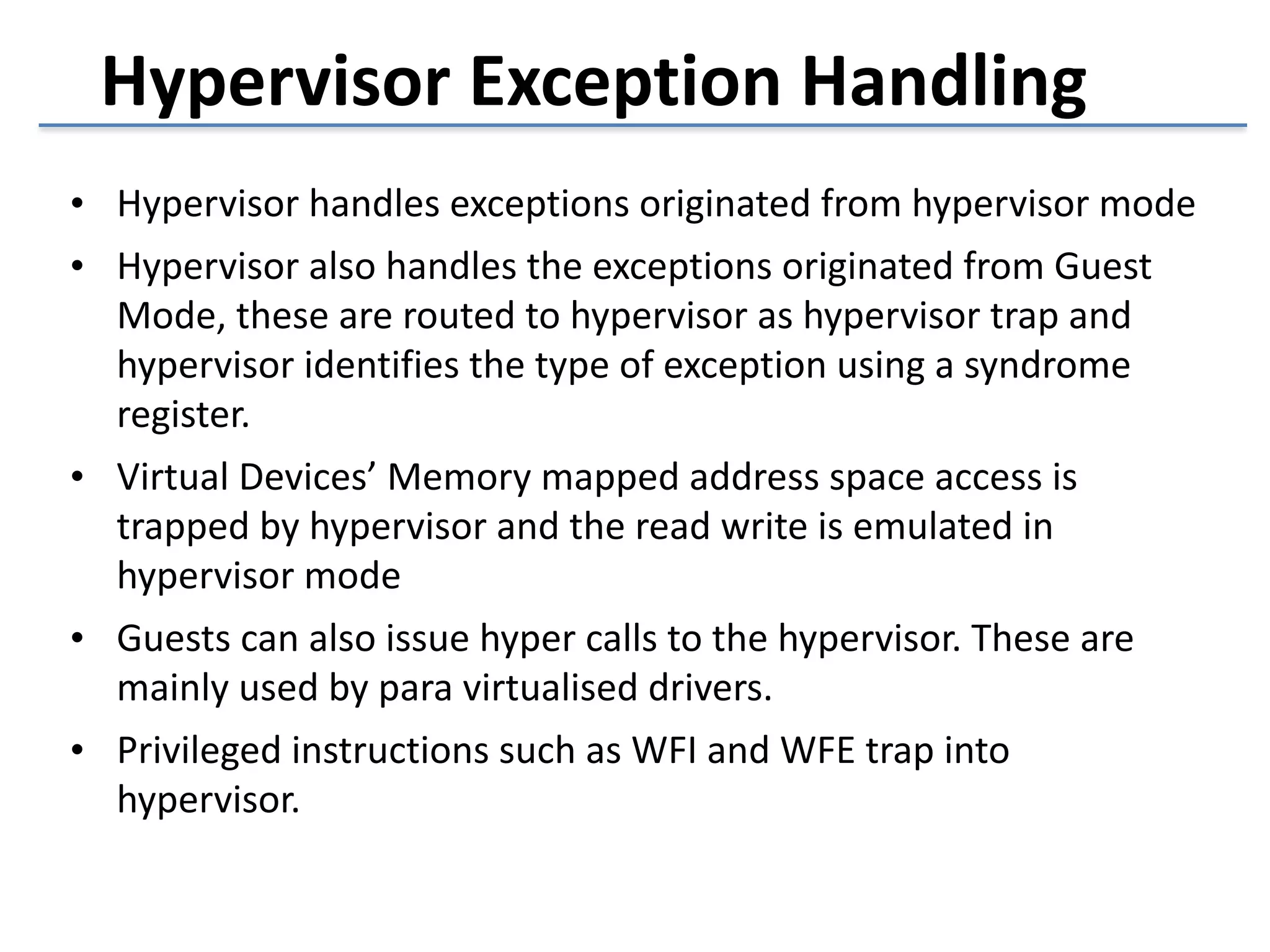
Hypervisor 
Exception 
Handling 
• Hypervisor 
handles 
exceptions 
originated 
from 
hypervisor 
mode 
• Hypervisor 
also 
handles 
the 
exceptions 
originated 
from 
Guest 
Mode, 
these 
are 
routed 
to 
hypervisor 
as 
hypervisor 
trap 
and 
hypervisor 
identifies 
the 
type 
of 
exception 
using 
a 
syndrome 
register. 
• Virtual 
Devices’ 
Memory 
mapped 
address 
space 
access 
is 
trapped 
by 
hypervisor 
and 
the 
read 
write 
is 
emulated 
in 
hypervisor 
mode 
• Guests 
can 
also 
issue 
hyper 
calls 
to 
the 
hypervisor. 
These 
are 
mainly 
used 
by 
para 
virtualised 
drivers. 
• Privileged 
instructions 
such 
as 
WFI 
and 
WFE 
trap 
into 
hypervisor.
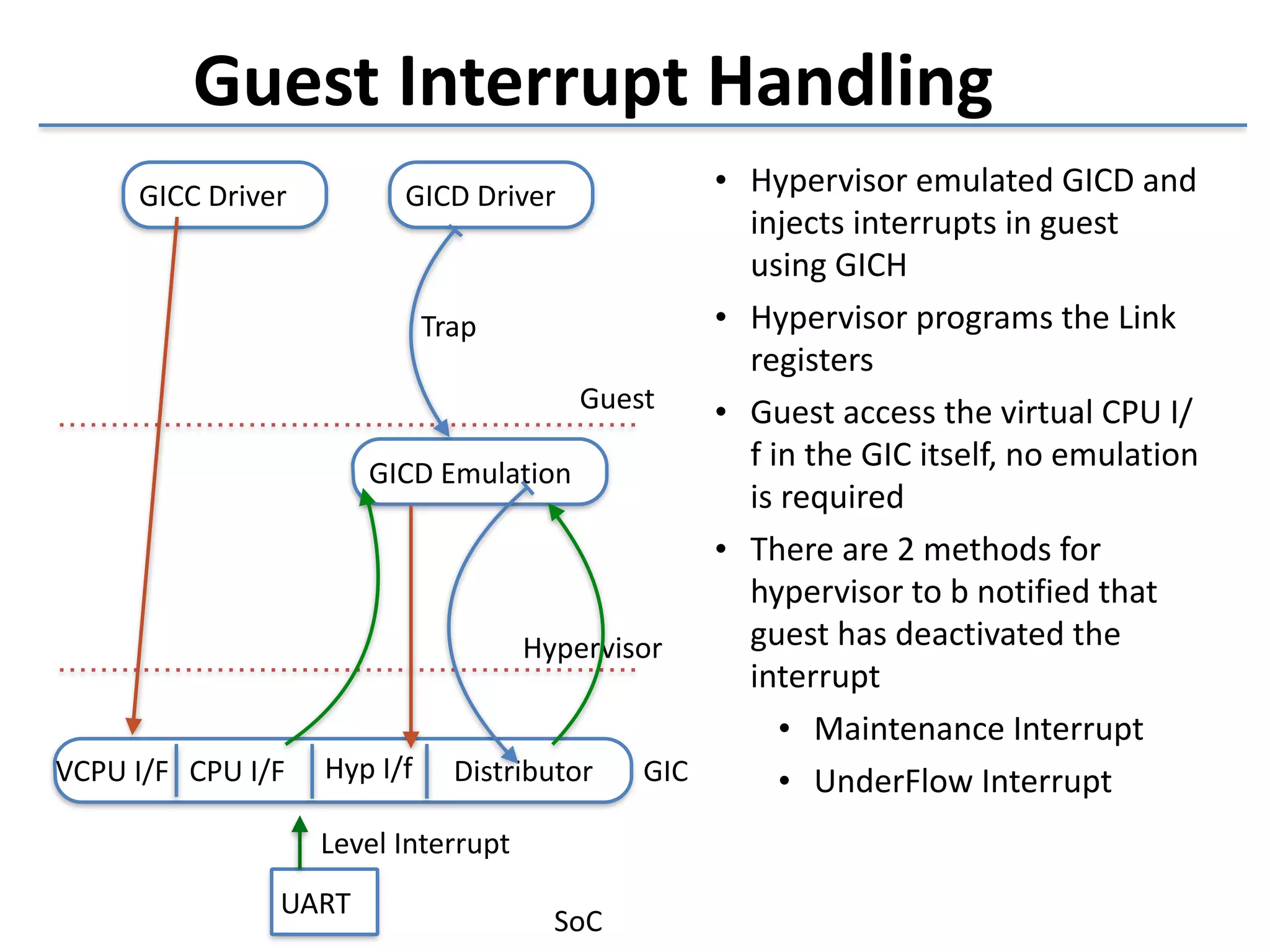
Guest 
Interrupt 
Handling 
• Hypervisor 
emulated 
GICD 
and 
injects 
interrupts 
in 
guest 
using 
GICH 
• Hypervisor 
programs 
the 
Link 
registers 
• Guest 
access 
the 
virtual 
CPU 
I/ 
f 
in 
the 
GIC 
itself, 
no 
emulation 
is 
required 
• There 
are 
2 
methods 
for 
hypervisor 
to 
b 
notified 
that 
guest 
has 
deactivated 
the 
interrupt 
• Maintenance 
Interrupt 
• UnderFlow 
Interrupt 
GICD 
Driver 
Guest 
Hypervisor 
VCPU 
I/F CPU 
I/F Hyp 
Trap 
I/f Distributor 
Level 
Interrupt 
UART SoC 
GIC 
GICD 
Emulation 
GICC 
Driver
• ARM 
Timer 
Virtualization 
provides 
a 
Physical 
timer 
register 
and 
a 
Virtual 
Timer 
register. 
Virtual 
Timer 
is 
an 
offset 
from 
physical 
timer 
• Hypervisor 
Programs 
the 
CNTVOFF 
register 
before 
guest 
is 
resumed. 
• ARM 
provides 
separate 
timer 
interrupt 
for 
hypervisor 
and 
guest. 
• Timer 
interrupt 
is 
injected 
in 
same 
way 
as 
other 
interrupts
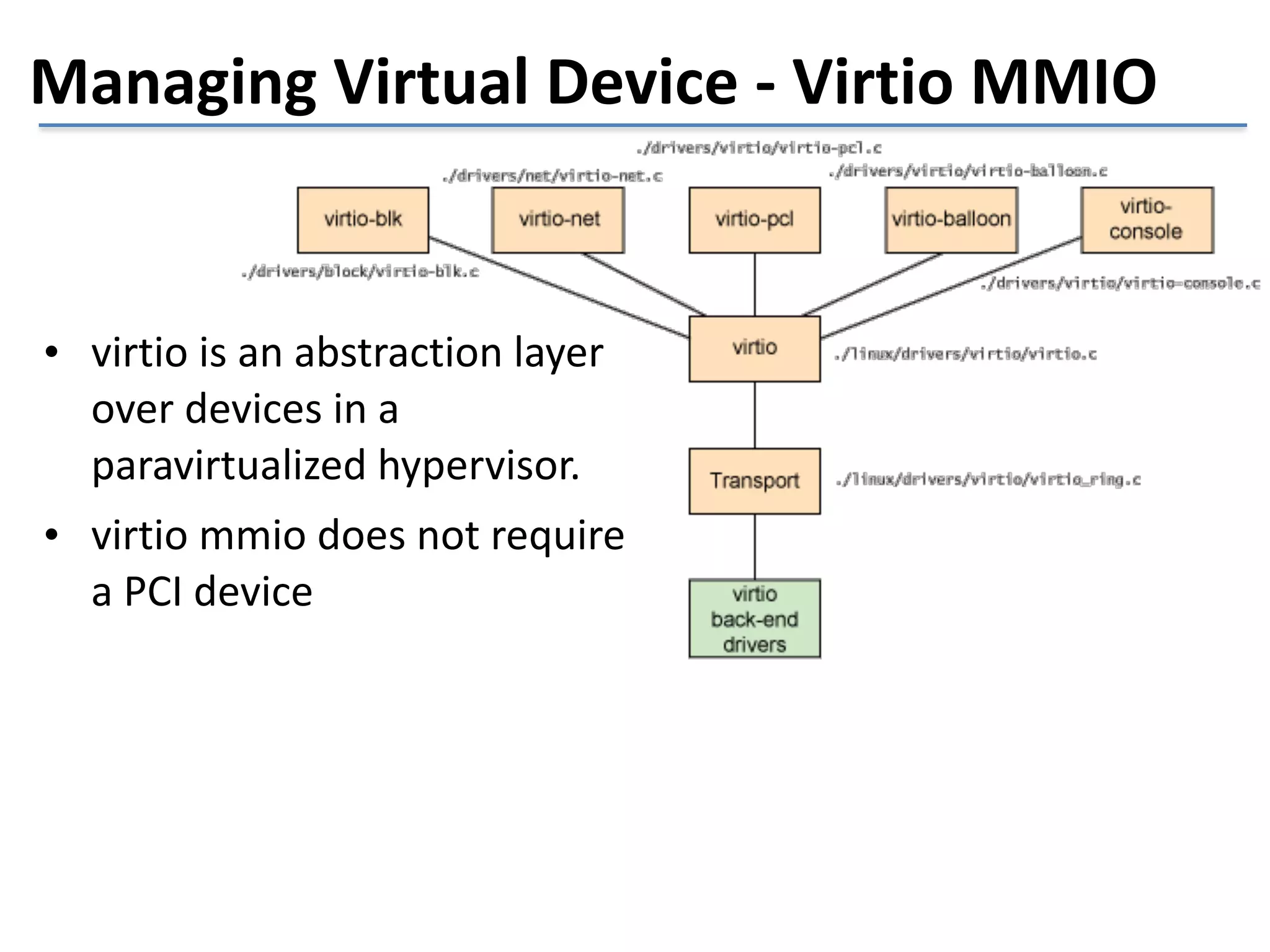
Managing 
Virtual 
Device 
-­‐ 
Virtio 
MMIO 
• virtio 
is 
an 
abstraction 
layer 
over 
devices 
in 
a 
paravirtualized 
hypervisor. 
• virtio 
mmio 
does 
not 
require 
a 
PCI 
device
15
Guest 
Debug 
Support 
• Debugging 
a 
guest 
can 
be 
done 
on 
hypervisor 
console 
• for 
dumping 
guest 
state 
on 
console 
• for 
setting 
software 
breakpoints 
• or 
gdb 
interface 
can 
be 
added 
in 
hypervisor 
to 
debug 
a 
guest
VM 
Management 
Summary 
• Context 
Save 
and 
Restore 
• Booting 
and 
Loading 
• Scheduling 
• VCPU 
Management 
• Remote 
Guest 
Image 
loading
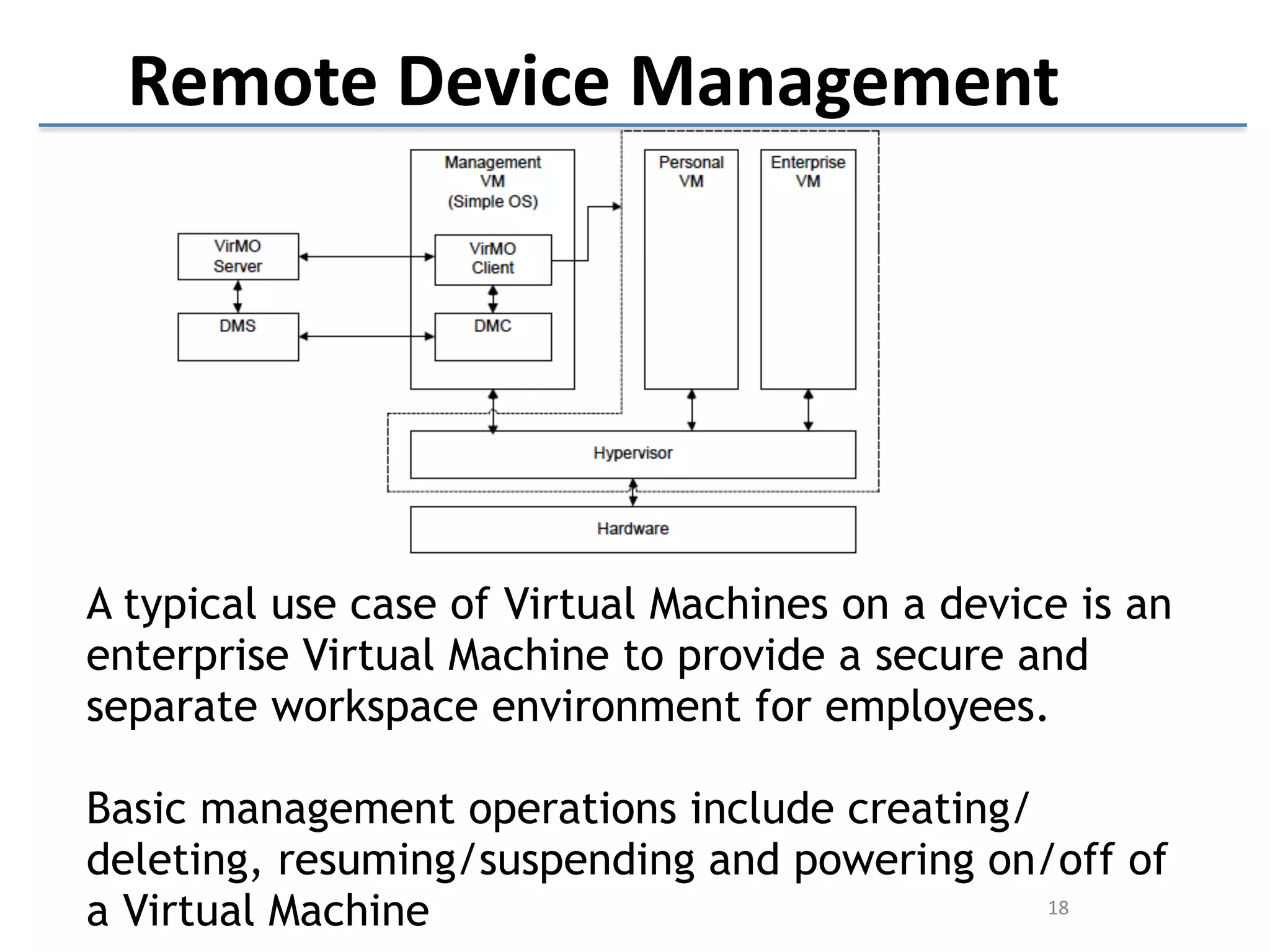
Remote 
Device 
Management 
A typical use case of Virtual Machines on a device is an 
enterprise Virtual Machine to provide a secure and 
separate workspace environment for employees. 
! 
Basic management operations include creating/ 
deleting, resuming/suspending and powering on/off of 
a Virtual Machine 
18
Questions

Embedded Systems Conference 2014 Presentation

  • 1.
    Challenges in designing a type 1 hypervisor for ARM v7 VE Manish Jaggi manish.jaggi@gmail.com http://in.linkedin.com/in/manishjaggi
  • 2.
    Hypervisor Layering in Software Stack • Type 1 HyperOne, Xen, PikeOS, OKL4, HyperV, Vmware ESX ! • Type 2 KVM, VirtualBox, Virtual PC, Parallels, BlueStacks Hypervisor Hardware UserSpace Kernel Hardware OS Kernel UserSpace Kernel Hypervisor VM1 VM2 UserSpace Kernel UserSpace
  • 3.
  • 4.
    HyperOne Microkernel Design.. VM2 Driver Device Drivers Hypervisor Hardware VM VM1 Root InterVM IPC Virtual Scheduling Memory Interrupt Routing Virtualization Stack Device Drivers Device Drivers
  • 5.
    ARM v7 Virtualization Extensions • Hypervisor Privilege Mode (PL2) NS • Different set of CP15 registers for hypervisor • Stage 2 MMU and SMMU • GIC Virtual CPU I/f • Timer Virtualization (Virtual Timer Interrupts for guest / hypervisor)
  • 6.
    Guest Stage 2 MMU Translation
  • 7.
  • 8.
  • 9.
    Bare Minimal Hypervisor • A hypervisor boots up like a normal smp os – MMU / GIC / UART / Timer drivers – Board specific / platform specific code – Needs a device tree – Has a console (shell) • Hypervisor functions – Trap guests accesses – Emulate – Load/run/suspend/resume guests
  • 10.
    IPC Channels vm_t Core_regs Cp15_regs interrupts vcpu_t VM State vGIC State virtual devices state Memory Assigned Hypervisor keeps the state of each VM and its associated vcpus. ! A VM has a machine definition and physical and virtual devices connected to it ! State of virtual devices is kept with hypervisor like VGIC, console, network and other virtual devices. ! VCPU has cpu_regs context, the cp15 regs and the descriptors of interrupts injected into the vcpu. ! This state is saved and restored as and when the VM or vcpu is scheduled out / in. ! There are two types of context saves, Shallow and deep.
  • 11.
    Hypervisor Exception Handling • Hypervisor handles exceptions originated from hypervisor mode • Hypervisor also handles the exceptions originated from Guest Mode, these are routed to hypervisor as hypervisor trap and hypervisor identifies the type of exception using a syndrome register. • Virtual Devices’ Memory mapped address space access is trapped by hypervisor and the read write is emulated in hypervisor mode • Guests can also issue hyper calls to the hypervisor. These are mainly used by para virtualised drivers. • Privileged instructions such as WFI and WFE trap into hypervisor.
  • 12.
    Guest Interrupt Handling • Hypervisor emulated GICD and injects interrupts in guest using GICH • Hypervisor programs the Link registers • Guest access the virtual CPU I/ f in the GIC itself, no emulation is required • There are 2 methods for hypervisor to b notified that guest has deactivated the interrupt • Maintenance Interrupt • UnderFlow Interrupt GICD Driver Guest Hypervisor VCPU I/F CPU I/F Hyp Trap I/f Distributor Level Interrupt UART SoC GIC GICD Emulation GICC Driver
  • 13.
    • ARM Timer Virtualization provides a Physical timer register and a Virtual Timer register. Virtual Timer is an offset from physical timer • Hypervisor Programs the CNTVOFF register before guest is resumed. • ARM provides separate timer interrupt for hypervisor and guest. • Timer interrupt is injected in same way as other interrupts
  • 14.
    Managing Virtual Device -­‐ Virtio MMIO • virtio is an abstraction layer over devices in a paravirtualized hypervisor. • virtio mmio does not require a PCI device
  • 15.
  • 16.
    Guest Debug Support • Debugging a guest can be done on hypervisor console • for dumping guest state on console • for setting software breakpoints • or gdb interface can be added in hypervisor to debug a guest
  • 17.
    VM Management Summary • Context Save and Restore • Booting and Loading • Scheduling • VCPU Management • Remote Guest Image loading
  • 18.
    Remote Device Management A typical use case of Virtual Machines on a device is an enterprise Virtual Machine to provide a secure and separate workspace environment for employees. ! Basic management operations include creating/ deleting, resuming/suspending and powering on/off of a Virtual Machine 18
  • 19.