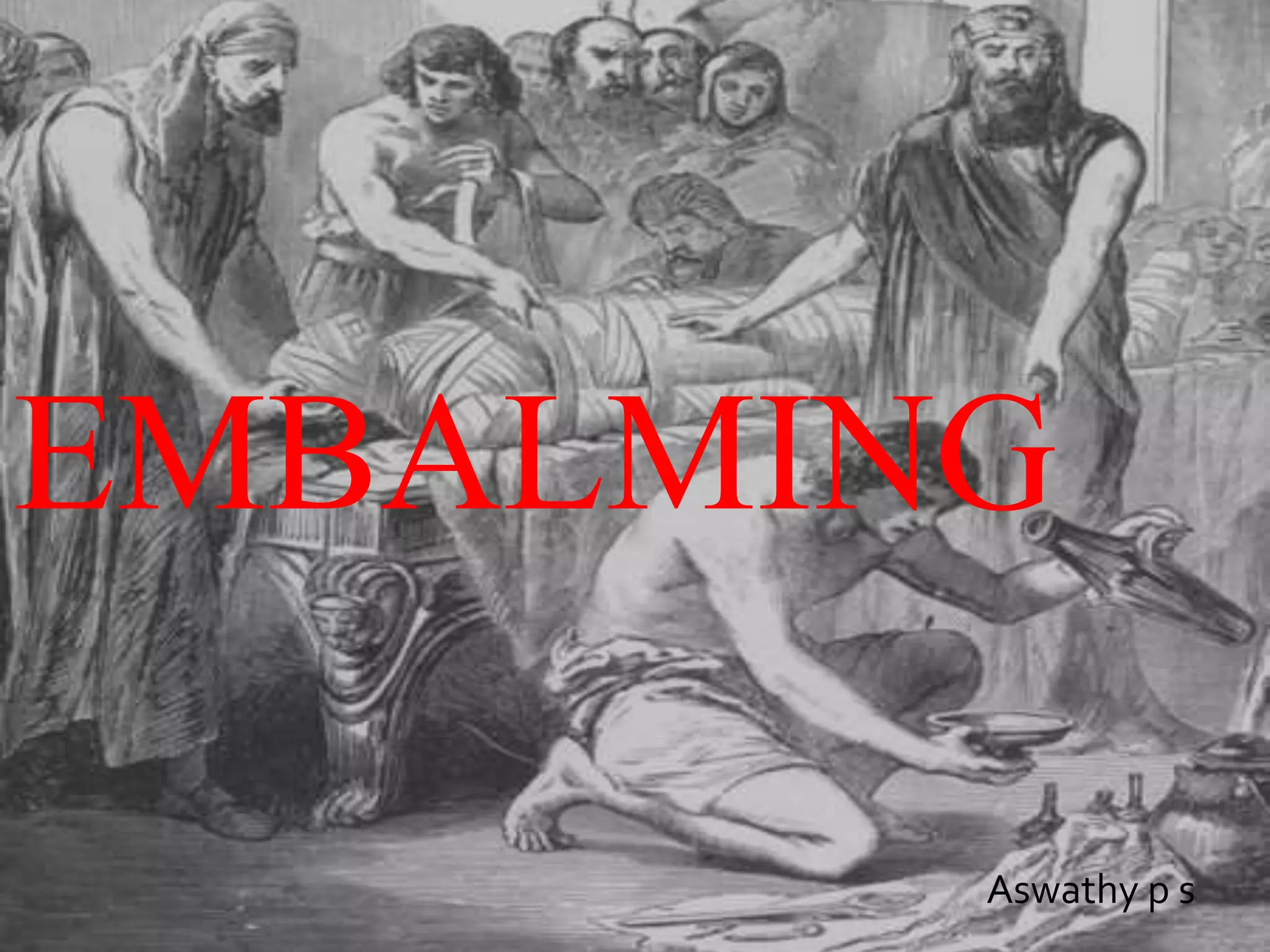
EMBALMING
Aswathy p s
contents
 Definition
 Effects
 indications
 Embalming fluid
 Samples
 Types
 Medico legal aspects
Definition
 Embalming is the treatment of the
dead body with antiseptics and
preservatives to prevent putrefaction
and preserve the body.
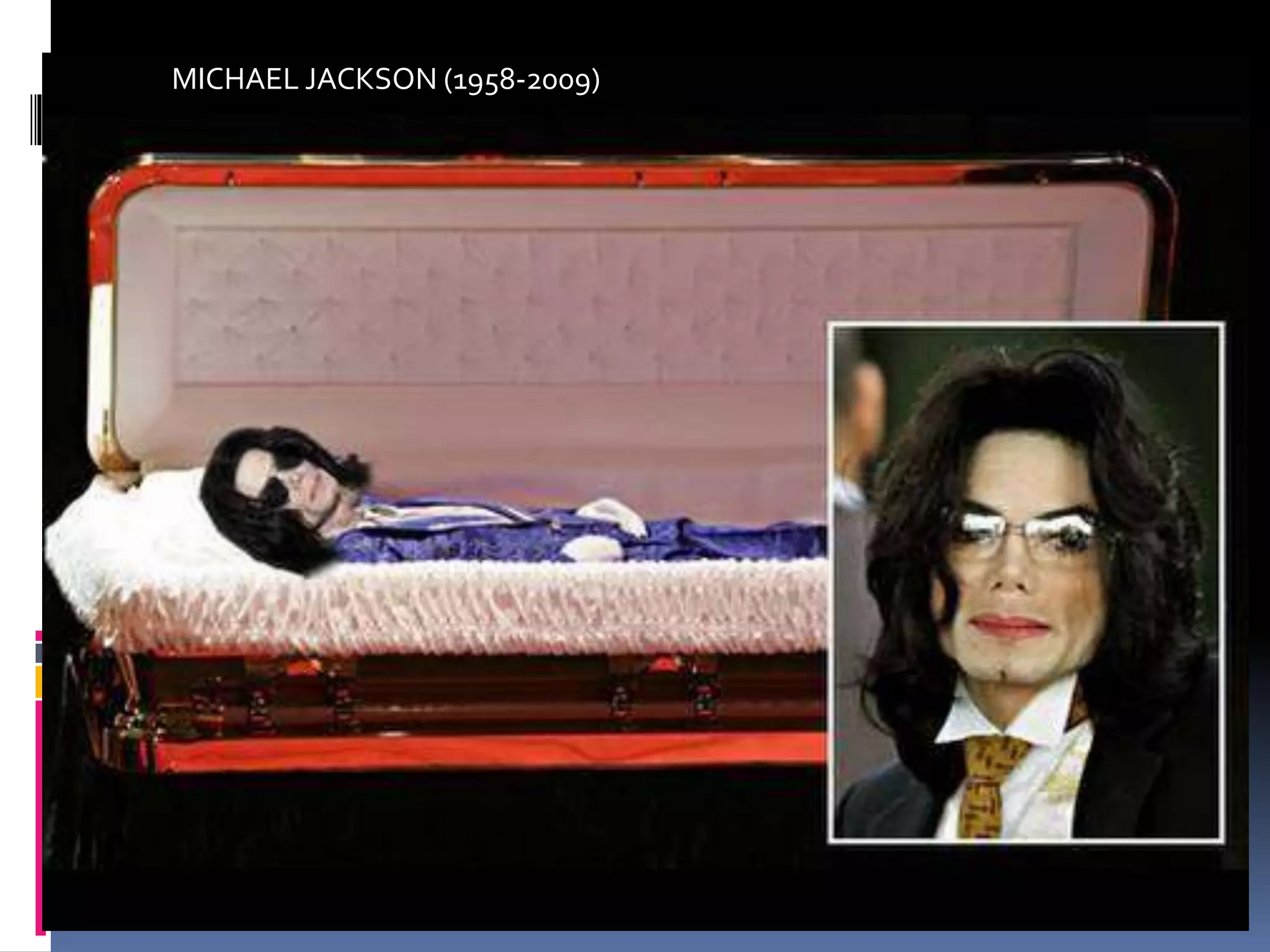
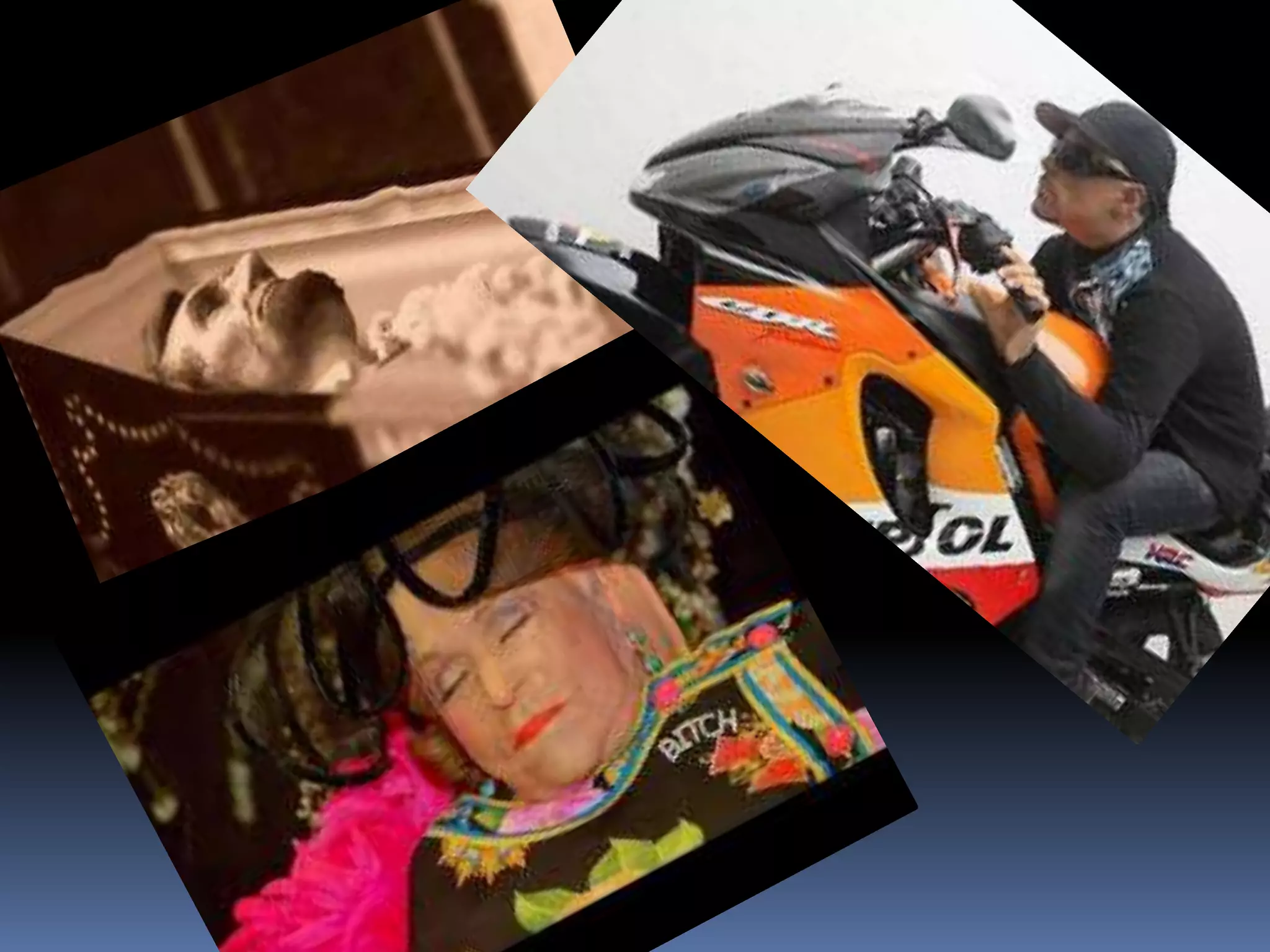
MICHAEL JACKSON (1958-2009)
History
 Originated in egypt around 3200 B.C
Effects of embalming
 Alters the appearance of the body,
tissues and organs, making it difficult
to interpret any injury or disease.
 Proteins are coagulated
 Tissues are fixed
 Organs are bleached and hardened
 Blood converted in to a brownish mass
 it completely destroys cyanide, alcohol
and many other substances
;determination of presence of many other
alkaloids and organic poisons become
very difficult.
 Blood grouping can’t be done ; thrombi
and emboli will be dislocated and washed
away.
 Produces a chemical stiffening similar to
rigor mortis and normal rigor doesn’t
develop; embalming rigidity is permenant
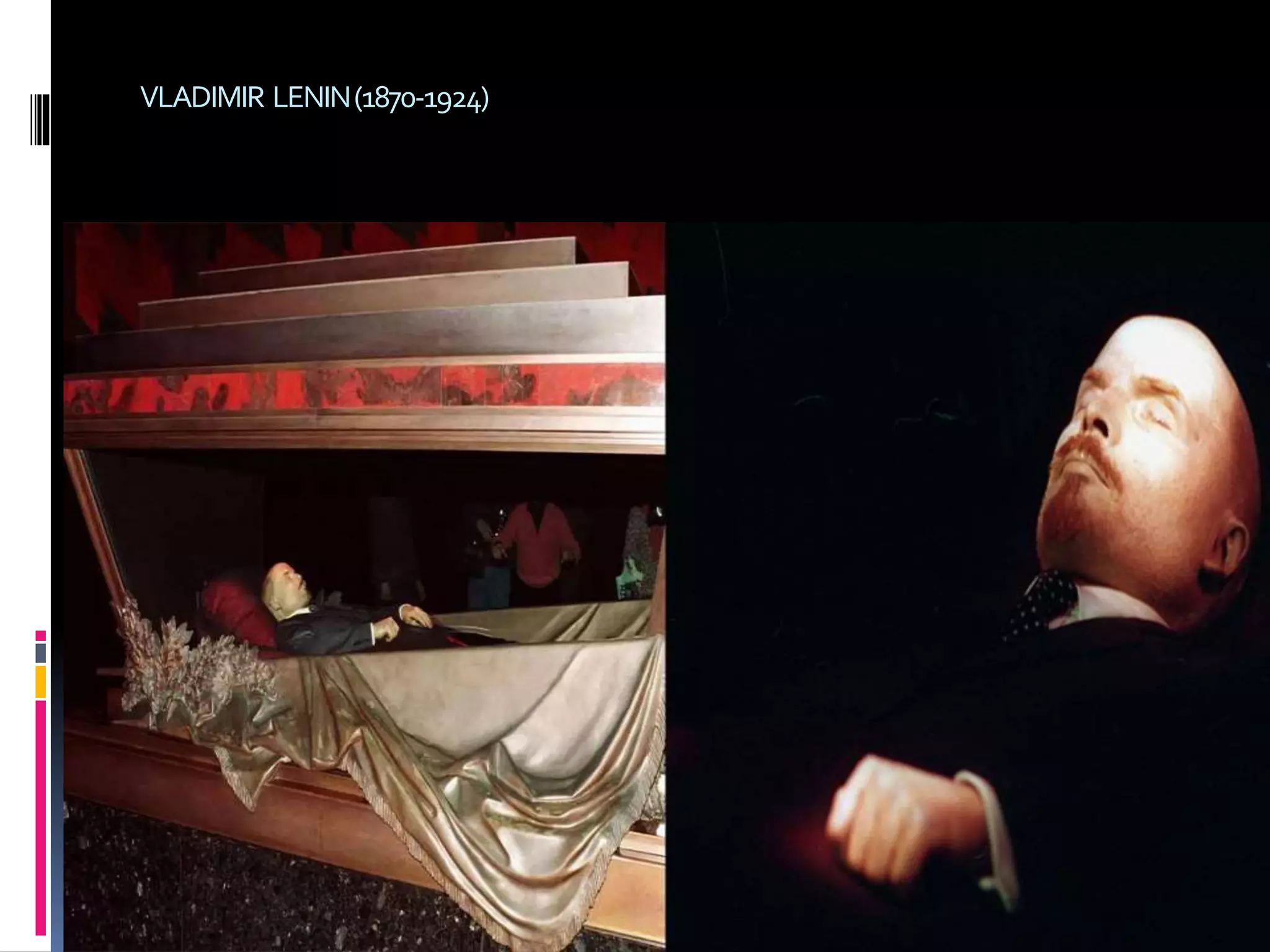
VLADIMIR LENIN(1870-1924)
Indications
 when the body has to be transported to distant
places
 For public or private viewing as part of funeral
ceremony
 Preserved for medical purposes in anatomical
laboratory
 Embalming should be done within 6 hrs of death to
get desired effect
 A dead body of 70kg requires 10 L of embalming
fluid of which 10% will be lost through various
drain and purging
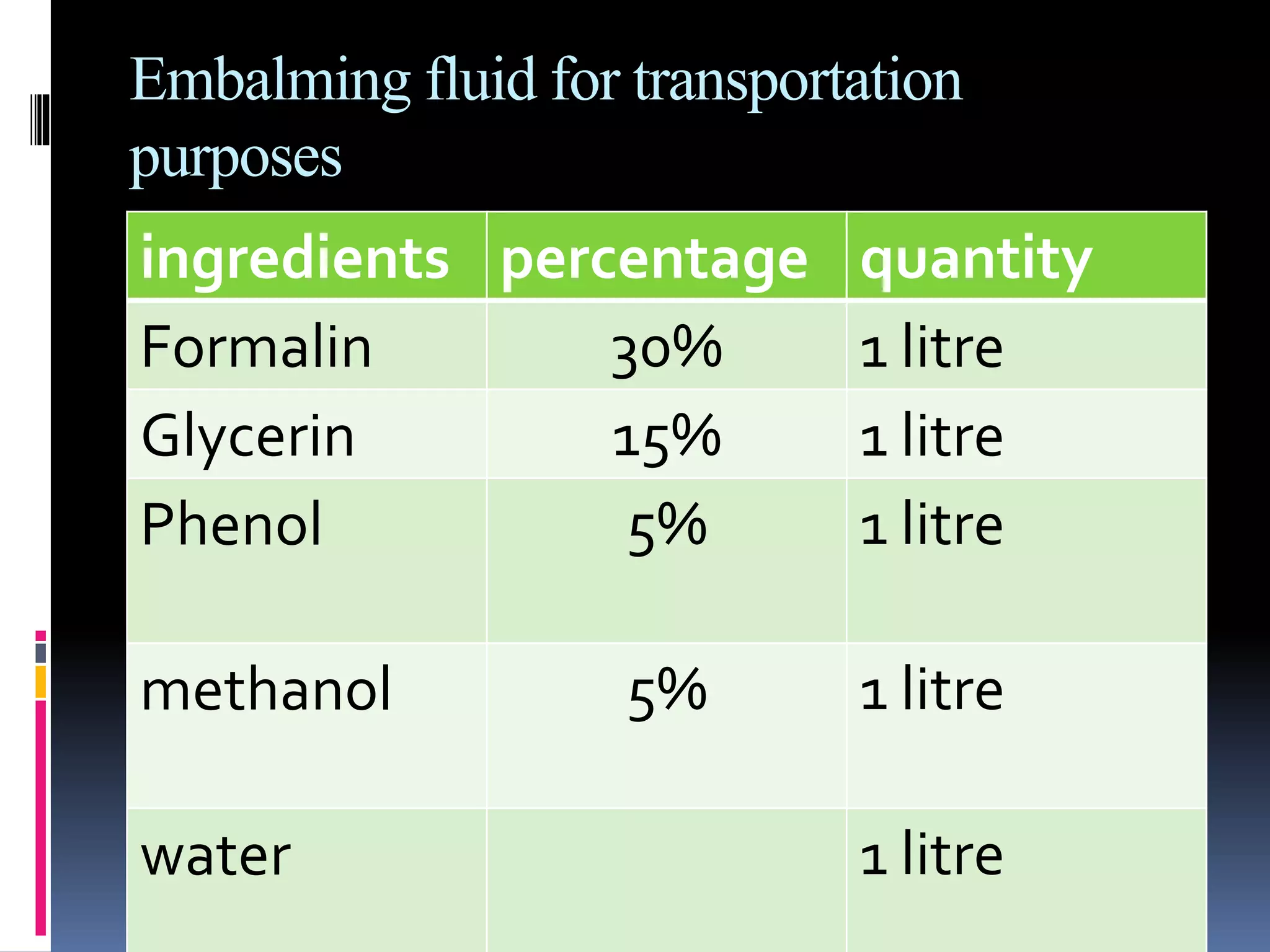
Embalming fluid for transportation
purposes
ingredients percentage quantity
Formalin 30% 1 litre
Glycerin 15% 1 litre
Phenol 5% 1 litre
methanol 5% 1 litre
water 1 litre
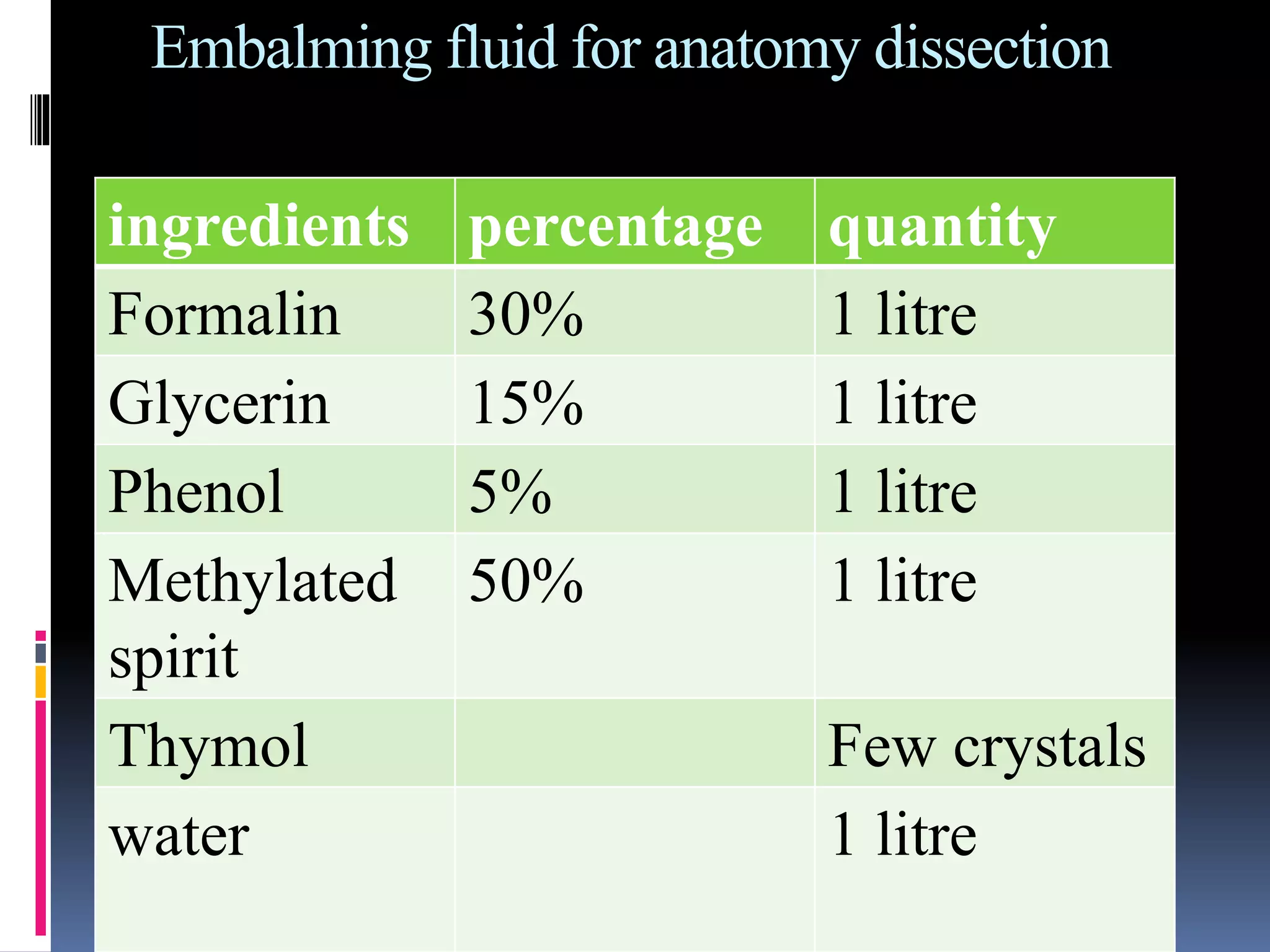
Embalming fluid for anatomy dissection
ingredients percentage quantity
Formalin 30% 1 litre
Glycerin 15% 1 litre
Phenol 5% 1 litre
Methylated
spirit
50% 1 litre
Thymol Few crystals
water 1 litre
Ideal samples for screening
for toxicology
 Vitreous humour
 Synovial fluid
 Bile
 Muscle mass from psoas and gluteal
region
Types of embalming
1 Arterial embalming
2 Cavity embalming
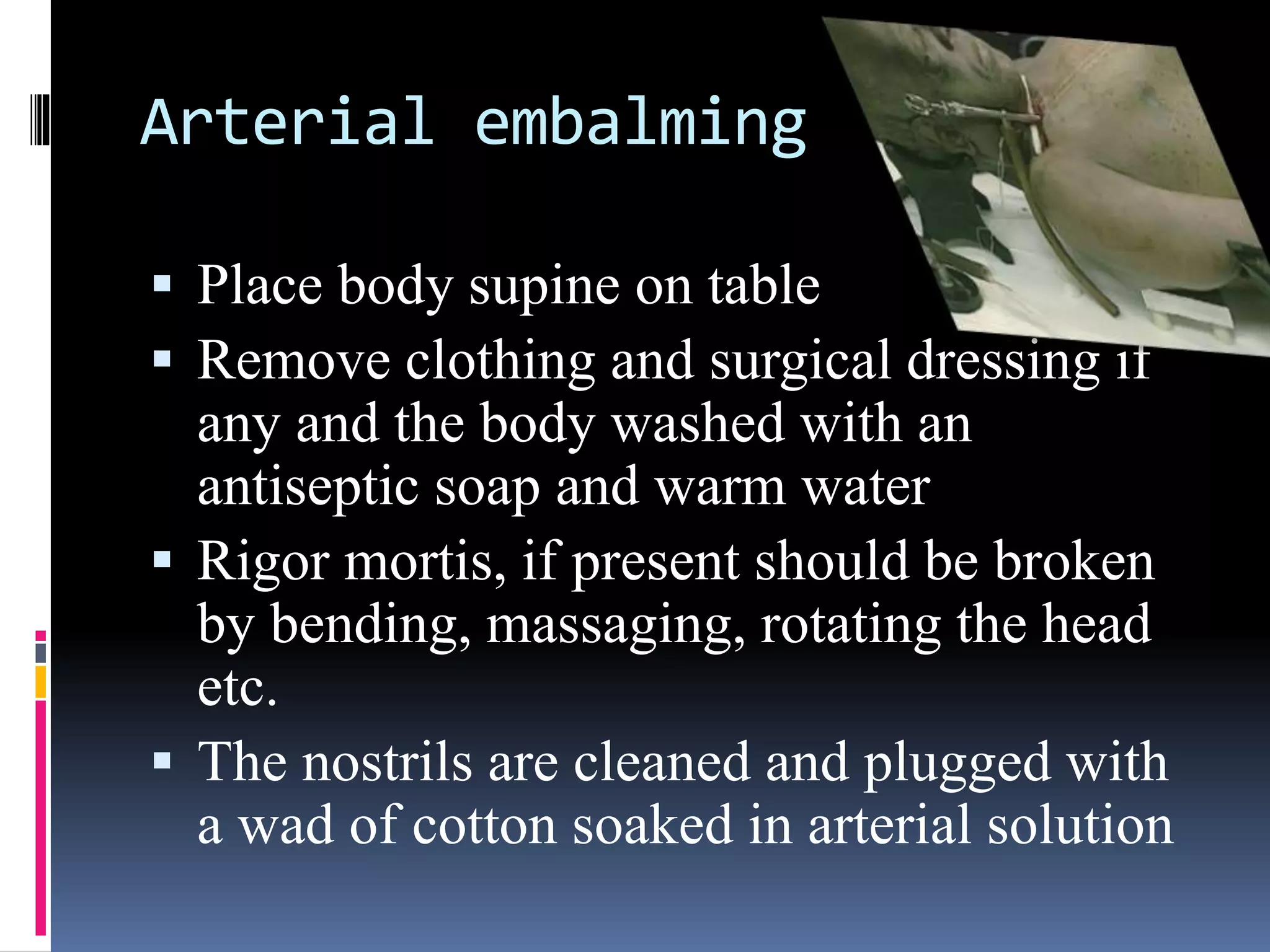
Arterial embalming
 Place body supine on table
 Remove clothing and surgical dressing if
any and the body washed with an
antiseptic soap and warm water
 Rigor mortis, if present should be broken
by bending, massaging, rotating the head
etc.
 The nostrils are cleaned and plugged with
a wad of cotton soaked in arterial solution
 Cheek may be filled out with cotton
soaked in arterial solution
 Mouth and eyelid should be closed
 If eyeball is sunken arterial solution
should be injected into the orbit and
eyeball
 Head should be elevated 8-10cm and
placed on head rest and feet raised to
facilitate drainage
 Anal orifice and vagina plugged similarly
Choice of vessels
 The nearer the vessel to the heart, the
better the result specially for drainage
 Single point injection leave the patches
of areas unfixed by the embalming
fluid
 Multiple site injection used in
traumatic death, autopsied case and
postmortem mutilation
 ‘six point injection involve
R/L common carotid A for head and
neck
R/L axillary A for upper limb
R/L femoral A for lower limb
 On completion the vessel should be
ligated to prevent leakage of
embalming fluid
 Each side of face injected seperately to
prevent distortion of face due to over
injection
 After injection of one A it should be
ligated before injecting to other A
 All drainage point should be ligated
after completion to prevent leak
INJECTION
METHODS
Arterial injection
 Forcing of fluid in an artery to reach
the tissues through the arteioles and
capillaries.
 Diffusion occurs into cells and tissues
at the capillary level.
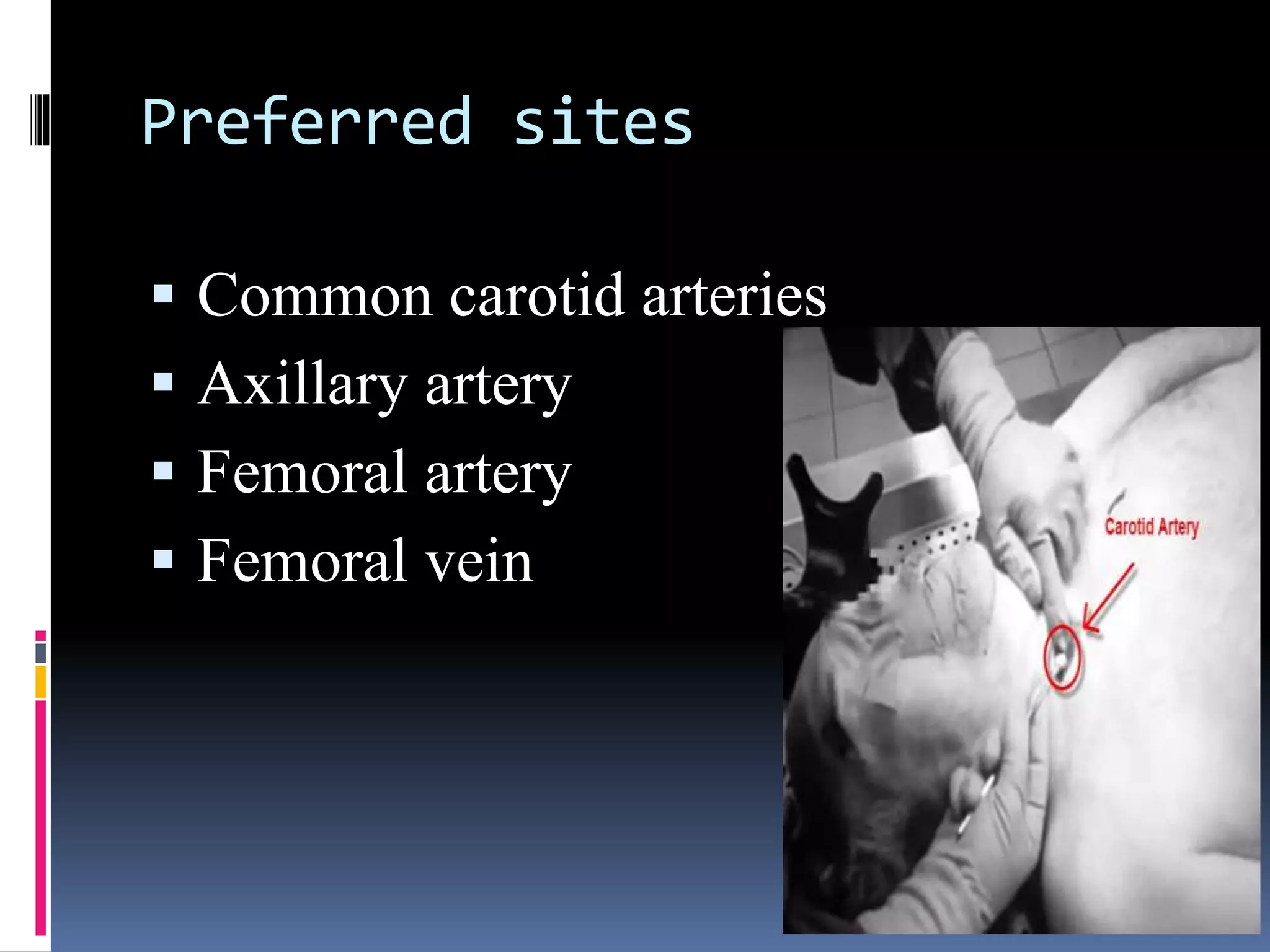
Preferred sites
 Common carotid arteries
 Axillary artery
 Femoral artery
 Femoral vein
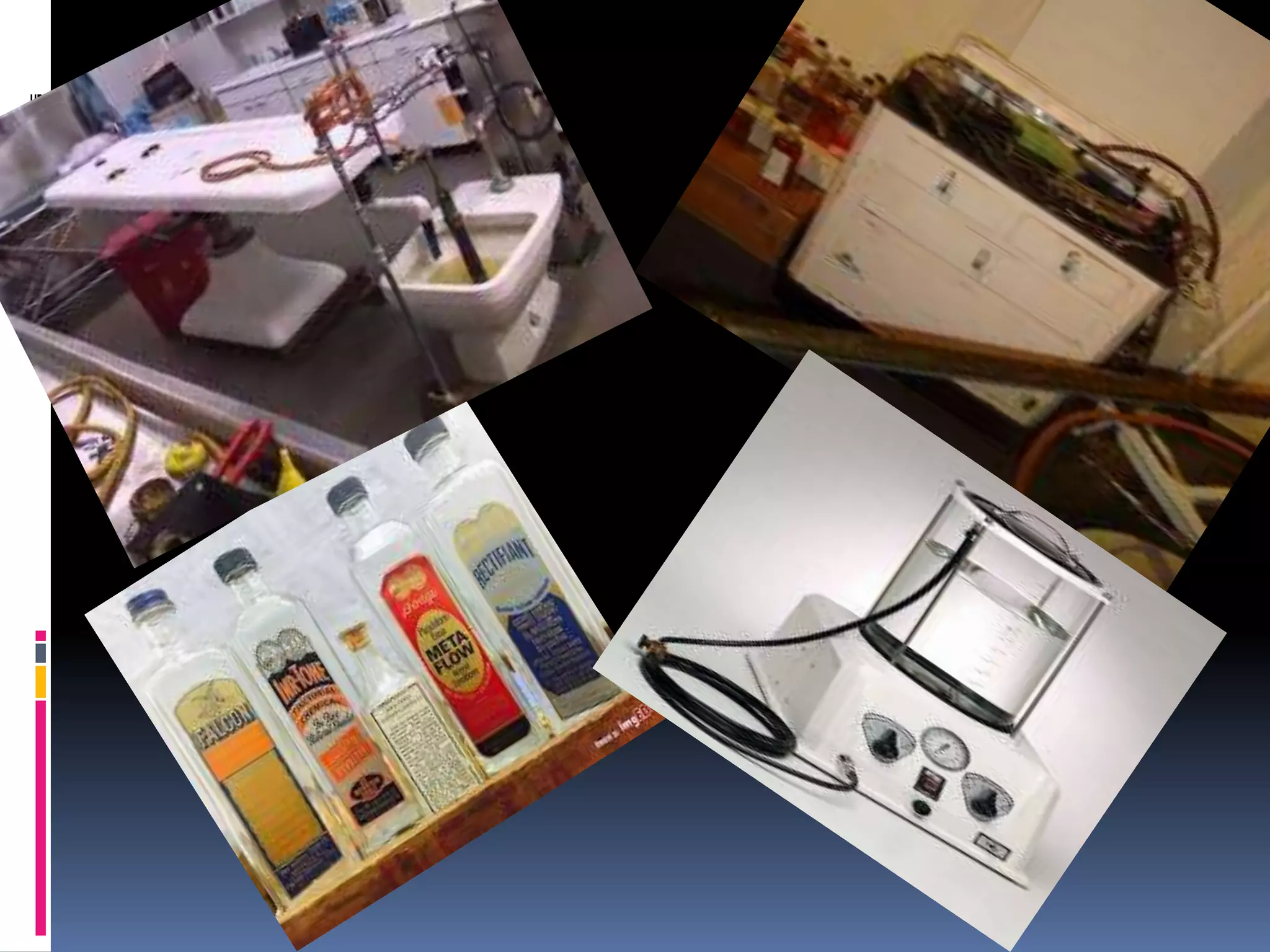
Types
1 Hand/ Foot pump
2 Stirrup pump
3 Bulb syringe
 A manual pump similar to Higginson’s
syringe
 Bulb type rubber syringe and rubber
tubing at either end
 Valves allow suction on one side and
ejection on other side
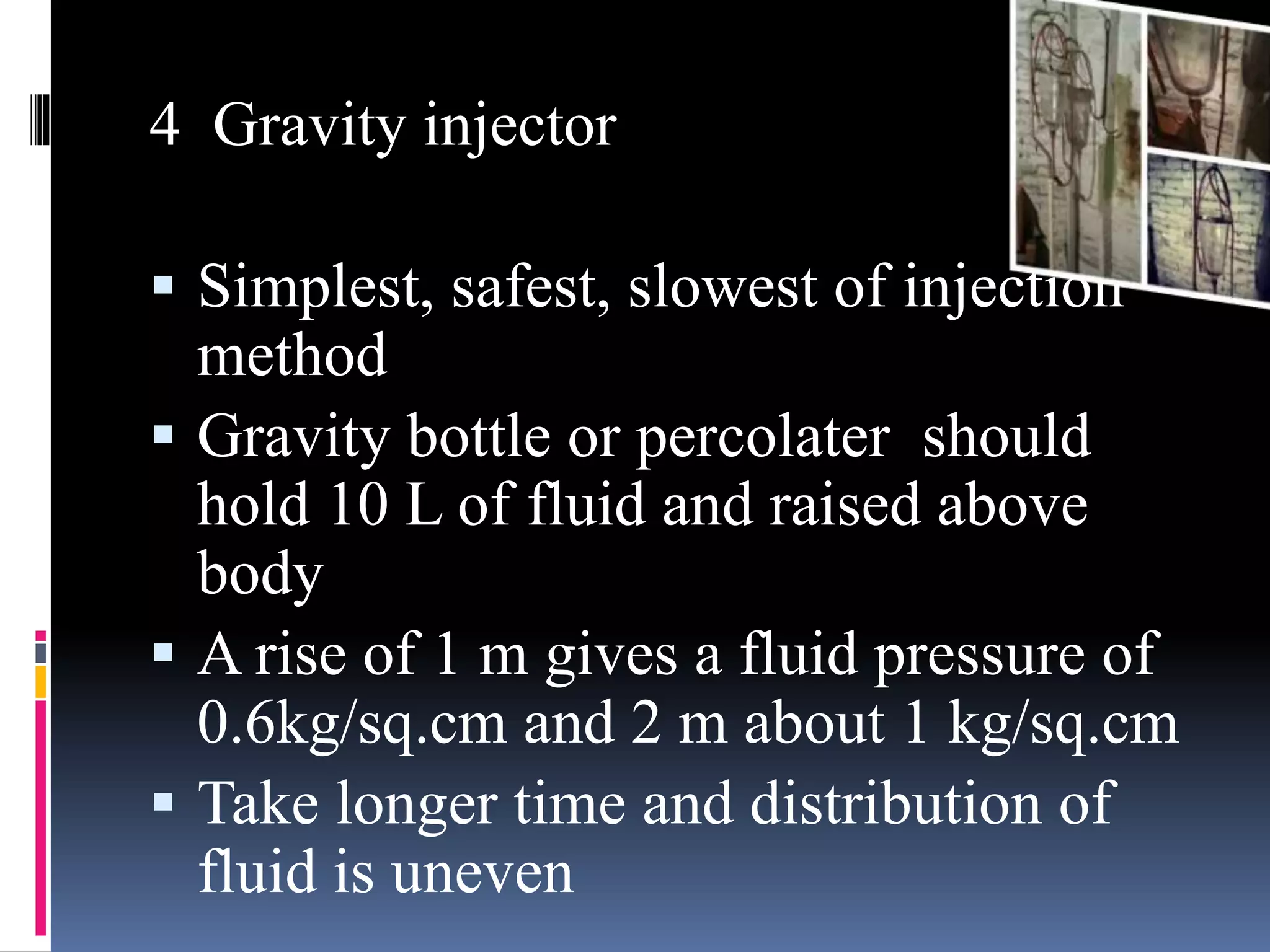
4 Gravity injector
 Simplest, safest, slowest of injection
method
 Gravity bottle or percolater should
hold 10 L of fluid and raised above
body
 A rise of 1 m gives a fluid pressure of
0.6kg/sq.cm and 2 m about 1 kg/sq.cm
 Take longer time and distribution of
fluid is uneven
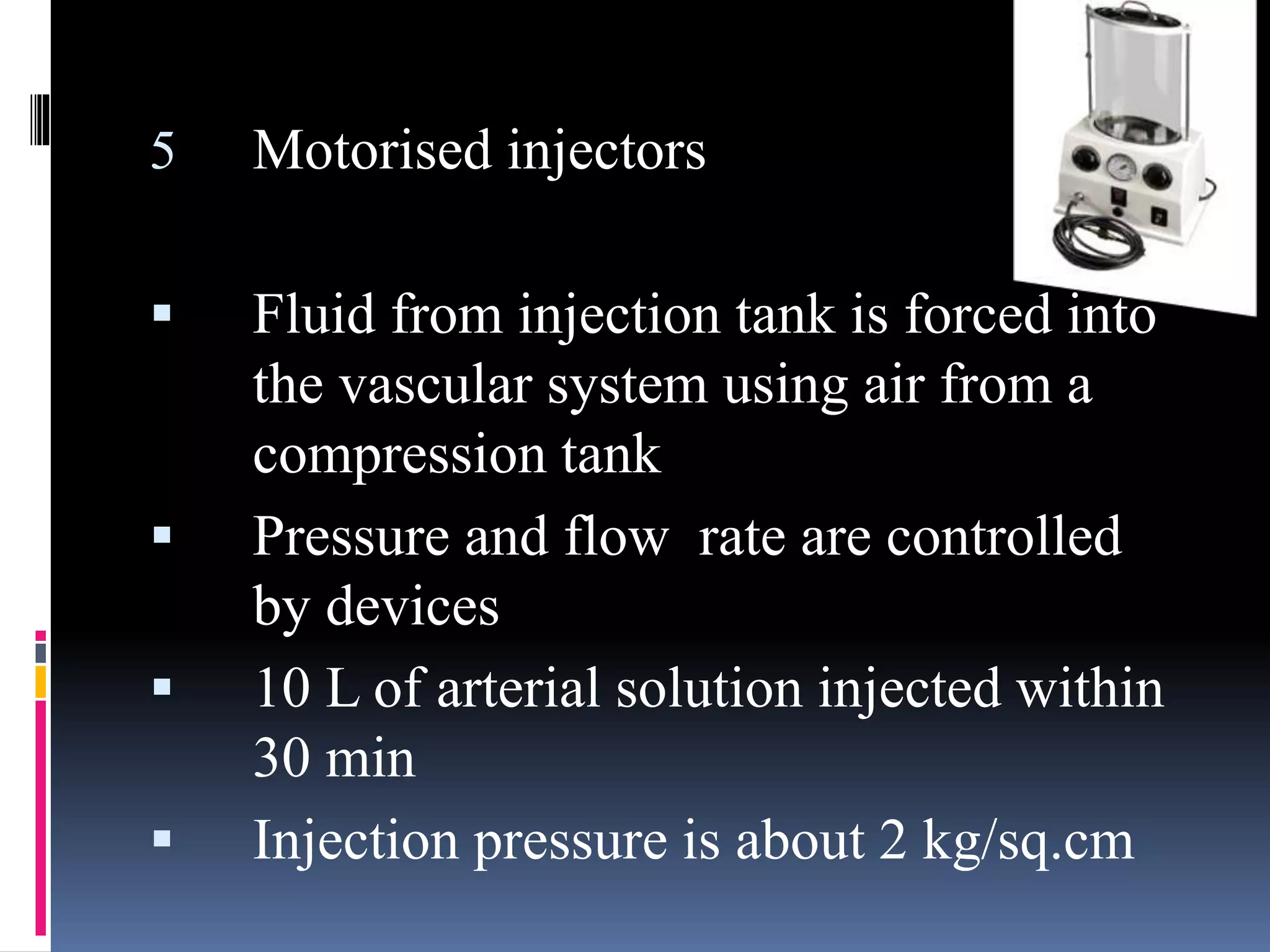
5 Motorised injectors
 Fluid from injection tank is forced into
the vascular system using air from a
compression tank
 Pressure and flow rate are controlled
by devices
 10 L of arterial solution injected within
30 min
 Injection pressure is about 2 kg/sq.cm
SRIDEVI (1963-2018)
Method of injection
1 continuous injection and drainage
2 Continuous injection with disrupted
drainage
3 Alternate injection and drainage
4 Discontinuous injection and
drainage
Continuous injection and
drainage
 Arterial injection is given continuosly
 Vein tube kept open throughout
injection
 Embalming time much shorter
 Venous drainage and tissue saturation
is poor
 Least satisfactory
Continuous injection with
disrupted drainage
 Injection is continuous with vein tube
closed
 Blood in the vein build up a resistance for
arterial flow which help in better
diffusion of fluid
 Thick blood is discharged when drain tube
is opened
 Better than continuous discharge and
drainage
Alternate injection and
drainage
 Arterial fluid is injected for sometime
with drain tube closed
 Injection is stopped when superficial
veins swell, and drain is opened
 When the flow of blood from the drain
tube stop, it is closed and injection
started
 This process repeated several time
Discontinuous injection and
drainage
 This consists of repeated arterial injection
of small quantities at 2 hrs interval
 The total quantity of injection fluid is in
excess of ordinary injection done at a time
 Injection is continued for ¾ time
 Venous drain tube which is closed is
opened a little before and open a little
after starting another dose of injection
 Best method
Cavity embalming(closed
cavity treatment)
 Cavity treatment should be done after ½-1
hrs, which allow for the hardening of the
viscera and facilitate piercing of the gut
 A motorised aspirator if available is better
 A 30cm long trocar is inserted in to the
abdomen through small incision 5-6cm
above umbilicus in midline
 Trocar is first directed upward,
backward and to the left to pierce and
aspirate the stomach
 Trocar is slightly withdrawn and
pushed up toward right to pierce right
side of heart
 Next the right and left pleural sacs are
reached by piercing diaphragm and
aspirated
 Next several puncture are made in
small intestine, caecum, colon to suck
out content
 Urinary bladder, sigmoid colon and
rectum should be aspirated
 1 L of cavity fluid should be injected
in abdominal and 1 L in thoracic
cavity distributing it evenly throughout
the cavities
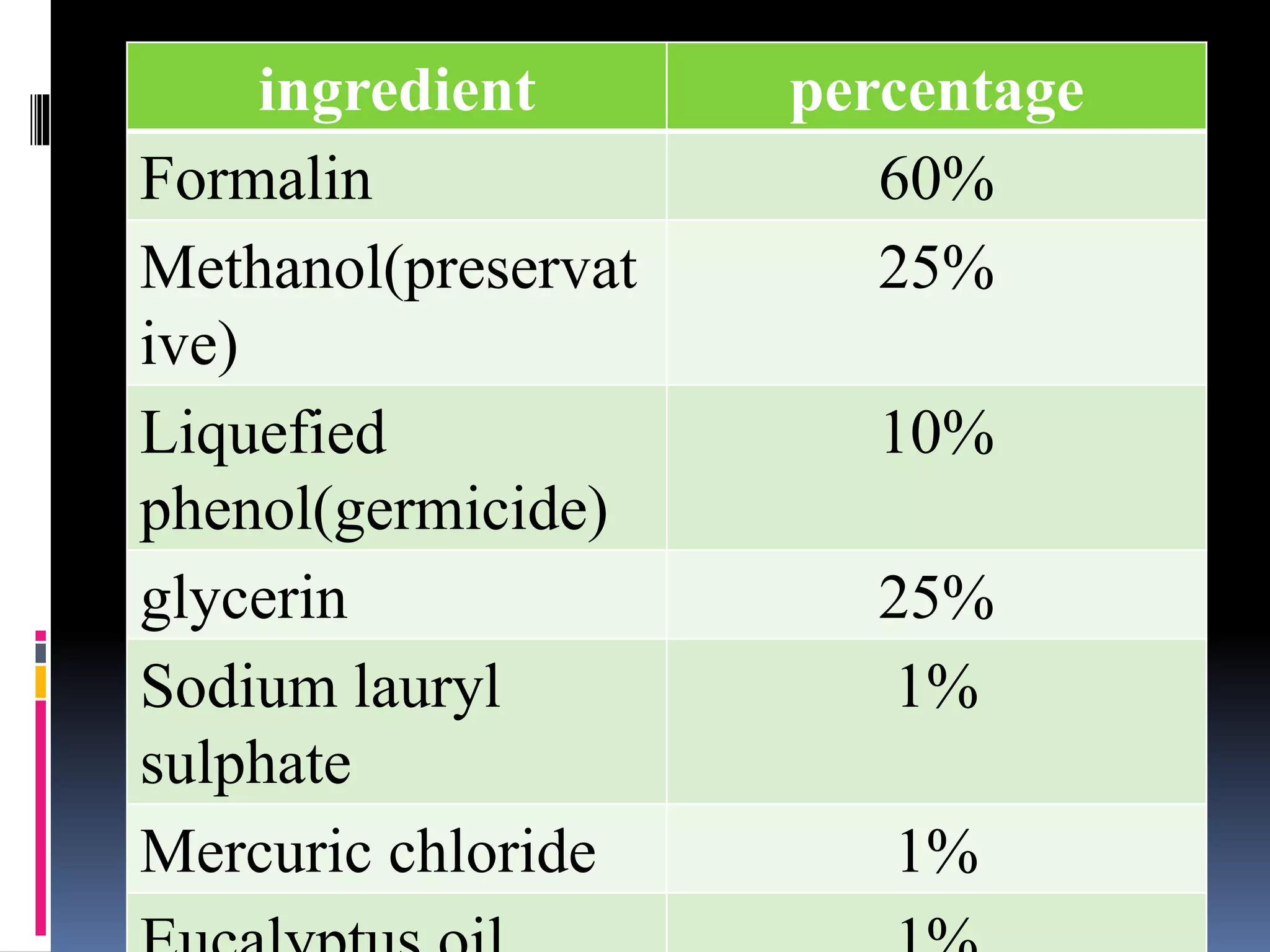
ingredient percentage
Formalin 60%
Methanol(preservat
ive)
25%
Liquefied
phenol(germicide)
10%
glycerin 25%
Sodium lauryl
sulphate
1%
Mercuric chloride 1%
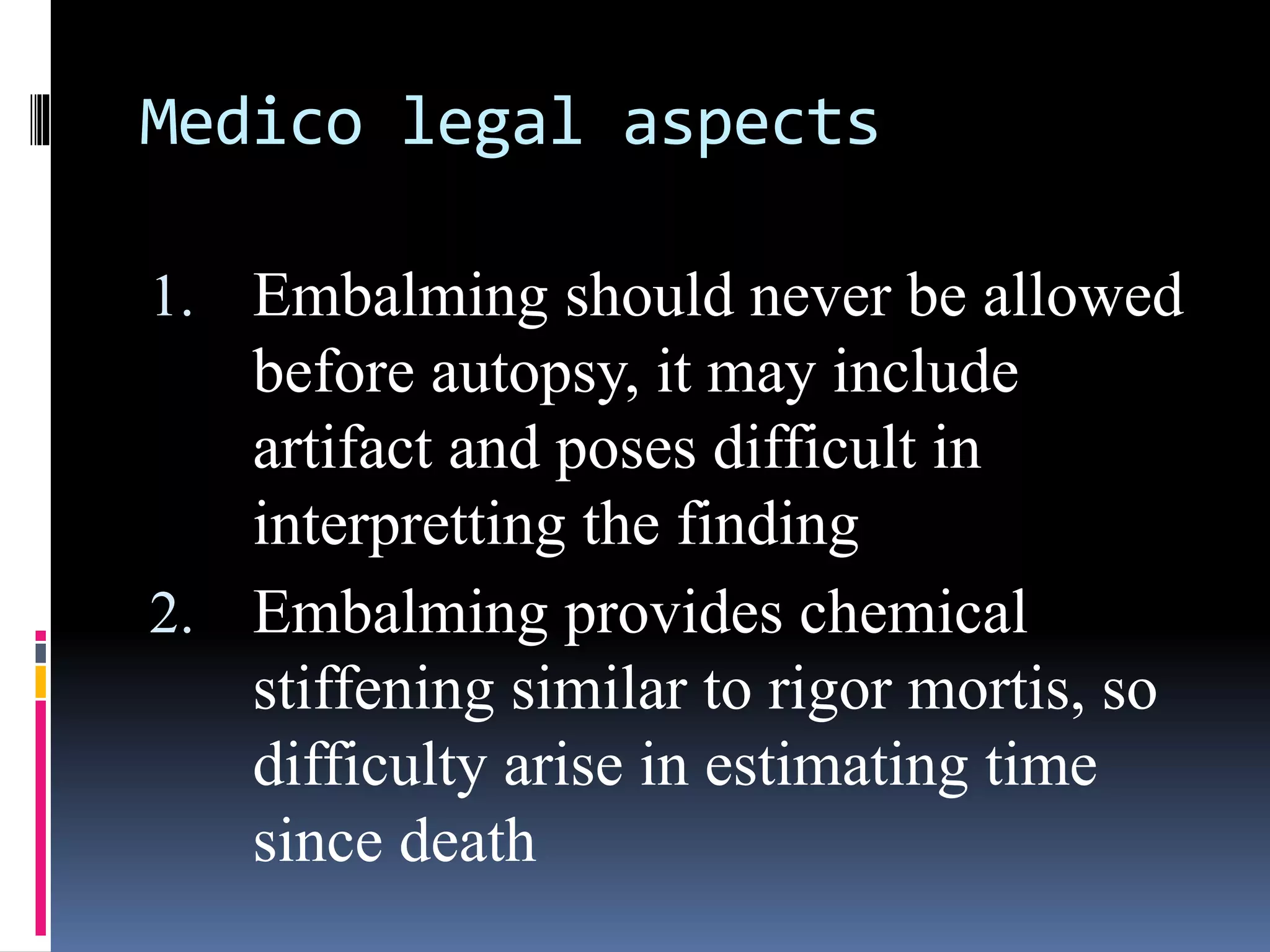
Medico legal aspects
1. Embalming should never be allowed
before autopsy, it may include
artifact and poses difficult in
interpretting the finding
2. Embalming provides chemical
stiffening similar to rigor mortis, so
difficulty arise in estimating time
since death
3. Embalming alter appearance of the body so
interpretation of injuries become difficult
4. Embalming destroys cyanide, alcohol, opiates,
CO thus toxological analysis become useless or
difficult
5. Embalming kills bacteria so bacteriologic
evaluation become useless
6. Due to embalming blood group cannot be
made out
7. Detection of thrombus or embolism are not
possible
8. The dimensions of wounds may be modified
by the embalmer or new wounds may be
produced due to use of trocher
Let’s recall....
 Definition
 Effects
 Indications
 Embalming fluid
 Samples
 Types
 Medico legal aspects
Embalming all points

Embalming all points

  • 1.
  • 2.
    contents  Definition  Effects indications  Embalming fluid  Samples  Types  Medico legal aspects
  • 3.
    Definition  Embalming isthe treatment of the dead body with antiseptics and preservatives to prevent putrefaction and preserve the body.
  • 4.
  • 5.
    History  Originated inegypt around 3200 B.C
  • 6.
    Effects of embalming Alters the appearance of the body, tissues and organs, making it difficult to interpret any injury or disease.  Proteins are coagulated  Tissues are fixed  Organs are bleached and hardened  Blood converted in to a brownish mass
  • 7.
     it completelydestroys cyanide, alcohol and many other substances ;determination of presence of many other alkaloids and organic poisons become very difficult.  Blood grouping can’t be done ; thrombi and emboli will be dislocated and washed away.  Produces a chemical stiffening similar to rigor mortis and normal rigor doesn’t develop; embalming rigidity is permenant
  • 8.
  • 9.
    Indications  when thebody has to be transported to distant places  For public or private viewing as part of funeral ceremony  Preserved for medical purposes in anatomical laboratory  Embalming should be done within 6 hrs of death to get desired effect  A dead body of 70kg requires 10 L of embalming fluid of which 10% will be lost through various drain and purging
  • 11.
    Embalming fluid fortransportation purposes ingredients percentage quantity Formalin 30% 1 litre Glycerin 15% 1 litre Phenol 5% 1 litre methanol 5% 1 litre water 1 litre
  • 12.
    Embalming fluid foranatomy dissection ingredients percentage quantity Formalin 30% 1 litre Glycerin 15% 1 litre Phenol 5% 1 litre Methylated spirit 50% 1 litre Thymol Few crystals water 1 litre
  • 13.
    Ideal samples forscreening for toxicology  Vitreous humour  Synovial fluid  Bile  Muscle mass from psoas and gluteal region
  • 15.
    Types of embalming 1Arterial embalming 2 Cavity embalming
  • 16.
    Arterial embalming  Placebody supine on table  Remove clothing and surgical dressing if any and the body washed with an antiseptic soap and warm water  Rigor mortis, if present should be broken by bending, massaging, rotating the head etc.  The nostrils are cleaned and plugged with a wad of cotton soaked in arterial solution
  • 17.
     Cheek maybe filled out with cotton soaked in arterial solution  Mouth and eyelid should be closed  If eyeball is sunken arterial solution should be injected into the orbit and eyeball  Head should be elevated 8-10cm and placed on head rest and feet raised to facilitate drainage  Anal orifice and vagina plugged similarly
  • 18.
    Choice of vessels The nearer the vessel to the heart, the better the result specially for drainage  Single point injection leave the patches of areas unfixed by the embalming fluid  Multiple site injection used in traumatic death, autopsied case and postmortem mutilation
  • 19.
     ‘six pointinjection involve R/L common carotid A for head and neck R/L axillary A for upper limb R/L femoral A for lower limb  On completion the vessel should be ligated to prevent leakage of embalming fluid
  • 20.
     Each sideof face injected seperately to prevent distortion of face due to over injection  After injection of one A it should be ligated before injecting to other A  All drainage point should be ligated after completion to prevent leak
  • 21.
  • 22.
    Arterial injection  Forcingof fluid in an artery to reach the tissues through the arteioles and capillaries.  Diffusion occurs into cells and tissues at the capillary level.
  • 23.
    Preferred sites  Commoncarotid arteries  Axillary artery  Femoral artery  Femoral vein
  • 25.
    Types 1 Hand/ Footpump 2 Stirrup pump 3 Bulb syringe  A manual pump similar to Higginson’s syringe  Bulb type rubber syringe and rubber tubing at either end  Valves allow suction on one side and ejection on other side
  • 26.
    4 Gravity injector Simplest, safest, slowest of injection method  Gravity bottle or percolater should hold 10 L of fluid and raised above body  A rise of 1 m gives a fluid pressure of 0.6kg/sq.cm and 2 m about 1 kg/sq.cm  Take longer time and distribution of fluid is uneven
  • 27.
    5 Motorised injectors Fluid from injection tank is forced into the vascular system using air from a compression tank  Pressure and flow rate are controlled by devices  10 L of arterial solution injected within 30 min  Injection pressure is about 2 kg/sq.cm
  • 28.
  • 29.
    Method of injection 1continuous injection and drainage 2 Continuous injection with disrupted drainage 3 Alternate injection and drainage 4 Discontinuous injection and drainage
  • 30.
    Continuous injection and drainage Arterial injection is given continuosly  Vein tube kept open throughout injection  Embalming time much shorter  Venous drainage and tissue saturation is poor  Least satisfactory
  • 31.
    Continuous injection with disrupteddrainage  Injection is continuous with vein tube closed  Blood in the vein build up a resistance for arterial flow which help in better diffusion of fluid  Thick blood is discharged when drain tube is opened  Better than continuous discharge and drainage
  • 32.
    Alternate injection and drainage Arterial fluid is injected for sometime with drain tube closed  Injection is stopped when superficial veins swell, and drain is opened  When the flow of blood from the drain tube stop, it is closed and injection started  This process repeated several time
  • 33.
    Discontinuous injection and drainage This consists of repeated arterial injection of small quantities at 2 hrs interval  The total quantity of injection fluid is in excess of ordinary injection done at a time  Injection is continued for ¾ time  Venous drain tube which is closed is opened a little before and open a little after starting another dose of injection  Best method
  • 35.
    Cavity embalming(closed cavity treatment) Cavity treatment should be done after ½-1 hrs, which allow for the hardening of the viscera and facilitate piercing of the gut  A motorised aspirator if available is better  A 30cm long trocar is inserted in to the abdomen through small incision 5-6cm above umbilicus in midline
  • 36.
     Trocar isfirst directed upward, backward and to the left to pierce and aspirate the stomach  Trocar is slightly withdrawn and pushed up toward right to pierce right side of heart  Next the right and left pleural sacs are reached by piercing diaphragm and aspirated
  • 37.
     Next severalpuncture are made in small intestine, caecum, colon to suck out content  Urinary bladder, sigmoid colon and rectum should be aspirated  1 L of cavity fluid should be injected in abdominal and 1 L in thoracic cavity distributing it evenly throughout the cavities
  • 38.
  • 39.
    Medico legal aspects 1.Embalming should never be allowed before autopsy, it may include artifact and poses difficult in interpretting the finding 2. Embalming provides chemical stiffening similar to rigor mortis, so difficulty arise in estimating time since death
  • 40.
    3. Embalming alterappearance of the body so interpretation of injuries become difficult 4. Embalming destroys cyanide, alcohol, opiates, CO thus toxological analysis become useless or difficult 5. Embalming kills bacteria so bacteriologic evaluation become useless 6. Due to embalming blood group cannot be made out 7. Detection of thrombus or embolism are not possible 8. The dimensions of wounds may be modified by the embalmer or new wounds may be produced due to use of trocher
  • 41.
    Let’s recall....  Definition Effects  Indications  Embalming fluid  Samples  Types  Medico legal aspects