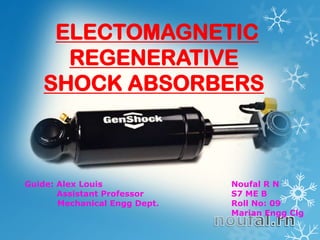
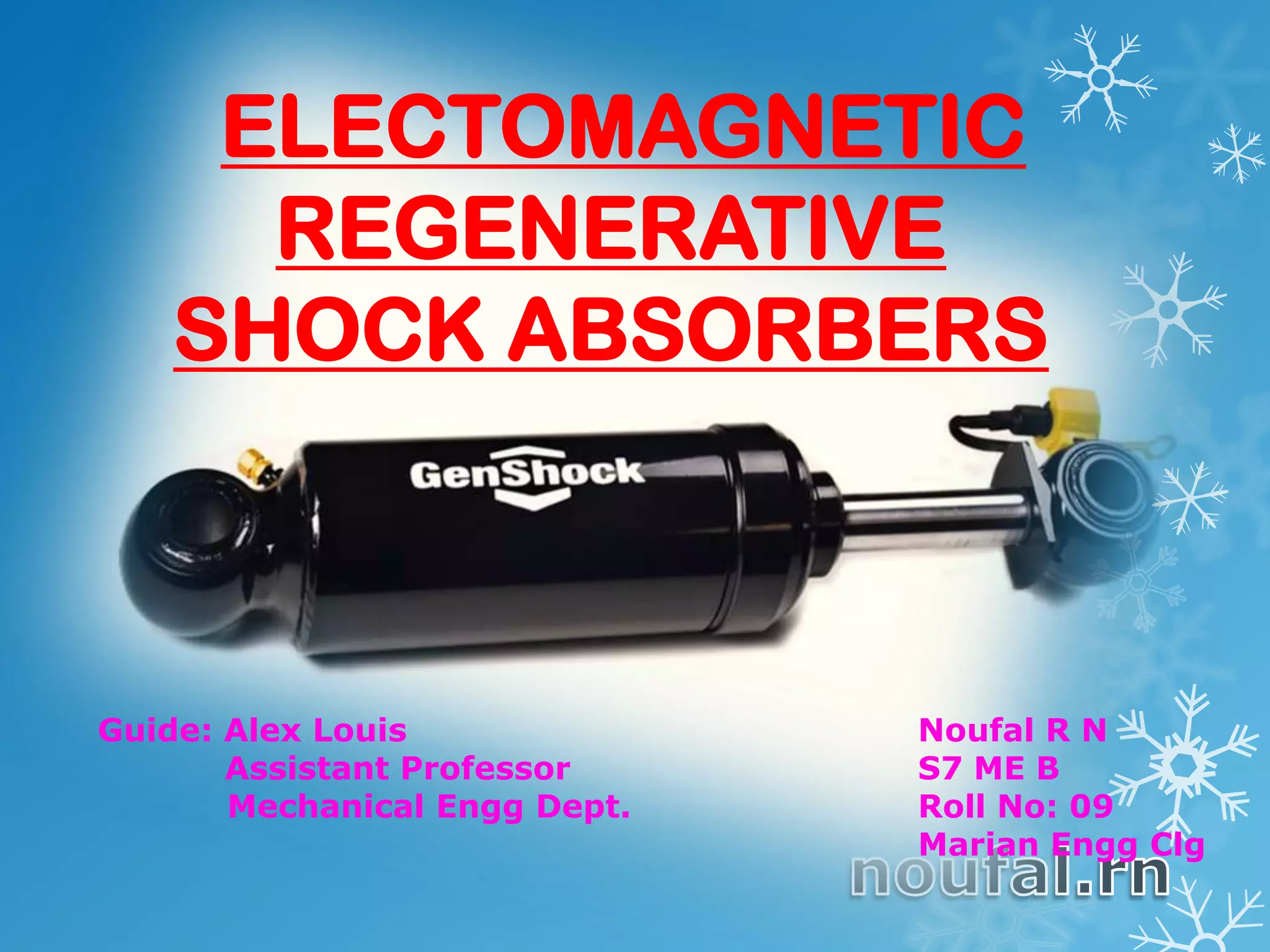
ELECTOMAGNETIC
REGENERATIVE
SHOCK ABSORBERS
Guide: Alex Louis
Assistant Professor
Mechanical Engg Dept.
Noufal R N
S7 ME B
Roll No: 09
Marian Engg Clg
CONTENTS
 Introduction
 Sources of Energy loss
 Conventional Suspension Systems
 Alternative ways of Regenerative Suspension
 Why EM Regenerative Suspension
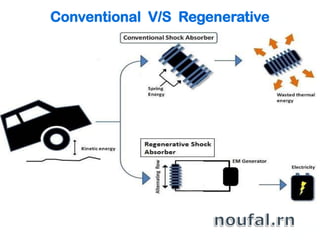
 Electromagnetic v/s Conventional
 Types
 Construction
 Working
 Experimental setup & Result
 Advantages
 Disadvantages
 Conclusion
Regenerative Shock Absorbers
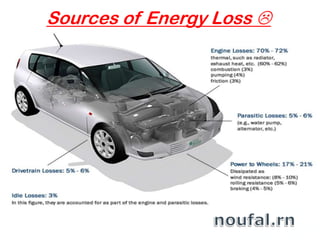
 Usually, only 10-16% of the fuel energy is used to
drive the vehicle - to overcome the road resistance
and air drag.
 People have been seeking ways to improve the miles
per gallon (mpg) of vehicles
 Regenerative shock has the ability to continuously
recover a vehicle's vibration energy that is otherwise
dissipated due to road irregularities, vehicle
acceleration, and braking, and further use the energy
for better suspension control.
Sources of Energy Loss 
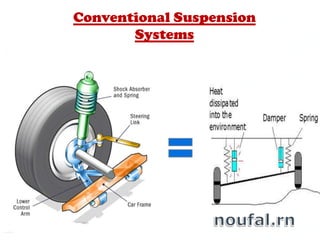
Conventional Suspension
Systems
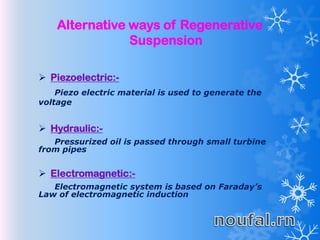
Alternative ways of Regenerative
Suspension
 Piezoelectric:-
Piezo electric material is used to generate the
voltage
 Hydraulic:-
Pressurized oil is passed through small turbine
from pipes
 Electromagnetic:-
Electromagnetic system is based on Faraday’s
Law of electromagnetic induction
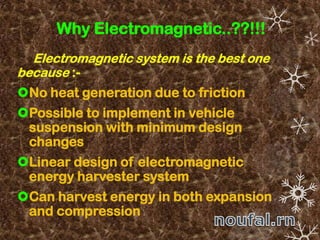
Why Electromagnetic..??!!!
Electromagnetic system is the best one
because :-
No heat generation due to friction
Possible to implement in vehicle
suspension with minimum design
changes
Linear design of electromagnetic
energy harvester system
Can harvest energy in both expansion
and compression
Conventional V/S Regenerative
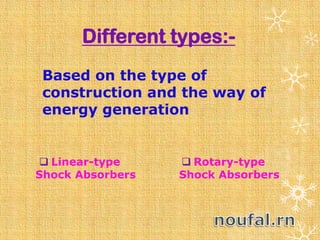
Different types:-
 Linear-type
Shock Absorbers
 Rotary-type
Shock Absorbers
Based on the type of
construction and the way of
energy generation
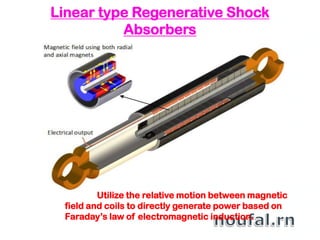
Linear type Regenerative Shock
Absorbers
Utilize the relative motion between magnetic
field and coils to directly generate power based on
Faraday’s law of electromagnetic induction.
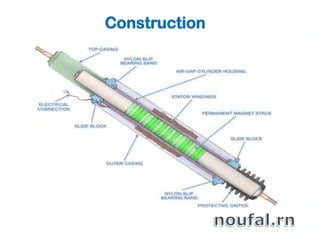
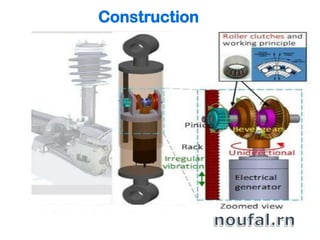
Construction
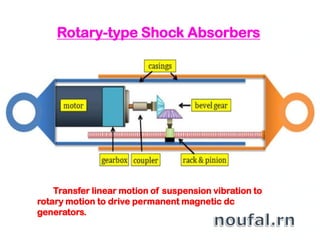
Rotary-type Shock Absorbers
Transfer linear motion of suspension vibration to
rotary motion to drive permanent magnetic dc
generators.
Construction
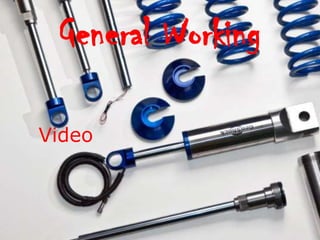
Video
General Working
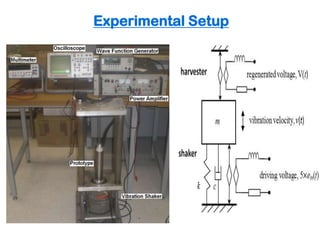
Experimental Setup
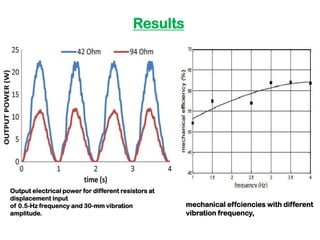
Results
mechanical effciencies with different
vibration frequency,
Output electrical power for different resistors at
displacement input
of 0.5-Hz frequency and 30-mm vibration
amplitude.
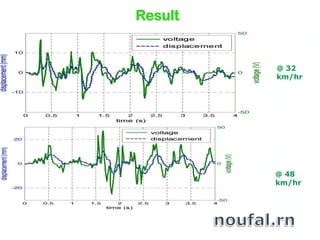
Road Tests
• Vehicle used:
Chevrolet
Suburban SUV
(2002 model).
• Test speed:
32kmph & 48 kmph
Result
@ 32
km/hr
@ 48
km/hr
Advantages
 Improved Fuel Economy
 Weight & Cost Savings
 Continuous supply of Energy
 Increased life of alternator
 Better Handling and Comfort
disadvantages
 System is the costly
 If system breakdowns it’s very
difficult and costly affair to repair it
 The system is very complex
 Requires high precision
machinery and skilled workers to
manufacture
Conclusion
 As electromagnetic shock absorbers can be
able to deliver almost continuous energy it can
be used as a source of energy regenerative
system
 It can be installed in the vehicles with less
modification in the conventional suspension
systems
 The amount of energy regenerated depends on
the velocity of vehicle, roughness of the
surfaces etc.
REFERENCES
1. Lei Zuo, Brian Scully, Jurgen Shestani and Yu Zhou, ‘Design and
characterization of an electromagnetic energy harvester for
vehicle suspensions’, Journal of Smart Materials and
Structures, Volume 19, Number 4.
2. Gupta A, Jendrzejczyk J A, Mulcahy T M and Hull J R , ‘Design of
electromagnetic shock absorbers’, International Journal of
Mechanics & Material Design, Volume 3, Number 3.
3. Goldner R B, Zerigian P and Hull J R, ‘A preliminary study of
energy recovery in vehicles by using regenerative magnetic shock
absorbers’, SAE Paper #2001-01-2071.
4. Pei-Sheng Zhang and Lei Zuo, ’Energy
harvesting, ride comfort, and road handling of regenerative vehicle
suspensions’, ASME Journal of Vibration and Acoustics, 2012.
5. Zhen Longxin and Wei Xiaogang , ‘Structure and Performance
Analysis of Regenerative Electromagnetic
Shock Absorber’, Journal of networks, vol. 5, no.
12, December 2010
Electromagnetic Regenerative Shock Absorbers

Electromagnetic Regenerative Shock Absorbers

  • 1.
    ELECTOMAGNETIC REGENERATIVE SHOCK ABSORBERS Guide: AlexLouis Assistant Professor Mechanical Engg Dept. Noufal R N S7 ME B Roll No: 09 Marian Engg Clg
  • 2.
    CONTENTS  Introduction  Sourcesof Energy loss  Conventional Suspension Systems  Alternative ways of Regenerative Suspension  Why EM Regenerative Suspension  Electromagnetic v/s Conventional  Types  Construction  Working  Experimental setup & Result  Advantages  Disadvantages  Conclusion
  • 3.
    Regenerative Shock Absorbers Usually, only 10-16% of the fuel energy is used to drive the vehicle - to overcome the road resistance and air drag.  People have been seeking ways to improve the miles per gallon (mpg) of vehicles  Regenerative shock has the ability to continuously recover a vehicle's vibration energy that is otherwise dissipated due to road irregularities, vehicle acceleration, and braking, and further use the energy for better suspension control.
  • 4.
  • 5.
  • 6.
    Alternative ways ofRegenerative Suspension  Piezoelectric:- Piezo electric material is used to generate the voltage  Hydraulic:- Pressurized oil is passed through small turbine from pipes  Electromagnetic:- Electromagnetic system is based on Faraday’s Law of electromagnetic induction
  • 7.
    Why Electromagnetic..??!!! Electromagnetic systemis the best one because :- No heat generation due to friction Possible to implement in vehicle suspension with minimum design changes Linear design of electromagnetic energy harvester system Can harvest energy in both expansion and compression
  • 8.
  • 9.
    Different types:-  Linear-type ShockAbsorbers  Rotary-type Shock Absorbers Based on the type of construction and the way of energy generation
  • 10.
    Linear type RegenerativeShock Absorbers Utilize the relative motion between magnetic field and coils to directly generate power based on Faraday’s law of electromagnetic induction.
  • 11.
  • 12.
    Rotary-type Shock Absorbers Transferlinear motion of suspension vibration to rotary motion to drive permanent magnetic dc generators.
  • 13.
  • 14.
  • 15.
  • 16.
    Results mechanical effciencies withdifferent vibration frequency, Output electrical power for different resistors at displacement input of 0.5-Hz frequency and 30-mm vibration amplitude.
  • 17.
    Road Tests • Vehicleused: Chevrolet Suburban SUV (2002 model). • Test speed: 32kmph & 48 kmph
  • 18.
  • 19.
    Advantages  Improved FuelEconomy  Weight & Cost Savings  Continuous supply of Energy  Increased life of alternator  Better Handling and Comfort
  • 20.
    disadvantages  System isthe costly  If system breakdowns it’s very difficult and costly affair to repair it  The system is very complex  Requires high precision machinery and skilled workers to manufacture
  • 21.
    Conclusion  As electromagneticshock absorbers can be able to deliver almost continuous energy it can be used as a source of energy regenerative system  It can be installed in the vehicles with less modification in the conventional suspension systems  The amount of energy regenerated depends on the velocity of vehicle, roughness of the surfaces etc.
  • 22.
    REFERENCES 1. Lei Zuo,Brian Scully, Jurgen Shestani and Yu Zhou, ‘Design and characterization of an electromagnetic energy harvester for vehicle suspensions’, Journal of Smart Materials and Structures, Volume 19, Number 4. 2. Gupta A, Jendrzejczyk J A, Mulcahy T M and Hull J R , ‘Design of electromagnetic shock absorbers’, International Journal of Mechanics & Material Design, Volume 3, Number 3. 3. Goldner R B, Zerigian P and Hull J R, ‘A preliminary study of energy recovery in vehicles by using regenerative magnetic shock absorbers’, SAE Paper #2001-01-2071. 4. Pei-Sheng Zhang and Lei Zuo, ’Energy harvesting, ride comfort, and road handling of regenerative vehicle suspensions’, ASME Journal of Vibration and Acoustics, 2012. 5. Zhen Longxin and Wei Xiaogang , ‘Structure and Performance Analysis of Regenerative Electromagnetic Shock Absorber’, Journal of networks, vol. 5, no. 12, December 2010