UTILIZATION OF ELECTRICAL ENERGY
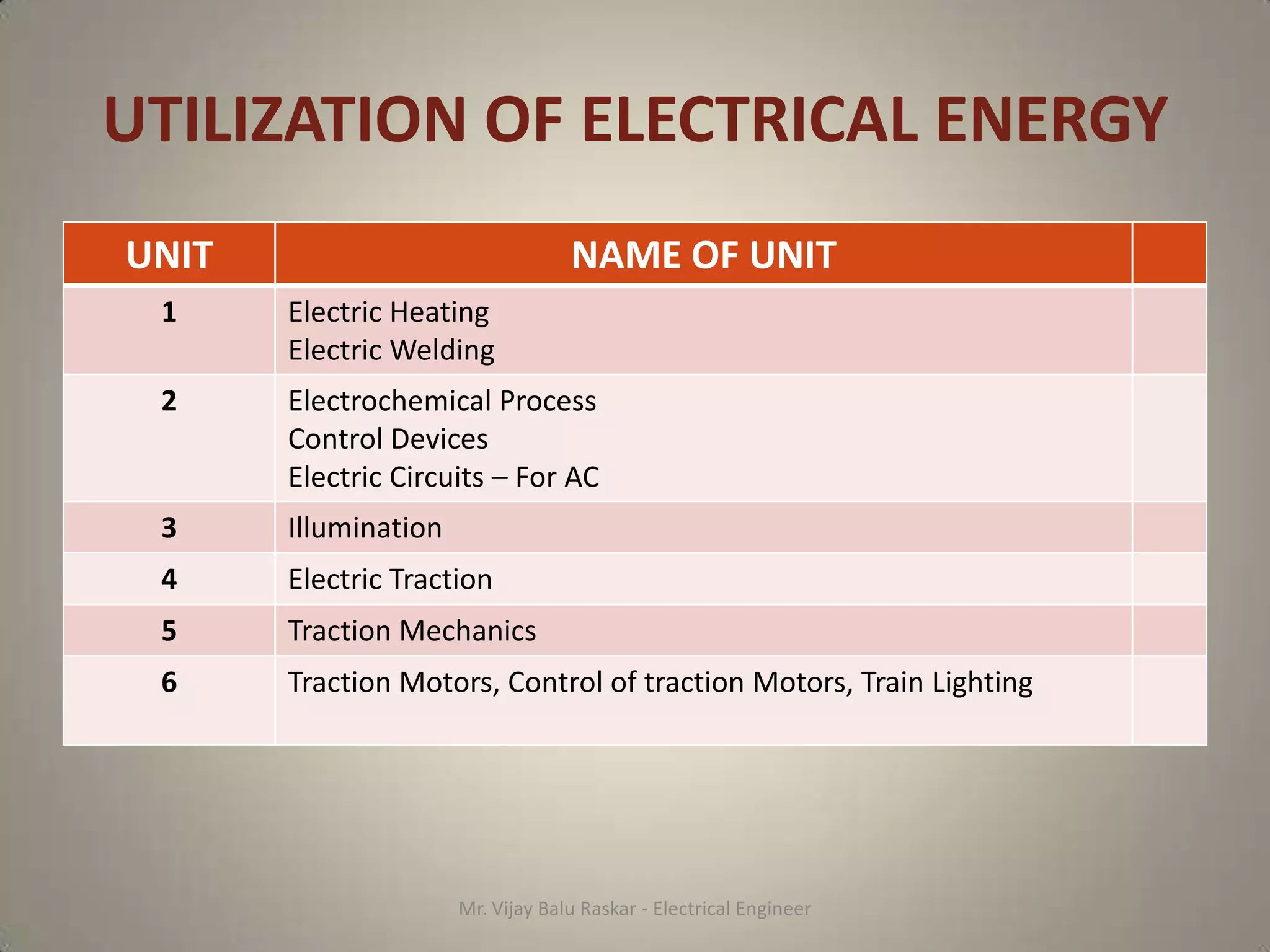
UNIT                               NAME OF UNIT
 1     Electric Heating
       Electric Welding
 2     Electrochemical Process
       Control Devices
       Electric Circuits – For AC
 3     Illumination
 4     Electric Traction
 5     Traction Mechanics
 6     Traction Motors, Control of traction Motors, Train Lighting


                      Mr. Vijay Balu Raskar - Electrical Engineer
Introduction

utilization of electrical
         energy


       Mr. Vijay Balu Raskar - Electrical Engineer
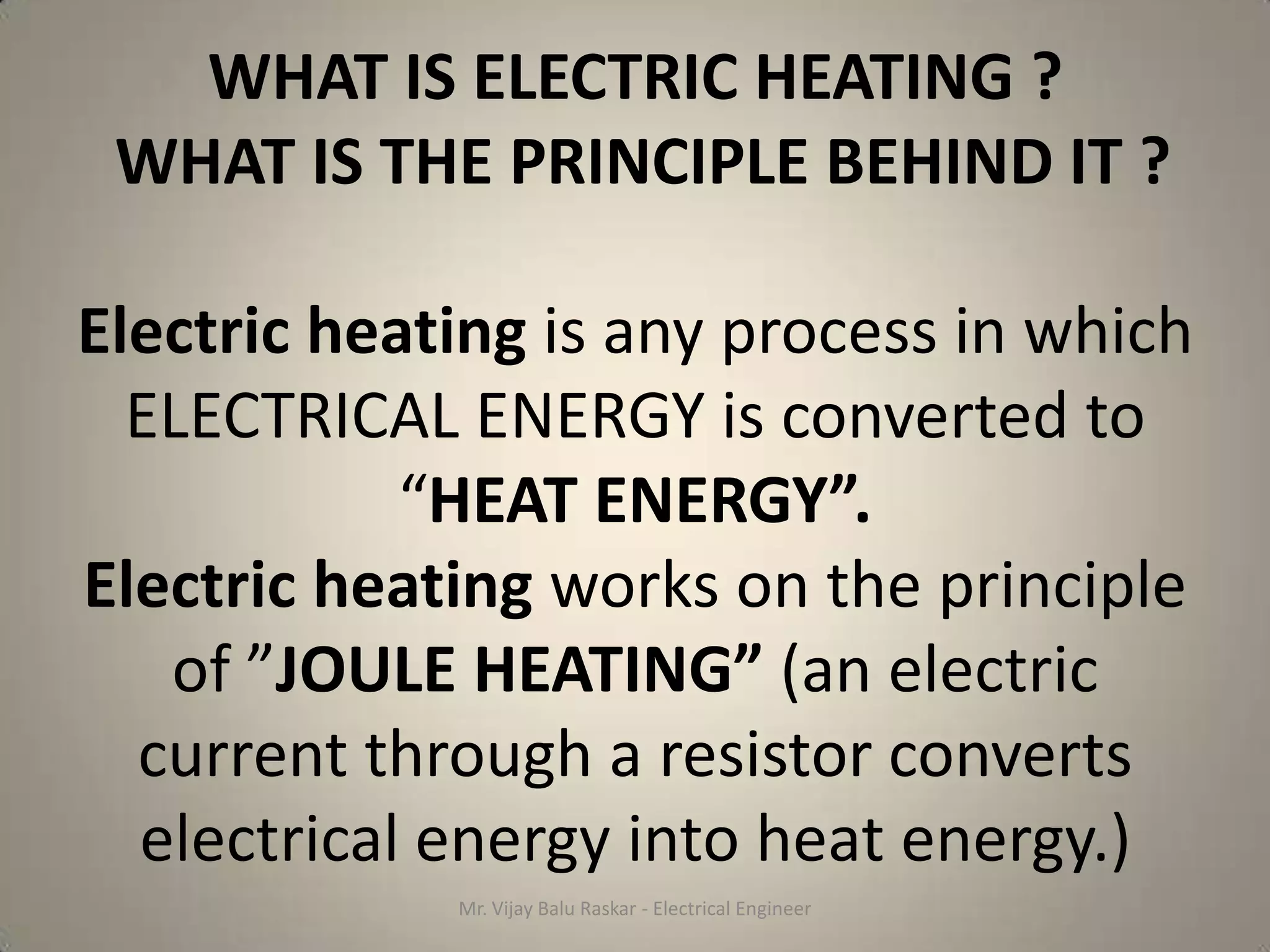
WHAT IS ELECTRIC HEATING ?
 WHAT IS THE PRINCIPLE BEHIND IT ?

Electric heating is any process in which
  ELECTRICAL ENERGY is converted to
            “HEAT ENERGY”.
Electric heating works on the principle
   of ”JOULE HEATING” (an electric
  current through a resistor converts
  electrical energy into heat energy.)
             Mr. Vijay Balu Raskar - Electrical Engineer
INTRODUCTION

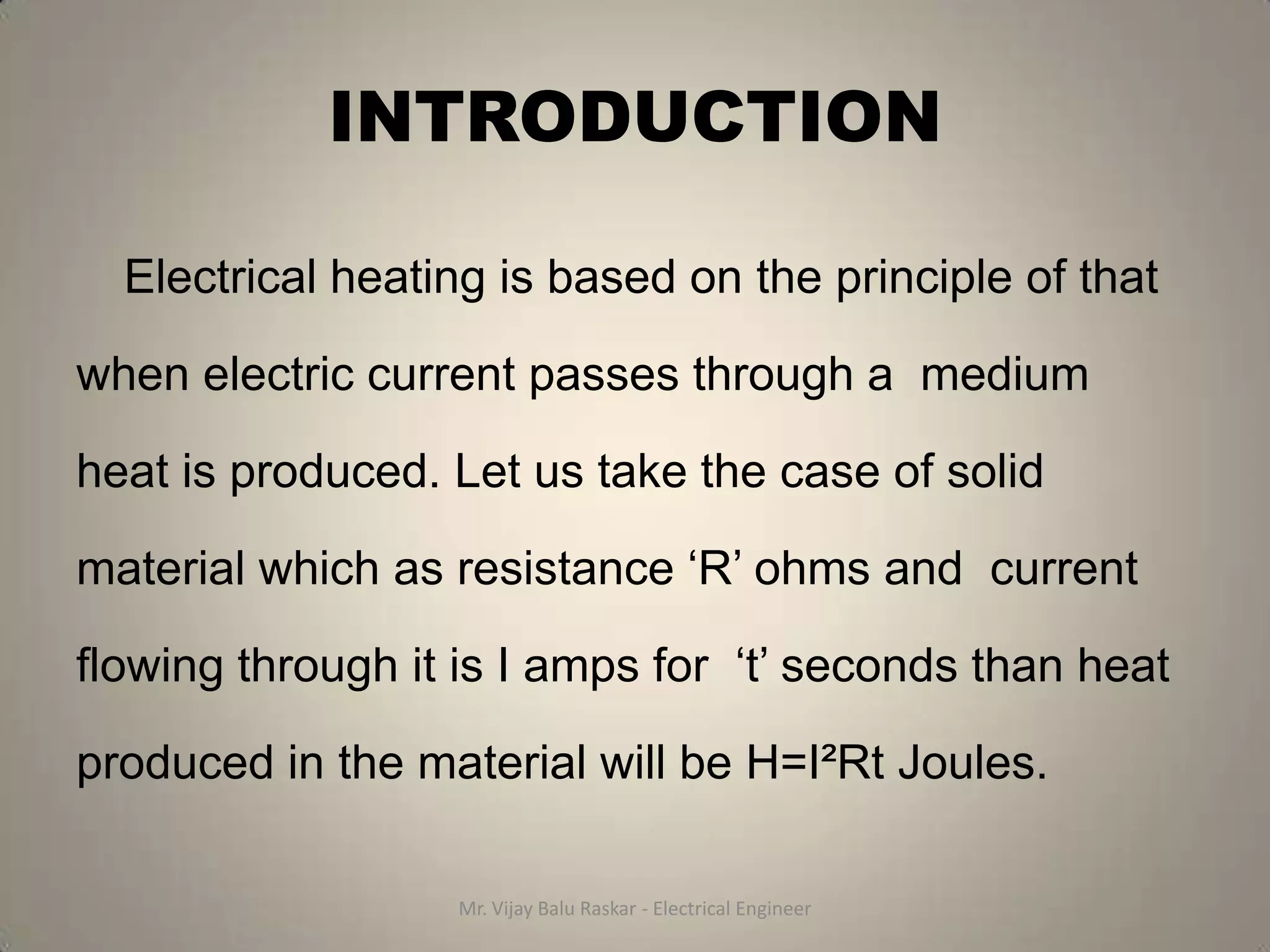
  Electrical heating is based on the principle of that

when electric current passes through a medium

heat is produced. Let us take the case of solid

material which as resistance ‘R’ ohms and current

flowing through it is I amps for ‘t’ seconds than heat

produced in the material will be H=I²Rt Joules.

                  Mr. Vijay Balu Raskar - Electrical Engineer
DOMESTIC APPLICATION OF
  ELECTRICAL HEATING
Room heater for heating the building
Immersion heater for water heating
Hot plates for cooking
Geysers
Electric kettles
Electric Iron
Electric oven for baking products
Electric toasters etc…

              Mr. Vijay Balu Raskar - Electrical Engineer
INDUSTRIAL APPLICATION
Melting of metals
Electric welding
Mouldling of glass for making glass
appliances
Baking of insulator
Mould ling of plastic components
Heat treatment of pointed surpasses
Making of plywood.

            Mr. Vijay Balu Raskar - Electrical Engineer
ADVANTAGES OF ELECTRICAL HEATING
      OVER OTHER METHOD OF HEATING
•   Clean and atmosphere / Free from dirt.
•   No pollution / No flue gas is produced
•   Response quickly
•   Accurate Controlled temperature can made easily
•   Comparatively safe
•   Localized application
•   Overall efficiency is much higher
•   Uniform heating
•   Highest efficiency of utilization
•   Cheap furnaces
•   Mobility of job


                      Mr. Vijay Balu Raskar - Electrical Engineer
TRANSFER OF HEAT

Conduction:- This phenomenon takes place
in solid, liquid and gas.
Heat transfer is proportional to
the difference of temperatures between two
faces.
No actual motion of molecules.
              Mr. Vijay Balu Raskar - Electrical Engineer
Convection
This phenomenon takes place in liquid
and gas. Heat is transferred due to
actual motion of molecules

Radiation
This phenomenon is confined to
surfaces. Radiant energy emitted or
absorbed is dependent on the nature
of the surface.
            Mr. Vijay Balu Raskar - Electrical Engineer
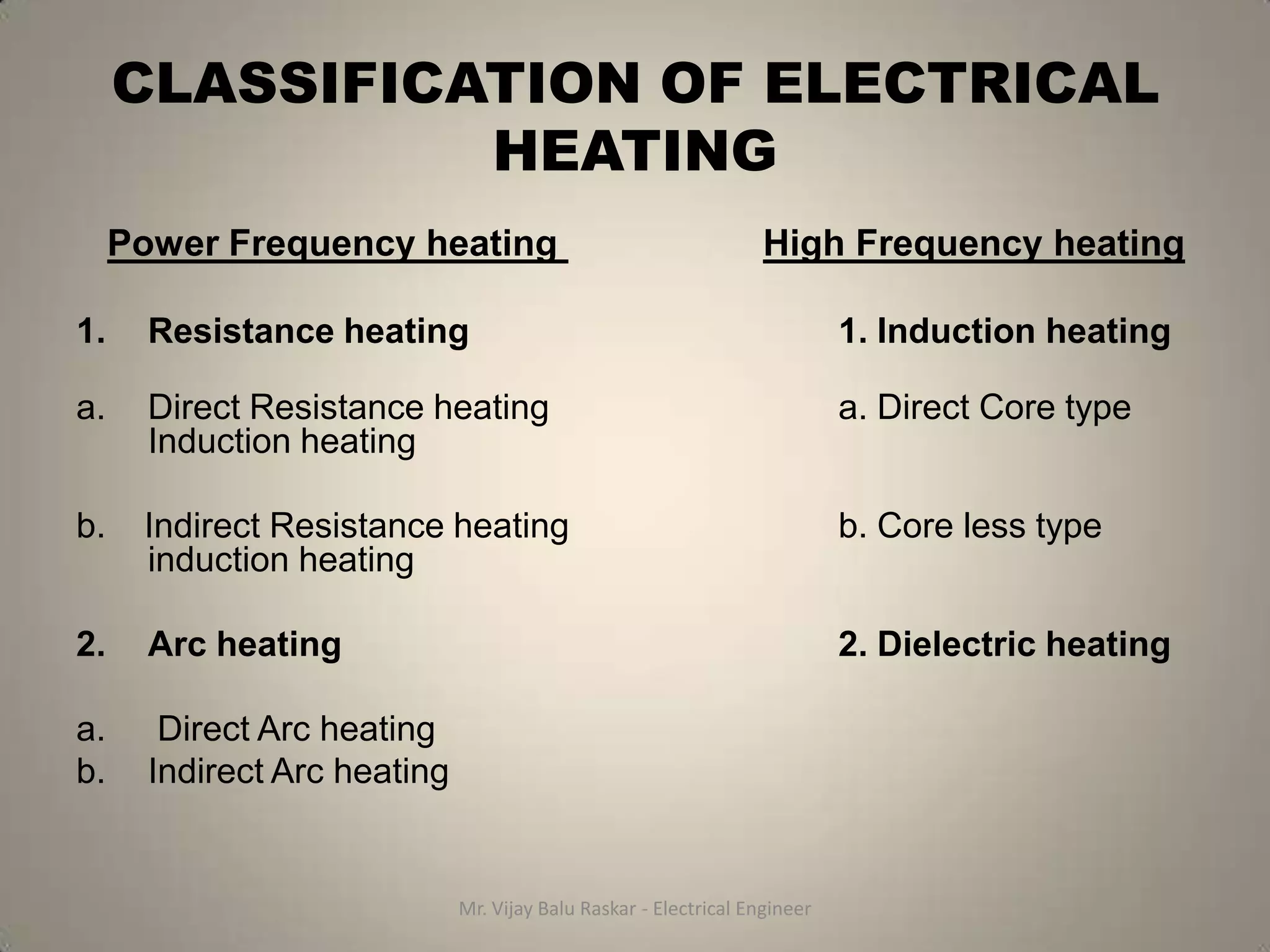
CLASSIFICATION OF ELECTRICAL
               HEATING
     Power Frequency heating                                       High Frequency heating

1.     Resistance heating                                                   1. Induction heating

a.     Direct Resistance heating                                            a. Direct Core type
       Induction heating

b.    Indirect Resistance heating                                           b. Core less type
      induction heating

2.     Arc heating                                                          2. Dielectric heating

a.      Direct Arc heating
b.     Indirect Arc heating


                              Mr. Vijay Balu Raskar - Electrical Engineer
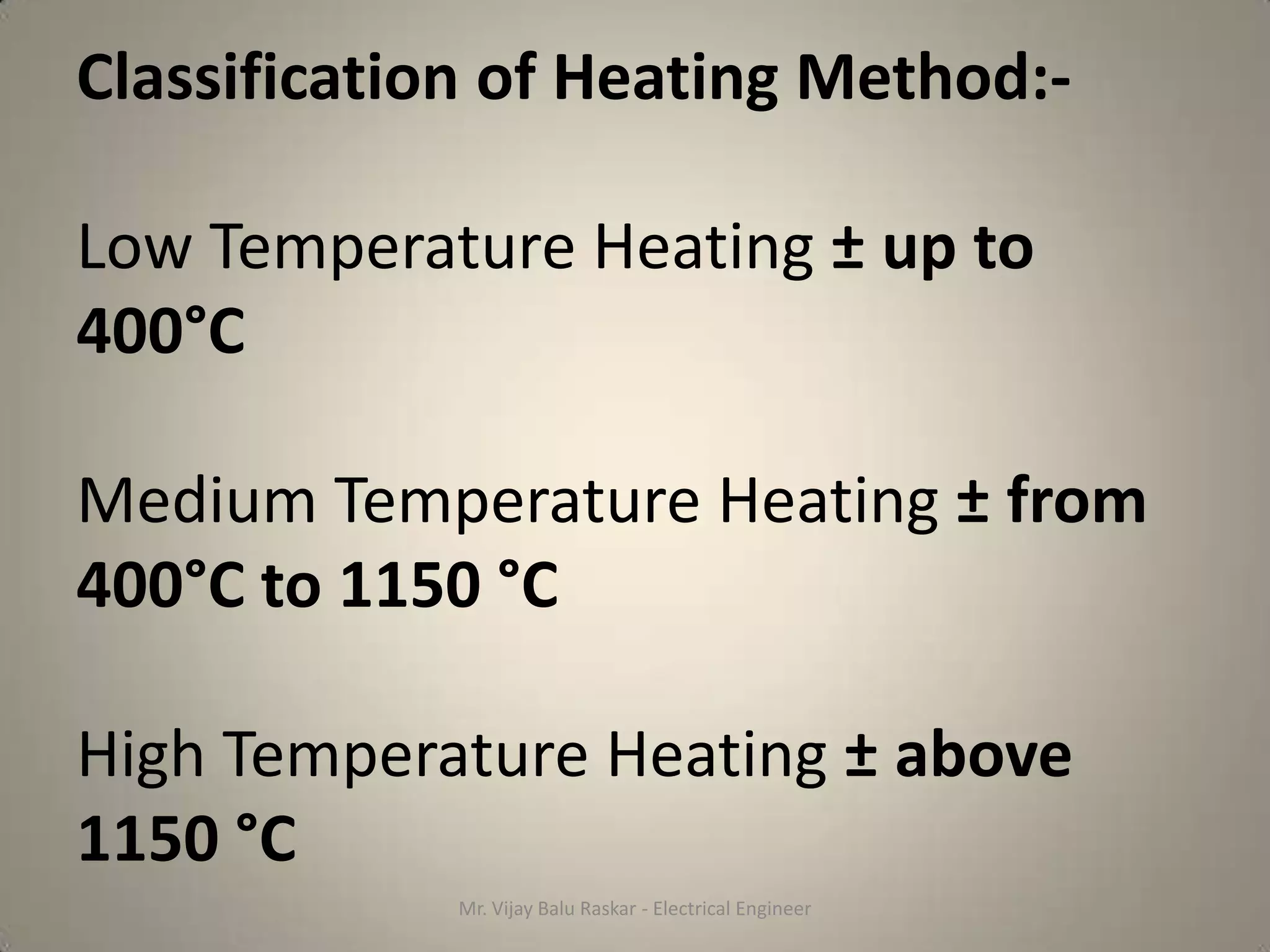
Classification of Heating Method:-

Low Temperature Heating ± up to
400°C

Medium Temperature Heating ± from
400°C to 1150 °C

High Temperature Heating ± above
1150 °C
             Mr. Vijay Balu Raskar - Electrical Engineer
Mr. Vijay Balu Raskar - Electrical Engineer
RESISTANCE HEATING
   (Example – Electric Water
           Heater)
  This method is based upon the I²R loss.
Whenever current is passed through a
resistor material heat is produced because
of I²R losses.
The generation of heat is done by electric resistor
  carrying current.

                  Mr. Vijay Balu Raskar - Electrical Engineer
Characteristic Features of Heating
Elements
1) high resistivity
2) able to withstand high temperatures
without deterioration
3) low temperature coefficient of
resistance
4) positive temperature coefficient
of resistance
5)free from oxidation at high
temperatures Mr. Vijay Balu Raskar - Electrical Engineer
RESISTANCE HEATING
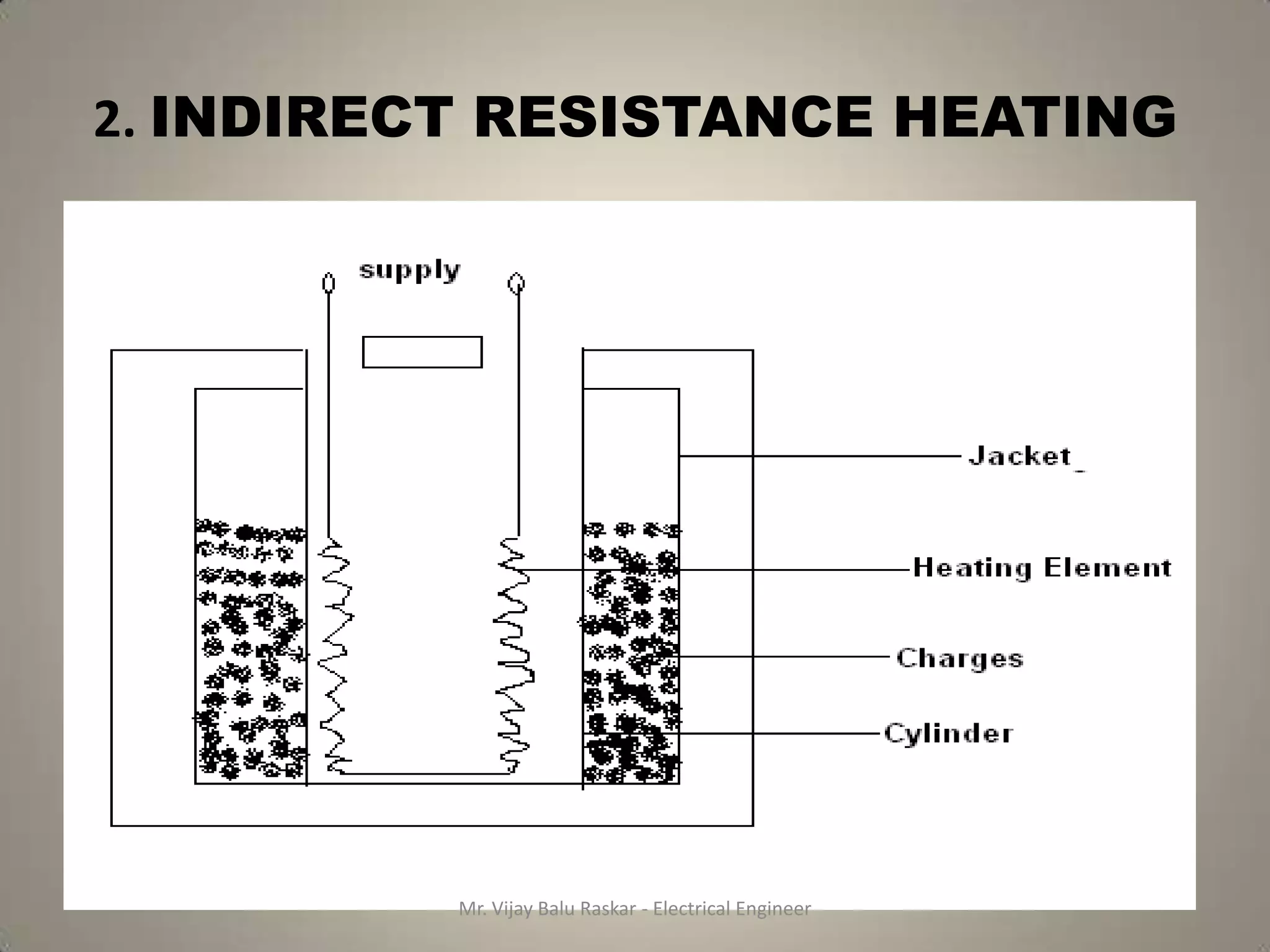
       DIRECT HEATING                INDIRECT HEATING
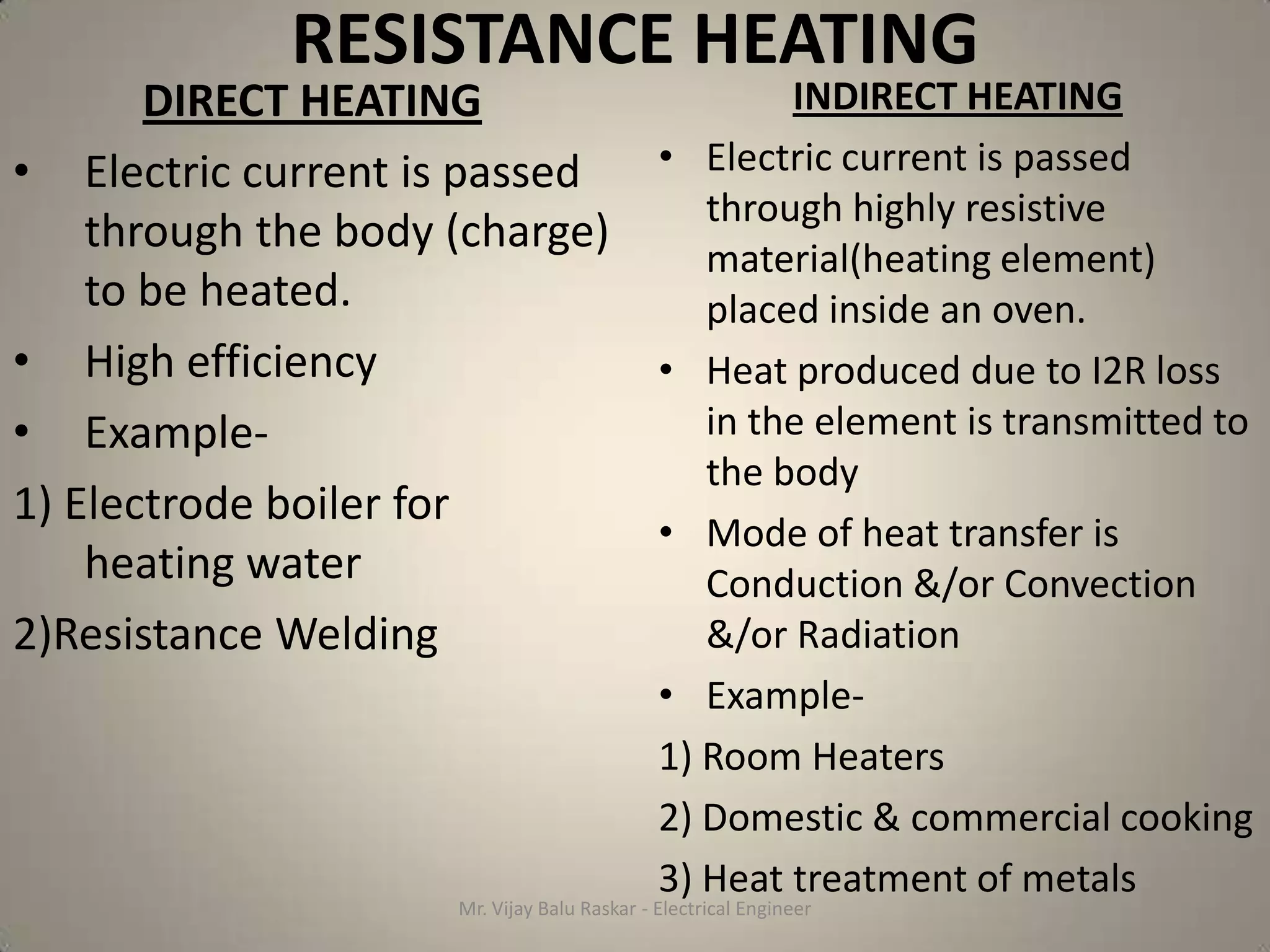
• Electric current is passed  • Electric current is passed
                                through highly resistive
    through the body (charge)
                                material(heating element)
    to be heated.               placed inside an oven.
• High efficiency             • Heat produced due to I2R loss
• Example-                      in the element is transmitted to
                                the body
1) Electrode boiler for
                              • Mode of heat transfer is
    heating water               Conduction &/or Convection
2)Resistance Welding            &/or Radiation
                                               • Example-
                                               1) Room Heaters
                                               2) Domestic & commercial cooking
                                               3) Heat treatment of metals
                       Mr. Vijay Balu Raskar - Electrical Engineer
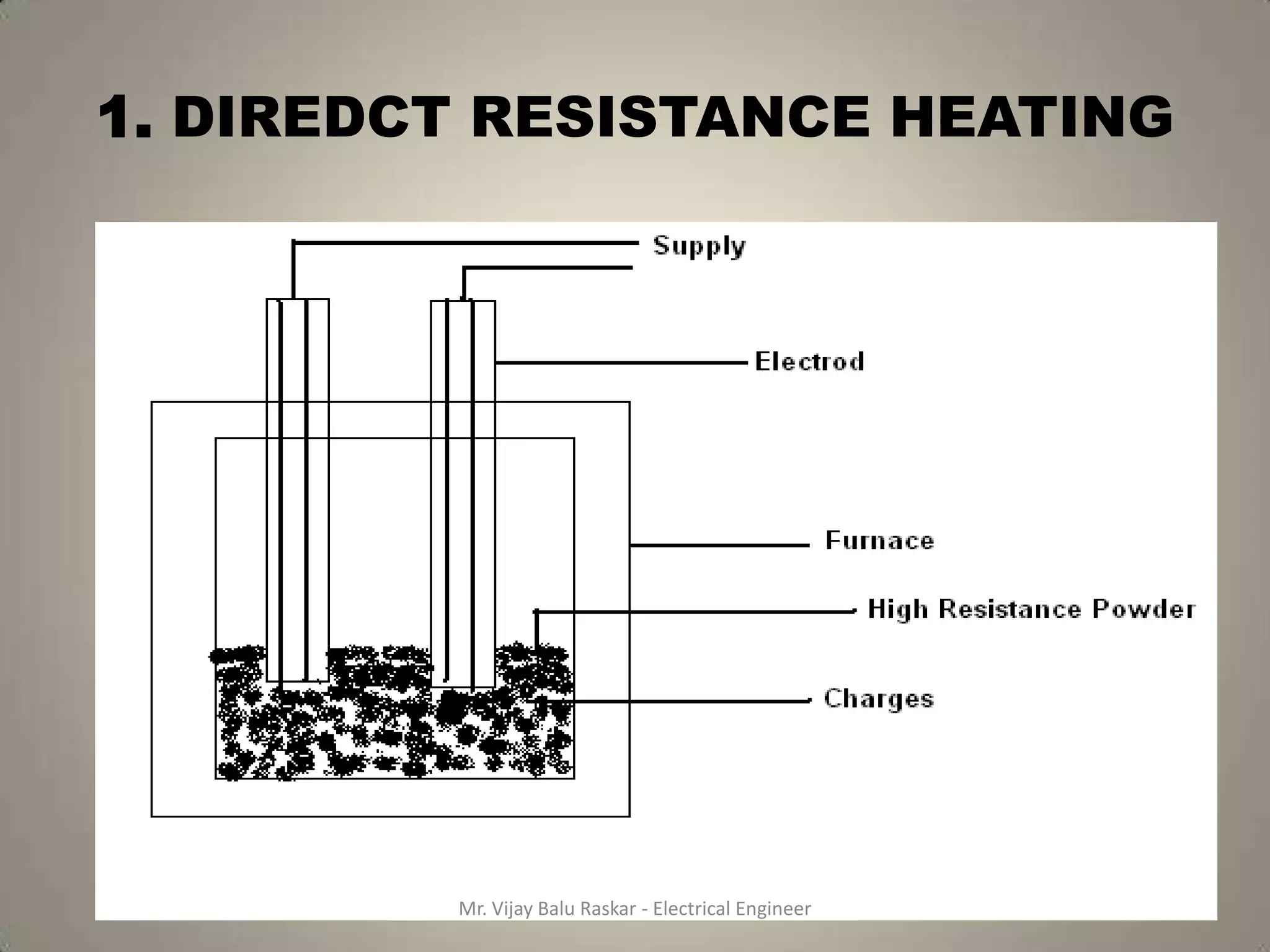
1. DIREDCT RESISTANCE HEATING


         Mr. Vijay Balu Raskar - Electrical Engineer
2. INDIRECT RESISTANCE HEATING


          Mr. Vijay Balu Raskar - Electrical Engineer
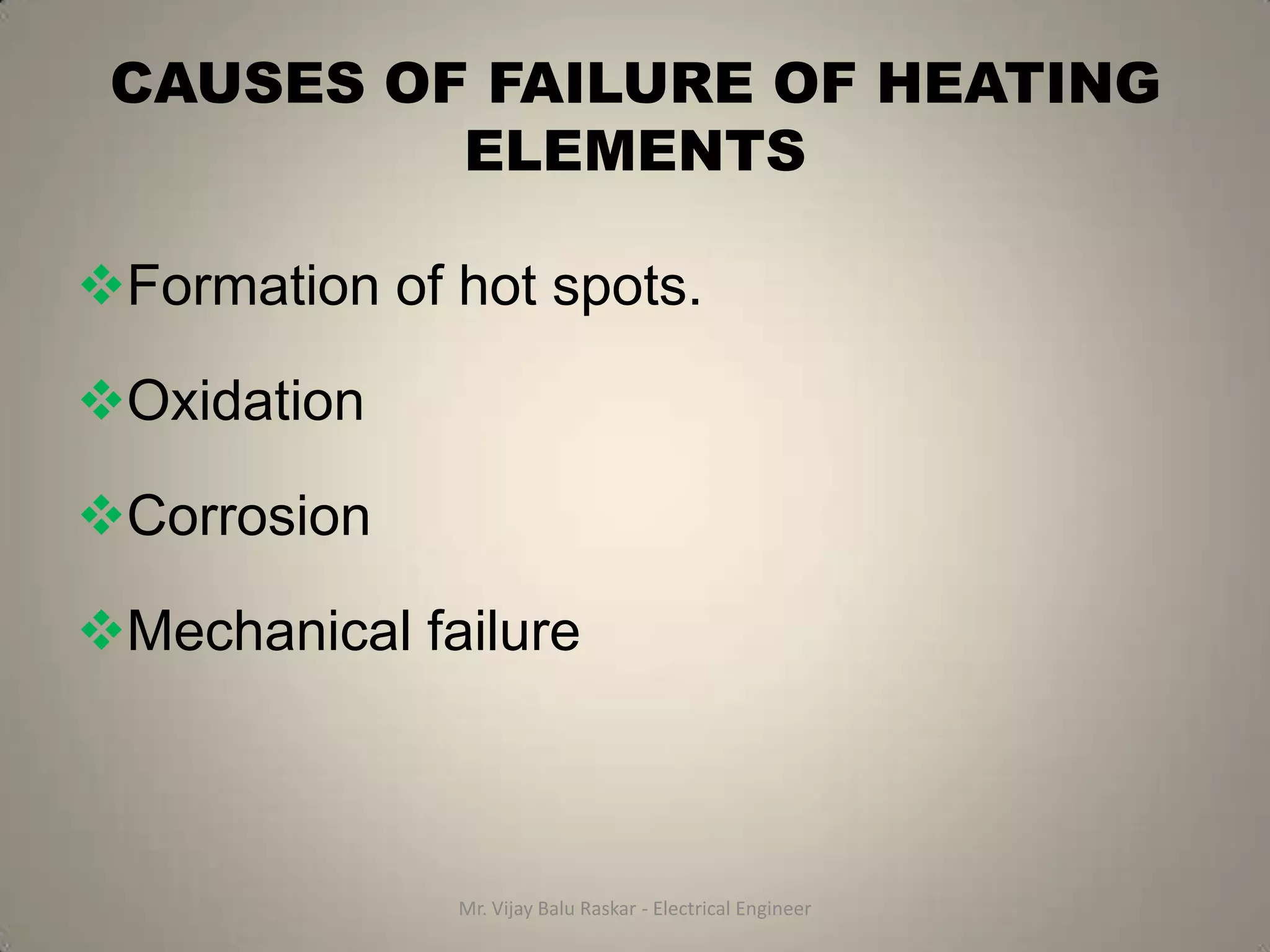
CAUSES OF FAILURE OF HEATING
          ELEMENTS

Formation of hot spots.

Oxidation

Corrosion

Mechanical failure


              Mr. Vijay Balu Raskar - Electrical Engineer
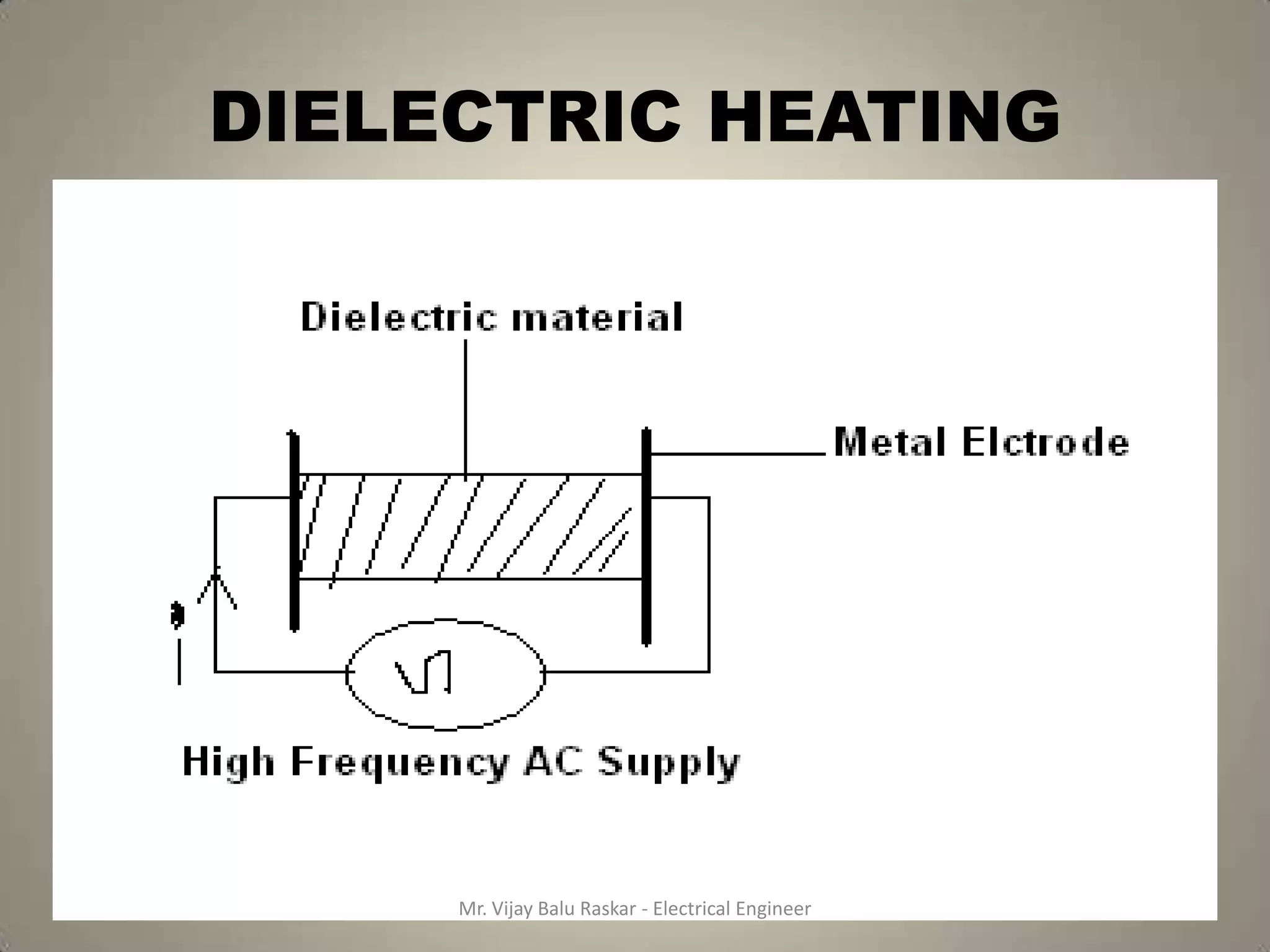
DIELECTRIC HEATING


     Mr. Vijay Balu Raskar - Electrical Engineer
Dielectric heating, also known as electronic
heating, RF heating, high-frequency
heating and diathermy.
Dielectric heating is a special way of
transforming electric current into heat.
By the method of dielectric heating, generally,
foils, plates and profiles with a thickness of 0,1-
2,0 mm is are welded.
We understand dielectric heating as the
generation of thermal energy (heat) in a non-
conducting material by the application of an
electromagnetic force or field t it. This is the
                  Mr. Vijay Balu Raskar - Electrical Engineer
Mr. Vijay Balu Raskar - Electrical Engineer

Electrical Heating 01-03

  • 1.
    UTILIZATION OF ELECTRICALENERGY UNIT NAME OF UNIT 1 Electric Heating Electric Welding 2 Electrochemical Process Control Devices Electric Circuits – For AC 3 Illumination 4 Electric Traction 5 Traction Mechanics 6 Traction Motors, Control of traction Motors, Train Lighting Mr. Vijay Balu Raskar - Electrical Engineer
  • 2.
    Introduction utilization of electrical energy Mr. Vijay Balu Raskar - Electrical Engineer
  • 3.
    WHAT IS ELECTRICHEATING ? WHAT IS THE PRINCIPLE BEHIND IT ? Electric heating is any process in which ELECTRICAL ENERGY is converted to “HEAT ENERGY”. Electric heating works on the principle of ”JOULE HEATING” (an electric current through a resistor converts electrical energy into heat energy.) Mr. Vijay Balu Raskar - Electrical Engineer
  • 4.
    INTRODUCTION Electricalheating is based on the principle of that when electric current passes through a medium heat is produced. Let us take the case of solid material which as resistance ‘R’ ohms and current flowing through it is I amps for ‘t’ seconds than heat produced in the material will be H=I²Rt Joules. Mr. Vijay Balu Raskar - Electrical Engineer
  • 5.
    DOMESTIC APPLICATION OF ELECTRICAL HEATING Room heater for heating the building Immersion heater for water heating Hot plates for cooking Geysers Electric kettles Electric Iron Electric oven for baking products Electric toasters etc… Mr. Vijay Balu Raskar - Electrical Engineer
  • 6.
    INDUSTRIAL APPLICATION Melting ofmetals Electric welding Mouldling of glass for making glass appliances Baking of insulator Mould ling of plastic components Heat treatment of pointed surpasses Making of plywood. Mr. Vijay Balu Raskar - Electrical Engineer
  • 7.
    ADVANTAGES OF ELECTRICALHEATING OVER OTHER METHOD OF HEATING • Clean and atmosphere / Free from dirt. • No pollution / No flue gas is produced • Response quickly • Accurate Controlled temperature can made easily • Comparatively safe • Localized application • Overall efficiency is much higher • Uniform heating • Highest efficiency of utilization • Cheap furnaces • Mobility of job Mr. Vijay Balu Raskar - Electrical Engineer
  • 8.
    TRANSFER OF HEAT Conduction:-This phenomenon takes place in solid, liquid and gas. Heat transfer is proportional to the difference of temperatures between two faces. No actual motion of molecules. Mr. Vijay Balu Raskar - Electrical Engineer
  • 9.
    Convection This phenomenon takesplace in liquid and gas. Heat is transferred due to actual motion of molecules Radiation This phenomenon is confined to surfaces. Radiant energy emitted or absorbed is dependent on the nature of the surface. Mr. Vijay Balu Raskar - Electrical Engineer
  • 10.
    CLASSIFICATION OF ELECTRICAL HEATING Power Frequency heating High Frequency heating 1. Resistance heating 1. Induction heating a. Direct Resistance heating a. Direct Core type Induction heating b. Indirect Resistance heating b. Core less type induction heating 2. Arc heating 2. Dielectric heating a. Direct Arc heating b. Indirect Arc heating Mr. Vijay Balu Raskar - Electrical Engineer
  • 11.
    Classification of HeatingMethod:- Low Temperature Heating ± up to 400°C Medium Temperature Heating ± from 400°C to 1150 °C High Temperature Heating ± above 1150 °C Mr. Vijay Balu Raskar - Electrical Engineer
  • 12.
    Mr. Vijay BaluRaskar - Electrical Engineer
  • 13.
    RESISTANCE HEATING (Example – Electric Water Heater) This method is based upon the I²R loss. Whenever current is passed through a resistor material heat is produced because of I²R losses. The generation of heat is done by electric resistor carrying current. Mr. Vijay Balu Raskar - Electrical Engineer
  • 14.
    Characteristic Features ofHeating Elements 1) high resistivity 2) able to withstand high temperatures without deterioration 3) low temperature coefficient of resistance 4) positive temperature coefficient of resistance 5)free from oxidation at high temperatures Mr. Vijay Balu Raskar - Electrical Engineer
  • 15.
    RESISTANCE HEATING DIRECT HEATING INDIRECT HEATING • Electric current is passed • Electric current is passed through highly resistive through the body (charge) material(heating element) to be heated. placed inside an oven. • High efficiency • Heat produced due to I2R loss • Example- in the element is transmitted to the body 1) Electrode boiler for • Mode of heat transfer is heating water Conduction &/or Convection 2)Resistance Welding &/or Radiation • Example- 1) Room Heaters 2) Domestic & commercial cooking 3) Heat treatment of metals Mr. Vijay Balu Raskar - Electrical Engineer
  • 16.
    1. DIREDCT RESISTANCEHEATING Mr. Vijay Balu Raskar - Electrical Engineer
  • 17.
    2. INDIRECT RESISTANCEHEATING Mr. Vijay Balu Raskar - Electrical Engineer
  • 18.
    CAUSES OF FAILUREOF HEATING ELEMENTS Formation of hot spots. Oxidation Corrosion Mechanical failure Mr. Vijay Balu Raskar - Electrical Engineer
  • 19.
    DIELECTRIC HEATING Mr. Vijay Balu Raskar - Electrical Engineer
  • 20.
    Dielectric heating, alsoknown as electronic heating, RF heating, high-frequency heating and diathermy. Dielectric heating is a special way of transforming electric current into heat. By the method of dielectric heating, generally, foils, plates and profiles with a thickness of 0,1- 2,0 mm is are welded. We understand dielectric heating as the generation of thermal energy (heat) in a non- conducting material by the application of an electromagnetic force or field t it. This is the Mr. Vijay Balu Raskar - Electrical Engineer
  • 21.
    Mr. Vijay BaluRaskar - Electrical Engineer