Downloaded 684 times
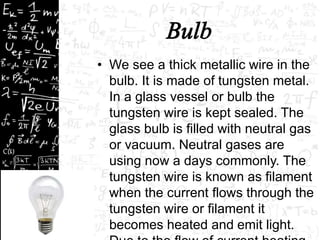
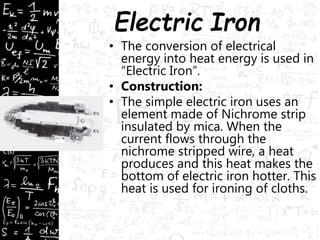
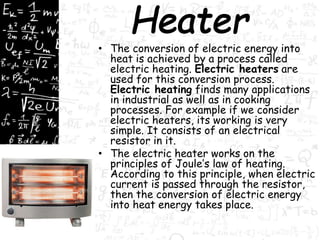
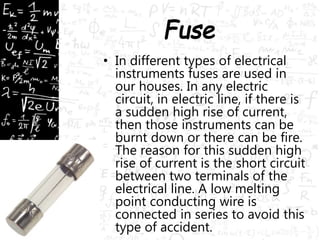

The document discusses the heating effect of electricity, which is one of the most common effects. It explains that when electric current passes through a conductor, the electrons collide with atoms and transfer their kinetic energy, producing heat. The amount of heat generated depends on the current, resistance of the material, and duration of current flow, as defined by Joule's law. Common applications that use this heating effect include electric irons, heaters, stoves, and light bulbs. Nichrome is often used as the heating element due to its high melting point and resistance.


