GOVERNMENT ENGINEERING
COLLEGE, DAHOD
ELECTRICAL ENGINEERING DEPARTMENT
TOPIC NAME : DIFFERENCE BETWEEN GENRATOR AND
ALTERNATOR
PRESENTED BY : -
1) SONI PARTH
2) PATEL NIL
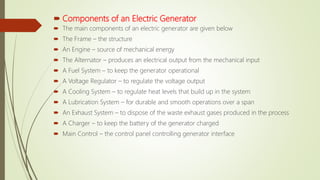
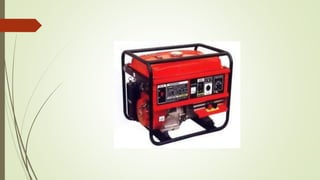
 Components of an Electric Generator
 The main components of an electric generator are given below
 The Frame – the structure
 An Engine – source of mechanical energy
 The Alternator – produces an electrical output from the mechanical input
 A Fuel System – to keep the generator operational
 A Voltage Regulator – to regulate the voltage output
 A Cooling System – to regulate heat levels that build up in the system
 A Lubrication System – for durable and smooth operations over a span
 An Exhaust System – to dispose of the waste exhaust gases produced in the process
 A Charger – to keep the battery of the generator charged
 Main Control – the control panel controlling generator interface
GENRATOR
 What is generator ?
 A generator is a mechanical device
which converts mechanical energy to
either AC or DC electrical energy.
 Output Current
 A generator can generate either
alternating or direct current.
 Energy Efficiency
 Generators are considered less
efficient.
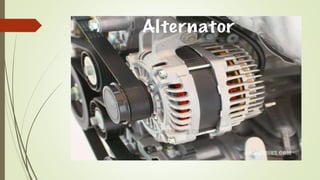
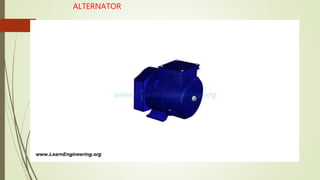
ALTERNATOR
 What is Alternator ?
 An alternator is a device that converts
mechanical energy into AC electrical
energy.
 Output Current
 An alternator always induces an
alternating current.
 Energy Efficiency
 Alternators are very efficient.
GENRATOR
 Output
 Generators have a lower output when
compared with an alternator.
 Energy Conservation
 Generators use all the energy that is
produced and so, they conserve less
energy.
 Magnetic Field
 In case of a generator, the magnetic
field is stationary or fixed where the
armature winding spins.
ALTERNATOR
 Output
 Alternators have higher output than
generators.
 Energy Conservation
 Alternators use only the required
amount of energy and thus, it
conserves more energy.
 Magnetic Field
 The magnetic field is rotating inside
the stator of an alternator.
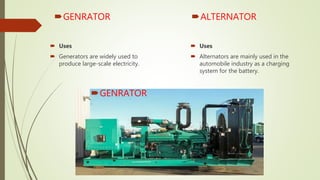
Cummins 1500 kW Standby Diesel Generator– 277/480 V
GENRATOR ALTERNATOR
 Armature Movement
 The armature of a generator is
rotating.
 Input Supply
 The generator takes input supply
from the rotor.
 RPM (Rotation Per Minute) Range
 Generators have a low range of RPM.
 Armature Movement
 The armature of an alternator is
stationary.
 Input Supply
 The alternator takes input supply
from the stator.
 RPM (Rotation Per Minute) Range
 Alternators have a wide range of
RPM.
GENRATOR ALTERNATOR
 Size
 Generators are larger and require
more space to fit in.
 Brush Efficiency
 The brushes of generators last lesser
when compared to an alternator.
 Charging of a Dead Battery
 A generator can be used for charging
a dead battery.
 Size
 Alternators are generally smaller in
size
 Brush Efficiency
 The brushes of alternators last
longer.
 Charging of a Dead Battery
 Alternators will never charge a dead
battery.
GENRATOR ALTERNATOR
 Uses
 Generators are widely used to
produce large-scale electricity.
 Uses
 Alternators are mainly used in the
automobile industry as a charging
system for the battery.
GENRATOR
ALTERNATOR
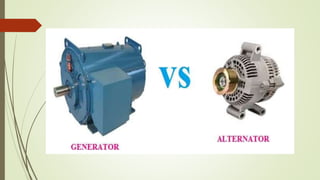
Generator vs alternator

Generator vs alternator

  • 1.
    GOVERNMENT ENGINEERING COLLEGE, DAHOD ELECTRICALENGINEERING DEPARTMENT TOPIC NAME : DIFFERENCE BETWEEN GENRATOR AND ALTERNATOR PRESENTED BY : - 1) SONI PARTH 2) PATEL NIL
  • 3.
     Components ofan Electric Generator  The main components of an electric generator are given below  The Frame – the structure  An Engine – source of mechanical energy  The Alternator – produces an electrical output from the mechanical input  A Fuel System – to keep the generator operational  A Voltage Regulator – to regulate the voltage output  A Cooling System – to regulate heat levels that build up in the system  A Lubrication System – for durable and smooth operations over a span  An Exhaust System – to dispose of the waste exhaust gases produced in the process  A Charger – to keep the battery of the generator charged  Main Control – the control panel controlling generator interface
  • 4.
    GENRATOR  What isgenerator ?  A generator is a mechanical device which converts mechanical energy to either AC or DC electrical energy.  Output Current  A generator can generate either alternating or direct current.  Energy Efficiency  Generators are considered less efficient. ALTERNATOR  What is Alternator ?  An alternator is a device that converts mechanical energy into AC electrical energy.  Output Current  An alternator always induces an alternating current.  Energy Efficiency  Alternators are very efficient.
  • 6.
    GENRATOR  Output  Generatorshave a lower output when compared with an alternator.  Energy Conservation  Generators use all the energy that is produced and so, they conserve less energy.  Magnetic Field  In case of a generator, the magnetic field is stationary or fixed where the armature winding spins. ALTERNATOR  Output  Alternators have higher output than generators.  Energy Conservation  Alternators use only the required amount of energy and thus, it conserves more energy.  Magnetic Field  The magnetic field is rotating inside the stator of an alternator.
  • 7.
    Cummins 1500 kWStandby Diesel Generator– 277/480 V
  • 8.
    GENRATOR ALTERNATOR  ArmatureMovement  The armature of a generator is rotating.  Input Supply  The generator takes input supply from the rotor.  RPM (Rotation Per Minute) Range  Generators have a low range of RPM.  Armature Movement  The armature of an alternator is stationary.  Input Supply  The alternator takes input supply from the stator.  RPM (Rotation Per Minute) Range  Alternators have a wide range of RPM.
  • 10.
    GENRATOR ALTERNATOR  Size Generators are larger and require more space to fit in.  Brush Efficiency  The brushes of generators last lesser when compared to an alternator.  Charging of a Dead Battery  A generator can be used for charging a dead battery.  Size  Alternators are generally smaller in size  Brush Efficiency  The brushes of alternators last longer.  Charging of a Dead Battery  Alternators will never charge a dead battery.
  • 11.
    GENRATOR ALTERNATOR  Uses Generators are widely used to produce large-scale electricity.  Uses  Alternators are mainly used in the automobile industry as a charging system for the battery. GENRATOR
  • 12.