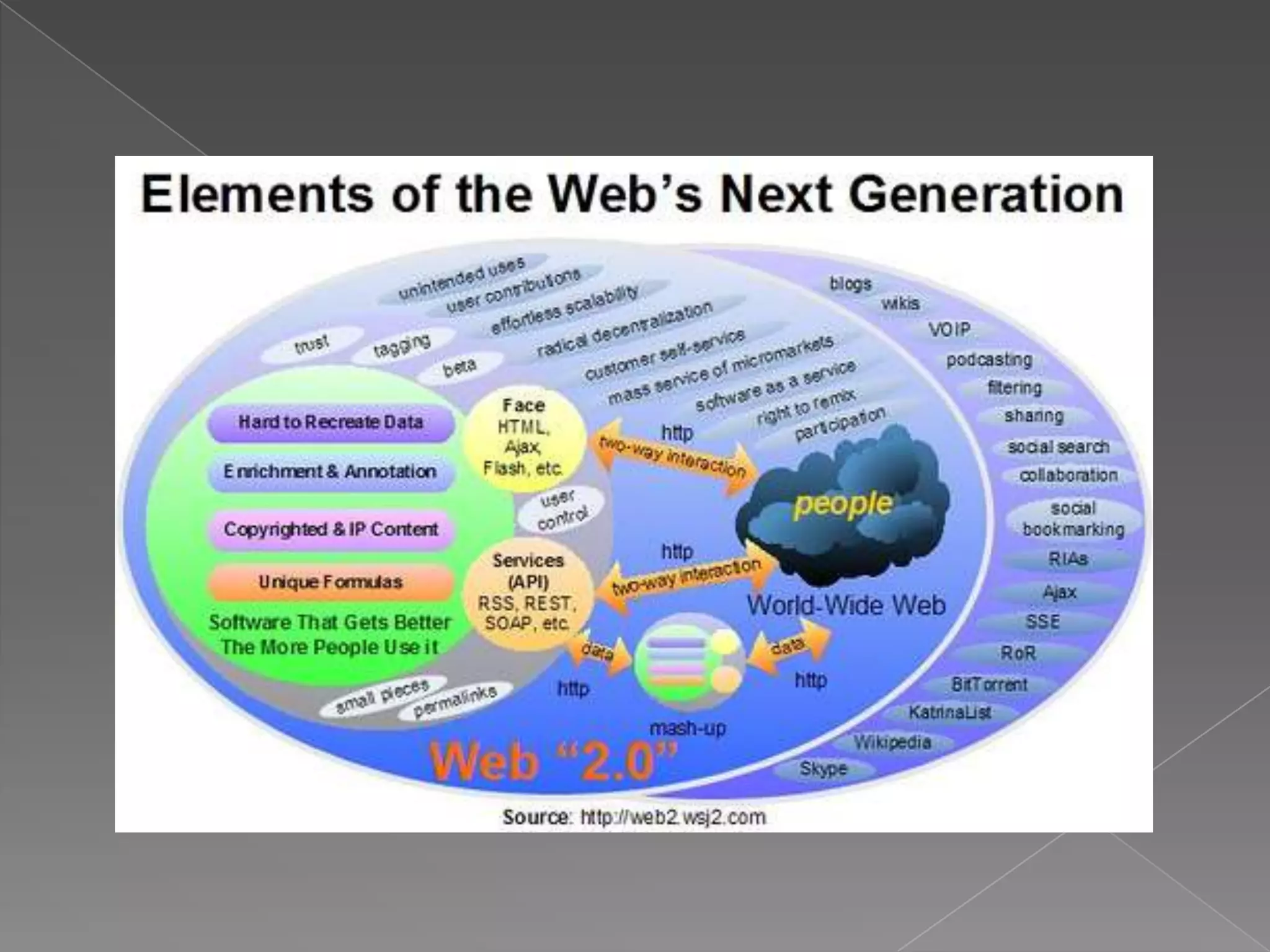
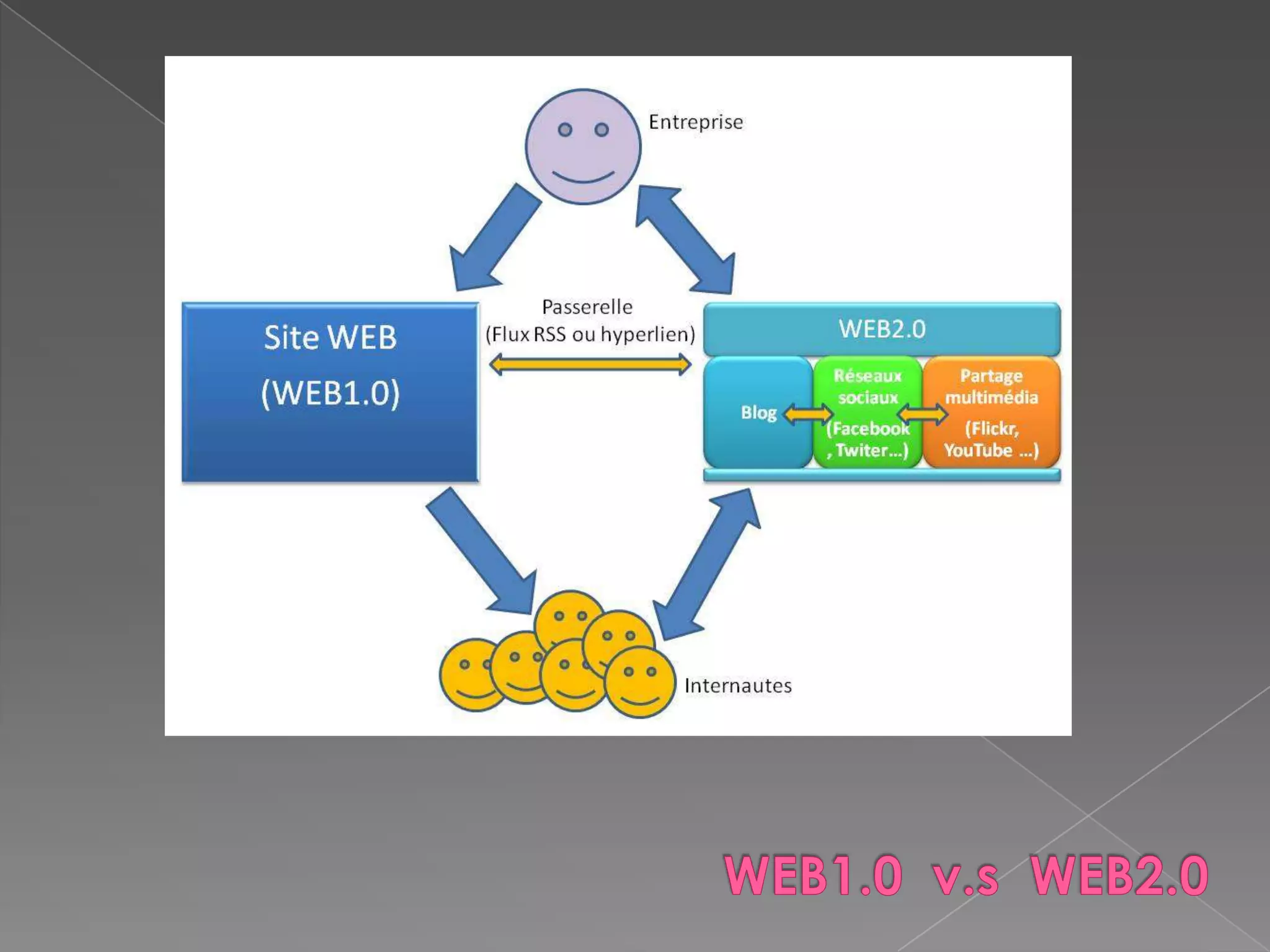
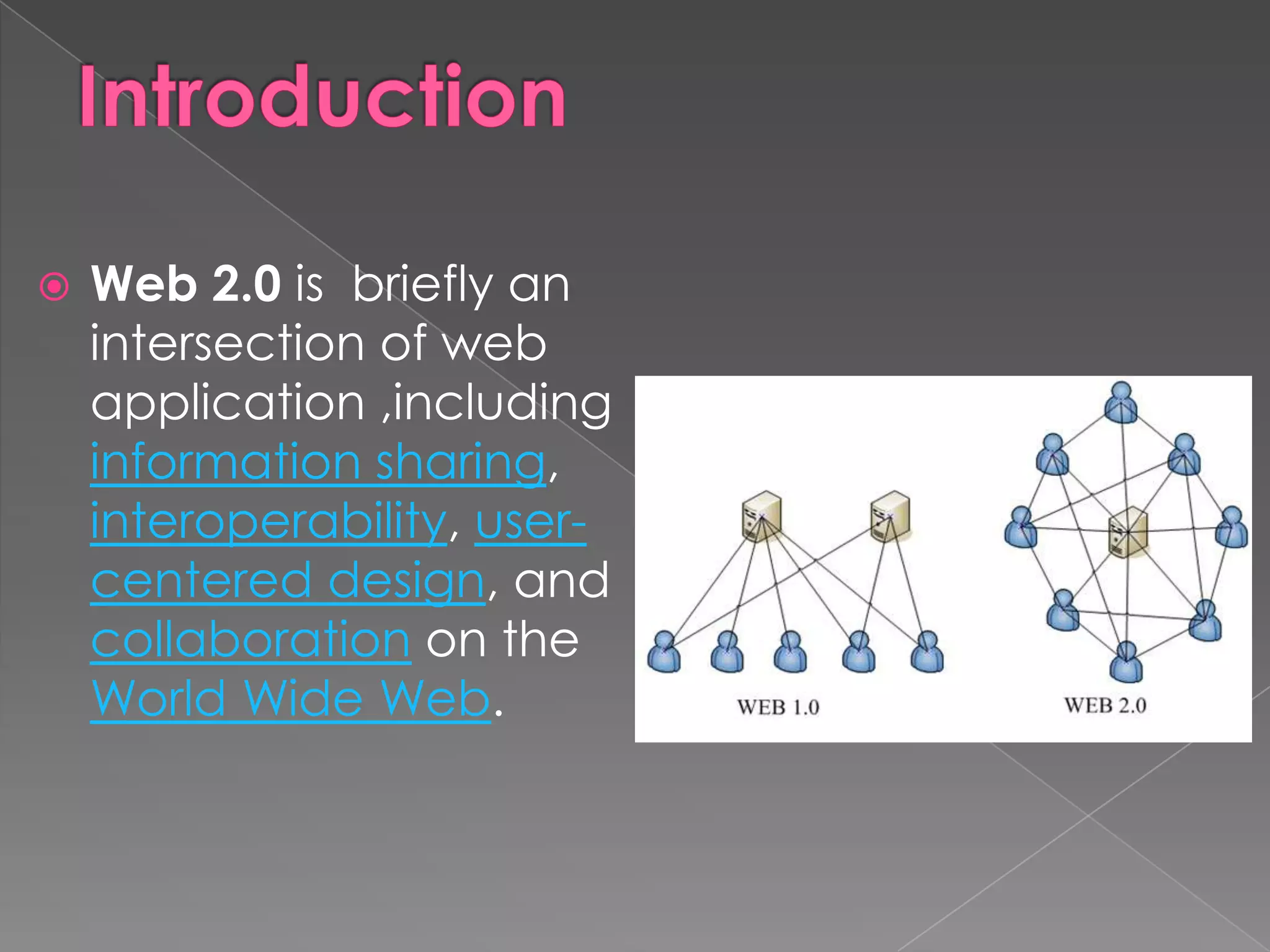
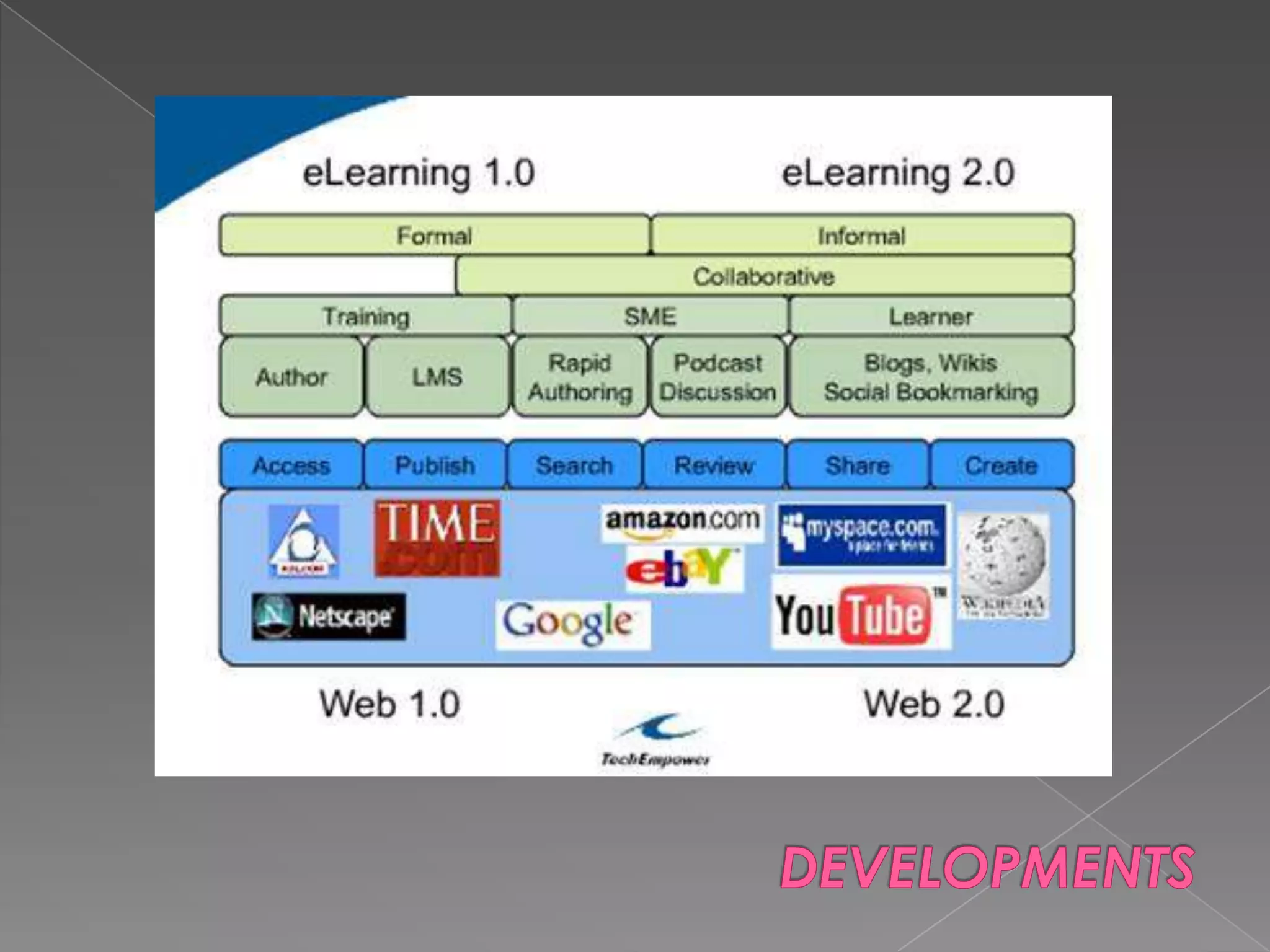
   Web 2.0 is briefly an
    intersection of web
    application ,including
    information sharing,
    interoperability, user-
    centered design, and
    collaboration on the
    World Wide Web.
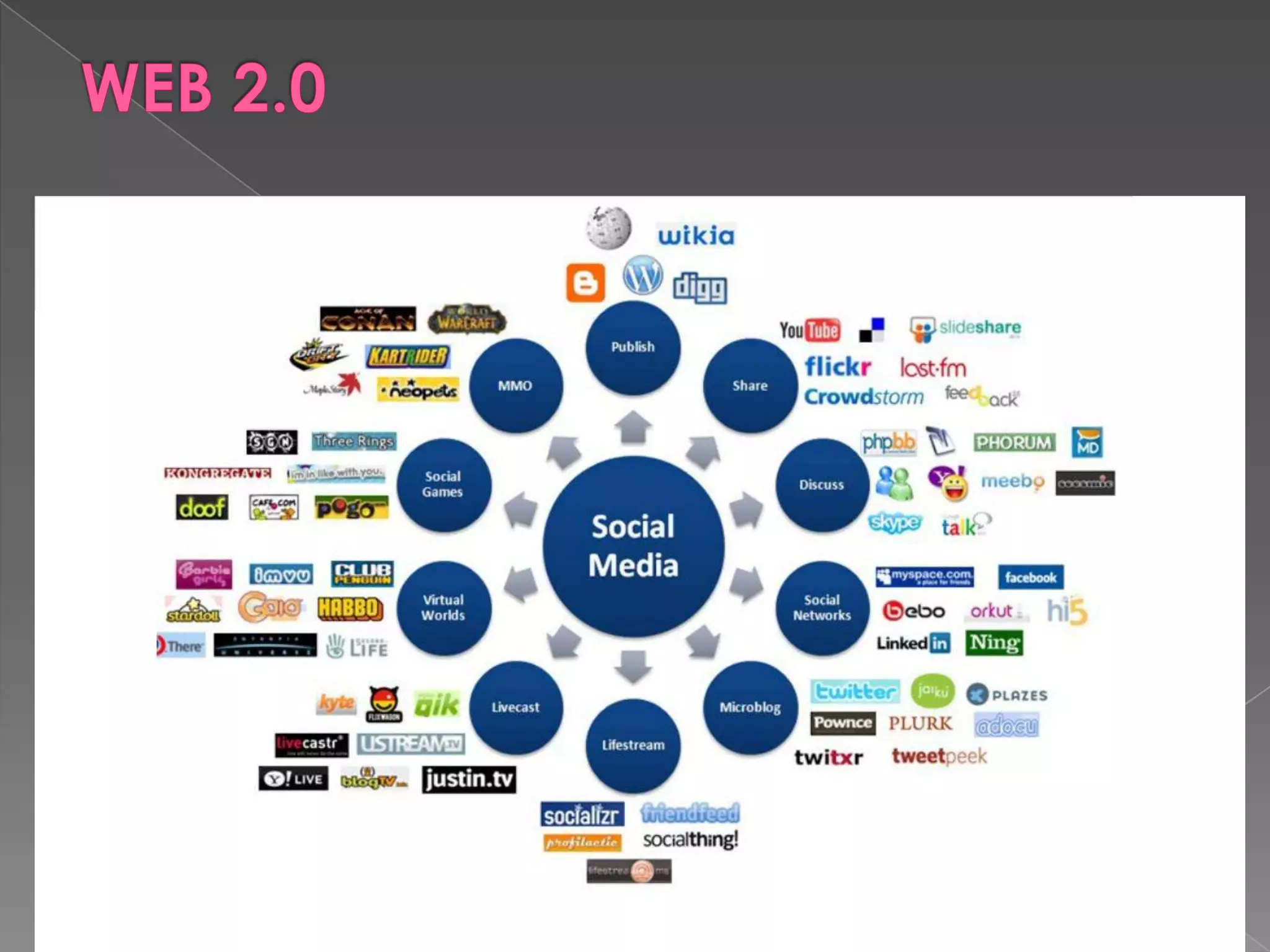
 ForExamples, it
 comprises social
 networking sites,
 blogs, wikis,
 video sharing
 sites, hosted
 services, web
 applications.
   It provides teachers
    with new ways to
    engage students in a
    meaningful way.

                              "Children raised on
                               new media
                               technologies are less
                               patient with filling out
                               worksheets and
                               listening to lectures”,
                               because students
                               already participate
                               on a global level.
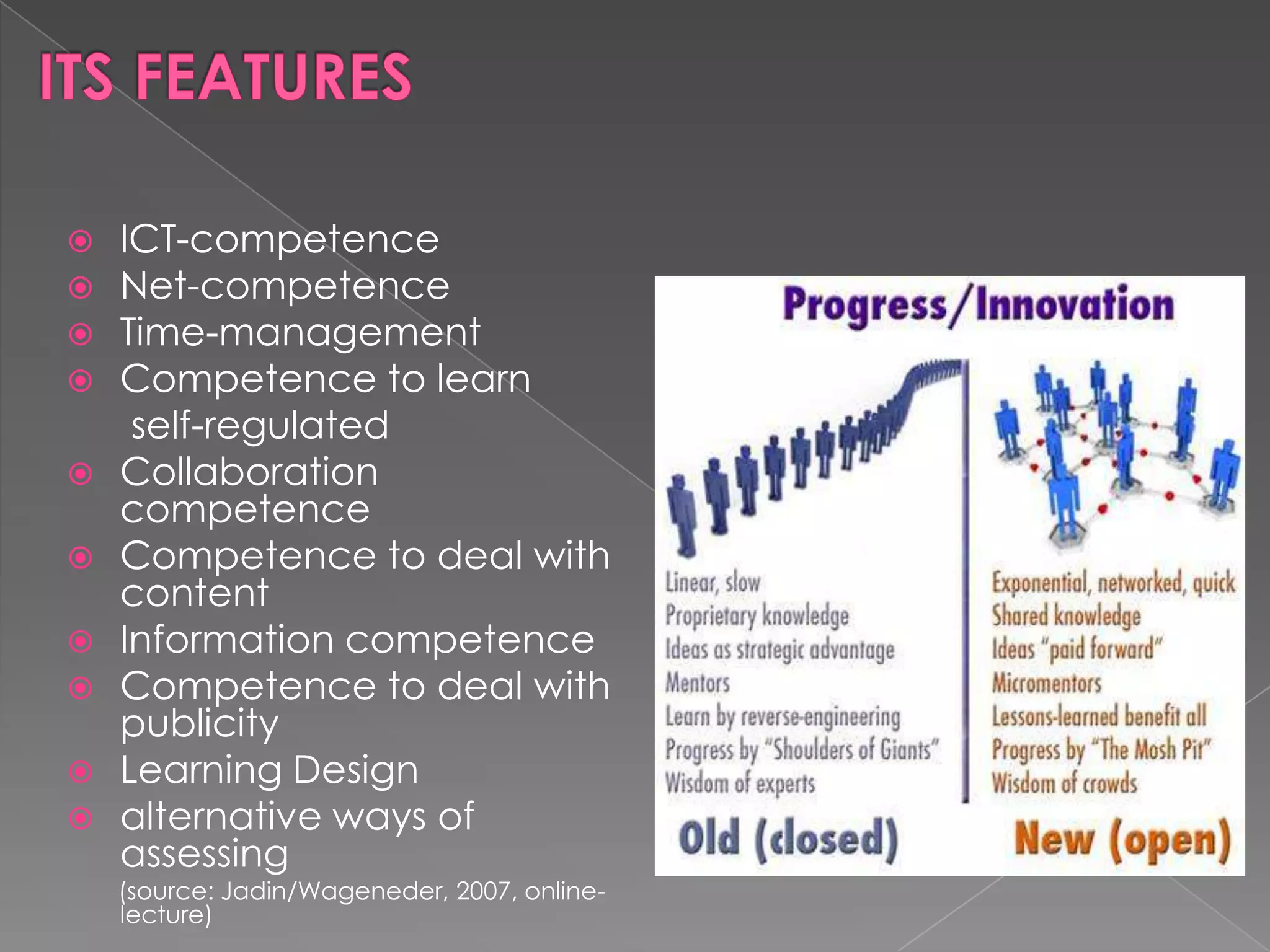
   ICT-competence
   Net-competence
   Time-management
   Competence to learn
     self-regulated
   Collaboration
    competence
   Competence to deal with
    content
   Information competence
   Competence to deal with
    publicity
   Learning Design
   alternative ways of
    assessing
    (source: Jadin/Wageneder, 2007, online-
    lecture)
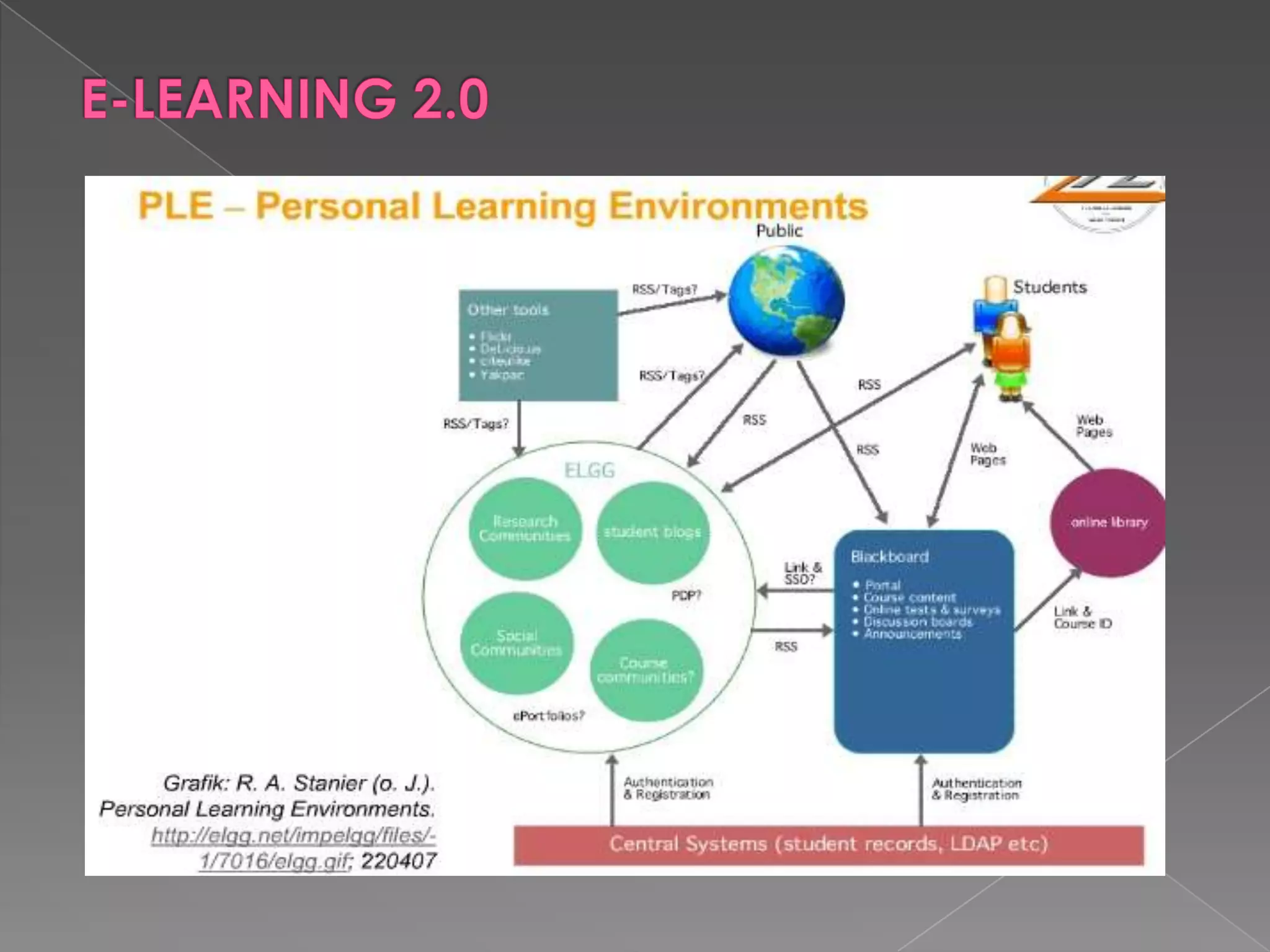
   GOOGLE SEARCHERS: web 2.0/ e-learning 2.0
   http://members.shaw.ca/dbrear/web2.0.html
   http://socialsoftware.blogsome.com/2007/04/2
    3/online-lecture-on-e-learning-20/
   http://idp.teldap.tw/epaper/20081113/41

497410185 web2.0

  • 8.
    Web 2.0 is briefly an intersection of web application ,including information sharing, interoperability, user- centered design, and collaboration on the World Wide Web.
  • 9.
     ForExamples, it comprises social networking sites, blogs, wikis, video sharing sites, hosted services, web applications.
  • 13.
    It provides teachers with new ways to engage students in a meaningful way.  "Children raised on new media technologies are less patient with filling out worksheets and listening to lectures”, because students already participate on a global level.
  • 14.
    ICT-competence  Net-competence  Time-management  Competence to learn self-regulated  Collaboration competence  Competence to deal with content  Information competence  Competence to deal with publicity  Learning Design  alternative ways of assessing (source: Jadin/Wageneder, 2007, online- lecture)
  • 15.
    GOOGLE SEARCHERS: web 2.0/ e-learning 2.0  http://members.shaw.ca/dbrear/web2.0.html  http://socialsoftware.blogsome.com/2007/04/2 3/online-lecture-on-e-learning-20/  http://idp.teldap.tw/epaper/20081113/41