Jason A. Sirmon COMM 306
What the heck is it? E-Fraud is an umbrella term that covers numerous activities across the Internet with the common intent of which is to make money or obtain services using illegally or fraudulently obtained information.
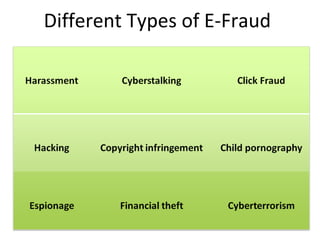
Different Types of E-Fraud
SPAM: Unsolicited sending of bulk  email for commercial purposes
Fraud: Altering computer input in an unauthorized way Destroying, suppressing, or stealing output to conceal unauthorized transactions.  Altering or deleting stored data Facilitated using computer systems, including bank fraud,  identity theft, extortion
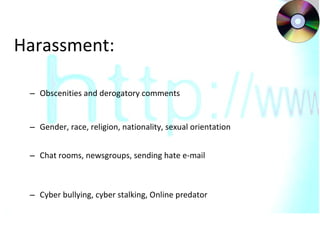
Harassment: Obscenities and derogatory comments Gender, race, religion, nationality, sexual orientation  Chat rooms, newsgroups, sending hate e-mail Cyber bullying, cyber stalking, Online predator
Drug trafficking: To sell illegal substances through encrypted e-mail or other technology Use courier Web sites to track illegal packages of pills Swapping recipes
Harassment: Obscenities and derogatory comments Gender, race, religion, nationality, sexual orientation  Chat rooms, newsgroups, sending hate e-mail Cyber bullying, cyber stalking, Online predator
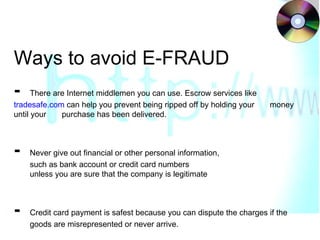
Ways to avoid E-FRAUD -   There are Internet middlemen you can use. Escrow services like  tradesafe.com  can help you prevent being ripped off by holding your  money until your  purchase has been delivered. -  Never give out financial or other personal information,  such as bank account or credit card numbers  unless you are sure that the company is legitimate -  Credit card payment is safest because you can dispute the charges if the  goods are misrepresented or never arrive.
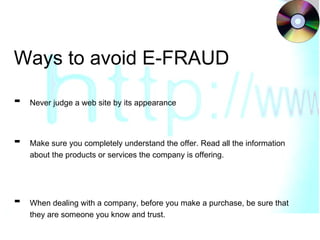
Ways to avoid E-FRAUD -  Never judge a web site by its appearance - Make sure you completely understand the offer. Read all the information  about the products or services the company is offering. -  When dealing with a company, before you make a purchase, be sure that  they are someone you know and trust.
References  7th Pacific Asia Conference on Information Systems, 10-13 July 2003, Adelaide, South Australia  Page  18 http://en.wikipedia.org/wiki/Internet_crime  http://www.marcusevans.com/marcusevans-conferences-event-details.asp?EventID=17422&SectorID=39   The Business Link  “AVOIDING E-FRAUD”  12/08  Calgary, Alberta www.elcnetwork.ca/ebusiness/efc_ avoid ing_ e - fraud .pdf  This presentation was completed for our Integrated Strategic Communication class at  Queens University of Charlotte. Contact the authors at  [email_address]

e-Fraud ppt

  • 1.
  • 2.
    What the heckis it? E-Fraud is an umbrella term that covers numerous activities across the Internet with the common intent of which is to make money or obtain services using illegally or fraudulently obtained information.
  • 3.
  • 4.
    SPAM: Unsolicited sendingof bulk email for commercial purposes
  • 5.
    Fraud: Altering computerinput in an unauthorized way Destroying, suppressing, or stealing output to conceal unauthorized transactions. Altering or deleting stored data Facilitated using computer systems, including bank fraud, identity theft, extortion
  • 6.
    Harassment: Obscenities andderogatory comments Gender, race, religion, nationality, sexual orientation Chat rooms, newsgroups, sending hate e-mail Cyber bullying, cyber stalking, Online predator
  • 7.
    Drug trafficking: Tosell illegal substances through encrypted e-mail or other technology Use courier Web sites to track illegal packages of pills Swapping recipes
  • 8.
    Harassment: Obscenities andderogatory comments Gender, race, religion, nationality, sexual orientation Chat rooms, newsgroups, sending hate e-mail Cyber bullying, cyber stalking, Online predator
  • 9.
    Ways to avoidE-FRAUD - There are Internet middlemen you can use. Escrow services like tradesafe.com can help you prevent being ripped off by holding your money until your purchase has been delivered. - Never give out financial or other personal information, such as bank account or credit card numbers unless you are sure that the company is legitimate - Credit card payment is safest because you can dispute the charges if the goods are misrepresented or never arrive.
  • 10.
    Ways to avoidE-FRAUD - Never judge a web site by its appearance - Make sure you completely understand the offer. Read all the information about the products or services the company is offering. - When dealing with a company, before you make a purchase, be sure that they are someone you know and trust.
  • 11.
    References 7thPacific Asia Conference on Information Systems, 10-13 July 2003, Adelaide, South Australia Page 18 http://en.wikipedia.org/wiki/Internet_crime http://www.marcusevans.com/marcusevans-conferences-event-details.asp?EventID=17422&SectorID=39 The Business Link “AVOIDING E-FRAUD” 12/08 Calgary, Alberta www.elcnetwork.ca/ebusiness/efc_ avoid ing_ e - fraud .pdf This presentation was completed for our Integrated Strategic Communication class at Queens University of Charlotte. Contact the authors at [email_address]