How
To
Make
An
Effective
Presentation
Presentation?
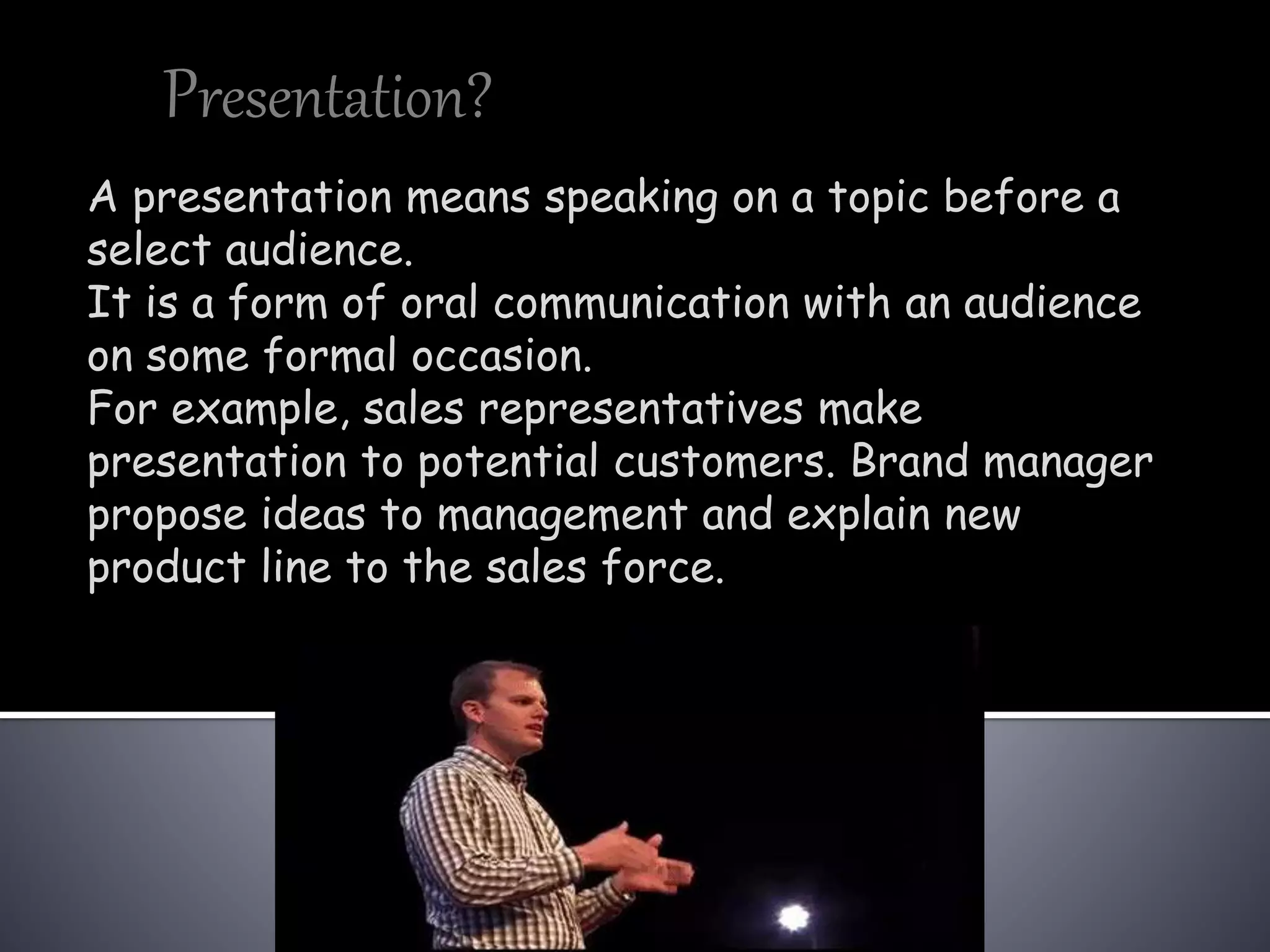
A presentation means speaking on a topic before a
select audience.
It is a form of oral communication with an audience
on some formal occasion.
For example, sales representatives make
presentation to potential customers. Brand manager
propose ideas to management and explain new
product line to the sales force.
Some essentialfeaturesofapresentationareasfollows
 A presentation is made formally before a select
audience.
 It has a clear structure with an introduction,
explanation and conclusion.
 It uses audio visual aids to represent facts and
figures through tables, graph, charts etc.
 Humor may also be employed to create a good
relationship with audience.
Starting a Presentation
 Introduction
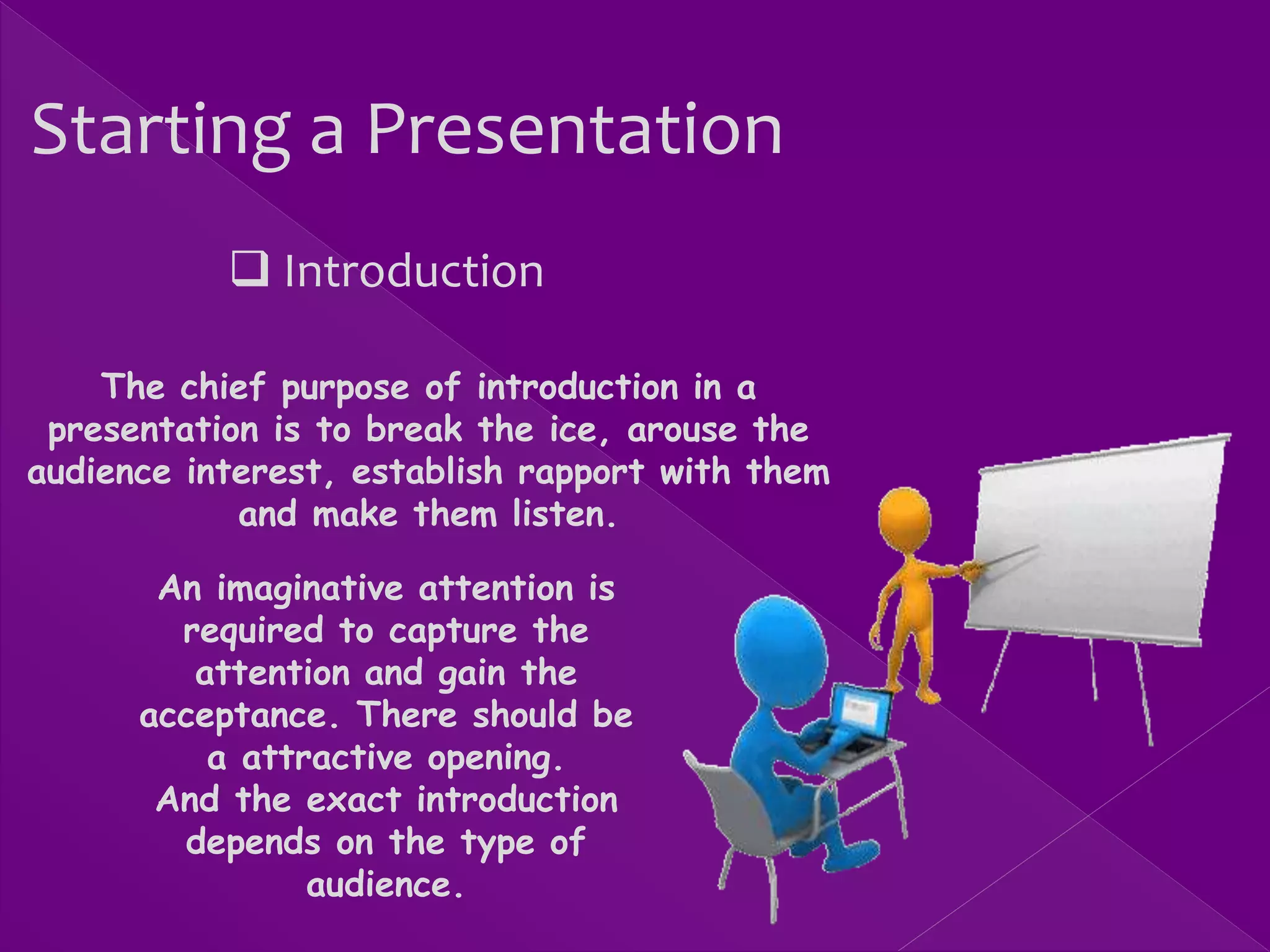
The chief purpose of introduction in a
presentation is to break the ice, arouse the
audience interest, establish rapport with them
and make them listen.
An imaginative attention is
required to capture the
attention and gain the
acceptance. There should be
a attractive opening.
And the exact introduction
depends on the type of
audience.
 Question And Answer Session
After concluding the presentation,
the speaker should thank the
audience for their patience and
cooperation and motivate to raise
their queries, if any.
He should take each question to
provide suitable answer so as to
satisfy the participants.
He should not feel offended if
somebody asks an awkward question.
He should always be humble and polite in answering
the question's
5
STAR
STRATEGY
WHO
WHAT
WHEN
WHY
WHERE
WHY
The presenter must have a
clear idea of the purpose of
presentation.
The purpose may be informing
the audience about some latest
development of persuading
them to do or to sell something.
Thus, the reason of the
presentation should be clear
WHO
The speaker should understand
his audience and shape the
message to suit the audience.
Information about the number,
age, sex, education, knowledge
level and status of the listeners
in deciding the format, tone and
the manner of presentation.
WHERE
It refers to the venue of
presentation which may be a
workplace, formal or informal.
The tone and format of the
presentation should be in tune
with the place.
If the place of the presentation
is the unknown one, the
presenter should arrive early and
familiarize himself with the place
for a smooth presentation.
WHEN
The time of presentation is of
utmost importance. Suppose,
the presentation is in the
morning hours and there is only
one presenter, he can take
extra time with the permission
of audience. But if it is towards
the end of the day and there
are few more presenters, it is
deal to be brief and lively.
WHAT
It refers to the contents of
the presentations. The subject-
matter of the presentation
should be decided depending
upon the needs and educational
backgrounds of the listners.
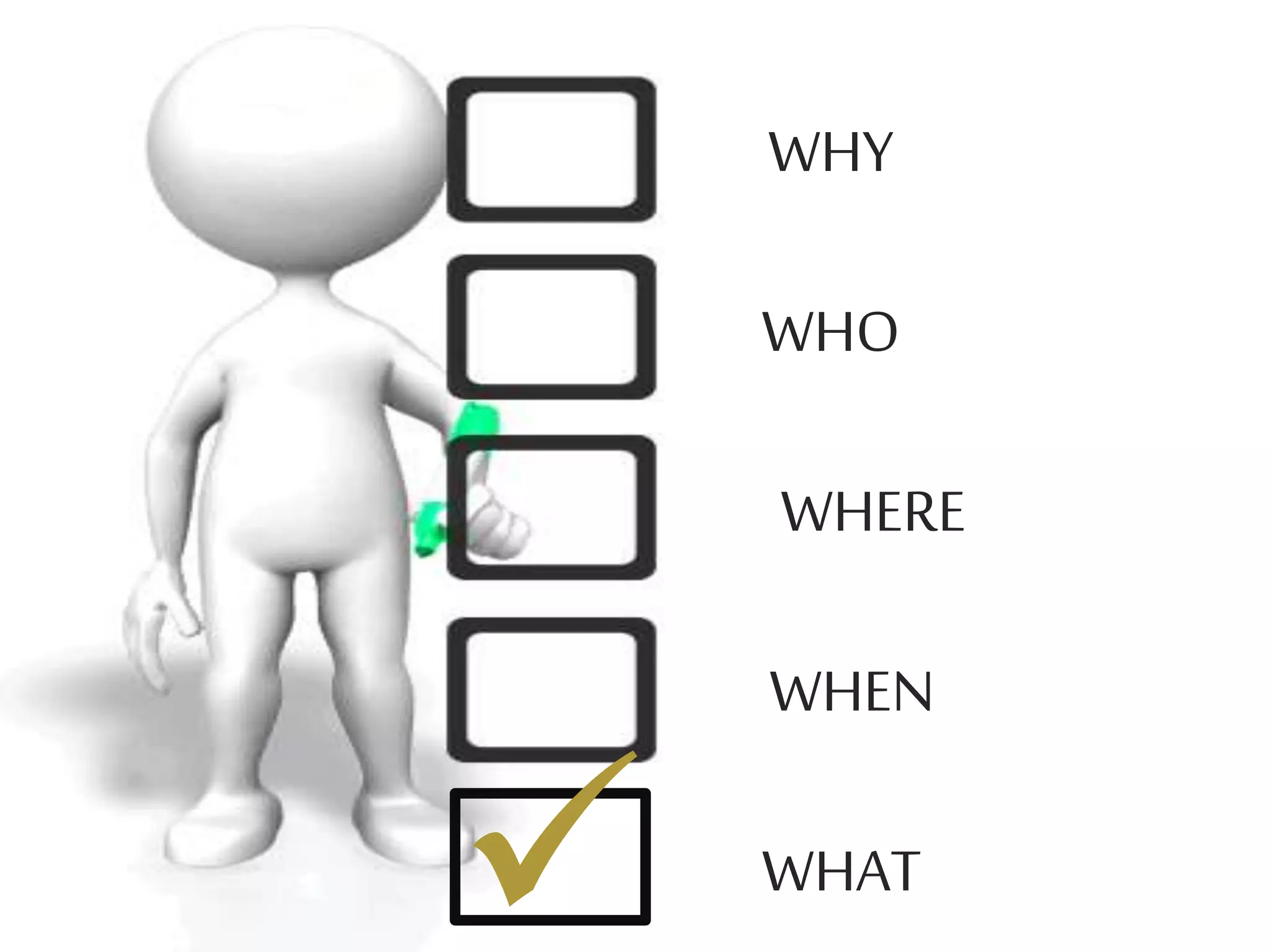
WHY
WHO
WHERE
WHEN
WHAT

ANY
QUESTION
CLASS?
EFFECTIVE PRESENTATIONS: How to make an Effective Presentation.

EFFECTIVE PRESENTATIONS: How to make an Effective Presentation.

  • 1.
  • 3.
    Presentation? A presentation meansspeaking on a topic before a select audience. It is a form of oral communication with an audience on some formal occasion. For example, sales representatives make presentation to potential customers. Brand manager propose ideas to management and explain new product line to the sales force.
  • 4.
    Some essentialfeaturesofapresentationareasfollows  Apresentation is made formally before a select audience.  It has a clear structure with an introduction, explanation and conclusion.  It uses audio visual aids to represent facts and figures through tables, graph, charts etc.  Humor may also be employed to create a good relationship with audience.
  • 5.
    Starting a Presentation Introduction The chief purpose of introduction in a presentation is to break the ice, arouse the audience interest, establish rapport with them and make them listen. An imaginative attention is required to capture the attention and gain the acceptance. There should be a attractive opening. And the exact introduction depends on the type of audience.
  • 7.
     Question AndAnswer Session After concluding the presentation, the speaker should thank the audience for their patience and cooperation and motivate to raise their queries, if any. He should take each question to provide suitable answer so as to satisfy the participants. He should not feel offended if somebody asks an awkward question. He should always be humble and polite in answering the question's
  • 8.
  • 9.
  • 10.
    WHY The presenter musthave a clear idea of the purpose of presentation. The purpose may be informing the audience about some latest development of persuading them to do or to sell something. Thus, the reason of the presentation should be clear
  • 11.
    WHO The speaker shouldunderstand his audience and shape the message to suit the audience. Information about the number, age, sex, education, knowledge level and status of the listeners in deciding the format, tone and the manner of presentation.
  • 12.
    WHERE It refers tothe venue of presentation which may be a workplace, formal or informal. The tone and format of the presentation should be in tune with the place. If the place of the presentation is the unknown one, the presenter should arrive early and familiarize himself with the place for a smooth presentation.
  • 13.
    WHEN The time ofpresentation is of utmost importance. Suppose, the presentation is in the morning hours and there is only one presenter, he can take extra time with the permission of audience. But if it is towards the end of the day and there are few more presenters, it is deal to be brief and lively.
  • 14.
    WHAT It refers tothe contents of the presentations. The subject- matter of the presentation should be decided depending upon the needs and educational backgrounds of the listners.
  • 15.
  • 17.