THE ACT OF SHARING OR
EXCHANGING INFORMATION, IDEAS
OR FEELINGS.
COMMUNICATION
COMMUNICATION
PROCESS
SENDER
ENCODING
FEEDBACK
CHANNEL
RECEIVER
DECODING
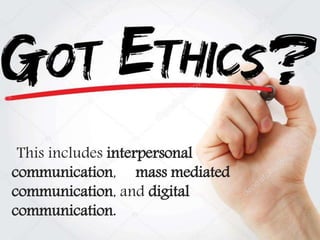
This includes interpersonal
communication, mass mediated
communication, and digital
communication.
A business with Unethical communication is
not as effective as one with ethical
communication practices.
For example, business with unethical
communication practices may withhold
evidence that it is harming the environment or
breaking a law through a lack of transparence;
while a business with ethical communication
practices will immediately press a release to
the affected parties.
For the sake of counterexample, there
maybe a time when censorship is the
more effective business practice: take
the case of trade secrets, when a
design method or management tactic
is not only openly revealed in the
name of competitive advantage; or
when terms of agreement/use that a
business may have with a service
provider forbids transparency.
Importance of Ethical Communication
 Helps you discover and make explicit your
ethical position and standards.
 Enables you to diagnose the ethical position of
your interlocutors.
 Provides you with a conceptual framework that
will guide you towards becoming a consistent
business ethical communicator
Principles of Communication
Ethics
Promote communication climate of caring
and mutual understanding that respect the
unique needs and characteristics of individual
communicators.
 Condemn communication that degrades
individual and humanity through distortion,
intimidation and violence, and through the
expressions of intolerance.
 Promote access to communication
resources and opportunities as
necessary to fulfill human potential and
contribute to the well being of families,
communities and society.
THAT’S ALL!
Communication - Ethics and Process

Communication - Ethics and Process

  • 1.
    THE ACT OFSHARING OR EXCHANGING INFORMATION, IDEAS OR FEELINGS. COMMUNICATION
  • 2.
  • 4.
    This includes interpersonal communication,mass mediated communication, and digital communication.
  • 5.
    A business withUnethical communication is not as effective as one with ethical communication practices. For example, business with unethical communication practices may withhold evidence that it is harming the environment or breaking a law through a lack of transparence; while a business with ethical communication practices will immediately press a release to the affected parties.
  • 7.
    For the sakeof counterexample, there maybe a time when censorship is the more effective business practice: take the case of trade secrets, when a design method or management tactic is not only openly revealed in the name of competitive advantage; or when terms of agreement/use that a business may have with a service provider forbids transparency.
  • 9.
    Importance of EthicalCommunication  Helps you discover and make explicit your ethical position and standards.  Enables you to diagnose the ethical position of your interlocutors.  Provides you with a conceptual framework that will guide you towards becoming a consistent business ethical communicator
  • 10.
  • 11.
    Promote communication climateof caring and mutual understanding that respect the unique needs and characteristics of individual communicators.
  • 12.
     Condemn communicationthat degrades individual and humanity through distortion, intimidation and violence, and through the expressions of intolerance.
  • 13.
     Promote accessto communication resources and opportunities as necessary to fulfill human potential and contribute to the well being of families, communities and society. THAT’S ALL!