

Our Portfolio in
Educational
Technology II
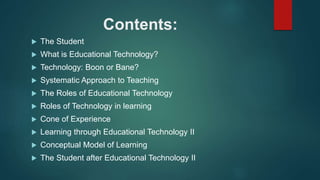
Contents:
 The Student
 What is Educational Technology?
 Technology: Boon or Bane?
 Systematic Approach to Teaching
 The Roles of Educational Technology
 Roles of Technology in learning
 Cone of Experience
 Learning through Educational Technology II
 Conceptual Model of Learning
 The Student after Educational Technology II
Educational Technology
II
The Student
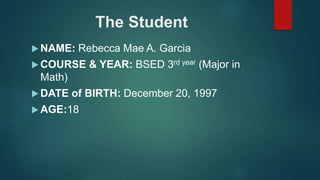
 NAME: Rebecca Mae A. Garcia
 COURSE & YEAR: BSED 3rd year (Major in
Math)
 DATE of BIRTH: December 20, 1997
 AGE:18
The Student
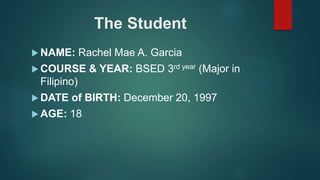
 NAME: Rachel Mae A. Garcia
 COURSE & YEAR: BSED 3rd year (Major in
Filipino)
 DATE of BIRTH: December 20, 1997
 AGE: 18
What is Educational
Technology?
 Conceptions of educational technology have
been evolving as wide as the field has, and
they are continuing to evolve, as we are a 3rd
world country, people/we are witnesses of our
country’s modernization.
 Educational technology is whatever stuff you
need to use to support the effective teaching
or learning.
 Educational technology like computer is said
to be a big help to many of us because it
makes our work easier. as a matter of fact
these new technologies are already changing
our lives. it is now possible for us to teach a
mute and a deaf student using this gadget. In
that way they will be motivated to learn though
they have this inabilities ,it is all because of
what this technology can do to make the
learning more fun, not just those people but
also those ordinary people.
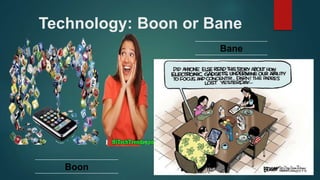
Technology: Boon or Bane
Boon
Bane
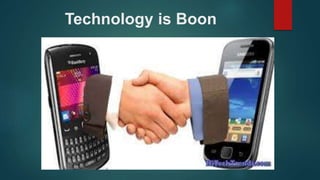
Technology is Boon
 With Technology we can do lots of things for
educating oneself. Technology contributes
much to the teaching-learning process. Cell
phones or web cams; you can be connected to
someone miles and miles away. Computers
and other gadgets can be used in learning, for
researching and getting new information
 You can even use Television to watch events
so you can be aware to what is happening all
over the globe. Those are evidence to prove
that technology in BOON to human lives.
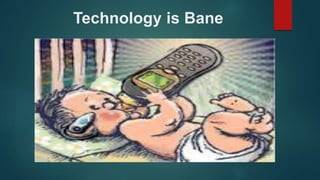
Technology is Bane
 Technology is Bane
 When technology is not used properly,
technology can only break the learning
process of the student. If cell phones or
computers are only used for gaming it will not
be helpful for the learner, or even make the
improvement of the learner process, it could
possibly make their learning process weaker.
Systematic Approach to
Teaching
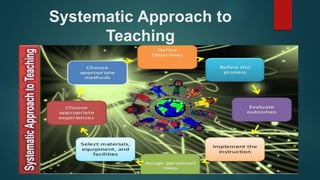
 The System Approach views the entire
educational program as a system of closely
interrelated parts. It is an orchestrated pattern
with all parts harmoniously integrated into the
whole: the school, the teacher, the students,
the media, the materials, and assessment
tools and procedures. Such an approach
integrates the older, more familiar methods
and tools of instructions with the new ones
such as the computer.
Systematic Approach to Teaching
 It is the focus of the teaching to the students
whether do they receive interest in the learning
or not. It should always be in the focus of the
leaner. The teaching method of the teacher
must be organized. The teacher gives
examples that are related to the topic, and it
must be efficient or effective.
The Roles of Educational
Technology in Learning
 With all of this so intrinsic to their ‘outside
school’ experience, the challenge for the
teaching profession is how to harness all this
for learning within the classroom and at home.
This generation of ‘digital natives’ has much
lower need for libraries of physical content for
example, the traditional resource used by
students half a generation ago. Learning styles
are changing and teachers need to adapt their
teaching styles accordingly.
Roles of Technology in Learning
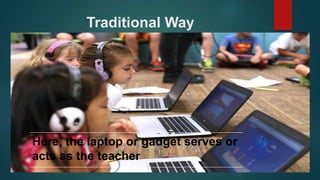
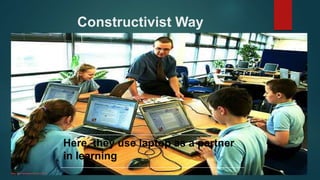
Technology can play a
TRADITIONAL role as a “delivery
vehicles for instructional lessons” or
in a CONTRUCTIVIST way as
“partners” in the learning process
Traditional Way
Here, the laptop or gadget serves or
acts as the teacher
Constructivist Way
Here, they use laptop as a partner
in learning
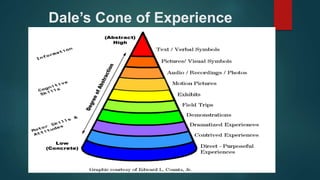
Dale’s Cone of Experience
 Dale’s Cone of Experience is a visual
model that is composed of eleven (11)
stages starting from concrete experiences
at the bottom of the cone then it becomes
more and more abstract as it reach the
peak of the cone. Also, according to Dale,
the arrangement in the cone is not based
on its difficulty but rather based on
abstraction and on the number of senses
involved. The experiences in each stages
can be mixed and are interrelated that
fosters more meaningful learning.
Learning through Educational
Technology 2
 Educational technology like computer is
said to be a big help to many of us because
it makes our work easier. as a matter of fact
these new technologies are already
changing our lives. it is now possible for
us to teach a mute and a deaf student
using this gadget.
 In that way they will be motivated to learn
though they have this inabilities ,it is all
because of what this technology can do to
make the learning more fun, not just those
people but also those ordinary people.
Future Shock
 Future shock by Alvin Toffler is one of the most
interesting topic we discussed from this subject.
(although we didn't read the whole book )
 Future Shock by Alvin Toffler discusses change and
what happens to people; how they do and don't
adapt. Even though the book was first published in
1970, it is certainly appropriate for the changes of the
age of technology. The book was written about the
future and that future is now. Massive changes result
in stress and disorientation, especially when these
changes take place in a short period of time.
 Man must cope with these changes and
Toffler's point is that there isn't much known
about the mechanisms for coping and
adaptability. Toffler attempts to study these
mechanisms in the book.
 Toffler's point is that the tactics of the past will
not be successful in the future. If future shock
is to be avoided, society must control the
accelerating thrust and must make plans for
the future and the changes it will bring.
Generation Gap
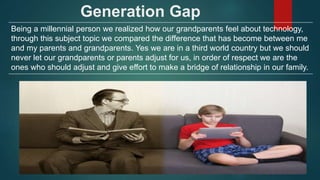
Being a millennial person we realized how our grandparents feel about technology,
through this subject topic we compared the difference that has become between me
and my parents and grandparents. Yes we are in a third world country but we should
never let our grandparents or parents adjust for us, in order of respect we are the
ones who should adjust and give effort to make a bridge of relationship in our family.
Social Media
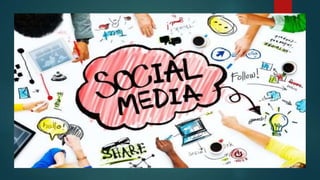
 We also learned many things in social media through computer and other gadgets used for
communicating like cell phones and tablets. It allow individuals, create and share information,
and in networks. Most of the applications we found out to be useful and fun. 
Conceptual Model of Learning
 1. Meaningful Learning
 2. Discovery Learning
 3. Generative Learning
 4. Constructivism
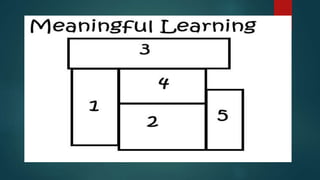
Meaningful Learning
If the traditional learning environment
gives stress to rote learning and simple
memorization, meaningful learning give
focus to new experience that departs
from the learning of a sequence of words
but gives attention to meaning
 Meaningful learning refers to the concept
that the learned knowledge (lets say a fact) is
fully understood by the individual and that the
individual knows how that specific fact relates
to other stored facts (stored in your brain that
is).
It Assumes that:
 Students already have prior knowledge that is
relevant to new learning.
 Students are willing to perform class work to
find connection between what they already
know and what they can learn.
Discovery Learning
Discovery Learning
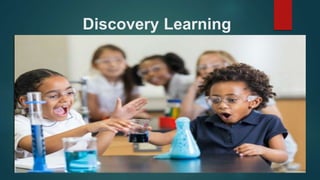
 Discovery learning is an inquiry-based,
constructivist learning theory that takes place
in problem solving situations where the learner
draws on his or her own past experience and
existing knowledge to discover facts and
relationships and new truths to be learned.
 This is differentiated from reception (meeting
point of meaningful and discovery learning) in
which ideas are presented to students in a
well-organized way., such as through detailed
set of instructions to complete an experiment.
 Ever recalled why you are so nervous, yet very
excited in doing an experiment test? It is
because of the idea that you are about to
discover something first hand.
 In discovery learning students perform tasks to
uncover what is to be learned. New ideas and
new decisions are generated in the learning
process, regardless of the need to move on
and depart from the structured lesson
previously set.
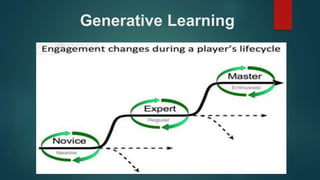
Generative Learning
 Generative learning is a theory that involves
the active integration of new ideas with the
learner's existing schemata. The main idea
of generative learning is that, in order to
learn with understanding, a learner has to
construct meaning actively.
 Here we have active listeners who attend
learning events and generate meaning from
this experience and draw inferences thereby
creating a personal model of explanation to
the new experience in the context of the
existing knowledge.
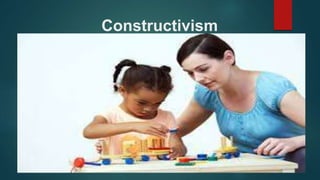
Constructivism
Constructivism
 Constructivism as a paradigm or worldview
posits that learning is an active, constructive
process. The learner is an information
constructor. People actively construct or create
their own subjective representations of
objective reality. New information is linked to to
prior knowledge, thus mental representations
are subjective
 Here the learner builds a personal
understanding through appropriate learning
activities and a goo learning environment. The
most accepted constructivism are:
 Learning in what a person can actively
assemble for himself and not what he can just
ask for someone else.
 Role of learning is to help the individual live to
his personal world.
The Student after Educational
Technology 2
 Students are expected to get information, facts and ideas about
communicating to each other, they Are even expected to know
what are its advantages and disadvantages in using a
technology.
 Students must learn new strategies for conducting and
evaluating oneself.
 They also need to improve themselves in using technology and
should know the importance of using technology.

Educational Technology 2 Ed8

  • 1.
  • 2.
    Contents:  The Student What is Educational Technology?  Technology: Boon or Bane?  Systematic Approach to Teaching  The Roles of Educational Technology  Roles of Technology in learning  Cone of Experience  Learning through Educational Technology II  Conceptual Model of Learning  The Student after Educational Technology II
  • 3.
  • 4.
    The Student  NAME:Rebecca Mae A. Garcia  COURSE & YEAR: BSED 3rd year (Major in Math)  DATE of BIRTH: December 20, 1997  AGE:18
  • 5.
    The Student  NAME:Rachel Mae A. Garcia  COURSE & YEAR: BSED 3rd year (Major in Filipino)  DATE of BIRTH: December 20, 1997  AGE: 18
  • 6.
    What is Educational Technology? Conceptions of educational technology have been evolving as wide as the field has, and they are continuing to evolve, as we are a 3rd world country, people/we are witnesses of our country’s modernization.  Educational technology is whatever stuff you need to use to support the effective teaching or learning.
  • 7.
     Educational technologylike computer is said to be a big help to many of us because it makes our work easier. as a matter of fact these new technologies are already changing our lives. it is now possible for us to teach a mute and a deaf student using this gadget. In that way they will be motivated to learn though they have this inabilities ,it is all because of what this technology can do to make the learning more fun, not just those people but also those ordinary people.
  • 8.
    Technology: Boon orBane Boon Bane
  • 9.
  • 10.
     With Technologywe can do lots of things for educating oneself. Technology contributes much to the teaching-learning process. Cell phones or web cams; you can be connected to someone miles and miles away. Computers and other gadgets can be used in learning, for researching and getting new information
  • 11.
     You caneven use Television to watch events so you can be aware to what is happening all over the globe. Those are evidence to prove that technology in BOON to human lives.
  • 12.
  • 13.
     Technology isBane  When technology is not used properly, technology can only break the learning process of the student. If cell phones or computers are only used for gaming it will not be helpful for the learner, or even make the improvement of the learner process, it could possibly make their learning process weaker.
  • 14.
  • 15.
     The SystemApproach views the entire educational program as a system of closely interrelated parts. It is an orchestrated pattern with all parts harmoniously integrated into the whole: the school, the teacher, the students, the media, the materials, and assessment tools and procedures. Such an approach integrates the older, more familiar methods and tools of instructions with the new ones such as the computer.
  • 16.
    Systematic Approach toTeaching  It is the focus of the teaching to the students whether do they receive interest in the learning or not. It should always be in the focus of the leaner. The teaching method of the teacher must be organized. The teacher gives examples that are related to the topic, and it must be efficient or effective.
  • 17.
    The Roles ofEducational Technology in Learning
  • 18.
     With allof this so intrinsic to their ‘outside school’ experience, the challenge for the teaching profession is how to harness all this for learning within the classroom and at home. This generation of ‘digital natives’ has much lower need for libraries of physical content for example, the traditional resource used by students half a generation ago. Learning styles are changing and teachers need to adapt their teaching styles accordingly.
  • 19.
    Roles of Technologyin Learning Technology can play a TRADITIONAL role as a “delivery vehicles for instructional lessons” or in a CONTRUCTIVIST way as “partners” in the learning process
  • 20.
    Traditional Way Here, thelaptop or gadget serves or acts as the teacher
  • 21.
    Constructivist Way Here, theyuse laptop as a partner in learning
  • 22.
    Dale’s Cone ofExperience
  • 23.
     Dale’s Coneof Experience is a visual model that is composed of eleven (11) stages starting from concrete experiences at the bottom of the cone then it becomes more and more abstract as it reach the peak of the cone. Also, according to Dale, the arrangement in the cone is not based on its difficulty but rather based on abstraction and on the number of senses involved. The experiences in each stages can be mixed and are interrelated that fosters more meaningful learning.
  • 24.
    Learning through Educational Technology2  Educational technology like computer is said to be a big help to many of us because it makes our work easier. as a matter of fact these new technologies are already changing our lives. it is now possible for us to teach a mute and a deaf student using this gadget.
  • 25.
     In thatway they will be motivated to learn though they have this inabilities ,it is all because of what this technology can do to make the learning more fun, not just those people but also those ordinary people.
  • 27.
    Future Shock  Futureshock by Alvin Toffler is one of the most interesting topic we discussed from this subject. (although we didn't read the whole book )  Future Shock by Alvin Toffler discusses change and what happens to people; how they do and don't adapt. Even though the book was first published in 1970, it is certainly appropriate for the changes of the age of technology. The book was written about the future and that future is now. Massive changes result in stress and disorientation, especially when these changes take place in a short period of time.
  • 28.
     Man mustcope with these changes and Toffler's point is that there isn't much known about the mechanisms for coping and adaptability. Toffler attempts to study these mechanisms in the book.  Toffler's point is that the tactics of the past will not be successful in the future. If future shock is to be avoided, society must control the accelerating thrust and must make plans for the future and the changes it will bring.
  • 29.
    Generation Gap Being amillennial person we realized how our grandparents feel about technology, through this subject topic we compared the difference that has become between me and my parents and grandparents. Yes we are in a third world country but we should never let our grandparents or parents adjust for us, in order of respect we are the ones who should adjust and give effort to make a bridge of relationship in our family.
  • 31.
    Social Media  Wealso learned many things in social media through computer and other gadgets used for communicating like cell phones and tablets. It allow individuals, create and share information, and in networks. Most of the applications we found out to be useful and fun. 
  • 32.
    Conceptual Model ofLearning  1. Meaningful Learning  2. Discovery Learning  3. Generative Learning  4. Constructivism
  • 34.
    Meaningful Learning If thetraditional learning environment gives stress to rote learning and simple memorization, meaningful learning give focus to new experience that departs from the learning of a sequence of words but gives attention to meaning
  • 35.
     Meaningful learningrefers to the concept that the learned knowledge (lets say a fact) is fully understood by the individual and that the individual knows how that specific fact relates to other stored facts (stored in your brain that is).
  • 36.
    It Assumes that: Students already have prior knowledge that is relevant to new learning.  Students are willing to perform class work to find connection between what they already know and what they can learn.
  • 37.
  • 38.
    Discovery Learning  Discoverylearning is an inquiry-based, constructivist learning theory that takes place in problem solving situations where the learner draws on his or her own past experience and existing knowledge to discover facts and relationships and new truths to be learned.
  • 39.
     This isdifferentiated from reception (meeting point of meaningful and discovery learning) in which ideas are presented to students in a well-organized way., such as through detailed set of instructions to complete an experiment.  Ever recalled why you are so nervous, yet very excited in doing an experiment test? It is because of the idea that you are about to discover something first hand.
  • 40.
     In discoverylearning students perform tasks to uncover what is to be learned. New ideas and new decisions are generated in the learning process, regardless of the need to move on and depart from the structured lesson previously set.
  • 41.
  • 42.
     Generative learningis a theory that involves the active integration of new ideas with the learner's existing schemata. The main idea of generative learning is that, in order to learn with understanding, a learner has to construct meaning actively.  Here we have active listeners who attend learning events and generate meaning from this experience and draw inferences thereby creating a personal model of explanation to the new experience in the context of the existing knowledge.
  • 43.
  • 44.
    Constructivism  Constructivism asa paradigm or worldview posits that learning is an active, constructive process. The learner is an information constructor. People actively construct or create their own subjective representations of objective reality. New information is linked to to prior knowledge, thus mental representations are subjective
  • 45.
     Here thelearner builds a personal understanding through appropriate learning activities and a goo learning environment. The most accepted constructivism are:  Learning in what a person can actively assemble for himself and not what he can just ask for someone else.  Role of learning is to help the individual live to his personal world.
  • 46.
    The Student afterEducational Technology 2  Students are expected to get information, facts and ideas about communicating to each other, they Are even expected to know what are its advantages and disadvantages in using a technology.  Students must learn new strategies for conducting and evaluating oneself.  They also need to improve themselves in using technology and should know the importance of using technology.