THE EDUCATIONAL SYSTEM IN GREECE
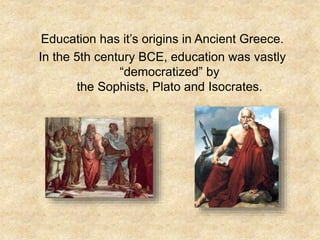
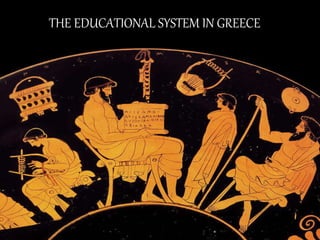
Education has it’s origins in Ancient Greece.
In the 5th century BCE, education was vastly
“democratized” by
the Sophists, Plato and Isocrates.
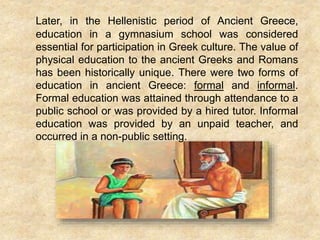
Later, in the Hellenistic period of Ancient Greece,
education in a gymnasium school was considered
essential for participation in Greek culture. The value of
physical education to the ancient Greeks and Romans
has been historically unique. There were two forms of
education in ancient Greece: formal and informal.
Formal education was attained through attendance to a
public school or was provided by a hired tutor. Informal
education was provided by an unpaid teacher, and
occurred in a non-public setting.
Nowadays, the educational system in Greece is
mainly characterized by its versatile character ,
which is ordained by the numerous laws and decrees
of the Greek Ministry of Culture, Education and
Religious Affairs. The Greek educational system is
very centralized; both in terms of organization and
administration.
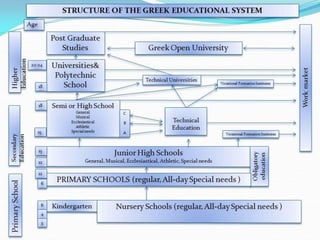
 Education in Greece is compulsory for all children
between the ages of 6 and 15. The education system is
divided into Early Education and Care for children up to
the age of 6; Primary Education for schoolchildren
between the ages of 6 and 12, Secondary Education
for teenagers between the ages of 12 and 18, Higher
Education for those wishing to attend university
courses, and, finally, Lifelong Learning, which caters for
adult students of all ages.
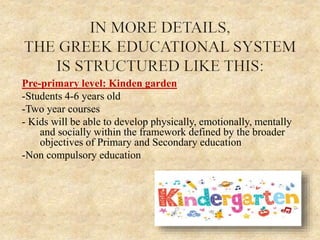
Pre-primary level: Kinden garden
-Students 4-6 years old
-Two year courses
- Kids will be able to develop physically, emotionally, mentally
and socially within the framework defined by the broader
objectives of Primary and Secondary education
-Non compulsory education
Primary education (compulsory)
-Student age from 6 to12
-Subjects
1. Language
2. Reading/Writing
3. Environmental studies
4. Mathematics
5. English language etc.
-Time of operation 8am-1pm
Secondary schools:
Junior High School (compulsory)
-Student age from 12 to 15
-Variety of subjects
1. Modern and Ancient Greek language
2. Mathematics
3. Physics
4. Chemistry
5. Geography
6. History
7. Physical Education
8. Religious studies
9. Music and Arts etc
-Time of operation 8am to 2pm
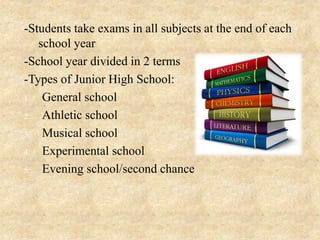
-Students take exams in all subjects at the end of each
school year
-School year divided in 2 terms
-Types of Junior High School:
1. General school
2. Athletic school
3. Musical school
4. Experimental school
5. Evening school/second chance
High School (non compulsory):
-Ages from 16-18
-Subjects:
1. Combination of General education and Advanced Placement
-Students who whish to pursue to Higher Education take Pan-
Hellenic exams in a specific number of Advanced
Placement courses which fall into one of the following
categories: Humanities, Science and Technology.
-Time of operation 8am to 2pm
-Types of High school:
1. General school
2. Vocational education
3. Evening schools/second chance
Higher education:
-Most of them are 4 years programs
-Courses in Higher Education institutes take form
of either lectures or workshops and most of the
courses spread over one semester
-Most departments offer one-year or two-year
postgraduate courses as well as the
opportunity to pursue a doctoral degree
4th EPAL KAVALAS GREECE

Educational system in greece

  • 1.
  • 2.
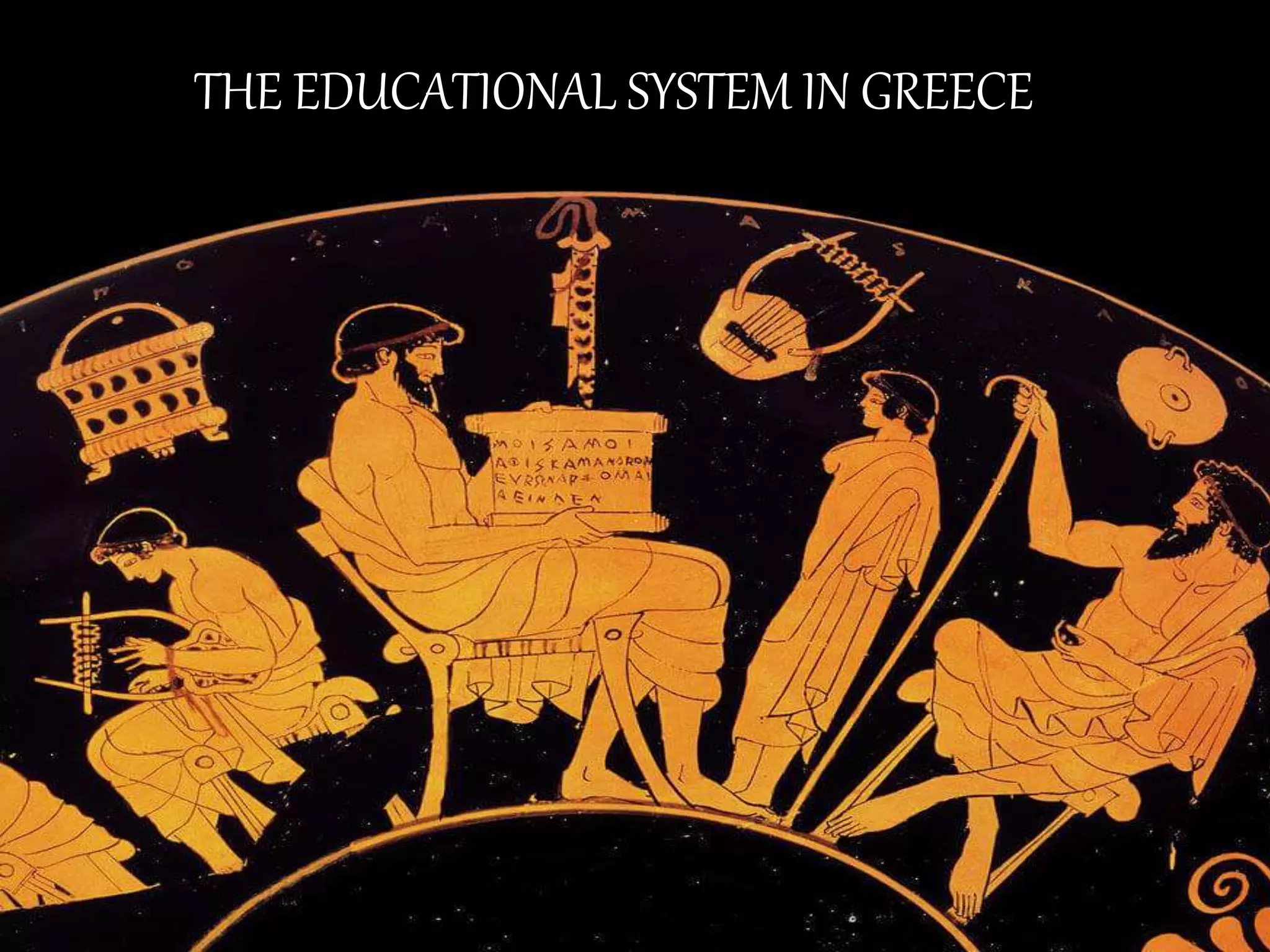
    Education has it’sorigins in Ancient Greece. In the 5th century BCE, education was vastly “democratized” by the Sophists, Plato and Isocrates.
  • 3.
    Later, in theHellenistic period of Ancient Greece, education in a gymnasium school was considered essential for participation in Greek culture. The value of physical education to the ancient Greeks and Romans has been historically unique. There were two forms of education in ancient Greece: formal and informal. Formal education was attained through attendance to a public school or was provided by a hired tutor. Informal education was provided by an unpaid teacher, and occurred in a non-public setting.
  • 4.
    Nowadays, the educationalsystem in Greece is mainly characterized by its versatile character , which is ordained by the numerous laws and decrees of the Greek Ministry of Culture, Education and Religious Affairs. The Greek educational system is very centralized; both in terms of organization and administration.
  • 5.
     Education inGreece is compulsory for all children between the ages of 6 and 15. The education system is divided into Early Education and Care for children up to the age of 6; Primary Education for schoolchildren between the ages of 6 and 12, Secondary Education for teenagers between the ages of 12 and 18, Higher Education for those wishing to attend university courses, and, finally, Lifelong Learning, which caters for adult students of all ages.
  • 7.
    Pre-primary level: Kindengarden -Students 4-6 years old -Two year courses - Kids will be able to develop physically, emotionally, mentally and socially within the framework defined by the broader objectives of Primary and Secondary education -Non compulsory education
  • 8.
    Primary education (compulsory) -Studentage from 6 to12 -Subjects 1. Language 2. Reading/Writing 3. Environmental studies 4. Mathematics 5. English language etc. -Time of operation 8am-1pm
  • 9.
    Secondary schools: Junior HighSchool (compulsory) -Student age from 12 to 15 -Variety of subjects 1. Modern and Ancient Greek language 2. Mathematics 3. Physics 4. Chemistry 5. Geography 6. History 7. Physical Education 8. Religious studies 9. Music and Arts etc -Time of operation 8am to 2pm
  • 10.
    -Students take examsin all subjects at the end of each school year -School year divided in 2 terms -Types of Junior High School: 1. General school 2. Athletic school 3. Musical school 4. Experimental school 5. Evening school/second chance
  • 11.
    High School (noncompulsory): -Ages from 16-18 -Subjects: 1. Combination of General education and Advanced Placement -Students who whish to pursue to Higher Education take Pan- Hellenic exams in a specific number of Advanced Placement courses which fall into one of the following categories: Humanities, Science and Technology. -Time of operation 8am to 2pm -Types of High school: 1. General school 2. Vocational education 3. Evening schools/second chance
  • 12.
    Higher education: -Most ofthem are 4 years programs -Courses in Higher Education institutes take form of either lectures or workshops and most of the courses spread over one semester -Most departments offer one-year or two-year postgraduate courses as well as the opportunity to pursue a doctoral degree
  • 14.