Educational Innovation
MISSION 1
Describes the definition and classification of
learning environment.
Learning environment is both physical and nonphysical education. And in the classroom this includes
situations or conditions that affect learning. Contributing
resources to support learning. Technique and its use in
teaching. And the relationship between the students and
teachers.
Innovation
Action, ideas, inventions or new methods. Or that
have been modified from the original developer. They must
pass the test to become a reliable research that can be
used effectively.
•
•
•

•

To solve the problems in education.
More responsive human learning to increase.
Using an innovative application to the learning
resources as efficiently as possible with their learning.
Development potential In particular, cognitive
processes and thought processes.
MISSION 1
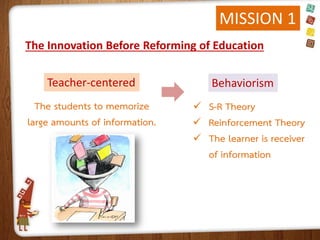
The Innovation Before Reforming of Education
Teacher-centered

The students to memorize
large amounts of information.

Behaviorism




S-R Theory
Reinforcement Theory
The learner is receiver
of information
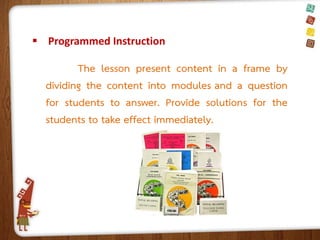
 Programmed Instruction

The lesson present content in a frame by
dividing the content into modules and a question
for students to answer. Provide solutions for the
students to take effect immediately.
 Instructional Module

The lessons learned individually and
groups. Teaching and learning feature a variety
of activities that response to differences
between individuals.
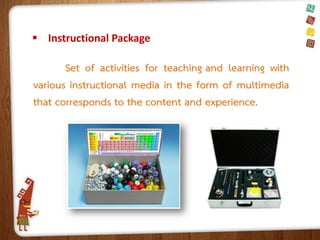
 Instructional Package

Set of activities for teaching and learning with
various instructional media in the form of multimedia
that corresponds to the content and experience.
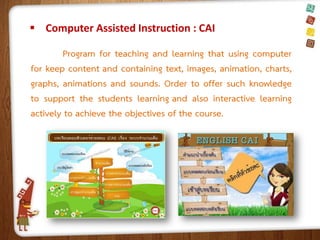
 Computer Assisted Instruction : CAI

Program for teaching and learning that using computer
for keep content and containing text, images, animation, charts,
graphs, animations and sounds. Order to offer such knowledge
to support the students learning and also interactive learning
actively to achieve the objectives of the course.
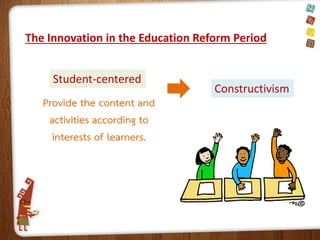
The Innovation in the Education Reform Period
Student-centered

Provide the content and
activities according to
interests of learners.

Constructivism
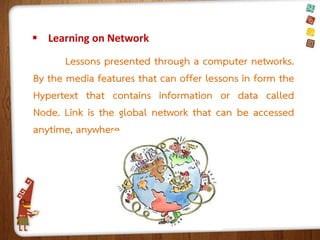
 Learning on Network

Lessons presented through a computer networks.
By the media features that can offer lessons in form the
Hypertext that contains information or data called
Node. Link is the global network that can be accessed
anytime, anywhere.
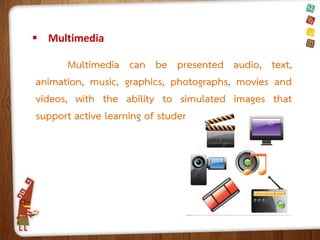
 Multimedia

Multimedia can be presented audio, text,
animation, music, graphics, photographs, movies and
videos, with the ability to simulated images that
support active learning of student.
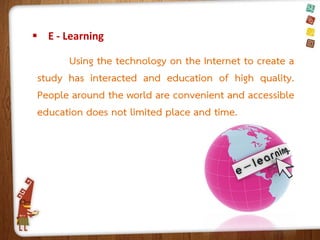
 E - Learning

Using the technology on the Internet to create a
study has interacted and education of high quality.
People around the world are convenient and accessible
education does not limited place and time.
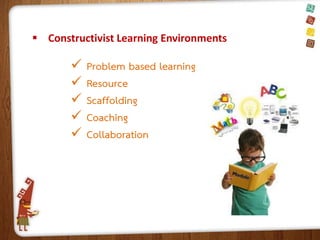
 Constructivist Learning Environments







Problem based learning
Resource
Scaffolding
Coaching
Collaboration
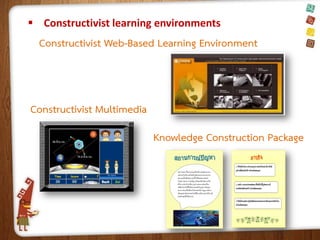
 Constructivist learning environments

Constructivist Web-Based Learning Environment

Constructivist Multimedia
Knowledge Construction Package
Prem sawat school

Mission 2

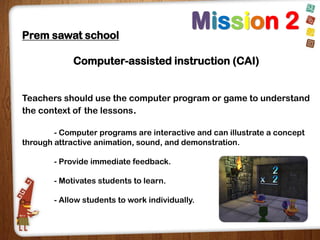
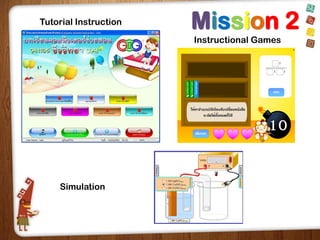
Computer-assisted instruction (CAI)
Teachers should use the computer program or game to understand
the context of the lessons.
- Computer programs are interactive and can illustrate a concept
through attractive animation, sound, and demonstration.
- Provide immediate feedback.
- Motivates students to learn.
- Allow students to work individually.
Tutorial Instruction

Mission 2
Instructional Games

Simulation
Mission 2
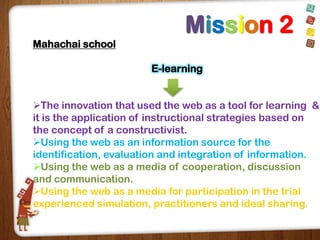
Mahachai school
E-learning
The innovation that used the web as a tool for learning &
it is the application of instructional strategies based on
the concept of a constructivist.
Using the web as an information source for the
identification, evaluation and integration of information.
Using the web as a media of cooperation, discussion
and communication.
Using the web as a media for participation in the trial
experienced simulation, practitioners and ideal sharing.
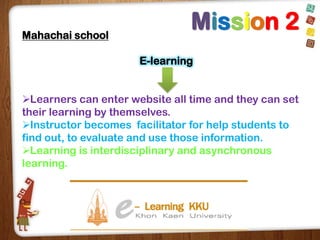
Mahachai school

Mission 2
E-learning

Learners can enter website all time and they can set
their learning by themselves.
Instructor becomes facilitator for help students to
find out, to evaluate and use those information.
Learning is interdisciplinary and asynchronous
learning.
Mission 2
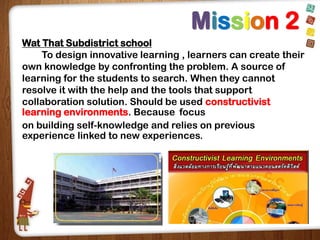
Wat That Subdistrict school
To design innovative learning , learners can create their
own knowledge by confronting the problem. A source of
learning for the students to search. When they cannot
resolve it with the help and the tools that support
collaboration solution. Should be used constructivist
learning environments. Because focus
on building self-knowledge and relies on previous
experience linked to new experiences.

Mission 2
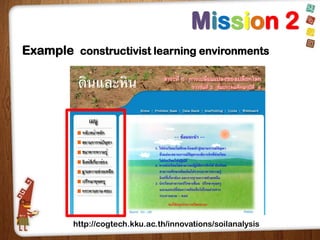
Example constructivist learning environments

http://cogtech.kku.ac.th/innovations/soilanalysis
Mission 3

Of the type of learning
innovation in Chapter 7 give students propose
of learning innovation correspond to its
characteristics majors that students will practice
teaching and explain the reasons.
Mission 3
Learning environments based on constructivist
because in learning about mathematics and science,
students must have an understanding of content not
only memorization which this learning innovation can
help promote learning as follows
Mission 3
- Focus on building self-knowledge, by act or
practice through the thought process.
- The previous experience or knowledge is
already linked to new experiences or new knowledge
to expand intellectual structure.
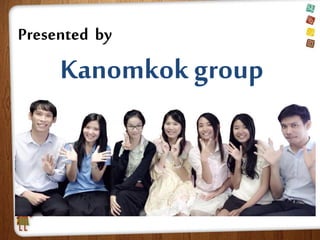
Presented by

Kanomkok group
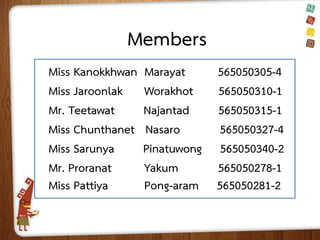
Members
Miss Kanokkhwan
Miss Jaroonlak
Mr. Teetawat
Miss Chunthanet
Miss Sarunya
Mr. Proranat
Miss Pattiya

Marayat
565050305-4
Worakhot
565050310-1
Najantad
565050315-1
Nasaro
565050327-4
Pinatuwong 565050340-2
Yakum
565050278-1
Pong-aram 565050281-2
educational inovation

educational inovation

  • 1.
  • 2.
    MISSION 1 Describes thedefinition and classification of learning environment. Learning environment is both physical and nonphysical education. And in the classroom this includes situations or conditions that affect learning. Contributing resources to support learning. Technique and its use in teaching. And the relationship between the students and teachers.
  • 3.
    Innovation Action, ideas, inventionsor new methods. Or that have been modified from the original developer. They must pass the test to become a reliable research that can be used effectively. • • • • To solve the problems in education. More responsive human learning to increase. Using an innovative application to the learning resources as efficiently as possible with their learning. Development potential In particular, cognitive processes and thought processes.
  • 4.
    MISSION 1 The InnovationBefore Reforming of Education Teacher-centered The students to memorize large amounts of information. Behaviorism    S-R Theory Reinforcement Theory The learner is receiver of information
  • 5.
     Programmed Instruction Thelesson present content in a frame by dividing the content into modules and a question for students to answer. Provide solutions for the students to take effect immediately.
  • 6.
     Instructional Module Thelessons learned individually and groups. Teaching and learning feature a variety of activities that response to differences between individuals.
  • 7.
     Instructional Package Setof activities for teaching and learning with various instructional media in the form of multimedia that corresponds to the content and experience.
  • 8.
     Computer AssistedInstruction : CAI Program for teaching and learning that using computer for keep content and containing text, images, animation, charts, graphs, animations and sounds. Order to offer such knowledge to support the students learning and also interactive learning actively to achieve the objectives of the course.
  • 9.
    The Innovation inthe Education Reform Period Student-centered Provide the content and activities according to interests of learners. Constructivism
  • 10.
     Learning onNetwork Lessons presented through a computer networks. By the media features that can offer lessons in form the Hypertext that contains information or data called Node. Link is the global network that can be accessed anytime, anywhere.
  • 11.
     Multimedia Multimedia canbe presented audio, text, animation, music, graphics, photographs, movies and videos, with the ability to simulated images that support active learning of student.
  • 12.
     E -Learning Using the technology on the Internet to create a study has interacted and education of high quality. People around the world are convenient and accessible education does not limited place and time.
  • 13.
     Constructivist LearningEnvironments      Problem based learning Resource Scaffolding Coaching Collaboration
  • 14.
     Constructivist learningenvironments Constructivist Web-Based Learning Environment Constructivist Multimedia Knowledge Construction Package
  • 15.
    Prem sawat school Mission2 Computer-assisted instruction (CAI) Teachers should use the computer program or game to understand the context of the lessons. - Computer programs are interactive and can illustrate a concept through attractive animation, sound, and demonstration. - Provide immediate feedback. - Motivates students to learn. - Allow students to work individually.
  • 16.
  • 17.
    Mission 2 Mahachai school E-learning Theinnovation that used the web as a tool for learning & it is the application of instructional strategies based on the concept of a constructivist. Using the web as an information source for the identification, evaluation and integration of information. Using the web as a media of cooperation, discussion and communication. Using the web as a media for participation in the trial experienced simulation, practitioners and ideal sharing.
  • 18.
    Mahachai school Mission 2 E-learning Learnerscan enter website all time and they can set their learning by themselves. Instructor becomes facilitator for help students to find out, to evaluate and use those information. Learning is interdisciplinary and asynchronous learning.
  • 19.
    Mission 2 Wat ThatSubdistrict school To design innovative learning , learners can create their own knowledge by confronting the problem. A source of learning for the students to search. When they cannot resolve it with the help and the tools that support collaboration solution. Should be used constructivist learning environments. Because focus on building self-knowledge and relies on previous experience linked to new experiences.
  • 20.
    Mission 2 Example constructivistlearning environments http://cogtech.kku.ac.th/innovations/soilanalysis
  • 21.
    Mission 3 Of thetype of learning innovation in Chapter 7 give students propose of learning innovation correspond to its characteristics majors that students will practice teaching and explain the reasons.
  • 22.
    Mission 3 Learning environmentsbased on constructivist because in learning about mathematics and science, students must have an understanding of content not only memorization which this learning innovation can help promote learning as follows
  • 23.
    Mission 3 - Focuson building self-knowledge, by act or practice through the thought process. - The previous experience or knowledge is already linked to new experiences or new knowledge to expand intellectual structure.
  • 24.
  • 25.
    Members Miss Kanokkhwan Miss Jaroonlak Mr.Teetawat Miss Chunthanet Miss Sarunya Mr. Proranat Miss Pattiya Marayat 565050305-4 Worakhot 565050310-1 Najantad 565050315-1 Nasaro 565050327-4 Pinatuwong 565050340-2 Yakum 565050278-1 Pong-aram 565050281-2