www.drjayeshpatidar.blogspot.com
The term education has its origin in the
Latin words educo, educare & educatum.
Etymologically, the word education is
derived from the Latin words educo where
e means ‘out of’ duco means ‘I lead.’
Accorsing to this view, education means ‘I
lead out darkness into brightness’.
7/14/2014www.drjayeshpatidar.blogspot.in 2
Education means the training for the country &
love for the nation.
-Chanakya
Education is realization of self
-Shankaracharya
Education is an all-round drawing out of the
best in child & man-body, mind & spirit.
-Mahatma Gandhi
Education is the natural, harmonious &
progressive development of man’s innate
power.
- Pestalozzi
7/14/2014www.drjayeshpatidar.blogspot.in 3
Nursing education is a professional education
which is consciously & systematically planned &
implemented through instruction & discipline &
aims the harmonious development of the
physical, intellectual, social, emotional, spiritual
& aesthetic powers or abilities of the students in
order to tender professional nursing care to
people of all ages, in all phases of health &
illness, in a variety of setting, in the best or
highest possible manner.
7/14/2014www.drjayeshpatidar.blogspot.in 4
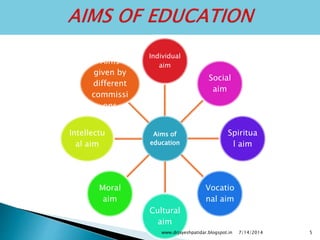
Aims of
education
Individual
aim
Social
aim
Spiritua
l aim
Vocatio
nal aim
Cultural
aim
Moral
aim
Intellectu
al aim
Aims
given by
different
commissi
ons
7/14/2014www.drjayeshpatidar.blogspot.in 5
 Individual aim:
 Development as an individual of a human being.
 Moral & spiritual development.
 Cultural development.
 Harmonious development
 Promote positive physical development
 Development of a right personality
 Development of good citizenship
 Development of good leadership
 Emotional & mental development
 Character building, etc.
7/14/2014www.drjayeshpatidar.blogspot.in 6
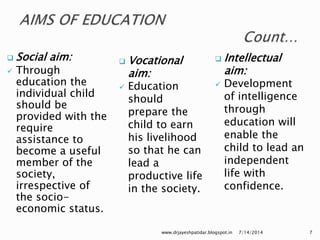
 Social aim:
 Through
education the
individual child
should be
provided with the
require
assistance to
become a useful
member of the
society,
irrespective of
the socio-
economic status.
 Vocational
aim:
 Education
should
prepare the
child to earn
his livelihood
so that he can
lead a
productive life
in the society.
7/14/2014www.drjayeshpatidar.blogspot.in 7
 Intellectual
aim:
 Development
of intelligence
through
education will
enable the
child to lead an
independent
life with
confidence.
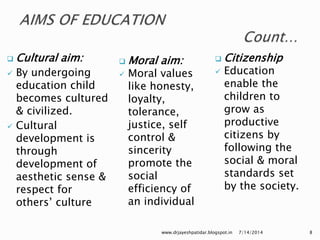
 Cultural aim:
 By undergoing
education child
becomes cultured
& civilized.
 Cultural
development is
through
development of
aesthetic sense &
respect for
others’ culture
 Moral aim:
 Moral values
like honesty,
loyalty,
tolerance,
justice, self
control &
sincerity
promote the
social
efficiency of
an individual
7/14/2014www.drjayeshpatidar.blogspot.in 8
 Citizenship
 Education
enable the
children to
grow as
productive
citizens by
following the
social & moral
standards set
by the society.
 Physical
health & well
being:
 Education
prepare the
child to lead a
healthy life
through
providing the
knowledge
required for a
healthy living.
 Character
development:
 Education assist
the child to
develop certain
human values,
attitudes & habits
which are
essential for
building a
desirable
character.
7/14/2014www.drjayeshpatidar.blogspot.in 9
 Education for
leisure:
 Education
prepares the
child to use his
leisure time for
doing
something
useful.
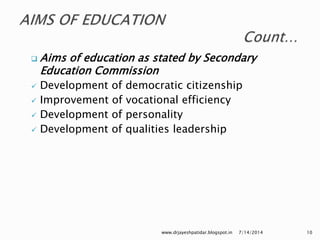
 Aims of education as stated by Secondary
Education Commission
 Development of democratic citizenship
 Improvement of vocational efficiency
 Development of personality
 Development of qualities leadership
7/14/2014www.drjayeshpatidar.blogspot.in 10
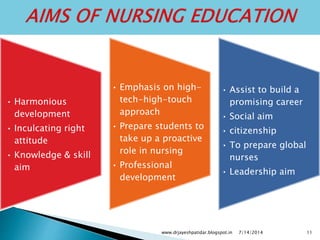
• Harmonious
development
• Inculcating right
attitude
• Knowledge & skill
aim
• Emphasis on high-
tech-high-touch
approach
• Prepare students to
take up a proactive
role in nursing
• Professional
development
• Assist to build a
promising career
• Social aim
• citizenship
• To prepare global
nurses
• Leadership aim
7/14/2014www.drjayeshpatidar.blogspot.in 11
7/14/2014www.drjayeshpatidar.blogspot.in 12
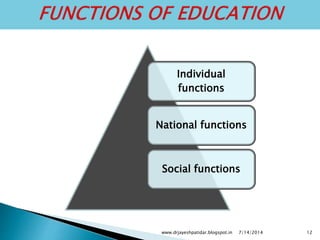
Individual
functions
National functions
Social functions
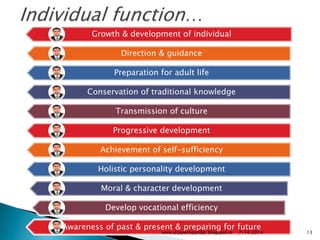
Growth & development of individual
Direction & guidance
Preparation for adult life
Conservation of traditional knowledge
Transmission of culture
Progressive development
Achievement of self-sufficiency
Holistic personality development
Moral & character development
Develop vocational efficiency
Awareness of past & present & preparing for future
7/14/2014www.drjayeshpatidar.blogspot.in 13
7/14/2014www.drjayeshpatidar.blogspot.in 14
Ensuring
national
development
Promoting
national
integrity
Continuous
supply of
skilled
workforce
Developing
leaders for
nation
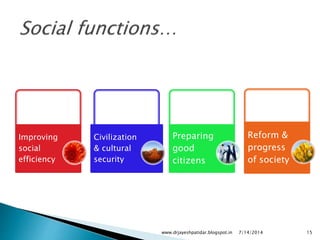
Improving
social
efficiency
Civilization
& cultural
security
Preparing
good
citizens
Reform &
progress
of society
7/14/2014www.drjayeshpatidar.blogspot.in 15
Thank
you
7/14/2014www.drjayeshpatidar.blogspot.in 16

Education

  • 1.
  • 2.
    The term educationhas its origin in the Latin words educo, educare & educatum. Etymologically, the word education is derived from the Latin words educo where e means ‘out of’ duco means ‘I lead.’ Accorsing to this view, education means ‘I lead out darkness into brightness’. 7/14/2014www.drjayeshpatidar.blogspot.in 2
  • 3.
    Education means thetraining for the country & love for the nation. -Chanakya Education is realization of self -Shankaracharya Education is an all-round drawing out of the best in child & man-body, mind & spirit. -Mahatma Gandhi Education is the natural, harmonious & progressive development of man’s innate power. - Pestalozzi 7/14/2014www.drjayeshpatidar.blogspot.in 3
  • 4.
    Nursing education isa professional education which is consciously & systematically planned & implemented through instruction & discipline & aims the harmonious development of the physical, intellectual, social, emotional, spiritual & aesthetic powers or abilities of the students in order to tender professional nursing care to people of all ages, in all phases of health & illness, in a variety of setting, in the best or highest possible manner. 7/14/2014www.drjayeshpatidar.blogspot.in 4
  • 5.
    Aims of education Individual aim Social aim Spiritua l aim Vocatio nalaim Cultural aim Moral aim Intellectu al aim Aims given by different commissi ons 7/14/2014www.drjayeshpatidar.blogspot.in 5
  • 6.
     Individual aim: Development as an individual of a human being.  Moral & spiritual development.  Cultural development.  Harmonious development  Promote positive physical development  Development of a right personality  Development of good citizenship  Development of good leadership  Emotional & mental development  Character building, etc. 7/14/2014www.drjayeshpatidar.blogspot.in 6
  • 7.
     Social aim: Through education the individual child should be provided with the require assistance to become a useful member of the society, irrespective of the socio- economic status.  Vocational aim:  Education should prepare the child to earn his livelihood so that he can lead a productive life in the society. 7/14/2014www.drjayeshpatidar.blogspot.in 7  Intellectual aim:  Development of intelligence through education will enable the child to lead an independent life with confidence.
  • 8.
     Cultural aim: By undergoing education child becomes cultured & civilized.  Cultural development is through development of aesthetic sense & respect for others’ culture  Moral aim:  Moral values like honesty, loyalty, tolerance, justice, self control & sincerity promote the social efficiency of an individual 7/14/2014www.drjayeshpatidar.blogspot.in 8  Citizenship  Education enable the children to grow as productive citizens by following the social & moral standards set by the society.
  • 9.
     Physical health &well being:  Education prepare the child to lead a healthy life through providing the knowledge required for a healthy living.  Character development:  Education assist the child to develop certain human values, attitudes & habits which are essential for building a desirable character. 7/14/2014www.drjayeshpatidar.blogspot.in 9  Education for leisure:  Education prepares the child to use his leisure time for doing something useful.
  • 10.
     Aims ofeducation as stated by Secondary Education Commission  Development of democratic citizenship  Improvement of vocational efficiency  Development of personality  Development of qualities leadership 7/14/2014www.drjayeshpatidar.blogspot.in 10
  • 11.
    • Harmonious development • Inculcatingright attitude • Knowledge & skill aim • Emphasis on high- tech-high-touch approach • Prepare students to take up a proactive role in nursing • Professional development • Assist to build a promising career • Social aim • citizenship • To prepare global nurses • Leadership aim 7/14/2014www.drjayeshpatidar.blogspot.in 11
  • 12.
  • 13.
    Growth & developmentof individual Direction & guidance Preparation for adult life Conservation of traditional knowledge Transmission of culture Progressive development Achievement of self-sufficiency Holistic personality development Moral & character development Develop vocational efficiency Awareness of past & present & preparing for future 7/14/2014www.drjayeshpatidar.blogspot.in 13
  • 14.
  • 15.
  • 16.