Submitted by:-
Md Naiyer Kalam Khan
Fac. No.- 17 MEIM 036
En. No.- GG 9523
Contents
 What is EDM?
 Surface Integrity
 Surface Roughness
 Surface Finish
 Surface Finish with Forced Circulation
 Machining Accuracies
What is EDM?
 Electric Discharge Machining (EDM) is an electro-thermal
non-traditional machining process, where electrical energy
is used to generate electrical spark and material removal
mainly occurs due to thermal energy of the spark.
 EDM is mainly used to machine which is difficult-to-
machine and high strength temperature resistant alloys.
 EDM can be used to machine difficult geometries in small
batches.
 Work material to be machined by EDM has to be
electrically conductive.
Surface Integrity
 Surface consists of a multitude of overlapping craters that are
formed by the action of microsecond-duration spark discharges.
 Crater size depends on
 physical and mechanical properties of the material
 composition of the machining medium
 discharge energy and duration
 Surface roughness increases linearly with an increase in MRR.
 MRR in practice does increase with increase in working voltage,
current, pulse on time and decreases with increase in pulse off
time.
 Kuneida and Furuoya (1991) claimed that the introduction of
oxygen into discharge gap provides extra power by the reaction of
oxygen.
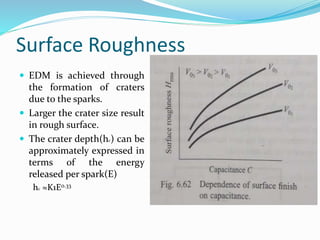
Surface Roughness
 EDM is achieved through
the formation of craters
due to the sparks.
 Larger the crater size result
in rough surface.
 The crater depth(hc) can be
approximately expressed in
terms of the energy
released per spark(E)
hc ≈K1E0.33
Surface Finish
 As with conventional metal cutting, surface roughness
is inversely proportional to cutting power and speed.
In other words, the key to achieving better EDM finish
quality is to cut slower.
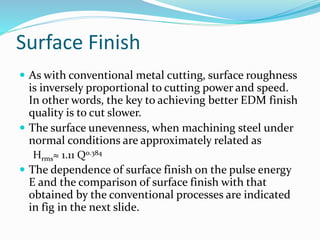
 The surface unevenness, when machining steel under
normal conditions are approximately related as
Hrms≈ 1.11 Q0.384
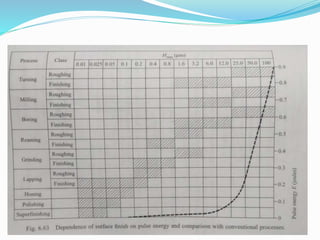
 The dependence of surface finish on the pulse energy
E and the comparison of surface finish with that
obtained by the conventional processes are indicated
in fig in the next slide.
Surface Finish with Forced Circulation
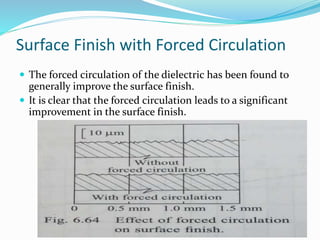
 The forced circulation of the dielectric has been found to
generally improve the surface finish.
 It is clear that the forced circulation leads to a significant
improvement in the surface finish.
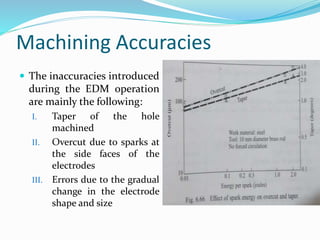
Machining Accuracies
 The inaccuracies introduced
during the EDM operation
are mainly the following:
I. Taper of the hole
machined
II. Overcut due to sparks at
the side faces of the
electrodes
III. Errors due to the gradual
change in the electrode
shape and size
Taper
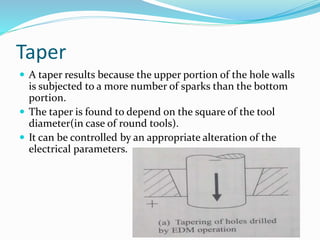
 A taper results because the upper portion of the hole walls
is subjected to a more number of sparks than the bottom
portion.
 The taper is found to depend on the square of the tool
diameter(in case of round tools).
 It can be controlled by an appropriate alteration of the
electrical parameters.
Overcut
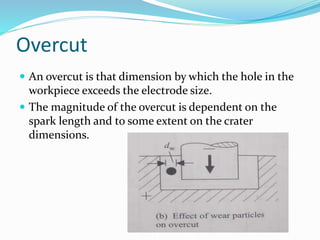
 An overcut is that dimension by which the hole in the
workpiece exceeds the electrode size.
 The magnitude of the overcut is dependent on the
spark length and to some extent on the crater
dimensions.
References
 Manufacturing Science by Amitabha Ghosh and Asok
Kumar Mallik
 http://nptel.ac.in/courses/112105127/pdf/LM-39.pdf
 https://www.micropulsewest.com/our-blog/surface-
finish-achievable-with-edm/
Thank You

Edm surface finish and machining accuracy

  • 1.
    Submitted by:- Md NaiyerKalam Khan Fac. No.- 17 MEIM 036 En. No.- GG 9523
  • 2.
    Contents  What isEDM?  Surface Integrity  Surface Roughness  Surface Finish  Surface Finish with Forced Circulation  Machining Accuracies
  • 3.
    What is EDM? Electric Discharge Machining (EDM) is an electro-thermal non-traditional machining process, where electrical energy is used to generate electrical spark and material removal mainly occurs due to thermal energy of the spark.  EDM is mainly used to machine which is difficult-to- machine and high strength temperature resistant alloys.  EDM can be used to machine difficult geometries in small batches.  Work material to be machined by EDM has to be electrically conductive.
  • 4.
    Surface Integrity  Surfaceconsists of a multitude of overlapping craters that are formed by the action of microsecond-duration spark discharges.  Crater size depends on  physical and mechanical properties of the material  composition of the machining medium  discharge energy and duration  Surface roughness increases linearly with an increase in MRR.  MRR in practice does increase with increase in working voltage, current, pulse on time and decreases with increase in pulse off time.  Kuneida and Furuoya (1991) claimed that the introduction of oxygen into discharge gap provides extra power by the reaction of oxygen.
  • 5.
    Surface Roughness  EDMis achieved through the formation of craters due to the sparks.  Larger the crater size result in rough surface.  The crater depth(hc) can be approximately expressed in terms of the energy released per spark(E) hc ≈K1E0.33
  • 6.
    Surface Finish  Aswith conventional metal cutting, surface roughness is inversely proportional to cutting power and speed. In other words, the key to achieving better EDM finish quality is to cut slower.  The surface unevenness, when machining steel under normal conditions are approximately related as Hrms≈ 1.11 Q0.384  The dependence of surface finish on the pulse energy E and the comparison of surface finish with that obtained by the conventional processes are indicated in fig in the next slide.
  • 8.
    Surface Finish withForced Circulation  The forced circulation of the dielectric has been found to generally improve the surface finish.  It is clear that the forced circulation leads to a significant improvement in the surface finish.
  • 9.
    Machining Accuracies  Theinaccuracies introduced during the EDM operation are mainly the following: I. Taper of the hole machined II. Overcut due to sparks at the side faces of the electrodes III. Errors due to the gradual change in the electrode shape and size
  • 10.
    Taper  A taperresults because the upper portion of the hole walls is subjected to a more number of sparks than the bottom portion.  The taper is found to depend on the square of the tool diameter(in case of round tools).  It can be controlled by an appropriate alteration of the electrical parameters.
  • 11.
    Overcut  An overcutis that dimension by which the hole in the workpiece exceeds the electrode size.  The magnitude of the overcut is dependent on the spark length and to some extent on the crater dimensions.
  • 12.
    References  Manufacturing Scienceby Amitabha Ghosh and Asok Kumar Mallik  http://nptel.ac.in/courses/112105127/pdf/LM-39.pdf  https://www.micropulsewest.com/our-blog/surface- finish-achievable-with-edm/
  • 13.