External cephalic version
RCOG, 2006
Aboubakr Elnashar
Prof . Obs Gyn
Benha University Hospital
Reduction of incidence of breech presentation
have become more important
1. Breech:
 3–4% of all term deliveries
2. CS for breech
 increased markedly in the last 20 ys
 safer for the fetus & of similar safety to the mother
(The term breech trial).
Impact of ECV on the incidence of breech
presentation at delivery
ECV reduces the chance of breech presentation at
delivery.
Spontaneous version: 8%
Spontaneous version after unsuccessful ECV: 5%
Success rates of ECV: 30–80%.
Spontaneous reversion to breech after successful ECV:
5%.
Effect of ECV on CS rate
ECV lowers CS rate
Labour with a cephalic presentation following ECV is
associated with a higher rate of obstetric intervention
than when ECV has not been required.
Risk difference: 17%
NNT: 6
Success rate of ECV
50%
30%-80%
Nulliparous: 40%
multiparous 60%
Factors affecting success
1. Race
2. Parity
3. uterine tone
4. liquor volume,
5. engagement of the breech
6. whether the head is palpable
7. use of tocolysis
The highest success rates
1. Multiparous
2. non-white women
3. Relaxed uterus
4. breech is not engaged
5. head is easily palpable.
6. increasing liquor volume. N.B. very high liquor
volume may be associated with spontaneous
reversion.
Less important factors:
1. Maternal weight
2. placental position
3. Gestation
4. fetal size
5. position of the legs
Tocolysis
either routinely or if an initial attempt has failed.
beta-sympathomimetics increase the success rate:
ritodrine, salbutamol, terbutaline
slow IV or SC bolus
Not
glyceryl trinitrate
nifedipine.
Methods to increase the success rate
of ECV
1. Second attempt:
particularly with a second operator or where the back
has been in the midline
2. Tocolysis
3. Fetal acoustic stimulation:
where the back is in the midline
4. Regional analgesia:
success rate is evident with epidural but not spinal
As maternal pain might indicate a complication,
concerns regarding safety
Timing of ECV
Nulliparous: 36 w
Multiparous: 37 w
{ECV before 36 w is not associated with a significant
reduction in noncephalic births or CS}.
No upper time limit on the appropriate gestation for
ECV.
Successes has been reported at 42 w
can be performed in early labour provided that the
membranes are intact.
Complications
Rare
1. placental abruption
2. uterine rupture
3. fetomaternal haemorrhage.
4. immediate emergency CS: 0.5%
5. Transient alterations in fetal parameters:
Fetal bradycardia
Nonreactive CTG
Alterations in umbilical artery and middle cerebral artery
waveforms
increase in AFV.
The significance of these is unknown.
No increase in
neonatal morbidity and mortality
Labour
Prerequisites
1. Facilities for monitoring
US: FHR visualisation
CTG: before & after procedure
2. Facilities for immediate delivery
3. Anti-D immunoglobulin to rhesus-negative
Not necessary
1. Kleihauer testing
2. Preoperative preparations for CS
Starvation
anaesthetic premedication
intravenous access
ECV & pain
can be painful
No discomfort: few women
High pain scores: 5%: stop
Pain is greater where the procedure fails.
Contraindications
Absolute
● where CS is required
● antepartum haemorrhage within the last 7 days
● abnormal CTG
● major uterine anomaly
● ruptured membranes
● multiple pregnancy (except delivery of second
twin).
Relative
● small-for-gestational-age fetus with abnormal Doppler
parameters
● proteinuric pre-eclampsia
● oligohydramnios
● major fetal anomalies
● scarred uterus: The available data on ECV after one caesarean
section are reassuring, but are insufficient to confidently conclude that
the risk is not increased.
● unstable lie: ECV is only logical in the context of a stabilising
induction. There are few available data on this procedure, which
should only be performed for a valid indication and may be associated
with a significant intrapartum complication rate.
Increasing the uptake of ECV
Local policies should be implemented to actively
increase the number of women offered and
undergoing ECV.
Obstetricians and midwives should be able to
discuss the benefits and risks of ECV
Alternatives to ECV
1. Postural management:
insufficient evidence
2. Moxibustion:
should not be recommended
burnt at the tip of the fifth toe (acupuncture point
BL67)
Developing an ECV service
1. An ECV service should be available to all women
with a breech presentation at term.
2. ECV is not difficult and skills should be developed,
if necessary, by visiting other hospitals. ECV can be
performed by suitably trained midwives; experience
with ultrasound is essential.
3. All women undergoing ECV should be offered
detailed information (preferably written) concerning
the risks and benefits of the procedure.
4. Consent may also be appropriate.
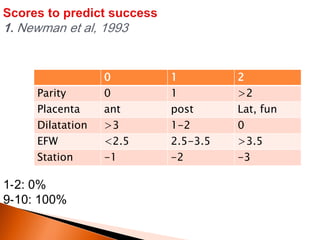
1-2: 0%
9-10: 100%
210
>210Parity
Lat, funpostantPlacenta
01-2>3Dilatation
>3.52.5-3.5<2.5EFW
-3-2-1Station
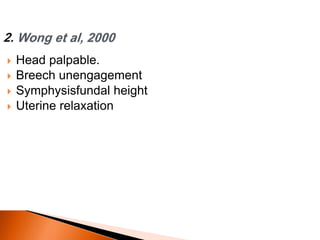
 Head palpable.
 Breech unengagement
 Symphysisfundal height
 Uterine relaxation
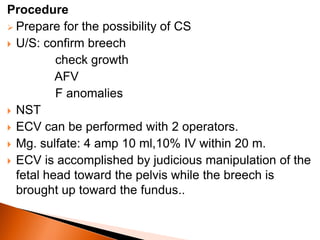
Procedure
 Prepare for the possibility of CS
 U/S: confirm breech
check growth
AFV
F anomalies
 NST
 ECV can be performed with 2 operators.
 Mg. sulfate: 4 amp 10 ml,10% IV within 20 m.
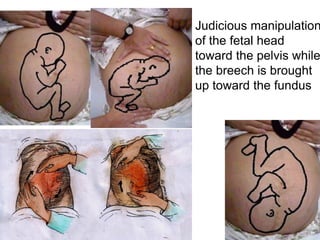
 ECV is accomplished by judicious manipulation of the
fetal head toward the pelvis while the breech is
brought up toward the fundus..
Judicious manipulation
of the fetal head
toward the pelvis while
the breech is brought
up toward the fundus
 Following an ECV attempt, repeat NST
 Administer Rh-immune globulin to women who
are Rh negative.
 Be prepared for an unsuccessful ECV.
 Some physicians induce labors following
successful ECV

Ecv rcog2006

  • 1.
    External cephalic version RCOG,2006 Aboubakr Elnashar Prof . Obs Gyn Benha University Hospital
  • 2.
    Reduction of incidenceof breech presentation have become more important 1. Breech:  3–4% of all term deliveries 2. CS for breech  increased markedly in the last 20 ys  safer for the fetus & of similar safety to the mother (The term breech trial).
  • 3.
    Impact of ECVon the incidence of breech presentation at delivery ECV reduces the chance of breech presentation at delivery. Spontaneous version: 8% Spontaneous version after unsuccessful ECV: 5% Success rates of ECV: 30–80%. Spontaneous reversion to breech after successful ECV: 5%.
  • 4.
    Effect of ECVon CS rate ECV lowers CS rate Labour with a cephalic presentation following ECV is associated with a higher rate of obstetric intervention than when ECV has not been required. Risk difference: 17% NNT: 6
  • 5.
    Success rate ofECV 50% 30%-80% Nulliparous: 40% multiparous 60%
  • 6.
    Factors affecting success 1.Race 2. Parity 3. uterine tone 4. liquor volume, 5. engagement of the breech 6. whether the head is palpable 7. use of tocolysis
  • 7.
    The highest successrates 1. Multiparous 2. non-white women 3. Relaxed uterus 4. breech is not engaged 5. head is easily palpable. 6. increasing liquor volume. N.B. very high liquor volume may be associated with spontaneous reversion.
  • 8.
    Less important factors: 1.Maternal weight 2. placental position 3. Gestation 4. fetal size 5. position of the legs
  • 9.
    Tocolysis either routinely orif an initial attempt has failed. beta-sympathomimetics increase the success rate: ritodrine, salbutamol, terbutaline slow IV or SC bolus Not glyceryl trinitrate nifedipine.
  • 10.
    Methods to increasethe success rate of ECV 1. Second attempt: particularly with a second operator or where the back has been in the midline 2. Tocolysis 3. Fetal acoustic stimulation: where the back is in the midline 4. Regional analgesia: success rate is evident with epidural but not spinal As maternal pain might indicate a complication, concerns regarding safety
  • 11.
    Timing of ECV Nulliparous:36 w Multiparous: 37 w {ECV before 36 w is not associated with a significant reduction in noncephalic births or CS}. No upper time limit on the appropriate gestation for ECV. Successes has been reported at 42 w can be performed in early labour provided that the membranes are intact.
  • 12.
    Complications Rare 1. placental abruption 2.uterine rupture 3. fetomaternal haemorrhage. 4. immediate emergency CS: 0.5% 5. Transient alterations in fetal parameters:
  • 13.
    5. Transient alterationsin fetal parameters: Fetal bradycardia Nonreactive CTG Alterations in umbilical artery and middle cerebral artery waveforms increase in AFV. The significance of these is unknown. No increase in neonatal morbidity and mortality Labour
  • 14.
    Prerequisites 1. Facilities formonitoring US: FHR visualisation CTG: before & after procedure 2. Facilities for immediate delivery 3. Anti-D immunoglobulin to rhesus-negative
  • 15.
    Not necessary 1. Kleihauertesting 2. Preoperative preparations for CS Starvation anaesthetic premedication intravenous access
  • 16.
    ECV & pain canbe painful No discomfort: few women High pain scores: 5%: stop Pain is greater where the procedure fails.
  • 17.
    Contraindications Absolute ● where CSis required ● antepartum haemorrhage within the last 7 days ● abnormal CTG ● major uterine anomaly ● ruptured membranes ● multiple pregnancy (except delivery of second twin).
  • 18.
    Relative ● small-for-gestational-age fetuswith abnormal Doppler parameters ● proteinuric pre-eclampsia ● oligohydramnios ● major fetal anomalies ● scarred uterus: The available data on ECV after one caesarean section are reassuring, but are insufficient to confidently conclude that the risk is not increased. ● unstable lie: ECV is only logical in the context of a stabilising induction. There are few available data on this procedure, which should only be performed for a valid indication and may be associated with a significant intrapartum complication rate.
  • 19.
    Increasing the uptakeof ECV Local policies should be implemented to actively increase the number of women offered and undergoing ECV. Obstetricians and midwives should be able to discuss the benefits and risks of ECV
  • 20.
    Alternatives to ECV 1.Postural management: insufficient evidence 2. Moxibustion: should not be recommended burnt at the tip of the fifth toe (acupuncture point BL67)
  • 21.
    Developing an ECVservice 1. An ECV service should be available to all women with a breech presentation at term. 2. ECV is not difficult and skills should be developed, if necessary, by visiting other hospitals. ECV can be performed by suitably trained midwives; experience with ultrasound is essential. 3. All women undergoing ECV should be offered detailed information (preferably written) concerning the risks and benefits of the procedure. 4. Consent may also be appropriate.
  • 22.
    1-2: 0% 9-10: 100% 210 >210Parity Lat,funpostantPlacenta 01-2>3Dilatation >3.52.5-3.5<2.5EFW -3-2-1Station
  • 23.
     Head palpable. Breech unengagement  Symphysisfundal height  Uterine relaxation
  • 24.
    Procedure  Prepare forthe possibility of CS  U/S: confirm breech check growth AFV F anomalies  NST  ECV can be performed with 2 operators.  Mg. sulfate: 4 amp 10 ml,10% IV within 20 m.  ECV is accomplished by judicious manipulation of the fetal head toward the pelvis while the breech is brought up toward the fundus..
  • 25.
    Judicious manipulation of thefetal head toward the pelvis while the breech is brought up toward the fundus
  • 26.
     Following anECV attempt, repeat NST  Administer Rh-immune globulin to women who are Rh negative.  Be prepared for an unsuccessful ECV.  Some physicians induce labors following successful ECV