TACKLING DIFFICULT
BROAD LIGAMENT AND
CERVICAL FIBROIDS
Dr. Niranjan Chavan
MD, FCPS, DGO, DFP, MICOG, DICOG, FICOG
Professor and Unit Chief, L.T.M.M.C & L.T.M.G.H
Chairperson, FOGSI Oncology and TT Committee (2012-2014)
Treasurer, MOGS (2017- 2018)
Chair and Convener, FOGSI Cell- Violence against Doctors (2015-2016)
Chief Editor, AFG Times (2015-2017)
Editorial Board, European Journal of Gynecologic Oncology
Editor of FOGSI FOCUS, MOGS, AFG & IAGE Newsletters
Member, Managing Committee, IAGE (2013-2017)
Member , Oncology Committee, AOFOG (2013 -2015)
Recipient of 6 National & International Awards
Author of 15 Research Papers and 19 Scientific Chapters
Course Co-Ordinator, of 11 batches, of MUHS recognized Certificate Course of
Basic Infertility Management Including Endoscopy (BIMIE) at LTMGH
INTRODUCTION
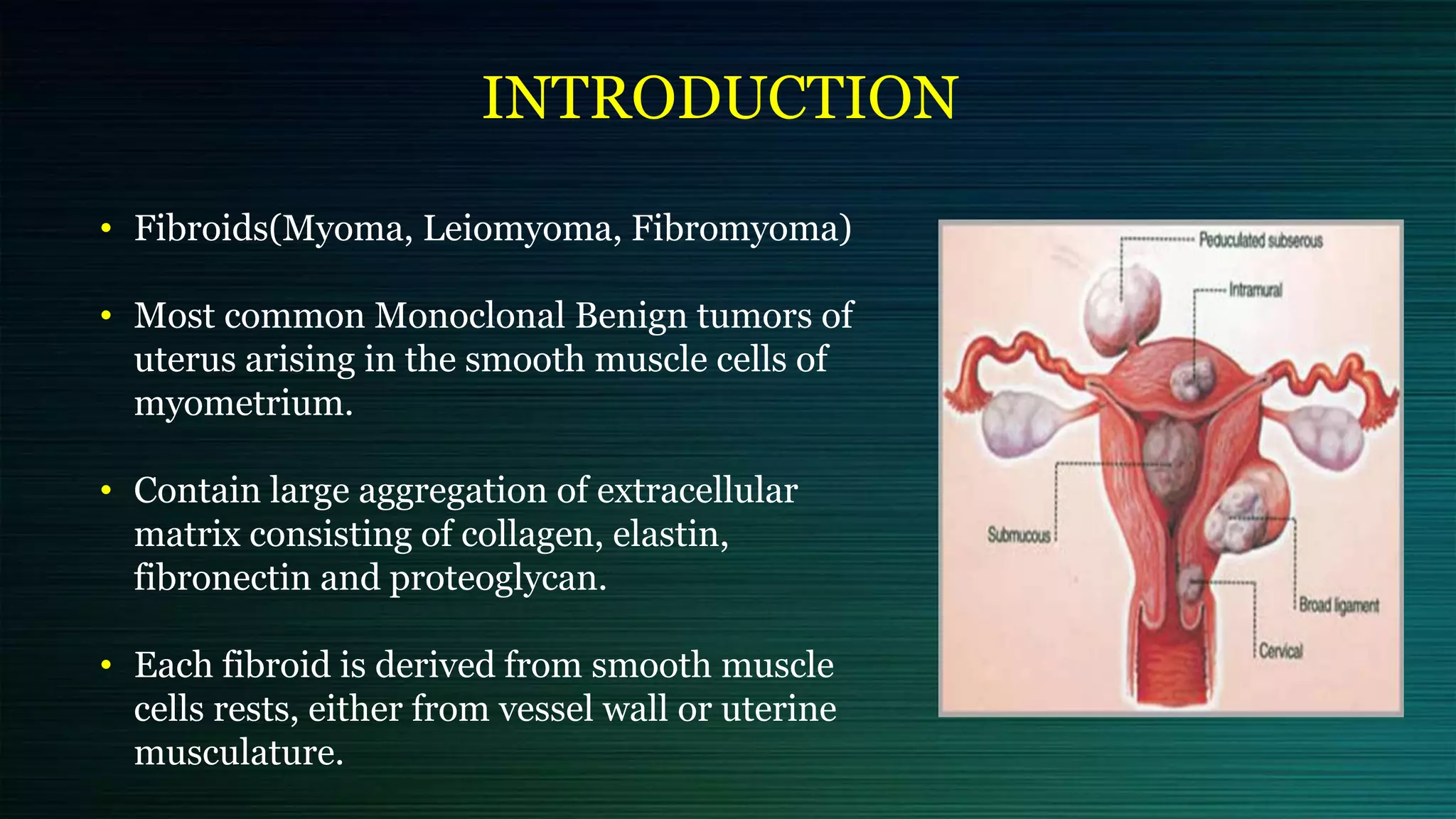
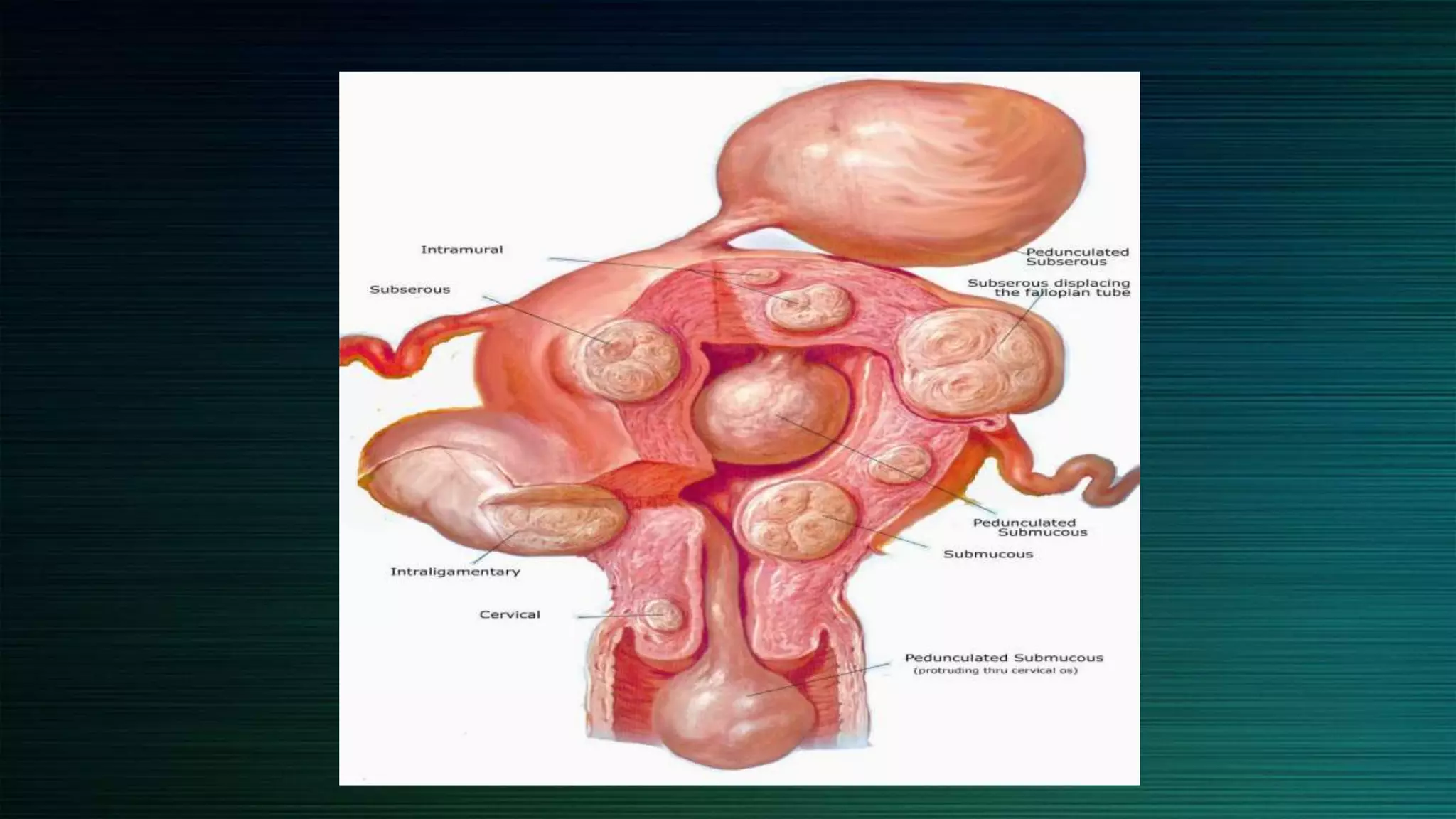
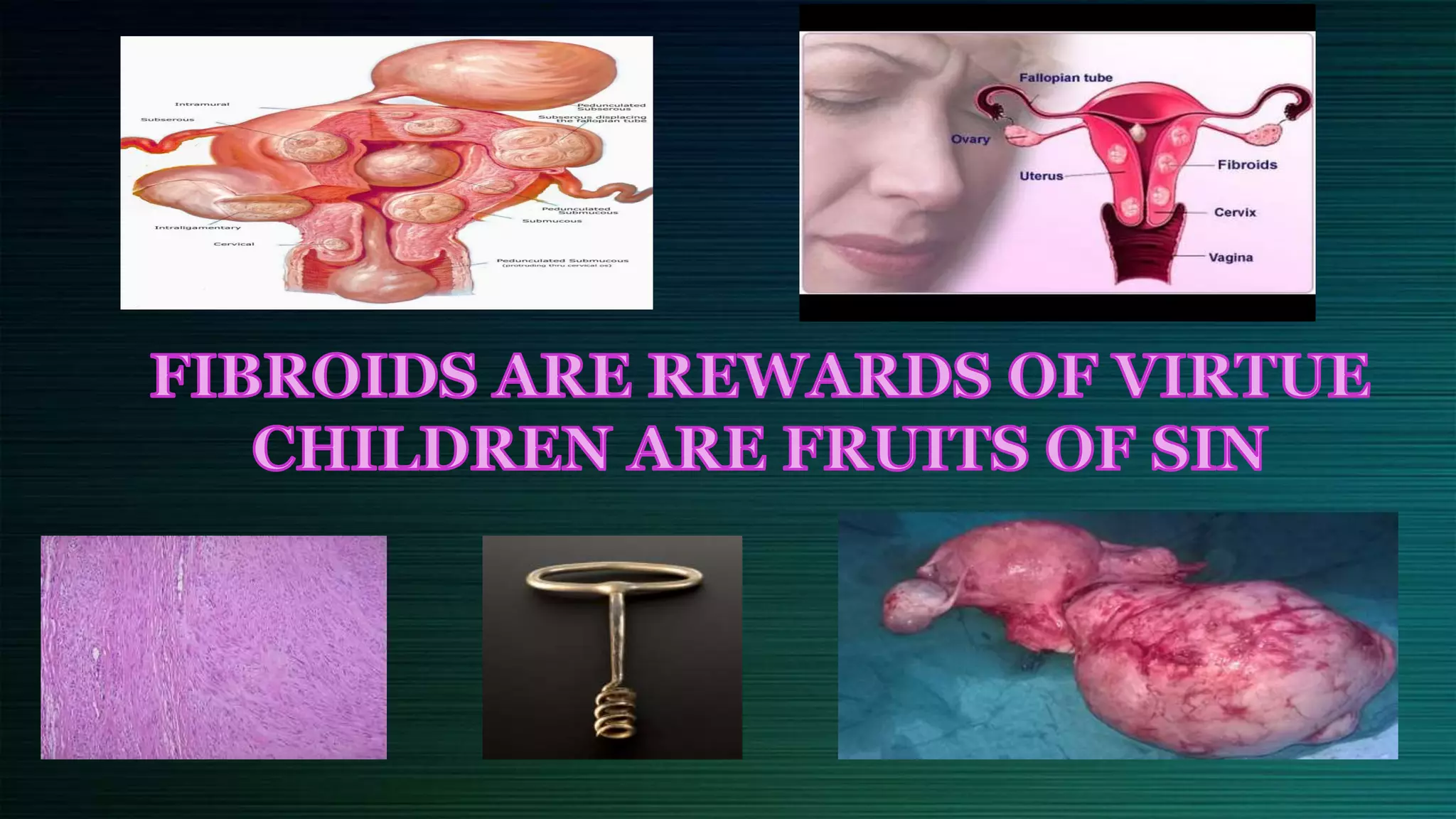
• Fibroids(Myoma, Leiomyoma, Fibromyoma)
• Most common Monoclonal Benign tumors of
uterus arising in the smooth muscle cells of
myometrium.
• Contain large aggregation of extracellular
matrix consisting of collagen, elastin,
fibronectin and proteoglycan.
• Each fibroid is derived from smooth muscle
cells rests, either from vessel wall or uterine
musculature.
INCIDENCE
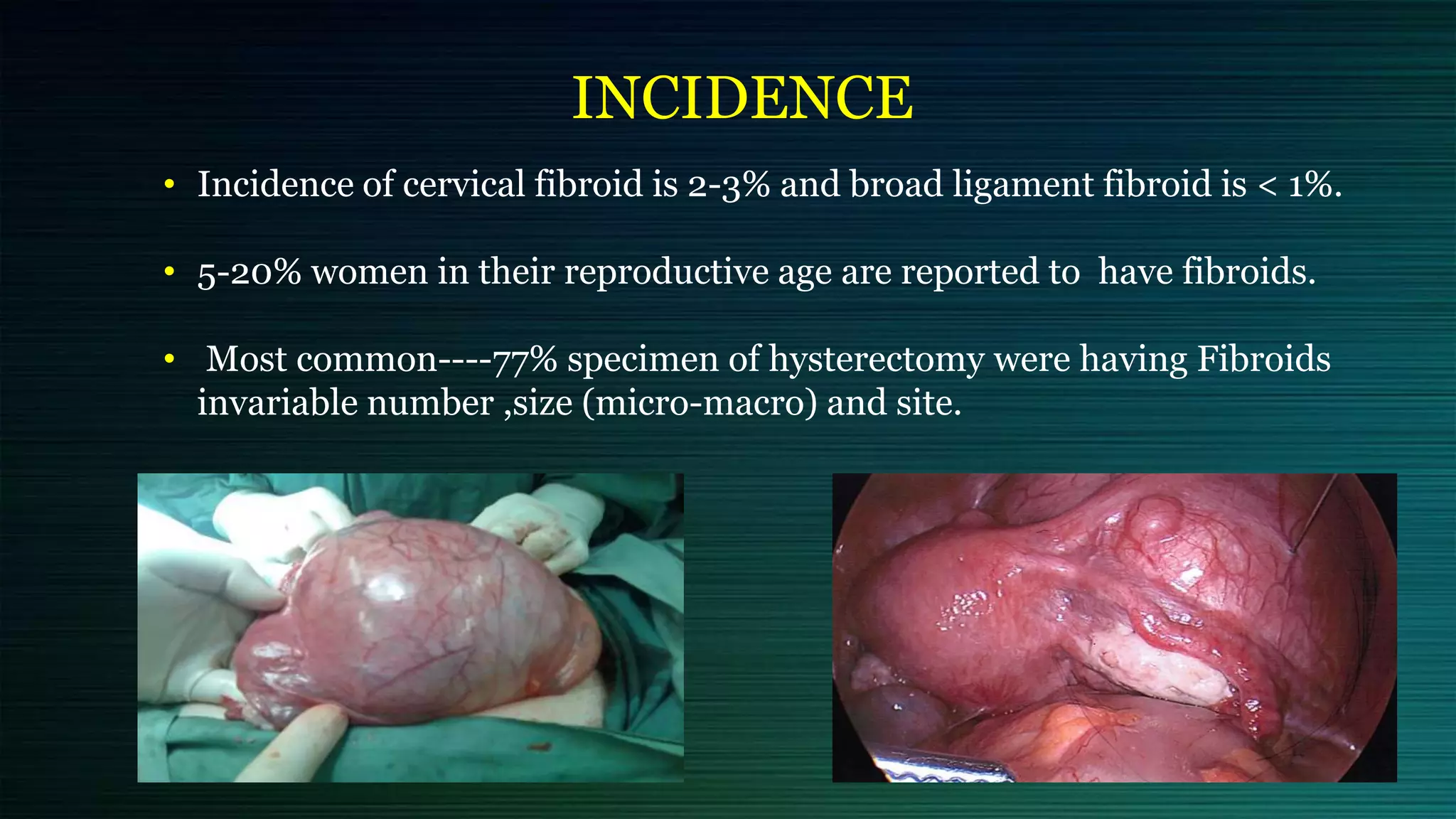
• Incidence of cervical fibroid is 2-3% and broad ligament fibroid is < 1%.
• 5-20% women in their reproductive age are reported to have fibroids.
• Most common----77% specimen of hysterectomy were having Fibroids
invariable number ,size (micro-macro) and site.
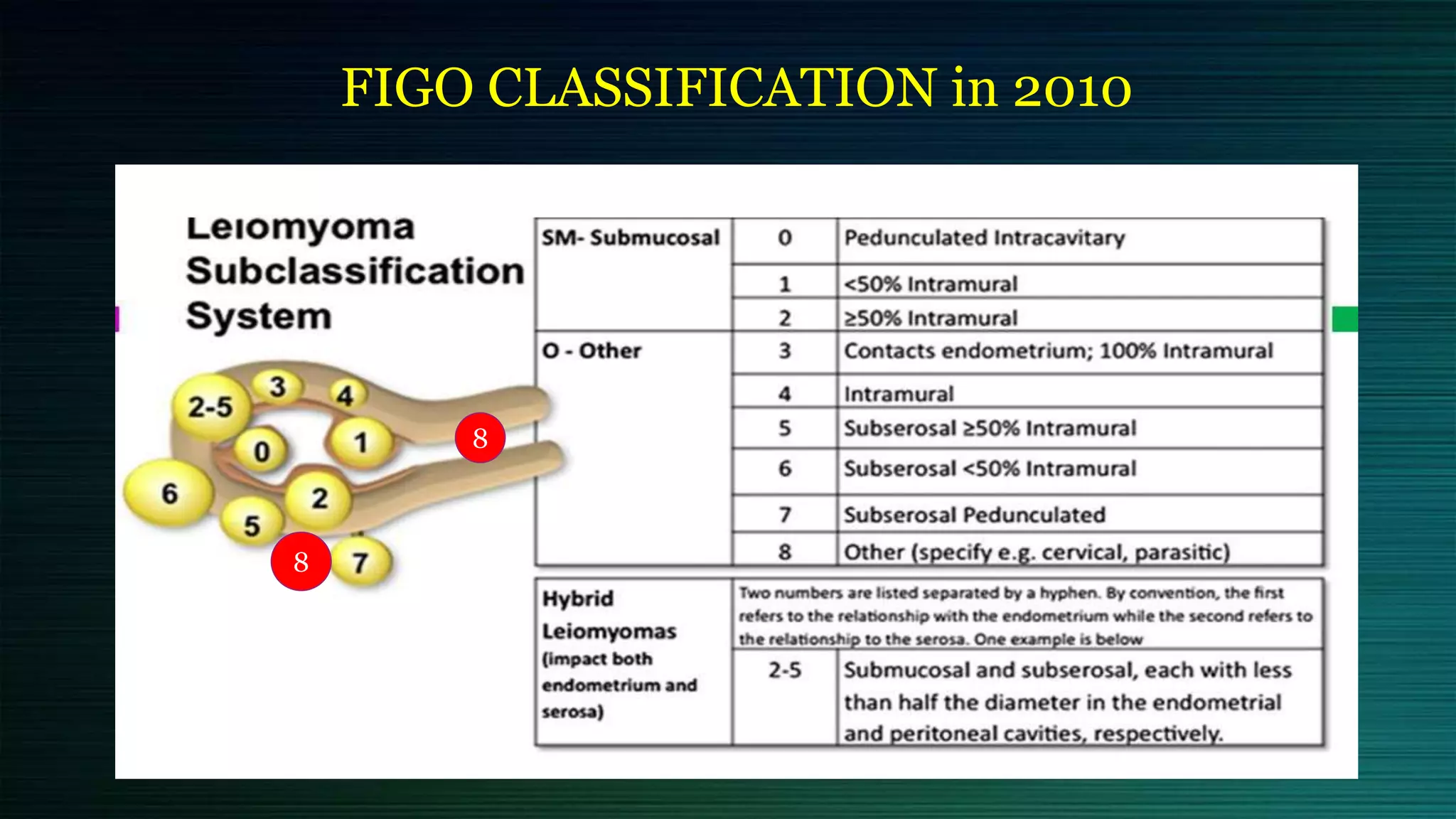
FIGO CLASSIFICATION in 2010
8
8
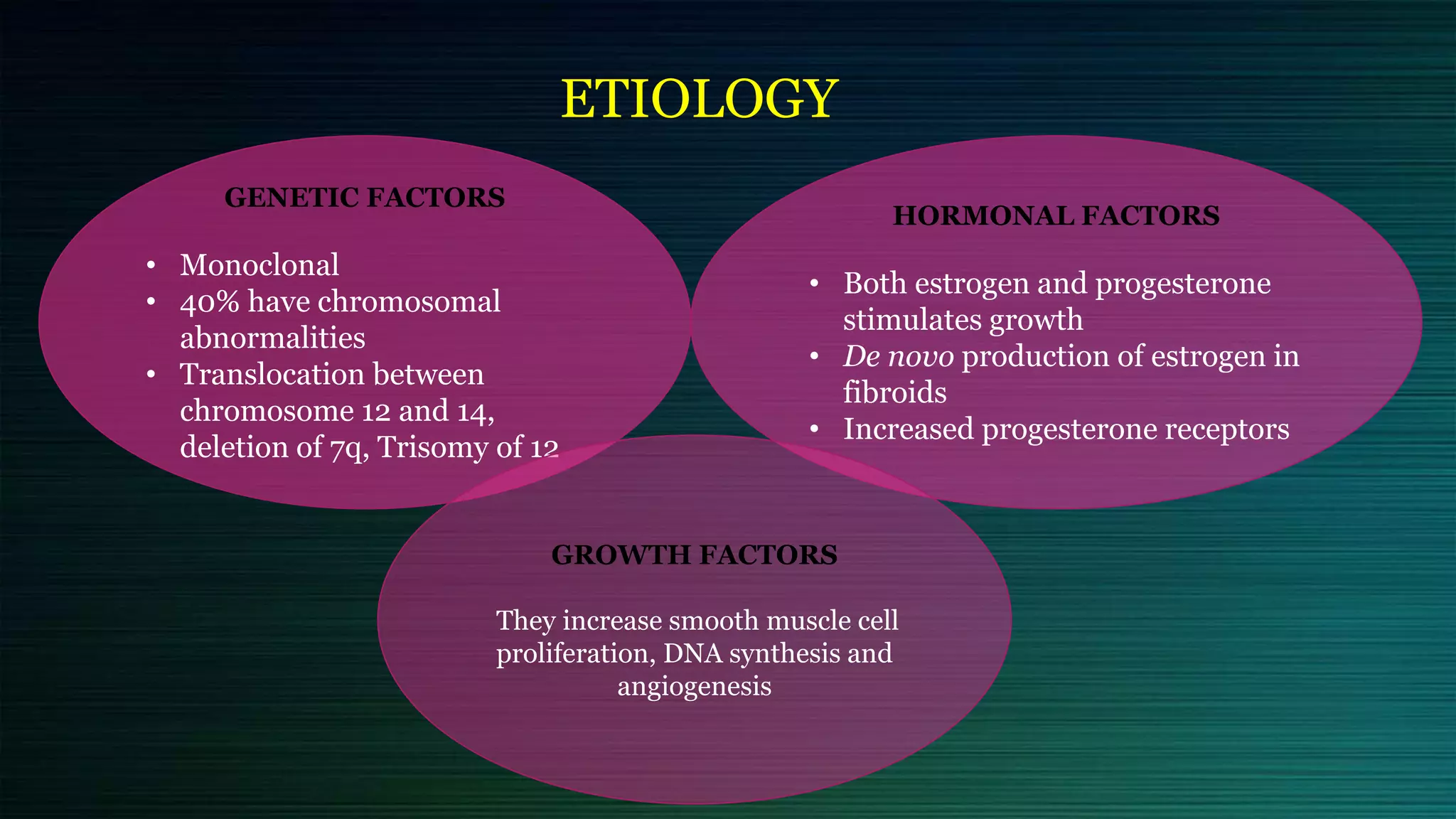
ETIOLOGY
GENETIC FACTORS
• Monoclonal
• 40% have chromosomal
abnormalities
• Translocation between
chromosome 12 and 14,
deletion of 7q, Trisomy of 12
HORMONAL FACTORS
• Both estrogen and progesterone
stimulates growth
• De novo production of estrogen in
fibroids
• Increased progesterone receptors
GROWTH FACTORS
They increase smooth muscle cell
proliferation, DNA synthesis and
angiogenesis
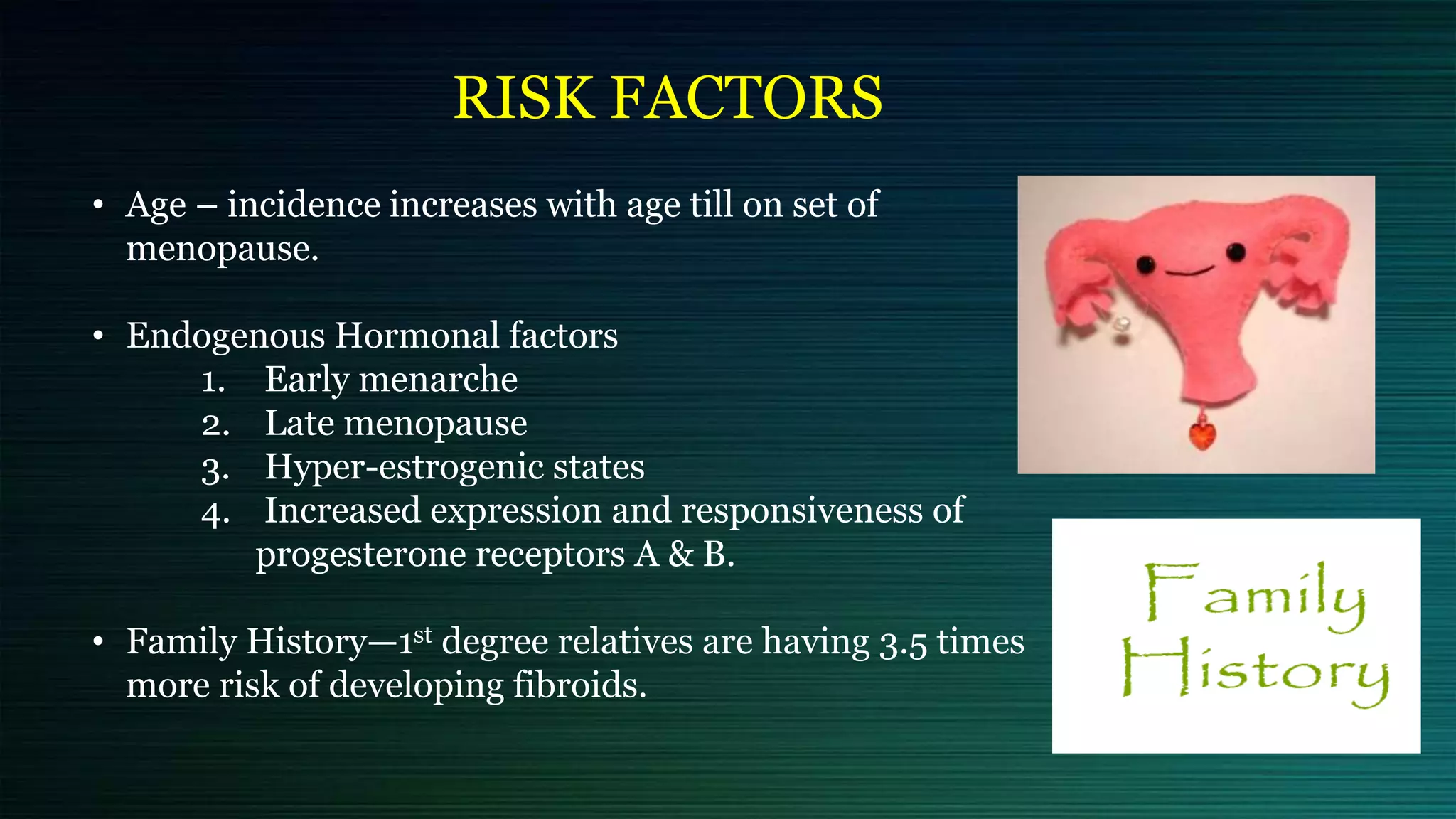
RISK FACTORS
• Age – incidence increases with age till on set of
menopause.
• Endogenous Hormonal factors
1. Early menarche
2. Late menopause
3. Hyper-estrogenic states
4. Increased expression and responsiveness of
progesterone receptors A & B.
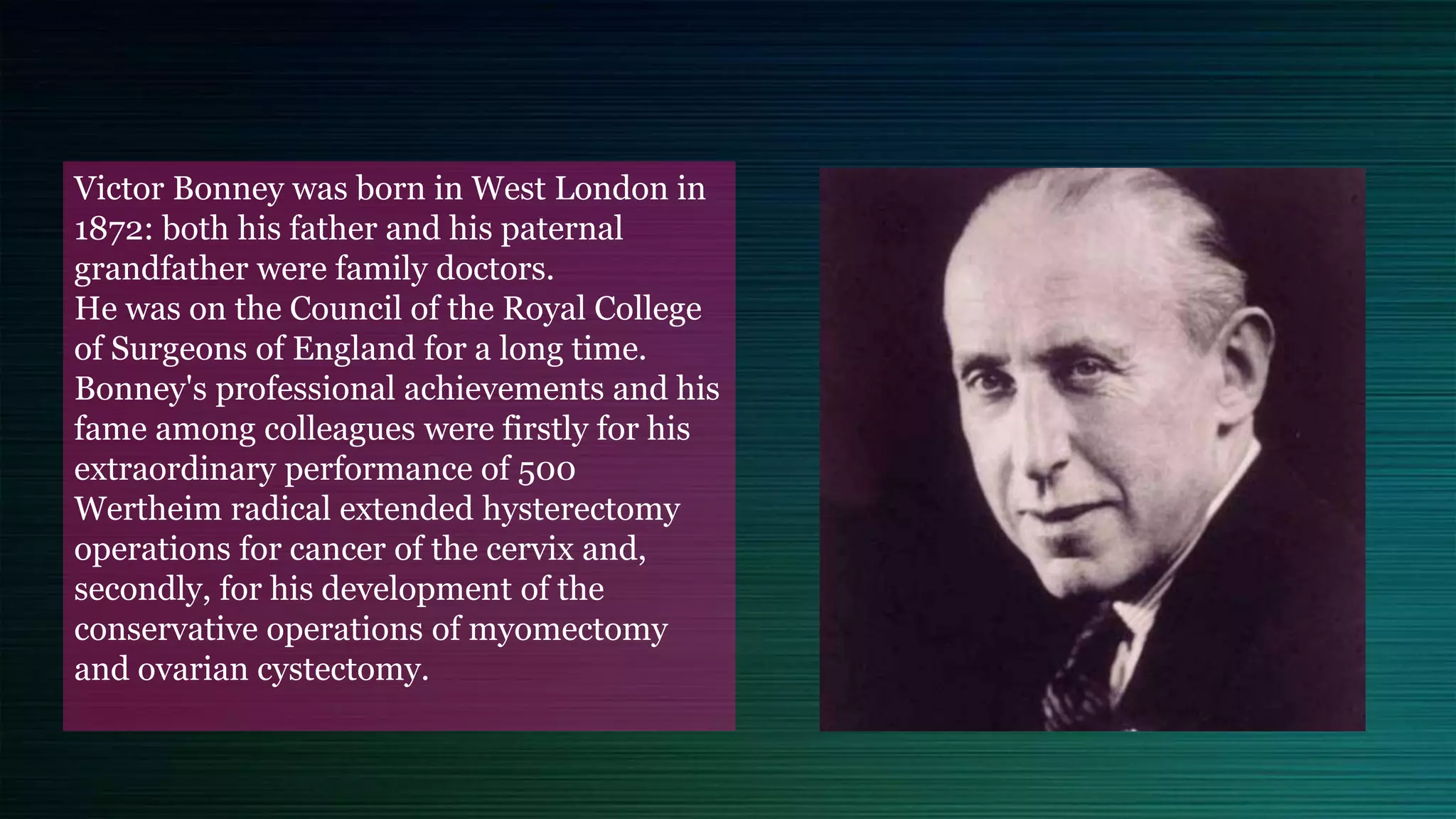
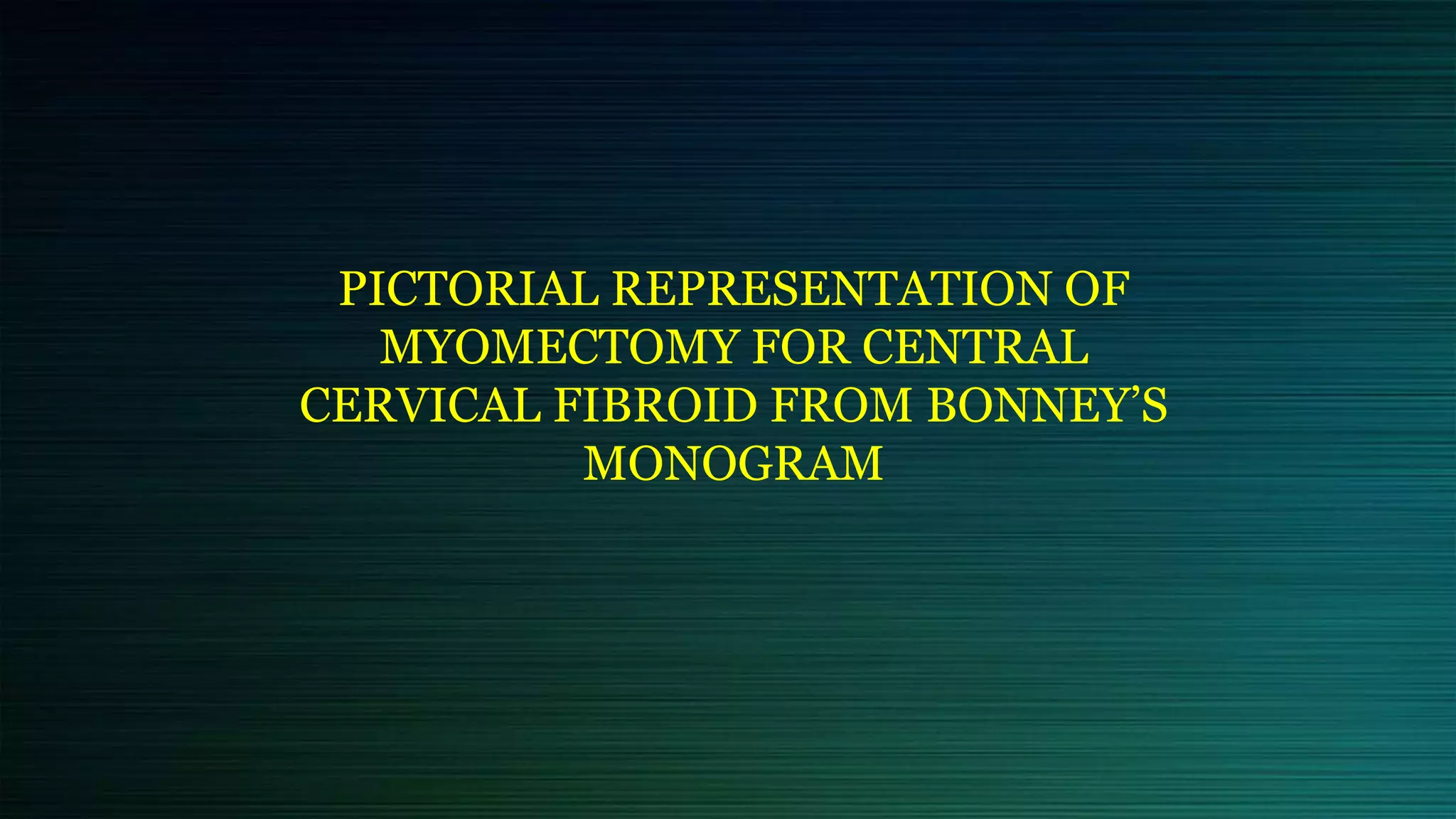
• Family History—1st degree relatives are having 3.5 times
more risk of developing fibroids.
• Body weight
• Diet—diet rich in red meat, ham, beef
• Exercise – women doing regular exercise low risk
• OCS --- no definite relationship.
• ERT—variable reports
• Pregnancy
• Smoking
BROAD LIGAMENT FIBROID
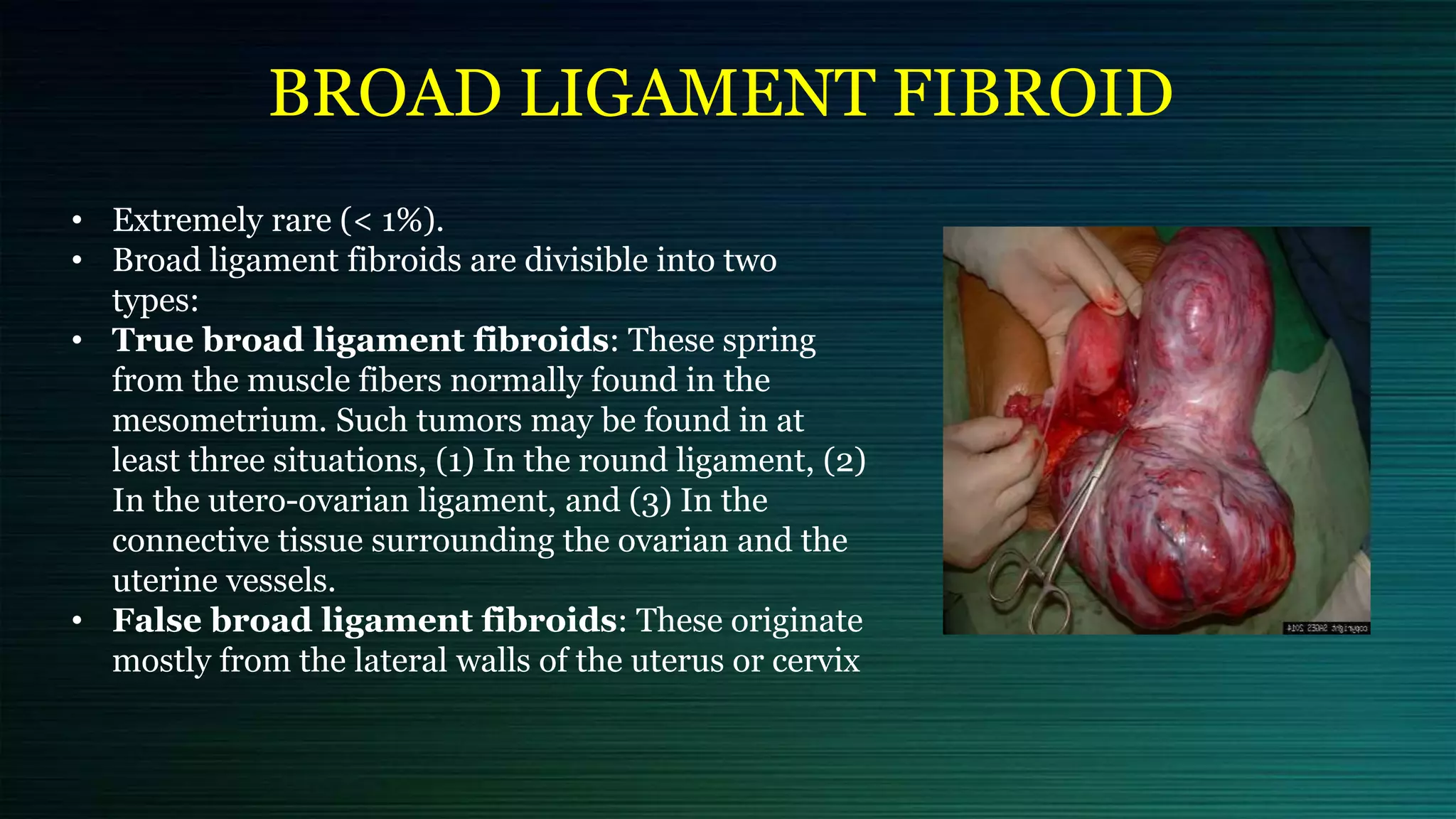
• Extremely rare (< 1%).
• Broad ligament fibroids are divisible into two
types:
• True broad ligament fibroids: These spring
from the muscle fibers normally found in the
mesometrium. Such tumors may be found in at
least three situations, (1) In the round ligament, (2)
In the utero-ovarian ligament, and (3) In the
connective tissue surrounding the ovarian and the
uterine vessels.
• False broad ligament fibroids: These originate
mostly from the lateral walls of the uterus or cervix
BROAD LIGAMENT FIBROID
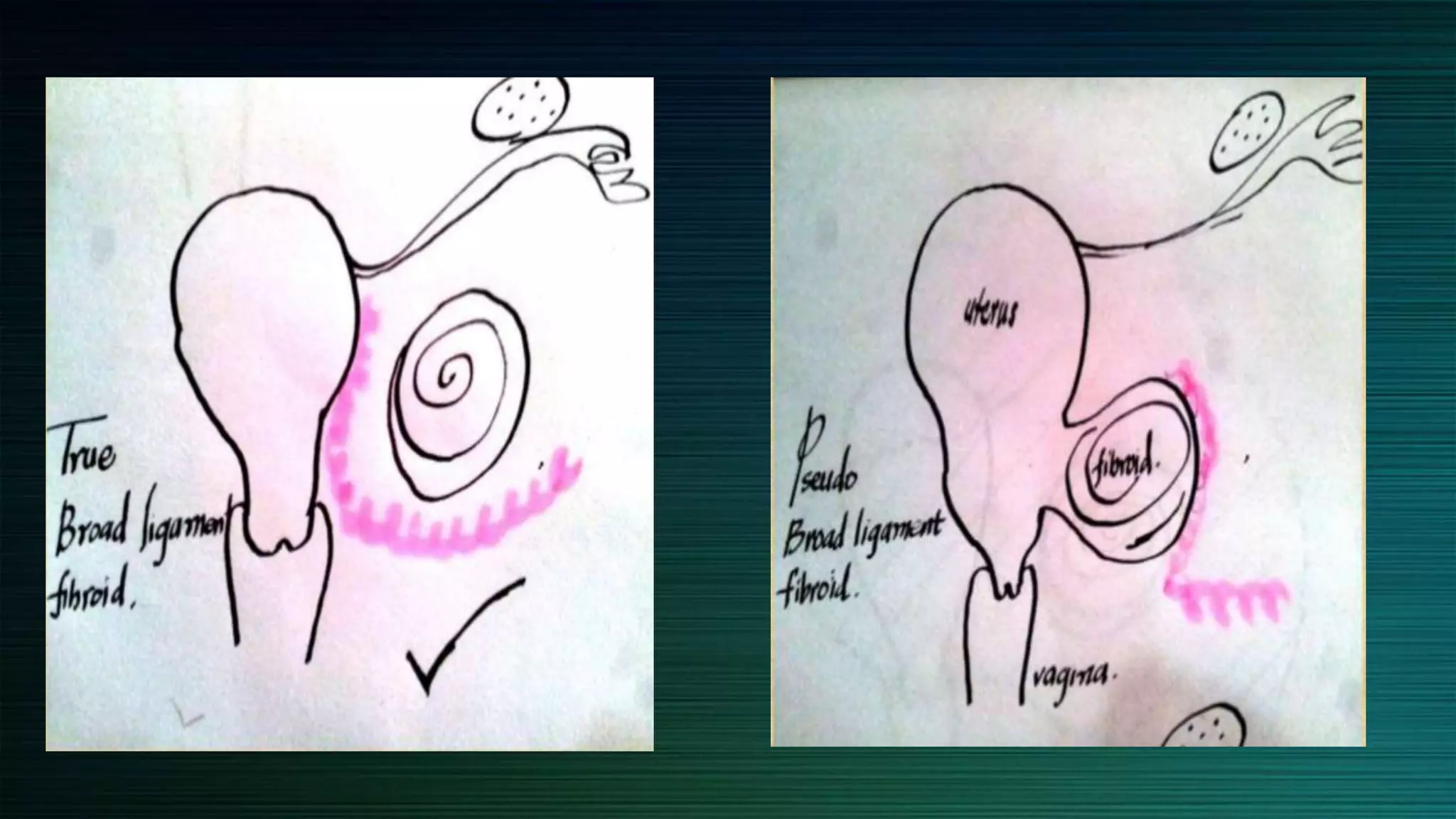
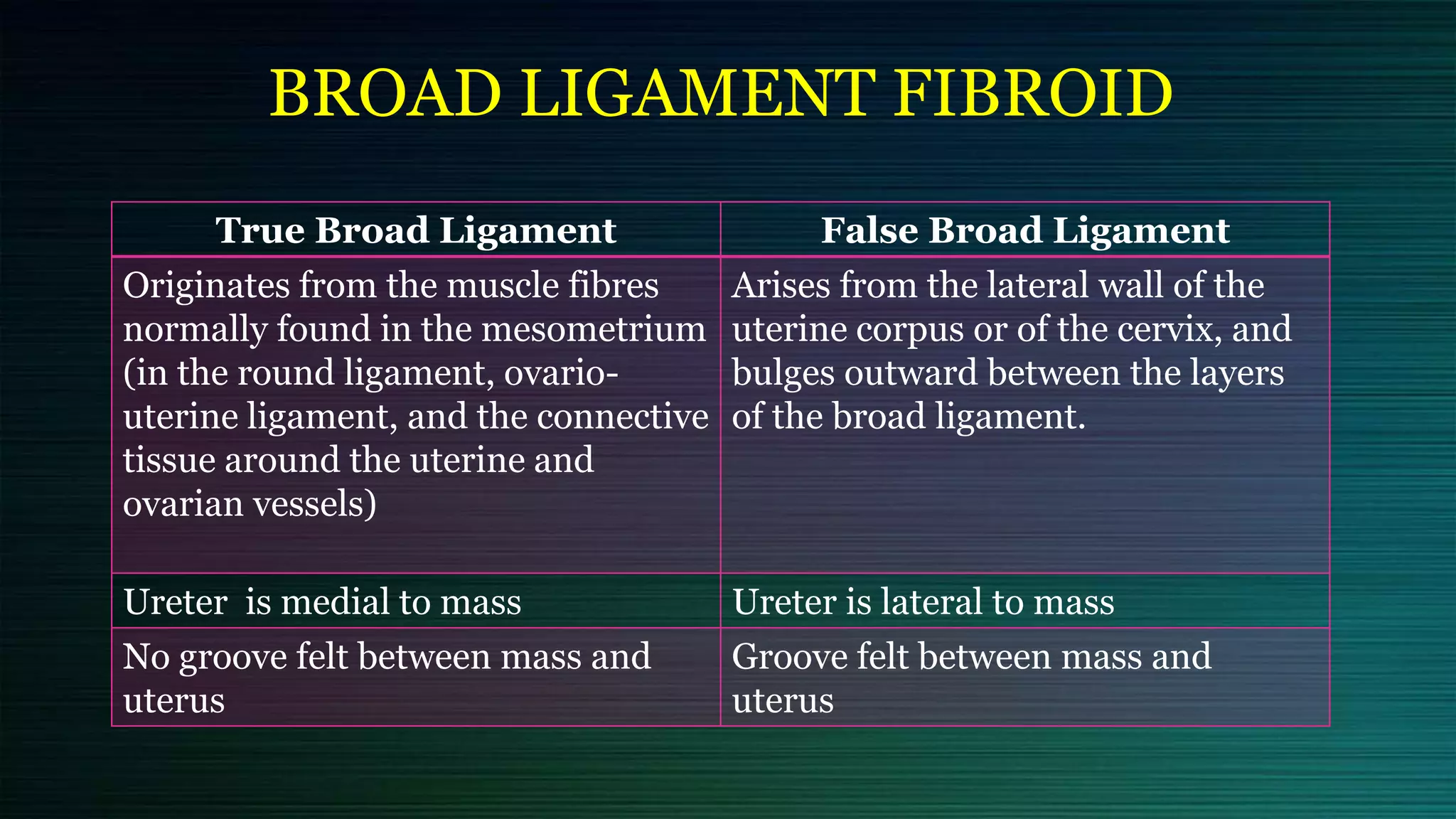
True Broad Ligament False Broad Ligament
Originates from the muscle fibres
normally found in the mesometrium
(in the round ligament, ovario-
uterine ligament, and the connective
tissue around the uterine and
ovarian vessels)
Arises from the lateral wall of the
uterine corpus or of the cervix, and
bulges outward between the layers
of the broad ligament.
Ureter is medial to mass Ureter is lateral to mass
No groove felt between mass and
uterus
Groove felt between mass and
uterus
BROAD LIGAMENT FIBROID:
SYMPTOMS
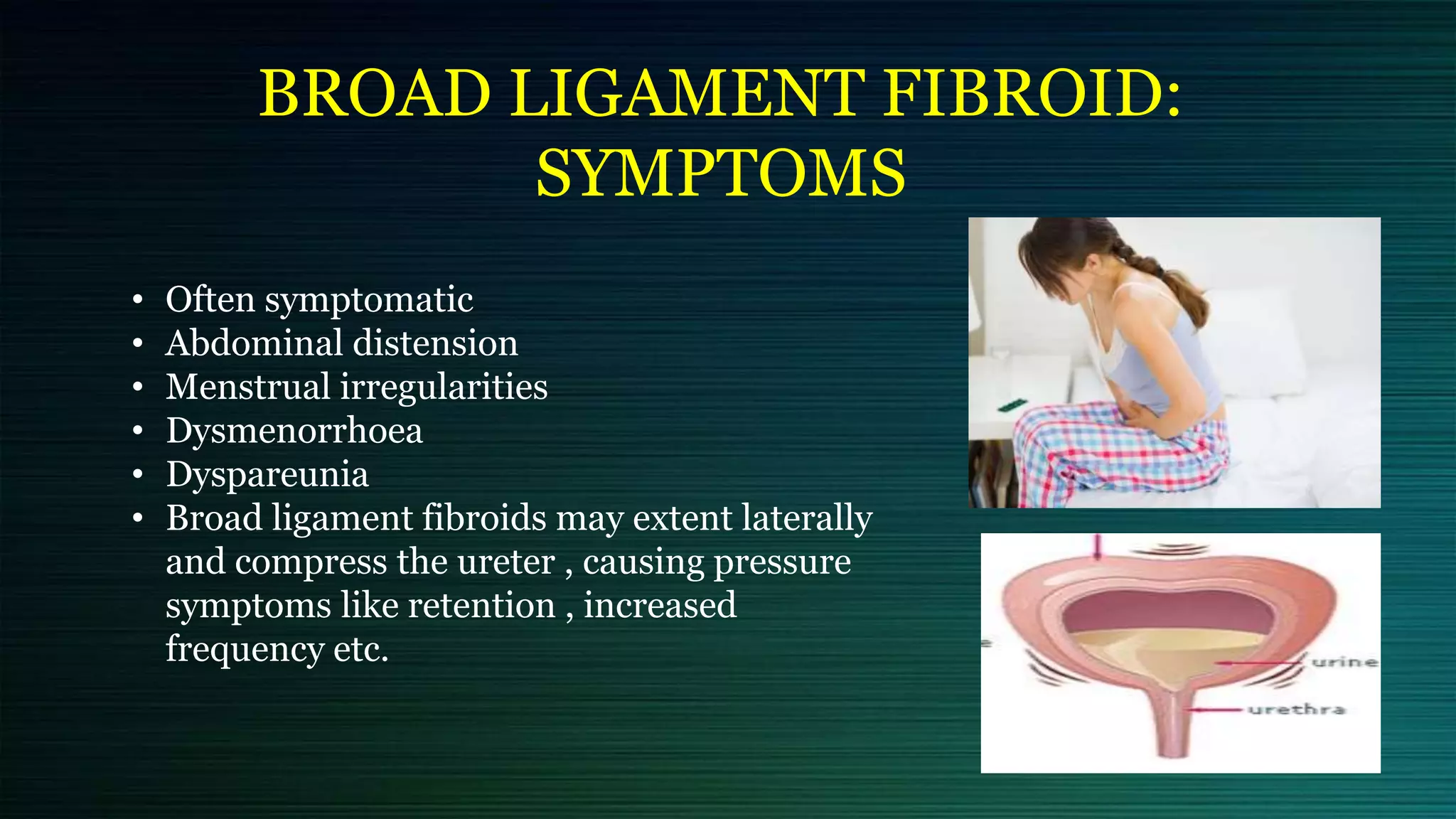
• Often symptomatic
• Abdominal distension
• Menstrual irregularities
• Dysmenorrhoea
• Dyspareunia
• Broad ligament fibroids may extent laterally
and compress the ureter , causing pressure
symptoms like retention , increased
frequency etc.
BROAD LIGAMENT FIBROID:
DIAGNOSIS
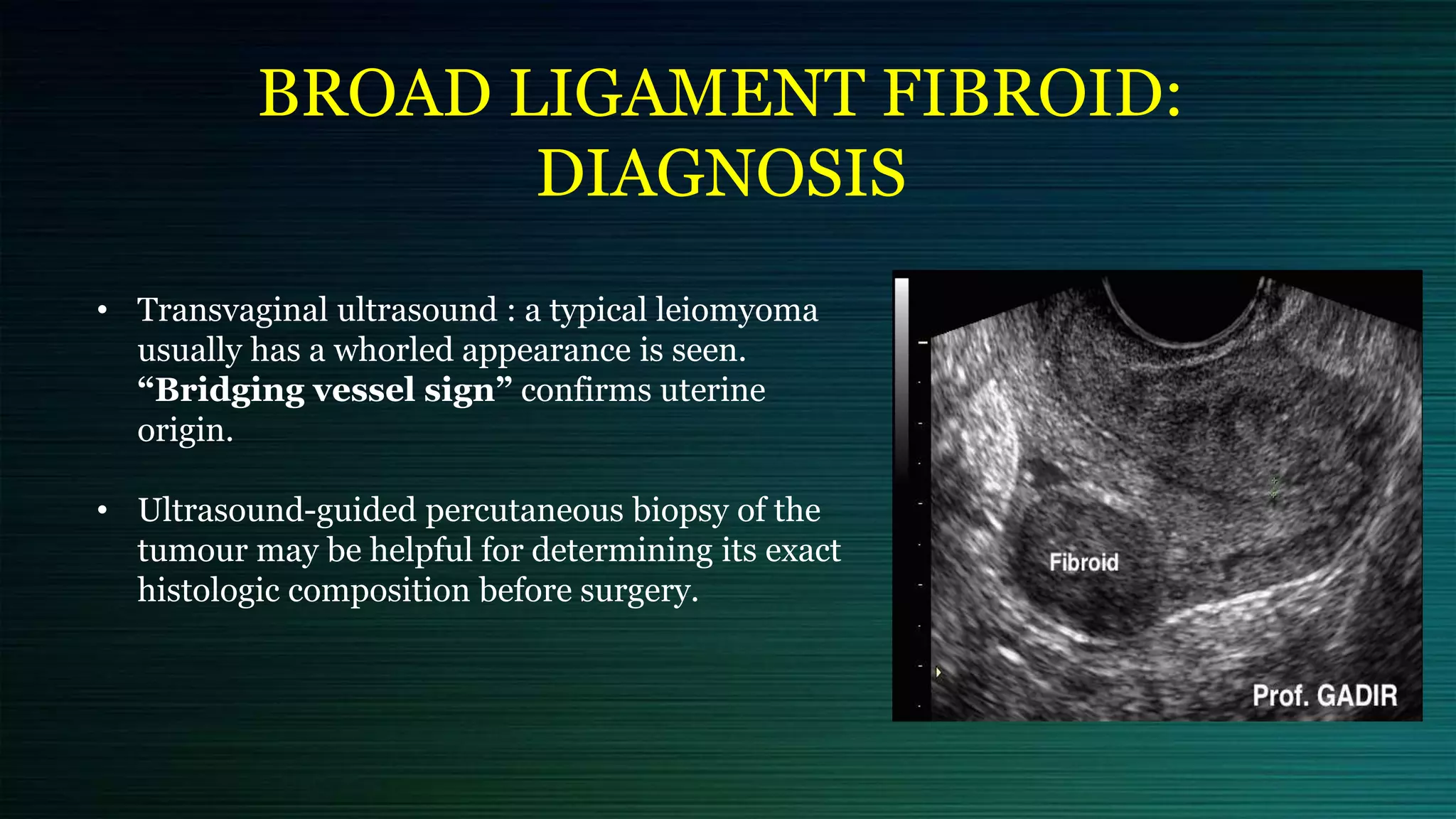
• Transvaginal ultrasound : a typical leiomyoma
usually has a whorled appearance is seen.
“Bridging vessel sign” confirms uterine
origin.
• Ultrasound-guided percutaneous biopsy of the
tumour may be helpful for determining its exact
histologic composition before surgery.
BROAD LIGAMENT FIBROID:
DIAGNOSIS
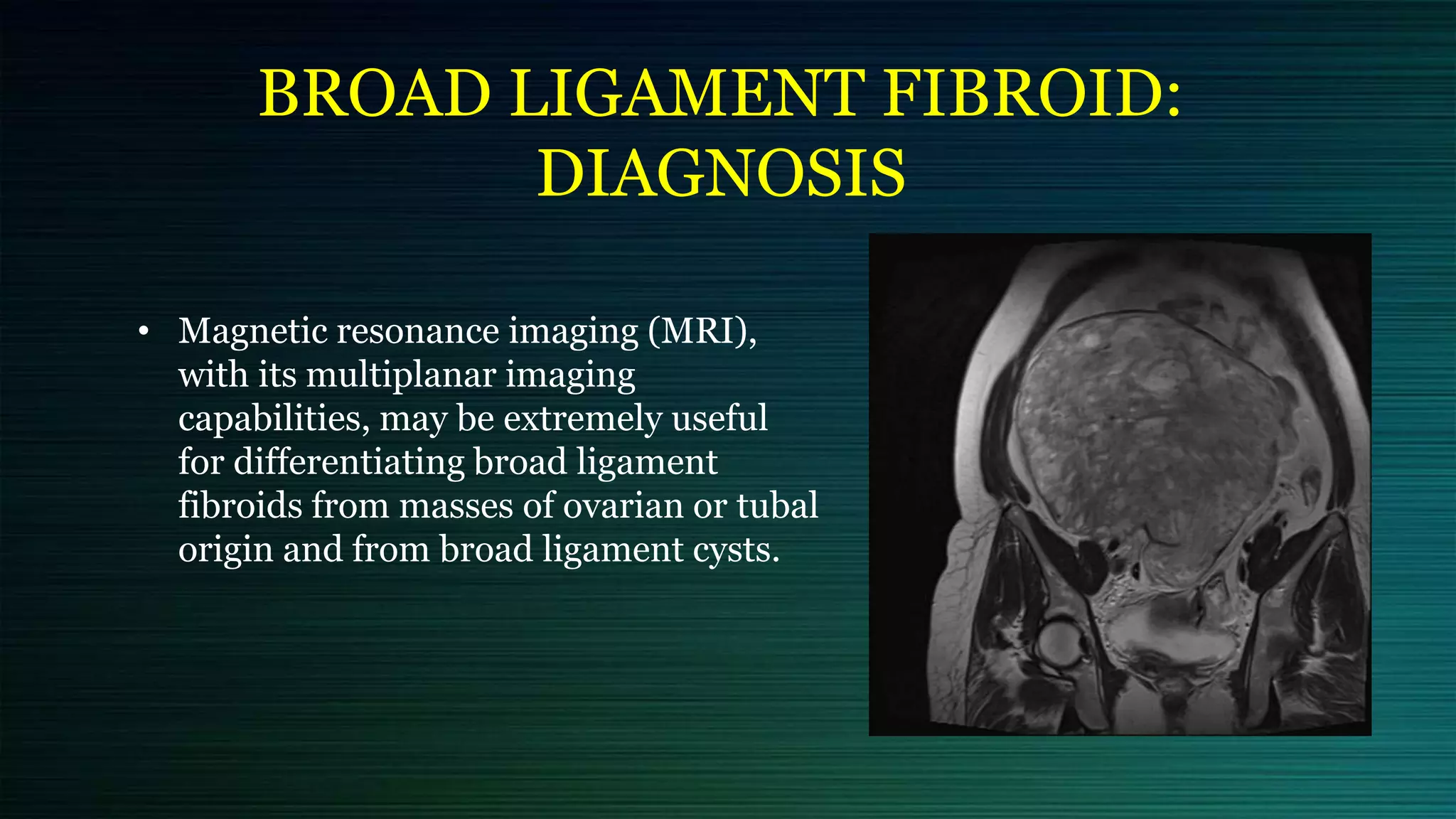
• Magnetic resonance imaging (MRI),
with its multiplanar imaging
capabilities, may be extremely useful
for differentiating broad ligament
fibroids from masses of ovarian or tubal
origin and from broad ligament cysts.
BROAD LIGAMENT FIBROID :
DIFFERENTIAL DIAGNOSIS
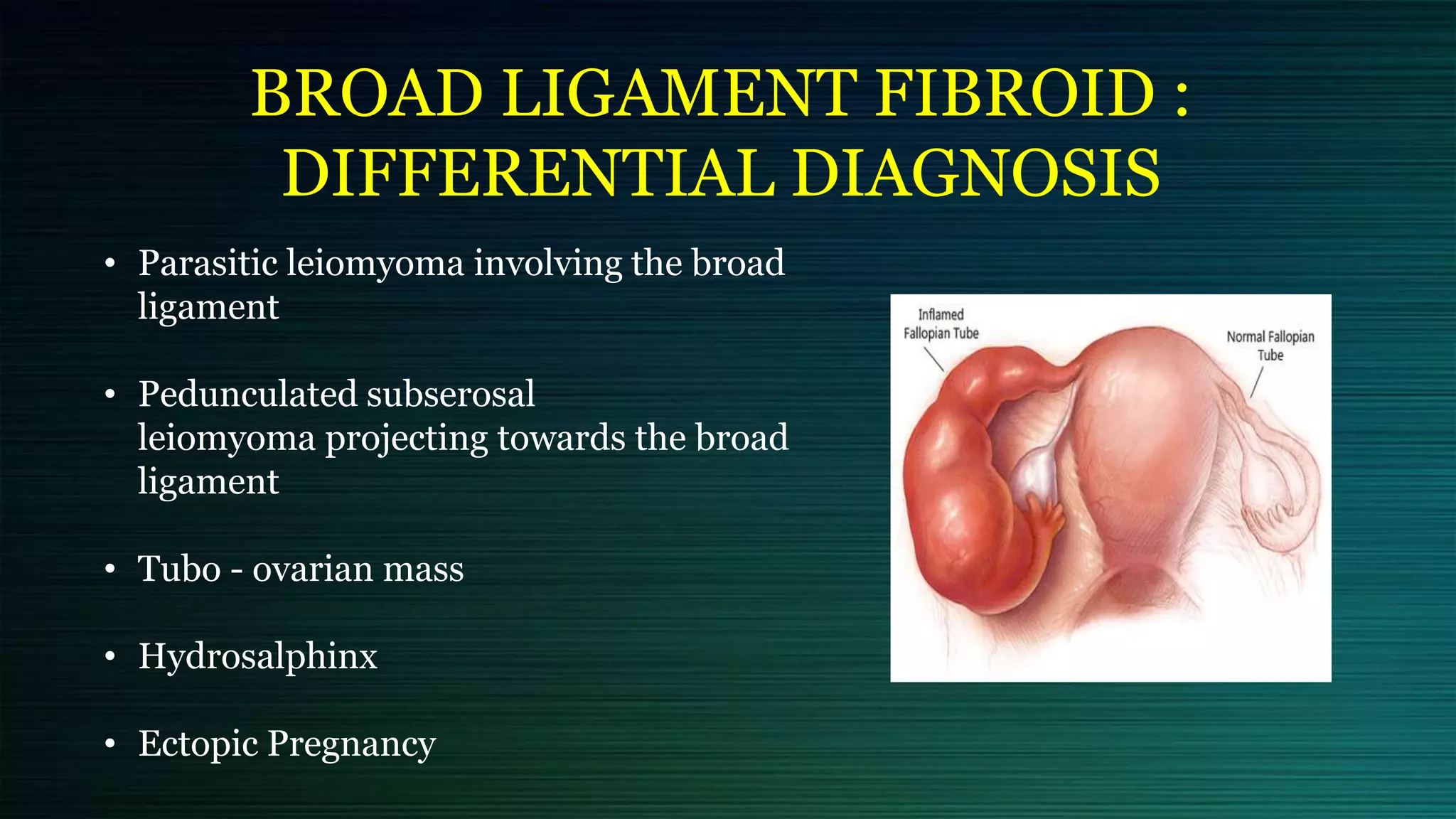
• Parasitic leiomyoma involving the broad
ligament
• Pedunculated subserosal
leiomyoma projecting towards the broad
ligament
• Tubo - ovarian mass
• Hydrosalphinx
• Ectopic Pregnancy
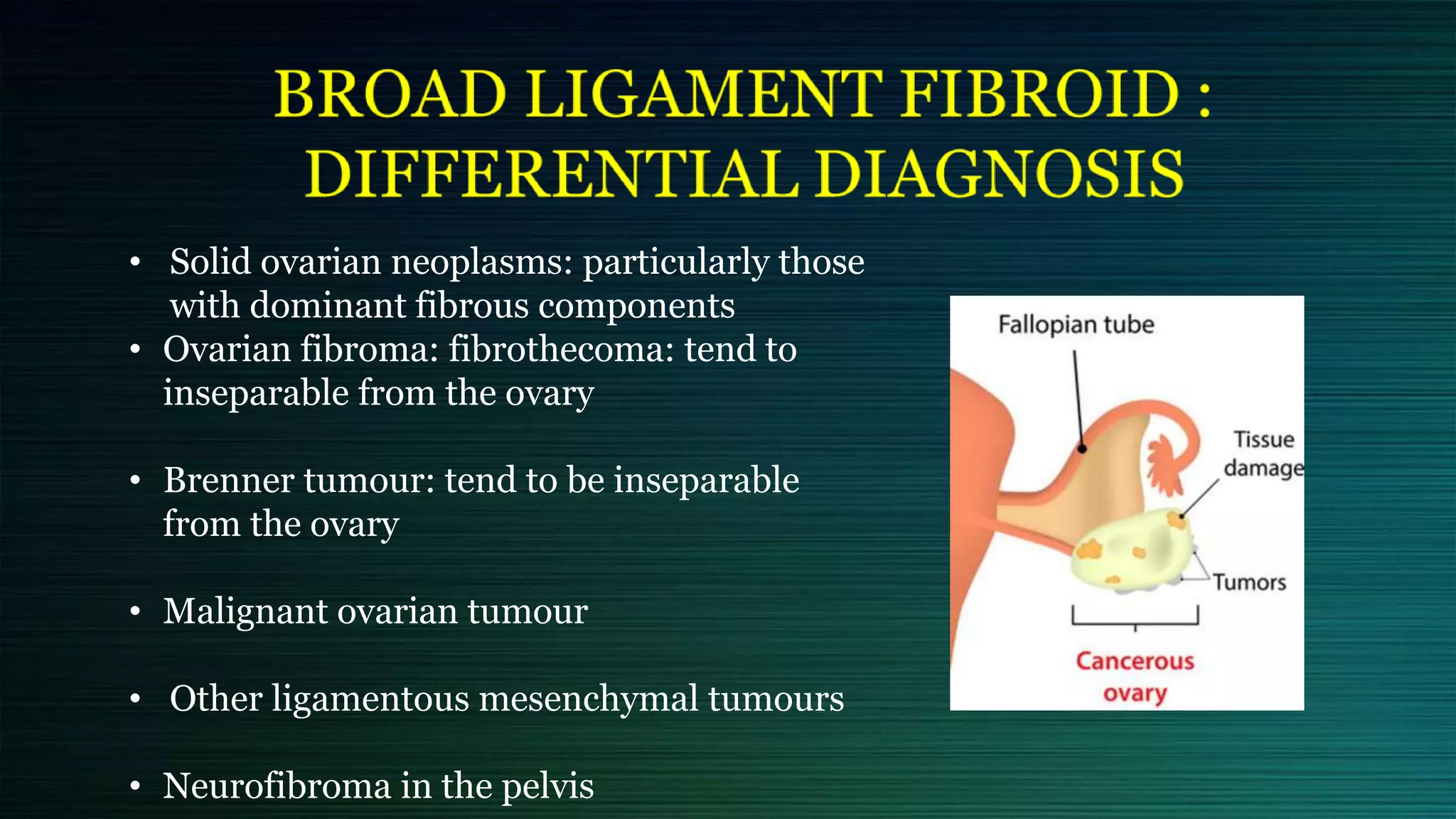
• Solid ovarian neoplasms: particularly those
with dominant fibrous components
• Ovarian fibroma: fibrothecoma: tend to
inseparable from the ovary
• Brenner tumour: tend to be inseparable
from the ovary
• Malignant ovarian tumour
• Other ligamentous mesenchymal tumours
• Neurofibroma in the pelvis
BROAD LIGAMENT FIBROID:
COMPLICATIONS
• Torsion
• Psuedo meg syndrome
• Cystic degeneration mimicking ovarian
malignancy
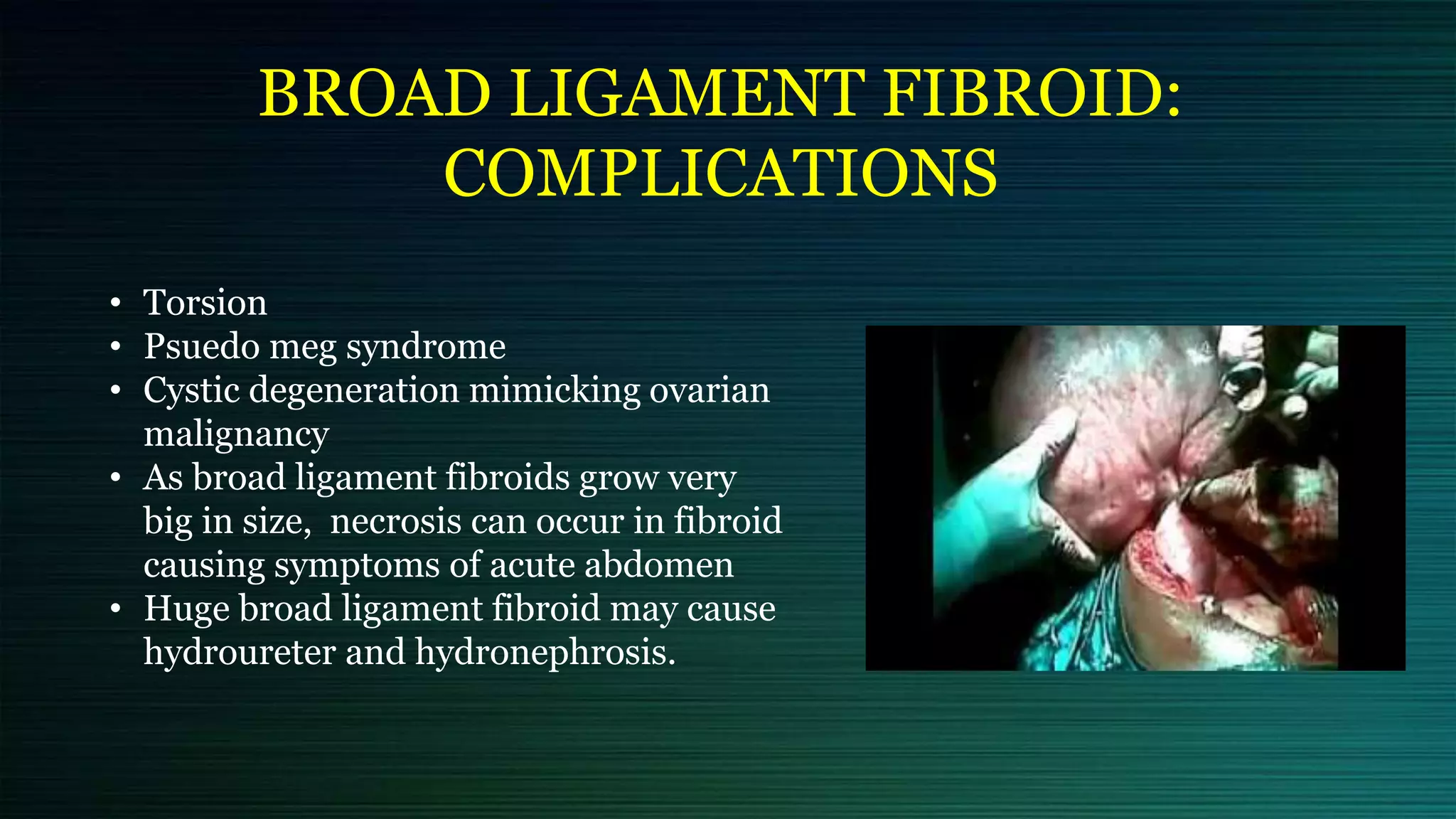
• As broad ligament fibroids grow very
big in size, necrosis can occur in fibroid
causing symptoms of acute abdomen
• Huge broad ligament fibroid may cause
hydroureter and hydronephrosis.
BROAD LIGAMENT FIBROID:
MANAGEMENT
Myomectomy VS Hysterectomy ?
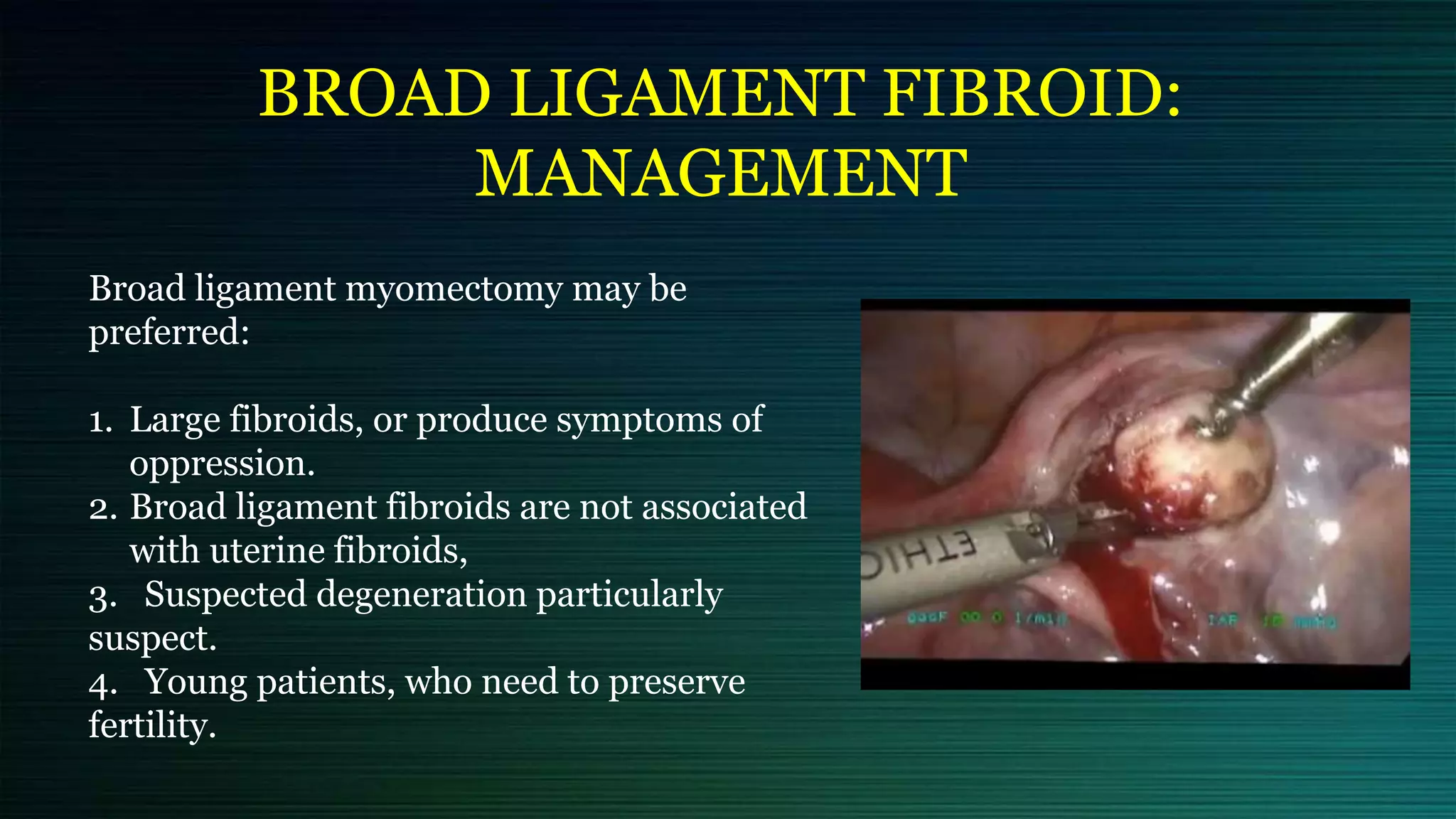
Broad ligament myomectomy may be
preferred:
1. Large fibroids, or produce symptoms of
oppression.
2. Broad ligament fibroids are not associated
with uterine fibroids,
3. Suspected degeneration particularly
suspect.
4. Young patients, who need to preserve
fertility.
BROAD LIGAMENT FIBROID:
MANAGEMENT
BROAD LIGAMENT FIBROID:
MANAGEMENT
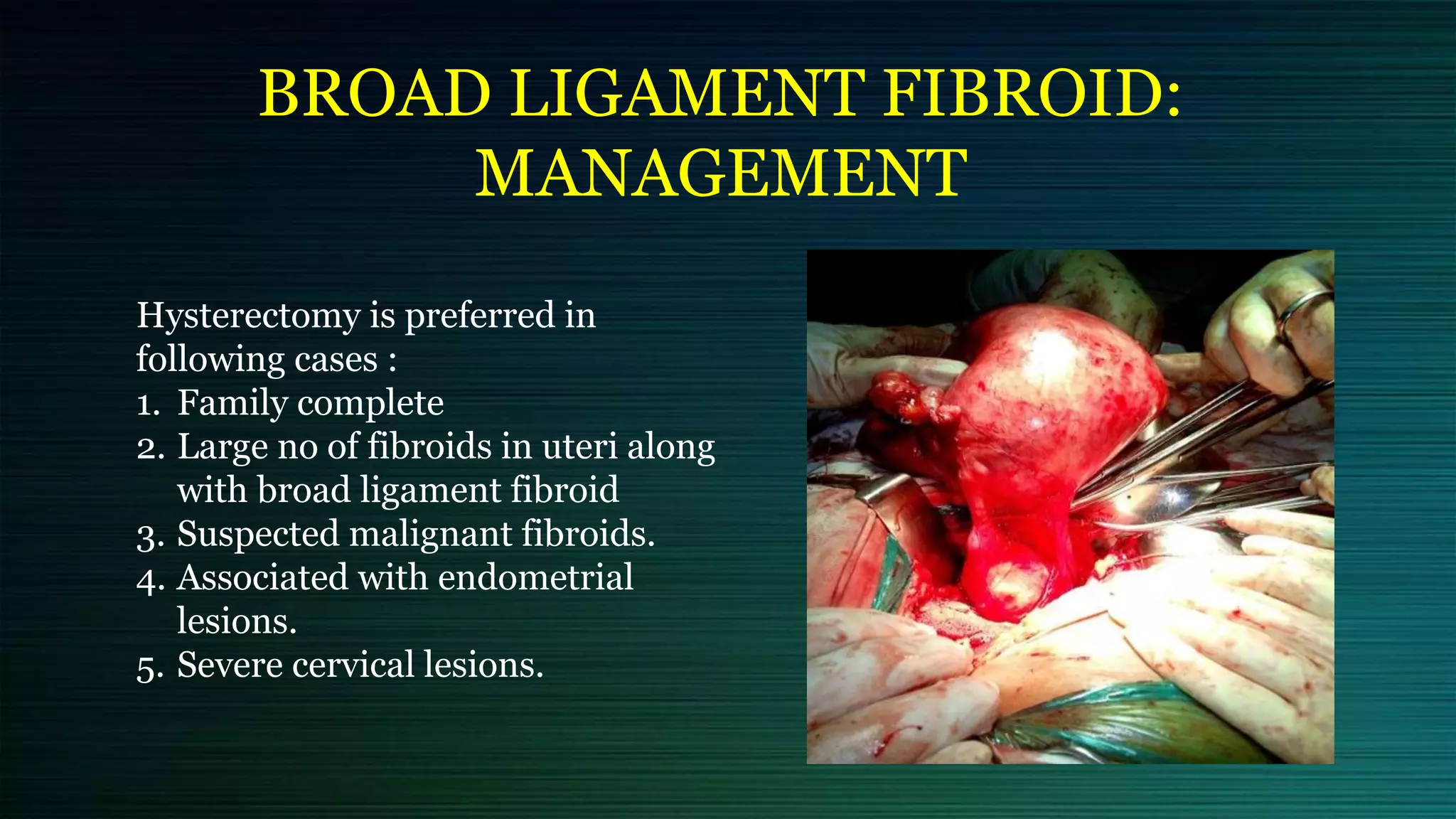
Hysterectomy is preferred in
following cases :
1. Family complete
2. Large no of fibroids in uteri along
with broad ligament fibroid
3. Suspected malignant fibroids.
4. Associated with endometrial
lesions.
5. Severe cervical lesions.
CASE REPORT
• A 45yr old P2L2 presented with complaints of heaviness in abdomen,
irregular heavy menses and dysmenorrhea , since 2 – 3 months
• On Examination:
P/A – soft, non tender
P/S - cervix , vagina healthy
P/V – uterus bulky firm mobile, AV, soft to cystic mass 10X 8 cm in left and
posterior fornix separate from uterus. Right fornix free and non tender.
P/R – bogginess felt anteriorly, rectal mucosa and parametrium free.
• Tumor Marker - WNL
CASE REPORT
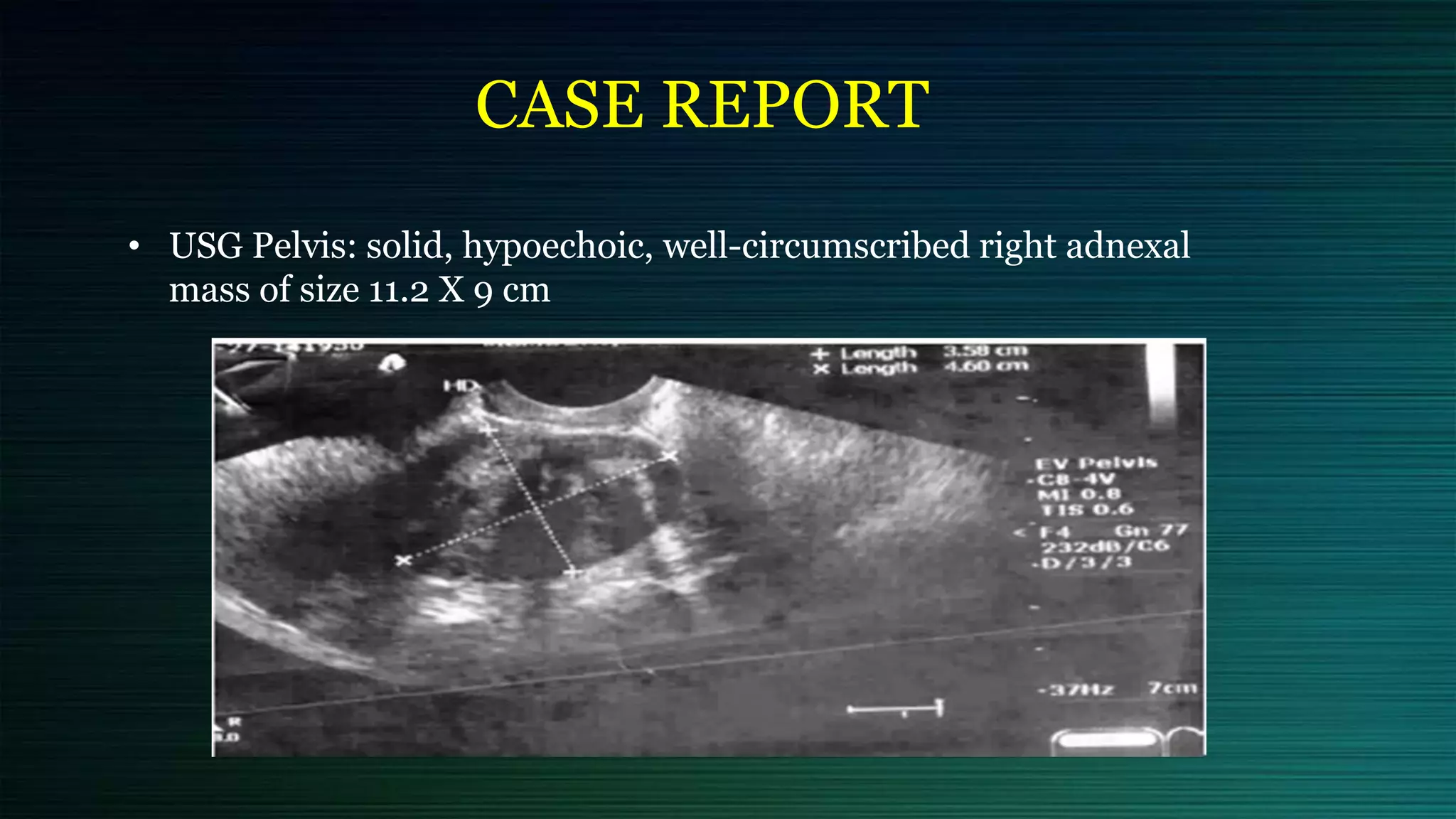
• USG Pelvis: solid, hypoechoic, well-circumscribed right adnexal
mass of size 11.2 X 9 cm
CASE REPORT
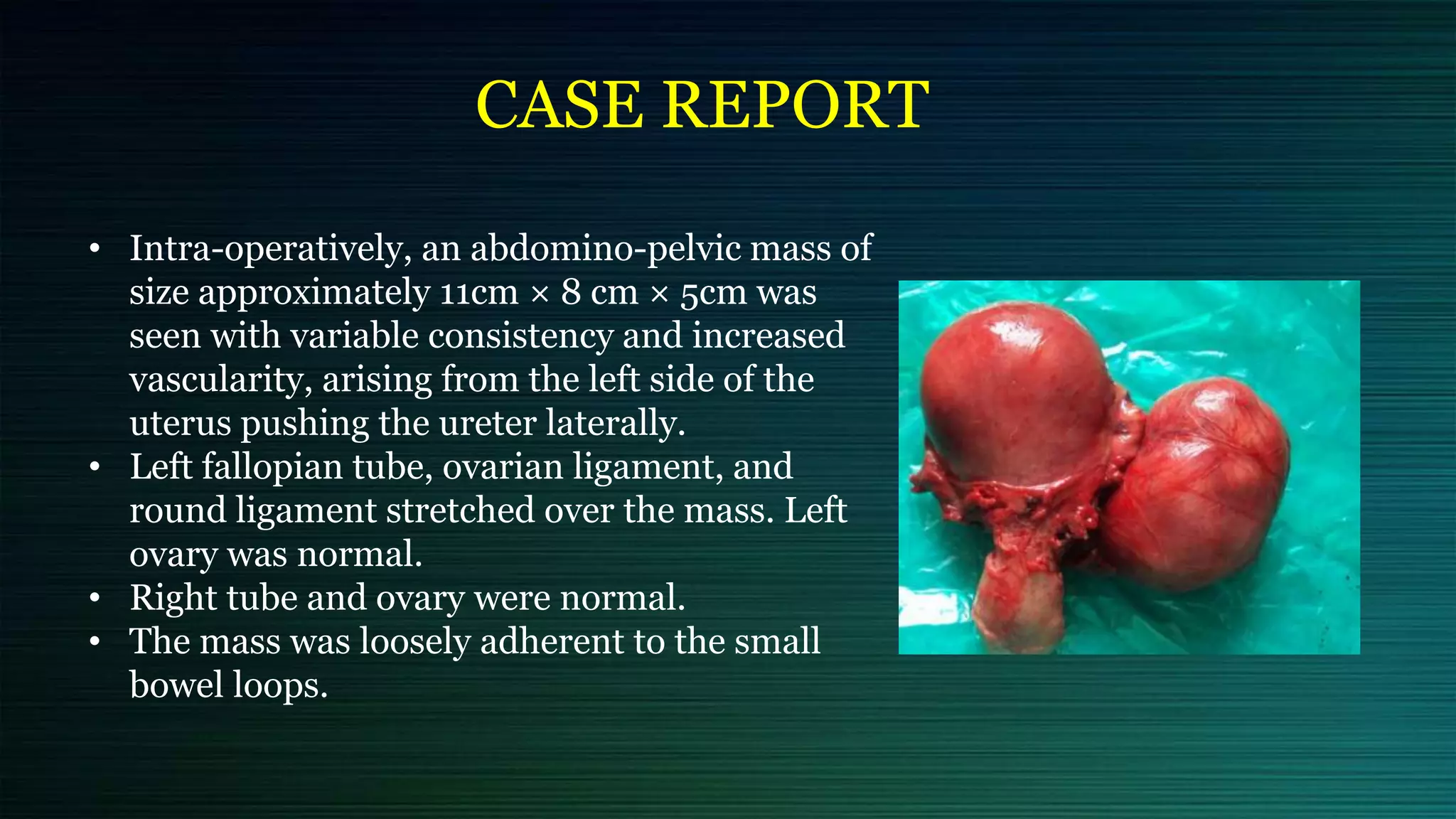
• Intra-operatively, an abdomino-pelvic mass of
size approximately 11cm × 8 cm × 5cm was
seen with variable consistency and increased
vascularity, arising from the left side of the
uterus pushing the ureter laterally.
• Left fallopian tube, ovarian ligament, and
round ligament stretched over the mass. Left
ovary was normal.
• Right tube and ovary were normal.
• The mass was loosely adherent to the small
bowel loops.
LAPAROSCOPIC BROAD LIGAMENT MYOMECTOMY
CERVICAL FIBROID
CERVICAL FIBROID
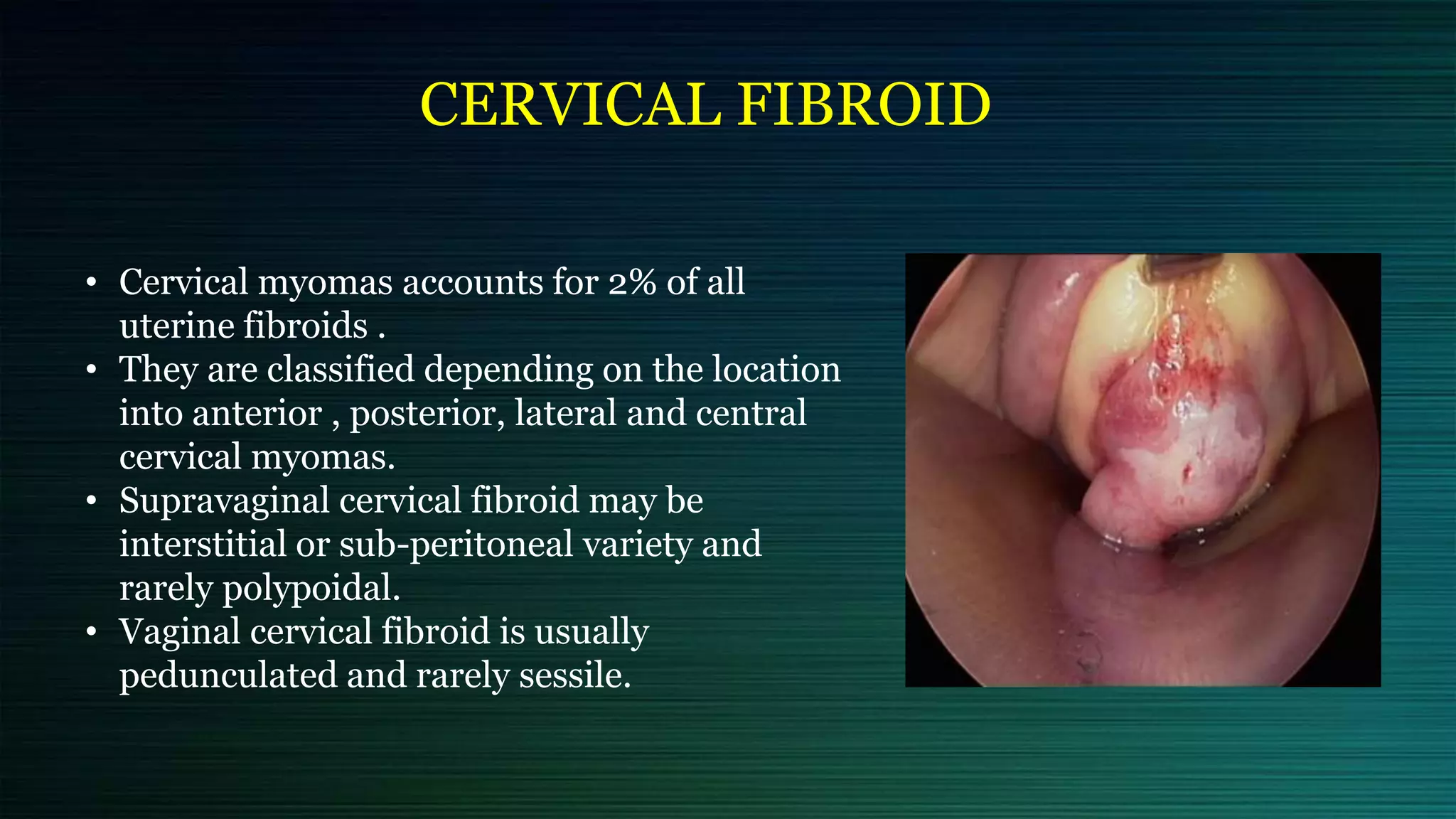
• Cervical myomas accounts for 2% of all
uterine fibroids .
• They are classified depending on the location
into anterior , posterior, lateral and central
cervical myomas.
• Supravaginal cervical fibroid may be
interstitial or sub-peritoneal variety and
rarely polypoidal.
• Vaginal cervical fibroid is usually
pedunculated and rarely sessile.
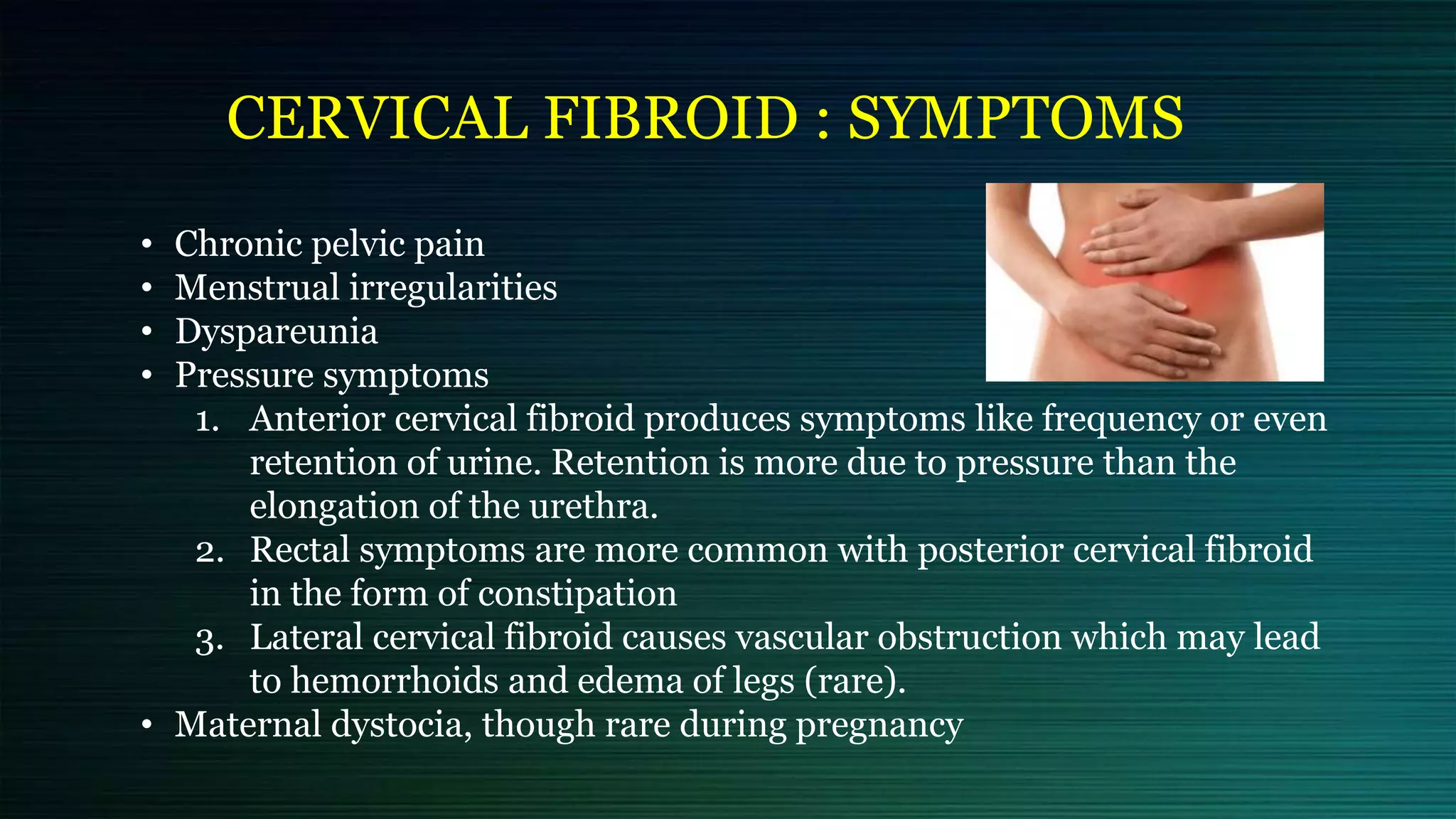
CERVICAL FIBROID : SYMPTOMS
• Chronic pelvic pain
• Menstrual irregularities
• Dyspareunia
• Pressure symptoms
1. Anterior cervical fibroid produces symptoms like frequency or even
retention of urine. Retention is more due to pressure than the
elongation of the urethra.
2. Rectal symptoms are more common with posterior cervical fibroid
in the form of constipation
3. Lateral cervical fibroid causes vascular obstruction which may lead
to hemorrhoids and edema of legs (rare).
• Maternal dystocia, though rare during pregnancy
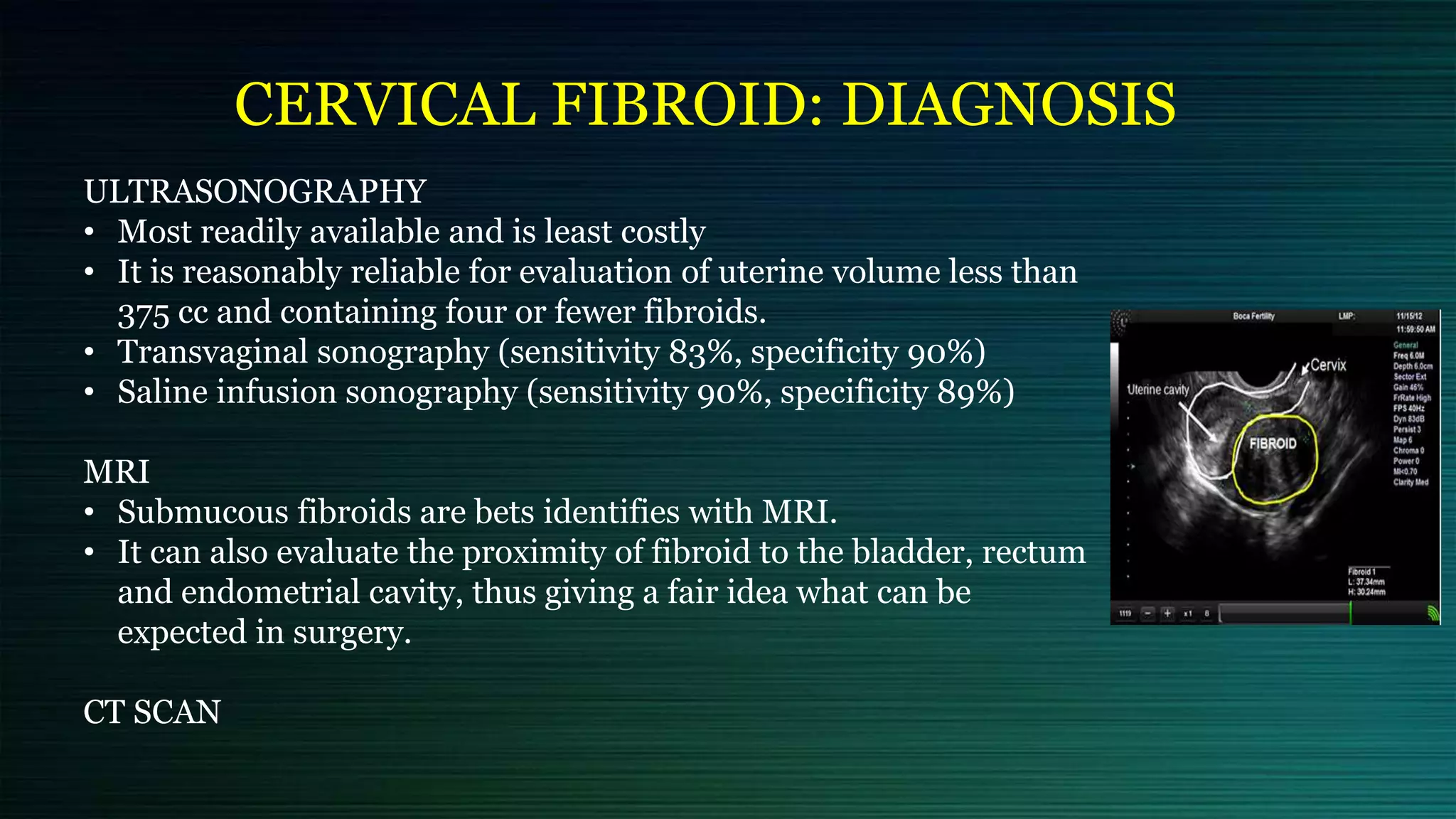
CERVICAL FIBROID: DIAGNOSIS
ULTRASONOGRAPHY
• Most readily available and is least costly
• It is reasonably reliable for evaluation of uterine volume less than
375 cc and containing four or fewer fibroids.
• Transvaginal sonography (sensitivity 83%, specificity 90%)
• Saline infusion sonography (sensitivity 90%, specificity 89%)
MRI
• Submucous fibroids are bets identifies with MRI.
• It can also evaluate the proximity of fibroid to the bladder, rectum
and endometrial cavity, thus giving a fair idea what can be
expected in surgery.
CT SCAN
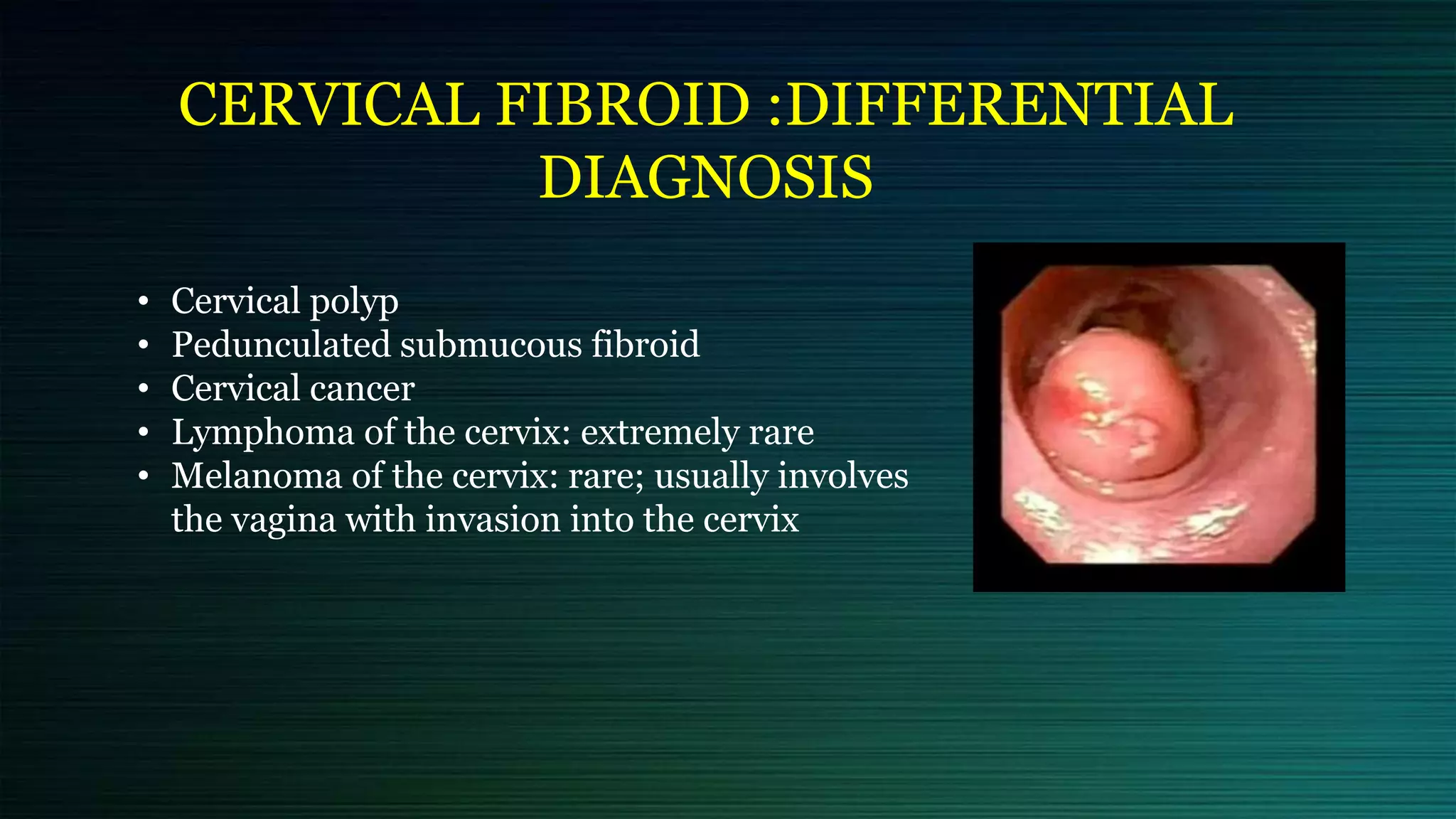
CERVICAL FIBROID :DIFFERENTIAL
DIAGNOSIS
• Cervical polyp
• Pedunculated submucous fibroid
• Cervical cancer
• Lymphoma of the cervix: extremely rare
• Melanoma of the cervix: rare; usually involves
the vagina with invasion into the cervix
CERVICAL FIBROID : MANAGEMNT
• Treatment of cervical fibroid depends on the size , location and
the desire for fertility of patients.
• Preoperative GnRH analogues administration for 3 months
facilitate surgery and improve the haemoglobin status .
• In vaginal part fibroids if the tumour is sessile, myomectomy and
if pedunculated ,polypectomy is done.
CERVICAL FIBROID : MANAGEMNT
• For lateral fibroids if patient is desirous of fertility,
myomectomy may be attempted .
• For central fibroids, hysterectomy is required which may be
done laparoscopically or by open surgery or by vaginal route if
the size of the fibroid is small.
Victor Bonney was born in West London in
1872: both his father and his paternal
grandfather were family doctors.
He was on the Council of the Royal College
of Surgeons of England for a long time.
Bonney's professional achievements and his
fame among colleagues were firstly for his
extraordinary performance of 500
Wertheim radical extended hysterectomy
operations for cancer of the cervix and,
secondly, for his development of the
conservative operations of myomectomy
and ovarian cystectomy.
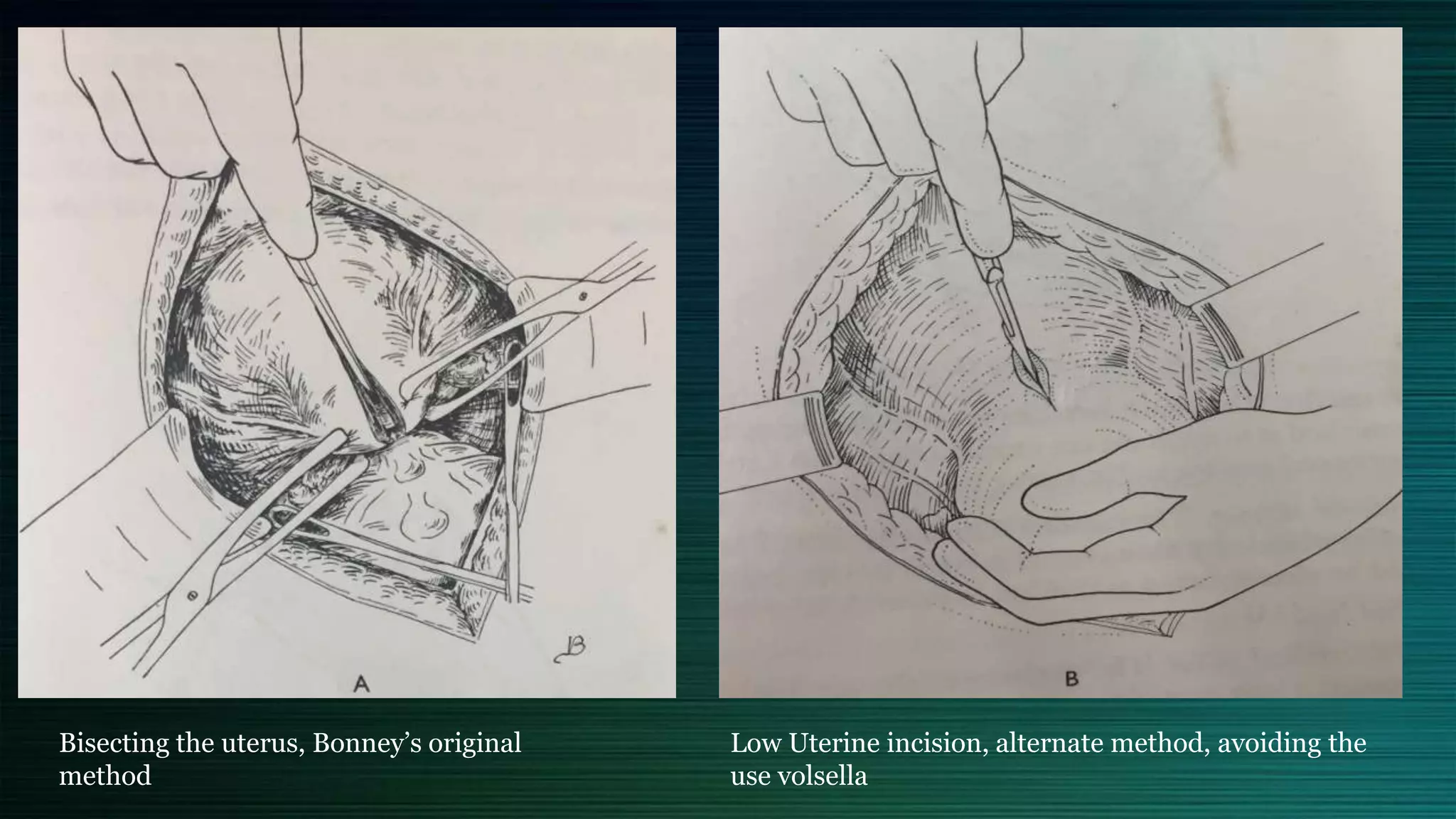
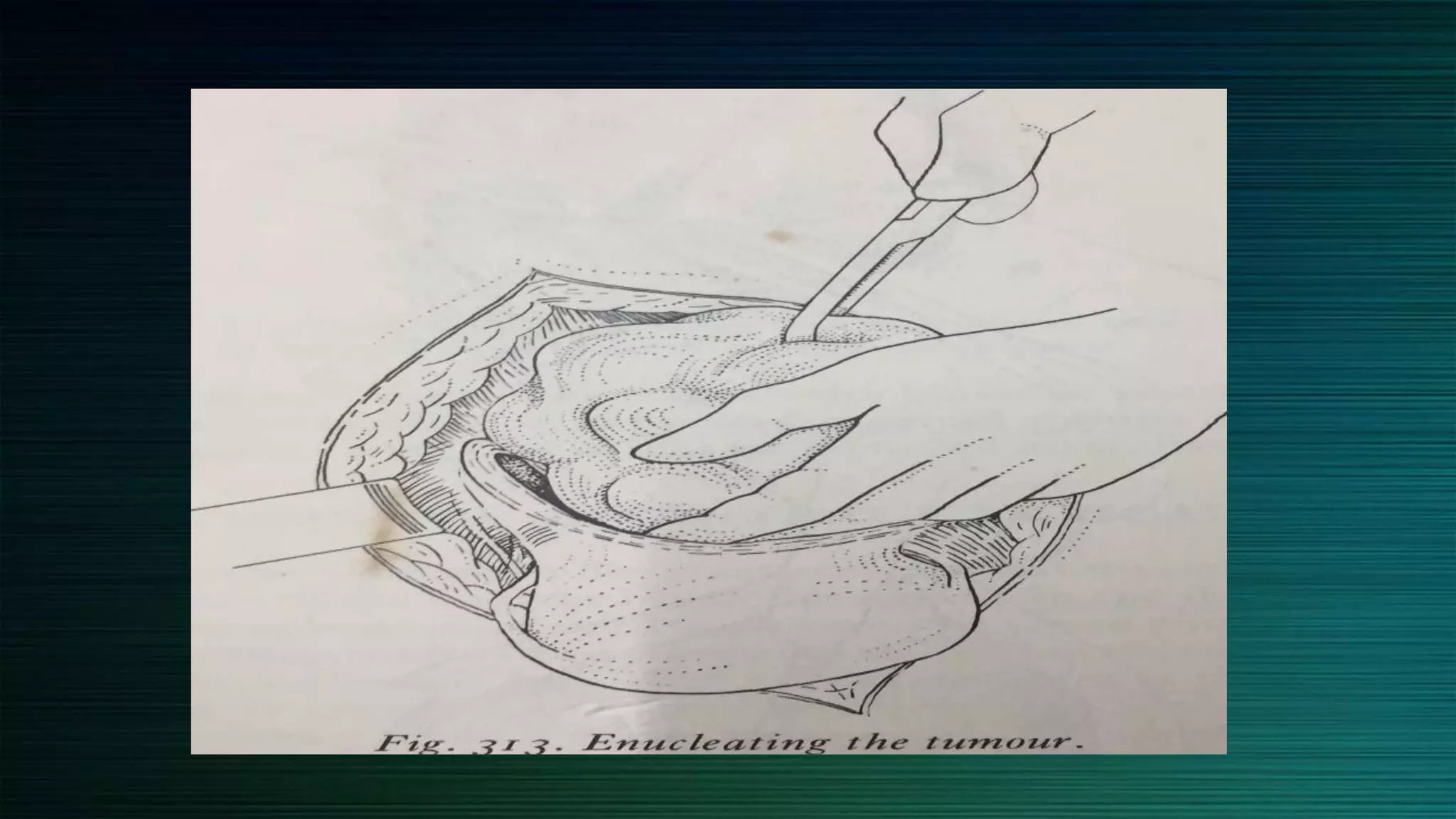
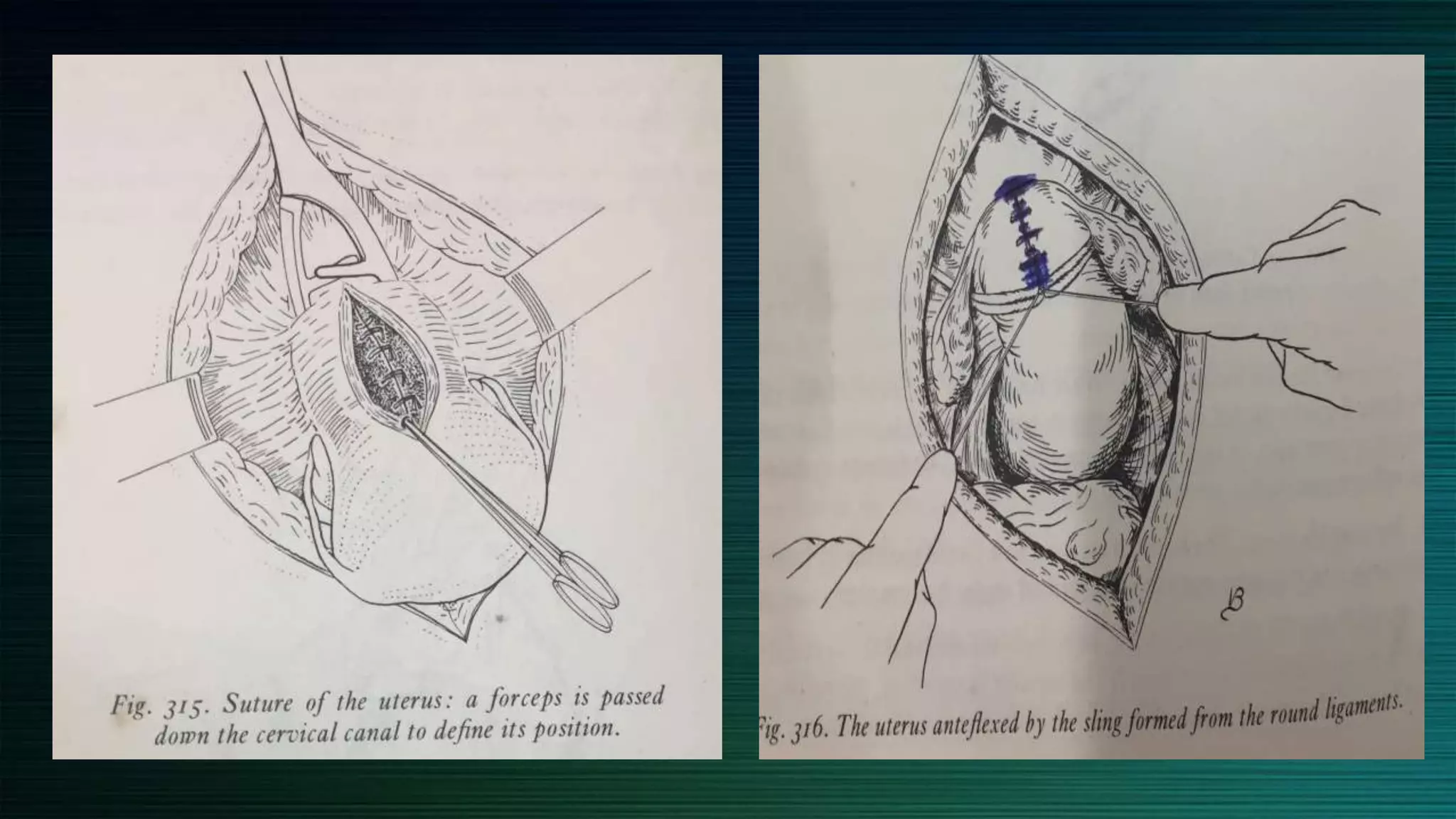
PICTORIAL REPRESENTATION OF
MYOMECTOMY FOR CENTRAL
CERVICAL FIBROID FROM BONNEY’S
MONOGRAM
Bisecting the uterus, Bonney’s original
method
Low Uterine incision, alternate method, avoiding the
use volsella
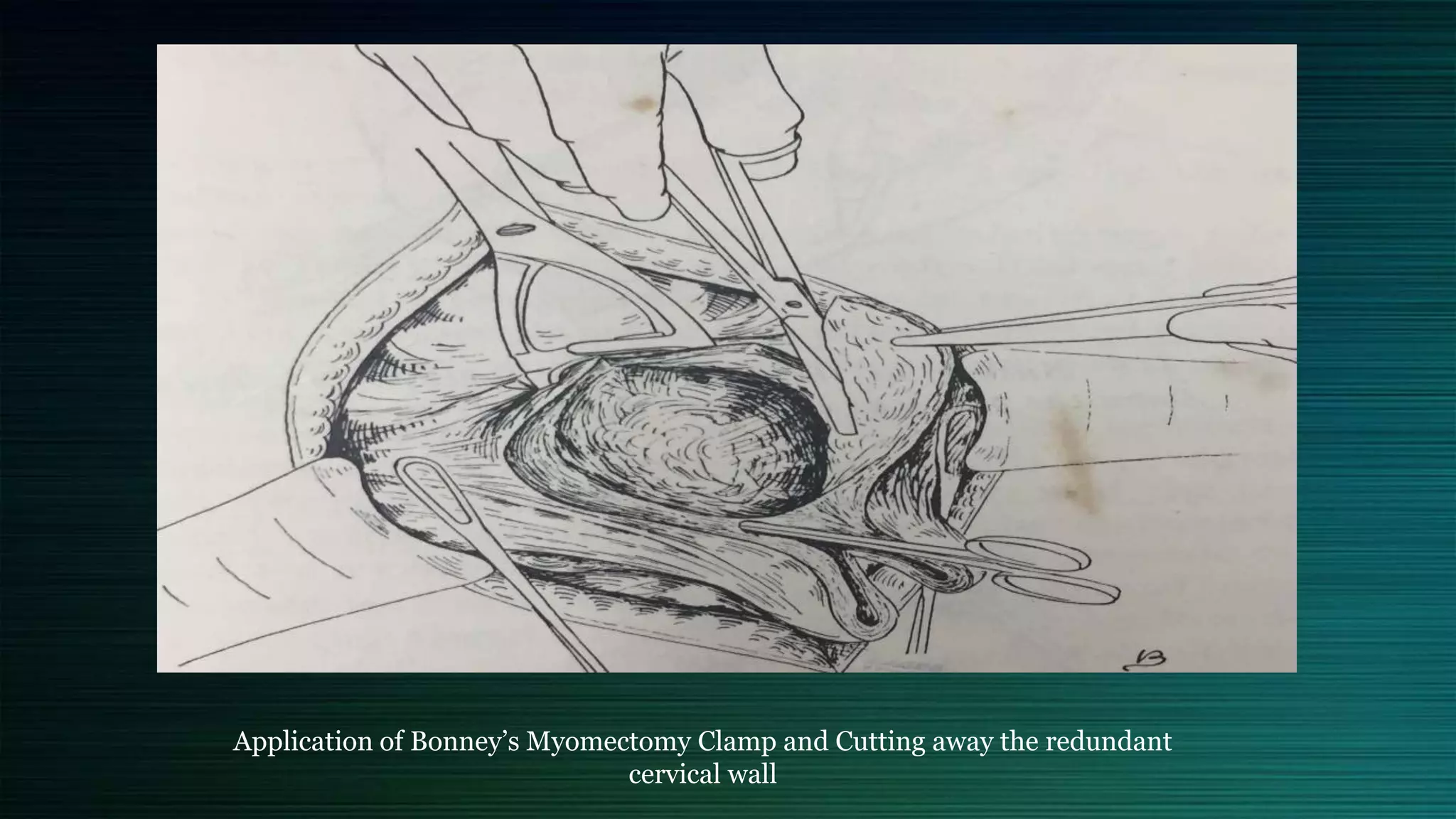
Application of Bonney’s Myomectomy Clamp and Cutting away the redundant
cervical wall
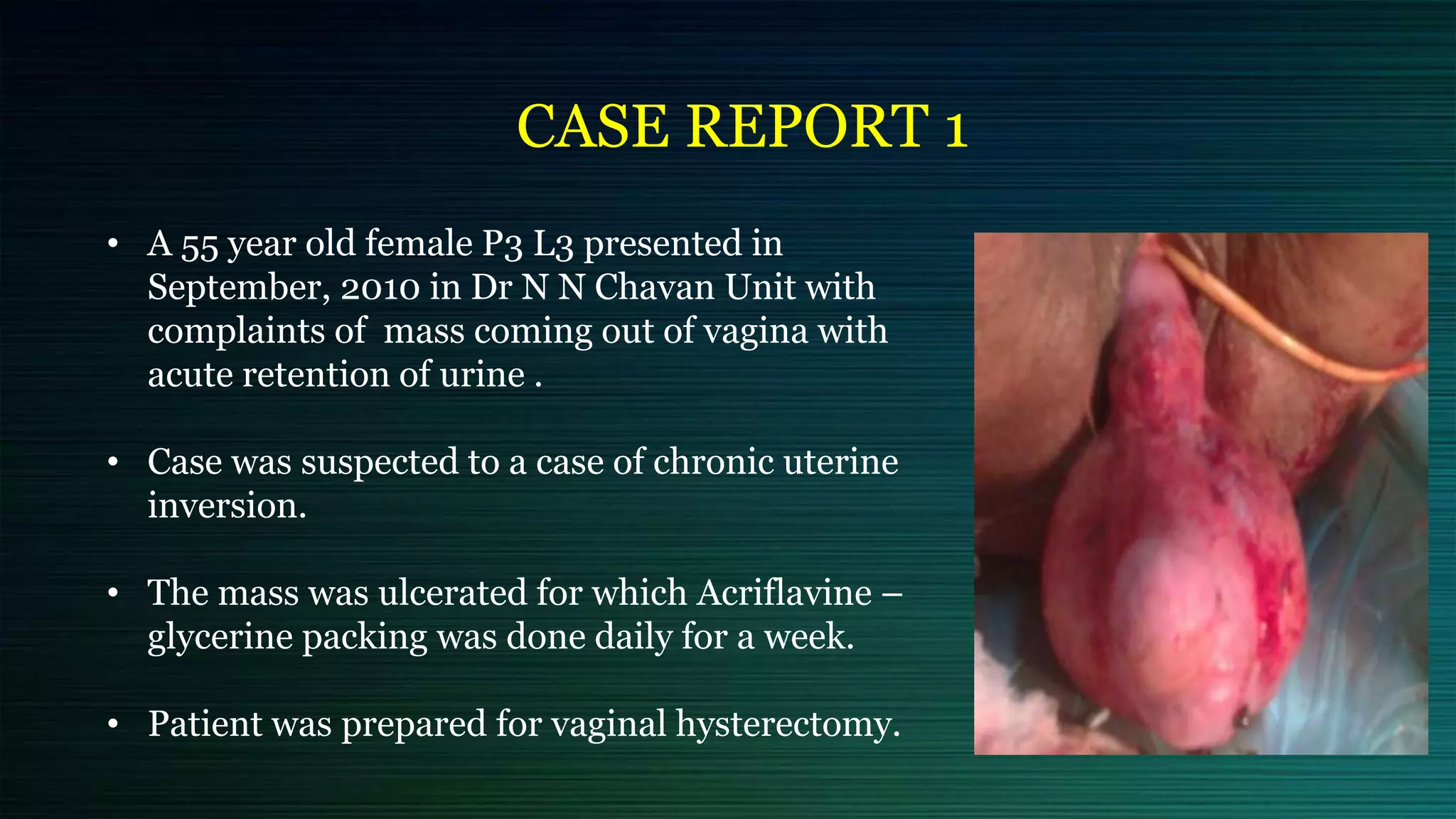
• A 55 year old female P3 L3 presented in
September, 2010 in Dr N N Chavan Unit with
complaints of mass coming out of vagina with
acute retention of urine .
• Case was suspected to a case of chronic uterine
inversion.
• The mass was ulcerated for which Acriflavine –
glycerine packing was done daily for a week.
• Patient was prepared for vaginal hysterectomy.
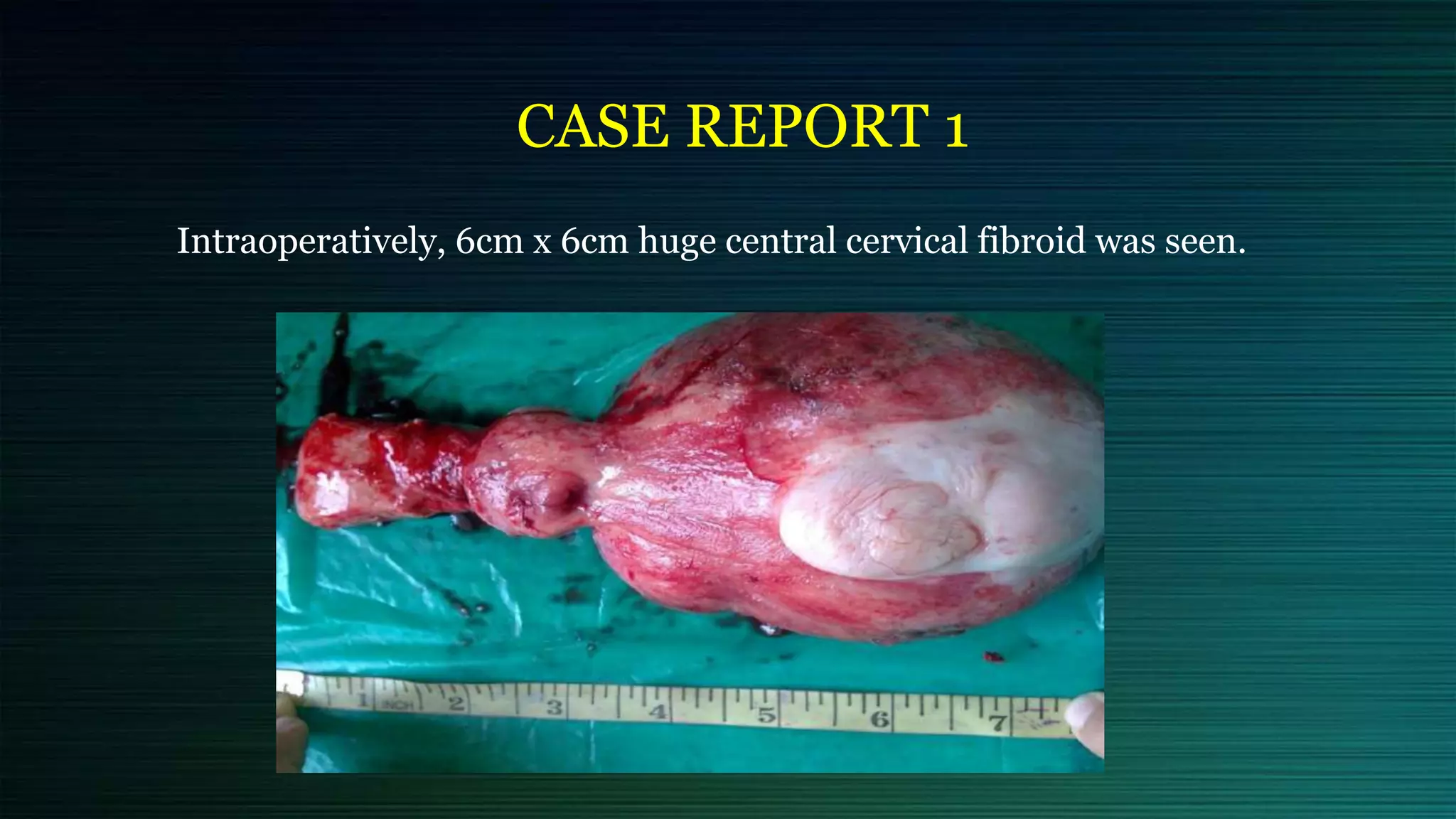
CASE REPORT 1
CASE REPORT 1
Intraoperatively, 6cm x 6cm huge central cervical fibroid was seen.
LAPAROSCOPIC CERVICAL FIBROID MYOMECTOMY
CONCLUSION
• Cervical and broad ligament fibroids are rare; with incidence of only
2% and 1% respectively.
• Cervical fibroid often present with pressure symptoms and often pose
surgical difficulties due to its proximity to bladder and rectum.
• Broad ligament fibroid though rare , but have the propensity of
growing into large adnexal masses and may mimic ovarian
malignancy.
• The choice of operation depends on the size , location and the family
status of the concerned patient.
• Both cervical and broad ligament can be managed by myomectomy or
hysterectomy either by laparoscopy or by open surgery .
REFERENCES
1. Uterine leiomyomata. American College of Obstetricians and Gynecologists (ACOG) Technical
Bulletin. Number 192, May 1994
2. Monaghan JM, Lopes AB, Naik R. Total hysterectomy for cervical and broad ligament fibroids.
In: Huxley R, Taylor S, Chandler K, editors. Bonney's Gynaecological Surgery, 10th ed. Maiden,
USA: Blackwell Publishing Company; 2004. p.74-86.
3. Buttram VC Jr, Reiter RC. Uterine leiomyomata: etiology, symptomatology, and management.
Fertil Steril 1981; 36:433.
4. 1.Tiltman, Andrew J. Leiomyomas of the uterine cervix: A Study of frequency. International
Journal of Gynecological Pathology 1998; 231-4. 2.Kumar P, Malhothra N. Tumours of the
corpus uteri. In: Jeffcoate’s Principles of Gynecology. 7th Ed.; Jaypee Brothers Medical
Publisher (Pvt.) Ltd. New Delhi. 2008;p 487-516.
5. Barek JS. Novack's Gynaecology. 15th ed. New Delhi: Lippincott Williams and Wilkins, Wolters
Kluwer (India); 2007. Benign diseases of the female reproductive tract; p. 470.
6. 3. Fasih N, Prasad Shanbhogue AK, Macdonald DB, Fraser-Hill MA, Papadatos D, Kielar AZ, et
al. Leiomyomas beyond the uterus: Unusual locations, rare
manifestations. Radiographics. 2008;28:1931–48.
Cervical and broad ligament fibroid

Cervical and broad ligament fibroid

  • 1.
    TACKLING DIFFICULT BROAD LIGAMENTAND CERVICAL FIBROIDS
  • 2.
    Dr. Niranjan Chavan MD,FCPS, DGO, DFP, MICOG, DICOG, FICOG Professor and Unit Chief, L.T.M.M.C & L.T.M.G.H Chairperson, FOGSI Oncology and TT Committee (2012-2014) Treasurer, MOGS (2017- 2018) Chair and Convener, FOGSI Cell- Violence against Doctors (2015-2016) Chief Editor, AFG Times (2015-2017) Editorial Board, European Journal of Gynecologic Oncology Editor of FOGSI FOCUS, MOGS, AFG & IAGE Newsletters Member, Managing Committee, IAGE (2013-2017) Member , Oncology Committee, AOFOG (2013 -2015) Recipient of 6 National & International Awards Author of 15 Research Papers and 19 Scientific Chapters Course Co-Ordinator, of 11 batches, of MUHS recognized Certificate Course of Basic Infertility Management Including Endoscopy (BIMIE) at LTMGH
  • 3.
    INTRODUCTION • Fibroids(Myoma, Leiomyoma,Fibromyoma) • Most common Monoclonal Benign tumors of uterus arising in the smooth muscle cells of myometrium. • Contain large aggregation of extracellular matrix consisting of collagen, elastin, fibronectin and proteoglycan. • Each fibroid is derived from smooth muscle cells rests, either from vessel wall or uterine musculature.
  • 4.
    INCIDENCE • Incidence ofcervical fibroid is 2-3% and broad ligament fibroid is < 1%. • 5-20% women in their reproductive age are reported to have fibroids. • Most common----77% specimen of hysterectomy were having Fibroids invariable number ,size (micro-macro) and site.
  • 5.
  • 7.
    ETIOLOGY GENETIC FACTORS • Monoclonal •40% have chromosomal abnormalities • Translocation between chromosome 12 and 14, deletion of 7q, Trisomy of 12 HORMONAL FACTORS • Both estrogen and progesterone stimulates growth • De novo production of estrogen in fibroids • Increased progesterone receptors GROWTH FACTORS They increase smooth muscle cell proliferation, DNA synthesis and angiogenesis
  • 8.
    RISK FACTORS • Age– incidence increases with age till on set of menopause. • Endogenous Hormonal factors 1. Early menarche 2. Late menopause 3. Hyper-estrogenic states 4. Increased expression and responsiveness of progesterone receptors A & B. • Family History—1st degree relatives are having 3.5 times more risk of developing fibroids.
  • 9.
    • Body weight •Diet—diet rich in red meat, ham, beef • Exercise – women doing regular exercise low risk • OCS --- no definite relationship. • ERT—variable reports • Pregnancy • Smoking
  • 10.
  • 11.
    BROAD LIGAMENT FIBROID •Extremely rare (< 1%). • Broad ligament fibroids are divisible into two types: • True broad ligament fibroids: These spring from the muscle fibers normally found in the mesometrium. Such tumors may be found in at least three situations, (1) In the round ligament, (2) In the utero-ovarian ligament, and (3) In the connective tissue surrounding the ovarian and the uterine vessels. • False broad ligament fibroids: These originate mostly from the lateral walls of the uterus or cervix
  • 13.
    BROAD LIGAMENT FIBROID TrueBroad Ligament False Broad Ligament Originates from the muscle fibres normally found in the mesometrium (in the round ligament, ovario- uterine ligament, and the connective tissue around the uterine and ovarian vessels) Arises from the lateral wall of the uterine corpus or of the cervix, and bulges outward between the layers of the broad ligament. Ureter is medial to mass Ureter is lateral to mass No groove felt between mass and uterus Groove felt between mass and uterus
  • 14.
    BROAD LIGAMENT FIBROID: SYMPTOMS •Often symptomatic • Abdominal distension • Menstrual irregularities • Dysmenorrhoea • Dyspareunia • Broad ligament fibroids may extent laterally and compress the ureter , causing pressure symptoms like retention , increased frequency etc.
  • 15.
    BROAD LIGAMENT FIBROID: DIAGNOSIS •Transvaginal ultrasound : a typical leiomyoma usually has a whorled appearance is seen. “Bridging vessel sign” confirms uterine origin. • Ultrasound-guided percutaneous biopsy of the tumour may be helpful for determining its exact histologic composition before surgery.
  • 16.
    BROAD LIGAMENT FIBROID: DIAGNOSIS •Magnetic resonance imaging (MRI), with its multiplanar imaging capabilities, may be extremely useful for differentiating broad ligament fibroids from masses of ovarian or tubal origin and from broad ligament cysts.
  • 17.
    BROAD LIGAMENT FIBROID: DIFFERENTIAL DIAGNOSIS • Parasitic leiomyoma involving the broad ligament • Pedunculated subserosal leiomyoma projecting towards the broad ligament • Tubo - ovarian mass • Hydrosalphinx • Ectopic Pregnancy
  • 18.
    • Solid ovarianneoplasms: particularly those with dominant fibrous components • Ovarian fibroma: fibrothecoma: tend to inseparable from the ovary • Brenner tumour: tend to be inseparable from the ovary • Malignant ovarian tumour • Other ligamentous mesenchymal tumours • Neurofibroma in the pelvis
  • 19.
    BROAD LIGAMENT FIBROID: COMPLICATIONS •Torsion • Psuedo meg syndrome • Cystic degeneration mimicking ovarian malignancy • As broad ligament fibroids grow very big in size, necrosis can occur in fibroid causing symptoms of acute abdomen • Huge broad ligament fibroid may cause hydroureter and hydronephrosis.
  • 20.
  • 21.
    Broad ligament myomectomymay be preferred: 1. Large fibroids, or produce symptoms of oppression. 2. Broad ligament fibroids are not associated with uterine fibroids, 3. Suspected degeneration particularly suspect. 4. Young patients, who need to preserve fertility. BROAD LIGAMENT FIBROID: MANAGEMENT
  • 22.
    BROAD LIGAMENT FIBROID: MANAGEMENT Hysterectomyis preferred in following cases : 1. Family complete 2. Large no of fibroids in uteri along with broad ligament fibroid 3. Suspected malignant fibroids. 4. Associated with endometrial lesions. 5. Severe cervical lesions.
  • 23.
    CASE REPORT • A45yr old P2L2 presented with complaints of heaviness in abdomen, irregular heavy menses and dysmenorrhea , since 2 – 3 months • On Examination: P/A – soft, non tender P/S - cervix , vagina healthy P/V – uterus bulky firm mobile, AV, soft to cystic mass 10X 8 cm in left and posterior fornix separate from uterus. Right fornix free and non tender. P/R – bogginess felt anteriorly, rectal mucosa and parametrium free. • Tumor Marker - WNL
  • 24.
    CASE REPORT • USGPelvis: solid, hypoechoic, well-circumscribed right adnexal mass of size 11.2 X 9 cm
  • 25.
    CASE REPORT • Intra-operatively,an abdomino-pelvic mass of size approximately 11cm × 8 cm × 5cm was seen with variable consistency and increased vascularity, arising from the left side of the uterus pushing the ureter laterally. • Left fallopian tube, ovarian ligament, and round ligament stretched over the mass. Left ovary was normal. • Right tube and ovary were normal. • The mass was loosely adherent to the small bowel loops.
  • 26.
  • 27.
  • 28.
    CERVICAL FIBROID • Cervicalmyomas accounts for 2% of all uterine fibroids . • They are classified depending on the location into anterior , posterior, lateral and central cervical myomas. • Supravaginal cervical fibroid may be interstitial or sub-peritoneal variety and rarely polypoidal. • Vaginal cervical fibroid is usually pedunculated and rarely sessile.
  • 29.
    CERVICAL FIBROID :SYMPTOMS • Chronic pelvic pain • Menstrual irregularities • Dyspareunia • Pressure symptoms 1. Anterior cervical fibroid produces symptoms like frequency or even retention of urine. Retention is more due to pressure than the elongation of the urethra. 2. Rectal symptoms are more common with posterior cervical fibroid in the form of constipation 3. Lateral cervical fibroid causes vascular obstruction which may lead to hemorrhoids and edema of legs (rare). • Maternal dystocia, though rare during pregnancy
  • 30.
    CERVICAL FIBROID: DIAGNOSIS ULTRASONOGRAPHY •Most readily available and is least costly • It is reasonably reliable for evaluation of uterine volume less than 375 cc and containing four or fewer fibroids. • Transvaginal sonography (sensitivity 83%, specificity 90%) • Saline infusion sonography (sensitivity 90%, specificity 89%) MRI • Submucous fibroids are bets identifies with MRI. • It can also evaluate the proximity of fibroid to the bladder, rectum and endometrial cavity, thus giving a fair idea what can be expected in surgery. CT SCAN
  • 31.
    CERVICAL FIBROID :DIFFERENTIAL DIAGNOSIS •Cervical polyp • Pedunculated submucous fibroid • Cervical cancer • Lymphoma of the cervix: extremely rare • Melanoma of the cervix: rare; usually involves the vagina with invasion into the cervix
  • 32.
    CERVICAL FIBROID :MANAGEMNT • Treatment of cervical fibroid depends on the size , location and the desire for fertility of patients. • Preoperative GnRH analogues administration for 3 months facilitate surgery and improve the haemoglobin status . • In vaginal part fibroids if the tumour is sessile, myomectomy and if pedunculated ,polypectomy is done.
  • 33.
    CERVICAL FIBROID :MANAGEMNT • For lateral fibroids if patient is desirous of fertility, myomectomy may be attempted . • For central fibroids, hysterectomy is required which may be done laparoscopically or by open surgery or by vaginal route if the size of the fibroid is small.
  • 34.
    Victor Bonney wasborn in West London in 1872: both his father and his paternal grandfather were family doctors. He was on the Council of the Royal College of Surgeons of England for a long time. Bonney's professional achievements and his fame among colleagues were firstly for his extraordinary performance of 500 Wertheim radical extended hysterectomy operations for cancer of the cervix and, secondly, for his development of the conservative operations of myomectomy and ovarian cystectomy.
  • 35.
    PICTORIAL REPRESENTATION OF MYOMECTOMYFOR CENTRAL CERVICAL FIBROID FROM BONNEY’S MONOGRAM
  • 36.
    Bisecting the uterus,Bonney’s original method Low Uterine incision, alternate method, avoiding the use volsella
  • 38.
    Application of Bonney’sMyomectomy Clamp and Cutting away the redundant cervical wall
  • 40.
    • A 55year old female P3 L3 presented in September, 2010 in Dr N N Chavan Unit with complaints of mass coming out of vagina with acute retention of urine . • Case was suspected to a case of chronic uterine inversion. • The mass was ulcerated for which Acriflavine – glycerine packing was done daily for a week. • Patient was prepared for vaginal hysterectomy. CASE REPORT 1
  • 41.
    CASE REPORT 1 Intraoperatively,6cm x 6cm huge central cervical fibroid was seen.
  • 42.
  • 43.
    CONCLUSION • Cervical andbroad ligament fibroids are rare; with incidence of only 2% and 1% respectively. • Cervical fibroid often present with pressure symptoms and often pose surgical difficulties due to its proximity to bladder and rectum. • Broad ligament fibroid though rare , but have the propensity of growing into large adnexal masses and may mimic ovarian malignancy.
  • 44.
    • The choiceof operation depends on the size , location and the family status of the concerned patient. • Both cervical and broad ligament can be managed by myomectomy or hysterectomy either by laparoscopy or by open surgery .
  • 46.
    REFERENCES 1. Uterine leiomyomata.American College of Obstetricians and Gynecologists (ACOG) Technical Bulletin. Number 192, May 1994 2. Monaghan JM, Lopes AB, Naik R. Total hysterectomy for cervical and broad ligament fibroids. In: Huxley R, Taylor S, Chandler K, editors. Bonney's Gynaecological Surgery, 10th ed. Maiden, USA: Blackwell Publishing Company; 2004. p.74-86. 3. Buttram VC Jr, Reiter RC. Uterine leiomyomata: etiology, symptomatology, and management. Fertil Steril 1981; 36:433. 4. 1.Tiltman, Andrew J. Leiomyomas of the uterine cervix: A Study of frequency. International Journal of Gynecological Pathology 1998; 231-4. 2.Kumar P, Malhothra N. Tumours of the corpus uteri. In: Jeffcoate’s Principles of Gynecology. 7th Ed.; Jaypee Brothers Medical Publisher (Pvt.) Ltd. New Delhi. 2008;p 487-516. 5. Barek JS. Novack's Gynaecology. 15th ed. New Delhi: Lippincott Williams and Wilkins, Wolters Kluwer (India); 2007. Benign diseases of the female reproductive tract; p. 470. 6. 3. Fasih N, Prasad Shanbhogue AK, Macdonald DB, Fraser-Hill MA, Papadatos D, Kielar AZ, et al. Leiomyomas beyond the uterus: Unusual locations, rare manifestations. Radiographics. 2008;28:1931–48.