Unit: IV
ECOLOGICAL
MODEL
Mrs. D. Melba Sahaya Sweety RN,RM
PhD Nursing , MSc Nursing (Pediatric Nursing), BSc Nursing
Associate Professor
Department of Pediatric Nursing
Enam Nursing College, Savar,
Bangladesh.
1
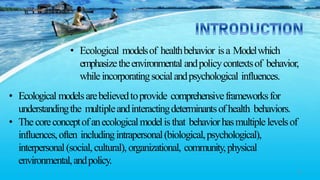
• Ecological modelsof healthbehavior isa Modelwhich
emphasizetheenvironmental andpolicycontextsof behavior,
whileincorporatingsocialandpsychological influences.
• Ecological modelsarebelievedtoprovide comprehensiveframeworksfor
understandingthe multipleandinteractingdeterminantsof health behaviors.
• Thecoreconceptofanecologicalmodelisthat behaviorhasmultiplelevelsof
influences,often includingintrapersonal(biological,psychological),
interpersonal(social,cultural), organizational, community,physical
environmental,andpolicy.
2
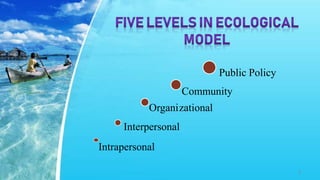
Intrapersonal
Interpersonal
Organizational
Community
Public Policy
3
Level of influence Description
Intrapersonal
Individual, personal
Individual characteristics that influence
behavior: Knowledge, skills, self-efficacy
Interpersonal
Family, friends, peers
Interpersonal processes and groups
providing identity and support
Organizational Churches,
Temples, Mosques, stores,
community organization
Rules, regulation, policies, structures
constraining or promote behaviors
Community
Social networks
Community norms (community
regulations)
Public policy
Local, state, federal
Policies and laws that regulate or support
healthy practices/actions 4
5

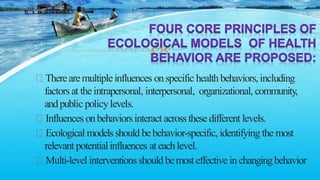
Therearemultipleinfluences onspecific health behaviors,including
factors at theintrapersonal, interpersonal, organizational, community,
andpublic policylevels.
Influences onbehaviorsinteract across thesedifferent levels.
Ecological models should bebehavior-specific, identifying the most
relevant potentialinfluences at eachlevel.
Multi-level interventions should bemosteffective in changingbehavior
6

•  Theultimatepurposeofecological modelsofhealthbehavioristo
informthedevelopment ofcomprehensiveintervention approaches
thatcansystematicallytargetmechanismsof changeatseveral levels
of influence.
•  Behavior changeisexpectedtobemaximizedwhen environments
andpoliciessupport healthful choices, when socialnormsandsocial
supportforhealthfulchoicesarestrong, andwhenindividuals are
motivatedandeducatedtomakethosechoices 7

Strength
Focus onmultiplelevels of influence that broadens optionsfor
interventions.
Policy andenvironmental interventionscanestablish setting and
incentives that canpersist in sustaining behavior changes.
Helpingtosolvetheproblemthat theeffectsof many
individually directedinterventionsarepoorly maintained.
8

Weakness
 Lackof specificityaboutthe most important hypothesizedinfluences.
 Lackinformation abouthowthebroader levels of influence operate or how
variablesinteract across level.
 Themodelhasbroaden perspectives withoutidentifying specific variablesor
providingguidanceabout howtouseecological model to improveresearch
or interventions.
 Needsophisticatedoperationalmodels that leadto testable hypotheses
anduseful guidancefor intervention. 9
10

Ecological Model .pptx

  • 1.
    Unit: IV ECOLOGICAL MODEL Mrs. D.Melba Sahaya Sweety RN,RM PhD Nursing , MSc Nursing (Pediatric Nursing), BSc Nursing Associate Professor Department of Pediatric Nursing Enam Nursing College, Savar, Bangladesh. 1
  • 2.
    • Ecological modelsofhealthbehavior isa Modelwhich emphasizetheenvironmental andpolicycontextsof behavior, whileincorporatingsocialandpsychological influences. • Ecological modelsarebelievedtoprovide comprehensiveframeworksfor understandingthe multipleandinteractingdeterminantsof health behaviors. • Thecoreconceptofanecologicalmodelisthat behaviorhasmultiplelevelsof influences,often includingintrapersonal(biological,psychological), interpersonal(social,cultural), organizational, community,physical environmental,andpolicy. 2
  • 3.
  • 4.
    Level of influenceDescription Intrapersonal Individual, personal Individual characteristics that influence behavior: Knowledge, skills, self-efficacy Interpersonal Family, friends, peers Interpersonal processes and groups providing identity and support Organizational Churches, Temples, Mosques, stores, community organization Rules, regulation, policies, structures constraining or promote behaviors Community Social networks Community norms (community regulations) Public policy Local, state, federal Policies and laws that regulate or support healthy practices/actions 4
  • 5.
  • 6.
     Therearemultipleinfluences onspecific healthbehaviors,including factors at theintrapersonal, interpersonal, organizational, community, andpublic policylevels. Influences onbehaviorsinteract across thesedifferent levels. Ecological models should bebehavior-specific, identifying the most relevant potentialinfluences at eachlevel. Multi-level interventions should bemosteffective in changingbehavior 6
  • 7.
     •  Theultimatepurposeofecologicalmodelsofhealthbehavioristo informthedevelopment ofcomprehensiveintervention approaches thatcansystematicallytargetmechanismsof changeatseveral levels of influence. •  Behavior changeisexpectedtobemaximizedwhen environments andpoliciessupport healthful choices, when socialnormsandsocial supportforhealthfulchoicesarestrong, andwhenindividuals are motivatedandeducatedtomakethosechoices 7
  • 8.
     Strength Focus onmultiplelevels ofinfluence that broadens optionsfor interventions. Policy andenvironmental interventionscanestablish setting and incentives that canpersist in sustaining behavior changes. Helpingtosolvetheproblemthat theeffectsof many individually directedinterventionsarepoorly maintained. 8
  • 9.
     Weakness  Lackof specificityaboutthemost important hypothesizedinfluences.  Lackinformation abouthowthebroader levels of influence operate or how variablesinteract across level.  Themodelhasbroaden perspectives withoutidentifying specific variablesor providingguidanceabout howtouseecological model to improveresearch or interventions.  Needsophisticatedoperationalmodels that leadto testable hypotheses anduseful guidancefor intervention. 9
  • 10.